
Interview: Dan Cohen of “Alive Inside”

Posted on July 26, 2014 at 8:00 am

Dan Cohen is the gifted and passionately committed man who transforms the lives of people with dementia and other severely debilitating diseases.  He is featured in the documentary “Alive Inside.” He is the founder of Music and Memory, which provides resources to help bring these programs to people with dementia.

How did you get started playing personal music for nursing home residents?

I’m a social worker by training. In 2006 I heard a journalist on the radio talking about how Ipods are everywhere. I Googled “Ipod in nursing homes” and even though there were 16,000 nursing homes in the US I couldn’t find one that was using Ipods for their residents. So I called up a nearby county-owned nursing home, and I said, “I know music is already your number one activity, you have live music, you play recorded music but what would be the added value if we were to totally personalize the music? And they said, “Sure.” So I sent them a laptop and some Ipods for the residence.

How do you personalize music for somebody who has lost so much memory that they can’t tell you a lot about who they are?

They can tell you nothing about who they are or what they like. So this is where if the family is available, we’ll speak to family. We’ll speak to friends, whoever is visiting. What did they listen to when they were young? Did they sing in choirs? Did they go to musicals? Did they play an instrument? Are there old records sitting in storage somewhere that we could look at? We really try to discover what that might be. We try for music from when they were young then we watch for their reaction to the songs. So build out a list based on their reaction to the songs.

Is it very important to personalize it to the individual’s experience?

That is exactly what is special about it, so back to Dr. Allen Power, who wrote Dementia Beyond Drugs: Changing the Culture of Care. He’s a geriatrician and a leader on how things should be in the nursing homes. He says that the typical nursing home facility is playing that 50s songs and it just becomes background noise. For the rest of us, everybody has their devices, and what do we put on? We put on what we really want to hear and that’s what we listen to.

We have that ability but these folks in nursing home are in like a digital isolation from the modern age and of course it takes technology to make this happen. But with music that is personalized, if somebody has advanced dementia and they can’t recognize their own family members and they can’t speak, if you give them music that has personal meaning for them they will awaken. Even with Alzheimers where you have short term cognition that is seriously degraded, your emotional system is very much intact. So you can say to somebody. “I’m here this is your daughter” and they do not react. But once you put on something, “God bless America,” Frank Sinatra or whatever, they will awaken literally as Henry did in the movie and start reminiscing and start being more social instead of just being in a slump and non-verbal.

One woman seems to indicate that the music connects her to memories she cannot access without it.

As you could see she had a lot of angst and it was really difficult to get through the day, and so this just allowed her to be herself, enjoy herself and that was huge for her. And that’s a massive benefit. That really changes their day. And it changes the way they interact with the family.

What kind of neurological research is being done on this kind of therapy?

There have been hundreds of studies over the last 50 years. Most of them have a really small sample size but the one study that I base this on, one piece of it, is research by Linda Gerdner on the impact of individualized music to reduce agitation. And it was so good; her research said that every one of the 16,000 nursing homes in New York should be using individualized music to reduce these agitations. But there is no money behind it, no requirement to do it so how do you do this anyway?

Dr. Concetta M. Tomaino who co-founded the institute for music and neurological research with Oliver Sacks, was with the New York State Department of Health funding in the 90s that did research on working on individuals with late stage dementia and playing music that personally related to them for an hour three days a week and repeated this three hour routine for 10 months. And after 10 months, these folks scored 25 percent better on the cognitive test. And then the neurologists who are brought in to assess by looking at these folks, how advanced the dementia was, they were unable to accurately assess how advanced the dementia was because these folks were uncharacteristically awake and alert instead of just head-down slumping.

If somebody came up with a pill and said, “After 10 months of taking this pill, your mom’s cognition is going to improve on average by 50 percent” well, it would be a multibillion-dollar blockbuster and every doctor would be prescribing it and every family would say, “I want it.” But because it’s not coming in the form of a pill, and we have medicalized our society, we are very much left with just word-of-mouth. We now have about 16,000 nursing homes and it’s just the living and hospice and home care and hospitals adult day care all using this in 45 states in eight countries. And then they see their benefits and then they tell everyone else in the community and that is how it this thing spreads because they are seeing it work.

Wisconsin rolled out 100 nursing homes with this six months ago. They are doing an 18 month study with 1500 residents with dementia. While they are waiting for their final results from this 18 month study, they already got funding approved to roll out a phase two, 150 nursing homes.

Have you been surprised at all by some of the musical choices that have had the biggest impact?

It really runs the gamut. It could be something their mom listened to when they were young and it was her song from the old country. Even though two people could be very similar in age, religion, culture and they have some overlap as a result of that, every playlist is like a fingerprint. That’s the hardest part sometimes to find that. But once you have that, you have it for this individual for the rest of your life and it will change their experience and the experience of their caregivers. My recommendation is to train all these nursing homes to have as large a playlist as possible no matter how advanced the dementia is.

Related Tags:


Documentary Interview Music

Contest: “Lullaby” — Family Drama With Amy Adams, Richard Jenkins, and Garrett Hedlund

Posted on July 25, 2014 at 3:50 pm

Copyright 2014 ARC EntertainmentGarrett Hedlund stars as Jonathan in this uneven but moving drama about a family facing the loss of a husband and father. The performances are excellent, especially Richard Jenkins as the father and “Downton Abbey’s” Jessica Brown Findlay as Jonathan’s sister.

I have two copies of the DVD to give away. To enter, send me an email at moviemom@moviemom.com with Lullaby in the subject line and tell me your favorite movie family. Don’t forget your address! I’ll pick a winner at random on Augut 4, 2014.

And don’t forget you still have a few more days to enter the “Earth to Echo” contests for the GoPro camera and Echo plushie.

Related Tags:


Contests and Giveaways Drama Family Issues

Remembering the Vietnam War: 10 Movies

Posted on July 25, 2014 at 8:00 am

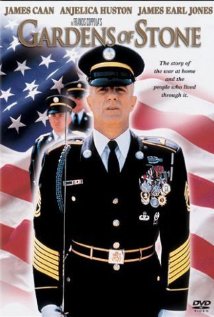
gardens of stoneAs we observe the 50th anniversary of the War in Vietnam, here are ten of the best of the movie and documentary depictions of the war and its impact on history and culture in the United States. The best-known films about Vietnam include “Apocalypse Now,” “Full Metal Jacket,” “Platoon,” “The Deer Hunter,” “Coming Home,” “Good Morning Vietnam.” But over 2000 films have touched on or portrayed the Vietnam war and there are sure to be many more to come as we continue to grapple with the strong feelings about the conflict. These are others I think are well worth watching.

1. We Were Soldiers The very first U.S. military involvement in Vietnam is explored in this somber portrayal of military honor and politicians’ hubris.

2. Gardens of Stone James Caan and James Earl Jones star in this poignant story of the war at home and in Southeast Asia, focusing on the Arlington Cemetery’s “Old Guard.”

3. Hearts and Minds This documentary was made in 1974 so it is as much an artifact of its time as it is an accurate depiction of events as we have come to understand them.  But it is a powerful film with some important footage of the era.

4. China Beach This beautifully acted television series is a rare look at the war through the eyes of women.

5. Hamburger Hill The story of the 101st Airborne’s attempt to take a single hill in one of the most brutal engagements of the war stars Dylan McDermott and Don Cheadle.

https://www.youtube.com/watch?v=QA7qVIqh6_8

6. Born on the Fourth of July Tom Cruise plays Vietnam veteran Ron Kovic, who became an anti-war protester after he returned.

7. Little Dieter needs to Fly Werner Herzog made a documentary about a German immigrant fell in love with planes and became an American naval pilot in the Vietnam War, where he was captured and then escaped, and then made it again as a feature film called Rescue Dawn with Christian Bale.

8. Vietnam – A Television History The PBS series about the Vietnam war has been re-edited and updated. It is still a thoughtful, balanced history of the conflict and its context.

9. In Country Bruce Willis stars in the story of a girl who wants to find out what happened to her father, who never returned from Vietnam.

10: Remembering Vietnam: The Wall at 25 Maya Lin’s memorial to the Americans who died in Vietnam is one of the most powerful spaces in Washington D.C. Vietnam veteran Jan Scruggs was determined to build a Vietnam memorial. Maya Lin was the Yale undergraduate whose etched granite memorial was selected by the judges but was considered insulting by some in the veteran community. The site has become a place for thousands of visitors to pay their respects. Many of them leave tokens with deep personal connections, and that is now a part of the memorial as well.
Related Tags:


After the kids go to bed For Your Netflix Queue Lists War

Lucy

Posted on July 24, 2014 at 6:00 pm

Copyright 2014 Universal Pictures

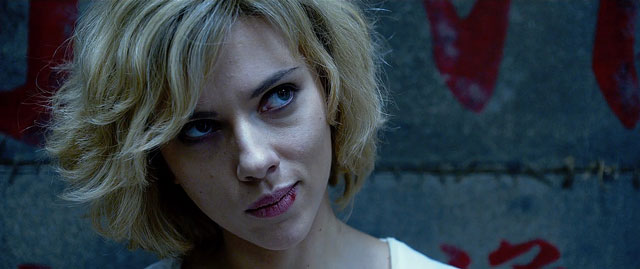
I always enjoy Luc Besson’s stylish car chases and shootouts. I like his use of locations, his strong female characters, and unexpected flashes of sentiment in the midst of mayhem.  While I found much to like in this story about a young woman who gains superpowers through a new drug, it was a mistake to have her show less emotion as she becomes physically and emotionally stronger.  Instead of sentiment, this time Besson inserts some preachy ruminations on the meaning of life.  I’m not opposed to existential ponderings in the middle of a crashes and explosions film.  But they need to be a little less silly and a lot less intrusive.

For a moment, I thought we were back on the Planet of the Apes or perhaps picking up some deleted scenes from “Tree of Life” as we returned to the dawn of time with the earliest hominids.  But no, this is just some sort of context for what is to come.  Our heroine, you see, shares a name with the skeleton of the oldest human remains, thought of as the first woman.

We then meet our present-day Lucy, standing on the sidewalk, arguing with her boyfriend of a week, who is trying to persuade her to deliver a briefcase for him.  She may not be very focused, but she is sharp enough to know that he and the deal he is proposing are both very sketchy.  But she is not smart enough to walk away before he can handcuff her to the case and shove her toward the door.  She has no choice.  She walks into the building.  The boyfriend gets shot.  And she is hustled upstairs but a lot of very scary-looking guys in black suits.

She is soon knocked out, and awakens to find that a pouch of a powerful new drug has been sewn into her abdomen.  She is one of four mules to be sent to cities across Europe to deliver the drug.  But before she leaves, a thug kicks her in the belly, the pouch opens, and the drug, a synthetic version of a chemical essential in fetal development, goes into her bloodstream and she is suddenly super-smart, super-powerful, and super-mad.  Also, she can time-travel, sweeping eras to the side like Tinder rejects.

Meanwhile, all of that brain power has not led her to the obvious conclusion that wiping out all of the bad guys who are in charge of distribution of the new drug is not going to solve very much if there are still people out there manufacturing it.

For a while it is fun to see her think, kick, punch, stab, and, yes, levitate the bad guys.  But there are too many returns to Morgan Freeman lecturing a group of students about what would happen if we used more than ten percent of our brains (by the way, that old myth has no more basis in reality than this movie does) and the decision to make Lucy increasingly robotic in demeanor as she gets more cerebrally enhanced lessens the narrative propulsion and emotional heft to the storyline. She also loses a lot of our sympathy when she engages in needless murders of innocent parties. I like Luc Besson. But I think he was using less than ten percent of his brain when he wrote this one.

Parents should know that this film includes extensive action-style violence with many characters injured and killed, lots of guns, knives, surgery, car chases and crashes, fights, threat of sexual assault with some grabbing, explicit scenes of animal and brief human sex and childbirth, sexual references, brief strong language, theme of drug dealing and effects of illegal drugs

Family discussion: If you could access more of your brain capacity, what would you use it for? Why did Lucy become less emotional as she got smarter?

If you like this, try: “The Transporter” and “Limitless”

Related Tags:


Action/Adventure Fantasy

And So It Goes

Posted on July 24, 2014 at 6:00 pm

12 June 2013 Photo by Clay Enos – © 2013 ASIG Productions LLC

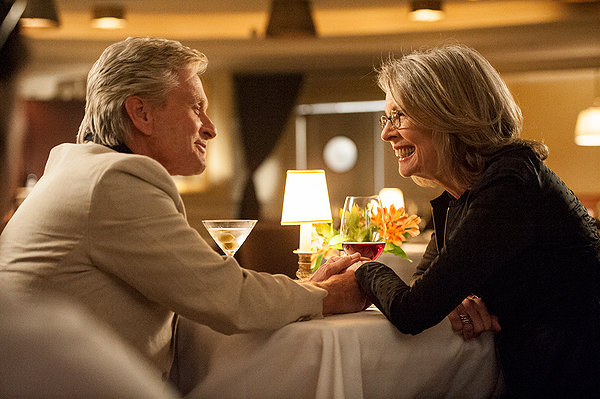
A second marriage is, as Samuel Johnson famously said, “The triumph of hope over experience.” And as lyricist Sammy Cahn wrote in the song Bing Crosby sang in “High Time,” “Love is lovelier the second time around.” In this slight but endearing new film, director Rob Reiner and screenwriter Mark Andrus (“As Good as it Gets”) bring us an autumn-years love story. Oscar-winners Michael Douglas and Diane Keaton play two characters with little in common but the experience of great loss, the knowledge that love carries great risks, and the fear that there may not be another chance.

Douglas is Oren, a successful realtor and even more successful misanthrope. He insults people.  He is bitter.  He shoots a dog with a paintball gun.  He does not like anyone and no one likes him, with the exception of his longtime colleague played by the invaluable Frances Sternhagen.   Keaton plays Leah, a widow experimenting with singing at a restaurant.  She is universally beloved, especially by her neighbors in a fourplex and her loyal accompanist (played by the director himself).  Oren lives in the fourplex, too, ironically named “Little Shangri-La,” and is revealed early on to be the owner as well.  He hopes for one last big-ticket house sale so he can retire and move away and never deal with anyone ever again.

But life has a way of entangling those who most try to rid themselves of obligations and relationships — at least in movies.  Oren’s long-estranged son arrives to inform his father that (1) he is no longer a drug addict, (2) he has a daughter, and (3) he needs Oren to care for her while he serves a prison term.

Oren refuses, saying “I already tried to raise a kid and it didn’t work out.”   So Leah steps in and says the girl can stay with her.  She is Sarah (Sterling Jerins).  And anyone who has ever seen a movie (or read “Heidi”) knows that the girl will charm her grandfather and open the hurting hearts of both Oren and Leah to her and to each other.  Oren finally admits to Leah, “I like you and I don’t like anyone.”

Despite contemporary references like “Duck Dynasty” and “Hoarders,” this film has a musty, retro feel, like a script that has been sitting in a drawer for a couple of decades.  The plot is predictable and creaky.  An attempt to return Sarah to her mother goes exactly the way you think.  The caterpillar Sarah collects is exactly the metaphor you think. The pregnant neighbor provides exactly the opportunity for Oren’s showing what he is capable of that you thought but hoped you could avoid.  The racial humor is painfully out of date, so you didn’t predict it, but that does not make it a good surprise.  Far from it.

What the movie does have, though, is Douglas and Keaton, and they triumph over the limitations of the material, making us believe that the greatest love in our lives may still be waiting for us.

Parents should know that this film includes  sexual references, some crude, childbirth scene, some strong language, some racial insults, drinking, drug abuse, references to sad deaths

Family discussion: Why was it so hard for Oren to be nice to people? How did Leah make Sarah feel at home?

If you like this, try: “As Good as It Gets” and “Something’s Gotta Give”

Related Tags:


Comedy Drama Romance
THE MOVIE MOM® is a registered trademark of Nell Minow. Use of the mark without express consent from Nell Minow constitutes trademark infringement and unfair competition in violation of federal and state laws. All material © Nell Minow 1995-2026, all rights reserved, and no use or republication is permitted without explicit permission. This site hosts Nell Minow’s Movie Mom® archive, with material that originally appeared on Yahoo! Movies, Beliefnet, and other sources. Much of her new material can be found at Rogerebert.com, Huffington Post, and WheretoWatch. Her books include The Movie Mom’s Guide to Family Movies and 101 Must-See Movie Moments, and she can be heard each week on radio stations across the country.

Website Designed by Max LaZebnik