
Jumper
Posted on June 9, 2008 at 8:00 am
C| Lowest Recommended Age: | High School |
| MPAA Rating: | Rated PG-13 for sequences of intense action violence, some language and brief sexuality. |
| Profanity: | Some strong language |
| Alcohol/ Drugs: | Drinking |
| Violence/ Scariness: | A lot of action violence, characters injured and killed, character gutted |
| Diversity Issues: | Diverse characters |
| Date Released to Theaters: | February 14, 2008 |
| Date Released to DVD: | June 10, 2008 |
The movie “Jumper” is 88 minutes on a pogo stick, hopping from teenage cliche to teenage cliche. You like the story about the high school nerd who pines for the class beauty and is tormented by her bully boyfriend? You’re in luck. Or do you like the one about the perpetual victim who suddenly discovers that he has his own super powers and is better than everyone else? Then this is your movie. How about the cliche of a teenager trapped in an unloving home with a gruff and unsympathetic father, suddenly liberated from all parental dependence — and isn’t that heartless old dad sorry now?

Here’s another one that should sound familiar to you: “what would you do if you had the power to walk into banks, stores, or women’s lives and simply take anything you want?” Every angst-filled teenage fantasy is covered in this movie for just about as long as it takes a pogo stick to touch down. Then we’re off to the next one: the sadder but wiser beauty who realizes how foolish she was to let the nerd go, years before.
A group of evil authoritarian figures who don’t believe that kids should be having fun with their super powers (the cornered hero’s plaintive wail, “but I didn’t do anything wrong!” will resonate with every teenager ever caught painting the cat or dismantling the lawnmower).
The virtues of this movie, slender though they may be, are really peripatetic virtues. You get a rapid-fire tour of exotic locations around the world, as jumpers race from the Egyptian Desert to downtown Tokyo to London to Rome. You jump from fight to fight, from character to character. With this pace, the fun and clever moments never last too long, but then again, you never have to confront the lack of depth or substance either. Just as you are beginning to think, “say… this acting is pretty superficial…” WHOOOOSH you are sitting on top of the Sphinx in Egypt, and isn’t it a lovely view?
There are lots of other cliches of teenage wish fulfillment– archetypal stories about mothers and friends– but I don’t want to give away too much of the feather-light plot. Suffice it to say that that no adolescent wish-list item is left unrecognized. The problem is that it is never long enough or interesting enough to be satisfying. This movie is paced for an audience that grew up multi-tasking and its aesthetic sensibility and depth of story-telling is equivalent to a beer commercial. Even at under 90 minutes, too much money has been stuffed into too little script.
At one point, a character says that jumping enables you to skip the boring parts. If that were true, he would have jumped out of this movie. Nor will you find much satisfaction in the acting by stars Hayden Christensen or Rachel Bilson, in the useless role of love interest/damsel in distress, who keeps asking Christensen’s character to tell her what is going on as he is dodging assassins. Samuel L. Jackson, wearing a hairpiece that resembles a Krispy Kreme powdered sugar donut, turns in a calamitous performance as a hit man for the authoritarian “paladins” who for centuries have lived only to squelch the fun of “jumpers,” because only God should have that power. He uses something between an electric lasso and a “don’t tase me, bro” cattle prod to subdue them and it does not seem to occur to him that God might not approve of murder. Christensen, Jackson, Bilson, and
“Billy Elliot
Parents should know that this film includes a lot of “action violence” (not much blood) and peril. A character is gutted and other characters injured and killed. There are non-explicit sexual situations, drinking, and smoking, and characters use some strong language.
Families who see this movie should talk about whether the ending was a surprise. If you had the power to be a jumper, what would you do?
Families who enjoy this film will enjoy Clockstoppers

 are being released in one DVD and both are worth watching. The 1967 original, directed by Stanley Donen (“Singin’ in the Rain”) and starring British comedy duo Peter Cook and Dudley Moore, is the story of a short order cook (Moore) who sells his soul to the devil (Cook, who also wrote the screenplay) for the chance to be noticed by a beautiful waitress. He is certain that his seven wishes will give him all the opportunities he needs to persuade her to fall in love with him. But each one goes hilariously wrong. And of course the devil has more than one trick up his sleeve. The story is fine but what makes this movie memorable is what goes on around the edges — like the portrayal of the seven deadly sins (Raquel Welch appears briefly as Lust). The devil keeps busy — watch him scratching record and tearing the last page out of mystery novels as he chats with Moore’s character. And his answer to the question of how he became the devil is very well done.
 part two, or it tries to be. It has voiceover narration by Morgan Freeman. It has an inspiring and life-affirming friendship — featuring Morgan Freeman. It just is not very good.
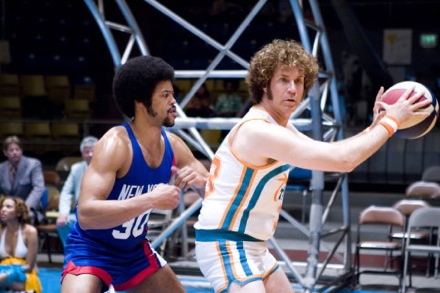 “Semi-Pro” is not even semi-funny. It takes what looks like an unmissable slam dunk of a premise and turns it into a big, noisy airball of a movie without a single truly funny moment.