
White Chicks

White Chicks

Posted on June 23, 2004 at 4:58 am

C
Lowest Recommended Age: High School
MPAA Rating: Rated PG-13 for crude and sexual humor, language and some drug content
Profanity: Very strong language for a PG-13
Alcohol/ Drugs: Drug humor, drinking, smoking
Violence/ Scariness: Comic violence including guns, characters shot but no one badly hurt
Diversity Issues: A theme of the movie
Date Released to Theaters: June 23, 2004
Date Released to DVD: October 26, 2004

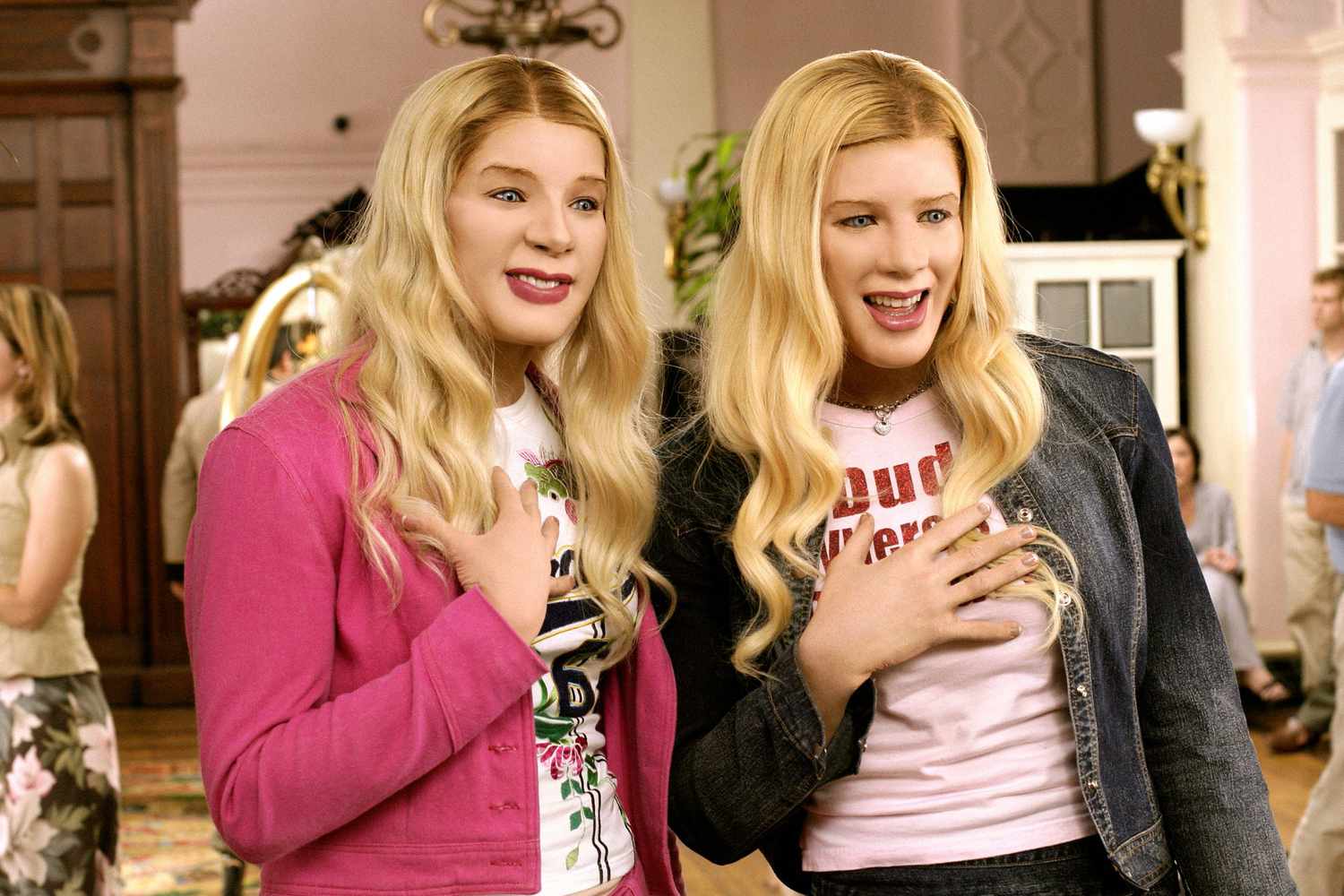
Appealing performers and a couple of very funny moments don’t make up for a lazy and generic script in this predictable farce about two black male FBI agents who go undercover as spoiled rich white girls. I knew we were in trouble when there was a “Hammer Time” joke in the first few minutes, a reference way past its sell-by date. And a Bjork swan-dress joke? In white chick terms, that’s so yesterday.
Copyright Columbia Pictures 2004

In rap music terms, this movie samples characters and plots from many other movies, including the already vastly over-used (attractive and principled but do-things-their-own-creative-way law enforcement types always getting chewed out by choleric superiors until one of their wacky schemes pays off and they get to be heroes) and the already done so brilliantly and distinctively that no one should ever try them again (whoever thought of appropriating the “Junior” plot twist from Some Like it Hot should be sent to the screenwriter equivalent of solitary confinement).

Even the movie doesn’t even appear to paying attention to its plot. Movies don’t have to be logical; they don’t even have to make sense. But sloppy inconsistencies like the ones here become a distraction that interferes with the ability of the audience to enjoy even the jokes that work.

Shawn and Marlon Wayans, apparently both the Zeppo Marxes of the talented Wayans family, play FBI agents Kevin and Marcus Copeland. It is typical of this movie’s problems that no one had the energy to give these characters anything resembling a personality. They are almost indistinguishable from each other except that one has a hysterically jealous wife and the other has a goatee and is single.

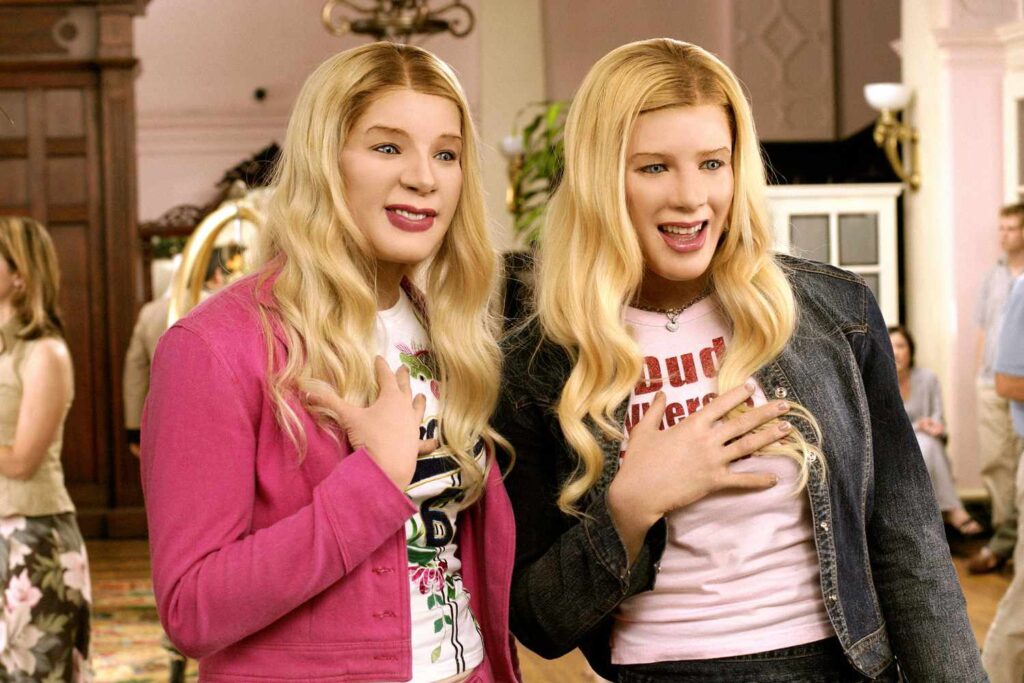
After they bungle a drug bust, they are assigned to escort the Wilson sisters (think Paris and Nicky Hilton), who may be targets for a kidnapper. They are on their way to a weekend at the Hamptons where they hope to be photographed for the cover of a magazine. A minor car accident on the way there leaves them with scratches on their faces and they refuse to be seen that way. So, the Copelands call in the FBI’s crackerjack undercover make-up team to transform them into the Wilsons. Conveniently, they both already have earrings.

Despite the fact that they are taller than the girls and the latex masks applied to their faces make them look like victims of Botox overkill, no one in the Hamptons seems to notice anything significantly different about “the girls” (one friend guesses that they’ve had collegen treatments to turn their lips from “Cameron Diaz to Jay-Z”). The Copelands squeal and giggle, shop with the girls, go all mean girls on the snooty rich snobs, and participate in a fashion show and a dance-off (okay, that dance-off is pretty funny). They also go out on dates, Marcus in drag with a smitten athlete (the very funny Terry Crews) and Kevin as a man but pretending to be someone else to impress a pretty reporter.

Gender and race-switching are inherently funny but the situations and jokes in this script do very little to build on that energy and sometimes actually get in the way. There are predictable culture clashes, as when the society girls sing along to Vanessa Carleton’s “1000 Miles” and the Copelands have to pretend to know the words. Then, when the rap song comes on…well, you know where this is going. (A twist on this scene later on provides the movie’s most sustained laugh.) There is a lot of gross-out humor involving various body parts and functions, and some leering double entendres. There are also predictable life lessons as the Copelands develop more empathy for women and encourage the society girls to have more self-respect, to insist on the best for and from themselves. Too bad the Wayans forgot to learn that lesson themselves; the insights are delivered with no more enthusiasm, sincerity, or imagination than the comedy.

Parents should know that the movie has very crude and vulgar material for a PG-13, with comedy based on sexual references (including a game where players have to choose between two unappealing sexual encounters), drug jokes, insult humor, and a lot of graphic potty humor. Characters use strong language, not just the usual “almost-R” words but also terms that may concern parents like “yeast infection,” “coke whore,” “bitch fit,” and the n-word. Racial insults and stereotyping are intended to be comic. The movie has some comic and action violence, meaning that a lot of punches are thrown and a few shots are fired but no one is seriously hurt.

Families who see this movie should talk about what Kevin and Marcus learn from pretending to be white women. Why was it so hard for Karen, Lisa, and Gina to feel good about themselves and their relationships?

Families who enjoy this movie will also enjoy the better movies it borrows from, like Some Like it Hot, which was first on the American Film Institute’s funniest movies of all time, and Tootsie, which was second. They may also enjoy Martin Lawrence in drag as an undercover cop in Big Momma’s House. The freshest and funniest Wayans film is still I’m Gonna Git You Sucka.
Related Tags:


Comedy movie review Movies -- format Movies -- Reviews

Dodgeball: A True Underdog Story

Posted on June 15, 2004 at 7:22 pm

Think Bad News Bears crossed with Happy Gilmore. Except with dodgeball, which means many, many opportunities for humorous slams to the head, chest, and crotch. That pretty much sums it up.

Pete (Vince Vaughn) is about to lose his gym, the comfy hang-out “Average Joe’s,” to White (Ben Stiller), the owner of the uber-exercise facility known as Globo Gym (slogan: “We’re better than you are!”) To save the gym, he needs $50,000 in 30 days. And that just happens to be the purse for the winner of the big dodgeball tournament that one of Average Joe’s regulars finds in the pages of his Obscure Sports Quarterly magazine.

So Pete and his gang of misfits decide to take their shot. The group includes Justin (Justin Long of television’s “Ed”), Stephen Root (Office Space), and Steve the Pirate (Alan Tudyk), a guy who refers to himself in the third person and thinks he is a pirate. After winning the qualifying regional title on a technicality, they are approached by the world’s greatest dodgeball coach (Rip Torn), who reminds them that “dodgeball is a sport of violence, exclusion, and degradation” and in just three weeks turns them into a lean, mean, fighting machine. Or at least into a group that can duck when a wrench is thrown their way. And they pick up a new team member who can throw very, very hard.

Then it’s off to the big game, with preliminary skirmishes before facing the Globo team, men-mountains who all have names like “Laser” and “Taser” plus a unibrowed woman with very bad teeth.

All of this is just an excuse for pure silliness — lots of balls slamming into lots of people, some funny surprise cameo appearances, Ben Stiller’s clueless bully persona, and insult humor. Gary Cole and Jason Bateman have some good moments as sportscasters and Hank Azaria is fun to watch in an old instructional film the team uses to learn how to play. Most of the laughs are less in the “wow, that’s funny category” than in the “I can’t believe they tried that” category, as when a uniform mix-up has the Average Joes appearing at a match in bondage gear, but there aren’t many real clunkers. Pete’s slacker demeanor never gives Vaughn a chance to make use of his greatest asset, the slightly ADD vibe he showed to such advantage in Swingers and Clay Pigeons. And Christine Taylor (Stiller’s real-life wife) deserves better than a role that is essentially the same one she played in Zoolander. But it all moves pretty quickly and is over before it wears out its welcome.

Parents should know that the movie has some very mature material for a PG-13 including explicit sexual humor with jokes about adultery, group sex, pornography, genital size, bondage, and homosexuality along with some very strong language including many double entrendres featuring the word “balls.” Characters drink frequently, including drinking to dull pain. The coach taunts the team by calling them “ladies.”

Families who see this movie should talk about some of their own experience in feeling like an underdog. What should Pete have done when White made him an offer? Families should also talk about perseverance, and the comment made by one character that “if a person never quits after the going gets rough, they won’t have anything to regret for the rest of their lives.”

Families who enjoy this movie will enjoy Happy Gilmore, Zoolander, and, for older audiences, Old School (rated R). They can also check out this site for more information about different ways to play dodgeball (also called bombardment) or some of the news stories about efforts to ban the game at schools because of its violence and susceptibility to abuse and bullying.

Related Tags:


Comedy
Clifford’s Really Big Movie

Clifford’s Really Big Movie

Posted on April 17, 2004 at 9:53 am

B
Lowest Recommended Age: Preschool
MPAA Rating: Rated G
Profanity: None
Alcohol/ Drugs: None
Violence/ Scariness: None
Diversity Issues: Diverse characters
Date Released to Theaters: April 23, 2004
Date Released to DVD: July 3, 2004

Copyright 2004 Warner Brothers

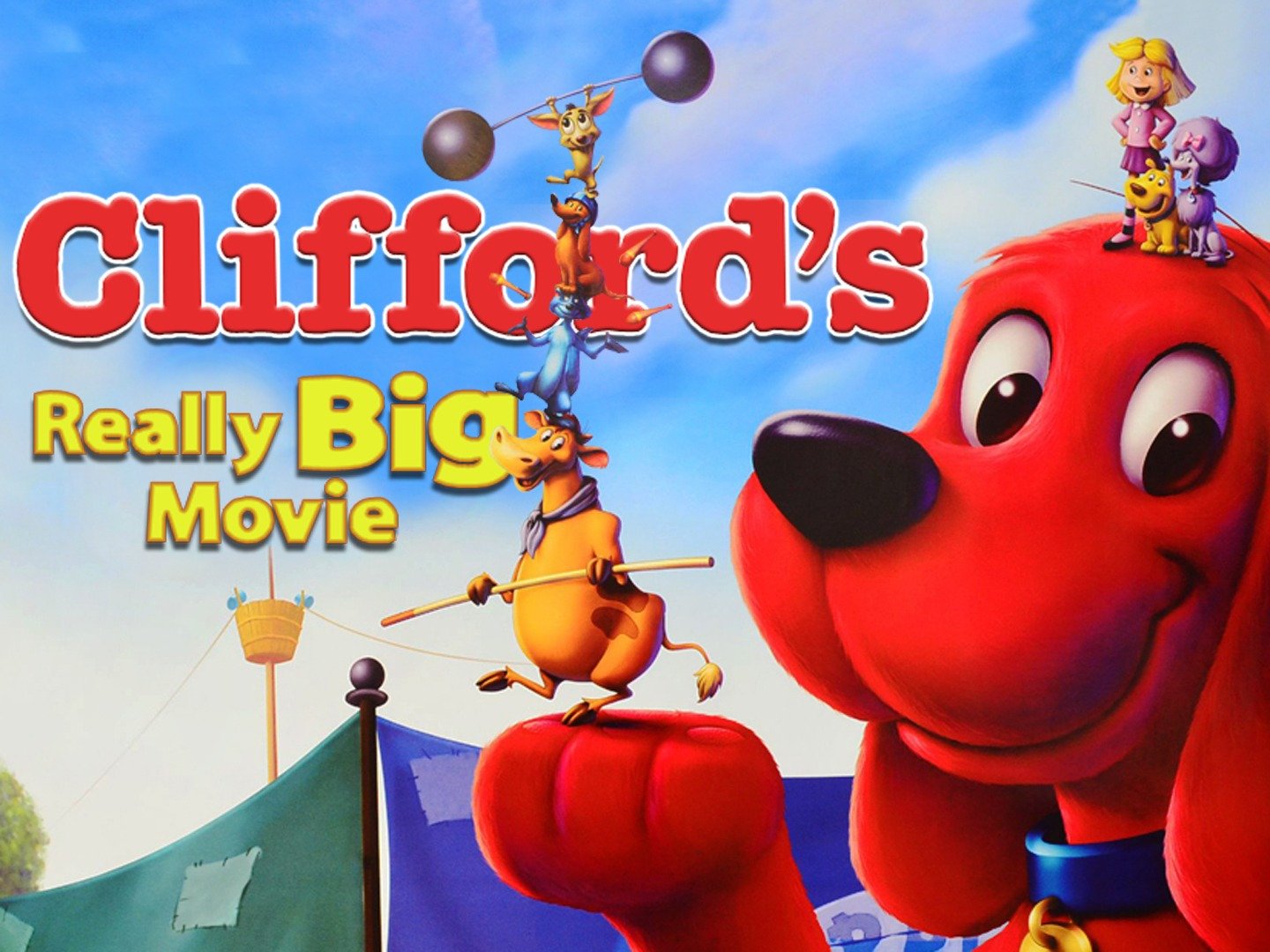
Clifford is not just a Big Red Dog; he’s a big, red phenomenon, hero of a series of books by Norman Bridwell, an animated PBS series, and even a live road show. Now he has moved (briefly) to the big screen with a low-key feature destined for a quick theatrical release on its way to video and DVD.

Clifford is a really, really big red dog, part of his appeal to toddlers, who live among giants and are thus drawn to huge, powerful but kind creatures who love children (like Barney). Children also like the way that Clifford explores the world around him, learning gentle lessons about getting along with others and solving problems like finding lost toys and not being afraid of a storm.

Clifford (voice of the late John Ritter in his last role) lives with Emily Elizabeth and her family on dogbone-shaped Birdwell Island. His best dog friends are T-Bone (voice of Kel Mitchell) and Cleo (voice of Cree Summer). When Clifford overhears Emily Elizabeth’s parents talk to a neighbor about how much he eats, Clifford thinks he is too much of a burden for the family and decides that he, T-Bone, and Cleo should join an animal act and compete for a prize of a lifetime supply of pet Tummy Yummies.

The animal act includes a trapeze artist ferret named Shackelford (voice of Wayne Brady) and a tightrope-walking cow named Dorothy (voice of Jenna Elfman). They are managed by Larry (voice of Judge Reinhold), who loves them very much but has not been able to make the act successful. Their only chance is to win that contest. But, Shackelford says, in order to do that, they need something big. Enter Clifford.

As soon as Clifford and his friends arrive, the act comes together and audiences love it. But Shackelford gets jealous of all the attention Clifford is getting. The daughter of George Wolfsbottom (voice of John Goodman), the wealthy man who owns the Tummy Yummies company, wants Clifford to be her pet. And Emily Elizabeth misses her beloved Clifford, and he misses her, too. Fortunately, everyone in this movie is kind and understanding and loyal, though it takes some longer to get there than others.

The limited animation style looks static on the big screen and the movie is too long for its age group even at 75 minutes. (Actually, I felt it was too long for my age group, too.) The children at the screening I attended fidgeted during the musical numbers and some seemed uncomfortable with even the mild tension in the story. The story itself is questionable, with Clifford and his friends leaving home without thinking about how upsetting that will be for their families. The song lyrics justifying it were downright unsettling at times; it cannot be wise to sing to children about how “You’ve got to be lost if you want to be found….It only gets better after it gets worst, happy ever after needs the scary part first.” It’s fine to let children know that problems can be solved, but this suggests that they cannot be happy unless they make sure something bad happens first.

Parents should know that there is some mild peril and some emotional tension. Some children may be upset when Clifford and his friends leave home or when the dogs lie about not having owners.

Families who see this movie should talk about how Clifford got the wrong idea by hearing only part of what Emily Elizabeth’s parents said about him. What should he have done instead of leaving? Make sure children know that it is never all right for anyone to leave home without talking to the family about what is wrong. Families should also talk about the lie the dogs tell about their dog tags, and about Dorothy’s saying that Shackleford is “not the most secure ferret in the world, but he means well.” Why does Mr. Wolfsbottom’s daughter want to have the biggest of everything? What does it mean to say that “okay does not dazzle?”

Families who enjoy this movie will enjoy the Clifford books and videos. They will also enjoy the books and video starring Lyle, Lyle Crocodile, especially the animated version, which has outstanding songs and voice talent. And they might like to try to make snickerdoodles, the cookies Dorothy and Cleo promise to make together.

Related Tags:


Based on a book DVD/Blu-Ray Fantasy Movies -- format

Peter Pan

Posted on December 14, 2003 at 7:45 am

Oh, the cleverness of storyteller James M. Barrie, who gave us Peter Pan, Captain Hook, Tinkerbell, a St. Bernard nanny, Tiger Lily, and the crocodile that ticks because it swallowed a clock! And oh, the cleverness of P.J. Hogan, the director and co-screenwriter who has brought us this sumptuously beautiful re-telling of the classic story that maintains its timeless charm.

This is the story of Wendy Darling and her brothers Michael and John, who fly to Neverland with Peter Pan, the boy who would not grow up. Neverland has pirates, mermaids, and no baths, bedtimes, or schoolwork.

But there are no mothers, either, and without mothers, there are no stories. So Peter leaves Neverland at night to come listen to the stories that Wendy tells her brothers. One night, his shadow is caught in the window. When he comes back to get it, Wendy sews it back on, and Peter invites the Darling children to fly with him back to Neverland and tell stories to the Lost Boys. There Wendy and her brothers meet up with the Lost Boys, and battle Captain Hook (Jason Isaacs, “Harry Potter’s” Lucius Malfoy).

The production design is simply gorgeous. A storybook Victorian London is imagined with exquisite period detail. Even state-of-the-art special effects like flying and computer graphics are consistently conceived and gratifyingly believable. The jarring notes are Peter’s (unforgiveably) American accent and some anachronistic-sounding music. Swimming Pool’s Ludivine Sagnier does her best, but Tinkerbell is probably best portrayed as a spot of light. And some Pan lovers will object to a bit of gentle tweaking of the story. But it is not so much to be politically correct or bring it up to date as it is to remove any distractions from what in today’s view would be seen as sexism.

The story is about growing up, after all, and it is not a coincidence that Wendy flies away with Peter on what is supposed to be her last night sleeping in the nursery with her brothers before she must start to become a young lady. But even though, like her mother, Wendy has a kiss hiding in the corner of her mouth, she is not at all sure that she wants to become a young lady.

Part of the charm of the story is the way it looks at the terror and wonder of that bittersweet moment on the cusp of an adventure that can be scarier and more thrilling than a battle with pirates. Barrie thought that it was really Wendy’s story. Though Peter is the title character, it is Wendy who is the heroine because she makes a journey. When she kisses Peter to bring him back to life, both of them wake up.

When Wendy follows Peter to Neverland, he tells her she will never have to grow up but then he makes her into the mother of the Lost Boys. She assures him (and herself) that they are only playing, but she feels the pull of the adult world. She even tells Peter that Captain Hook is “a man of feeling” while he is just a boy. And feelings are taken very seriously in this story. Fairies like Tinkerbell can have only one feeling at a time. Peter cannot answer when Wendy asks him what his feelings are. And Hook has a deadly poison made up of “a mixture of malice, jealous, and disappointment.”

As Barrie requested in the notes for the play, one actor plays both Hook and Wendy’s father. But it is Hook and Peter who are truly linked. Wendy observes that Peter has no unhappy thoughts and Hook has no happy ones. Hook tells Peter, “You will die alone and unloved, just like me.”

All of this is there to give depth and resonance to an enchanting classic story which is lovingly, even tenderly told in a movie that will become a classic itself. Thrilling adventure, touching drama, and delightful comedy will give audiences of all ages all the happy thoughts and fairy dust it takes to fly.

Parents should know that the movie has a lot of fantasy violence, including swordfights, guns, and hitting below the belt. Pirates are killed. There is a brief graphic image of Captain Hook’s amputated arm as he puts on one of his hooks. We see boys’ bare behinds. There are a couple of sweet kisses and some subtle references to puberty. Characters drink and smoke and a pirate offers liquor and cigars to a child.

Families who see this movie should talk about why someone might not want to grow up. What do grown-ups do to keep the best part of childhood inside themselves? Is that what Barrie was doing in writing this story? There is a lot of talk about feelings in this movie. What does it mean to say that fairies can only feel one thing at a time? Why does Wendy tell Peter that she thinks Captain Hook is “a man of feeling?”

Families who enjoy this movie will also enjoy comparing it to other versions of the story, including the Disney animated musical (but parents should be aware that it includes material that is insensitive about girls and Indians by today’s standards) and the live-action musical, which is available on video starring Mary Martin and Cathy Rigby. But stay away from Steven Spielberg’s sour Hook, an unfortunate variation starring Robin Williams as a grown-up Peter who returns to confront Dustin Hoffman as Captain Hook. For more about Peter Pan, try this site or this one.

Families might also enjoy other movies with similar themes, including Mary Poppins and Gigi.

Related Tags:


Action/Adventure Based on a play Fantasy Remake Stories About Kids

Dr. Seuss’ The Cat in the Hat

Posted on November 18, 2003 at 6:10 pm

The great thing about the irrepressibly anarchic Cat in the Hat is that even Hollywood can’t contain him. They can stretch out the story with filler that ranges from the superfluous to the distracting and once in a while reaches the level of oh-no-not-that-again. They can put in some inexcusably vulgar humor. But when Cat takes over, it is still entertaining.

Mike Meyers, as irrepressibly mischevious as the Cat himself, is a great choice for the role. His Cat seems to be a master of vaudvillian schtick with a few of the voices from The Wizard of Oz and a sort of demented Mary Poppins thrown in for what turns out to be very good measure. His energy and audacity — and his astonishingly animated expressions under all that fur — do as much as possible to keep the movie on track.

But very little of what is added to the story is worth the effort. Dr. Seuss was much too smart to try to insert any kind of a moral into his stories or to give us too much detail about the lives of the children the Cat comes to visit. This left his story universal and subject to interpretation.

But it would not fill even the short 73 minute running time of this feature film. So, this version makes the Cat into an “I’m here to teach you a lesson,” sort of guy. Conrad (Spencer Breslin) has to learn to follow the rules and Sally (Dakota Fanning) has to learn to loosen up and not be so bossy. And they have to learn to appreciate one another. Awwwwww. We also get a completely gratuitous menace in Alec Baldwin, a neighbor with a corset and an upper plate who schemes to marry the kids’ mother and have Conrad sent to a military boarding school. None of this is very original or interesting, and it all takes much too much time away from the real story, which is the absolute chaos created by the Cat and the reaction of the kids — a mixture of horror and delight, with delight winning out. And why not? Who among us does not thrill to see that “don’t you touch anything” living room covered in splotches of purple goo?

This undeniable pleasure is almost enough to keep the movie working. Those jellybean-colored sets (and Mom’s just-drycleaned dress) are cheerfully destroyed along with, Mom’s rules, some of the kids’ ideas about themselves, and, apparently, the laws of physics. We get both the fun of imagining all of that and the satisfaction of a happy ending. Meyers is simply a hoot to watch, with able support from the kids (especially Fanning) and the fish (voice of Sean Hayes).

But parents should know that this movie has some surprisingly rude and crude humor for a PG, including double entendres and almost-swearing, potty humor, and other bodily function jokes. The Cat picks up a muddy garden implement and refers to it as “a dirty hoe” and spells out the s-word. The Cat is hit in the crotch. He has a fake bare behind. It is almost unfathomable that the people behind this movie put material like that in a movie based on a beloved book for children. There is also a lot of comic peril that may be too intense for younger children. An adult character drinks beer.

Families who see this movie should talk about why Sally had a hard time with her friends and why Conrad had a hard time following rules. They might also like to pretend they are Thing One and Thing Two (or Chocolate Thun-da) and do the opposite of what they are told.

Families who enjoy this movie should read the book and its sequel and some of the other Seuss classics like Horton Hears a Who and The Sneetches.

Related Tags:


Based on a book Comedy Fantasy
THE MOVIE MOM® is a registered trademark of Nell Minow. Use of the mark without express consent from Nell Minow constitutes trademark infringement and unfair competition in violation of federal and state laws. All material © Nell Minow 1995-2026, all rights reserved, and no use or republication is permitted without explicit permission. This site hosts Nell Minow’s Movie Mom® archive, with material that originally appeared on Yahoo! Movies, Beliefnet, and other sources. Much of her new material can be found at Rogerebert.com, Huffington Post, and WheretoWatch. Her books include The Movie Mom’s Guide to Family Movies and 101 Must-See Movie Moments, and she can be heard each week on radio stations across the country.

Website Designed by Max LaZebnik