
Interview: Teyonah Parris and Spike Lee on “Chi-Raq”

Interview: Teyonah Parris and Spike Lee on “Chi-Raq”

Posted on December 3, 2015 at 1:01 pm
Copyright Amazon 2015

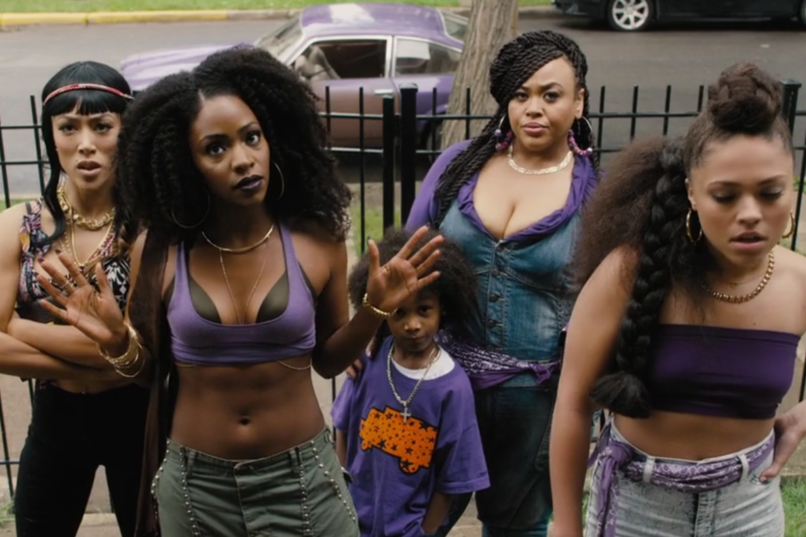
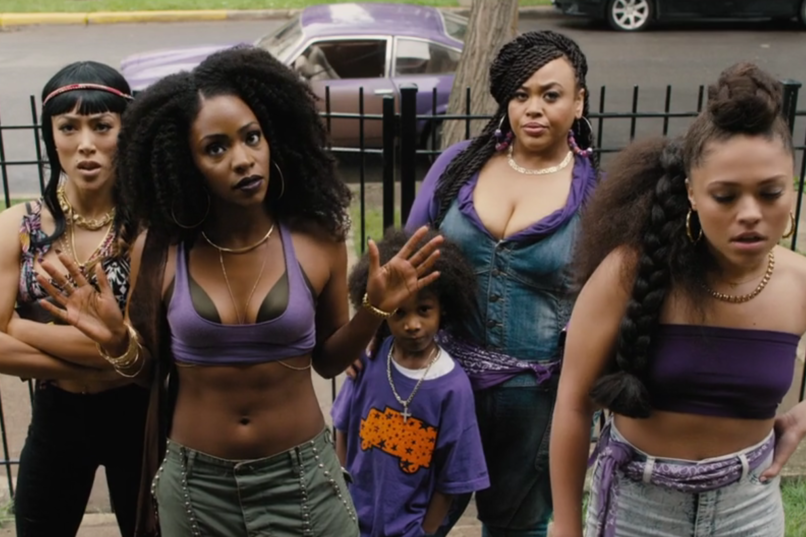
“Chi-Raq” is one of the best films of the year and one of the most important films of many years. It is a searing wail of love, grief, and fury inspired by “Lysistrata,” a play written in 411 BC. A small group of reporters spoke to star Teyonah Parris and co-writer/director Spike Lee.

Parris told us that she actually performed in the original Lysistrata when she attended Juilliard. “I did not get to play Lysistrata but I have always studied Shakespeare and Greek plays and Chekhov and I love working on that sort of text. There is so much to mine from it. And so when I got this script for ‘Chi-Raq’ and I realized this was a modern retelling of that story I was all in. And then to hear Spike talk about what he was doing with the movie — the first thing he said is, ‘I’m trying to save lives. We have to save lives,’ and I was all in, there was no question about it. Spike certainly has an out of the box approach to his work but I think that’s why people gravitate towards him. He gives us another way to look at things. It is a bit more unconventional but I certainly think that it will resonate with our current generation because it’s Spike. It’s hard to put your finger on what it is he does that makes it hit right here but I think that people will watch this movie and certainly understand what we’re seeing and what the message is.” She acknowledged that the film is bound to be controversial. “The title has gotten a lot of flak but the no one has actually seen it and heard the message and seen what we’re trying to say but I know that Spike’s intentions and mine and everyone that is a part of this film, our intentions are pure and were trying to make a difference and get this conversation started so that people can actively make some changes. The issue that we’re dealing with in the film with our young brothers killing each other — to talk about that I don’t think eliminates the conversation which has been on everyone’s minds and hearts with the police brutality against particularly young black men and women. I think that those conversations can be had simultaneously. There is a lot more at play and we talk about it in the movie, the fact that there are no jobs in these places. People are trying to feed their families who are given no other way out.”

The character she plays in the film is confident, forthright, and very capable of weaponizing her sexuality. She is a long way from the more realistic characters she played in “Mad Men” and “Dear White People,” and the distinction is clear in her physicality as well as her dialog and responses to other characters. She spoke about the costume designer and movement coach who helped her create the character. “I call the costume designer Master Ruth Carter. I remember being in those fittings saying ‘Ruth, don’t you want to add a little bit more fabric, a little more here and there?” but I loved it. I thought it certainly was a physical representation of who this woman was and the confidence that she has and how she moves about the world and finding her physicality. It felt very theatrical which is no surprise because it’s from a play. So finding who this woman was and how she walks into a room or walks down the street, I certainly had lots of assistance from a wonderful woman name Maija Garcia who was our movement director, and we worked on just finding her strength and, how does she stand and how does she command a room simply by being there without walking around or whatever. It took some work. I didn’t just show up to set; I had to explore it before getting there and I definitely had the assistance of Maija Garcia. We just did little exercises, exploring what does it feel like to walk in 6 inch heels and how that changes you.”

Parris was excited to work with Lee and to play the central role. “She’s the hero. She comes in and she sees the issue. There has to be a strength and a determination not only for her to carry on her mission but for me also the actress to figure out what she’s trying to do and how she has to do it and in such a very short time. We shot this in five weeks, the entire thing. And I had to use every bit of my artistic being in this film from the dancing to just finding my center and my strength and how do I affect people and how to effectively lead people. Yes, I think those are some of the things that made it a challenge for me but they are a welcome challenge.”

Lee emphasized that this movie is not for any particular demographic. “The film talks strongly about guns and that affects everybody, all Americans.” But it was not easy for him to get it into production, in part because it is so unusual to have an entire screenplay in verse. “I’ve never done this before so it was a challenge to get this made. I think that one of the reasons why everybody said no in the process is because of the verse, because it’s hard to read, and that’s why before Amazon said yes we had two readings. They wanted to hear it, they want their ears to hear it, and I don’t blame them because even when I write my own scripts reading it and hearing the actors say the lines is two different universes. And that doesn’t even happen till you hear bits and parts during casting. I do a lot of rewriting during that period because I hear it for the first time.”

The training Parris got at Juilliard helped prepare her for speaking in verse as though it was natural conversation. “Essentially the idea is that the structure is different but your intentions are still the same. You are trying to affect something. You are trying to get something out of someone. So what are you doing? And you have to continuously remember and remind yourself that you don’t get lost in the sing-song or the verse of it. Nick Cannon] and I frequently had conversations about that, just reminding ourselves and each other what is the scene about, like what are we trying to do so that we don’t get lost in the sound of it, so to speak.”

Like Lee’s earlier film, “School Daze,” this film ends with someone calling on us in the audience to “wake up.” Lee said, “We’ve been using those two words, that’s the last two words of ‘School Daze:’ wake up, from Laurence Fishburne. ‘Do The Right Thing’ begins with Samuel Jackson saying ‘wake up’ and closes with him saying ‘wake up’ as Mister Senor Love Daddy because consciousness is not something that is at use all the time.”

Parris added, “I agree with what Spike said. I think our role as artists is to show, to be a reflection of our community and the world in a way that even though it may not be comfortable to watch or to receive its truthful and makes you think about the state of our community.”
Related Tags:


Actors Directors Interview Race and Diversity Writers

Rosa Parks Was Arrested 60 Years Ago Today

Posted on December 1, 2015 at 9:23 am

https://www.youtube.com/watch?v=HBzYV_eATGY

Today and every day we pay tribute to one of the greatest heroes of the 20th century, Rosa Parks, who would not give up her seat on the bus and fought all her life for equal rights. “Some people say I was tired” when she refused the bus driver’s order to move to the back of the bus, but as she explained in her autobiography, “The only tired I was was tired of giving.”

Related Tags:


Documentary Race and Diversity

Pixar’s New Short is Really Special: Sanjay’s Super Team

Posted on November 25, 2015 at 2:30 pm

The best part of “The Good Dinosaur” is the short film that comes before, “Sanjay’s Super Team.” The Pixar short films are gems but this one is really special. It is the first to feature non-white characters, the first to be based on the life of the person who created it, and the first to touch on religion.

In the film, as a father is performing a Hindu morning prayer ritual with a bell and a candle, his son Sanjay is behind him, trying to watch superheroes on television. Sanjay, who is wearing superhero pajamas and playing with a superhero action figure, has no interest in Hindu deities. But in a lovely sequence the movie shows us the link between the deities and the superheros. And at the end, we see a photo of the real Sanjay with his father.

Here is a clip from the film:

And here the real Sanjay and his producer talk about making it:

Related Tags:


Animation Race and Diversity Spiritual films

#Playlikeahero with GoldieBlox

Posted on November 5, 2015 at 8:00 am

From Goldieblox:

What if all the action heroes who saved the world, day in and day out… were girls?

Only 12% of protagonists in major Hollywood films are female. Even in the background, in crowded wide shots, women only make up about 17% of those shown in live action and animated movies. Among the highest grossing G-rated films of all time, female characters are outnumbered by male characters by three to one.

Move behind the camera and the numbers are sadly similar: in 2014, only 15% of films had female directors, 20% had female writers, and a mere 8% had female cinematographers.

50% of the population is female.

This is a problem.

We’re not here to produce the next blockbuster; we’re here to provide a role model in play. When the girls in your life pick up Ruby Rails, we want them to know that they can be a high-flying, fashion-loving programming extraordinaire too. We want them to feel like they can be a boxer, a secret agent, a dinosaur wrangler, or a fighter pilot.

Our girls deserve action heroes with flowing hair and combat boots. Our girls deserve to see themselves on-screen and calling the shots behind the scenes. Our girls deserve more.

Related Tags:


Elementary School Gender and Diversity Race and Diversity
A Ballerina’s Tale

A Ballerina’s Tale

Posted on October 14, 2015 at 5:32 pm

B
Lowest Recommended Age: Middle School
MPAA Rating: Not rated
Profanity: None
Alcohol/ Drugs: None
Violence/ Scariness: Injury and recovery
Diversity Issues: A theme of the movie
Date Released to Theaters: October 16, 2015
Copyright 2015 Sundance Selects

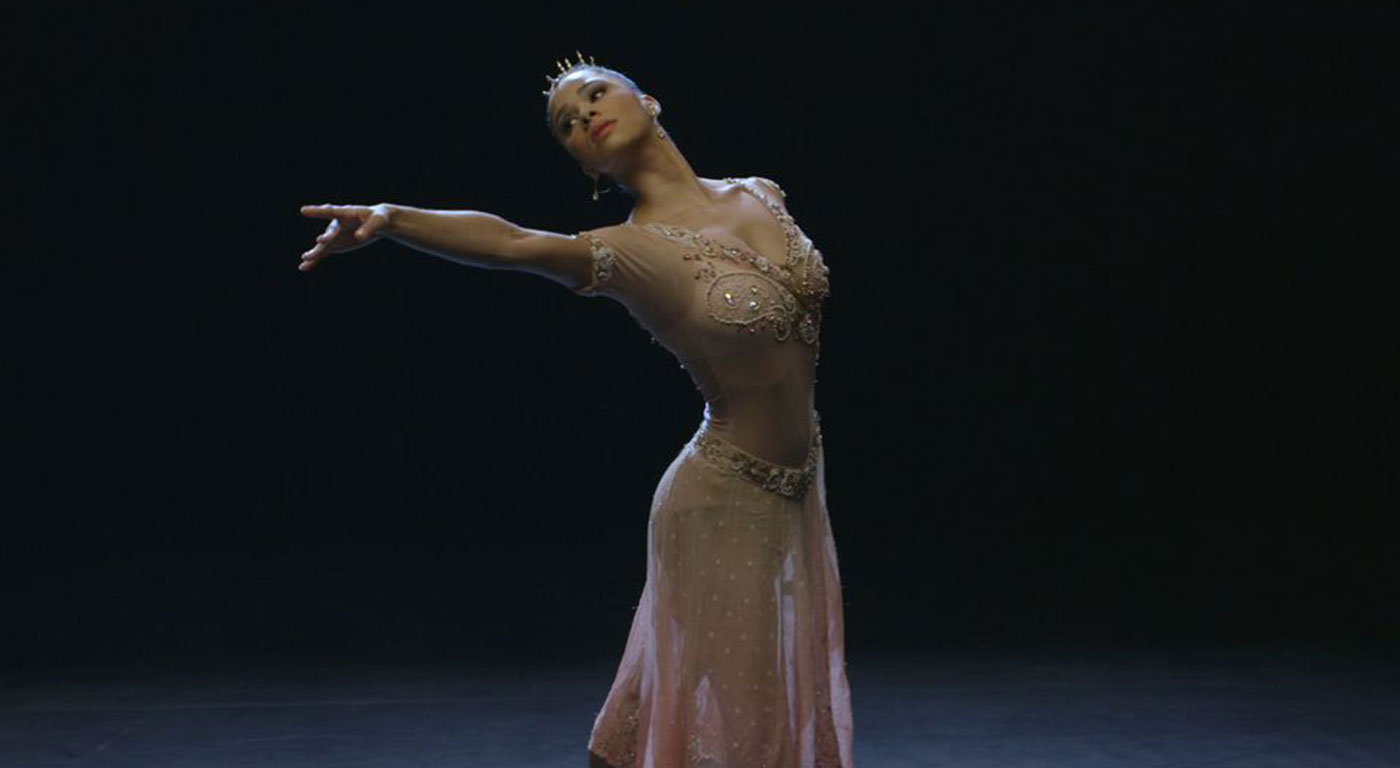
“A Ballerina’s Tale” — the title suggests a fairy story, with sugar plums and a happily ever after ending. But this documentary about Misty Copeland is a story about the brutal hard work and resolve necessary to create those exquisitely graceful performances and make them look effortless. Like the Venus and Serena documentary about the superstar tennis champions, this is a story of an African-American pioneer in a world that has traditionally been white. While ballet does not offer a competition as definitive as a sporting event, like the Williamses Copeland has a level of ability, skill, and dedication that made it impossible to put her anywhere but front and center.

And, like the Williams sisters, Copeland is in a field where people in their 20’s and 30’s may be at the end of their careers. Furthermore, like the Williams sisters, Copeland faces an unexpected health crisis that put her ability to continue at risk. Just as she was given the chance for her first lead role, Copeland found that she had a severe stress fracture in her lower leg. She was 29 years old, and did not know if she would ever dance again.

This is a good movie about a subject and a person who deserve a great movie. The drama is compelling, although it is hard to see an ad campaign as the triumph it expects us to cheer. The best parts of the movie are Copeland’s performances, starting with home video footage at the beginning, going back to when she was in her teens. Her grace and stage presence are there from the beginning. We see her stand in her favorite spot in the practice room, admitting she is a perfectionist. We learn a little about the relatively recent but still-prevalent notion that a ballet dancer should be waiflike and prepubescent-looking and as indistinguishable as possible from the other dancers. Copeland has a strong, healthy body, curvier than the typical principal dancer. And she is black. The film’s most touching moments are when the previous generation’s African-American dancers become her mentors, and we see in their eyes, faces, and still-graceful gestures how much it means to them that she may be able to go farther than they did. If this is a fairy tale, they are the fairy godmothers.

Parents should know that this film has frank discussions of racial prejudice and an injury with brief graphic images.

Family discussion: What other fields are as demanding as ballet? What did Misty Copeland learn from the women who went before her?

If you like this, try: “First Position,” “Pina,” and “Ballet 422”

Related Tags:


Documentary Movies -- format Race and Diversity
THE MOVIE MOM® is a registered trademark of Nell Minow. Use of the mark without express consent from Nell Minow constitutes trademark infringement and unfair competition in violation of federal and state laws. All material © Nell Minow 1995-2026, all rights reserved, and no use or republication is permitted without explicit permission. This site hosts Nell Minow’s Movie Mom® archive, with material that originally appeared on Yahoo! Movies, Beliefnet, and other sources. Much of her new material can be found at Rogerebert.com, Huffington Post, and WheretoWatch. Her books include The Movie Mom’s Guide to Family Movies and 101 Must-See Movie Moments, and she can be heard each week on radio stations across the country.

Website Designed by Max LaZebnik