Sports psychologist David L. Cook wrote a book called Seven Days in Utopia: Golf’s Sacred Journey about a young golfer who runs away after a meltdown at a big tournament, gets stuck in a small town, and meets a mentor who was once a champion and teaches him important lessons that he takes with him back to the next competition.
It’s still a good story. And I give Cook and co-writer/director Matthew Dean Russell credit for avoiding some of the usual sports-as-metaphor details. They refrained from making their main character spoiled or hot-headed. Even more unusually, they refrained from making his father a monster. Both are well-intentioned but misguided. This eliminates the easiest routes to dramatic intensity but demonstrates a confidence in the characters that is most welcome. It would be too much to say that adds subtlety to the story. This story is not subtle in any way; its biggest failing is that it does not trust its audience enough. It hammers its points home and then does it a few more times, and then a few more, just to make sure. If only the filmmakers had trusted their audience as much as the movie’s teacher trusts his student.
Lucas Black (“Cold Mountain,” “Friday Night Lights“), who co-produced, plays Luke Chislom, a young golfer who has been driven all his life by his father. When they get into an argument on a crucial shot in an important competition, Luke’s father walks off the course and Luke snaps his club in half and runs away.
Swerving to avoid a cow in the road, Luke crashes his car into a fence in the small town of Utopia, Texas. While the car is being repaired, a local rancher named Johnny Crawford (Robert Duvall) offers to give him some golf lessons to help him “find his game.” In true Mr. Miyagi “wax on, wax off” fashion, many of these lessons do not involve hitting a golf ball with a golf club. They are lessons about focus, faith, patience, confidence, and grace. They have Luke pitching washers, taking the controls of a plane, painting a picture, and literally burying the lies that hold him back. And there’s a pretty girl in town who is training to be horse whisperer and seems to know something about whispering golfers as well.
Black is an engaging performer and he and Duvall have an easy, natural quality together and many scenes have a refreshingly quiet quality, not so much of volume but from a spirit of humility and sincerity. Luke is a good kid, open to learning but not naive, and the film will reward those who are willing to give it a chance.
What does it feel like to have your story turned into a movie?
It’s really special. You can’t really put words to it. Life changes on a razor’s edge. One day, I was just living life in Utopia and the next day I happened to notice a hand-written sign on a half piece of paper on a bulletin board in the cafe that said Utopia Driving Range next to the cemetery and it said, “Come Find Your Game.” It intrigued me so I went out there and I found this beautiful cemetery with oak trees and a rock wall around it, and about ten steps outside of it were three pieces of astroturf, really bad golf balls, and a bunch of weeds and a pasture on the other side of a barbed wire fence, and this was what they called the driving range. It was pathetic!
I felt like this was the place where the Lord said, “Write a book.” I went home, got my computer out, on the porch of an 1874 farmhouse and began to write. My fingers didn’t stop for hours. This story came pouring out. One day before, I was just walking around Utopia. The next day, I’m in the middle of writing a book. Now, five years later, we’re sitting here talking about a movie with Robert Duvall.
It’s unbelievable how all that happened. But God has a purpose and a calling and we know that, we step into it and he gets the glory. It’s a great adventure.
I’m very intrigued by the idea of “Come Find Your Game.” Tell me more about that.
In the book and the movie, the mentor challenges this young kid who’s shown up having had a horrible meltdown in his life, in the middle of a golf tournament, in front of lots of people, and driving out into the middle of nowhere, this little town of Utopia and he meets this old rancher who says, “Spend some time with me and you’ll find your game.” He didn’t really know what it meant, but in the end he learns that life is much bigger than golf. The rancher will teach him about golf but all along he’s really weaving in principles about life. “I’m going to help you find your life.” Finding your game really is: What is your true purpose and calling? Are you allowing your talents to come out? Are you giving God the glory?
Why are sports such a powerful metaphor for the things that are meaningful to us in life?
People love sports because of the competition, because there’s a tangibility — success, failure, there’s a score. You can see improvement. And they like it because it takes them out of their everyday life. In the midst of sports you see these stories unfolding that mimic life. It’s kind of a microcosm, a way to look at life through a two-hour game or a World Series.
Is golf especially spiritual?
No. God created the universe and all its elements. Nothing is more spiritual than anything else. But you find that when you walk with God in every aspect of life, the parables that unfold in front of your eyes — God goes with you into that, whether it’s bowling or golf or curling or football. When we take Him with us and use the gifts and talents that He gives us within that, it’s all a spiritual experience. Every moment, every step we take, every breath we take is an opportunity to move closer to God or away from God or to help others move closer or away from Him.
What have you heard from those who have been influenced by your book?
Someone’s life is literally touched by the words that come through someone else’s hands. I scribed this. I’m not smart enough to write some of the things I’ve found embedded in this story. I’m just scribing it. When other people say it means something to them and affects their life — that’s pretty amazing.
There’s a women’s prison in Ohio where a lady was teaching a Biblical Principles class. She took the lesson of the “buried lie” from the book to ladies who have never played golf, never will play golf, probably never step on a golf course. They went out into the recreation area with the plastic spoons from their lunch and began to dig holes for their lies to change their lives, give all their false identities away. She said a revival broke out with all the other inmates around them, singing praise songs and crying.
Golf is unusual because there’s no referee.
Golf is supposed to be that place where we self-police and you do get those characters who put down the wrong score or kick the ball with their foot. That is just hilarious.
How did a small town in Texas get the name Utopia, which means an ideal community?
A guy named Captain William Ware started this town and named it after himself. The cemetery is still called “Waresville.” It’s in a valley with a crystal clear river that flows through here and mountains in every direction. They’re Texas mountains — they’d be called hills anywhere else! It’s just a really, really beautiful spot. After Ware died, it began to be called Utopia. I don’t know if that meant they didn’t like him or they just liked the name. It’s close to Utopia — except that it’s 104 degrees today!
Are many people afraid of success?
Yes, yes. There’s two fears, one’s the fear of failure and the other is a fear of success. You look at Tiger Woods — who would want to be that? Media sets up the superstars for the great fall. A lot of people at every different level shy away from being all they can be because they know the perils of the limelight.
Who have been your greatest teachers?
A gentleman named Johnny Arreaga was my childhood mentor and golf pro. He would hit a really great shot, and he’d turn and put his club back and say, “Picasso.” One day, when I was 14, I asked, “What do you mean, Picasso?” So he says, “Cookie, for every shot you’ve got a blank canvas. You’ve got to create a masterpiece in your mind’s eye before you ever take the shot. When I hit a shot, I sign it: Picasso. You have to make up your mind. If you don’t create a masterpiece in your mind before everything you do in your life, you will have a lifetime of unfulfilled stick-figure outcomes.”
It is a rare film about faith that is sincere and respectful in its appreciation for believers and those who struggle to find a connection with God. We first see Corinne as a little girl in church, shyly raising her hand when the preacher (Bill Irwin) asks the children to close their eyes and put their hands up if this is the day they will open their hearts to Jesus. As a teenager (played by Farmiga’s younger sister, Taissa), she becomes pregnant and marries her musician boyfriend. After a near-death experience, he becomes a believer and they join a community of Christians who live simply and support each other. Corinne’s closest relationship is with her friend Annika (Dagmara Dominczyk), and is inspired by Annika’s ability to be passionate in all of her relationships, including her connection to the Almighty.
Corinne struggles to find that kind of passionate transcendence, but she feels constrained when her preacher’s wife gently chides her for impinging on worship that is reserved for men and for wearing a dress that shows her shoulders. She prays for a certainty and completeness in faith that she sees around her but cannot achieve. Just as her husband’s faith is cemented by a tragedy averted, hers is tested to the breaking point by a loss she cannot understand.
As a director, Farmiga allows us to share privileged moments with Corinne and the other characters and as an actress, she glows with the humility and honesty of her seeking. Her quest, which clearly is continuing as she stands on the threshold at the end of the film (and as we know she will go on to write her book) is itself a form of prayer, as is this movie, a reaching out for understanding and and openness that makes faith a continual source of renewal.
Vera Farmiga (“The Departed,” “Up in the Air”) directed and stars in a new film based on the memoir by Carolyn S. Briggs, Higher Ground: A Memoir of Salvation Found and Lost. As she spoke to a small group of reporters in a Georgetown hotel, it was clear that she shares her character’s passionate yearning for an intimate connection with the Almighty.
I began by asking her about her character’s hair, which seems to reflect not just the changing fashions over the decades covered in the film, but her spiritual and emotional state as well. “It was three different time periods. The church changes. It goes from worshipping outside to worshipping in basements, hallways, annexes, to a proper, steeple-topped church. As the hippies turn into yuppies, so do the hairstyles. Her hair starts off wild and carefree and long and tangled. And passionate. And then there are the trials and tribulations and ebbs and flows of her path, and she engages in spiritual warfare and her hair also has its phases. Childbirth, and then she gets shorter. We did a perm curl – it gets corrupted. It gets poisoned — by a home perm! And then by the end it’s a looser wave, gentler.”
She admitted that this book was an unusual choice for her debut as a director. “It chose me. I really feel that way. I tried to wriggle out of its grasp, several times. Every time I tried, something else would happen that made it unstoppable….It touched me in divinely mysterious ways. It slayed me in the spirit. I loved this woman’s yearning to be passionate in her faith and all her relationships. That yearning is such a holiness to me that it touched me in a very deep way. I wanted to defend her journey….It was so juicy to me….I had a lot of ideas I wanted to bring into the film, ideas about music and praise and worship and joy.” It began to come together when her mentor, Deborah Granick, agreed to advise her and John Hawkes (from Granick’s “Winter’s Bone” agreed to appear in the film. “Before I knew it, I was on the set, having to deliver the last speech first.” And after that, she relaxed and enjoyed it.
“A story about God tends to make people tremble,” she said, “as the Almighty should. We all have our personal concepts of that that means. But that three-letter word makes people quake, especially in Hollywood.” But she had the support of her producers (including her husband) who “totally vibed with my vision, no mockery or judgment, just to look at how arduous that spiritual road is, how bumpy. No matter what your religion is, what your spiritual tenets are, what your idea of God is, we’re all on the same human team, trying to transcend self and look upwards for healing and holiness.”
She spoke of learning from directors like Granik, Anthony Minghella, and Martin Scorsese about the spirit they bring to their work, “their leadership, their approach, their wholesomeness, their joy, the good cheer that they spread as they attack their missions. In order for it to be a ‘holy experience,’ everyone’s got to be invested. You have to treat them like kings and queens and show them you are truly grateful.”
Farmiga cast her real-life sister as the younger version of her character. “We have the benefit of genetic similarity, so we did not have to do much as far as matching our performances. We move in similar ways because of the house we grew up in, probably even the Ukranian folk-dancing!”
I asked her about the portrayal of the main character’s friendship in the film. “I’ve learned so much from my best friends and they demand so much of me and inspire me in the ways that make me me. The character is able to be her best carnal self and her best spiritual self because of her friendship with Annika. We wanted to make it the most passionate and pure relationship — and then it gets taken away so she can find it within herself, the same energy, the same approach with the rest of her relationships, including her relationship with God.”
The tone of the film is respectful of all of its characters and their journeys. “My heart and my intent, indigenous to my personality is not cynicism, but compassion and serenity and gentleness and respect. I’m curious, what draws me into a story is recognizing my humanity, my imperfections, telling a story about struggle. This is not a general statement about Christianity; this is a moment this woman found herself in. We are still finding our voices.”
Interview: Joseph Dorman of ‘Sholem Aleichem: Laughing in the Darkness’
Posted on August 10, 2011 at 8:00 am
The writer Sholem Aleichem was born Sholom Rabinowitz. He grew up in a Russian shtetl. Today, he is most widely remembered as the author of the stories which became the basis for Fiddler on the Roof. But a new documentary from Joseph Dorman (“Arguing the World”) called “Sholem Aleichem: Laughing in the Darkness” makes a case for the man who changed his name to Yiddish for “Hello Friends” as not just a teller of folktales but a major literary figure. Mr. Dorman spoke to me about making the film, which is opening around the country.
Tell me how you became involved with this project.
I really stumbled onto it. I am not a native Yiddish speaker, nor were my parents. Yiddish was lost in my family between my grandparents’ generation and my parents’. I finished my last film a decade ago, “Arguing the World,” and was desperately looking for a project. A friend of mine, a professor of Yiddish literature at Rutgers, suggested doing something about Sholem Aleichem. He had originally thought about doing a film himself, about Sholem Aleichem as a failed immigrant in America and he had curated an exhibit on that a few years earlier. I thought, “I don’t know much about him, I know the name from Fiddler on the Roof. This will keep me busy until I find what I want to do.”
But in a very short time it turned out to be what I wanted to do. It moved from a way station to a destination. I spent the next ten years of my life working on it and falling deeper and deeper in love with Sholem Aleichem’s work and fascinated by his world.
Why is “Fiddler” all most people know about him?
Fiddler on the Roof should have its due. It is a brilliant popular entertainment, kind of a miraculous adaptation in many ways. He did his own theatrical adaptation and really focused on the Chava story . “Fiddler” is entertainment, re-interpreted for its time. It’s a classic comedy in a sense because everything is wrapped up neatly at the end. Tevye is coming to America. But at the end of the Tevye stories, it is a tragedy in the classical sense. Tevye is homeless. He doesn’t know where he’s going. He’s like Lear. His world drops out from under him.
What’s so fascinating about the Tevye stories is that he started them when he was younger and wrote them over 20 years. His own experience informed them and they get deeper and darker as they go along. They become a tragedy, something larger about the nature of man’s alone-ness in the universe.
You were able to uncover some real treasures in your research. What were some of your “Eureka” moments?
Because of the budget I did most of the research myself. There are 300 photographs in the film and the bulk of them come from the YIVO Institute for Jewish Research. It is a marvelous repository for Eastern European Jewish life, originally set up in Vilna between the wars, when the intellectuals of the time realized that the world of the shtetl was beginning to disappear. I would go there and keep looking through there — half the reason for doing a film like this is to get a chance to look at the treasure trove of these photos.
There are a number of photographers. One of the most remarkable was Alter Kacyzne. He was a writer, a protégé of one of the other classic Yiddish writers, Isaac Leib Peretz of Warsaw. He took photographs for the Jewish Daily Forward in the 20’s and 30’s. Even then he was photographing in a nostalgic way for an audience that had been separated form it. People didn’t want to see it as it looked at this moment. They wanted to see the eternal shtetl. Religious Jews are shot as they had been for centuries rather than trying to capture that moment in time.
Another man I don’t know much about is Menakhem Kipnes, who also has wonderful portraits. The last great discovery — and it wasn’t my discovery — was that I found out through one of my interview subjects was about a series of photos from the expedition of an ethnographer called An-Sky. He’s a remarkable figure, born in a shtetl, who became radicalized and a socialist. He decided what he wanted to do most of all was to leave the shtetl and study Russian coal minders. He moved to St. Petersburg, continued to be a writer and an intellectual, and it was probably the post-1905 pograms that radicalized him as a Jew. He realized he needed to turn his talents toward his own people. He realized that the shtetls were rapidly changing and so he organized ethnographic expeditions, recorded songs, and took along his nephew to take these remarkable, remarkable photos. Until the last few years, they’ve been unknown in the West. Now they’ve been published in a beautiful book. They are some of the most beautiful photos in the film. An-Sky was also the author of the famous Yiddish play, The Dybbuk.
The sad irony of Yiddish and its fate in the modern world is at the very moment that writers like Sholem Aleichem were bringing it to its literary flowering, taking this thousand year old language which had been looked down on as a street language or a language for women, not working of intellectual vehicle or a vehicle for literature — that was supposed to be Hebrew — at the very moment that writers were using it in all its richness, that was also the very moment it was ceasing to be the vernacular of the Jews. 90 percent of Jews in the world at that moment were speaking it but that was beginning to change as the Jews were leaving the shtetls to go to America or the big Russian cities or to Palestine. An amazing flowering was taking place over 100 years with Isaac Bashevis Singer at the end. This remarkable literature was produced, but it has been by the bulk of Jews forgotten, not just lost in translation but in the movement of Jews but their assimilation into other cultures. It’s a living language for Chassidic Jews, but not for anyone else. What’s nice about what’s happening is that generations younger than mine are realizing what’s been lost and there’s kind of an upsurge now and younger generations are studying it and learning it and that is wonderful. But it is not going to be a living language for secular Jews again. What is important about what Aaron is doing is the importance of being able to read this literature in whatever language you speak. Aaron is very committed to preserving those Yiddish books for Yiddish speakers but even more important is preserving Yiddish language and Yiddish culture whether you speak it or not.
We do speak it in a certain way because it is the ghost in our machine. It informs even the English we speak. One of the most beautiful things I heard was from a young Russian student who said, “It didn’t feel like I was learning Yiddish; it felt like I was somehow remembering Yiddish.”
In this film you make a strong case for Sholem Aleichem as not just a folklorist but a literary figure.
He is the equal of a Chekhov or any other great writer. This is top shelf world literature. It does not have to be couched in cultural terms to make him an important writer. Another irony that exists is that he was trying to reach not an illiterate but an uneducated audience. He created a folksy persona so undeducated people could relate to him. But very sophisticated literature. The very success of that persona masked how sophisticated and intentional an artist he was. He is thought of as a stenographer who wrote down what people spoke. But he took what seems to be everyday language and transmutes it to poetry. He is a great of world literature. Comedy is deceptive. If you laugh, how can it be serious? But of course it can be.
The stories are very particular to their place but the themes have universal appeal.
There are stories about fathers and daughters all over the world. There’s an annual yahrzeit, a memorial for Sholem Aleichem every year. At the last one, there were five men from China who are starting a Sholem Aleichem research center in Shanghai. As the Chinese leave the small towns for the big cities now, they are experiencing what he wrote about.



 by Carolyn S. Briggs.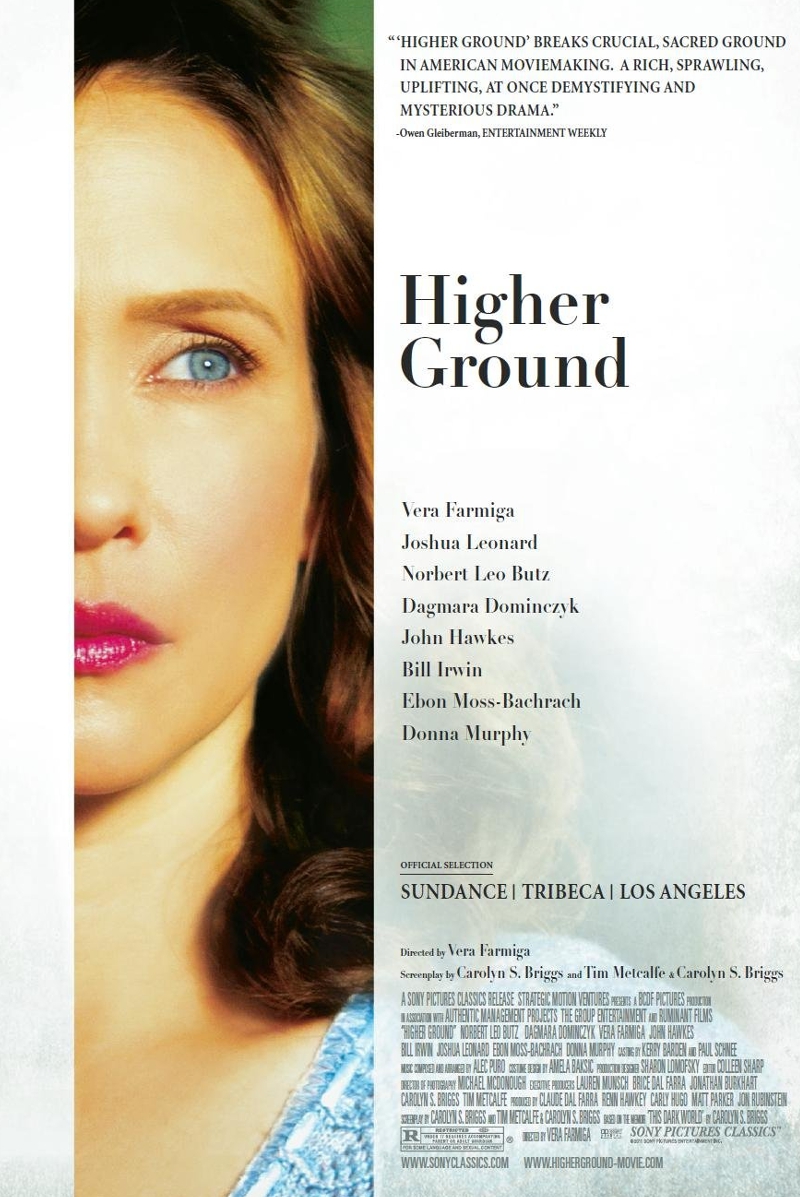
 . But a new documentary from Joseph Dorman (“Arguing the World”) called “
 . They are some of the most beautiful photos in the film. An-Sky was also the author of the famous Yiddish play,
  .
. at the end. This remarkable literature was produced, but it has been by the bulk of Jews forgotten, not just lost in translation but in the movement of Jews but their assimilation into other cultures. It’s a living language for Chassidic Jews, but not for anyone else. What’s nice about what’s happening is that generations younger than mine are realizing what’s been lost and there’s kind of an upsurge now and younger generations are studying it and learning it and that is wonderful. But it is not going to be a living language for secular Jews again. What is important about what Aaron is doing is the importance of being able to read this literature in whatever language you speak. Aaron is very committed to preserving those Yiddish books for Yiddish speakers but even more important is preserving Yiddish language and Yiddish culture whether you speak it or not.