The Shack

The Shack

Posted on March 2, 2017 at 5:57 pm

B
Lowest Recommended Age: Middle School
MPAA Rating: Rated PG-13 for thematic material including some violence
Profanity: Mild language
Alcohol/ Drugs: Alcoholic parent
Violence/ Scariness: Tragic murder of a child, domestic and child abuse, gun, possible attempted suicide
Diversity Issues: Diverse characters
Date Released to Theaters: March 3, 2017
Copyright Summit 2017

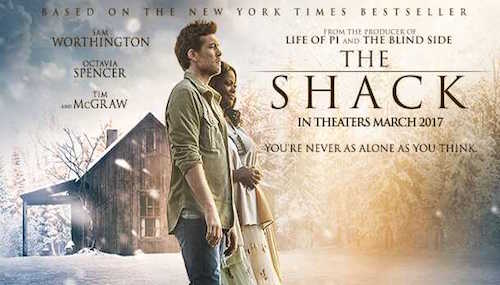
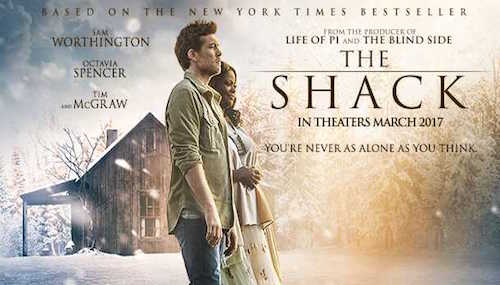
“The Shack,” based on the best-seller by William P.Young seeks to provide comfort and healing for those struggling with a terrible loss and with something even worse — the fear that tragedy has no purpose and the doubt that pain engenders about whether life makes sense. Can there be meaning in a world of senseless tragedy, where the innocent suffer? The book‘s subtitle is Where Tragedy Confronts Eternity, and it is somewhere between a parable, a fantasy, and a story about a man devastated by grief who spends a week in a shack in the woods, talking to God.

While some people, including some Christians, will find the theology of this story questionable, it presents an accessible and comforting notion of God’s love and the healing power of forgiveness.

Sam Worthington plays Mackenzie, a loving husband and father of three children who still struggles with his memories of his abusive father, a man of “calloused hand, rigid rules” and alcoholism. “Pain has a way of twisting us up inside and making us do the unthinkable,” and “the secrets we keep have a way of clawing themselves up to the surface.” (It is not clear exactly what the most painful secrets are but it seems possible he murdered his abusive dad?)

Mack takes his children on a camping trip, where his youngest daughter Missy is kidnapped and brutally murdered while he is rescuing his son, trapped under an overturned canoe. Mac, who had always been surprised and touched by Missy’s simple faith in a God she felt close enough to that she referred to Him as Papa, is shattered by guilt and grief. Even though he sees the pressure it puts on his family, he cannot break out of his isolation.

When his family is away, Mack finds a note in his mailbox, though there are no footprints in the snow. The note is signed “Papa” and it invites him to come to the woods, to the very shack where Missy’s bloody dress was found.  Although he dreads returning to the place of his crushing pain, he goes, and it is there he meets the Trinity. God, known as Elousia, I Am, or Papa, is in the form of an African-American woman who was a kind neighbor in his childhood and who wears Ma Griffe, the perfume he mother loved (Oscar-winner Octavia Spencer). She says he will be most open to her in the form of a mother, and apparently one who loves Neil Young.

God’s Son is in the form of a young carpenter who can walk on water and run on it, too (Avraham Aviv Alush), and the Spirit is known as Sarayu (Sumire Matsubara).  

They live in a Kinkade-like Eden, filled with warmth, light, nature, good food, and laughter.  Very gently, they guide him to an understanding that God’s love does not mean freedom from pain, but a sharing of that pain that can help him forgive and help make his spirit whole.

Some believers will dismiss this as “comfort food Christianity.” The Son actually says that religion is too much work. “I don’t want slaves; I want friends,” and he himself is “not exactly a Christian.” Papa tells him, “I can work incredible goodness out of unspeakable tragedy, but that does not mean I orchestrate the tragedies.”

But its idea that God loves us enough to reach out to every one of us in our the way we are best able to understand is genuinely touching. The insights Sam reaches about forgiveness and healing could be arrived at via psychotherapy or a number of other ways, but for this man — and this audience, the message is meaningful and touching, and a good reminder that patience and forgiveness are always worth making time for, and that every act of kindness changes the universe.

Parents should know that this movie concerns the brutal kidnapping and murder of a child, with images of her bloodied dress and dead body, a gun and possible attempted suicide, as well as depictions of wife and child abuse and alcoholism.

Family discussion: Why is it important to learn to forgive, even when the transgression is evil?  How did each member of the Trinity teach Mack a different lesson?

If you like this, try: “What Dreams May Come” and “Henry Poole is Here”

Related Tags:


Based on a book Drama Movies -- format Spiritual films

Interview: Arthur Rasco on the Ebola Documentary “Facing Darkness”

Posted on February 27, 2017 at 8:00 am

Arthur Rasco  directed the extraordinary documentary “Facing Darkness,” about the efforts of the humanitarian group Samaritan’s Purse and their fight against Ebola, one that became very personal when their own doctor and nurse, Kent Brantly and Nancy Writebol, became infected. It was an honor to speak to Mr. Rasco about the film.

When did you start filming? It seems like you were there right from the beginning.

Samaritan’s Purse has been covering the Ebola epidemic since 2014. We have people on the ground in Liberia and some of those folks had cameras and were filming. The Deputy Country Director, Joni Byker, was filming, trying to get some clips and we were trying to get a video team off the ground to go but then late July happened and Dr. Kent Brantly was diagnosed with Ebola. And then so that changed things dramatically and then all of a sudden that threw all of us into a tailspin so it was all hands on deck to try and take care of Kent and Nancy Writebol. So we filmed bits and pieces along the way as we could, their arrivals at Emory, and then we did send our crews back in late October 2014. Once we re-engaged and sent supplies to the airlift with two 747s loaded with supplies, we sent a video crew. And then we were green lit to do the documentary in about April 2015, so that’s when we really begun in earnest putting together the film. The film will be in theaters on March 30, 2017.

How did you shape your production schedule and your approach as the story developed?

We had a great team that was involved in putting the film together. I’m just one piece among a great team of people here at Samaritan’s Purse and so we documented quite a bit of the stories of several people that had been involved. Some of the people like Bev and Kendell Kauffeldt and Dr. Lance Plyler we debriefed and recorded those interviews. So we had an idea of how we wanted to shape the story and then you go and you go there on the ground and then you also start meeting people like the nationals, the Liberians who had such amazing stories that we were able to work into the film.

We talked to people like Joseph Gbembo who lost 17 family members. We knew that he had lost quite a few and when we were interviewing him and then he says in the film, “When I look at the kids, the nieces and nephews, the children of those family members that passed away that gives me hope.” Okay, how many are we talking about? And then he says, “16.” And that moment was just so real and so we put that into the film just as it was because it was just such a dramatic earth shattering moment for all of us. We didn’t quite know that aspect of the story and so that was just amazing. Meeting people like Barbara Bono, who was a Liberian Ebola survivor and having her tell the story was just so powerful. Filming many interviews with everybody, I am crying and all of us are just in tears as we’re hearing the stories of what she went through and what she was afraid of during the time.

How do you maintain the distance that you need in order to make the film and yet to reach out to them as a human to get them to open up the way they do?

Well, I don’t know if I’m too good at keeping distance. I really enjoy and I want to engage with the folks, with people because their stories are just so amazing, they have been through some things that I am just trying to reflect, I’m just trying to share. I wasn’t able to be on the ground in 2014 when all of this happened and yet you know that these folks have been through something pretty earth shattering and so you want to respect that and you want to be able to let them tell their story openly and honestly. And so I laughed at when they laughed, I cried when they cried. I’m just trying to have them tell their story.

In America people went a little crazy on the subject of Ebola and didn’t listen to what the experts and the scientists had to say about the threat that it posed. How did that complicate things to bring back Kent to the US in the midst of all of that fear?

We as an organization as Samaritan Purse knew that we had to do everything, all that was possible to try and take care of Kent and Nancy. As you saw in the film it’s just a miraculous set of events that’s really unfolded. You almost can’t write this as a script. You just see God working in these ways. We took all the precautions that we could and Samaritan’s Purse put in place its own set of protocols to try and take care of our remaining staff. We were in touch with the CBC during this time, too. They gave us their instructions and we said, “Well, we’re going to step it up a notch because we want to keep our people safe and do the best that we can.”

What do you want people to learn from the film?

Our hope is that this is a story that will inspire young people, inspire a new generation of missionaries to set out in bold faith and go out to the mission field, to go out and serve, and serve in the name of Christ and putting their life on the line if that’s what they are called to because that’s where the need is. The need is out there and you can go out, you can make a difference. And that’s what the movie is about right? It’s letting compassion fuel a courage that will conquer fear and so that’s what we want to be able to do to encourage, to inspire a new generation of missionaries to head out there. I hope that people will feel challenged after watching this movie.

Related Tags:


Documentary Illness, Medicine, and Health Care Interview Spiritual films

WIN FREE TICKETS to see “The Shack” — Based on the Faith-Based Best-Seller

Posted on February 23, 2017 at 10:44 pm

If you are in the Washington DC area, you can win two free tickets to see “The Shack” at a special premiere on March 2, 2017. The movie is based on the best-seller about a grieving father who receives a mysterious invitation to explore the timeless question “Where is God in a world so filled with unspeakable pain?” The film stars Sam Worthington and Octavia Spencer.

The Premiere Night showing includes a Special Celebration after the film, Featuring exclusive cast interviews, behind the scenes footage, and a special musical performance by Dan & Shay (who are also hosting).

To win tickets, send me an email at moviemom@moviemom.com with “Shack” in the subject line. Four winners will each get two tickets to attend the screening. Good luck!

Related Tags:


Based on a book Contests and Giveaways Spiritual films
The Resurrection of Gavin Stone

The Resurrection of Gavin Stone

Posted on January 19, 2017 at 5:39 pm

Copyright BH Tilt 2016

A spoiled former child star makes some bad choices and ends up sentenced to 200 hours of community service as a janitor in a church, where he is cast in the annual Easter passion play — as Jesus — in the light-hearted Christian romantic comedy “The Resurrection of Gavin Stone.” Handsome “Agents of S.H.I.E.L.D” star Brett Dalton stars in the title role, with stand-up charmer and “MADtv’s” Bon Qui Qui Anjelah Johnson-Reyes as Kelly, the by-the-rules preacher’s kid who directs the play.

We get a glimpse of Stone in his cute sit-com years, catch phrase and all, and then a look at some wild partying with a side of mayhem when he happens to be back in his home town. And so, with the sentence of community service and not being in demand any more as an actor, he has no choice but to move in with his estranged dad (“The Middle” and “Scrubs” star Neil Flynn) while he works it off, with the 200 hours counting down on his phone.

He shows up at the church, looking dissolute and louche, and asks the man fixing the furnace where to find the pastor. Of course that is the pastor (“The Cutting Edge” star D.B. Sweeney). He not unkindly hands Gavin a mop and bucket — the sharper sting is that he doesn’t recognize Gavin or know anything about his fame. The 200 hours seems like forever.

But then Gavin sees the auditions for the play and suddenly he is at home. He explains that he knows about acting and wants to try out for the lead role. It’s a lot easier than mopping, and, at heart, he really is an actor, as we see when he chooses a surprising speech for his audition — a monologue from “Hamlet” — and performs it surprisingly well. He lies and says he is a believing Christian. Kelly is pretty sure that is not true but casts him in the role of Jesus because he is a good actor and because her father reminds her that they believe in second chances.

Gavin is humorously ignorant about the details of the story and at first impetuously offers to improve the script. But as he plays the role and is inspired by the faith and kindness of the people around him, he reconciles with his father, makes new friends, begins to fall for Kelly, and looks forward to the performance — until his dream job offer comes in and in order to take it he has to leave right away.

The sweet story has no surprises, but the humor and the very capable and appealing cast — including Shawn Michaels from the WWE, which co-produced the film — make it fun to watch, and make it touching as well.

Parents should know that this film includes some bad behavior and mayhem and a passion play with a bloody crucifixion image.

Family discussion: Why did Gavin make so many bad choices? What surprised him about the people in the church?

If you like this, try: “Brother White” and the church/study guide resources made available for the film.

Related Tags:


Comedy Date movie Romance Spiritual films
Silence

Silence

Posted on January 5, 2017 at 5:27 pm

Copyright Paramount 2016
Like Joseph Conrad’s Heart of Darkness and Francis Ford Coppola’s Vietnam-era adaptation, Apocalypse Now, Martin Scorsese’s “Silence” is the story of men who take a journey to find a former leader who has disappeared into the untamed natural world.

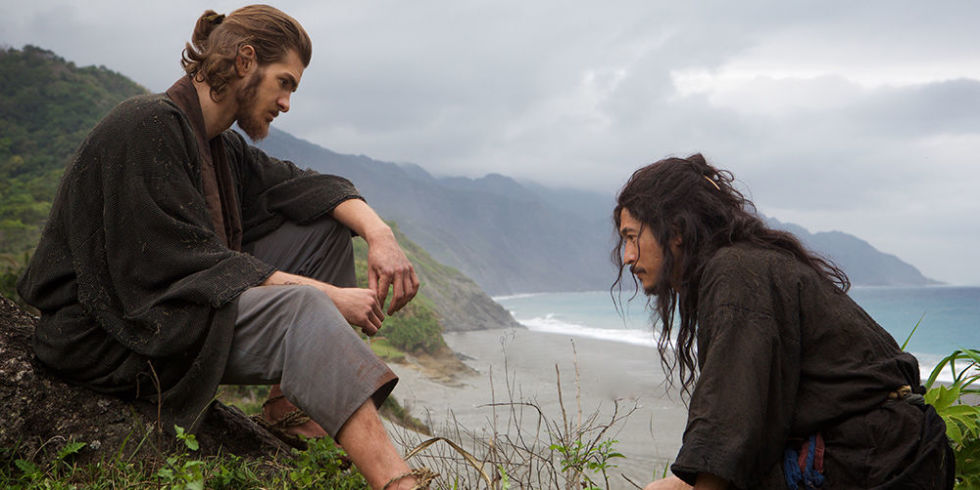
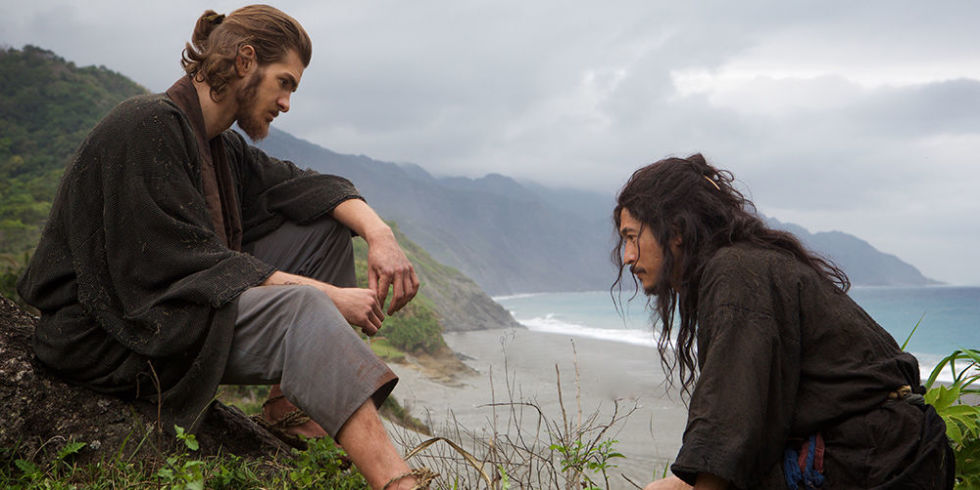
It is the mid-17th century. Two Portuguese priests, Father Rodrigues (Andrew Garfield) and Father Garrpe (Adam Driver) go to Japan in search of their teacher and mentor, Father Ferreira (Liam Neeson). After receiving disturbing reports that he has publicly abandoned his faith, they say, “We have no choice but to save his soul.” They leave with “no luggage except our hearts.”

Ferreira had gone to Japan as a missionary and he and his colleagues had some success in converting Buddhist peasants. But Japan has now outlawed Christianity in any form, and as we see immediately, the officials have decided that the best way to eradicate it is to torture believers, forcing the priests to watch. Early efforts to fight Christianity failed because killing the priests made them martyrs, showing the strength and power of their faith when they refused to renounce it, even under torture. So the officials responsible for eradicating Christianity have had to develop a more subtle approach. Instead of torturing the priests, they torture and murder their followers, telling the priests that all they have to do to stop it is recant. It can be as simple as putting a foot on an icon of Jesus. “It’s a formality,” the Japanese official says in a soothing voice. “You don’t have to believe it.”

The priests have a choice: deny their faith in Jesus and Christianity or allow the suffering and death of innocent people. What should they do? Who has the answer?

For Martin Scorsese, who co-wrote and directed, this movie has been a passion project for three decades, since he read the award-winning novel by Shusaku Endo, inspired by the true stories of 17th century priests in Japan. Scorsese, who once thought of becoming a priest grapples here with the big questions about the letter and the spirit in the context of a time and a faith that traditionally has put a lot of emphasis on the letter as a frame and a discipline for the spirit. It is also a faith tradition that understands suffering as a part of faith practice, whether a way to appreciate the suffering of Jesus or to test one’s faith or to better understand others’ experiences, or to earn the rewards of heaven. The gorgeous visual scope and striking images are as powerful in telling the story of the clash of culture and religion as the narrative.

When it comes to performances, the film is off-balance, probably unintentionally, as the Japanese characters are more complex and completely realized than the one-dimensional priests. Garfield seems at sea as an actor, not just as a character, except in a few scenes where he has a chance to debate the “Inquisitor” (a wry, clever Issey Ogata). This movie about silence is at its best in the verbal jousting on faith, culture, truth, and power.

Translation: Extremely tense scenes of torture and brutality with some very disturbing graphic images, characters injured and killed

Recommendation: Mature teens-Adults

Family discussion: Were you surprised by the final shot? In the debate with the Inquisitor about culture and faith, who was right?

If you like this, try: “Unbroken” and “The Last Temptation of Christ”

Related Tags:


Based on a book Epic/Historical Spiritual films
THE MOVIE MOM® is a registered trademark of Nell Minow. Use of the mark without express consent from Nell Minow constitutes trademark infringement and unfair competition in violation of federal and state laws. All material © Nell Minow 1995-2025, all rights reserved, and no use or republication is permitted without explicit permission. This site hosts Nell Minow’s Movie Mom® archive, with material that originally appeared on Yahoo! Movies, Beliefnet, and other sources. Much of her new material can be found at Rogerebert.com, Huffington Post, and WheretoWatch. Her books include The Movie Mom’s Guide to Family Movies and 101 Must-See Movie Moments, and she can be heard each week on radio stations across the country.

Website Designed by Max LaZebnik