Some tense scenes of anxiety, hurt feelings, and shyness, some mild action scenes and peril (Snoopy’s flying ace battles)
Diversity Issues:
None
Date Released to Theaters:
November 6, 2015
Date Released to DVD:
February 29, 2016
Amazon.com ASIN:
B018WXLHVM
I admit that I approached this film with some of the same trepidation Charlie Brown approaches the football, knowing Lucy’s history of pulling it out of the way at the last second. I’m a fan of Charles Schultz’s original comic strip and fond of many of the animated specials and features that were careful to preserve the simplicity of his aesthetic. I was concerned that a more fully-animated version (in 3D!) would drown out the gentle storylines. But Schulz’s family has been careful to preserve his legacy. The script is co-written by his son and grandson and is timed to appear on the 65th anniversary of the strip and the 50th anniversary of the classic “Charlie Brown Christmas” special. And Blue Sky (which made the “Ice Age” and “Rio” movies) understands the material and its audiences — the older generations who are attached to the original version and today’s children, who are new to these characters.
The brightly colored, rounded figures were easier to get used to than I feared. The iconic details — Charlie Brown’s yellow shirt with the brown zigzag (it turns out he has a whole closetful) and wisps of hair are familiarly iconic. It’s not a period piece but there is a timeless quality. Phones are corded landlines. We never see a laptop and no one ever checks Google or GPS. Indeed, one of the most important items in the story is a pencil. It has glitter and a feather decorating it, but it also has the teeth marks of its sometimes nervous owner, and that is something you won’t find on a smartphone.
The movie does not commit any serious blunders. There are pleasant moments and welcome echoes of the past, but it does not justify its existence by adding anything of value to the canon already available. The first and best of the television specials, A Charlie Brown Christmas, is less than half an hour long, but it has more wit, charm, poignancy, than this feature film, and it includes one of the most beautiful holiday songs ever written, the piercingly bittersweet Christmastime is Here. In almost two hours, this film has time for just a snippet, to make room for inferior contemporary pop songs. A joke about “merch” seems ill-advised given the strip’s history of selling its characters for everything from insurance to toothbrushes.
The film begins promisingly, with Schroder playing the studio’s theme music on his piano and an immersive soft, gentle snowfall. It’s the most joyous day of the year — a snow day — and we meet the characters as they wake up and choose the winter activities they most enjoy. Charlie Brown decides it is a good time for him to try the kite again, figuring that the “kite-eating tree” will be out of commission in winter. It does not go well. Once school is back in session, a new student arrives, a girl with red hair, and Charlie Brown is smitten — and terrified. How can he impress her?
The Schulzes are true to the spirit of the original. We squirm with Charlie Brown as he agonizes over his insecurity, especially when he is faced with a dilemma at the school talent show and when he is awarded an honor it turns out he did not deserve. The sections with Snoopy’s Red Baron fantasy are of less interest and appeal and the 3D effects and the talents of top-tier musical stars (Trombone Shorty playing the “waa waas” for the adult voices and Kristen Chenoweth as Snoopy’s daring aviatrix love interest) are underused. The best use of this film is as an introduction to the classic television specials — and the original comic strips that inspired them.
Parents should know that this film includes some tense scenes of anxiety, hurt feelings, and shyness, and some mild action scenes and peril (Snoopy’s flying ace battles).
Family discussion: Which character is most like your friends? Which would you most want to be like? Why don’t we hear the grown-up voices?
If you like this, try: The Peanuts comic strip collections and the television specials.
Interview: Writer-Director Carmen Marron of “Endgame”
Posted on September 23, 2015 at 3:18 pm
“Endgame” is a heartwarming family film inspired by the true story of a championship middle school chess team from a school in a poor Texas community. It stars “Modern Family’s” Rico Rodriguez and two actors from “Napoleon Dynamite,” Efran Ramirez and Jon Gries. Writer/director Carmen Marron talked to me about why it was important to her to tell this story.
How did you first hear about this chess team?
It was like three years ago actually I was working on another project and one of the producers on the other project was approached by the executive producer of “Endgame.” He knew her; they were both from Texas. He started writing a script about the story of what was going in Brownsville and he was like, “I would really like to make it into a movie and can you help me with that?” It was low-budget, they didn’t have much money. So she knew what I did with my first film, Go for It, that I basically put together myself. And she said, “Look, this is what you like to do, an inspirational movie, a movie that can help motivate youth and women in our society. This story might be up your alley. Would you be willing to jump on board and help make it happen?” I felt like it was going to be a lot of work and at the time it was not my priority. But then I researched it. I researched it online about the community, about Brownsville, about the teacher and the kids and everything and I was researching it all night and by the morning I was like, “I have to make this movie. I don’t care if I do it for free at this point.”
I grew up really poor in Chicago, one of 10 kids. My dad always raised me with the belief that one person can make a huge difference and so I felt like this is the perfect example of how this teacher in the third poorest community in the time in the US really turned it around and created so much faith and hope just for the love that he had and the belief that he had in these kids. He showed that you don’t need money, you don’t need the resources if you really have that hope and he turned it all around. It was amazing! And to see these kids, and how resilient they are. It reminded me of those kids that I worked with when I was a guidance counselor. These kids are put through so much at such a young age and you see what their potential is if they have adults around them who can make them believe that what they are going through is just going to make them stronger, it’s not going to ruin their future.
Why chess?
He said that he had it in his classroom and it didn’t cost any money. It’s very costly to put together a team and uniforms. And it’s about critical thinking and it helps keep the kids focused and in the classroom in their seats. That’s what these kids in detention weren’t able to do. And so he started doing that with them little by little and they were so perceptive. It just goes to show how resilient and so very resourceful they are. They are always thinking, they are always trying to figure out how they can survive really but he was just using it to make them analytical.
I liked the way you portrayed the culture of chess, shaking hands after every match, which you use to great dramatic effect in the film.
Yes, in addition to the analytic skill, it is important to teach them good sportsmanship and respect and to be able to look at the other kid in the eye regardless of who they are. And what he used to say is when he started the team, these were inner-city kids with no money. He put the uniforms together were just T-shirts and he said that when he first took them to Dallas the first year nobody even looked at them. They treated them like they were invisible, like they weren’t even contenders. So he wanted to teach the students that confidence. No matter who you play against, no matter how rich this kid is or what prep school he comes from you just look him in the eye and you wish him well and you have that sportsmanship which I thought was so beautiful.
It was great to see such strong female characters.
I think that’s my personal mission as a filmmaker. I did that with my first film and I am going to do that with every film. I really do believe and I think that what I learned as a guidance counselor that there really is such an imbalance of women role models or girl role models for these girls and so I really need to start creating stories that can show these young girls, older girls, older women as powerful role models and heroes and leaders in their own rights. It’s really important to me. That’s the mission that I have that I am going to continue to do because these young girls that I work with are just so hungry to try to identify with public figures. Unfortunately they are looking up to Kim Kardashian and Britney Spears and all of these women that really don’t care to be role models. And so I really want to create these characters that just have so much inner power, inner strength in them and intelligence and leadership. It is really like an obsession for me.
Now why was it important to you to include an undocumented character who was deported?
That was actually one of the requests of the executive producers because he is an attorney and he deals a lot with immigration law and also it was an issue that the coach said that he came across. Some of these kids on the team were undocumented. And so I really wanted to show that whether they are born here or not, they are living the American life just like the other kids and they are going through the journey together. You see the huge safety net that they don’t have under them that all the other kids have because all of this uncertainty with immigration laws and it shows the double burden that they are also dealing with as they are growing up but how they are also handling it with grace as much as possible.
Was it a challenge to work with so many young actors?
Well I completely understand is definitely, definitely a whole world onto itself working with kids I didn’t even know. But I have always worked with kids. I was a guidance counselor and I have a Masters in Educational Psychology so my goal is always to make a difference with kids through education. And so that was the easy part. The hard part is that dealing with the child labor laws because you have to treat them as employees in a way because you have this movie to make. I made the movie 19 days and these kids can only work six hour days and they have a teacher who has to spend time with them. When working with kids you have to be focused. You have to make sure that the kids are all on the same page before you even begin and that you just know. You have your vision and you know what it is because you really sometimes only have the one chance and you have to move on.
How do you go from being a guidance counselor to being a filmmaker?
That, I would say was divine intervention. I never wanted to be a filmmaker, to be honest with you. I always knew that I wanted to make a difference in society and that I was going to work with kids and with women but I didn’t know how. As a guidance counselor I loved what I did. I loved it, I loved it, I loved it. And then after about my second year, maybe after my first year I was thinking that I was making a difference with 600 kids. How can I reach much more? How can I reach the inner-city kids in Chicago? How can I reach them in LA and Texas? I was in Phoenix at the time and I didn’t know. I just knew that what I was doing at the school, I wanted to try to help more kids and so honestly I prayed a lot and it came to me when I was praying, when I was meditating and the answer was, “You have to tell what you’re trying to teach, how you are trying to inspire kids you have to make movies so that you can reach more.” And then from there I just followed my heart. Honestly I went to the library and I checked out a book on how to write a screenplay and then I just started writing, watching movies and then I just packed up my car and my dog and my laptop and moved to LA with a script.
“Bread and Roses,” I recommend that to everybody because when I saw the movie I moved to LA and for two years people basically laughed at me telling me that I had no idea what I was getting myself into, I didn’t know a thing about filmmaking. It’s like the worst industry to get into, to break into. Even when you are in it is even worse to try to move up. I remembered just feeling so dismayed and then I watched “Bread and Roses” and it just brought me back to life and I was like, “Those are the types of movies I want to make.” And then actually I reached out to Ken Loach, who directed it. I wrote him the longest letter on how I want to make this inspirational movie that revolves around inner-city girls and it deals with dance because I used to be a street dancer, blah blah blah and I wanted him to direct it and I wanted to be very raw and honest like “Bread and Roses.” And two weeks later his assistant calls me from London, wakes me up at seven in the morning and he says, “Ken and I read your email and he really wants me to tell you that you need to direct your movie.” And told him I don’t know how to direct a movie, I don’t know how to do anything like this, I just wrote it. And he said, “No, you really do. Your email spelled it all out and no one will have that passion like you. The hardest part is having the money and once you have the money everything is going to fall into place.” And so from there that’s when I just made the decision.
Peril, issues of parental death and abandonment, mean adults
Diversity Issues:
None
Date Released to Theaters:
August 14, 2015
Copyright ARC Entertainment 2015“Molly Moon and the Incredible Book of Hypnotism” is a cute family fantasy, based on the series of books about a spunky orphan by Georgia Byng. Raffey Cassidy, the enchanting young star who was the highlight of “Tomorrowland,” is perfectly cast as the determined Molly Moon, who learns from an old book how to use hypnotism to get people to do what she wants. Cassidy’s clear blue eyes are so mesmerizing that it is easy to believe they can bewitch anyone.
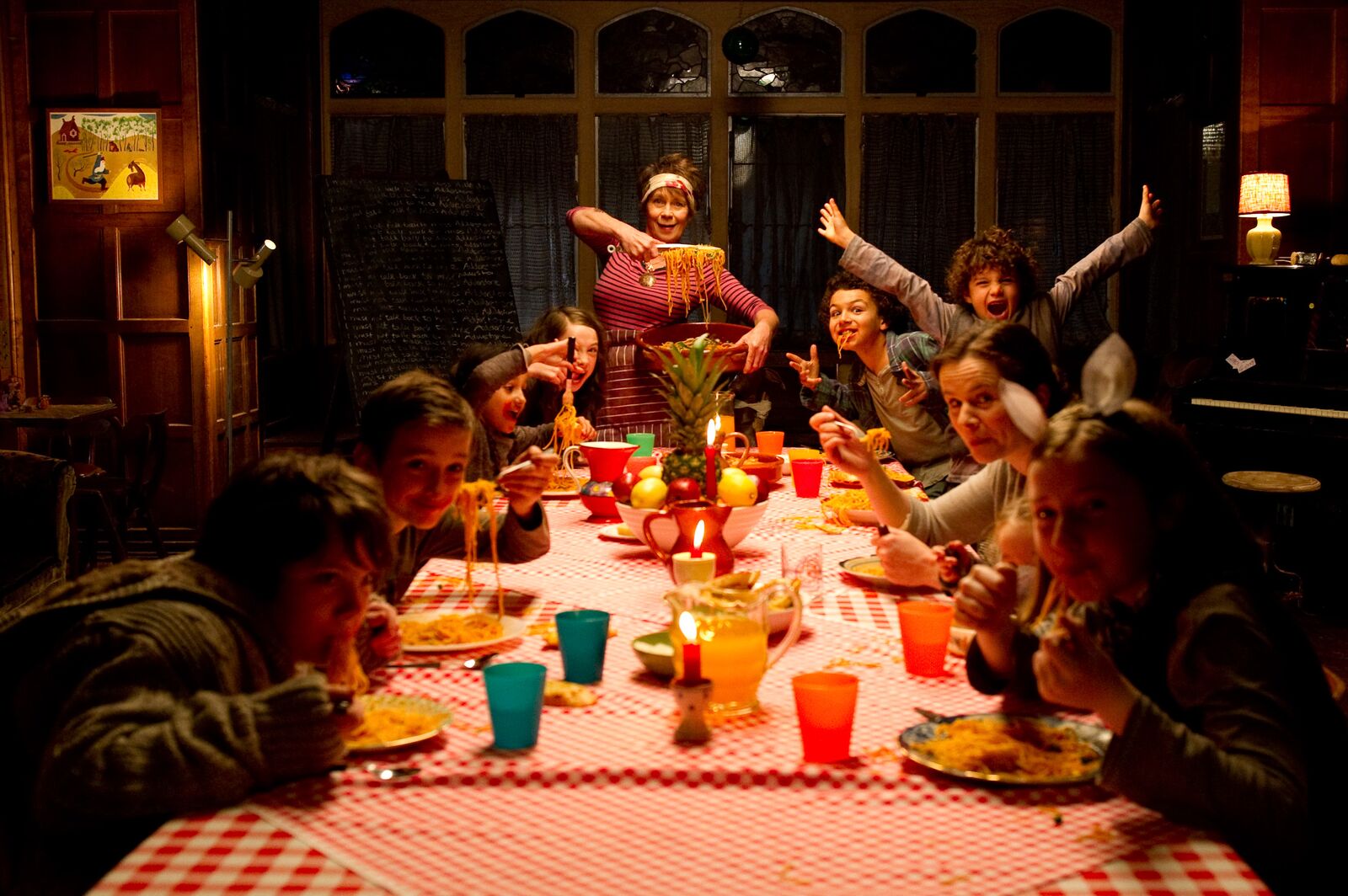
Molly lives in a Little Orphan Annie/Oliver Twist-style terrible orphanage, presided over by mean Mrs. Adderstone (Lesley Manville), with the disgusting food prepared by a cook named Edna (Celia Imrie). In this brutal environment, Molly’s only friend is Rocky (Jadon Carnelly Morris), a gifted singer. Molly promises to be there for his performance but lets him down twice because she is so captivated by an old book about hypnotism she found in the library. She tries out what she learned first on Mrs. Adderstone’s fierce dog Petula, who becomes friendly and devoted. And then she goes to work on Edna, who suddenly starts preparing delicious, wholesome meals for the children. She tries to work out some adoptions that would keep her with Rocky, but, angry and hurt because she broke her promise, he goes off with the wealthy Mr. and Mrs. Alabaster. Molly decides that what she needs is stardom. If she is rich and famous like pop star Davina (Tallulah Evans), she thinks she will be happy. She cannot sing or dance, but she does have the crucial skill — her ability to hypnotize extends not only to a television producer and a talk show host, but by the clever use of magnification, to almost everyone in the audience, not just in the theater where she is performing but those watching on television as well.
Meanwhile, someone else is trying to get the hypnotism book: a crook named Nockman (“Lord of the Rings'” Dominic Monaghan), spurred on by his crime queenpin mother (Joan Collins, as always, at her best playing bad). They want to use hypnotism for a big robbery. And if they can’t get there before a rival gang, maybe they can let them do the robbery and then rob them.
All of the performers, young and grown-up, are clearly enjoying themselves. Cassidy is one of the most appealing young actors in film, Emily Watson is very touching in a brief role as a sympathetic adult supervising the orphans, and Evans is excellent as a pint-sized diva. Director Christopher N. Rowley and director of photography Remi Adefarasin (“Match Point,” “Elizabeth”) keep the tone light and playful, enjoying the heightened fantasy elements of the story. It comes across like a fairy tale, with transformations and enchantments. And it is exceptionally understanding of the story’s villains. In order to hypnotize someone, Molly has to understand something about them. Even pretending to listen to them teaches her something about why acts that are inconsiderate or selfish are often based in hurt and fear. Molly herself is thoughtless and unfair at times. Like Spider-Man she has to learn that with great power comes great responsibility, and like Dorothy, she learns that there’s no place like home.
Parents should know that the film deals with parental loss and abandonment and with adults being cruel to children. They should also know that the film perpetuates inaccurate stereotypes of adoption, including the idea that prospective parents go to orphanages to pick out children as though they are buying groceries. There is some mild peril and brief language and crude humor.
Family discussion: Who would you like to hypnotize? Why didn’t Molly like being a pop star?
Children with cancer learn two things, we hear in this documentary about a boy who is being treated for leukemia. They learn how to fight. And, because they are surrounded by caregivers, they learn compassion.
When he was two, Miles crawled into bed with his parents, and they felt a lump under his jaw. It was cancer. As he endured treatment, he became fascinated with the old Adam West “Batman” series. He loved seeing Batman and Robin fight for justice. He loved the way they helped people in need. And he loved their costumes. Miles was a kid who really loved to dress up, especially in clothes that made him feel strong and powerful. And so, when he was five and feeling better, it was time for him to get a special treat from the Make-a-Wish people in San Francisco, the city closest to his home. Their goal was to do something that would “give him a bit of his childhood back.” Kids who have seen more pain, danger, fear, and loss than most adults can handle are given a chance to have a dream come true. Some want to meet a celebrity or go to Disney World. Miles wanted to be Batman. And San Francisco Make-A-Wish chapter head Patricia Wilson was determined to make that happen.
We get to see a glimpse of a girl whose wish was to be a pop star. Wilson arranged for about 200 people to be there to cheer her on. She figured the same size crowd for Miles. But something about the story caught on. It captured the attention of the city and then the world. They turned San Francisco into Gotham. The real-life mayor and police chief taped messages ahead of time that would explain what kind of help they needed from Miles. People flew in to cheer Miles on in person. “Batman Begins” composer Hans Zimmer wrote him a special theme. President Obama sent a Vine with his thanks. Two billion people tuned in to be a part of it. The idea of a simple act of kindness for a kid who wanted to be a superhero made a lot of people feel good about the world for a little while. Everybody got a bit of childhood back, not because of what they got but because of what they gave.
Filmmaker Dana Nachman, who made the documentary after the story was over, shows us how it all came together. Wilson called Eric Johnston, who is in real life pretty close to Batman without the anguish or the Wayne millions. He is a stuntman and an inventor. One of the sweetest parts of the film is the way he adores his wife, who gallantly volunteered to be the damsel in distress whose rescue would be the first of three deeds for Johnston as Batman and Miles as Batkid. Then they would capture the Riddler in the midst of a bank robbery and rescue San Francisco Giants mascot Lou Seal, who had been taken hostage by The Penguin (Mike Jutan). Creating each of these adventures, from the casting to the costumes, introduces us to some wonderful characters. I especially loved the opera’s costume department, who pitched in on their own time to make sure the characters would look real. Miles’ Batkid costume was donated by another child, whose father had created the costume for him. Johnston took Miles to a rehearsal space for acrobats to get him comfortable with some simple stunts. The manager had the brilliant idea of having all the regulars show up in superhero costumes. Why wouldn’t Wonder Woman and The Flash come to the same place to work out and perfect their skills when they were not fighting crime?
She also shows us how the day unfolded, the plans that worked and the ones that didn’t. Lou Seal almost didn’t make it because the crowds had become so massive he couldn’t get through. And of course all day there were adjustments based on how Miles was doing. At the beginning and end of the film we see an interview with Miles and his family. Was it what they expected? Miles’ parents both say, reasonably, that they were stunned and overwhelmed by how gigantic it all became. But Miles, taking it all in stride, just says, yep. And there it is. What gives him a piece of his childhood back is having something come together just the way he thought it should. Making that happen, being a part of it, even seeing it in the film and cheering him on, is a reminder of how much magic we can create, and how important it is that we try.
Parents should know that this is a documentary about a child who is being treated for cancer and a program that provides services and special treats for critically ill children and their families.
Family discussion: What wish would you like to help come true? Why do sick kids learn more about compassion than kids who are not sick?
If you like this, try: the Adam West “Batman” series and the PBS documentary about cancer, “The Emperor of all Maladies”
Yes, it is basically “Die Hard” and “Under Siege” in the mountains of Finland, if Bruce Willis was a kid on a rite-of-passage solo hunting trip. And instead of executive hostages in a big office building, the kid has to save the President of the United States, who has been ejected from Air Force One in some sort of attack we will learn more about later on.
So, the storyline is far from fresh. But the location is, and it is excitingly filmed and engagingly performed.
Samuel L. Jackson plays President William Allen Moore, en route to a G8-style meeting when his Secret Service officer, Morris (Ray Stevenson) sends him out in a parachute pod to protect him from what appears to be an assassination or kidnap attempt, led by known terrorist-type bad guy and obvious mercenary sociopath Hazar (Mehmet Kurtulus). Meanwhile, back in the Situation Room back home, the vice president (Victor Garber), the head of the CIA (Felicity Huffman), and a national security expert (James Broadbent) are trying to locate and rescue the President.
Copyright Big Zero Film Entertainment 2015
But you probably suspect that some of the people we are supposed to be trusting will turn out not to be trustworthy, and you are right.
Meanwhile, Oskari (the nicely underplaying Onni Tommila) in on his Finnish walkabout. He is on his own in the wilderness with a bow and arrow, expected to bring home an impressive kill. He is under a lot of pressure, because his father is a legendary hunter. But the bow is nearly as big as he is and the hint his father gave him about where the best spot is to find his prey. But his father’s idea of help was not what Oskari thought. And the big game he found was a guy in a suit who is pretty big stuff in Washington but not so powerful away from home.
Writer/director (and Tommila’s uncle) Jalmari Helander knows Hollywood movies and matches the pacing and tone of the best of the genre. There is nothing new in the twists of the plot, but the relationship between the canny President and the unruffled boy, each with different skills, and the action sequences that are unrealistic but fun keep things entertaining.
Parents should know that this film incudes extended action-style violence, characters injured and killed, themes of treason and assassination, some strong language, and potty humor.
Family discussion: How did Oskari feel when he saw what his father left for him? What was Oskari’s biggest challenge?
If you like this, try: “Masterminds” with Patrick Stewart



 , that I basically put together myself. And she said, “Look, this is what you like to do, an inspirational movie, a movie that can help motivate youth and women in our society. This story might be up your alley. Would you be willing to jump on board and help make it happen?” I felt like it was going to be a lot of work and at the time it was not my priority. But then I researched it. I researched it online about the community, about Brownsville, about the teacher and the kids and everything and I was researching it all night and by the morning I was like, “I have to make this movie. I don’t care if I do it for free at this point.”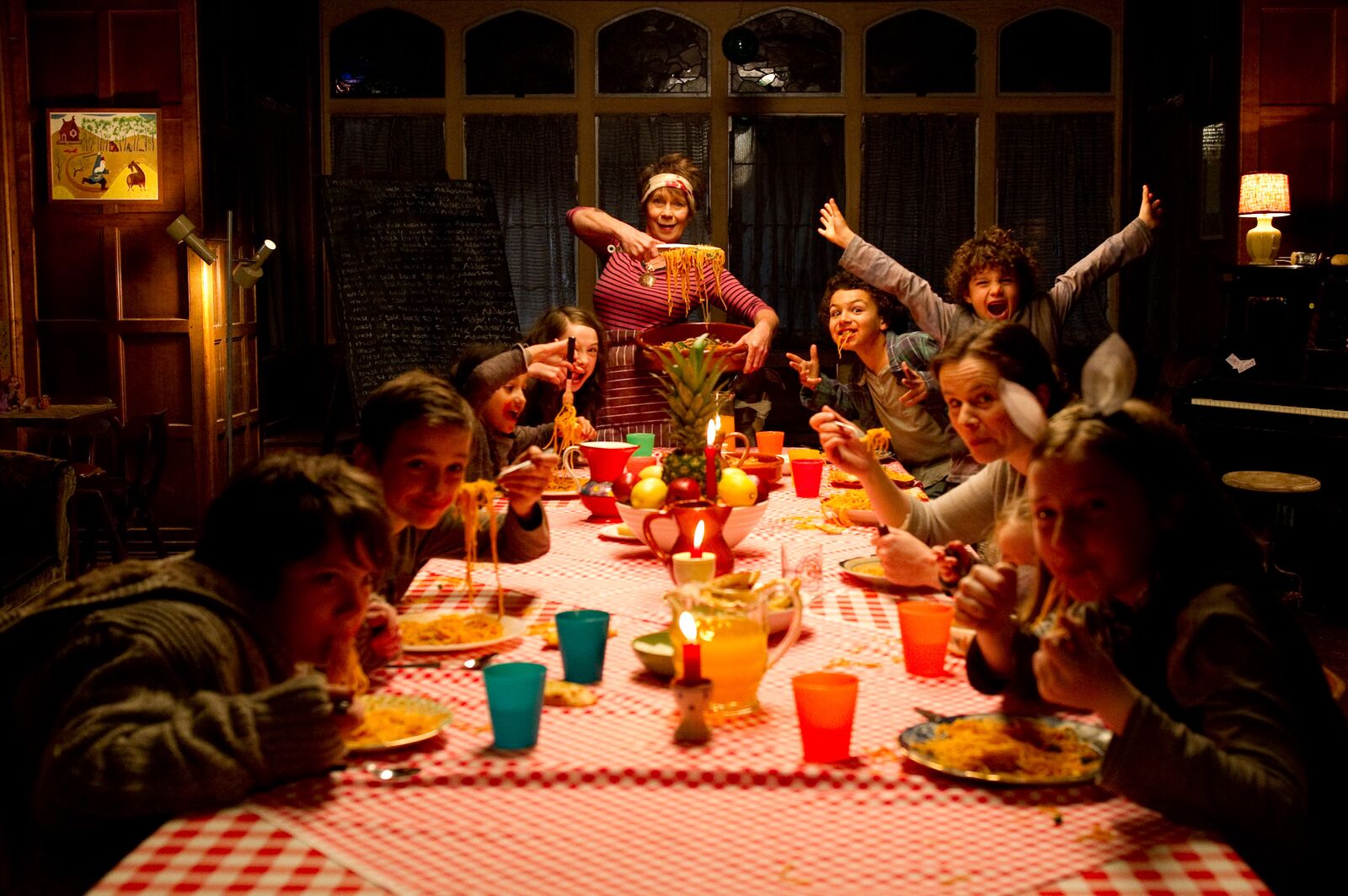
 . Raffey Cassidy, the enchanting young star who was the highlight of “Tomorrowland,” is perfectly cast as the determined Molly Moon, who learns from an old book how to use hypnotism to get people to do what she wants. Cassidy’s clear blue eyes are so mesmerizing that it is easy to believe they can bewitch anyone.