Rated R for language, some sexual references, drug use, and disturbing behavior
Profanity:
Very strong language
Alcohol/ Drugs:
Alcohol, drugs, smoking (by a young teenager)
Violence/ Scariness:
Fatal car crash, guns, dangerous and destructive behavior
Diversity Issues:
None
Date Released to Theaters:
April 8, 2016
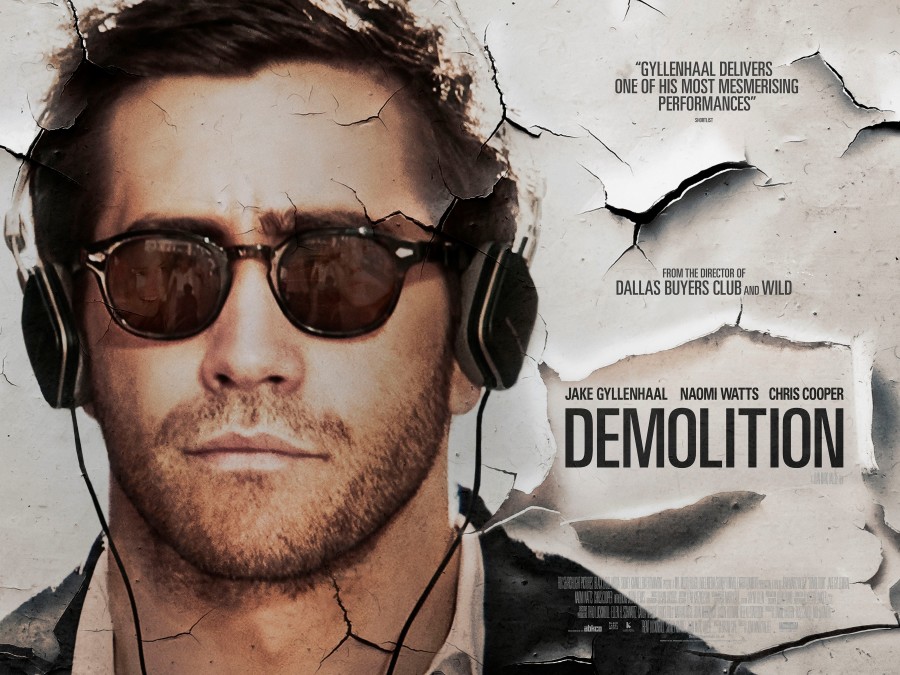
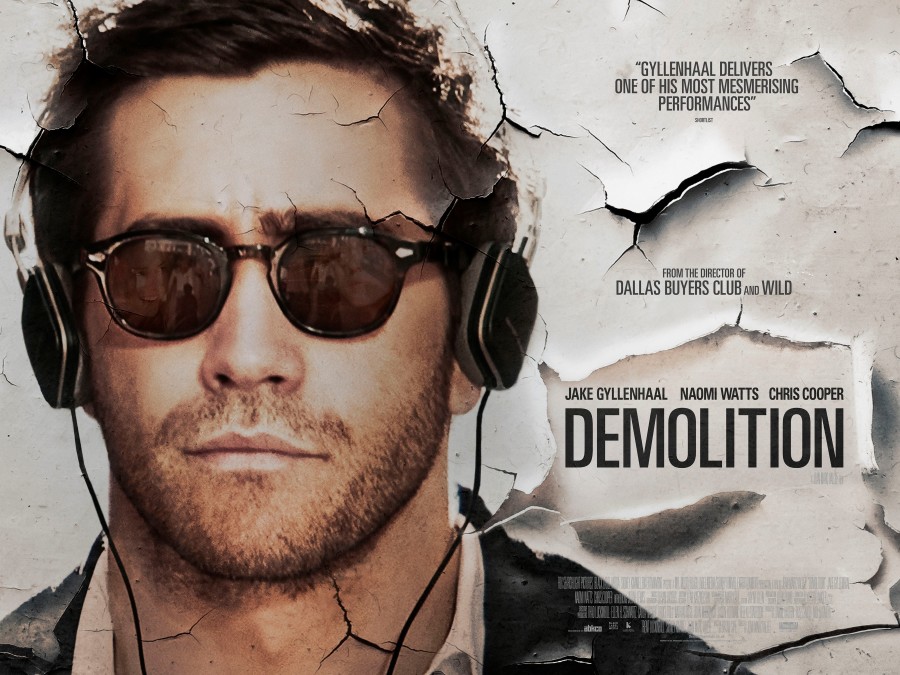
Copyright Fox Searchlight 2016As the title suggests, this is a movie about taking things apart, literally and spiritually. And Jake Gyllenhaal gives a performance of shattering intensity as Davis, a finance executive whose wife is killed in a car accident.
At the hospital, he puts five quarters into a vending machine, which fails to deliver the peanut M&Ms he has selected. So he goes home and writes a long, detailed letter of complaint to the vending machine company. And then another one. And then another one. And then another one.
And he begins to take things apart. Screenwriter Bryan Sipe says the idea was inspired by the time he spent knocking down damaged houses for his father’s insurance company. Davis says he feels numb. He says he did not really know his wife. And he really wants satisfaction for that undelivered bag of peanut M&Ms.
His father-in-law, also his boss (Chris Cooper, who played Gyllenhaal’s dad in “October Sky”), is devastated. He immediately plans a tribute to his daughter and wants Davis to support it. But Davis just wants to take things apart.
A call from the complaints department at the vending machine company leads to an adventure. Davis ends up spending time with an angry teenager (Judah Lewis) who has been suspended from school. They do things that would get him expelled and probably arrested. Those scenes are the best in the film as the kid who feels too much meets the adult who cannot feel at all.
The film, directed by “Dallas Buyers Club’s” Jean-Marc Vallee, is uneven but arresting and impressively ambitious. He maintains a fascinating, heightened tone that never interferes with the real humanity of the characters. Gyllenhaal, long one of the most underrated actors, shows once again that he can take on an exceptionally challenging role and bring enormous depth and authenticity. More important, even before Davis is able to connect to his own feelings, he is able to connect to ours.
Parents should know that this film includes a sad death, fatal accident, very strong language, drinking, drugs, smoking (by a child), sexual references including adultery, destructive and dangerous behavior, and guns.
Family discussion: Why did Davis write the letters? What do we learn from his decision about how best to honor his wife?
Rated R for language throughout, sexual content, drug use and some nudity
Profanity:
Constant very strong and crude language
Alcohol/ Drugs:
Drinking, drugs
Violence/ Scariness:
None
Diversity Issues:
None
Date Released to Theaters:
April 1, 2016
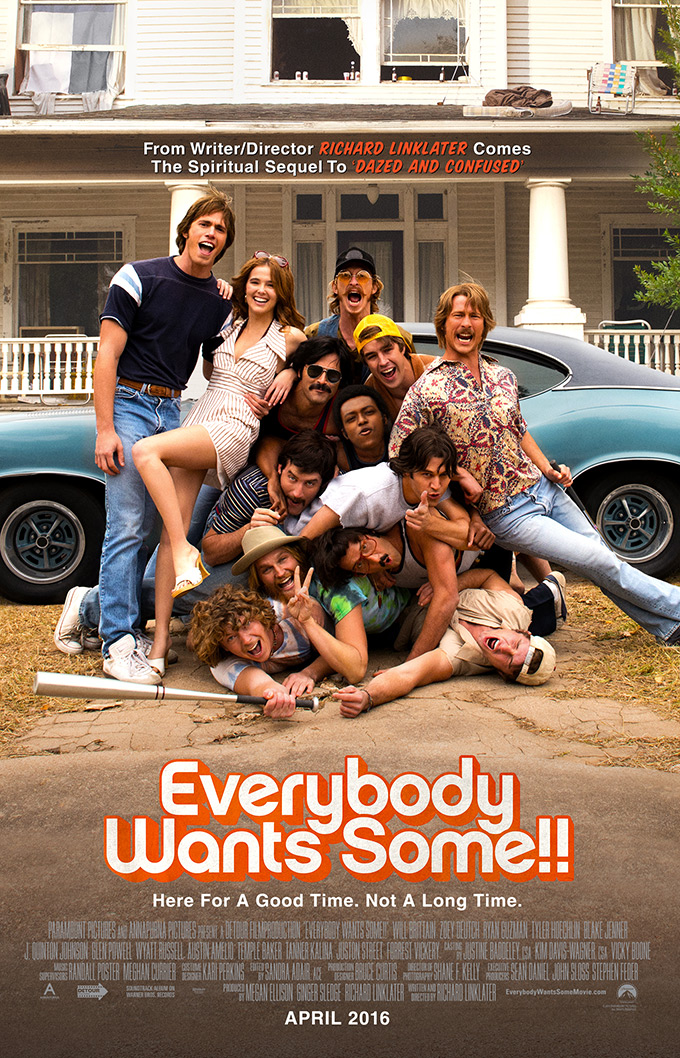
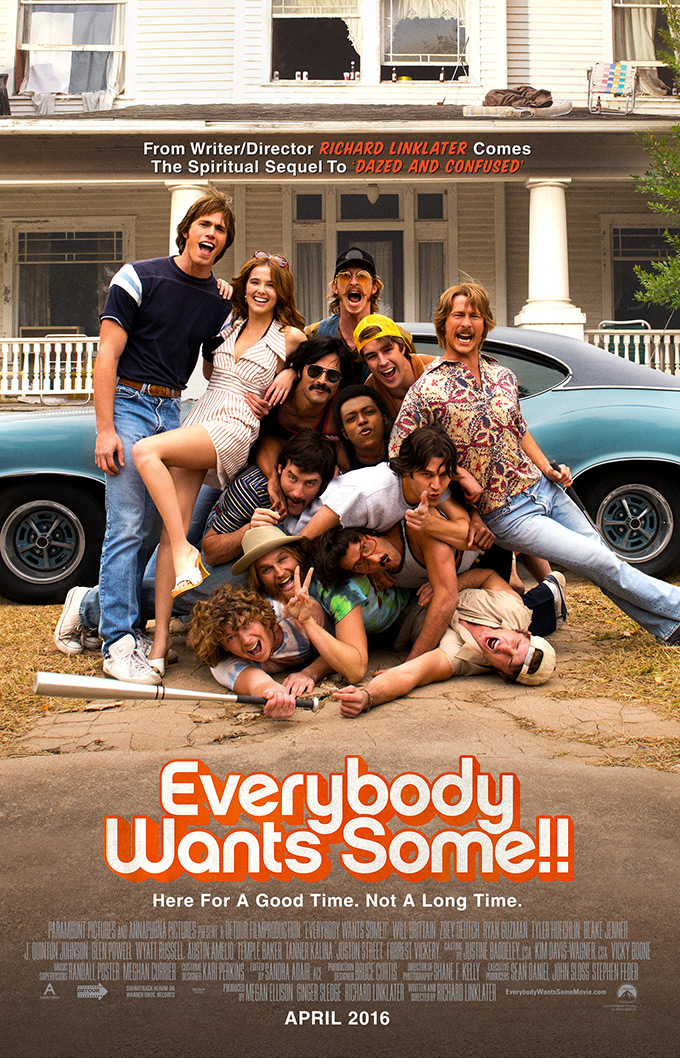
Copyright Annapurna Films 2016“Everybody Wants Some!!,” the “spiritual sequel” to Richard Linklater’s Dazed and Confused, is so much fun that it is easy to overlook how sweet it is and how smart it is. Those who are hoping for the same combination of slightly smug nostalgia, outrageous partying, smart, self-aware characters including at least one who is older than the others but prefers to hang out with teenagers, almost no grown-ups, and a superbly curated soundtrack will find all of that. Like “Dazed and Confused,” the title comes from a rock song with some smokin’ guitar licks, this one, two exclamation points and all, by Van Halen. But this film is subtler, more ambitious, heir not just to “Dazed and Confused” but also to Linklater’s impressionistic, existentialist film “Waking Life,” and even to his “Before” trilogy as well.
As in the earlier film, the time period is compressed. “Dazed and Confused” took place on the last day of high school. “Everybody Wants Some!!” takes place on the weekend before classes start at an unnamed Texas college. It opens with freshman Jake (Blake Jenner) driving to school in a convertible, blasting — of course — “My Sharona.” Welcome to 1980.
Jake is about to move into the house set aside for the members of the school’s baseball team, nationally ranked and the heroes of the school. (Linklater played college baseball for two years at Sam Houston State University.) As soon as he arrives and introduces himself to his new teammates, the dynamic that plays out through the rest of the film is established. These guys are athletes, so they are very competitive as individuals but also very aware that in order to be successful as a team they have to be competitive in a way that helps the team. Linklater and his exceptional young cast, all of whom had to audition both for acting and for ability to play baseball, perfectly capture the endless jockeying for position combined with an instinctive teamwork based on constant assessment of one another. They use a made-up word I can’t quote here to describe the way their physical and verbal interaction combines one-upmanship and more benign getting-to-know-you high spirits, both instinctively team building.
Not much happens in the movie, at least on the surface. The guys hang out and talk. There’s a ping pong game, some locker room hijinks, ingestion of various mood-altering substances, and of course a lot of discussion about and pursuit of the ladies. This leads them to several different venues and it is a lot of fun to see them adapt (including changes of clothes) as they go from a disco to a “kicker” (country music) bar, to a punk performance and finally a costume party given by the drama students.
But this is not the usual college comedy, thankfully avoiding the usual humiliation and clunky life lessons. The incoming freshmen are (mostly) smart, self-aware, and curious. The women (mostly) are not significant enough to merit much in the way of personality or storyline, and the male characters may tend to objectify or exploit them but the movie does not. They are smart, capable, looking for a good time, and self-aware, and the one we spend time with (Zoey Deutch, in a lovely performance as a drama student named Beverly) has a walk-and-talk (and float) conversation with Jake that reminds us this is a film from the writer/director of “Before Sunrise.”
The entire cast is superb, especially Jenner (“The Glee Project”), Wyatt Russell (“22 Jump Street”) as a transferring senior with a taste for philosophy and weed, Glenn Powell (“Expendables 3”) as the smooth-talking Finnigan, and J. Quinton Johnson as Dale, who is willing to explain to the newcomers what is going on.
Not much seems to be happening as the characters go from one party to another, but it does in fact cover a surprising range of ideas with a great deal of insight. It is a “spiritual sequel” in literal terms, if not grappling with then at least pondering the meaning of existence and the existence of meaning. The utterly perfect final shot brings that home perfectly.
As the characters keep changing their clothes to fit in at each venue, they ask themselves whether they are pretending or adapting. Jake talks about how each of them had always been the best baseball player at home, only to come to college and share a team with an entire group of best players. The guys think about who they are and what their goals are (hey, it’s a college movie; you know what their goal is, but there’s more there, too).
It takes place over a few days but Linklater’s perspective on existence, meaning, and the passage of time is subtly interwoven between the bong hits and the hitting of various balls. As the young baseball players reckon with their future prospects (and dream up a possible scout for the pros who could be hiding anywhere), they and we know that, like the movie itself, their time playing baseball is brief, and that’s all the more reason to enjoy the show.
NOTE: Stay through the credits to see a delightful musical number created by the cast
Parents should know that this film includes very strong and crude language, extensive partying with drinking and drugs, sexual references and situations, and nudity.
Family discussion: Did the guys’ competition with each other help or hurt the team? What are the biggest differences between what went on here and what would happen today?
If you like this, try: “Dazed and Confused,” “Waking Life,” and “Before Sunset” from the same writer/director
TRAP stands for Targeted Regulation of Abortion Providers. “Trapped” is a powerful new documentary that focuses on efforts to cut off women’s access to abortion by imposing requirements and restrictions on clinics that have no relationship to health or safety.
It could not be more timely, released the same week that the most significant challenge to Roe v. Wade was argued in the Supreme Court, just after the death of Justice Scalia makes a 4-4 split decision a possibility.
Lawyer-turned-documentarian Dawn Porter lets the people affected by these laws speak, interviewing the doctors and staff of abortion clinics to show the absurdity of the claim that the TRAP laws are based on concerns for women’s health and safety. A clinic staffer points to a requirement that “emergency lighting shall be provided in accordance with Sec. 7.9.” But there is no Sec. 7.9. Another says that they are required to spend $1100 a month on medication that has never been used but must be replaced every 30 days because it expires. Meanwhile, a protester stands outside a clinic screaming that women should be adored and cared for by men, while women who come to the clinic are berated.
We see the impact of the disinformation campaigns perpetrated by the anti-abortion forces, with clinic workers forced to provide misleading booklets and a young woman in the clinic worried that the abortion will make her sterile. It may sound reasonable to legislators who are not medical professionals to require abortion providers to have admitting privileges in the nearest hospital, but they do not understand the Catch-22: abortion is so safe that not enough patients are admitted to the hospital to retain those privileges.
And we see Alabama Supreme Court Chief Justice Roy Moore speaking at an anti-abortion event. (He has also opposed the Supreme Court’s ruling on marriage equality.)
We see a clinic staff member pray with a patient — and another one decide that “the grass is dry” and so she had better use her remote control to turn on the sprinkler that happens to be near a protester. Another staffer presents a doctor with a defiant bumper sticker: “May the fetus you save turn out to be a gay abortion provider.” We hear about 13-year-old rape victims who may be forced to bear the child of their rapists. What comes through most powerfully is their belief in supporting women in the decisions they have a right to make about what is best for them.
Rated PG-13 for Biblical violence including some disturbing images
Profanity:
None
Alcohol/ Drugs:
Alcohol
Violence/ Scariness:
Battle, swords, crucifixion, characters injured and killed, some graphic and disturbing images
Diversity Issues:
A theme of the movie
Date Released to Theaters:
February 19, 2016
Date Released to DVD:
May 23, 2016
Amazon.com ASIN:
B01BZ4DOGQ
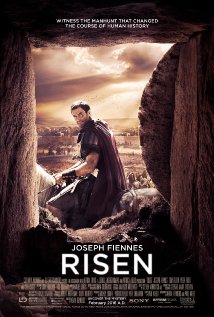
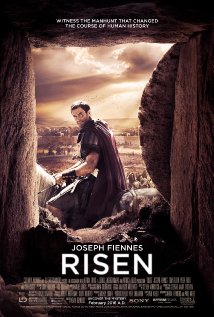
Copyright 2016 Sony Pictures “Risen” is a sober, reverent story of Clavius (Joseph Fiennes), a Roman soldier ordered to witness the crucifixion of Jesus and prevent his body from being stolen. When the rock placed in front of the tomb and sealed by Clavius is moved and the tomb is empty, Pilate (Peter Firth) is worried that the Jesus’ followers will use this disappearance as proof of His divinity, so he sends Clavius to investigate. His journey will take him to Galilee, and what he sees there will transform everything he thinks he knows.
Fiennes brings Clavius to life with a vivid, thoughtful, sensitive performance, showing us the depth of his loyalty and sense of honor. The way he walks, stands, and rides communicates a lifetime of battles fought and won. He is a man confident in his strength and very aware of the brutality on both sides. At first, he is governed by duty, which we see in the opening battle scenes, in his prompt appearance before Pilate following the battle, not even taking time to clean up, in his acquiescence to taking on a new aide (“Harry Potter’s” Tom Felton, excellent as Lucius) who has not come up through the ranks because his father is Pilate’s friend.
We see that he might have made a different decision about how to respond to the Sanhedrin’s concerns about Jesus, but he follows the orders and makes sure that Jesus is dead and that the tomb is sealed. And we see him speak to his own gods placing a tribute on the shrine to ensure that his prayers are heard.
One of the film’s most powerful sections is an almost “Law & Order” scene with Clavius interrogating witnesses to try to figure out what happened to the body in the tomb. Each encounter tells us something different about Clavius and, indirectly, about the impact that Jesus (called Yeshuah) has had on his followers.
The cinematography by Lorenzo Senatore is beautiful, lending dignity to the story, and Cliff Curtis, a superbly talented performer of Maori heritage who is famously able to play a remarkably wide range of ethnicitys makes a warm, appealing Jesus, kind, compassionate, and a little mysterious. But the focus of the story is wisely on the (fictional) Roman, who is the stand-in for the audience as a witness to the resurrection.
Parents should know that this film includes Biblical-era violence including battle scenes, torture, and crucifixions, with characters injured and killed and disturbing and briefly graphic images.
Family discussion: When did Clavius first begin to believe and why?
If you like this, try: “The Robe,” “Spartacus,” and “Ben-Hur”
Rated PG-13 for crude and sexual content, a scene of exaggerated violence, and brief strong language
Profanity:
Brief strong language, crude references
Alcohol/ Drugs:
None
Violence/ Scariness:
Mostly comic peril and violence, characters injured and killed, some disturbing images, assault weapons, knives, explosions, building collapse
Diversity Issues:
None
Date Released to Theaters:
February 12, 2016
Date Released to DVD:
May 23, 2106
Amazon.com ASIN:
B018IDVB6W
Copyright 2016 Paramount
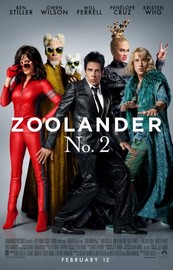
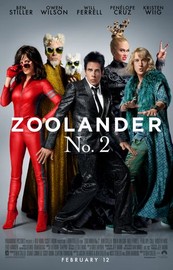
Kind of like fashion itself, we don’t really care whether “Zoolander 2” is any good. We go because it is silly fun.
The original Zoolander, released in 2001 just after the attacks on 9/11, was based on shorts Ben Stiller created for the VH1 fashion awards. It was moderately successful on release but has become a big hit on DVD/Blu-ray and an enduring cultural touchstone. It’s the kind of movie that is best watched at home, with friends who know exactly where the punchlines and star cameos come in, or while sick in bed recovering from the flu when you’re not quite up for binge-watching something that requires more than half your attention.
I suspect the same will happen with this 15-years-later sequel, again directed by Stiller, who stars as the dimwitted supermodel of the title and co-wrote with Justin Theroux, Nicholas Stoller, and John Hamburg. The script relies heavily on the audience’s affection for and knowledge of the first, with more winking references to the original than attempts to be funny about the current state of fashion and the industry.
In the first film, Derek Zoolander plans to build a book-shaped center called The Derek Zoolander Center for Kids Who Can’t Read Good and Who Wanna Learn to Do Other Stuff Good Too. After that film ended, we are told through clips from television news shows (Katie Couric, Jane Pauley, and Jim Lehrer are among the first of an avalanche of what-is he/she-doing-in-this-movie celebrity cameos) that after it was built the building immediately collapsed, killing Zoolander’s wife (Stiller’s real-life spouse, Christine Taylor) and injuring Derek’s rival-turned BFF, Hansel (Owen Wilson).
Partly because he was so distraught, but mostly because he is an idiot, Derek was unable to take care of his son, Derek Jr., and he was taken away by Child Protective Services. Derek announced at a press conference that he was retiring from modeling to become “a hermit crab.” Hansel, his face scarred from his injury, also retreated from the world, to live in the desert (well, Malibu) with an 11-person assortment of consorts he refers to affectionately as his orgy.
But then a nefarious villain is killing pop stars, who die with what appears to be Derek’s famous Blue Steel look on their faces. When Justin Bieber is killed (with time for an Instagram filters joke), Interpol’s fashion division, led by a former swimsuit model (eternal beauty Penelope Cruz) decides that they need Derek’s help to solve the crime.
There’s a lot of fan service here, which can seem stale to those who know the first movie well. But as a lukewarm fan of the earlier film, I found myself being a lukewarm fan of this one, too. The dumb jokes (both those about being dumb and those that actually are dumb) and grotesqueries are no funnier but no less funny. The storyline (Will Derek be reunited with his son? Will Hansel be a father to his various upcoming babies? Will Will Ferrell’s Mugatu destroy whatever it is he is planning to destroy?) is weak, but it is a hoot to see the fashion dream team (even Anna Wintour!) playing themselves with such good humor. In fashion terms, it’s a cheap knock-off, but sometimes that’s all you need.
Parents should know that this film includes very strong content for a PG-13 including very crude sexual references and brief graphic sexual humor, mostly comic violence with characters injured and killed and some disturbing images, and brief strong language.
Family discussion: What are the most important messages we receive from the fashion industry? If they make a “Zoolander 3,” what celebrities would you like to see included?