When the Game Stands Tall

Posted on August 21, 2014 at 5:59 pm

C
Lowest Recommended Age: Middle School
MPAA Rating: Rated PG for thematic material, a scene of violence, and brief smoking
Profanity: Mild language
Alcohol/ Drugs: Smoking
Violence/ Scariness: Shooting, very sad death, serious illness, parental abuse, tense confrontations
Diversity Issues: Diverse characters
Date Released to Theaters: August 22, 2014


Copyright 2014 Sony Pictures
This dreary assemblage of every possible sports cliché has one thing in common with the game it portrays. Every time it seems to be going somewhere, it stops.

More frustratingly, it wastes the opportunity to tell a good story by trying to squeeze in too many great ones. There are too many crises, too many story arcs, too few resolutions, too few reasons for us to invest in the outcome. When a movie is based on (or even “inspired by”) something that really happened, the first step has to be deciding what the theme is and streamlining all of the real-life details that are not central to that theme. Or, as a coach might say, “Don’t lose focus.”

The real-life high school football team that inspired this story is Concord, California’s De La Salle Spartans, from a small, all-boys Catholic school. They hold the all-time winning streak record for any sport in any category and at any level. We meet the team just as the streak is about to end. The last game of the season is the 151st win in a row. But then Coach Bob Ladouceur (Jim Caviezel) has a heart attack.  A player is killed in a drive-by shooting.  Another one becomes an orphan, responsible for his younger brother.  The other teams do not want to play the Spartans anymore, so they take on the number one team in the state (in a game that is the subject of a book. The winning streak that went from 1992-2004 came to an end.

That’s an interesting place for a sports movie to begin, a refreshing change from the over-familiar sports movie storyline of a scrappy group of underdogs who have to learn to work together.  And the film is sincere and good-hearted, though not much we haven’t learned from reading Kipling’s If, especially the part about understanding that winning and losing are both imposters.  But the dramatic force of the narrative keeps being mowed down by so many over-familiar sports movie lines that the film’s greatest appeal may be as a drinking game.  How many times do we have to hear about how the teammates are family, especially when we hear it more than we see it?  (Though I did enjoy seeing the team come on the field holding hands like a kindergarten field trip.)

There is a lot to explore here about what we learn from winning and how much more we learn from losing.  Ladouceur’s techniques include “commitment cards” with training goals, practice goals, and game goals, each one written by a player and shared with a teammate to help them understand they are responsible for each other’s performance as well as their own.  It is good to hear a coach say that end zone antics are inappropriate and that the purpose of the training is not to produce great high school football players but responsible men.

A number of issues are set up or glancingly referred to without any real connection or follow-through, including some of the coach’s lessons about what matters more than winning.  The coach’s son says that when he needed a dad he got a coach and when he needed a coach all he got was a “lame dad.”  The coach’s wife (a criminally under-used Laura Dern) says he does not share himself with her or their children.  Ladouceur acknowledges that he has been “a bad husband and a worse dad.”  But all we see as a response is Ladouceur burning some burgers when he tries to grill.

We do not get enough of the history between the two players who struggle over whether they will stay together through college for it to be meaningful.  A brutish father (Clancy Brown) pushes his quarterback son to break the state record in scoring, but the resolution is not set up in a way that makes it a triumph for anyone.  Intrusive product placement from a sporting goods store is a distraction as well.  As though to keep us on track, equally intrusive sports announcers keep reminding us what the stakes are.  Even more intrusive is a musical score that is ploddingly obvious, with hip-hop in a black player’s home and syrupy pop over the white characters. Meanwhile, over on the sidelines (literally), Michael Chiklis as the assistant coach turns in the film’s most intriguing performance.

“It’s no longer about who the bigger, stronger, faster players are,”  the coach who has the bigger, stronger, faster players says about playing against the Spartans.  (You can tell what’s coming next, right?) “It’s about who plays with more heart.”   The heart in this film is mostly over the end credits, where we see the truly inspirational Ladouceur and wish we had just seen a documentary about him instead.

Parents should know that this film includes the tragic murder of a teenager, serious illness of a parent, death of a parent, parental abuse of a teenager, scenes of wounded warriors in rehab, smoking, and brief crude sexual references

Family discussion: What goals will you put on your commitment card? Why didn’t the coach want his players to pay attention to the streak? What was his most important lesson?

If you like this, try: “Friday Night Lights” (the movie and the television series) and “Remember the Titans,” as well as the books about the Spartans: When the Game Stands Tall: The Story of the De La Salle Spartans and Football’s Longest Winning Streak and One Great Game: Two Teams, Two Dreams, in the First Ever National Championship High School Football Game
Related Tags:


Based on a book Based on a true story Drama High School Movies -- format Sports

A Will for the Woods

Posted on August 15, 2014 at 7:59 am

B
Lowest Recommended Age: Mature High Schooler
MPAA Rating: Not rated
Profanity: None
Alcohol/ Drugs: Alcohol
Violence/ Scariness: Very sad death, themes of death and dying
Diversity Issues: Diverse characters
Date Released to Theaters: August 15, 2014

“Without this,” Clark Wang says, “dying from lymphoma feels so empty and meaningless and pointless.”  Dr. Wang was diagnosed in 2003, and we meet him as he is running out of options for treatment.  His doctor tells him it is a matter of months.  His choice for making his death meaningful is to seek out a “green” burial.  He persuades a local cemetery to preserve a tract of forest instead of cutting it down to extend the lawn area.  He finds someone who can make a coffin coffin for him out of reclaimed wood.  We see him try it on for size, joking that “I’m going to be here for a while.”  He approves.  “It’s the exact style that I want to go out in.”  And, in a moment of both celebration and defiance, he dances on its cover.

“A Will for the Woods” is a documentary about the small but urgent movement for eco-burial.  But its focus on Dr. Wang, a psychiatrist and musician, makes it a profound statement about death and therefore about life.  While some people in the film speak in euphemisms and indirection, and even Wang himself uses terms like “burial is a very likely outcome,” the way that he and his partner Jane confront what is happening to maintain a sense of dignity, honesty, and control is both moving and inspiring.  It is not surprising that this film has won audience awards at four film festivals so far.

“It’s comforting to know I’ll be in such a beautiful place,” Wang says.  He speaks of learning to “befriend death,” to make sure that his last act is not an act of pollution.  Jane tells him what she will do after he dies, how she will wash his body and spend time with it, caring for him in a way he can no longer care for himself.

This is a touching film and a very important one. It is about dying with dignity, but it is also about living with grace. Just as Dr. Wang approached his own death with purpose and honor, the filmmakers have done the same in telling his story and making it ours as well.


Related Tags:


Documentary Environment/Green Movies -- format

Let’s Be Cops

Posted on August 14, 2014 at 8:00 am

C
Lowest Recommended Age: Mature High Schooler
MPAA Rating: Rated R for language including sexual references, some graphic nudity, violence and drug use
Profanity: Very strong and crude language
Alcohol/ Drugs: Drinking, marijuana, meth
Violence/ Scariness: Law enforcement peril and violence, guns, many characters injured and killed
Diversity Issues: Diverse characters, some racial, sexist, and homophobic humor
Date Released to Theaters: August 15, 2014
Copyright 2014 Twentieth Century Fox

Oh, let’s not.

As generic as its name and way too long, any significant connection “Let’s Be Cops” has with its audience comes from the increasing sense of regret that this talented cast wasted its time — and ours.

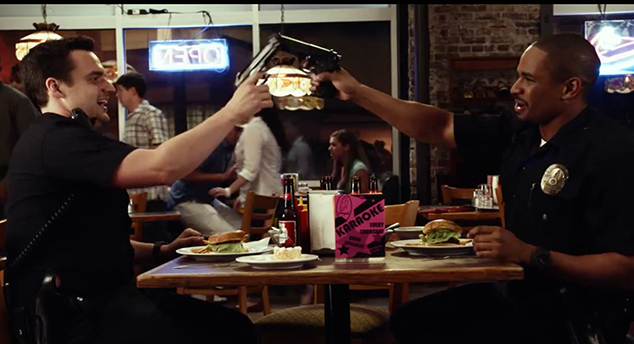
The title is the elevator pitch.  Two hapless losers dress up as cops, like the respect and sense of power they get, and decide to wear the uniforms some more so that they can order people around and get past the velvet rope at a nightclub.  And impress a girl.

Highly likeable “New Girl” co-stars Damon Wayans, Jr. and Jack Johnson play Justin and Ryan, 30-year old Perdue alums and roommates who are reminded by a reunion party that they have not accomplished very much.  Justin has a low-level job at a video game company and is too shy to get the attention of the boss for the new game he has developed, which is about a policeman.  That’s why he has a couple of authentic uniforms on hand.  Ryan is a sometime actor who — wait for it — is living off the residuals he got for a herpes medicine commercial.  Oh, my sides!

The un-dynamic duo misunderstand the invitation to the reunion party and arrive in costume to find everyone else in business attire with masks.  Why?  No reason except an improbable basis for the even more improbable premise.  They leave, embarrassed, but when people on the street believe they are real cops, they think it is a lot of fun.  Justin is ready to walk away, but Ryan gets into character, watching YouTube videos to learn police lingo and skills.  Pretty soon, Justin is impressing a pretty waitress (“Vampire Diaries'” Nina Dobrev) and Ryan is messing with some guys who crunched his car.  It is obvious that these are very scary gangsters, but of course Ryan has no clue and Justin is having way too much fun engaging them in a law enforcement version of Simon Says to pay attention.

The rest of it plays out exactly the way you’d imagine, with the only bright spot Key & Peele’s Keegan-Michael Key hilarious appearance as a tattooed low-level driver for the bad guys, sort of the fake cops’ Huggy Bear.  His too brief-appearance only reminds us of the comedic chaos this film is missing.  The funny parts aren’t funny enough (Really?  Wrestling a naked fat guy?  Wasting Rob Riggle as a straight man?  Being high on meth? Flirting with a drugged-out floozy?).  The action parts aren’t exciting enough.  The big surprise twist is neither big nor a surprise. Gene Siskel used to say that the movie should be better than watching the same actors talk over lunch. This one doesn’t come close.

Parents should know that this film has strong and crude language, sexual references and situations, male and female nudity, violence and peril with characters injured and killed, alcohol and drug use (marijuana and meth).

Family discussion: How did Justin and Ryan differ in their thinking about pretending to be policemen? How did their experiences change their ideas about what they were capable of?

If you like this, try: “The Other Guys” and “The Heat”

Related Tags:


Comedy Movies -- format

Life Itself

Posted on July 3, 2014 at 6:00 pm

A
Lowest Recommended Age: High School
MPAA Rating: Rated R for brief sexual images/nudity and language
Profanity: Some strong language
Alcohol/ Drugs: References to drinking and alcohol abuse
Violence/ Scariness: Scenes of illness, sad death
Diversity Issues: Diverse characters
Date Released to Theaters: July 4, 2014

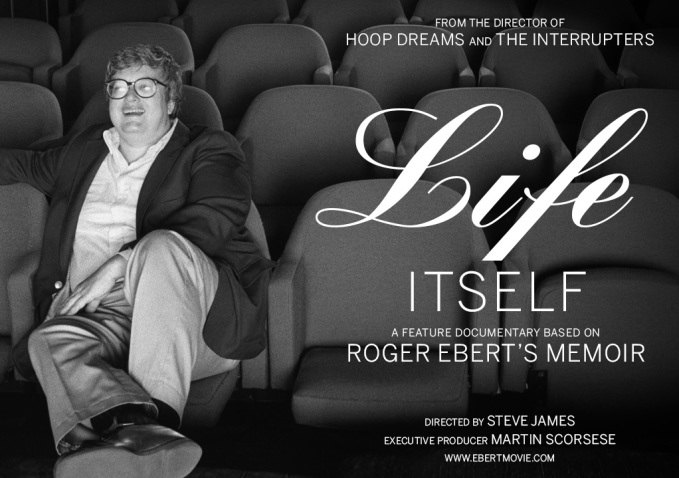
LifeItselfRoger Ebert, the most influential film critic of all time, gets the film he deserves directed by one of the many filmmakers he championed, Steve James (“Hoop Dreams,” “The Interrupters”).  It is co-produced by Martin Scorsese, whose emotional appearance in the film to talk about the impact of the support—and criticism—he received from Ebert is one of the highlights.

But this is not the story of a movie critic.  It is the story of a life, a big, grand, messy, vital, generous life.  It was a life with every bit as much drama, comedy, tension, romance, insight, compassion, and, as Ebert would say, civilizing influence and empathy creation as any of the films included in Roger’s pantheon of Great Movies.

The film shows us Ebert as a child in the university town of Urbana, Illinois, as a college student there, as a young newsman who, still in his 20’s, became the movie critic for the Chicago Sun-Times, and later a pioneering presence on television and online. He drank too much until he admitted that he was an alcoholic.  He and Chicago Tribune critic Gene Siskel created a television show that began on the local PBS channel, WTTW, and then went into national syndication and moved to commercial television.  While some print critics complained that it was stunt-ish, the show elevated serious engagement with movies to a nationwide conversation.  A highlight of the film is the testy outtakes from the show, making it clear that the competitiveness and tinge of animosity that made their on-screen interactions so fascinating were toned down from the real strains between them.  And it turns out Siskel hung out with Hugh Hefner at the Playboy Mansion during the wild era of the 60’s.  “Roger may have written ‘Beyond the Valley of the Dolls,’ but Gene lived it,” Siskel’s widow says with a smile.

The intensity of the competition between the two critics is very funny. So are the outrageously awful clothes and haircuts (there are some things even the ’70s does not excuse) and the amateurishness of the early episodes. But the very real respect and, ultimately, admiration, between them makes it clear that this was one of the most significant relationships of Roger’s life. It was his devastation over Siskel’s decision not to tell anyone about his own illness that made Roger resolve to be very open and honest about his own.

Ebert had great hungers, which led to excesses, not just in alcohol and food but in work, producing more reviews and books than any other critic and dabbling as a screenwriter in the legendarily awful “Beyond the Valley of the Dolls.”  Once he stopped drinking, he developed the courage to pursue his greatest hunger, the hunger for love and intimacy.  The man who called movies “an empathy machine” was ready, at age 50, to begin to feel those feelings outside of the screening room.  It is deeply moving to witness Ebert’s transformation through his finding a deep romantic love and a large extended family at age 50 with Chaz.  And then he got cancer, and we see the impact his illness had on his writing. He lost a great deal, but, James shows us, he found more.

Roger loved movies deeply, personally, viscerally. With this documentary, the movies return that love.

Parents should know that this movie includes scenes of illness and a sad death, some strong languages, discussions of alcohol abuse and alcoholism, smoking, and some sexual references and images from movies with adult material.

Family discussion:  What were the most important turning points in Ebert’s life?  Do you agree that film is an “empathy machine?”

If you like this, try: Roger Ebert’s books and his mesmerizing shot-by-shot commentary on Citizen Kane

Related Tags:


Critics Documentary Movies -- format

Coherence

Posted on June 19, 2014 at 5:47 pm

A-
Lowest Recommended Age: High School
MPAA Rating: Not rated
Profanity: Strong language
Alcohol/ Drugs: Drinking, drugs
Violence/ Scariness: Pervasive psychological horror and some violence
Diversity Issues: None
Date Released to Theaters: June 20, 2014

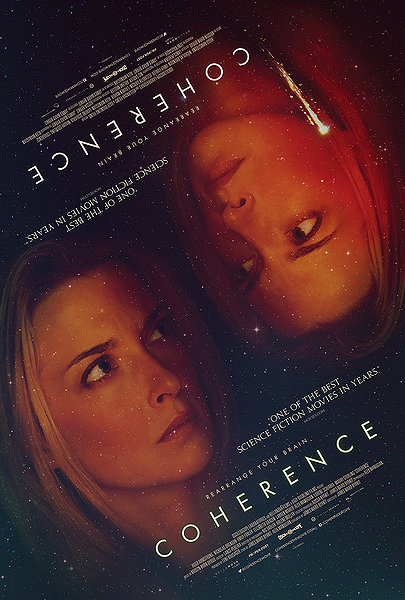
coherenceSeriously, don’t read this review until after you’ve seen the movie. The less you know, the more you will enjoy this nifty thriller, which craftily makes the most of its micro-budget to maximize a deliciously mind-bending story. As in all great thrillers, the scary stuff is not what’s on the outside, but what the stuff on the outside does to the stuff in the inside, meaning not just the inside of the characters but the inside of the audience.

James Ward Byrkit, who wrote “Rango” and created the visual design for the “Pirates of the Caribbean” movies (all with Gore Verbinski), wanted to take some time away from seven-figure-budget blockbusters and create something small and intimate. He literally shot it in his living room, with a cast of vaguely familiar looking but under the radar actors. As the movie begins, eight friends are getting together for a dinner party. We get some sense of the relationships and some tensions as they gather. They engage in routine dinner party chat, mentioning in passing some news about a comet due to pass overhead along with the usual updates and gossip.  And then the phones stop working.  And then the lights stop working.  And then someone says he’d better go outside to find out what is happening.  And we’ve all seen enough movies to know that this is probably not a great idea.

What happens next is not a plot twist but a plot Rubik’s Cube, an ingeniously plotted infinite regression of meta-realities. To say any more would be to spoil the movie’s best surprises.

Parents should know that this is a psychological thriller with a pervasive sense of dread and some violence.  Characters drink and use drugs and there is strong language.

Family discussion: What decision do you wish you could go back and do over?

If you like this, try: “Identity”

Related Tags:


Movies -- format Thriller VOD and Streaming
THE MOVIE MOM® is a registered trademark of Nell Minow. Use of the mark without express consent from Nell Minow constitutes trademark infringement and unfair competition in violation of federal and state laws. All material © Nell Minow 1995-2025, all rights reserved, and no use or republication is permitted without explicit permission. This site hosts Nell Minow’s Movie Mom® archive, with material that originally appeared on Yahoo! Movies, Beliefnet, and other sources. Much of her new material can be found at Rogerebert.com, Huffington Post, and WheretoWatch. Her books include The Movie Mom’s Guide to Family Movies and 101 Must-See Movie Moments, and she can be heard each week on radio stations across the country.

Website Designed by Max LaZebnik