Captive

Captive

Posted on September 17, 2015 at 8:00 pm

B
Lowest Recommended Age: High School
MPAA Rating: Rated PG-13 for mature thematic elements involving violence and substance abuse
Profanity: Some strong language
Alcohol/ Drugs: Drugs and discussions of drug abuse
Violence/ Scariness: Prison escape, violent murders, tense confrontations, hostage situation
Diversity Issues: Diverse characters
Date Released to Theaters: September 18, 2015
Copyright 2014 BN Films

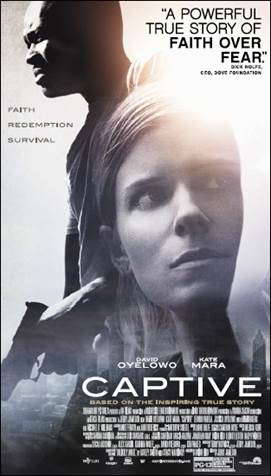
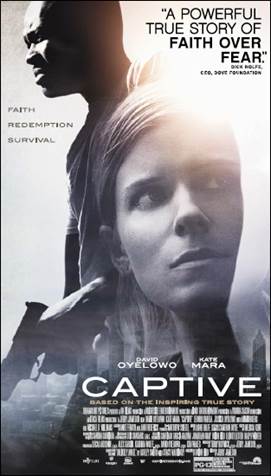
Two desperate people who think they have nothing discover that there is still a lot more to lose in this fact-based story about an escaped prisoner and the woman he held captive.

The story made headlines throughout the country. Ashley Smith, a young widow still in her 20’s, was in the early, fragile stages of recovery from drug abuse. Her daughter was living with Smith’s aunt, but Smith was working hard to be able to care for her. Brian Nichols was in prison, charged with rape. When he was being transferred for his trial, he beat the security guard, stole the civilian clothes he was to wear for the trial, and went on the run, killing a judge and three other people. He grabbed Smith, and forced her to let him into her apartment. He held her there for seven hours before she was able to leave and call 911. While they were together, they talked, she made him pancakes, and she read aloud to him from Rick Warren’s best-seller, The Purpose Driven Life: What on Earth Am I Here For?. The book was given to her by a woman in her 12-step group, and she tossed it in the garbage. But it was waiting for her again at her job. The woman who gave it to her got it out of the garbage can and left it for her.

Kate Mara plays Smith and David Oyelowo plays Nichols, and the heart of the movie is seeing each of them find some humanity in the other. Neither has any reason to trust, and neither does much to earn trust, either. “I’m a mother!” she says when he first captures her. She wants him to see her as a person, and as a person someone else depends on. But she tells him the truth, that her daughter is not there and will not be returning. And then she lies to him and says that her husband is coming home soon. He asks her for weed, and she says there isn’t any, but he can tell from the way she says it that she is holding something else. It is “ice” (meth) and it is in a small packet she almost could not resist shortly before Nichols captured her.

He takes some and tries to force her to take the rest. But she realizes that she would literally rather die than start using again, and it is the strength of that moment that is the turning point for her. Hopped up on drugs, Nichols says he wants Smith and her daughter to come with him to Mexico. He will kidnap his infant son and they can all be together. But he knows it is impossible. Listening to the book, or perhaps seeing Smith get the message that she can still have a purpose even after all her mistakes, helps him understand what he must do. Smith herself says that moment was when faith in God’s love filled her heart and she knew she would be all right.

The movie loses momentum when it shifts to the law enforcement efforts to track Nichols. What matters is two people who think they have lost everything and how one of them chooses life, hope, and purpose.

Parents should know that this movie includes a prison escape with four brutal murders, guns plus reference to drug dealing and another murder, hostage, drugs and discussion of drug abuse, some strong language, and issues of child custody and parental fitness.

Family discussion: What were the most meaningful parts of the time they spent together to Ashley? To Brian? What book would you want to read to someone afraid and in pain?

If you like this, try: the book by Ashley Smith Robinson and Rick Warren’s The Purpose Driven Life
Related Tags:


Based on a book Based on a true story Crime Drama Movies -- format Spiritual films
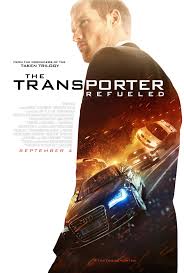
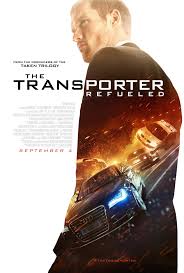
The Transporter Refueled

The Transporter Refueled

Posted on September 3, 2015 at 5:34 pm

C-
Lowest Recommended Age: High School
MPAA Rating: Rated PG-13 for sequences of violence & action, sexual material, some language, a drug reference & thematic elements
Profanity: Brief mild language (b-word, s-word)
Alcohol/ Drugs: Alcohol
Violence/ Scariness: Extended action-style violence and peril, many characters injured and killed, some disturbing images
Diversity Issues: Diverse characters
Date Released to Theaters: September 4, 2015
Copyright Relativity Europacorp 2015

It must be said. The refueled “Transporter” is very low octane. The original had some of the best chase scenes ever filmed and a star-making performance from Jason Statham. This reboot casts newcomer Ed Skrein who is the lower-priced spread to Statham’s artisanal butter. Skrein has bright blue eyes, cheekbones to die for, cute crooked teeth, and he looks great in a suit, especially when he is taking on a group of thugs all by himself. But neither he nor the storyline are enough to make any of the chases, explosions, or shoot-outs mean enough to hold our attention.

Same character: Frank. Same job: transporting. Same mad skills as a driver and in MMA-style fights. Same commitment to “plausible deniability,” so all clients must play by the rules. No names. No information about what’s in the packages or why they need a ride. No changing the deal after it’s been agreed on.

Frank agrees to transport a woman and two packages. But she changes the deal. She comes out of a bank with two other women, all identically dressed with blond Sia wigs on. Frank refuses to take them until they show him that they have kidnapped his father, played by Ray Stevenson, by far the best thing in the movie, as an unflappably urbane former spy who seems to enjoy everything that happens, from being kidnapped to MacGyver-ing an impromptu spot of bullet removal surgery with sugar and cobwebs. The next day, she’s up and around as though nothing had happened. Don’t try this at home, children. Really.

It would be more fun to watch a highlight reel of chases and stunts from the three previous films than this dull and surprisingly sour film, too lightweight to be referred to as a story and too ugly to be entertaining. A film like this has to have a bad guy who is despicable enough that we want him vanquished but not so nasty that it makes us start thinking too hard about questions like logic and why the police just abandon the chase whenever it is convenient. There are a couple of extra bad guys in this we barely learn enough to make us to pay attention to. If Luc Besson insists on making another one of these, let’s hope it’s “The Transporter’s Father” instead.

Parents should know that this film has constant chases and fight scenes, many characters injured and killed, some disturbing images including graphic wounds, brief strong language, sexual references and situations including prostitution, drinking, and smoking.

Family discussion: Why are Frank’s rules so important? How are Frank and his father different?

If you like this, try: the first “Transporter” movie

Related Tags:


Action/Adventure Movies -- format Series/Sequel
Learning to Drive

Learning to Drive

Posted on September 3, 2015 at 3:25 pm

B+
Lowest Recommended Age: Mature High Schooler
MPAA Rating: Rated R for language and sexual content
Profanity: Very strong and crude language
Alcohol/ Drugs: Alcohol
Violence/ Scariness: Tense emotional confrontations, car accident
Diversity Issues: A theme of the movie
Date Released to Theaters: September 4, 2015
Copyright 2015 Broad Green Pictures

Katha Pollitt’s wry but bordering on scathing essay about taking her first driving lessons in her 50’s, after her partner of seven years left her for another woman has been turned into a softened but still trenchant film. Patricia Clarkson plays Wendy, a less ethnic and more friendly-sounding name than Katha, and perhaps a reference to the “Peter Pan” character who had an adventure and then returned home to grow up.

Wendy is a New York intellectual who writes book reviews and appears on NPR. We first see her devastated and furious because her husband, Ted (Jake Weber), has taken her to dinner so that he can tell her in a public place that he is leaving her for another woman after 21 years of marriage. Their cab driver, a turbaned Sikh named Darwan (Sir Ben Kingsley) pretends not to hear as he takes them home, or rather takes Wendy home. Ted is not going back there anymore. When she realizes that a divorce will mean they have to sell their home, it is as painful for her as the end of the marriage. “It’s like asking me to move out of me.”

Later, Darwan realizes that Wendy has left an envelope in his cab. He returns it to her, and when she sees that he has a second job as a driving instructor, she impulsively hires him to teach her to drive. She has never had to learn; she lives in Manhattan and her husband drives. But their daughter (Grace Gummer) is living on a farm, and if Wendy wants to visit her, she will have to get a driver’s license and a car.

At first, Wendy assumes that Ted will come back. But, as Darwan tells her, she has to learn to be more attentive to what is going on around her. “Teach yourself to see everything.” He also cautions her to be mistrustful of other drivers. She begins to realize that this applies to her life as well as to driving. Meanwhile, Darwan struggles with his nephew, illegally in the US and living with him, and with his sister, back in India, who is trying to arrange a marriage for him. As Wendy’s marriage is dissolving, Darwan is agreeing to marry someone he has never met, Jasleen (Sarita Choudhury).

Beautiful performances by everyone, especially Clarkson and Choudhury, give this story a luminous glow and touches throughout remind us that this is a story told by women. Director Isabel Coixet (do not miss her exquisite “My Life Without Me”) and screenwriter Sarah Kernochan are wise about the connections women make with one another and how they talk about the men in their lives. That applies to Jasleen as well as Wendy. This is more than a story of a woman learning to pay attention and to “taste” a parking space; it is a story of Darwan and Jasleen as well, who have their own challenges of seeing and tasting.

Parents should know that this film includes very strong and crude language, sexual references and explicit conversations, and brief nudity.

Family discussion: What did Wendy learn about “tasting” and paying attention that helped her beyond the driving lessons? Why did she tell her daughter to go back to the farm? What will happen with Darwan and Jasleen?

If you like this, try: “An Unmarried Woman,” “84 Charing Cross Road,” and “Happy-Go-Lucky”

Related Tags:


Based on a true story Comedy Drama Movies -- format Romance
Gurukulam

Gurukulam

Posted on August 23, 2015 at 12:04 am

B
Lowest Recommended Age: Middle School
MPAA Rating: Not rated
Profanity: None
Alcohol/ Drugs: None
Violence/ Scariness: None
Diversity Issues: Diverse characters
Date Released to Theaters: August 22, 2015

It is hard to think of a form of communication more contrary to the internal stillness and oneness of meditation than a movie. Meditation seeks to remove our minds and spirits from the distractions of the outside world to free us from the non-essential. And movies are noisy, with images that are never still and scenes that stop and then start up again in another place and time, while meditation transcends time and place.

And yet the documentary Gurukulam, directed by Jillian Elizabeth and Neil Dalal is so gentle a window into the world of a traditional Advaita Vedanta ashram in Tamil Nadu, India that it is itself a kind of meditation.

https://vimeo.com/113890428

The film is reminiscent of 2007’s Into Great Silence, where Philip Gröning lived in a monastery for six months in near-complete silence, filming the monks’ daily prayers, cores, and rituals. As in that film, the inherent contradiction of making a film about a secluded community to share their world with outsiders is overcome at least in part by the quiet, unassuming, open=hearted approach of the filmmakers.
And it is, of course, fascinating to get a glimpse of this secluded world. We see members of the community perform various everyday tasks and the movie trusts us enough to expect that we will not find it boring, at least not for long, because the rhythms of the film illuminate the essential oneness — there is no separation between chores and worship. We meet people coming to the ashram and learn a little bit about what brought them at this moment and what they are looking for. And we hear some of Swami Dayananda’s lessons. One of the pleasant surprises of the film is how much laughter there is. There is seriousness of purpose, but the members of this community feel and convey a constant sense of joy that is as important a lesson for us as the commentary on the nature of reality.

Related Tags:


Documentary Movies -- format Spiritual films
Molly Moon and the Incredible Book of Hypnotism

Molly Moon and the Incredible Book of Hypnotism

Posted on August 13, 2015 at 3:43 pm

B
Lowest Recommended Age: 4th - 6th Grades
MPAA Rating: Rated PG for thematic elements and brief language
Profanity: Brieg language
Alcohol/ Drugs: None
Violence/ Scariness: Peril, issues of parental death and abandonment, mean adults
Diversity Issues: None
Date Released to Theaters: August 14, 2015

Copyright ARC Entertainment 2015
“Molly Moon and the Incredible Book of Hypnotism” is a cute family fantasy, based on the series of books about a spunky orphan by Georgia Byng. Raffey Cassidy, the enchanting young star who was the highlight of “Tomorrowland,” is perfectly cast as the determined Molly Moon, who learns from an old book how to use hypnotism to get people to do what she wants. Cassidy’s clear blue eyes are so mesmerizing that it is easy to believe they can bewitch anyone.

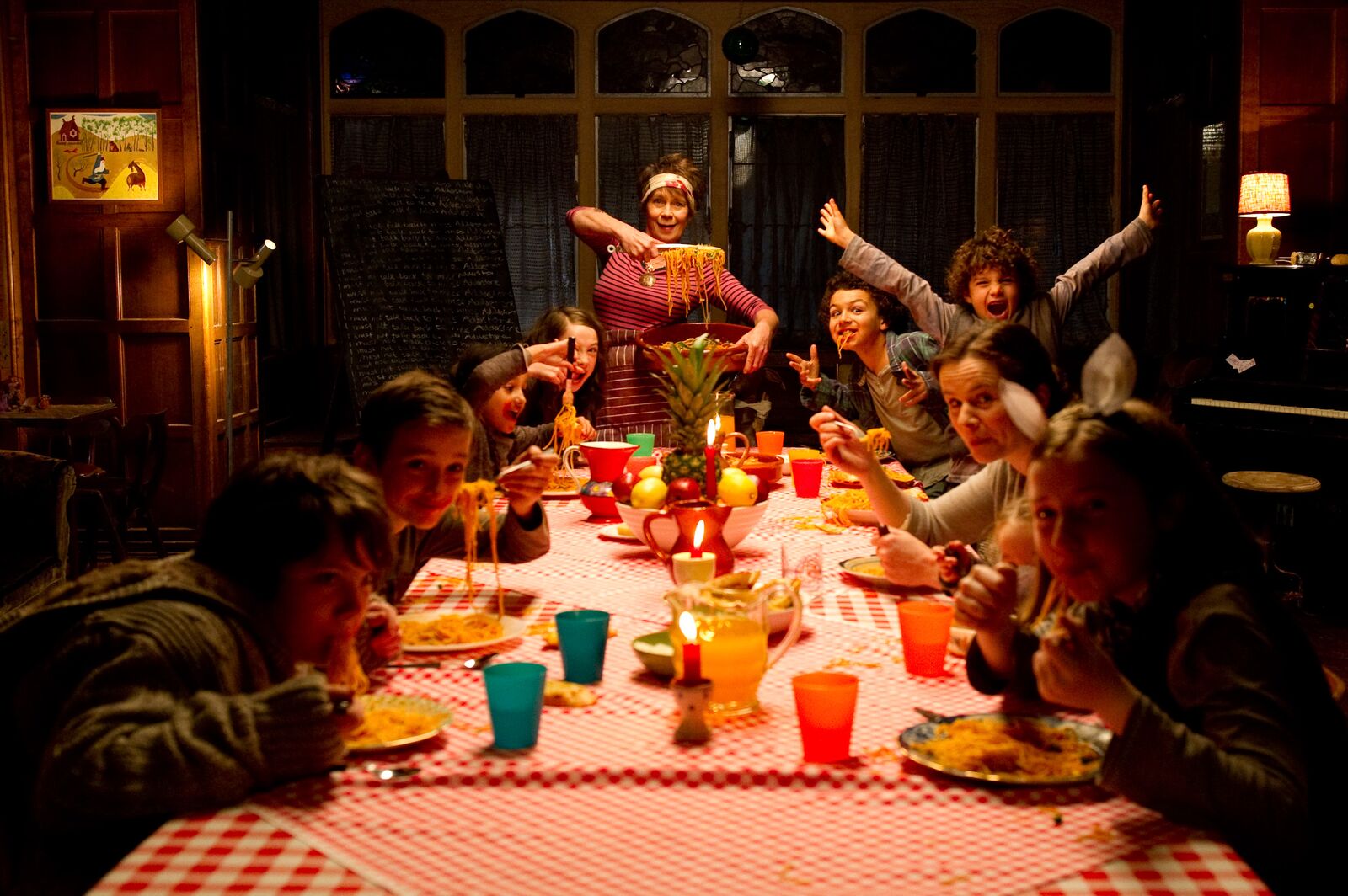
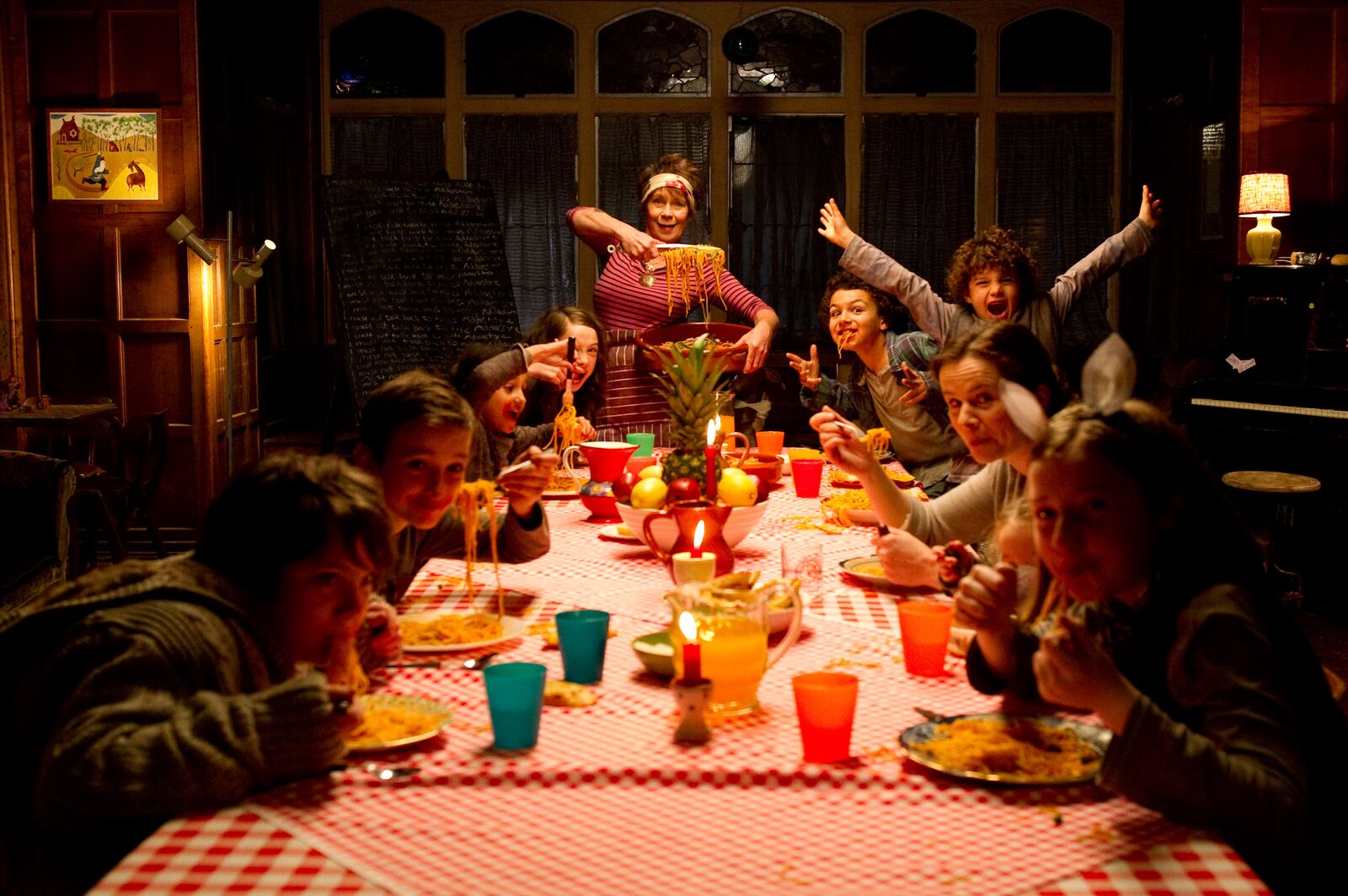
Molly lives in a Little Orphan Annie/Oliver Twist-style terrible orphanage, presided over by mean Mrs. Adderstone (Lesley Manville), with the disgusting food prepared by a cook named Edna (Celia Imrie). In this brutal environment, Molly’s only friend is Rocky (Jadon Carnelly Morris), a gifted singer. Molly promises to be there for his performance but lets him down twice because she is so captivated by an old book about hypnotism she found in the library. She tries out what she learned first on Mrs. Adderstone’s fierce dog Petula, who becomes friendly and devoted. And then she goes to work on Edna, who suddenly starts preparing delicious, wholesome meals for the children. She tries to work out some adoptions that would keep her with Rocky, but, angry and hurt because she broke her promise, he goes off with the wealthy Mr. and Mrs. Alabaster. Molly decides that what she needs is stardom. If she is rich and famous like pop star Davina (Tallulah Evans), she thinks she will be happy. She cannot sing or dance, but she does have the crucial skill — her ability to hypnotize extends not only to a television producer and a talk show host, but by the clever use of magnification, to almost everyone in the audience, not just in the theater where she is performing but those watching on television as well.

Meanwhile, someone else is trying to get the hypnotism book: a crook named Nockman (“Lord of the Rings'” Dominic Monaghan), spurred on by his crime queenpin mother (Joan Collins, as always, at her best playing bad). They want to use hypnotism for a big robbery. And if they can’t get there before a rival gang, maybe they can let them do the robbery and then rob them.

All of the performers, young and grown-up, are clearly enjoying themselves. Cassidy is one of the most appealing young actors in film, Emily Watson is very touching in a brief role as a sympathetic adult supervising the orphans, and Evans is excellent as a pint-sized diva. Director Christopher N. Rowley and director of photography Remi Adefarasin (“Match Point,” “Elizabeth”) keep the tone light and playful, enjoying the heightened fantasy elements of the story. It comes across like a fairy tale, with transformations and enchantments. And it is exceptionally understanding of the story’s villains. In order to hypnotize someone, Molly has to understand something about them. Even pretending to listen to them teaches her something about why acts that are inconsiderate or selfish are often based in hurt and fear. Molly herself is thoughtless and unfair at times. Like Spider-Man she has to learn that with great power comes great responsibility, and like Dorothy, she learns that there’s no place like home.

Parents should know that the film deals with parental loss and abandonment and with adults being cruel to children. They should also know that the film perpetuates inaccurate stereotypes of adoption, including the idea that prospective parents go to orphanages to pick out children as though they are buying groceries. There is some mild peril and brief language and crude humor.

Family discussion: Who would you like to hypnotize? Why didn’t Molly like being a pop star?

If you like this, try: the books by Georgia Byng

Related Tags:


Based on a book Fantasy Movies -- format Stories About Kids VOD and Streaming
THE MOVIE MOM® is a registered trademark of Nell Minow. Use of the mark without express consent from Nell Minow constitutes trademark infringement and unfair competition in violation of federal and state laws. All material © Nell Minow 1995-2026, all rights reserved, and no use or republication is permitted without explicit permission. This site hosts Nell Minow’s Movie Mom® archive, with material that originally appeared on Yahoo! Movies, Beliefnet, and other sources. Much of her new material can be found at Rogerebert.com, Huffington Post, and WheretoWatch. Her books include The Movie Mom’s Guide to Family Movies and 101 Must-See Movie Moments, and she can be heard each week on radio stations across the country.

Website Designed by Max LaZebnik