Seriously, don’t read this review until after you’ve seen the movie. The less you know, the more you will enjoy this nifty thriller, which craftily makes the most of its micro-budget to maximize a deliciously mind-bending story. As in all great thrillers, the scary stuff is not what’s on the outside, but what the stuff on the outside does to the stuff in the inside, meaning not just the inside of the characters but the inside of the audience.
James Ward Byrkit, who wrote “Rango” and created the visual design for the “Pirates of the Caribbean” movies (all with Gore Verbinski), wanted to take some time away from seven-figure-budget blockbusters and create something small and intimate. He literally shot it in his living room, with a cast of vaguely familiar looking but under the radar actors. As the movie begins, eight friends are getting together for a dinner party. We get some sense of the relationships and some tensions as they gather. They engage in routine dinner party chat, mentioning in passing some news about a comet due to pass overhead along with the usual updates and gossip. And then the phones stop working. And then the lights stop working. And then someone says he’d better go outside to find out what is happening. And we’ve all seen enough movies to know that this is probably not a great idea.
What happens next is not a plot twist but a plot Rubik’s Cube, an ingeniously plotted infinite regression of meta-realities. To say any more would be to spoil the movie’s best surprises.
Parents should know that this is a psychological thriller with a pervasive sense of dread and some violence. Characters drink and use drugs and there is strong language.
Family discussion: What decision do you wish you could go back and do over?
An outstanding cast, a weighty subject, and the sincerest of intentions are almost enough to make up for an undercooked, stuntish, and stagey script in this story about a man who decides to die and the family he leaves behind.
The always-brilliant Richard Jenkins plays Robert, who has been fighting cancer for twelve years, eleven and a half longer than his doctors expected. We get a glimpse of him in a flashback, superbly confident and capable as he crisply guides a boardroom through the details of a complicated transaction and then leaves them behind to take his adored and adoring 14-year-old son Jonathan to lunch.
Garrett Hedlund plays Jonathan at 26 and we first see him getting in trouble on an airplane for smoking in the lavatory, and then persuading a flight attendant not to have him arrested with charm — and a request for sympathy because he is on his way to be with his dying father. He is on his way to be with his dying father, but we get the idea that he has been using that as an excuse for a long time.
This visit is different, though. While Jonathan and his mother Rachel (the lovely Anne Archer) and lawyer sister (“Downton Abbey’s” Jessica Brown-Findlay) tell Robert that he can get through this as he has so many times before. But he says, “I fought for 12 years. I’ve got nothing.” He wants to be taken off the drugs so he can see his family clearly. And then he wants them to let him go.
He has a surprise for them. He has given away his money. “I love you both and I raised a couple of spoiled brats,” he tells them.
It takes about a day to sort this all out, and a lot happens. Some of it is touching, as when Hedlund explains why he has stayed away: “It’s hard to love someone with an expiration date stamped on his forehead.” And he did not want to come home until he could be proud of what he had accomplished. Jonathan has to admit that he is the one who is not ready. Rachel is devoted but shows some asperity when no one acknowledges the challenges she faces as the caretaker.
But too much seems artificial. Jessica Barden, like many of the other actors, does far more than it is fair to expect with an underwritten role. In her case it is the plucky dying teenager who just wants to know what one of the normal pleasures of adolescence might feel like, which gives Jonathan an opportunity to duck out on his family as a personal Make-A-Wish, with a chorus of cute sick kids cheering him on. There is a sort of seder in the hospital chapel and an impassioned oral argument. Amy Adams shows up as Jonathan’s ex and Terrence Howard and Jennifer Hudson are the doctor and nurse. All three are sensitive performances in underwritten parts. Issues and hostilities between family members appear and disappear without the underlying emotional heft necessary to provide a reason for the changes. When Robert says he is proud of Jonathan, it is hard to understand why. And yet Jenkins and Hedlund find something in the moment that makes it matter. Writer/director Andrew Levitas shows promise, but he needs to trust his audience a little more.
Parents should know that this film deals with issues of death and dying, including assisted suicide, and it includes smoking, drinking, drugs, sexual references, and strong language.
Family discussion: Who should decide when someone should be allowed to die? Have you discussed your wishes with your family?
Rated PG-13 for language including a sexual reference
Profanity:
Some strong language
Alcohol/ Drugs:
Drinking
Violence/ Scariness:
Tense family confrontations, bullies, brief fight, gun, sad deaths
Diversity Issues:
Diverse characters including disabled character
Date Released to Theaters:
January 13, 2012
Date Released to DVD:
April 30, 2012
Amazon.com ASIN:
https://amzn.to/4xxi2xm
Joyful indeed — this movie is pure cinematic sunshine, guaranteed to brighten the heart and gladden the spirit. Super-divas Dolly Parton and Queen Latifah play rival gospel choir leaders in an inspiring and heart-warming story filled with love, laughter, music, and praise.
Copyright 2012 Warner Brothers
G.G. (Parton) is still mourning the loss of her husband Bernard (Kris Kristofferson) when she receives another blow. She expected to take over his duties as choir leader but the church council picks Vi Rose (Queen Latifah) and her more traditional approach instead. Vi Rose’s husband is in the military and out of contact. She has to take on extra work to support Olivia and her son Walter (Dexter Darden), who has Asperger’s syndrome that makes social interaction difficult. She is devoted to the choir, a source of stability and connection for her. She wants it to be competitive but it is more important to her that it be clear that the focus is on the music as worship, not performance. When they get a chance at the national title — and a budding romance between G.G.’s grandson Randy (Broadway star Jeremy Jordan) and Vi Rose’s daughter Olivia (Keke Palmer of Akeelah and the Bee) — G.G. and Vi Rose will have to find a way to work together harmoniously. And that, after all, is what a choir is about.
Writer/director Todd Graff demonstrated in the underrated Camp and Bandslam that he understands teenagers as characters and works well with them as performers. His sincere and sympathetic appreciation for their stage of life is a pleasure to experience. Graff also understands the passion of those who love to perform before a live audience and the challenges they face. As an experienced theater nerd himself he knows how to stage musical numbers. And he is remarkably adept at managing a lot of characters and story lines gracefully, giving each element of the story its own dignity and spirit and sensitively evoking a touching sense of a small-town Georgia community hit hard by the economic upheavals of the past five years. I would have excised a not-very-comic sub-plot about one choir member’s difficulty finding a date after a man dies following their first night together. But the rest is skillfully blended with some sharp dialog. “You’re so country you’ve been married three times and have the same in-laws,” one character teases another. “Your train of thought makes all local stops,” says another.
Queen Latifah gives her best performance to date because Vi Rose is the most complex character she has played to date, giving her a chance to show her confidence, her humor, and her warmth. She shines in a terrific speech about what incandescent beauty really means and sings a moving “Fix Me, Jesus.”
Parton makes a welcome return to feature films after nearly two decades in a role as tailor-made for her as her fitted choir robes. G.G. is flashy and outspoken. But she, too, is trying to hold on in difficult times. She is estranged from her daughter and trying to care for her grandson. In a scene of piercing sweetness, she remembers her life with her husband in a tender duet that gently evolves into a trio.
Jordan and Palmer are enormously appealing, with a quiet chemistry that lights up the screen.
Parton’s three tuneful new songs are mixed with raise-the-roof adaptations of gospelized classics Paul McCartney’s “Maybe I’m Amazed” and Michael Jackson’s “The Man in the Mirror.” On stage and off, Graff shows us the characters’ kindness and sense of connection even when they frustrate each other and it feels very genuine. There is a lot of heart in the musical numbers that deepens our pleasure in seeing the characters find what the harmony they are looking for.
Parents should know that this film includes tense and unhappy family situations, sad deaths, bullies and a brief fight, a gun, sexual references, earthy humor and a non-explicit situation, jokes about character who can’t get anyone to sleep with her because someone died after they had sex, and some strong language (b-word, s-word).
Family discussion: What was the biggest difference between Vi Rose and G.G.? Who was right? Find out which members of your family have participated in choirs and go to see some of the choirs in your neighborhood.

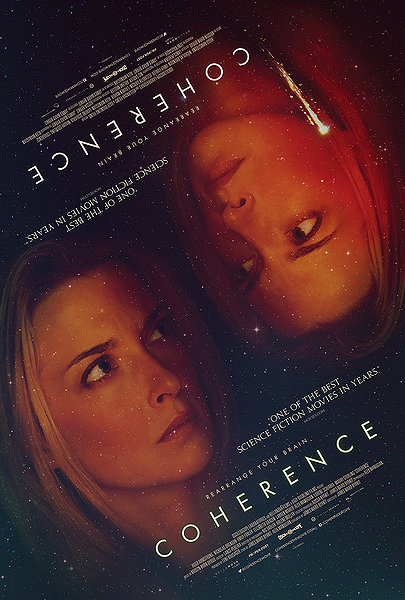 Seriously, don’t read this review until after you’ve seen the movie. The less you know, the more you will enjoy this nifty thriller, which craftily makes the most of its micro-budget to maximize a deliciously mind-bending story. As in all great thrillers, the scary stuff is not what’s on the outside, but what the stuff on the outside does to the stuff in the inside, meaning not just the inside of the characters but the inside of the audience.
 with Sally Field

 and the glorious Aretha Franklin in