Malcolm and Marie

Malcolm and Marie

Posted on February 4, 2021 at 5:14 pm

B +
Lowest Recommended Age: Mature High Schooler
MPAA Rating: Rated R for pervasive language and sexual content
Profanity: Very strong language
Alcohol/ Drugs: Alcohol
Violence/ Scariness: Struggles, arguments
Diversity Issues: A theme of the movie
Date Released to Theaters: February 5, 2021

Copyright Netflix 2021
When I interviewed John David Washington about “BlackKklansman,” he told me his dream was a film of “The Taming of the Shrew.” His new film, “Malcolm and Marie” could be an audition for that project and based on the results, someone should cast him and his co-star Zendaya right this minute and start filming it tomorrow.

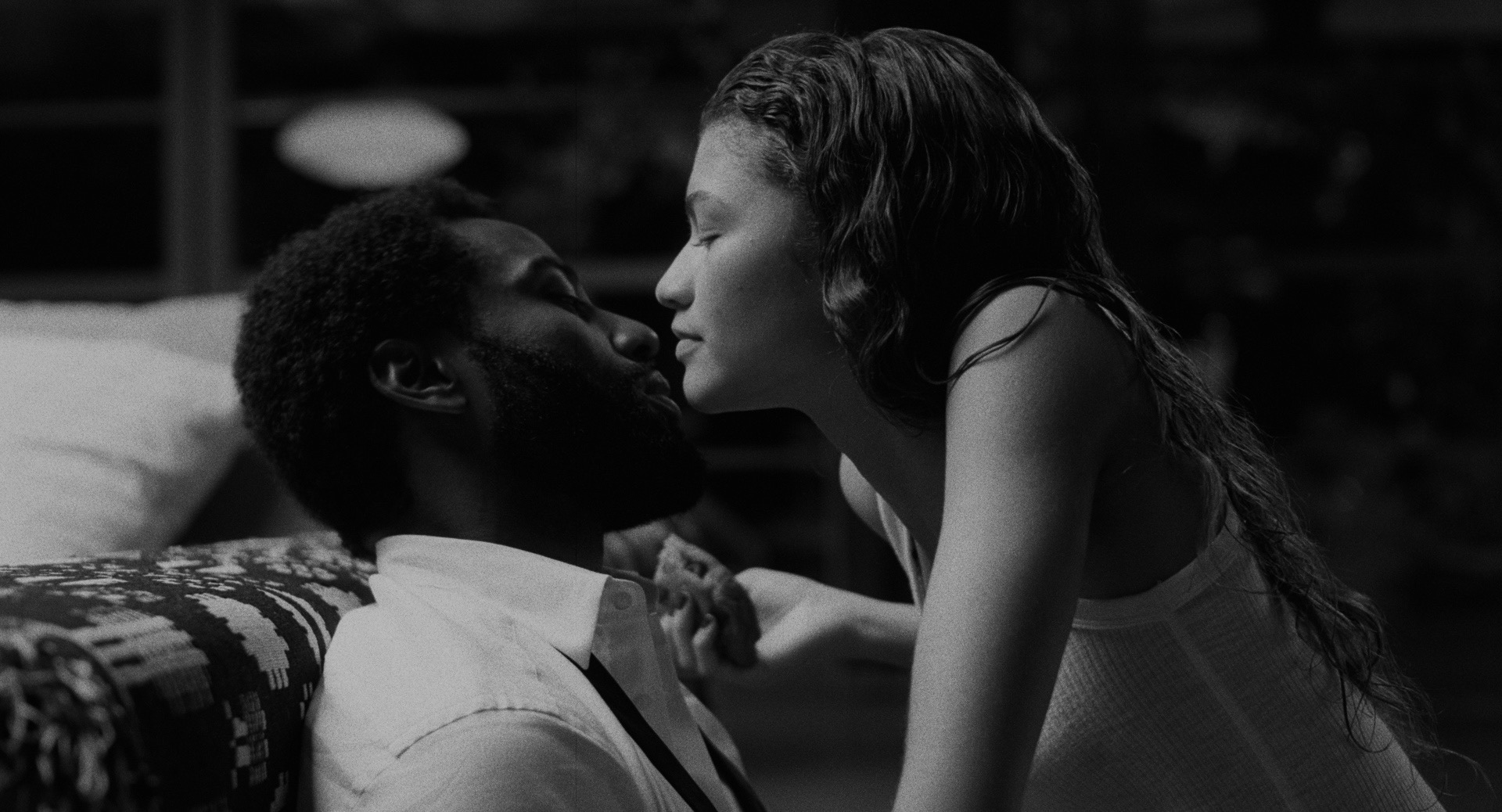
There’s a lot wrong or maybe it is more accurate to say missing in “Malcolm and Marie,” but given the way it was made, it is remarkable how much is right and it is never less than watchable thanks to the palpable magnetism and chemistry of its two stars, who make up the entire cast. This was a pandemic project, made by writer/director Sam Levinson, as he and Zendaya were on hiatus from their “Euphoria” series due to COVID-19 restrictions. So, this film preserves the classical unities of time and space and action, not as a tribute to Aristotle’s Poetics but as a way to keep everyone safe. The cast and crew quarantined together and the entire film takes place in real time during one late evening in one beautiful beach house. It is filmed in gorgeous black and white by Marcell Rév. And it has a script that could have used a couple more drafts.

Malcolm (Washington) and Marie (Zendaya) come home from a big, glittery event in very different moods, so different that they do not at first notice what is happening with each other. Malcolm is proud, happy, relieved, and excited. He pours himself a drink, cranks up the music, starts to dance, and asks Marie to make some mac and cheese.

Marie boils the water and cuts the butter, but she is quiet, reflective, possibly seething underneath.

Malcolm is an up-and-coming film director and they have just come from the premiere of his latest, the story of a young woman struggling with drug addiction. The premiere was a triumph, the kind that may have moved him from up-and-coming to arrived. Following the screening, he was complimented by everyone, even “the white lady critic from the LA Times.” He is delighted with the reaction, but it stings that her compliment compared him to directors like Spike Lee and Barry Jenkins, all Black filmmakers, and not to, say, William Wyler, a white director from the 1940s and 50s. Marie is feeling left out, partly for reasons we will discover, but initially because in his speech at the reception, he thanked a lot of people, including the star of the film, but did not thank her. He apologized in the car on the way home, but it still bothers her.

The rest of the film is up and down and back and forth as they argue, make up, argue, make up, argue, and possibly make up again. There are elements of “Who’s Afraid of Virginia Woolf” as their arguments strip away the boundaries enduring couples are careful to protect, but in this case there is no bewildered, meek, and tipsy other couple to perform for; there is just us. Washington and Zendaya are never less than utterly present, utterly vulnerable, and utterly in control of the constantly shifting moods, challenging and matching each other in every beat as characters and as performers. It is a wonder to watch.

And it is impossible not to be sympathetic to the movie’s failures because they are the faults of daring too much, when too many movies fail for the opposite reason. “Malcolm and Marie” tries to bring a lot into the world of these two people in two hours, with issues of race and culture and the relationship of the critic to the artist and who gets credit for what and when and probably also what art is for in the first place. A lot a lot a lot, all from two people talking. It is unlikely that it would have been made this way without the restrictions of a pandemic, including the claustrophobia of the entire crew quarantining together. What other conditions could create this work? How else could we explore these issues in this way? Think of other movies about two people talking. “My Dinner with Andre” was constructed, with everyone going home after a day of shooting, and “Before Sunrise” and “Columbus” had whole cities to explore.

“Malcolm and Marie” may end up as a footnote in what are sure to be long and rich careers for the filmmakers. But it is well worth seeing as an example of what can be done when it seems like nothing is possible, indeed what can be inspired by a moment that seems stuck. I came away hoping the characters go on together and looking forward to whatever Washington and Zendaya do next.

Parents should know that this movie includes very strong language, explicit sexual references and situations, tense confrontations, and discussions of drug addiction.

Family questions: Do your sympathies shift back and forth over the course of the movie? When? Why?

If you like this, try: “Who’s Afraid of Virginia Woolf” and “My Dinner with Andre” as well as other films from Washington and Zendaya and the works of William Wyler

Related Tags:


movie review Movies -- format Movies -- Reviews Race and Diversity Romance
Supernova

Supernova

Posted on January 28, 2021 at 5:49 pm

B +
Lowest Recommended Age: Mature High Schooler
MPAA Rating: Rated R for language
Profanity: Very strong language
Alcohol/ Drugs: Social drinkiing
Violence/ Scariness: Illness, dementia, discussion of suicide
Diversity Issues: None
Date Released to Theaters: January 29, 2021

Copyright Netflix 2021
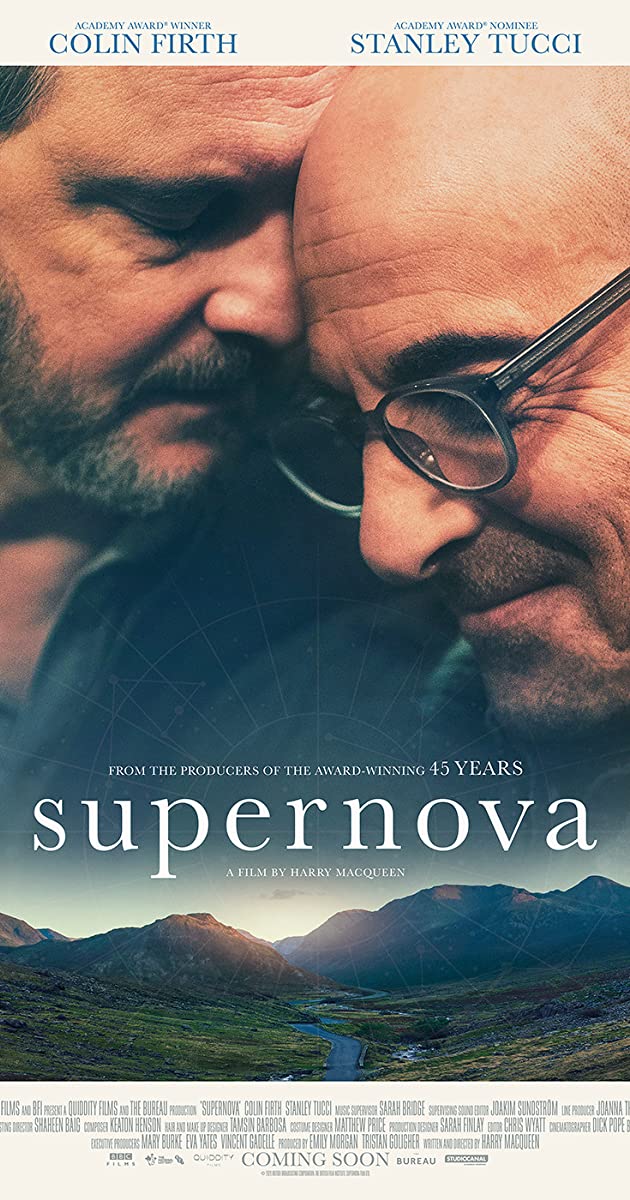
A lot of thought goes into weddings, but very little of it focuses on one of the promises couples make, the one about “in sickness and in health.” And yet those of us who are lucky enough to share our lives with the ones we love for decades will face a time when one has to care for the other. In “Supernova,” Colin Firth and Stanley Tucci play a longtime devoted couple who are facing one of the most painful losses of all. One of them has been diagnosed with dementia.

Firth plays Sam, classical pianist, and Tucci is Tusker, a successful novelist. Asleep, they tenderly embrace. Awake, they amiably bicker and banter as they embark on a road trip in a well-traveled camper.

Sam is clearly the more serious of the two, with Tusker more sardonic and a bit of a tease. Writer/director Harry Macqueen understands the rhythms, stresses, and enduring pleasures of a long-term relationship. And Firth beautifully portrays the way Sam worries, worries about revealing that he is worrying, all the time relishing his time with Tusker all the more because he knows there will be less of Tusker every day.

The trip itself is about memory as they visit places and people that have meant the most to them. And as we understand better the strain they are under, their connections and conversations take on deeper meanings. Looking out at a magnificent view that many couples have found romantic Tusker asks what wish Sam would make. Sam says something many couple have said in that same spot. He wishes this vacation could go on forever. But what he means is that he wants to freeze this moment. Tusker, even impaired, knows Sam well enough to respond to the subtext: “So can you tell that it’s gotten worse?”

The trip takes them backwards and forward. They relive some of their past, through recollection, stops at meaningful locations, and encounters with people who have been important to them for a long time. And then obliquely and then more explicitly they look ahead as they consider their options and priorities. Tusker will become more dependent but, most terrifying for both of them, he will become less himself.

How much deference do you give to someone you love deeply when his judgement may be severely diminished? How much deference do you give to someone you love when he wants to care for you — and you don’t want to be cared for, you want both of you to be spared what will inevitably be (literally) horrible?

Macqueen has a light touch with the bigger picture hinted at in the movie’s title. His palpable sympathy for both men and for the complexity of the decisions they are making and the subtle, sympathetic performances from Firth and Tucci make this film a quiet gem, true to the characters and their love story.

Parents should know that the themes of this movie including memory loss and suicide and characters use very strong language.

Family discussion: Do you agree with Tuskar’s decision? How should Sam respond?

If you like this, try: “Still Mine,” “Away From Her,” “The Leisure Seeker,” “Blackbird,” and “I Remember Better When I Paint”

Related Tags:


Drama Illness, Medicine, and Health Care movie review Movies -- format Movies -- Reviews
The Little Things

The Little Things

Posted on January 27, 2021 at 7:00 am

C
Lowest Recommended Age: Mature High Schooler
MPAA Rating: Rated R for violent/disturbing images, language and full nudity.
Profanity: Very strong language
Alcohol/ Drugs: Alcohol
Violence/ Scariness: Serial killer crime drama
Diversity Issues: None
Date Released to Theaters: January 29, 2021
Date Released to DVD: May 4, 2021

Copyright Warner Brothers 2021
Three Oscar winners cannot save “The Little Things,” a crime thriller that starts out promisingly and about halfway through completely loses its way. It’s almost like the screenplay was created by two different people, or undermined by the director. But John Lee Hancock (“The Blind Side,” “Saving Mr. Banks,” “The Highwaymen”), both wrote and directed, so he is responsible when the story veers into Gothika Rule territory.

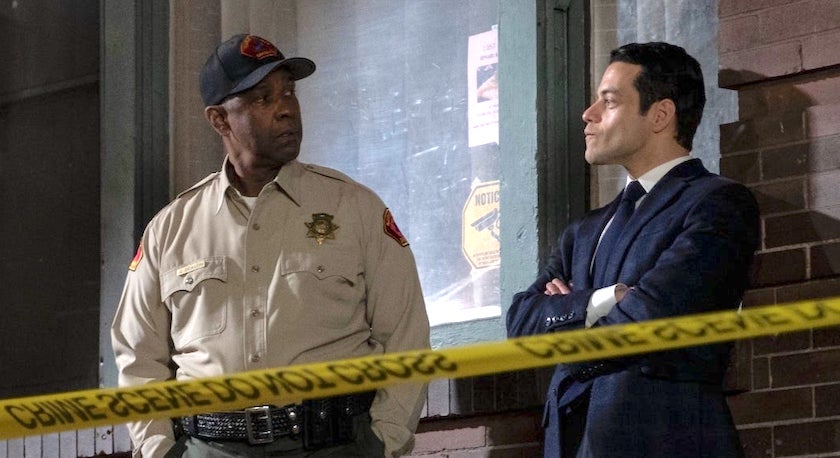
It takes place in 1990, and we begin with a pretty young woman driving on the highway and singing along to the Go-Gos as a sinister motorist behind her makes her uncomfortable and then terrified. The first half sets up two mysteries. The first is the realization that the young woman who has been murdered is the victim of a serial killer, expanding and making more urgent the search to find the one responsible. The detective in charge is Jim Baxter (Rami Malek), who takes the job very seriously, even personally. “We work for her,” he says about the dead woman.

A lower-level officer named Deke Deacon (Denzel Washington) has been sent to Baxter’s police station to pick up some evidence. The second mystery is why the people there are (mostly) so hostile to him and why a clearly experienced, capable, and dedicated has not risen in rank. “And they say Black guys never return to the scene of the crime,” another detective says with acid in his voice. But the forensic pathologist seems more sympathetic, agreeing to spend some time with him when a delay in making the evidence available keeps him there overnight.

There’s “something like it up north,” Deke says, and soon he and Baxter are beginning to work together to find the killer. “Things probably changed a lot since you left,” says Baxter. “Still gotta catch ’em? Then nothing has really changed that much,” Deke says.

So far, so good. As long as Deke and Baxter are behaving like intelligent, dedicated professionals, the movie holds our interest as a police procedural with intriguing characters. But then Jared Leto enters the picture as suspect Albert Sparma and it all begins to fall apart. Baxter seems to have an inexplicable change of personality with a decision so monumentally stupid and contrary to day one of any kind of law enforcement training not to mention basic common sense that it takes us out of the story.

Meanwhile, what we learn about Deke’s past is not as meaningful as the movie clearly thinks it is, making the story’s primary mystery secondary to the point of almost inconsequential. Washington’s is the only performance that continues to hold our attention as Leto hits one creepy note and stays there and Malek is unable to overcome his character’s inconsistency. More important, the swerve in tone undermines the film’s aspirations for moral complexity. The title of the film refers to the little things that are important to get right, whether you are a killer trying to evade justice or law enforcement trying to achieve it. In the case of this movie, the little things are all right but the big thing, the screenplay, is a mess.

Parents should know that this movie is about a serial killer and it has some grisly and graphic images and strong language.

Family discussion: Why did Deke send the package to Baxter? How was that decision tied to his own experience? Why did Flo keep the memento on her keychain?

If you like this, try: “Inside Man” and “Silence of the Lambs”

Related Tags:


Crime Drama DVD/Blu-Ray movie review Movies -- Reviews Thriller
Herself

Herself

Posted on January 7, 2021 at 5:33 pm

B +
Lowest Recommended Age: High School
Profanity: Some strong and crude language
Alcohol/ Drugs: Alcohol
Violence/ Scariness: Brutal domestic abuse, illness, adult and child injured
Diversity Issues: Diverse characters
Date Released to Theaters: January 8, 2021
Copyright Amazon 2020

Reflexive pronouns are used differently in the UK. In the US, we mostly use “himself” and “herself” to emphasize achievement: “He learned to ride his bicycle himself!” But in the UK those words are colloquially used as subjects, to refer to individuals. So, in “Herself,” a film co-written by and starring Irish actress Clare Dunne, a man who is helping her character with a big project hands her a tool to take the first step, saying, “We’ll let herself do the honors.” The title refers to both uses of the word, indicating agency and independence.

Dunne plays Sandra, who tells her daughters in the opening scene that the birthmark under her eye was God’s way of making sure he can always find her, because “there are a lot of Sandras in Dublin.” We can see immediately what a patient, loving mother she is, and then again as she dances with her daughters to Sia in their kitchen. But when her husband Gary (Ian Lloyd Anderson) comes home, the mood shifts subtly but unmistakably. In what is obviously a pattern, he sends the girls outside and begins to beat Sandra brutally. But this time is different. She has made a plan and whispered the code word to her older daughter. Soon they are in shelter space in a hotel.

Sandra sees a video of a man explaining how anyone can build a tiny house. Without any help from the social service agencies, she decides to do it — by herself.

But what that means is getting the help of other people, including a local builder named Aido (Conleth Hill), neighbors, and the disabled doctor she works for as a cleaning lady (the always-marvelous Harriet Walter, mistress of the dry delivery). Like all abusers, Gary had cut her off from other people. But learning to trust and to reach out is as healing as the house itself.

Little details add a lot of richness to the story, showing us instead of telling us. Sandra meets Aido when he rebukes a sales clerk for being rude to her. And we see Aido change his mind about saying no to her when his son Francis (Daniel Ryan), who has Down syndrome, quietly hands Sandra his old work boots to help her get started. Gary’s mother has a poignant confession. A sympathetic social worker (Cathy Belton) helps Sandra when Gary sues her for custody. And the scenes with the neighbors, many of them immigrants, who help build the house are charming and engaging. Dunne’s performance is deeply moving and the story is genuinely heartwarming.

Parents should know that this film includes domestic abuse. Adults and children are injured. There is some strong and crude language.

Family discussion: Why did Sandra tell the judge she was asking the wrong questions? What can we do to provide better support for people like Sandra?

If you like this, try: “Still Mine” and “Places in the Heart”

Related Tags:


Drama Family Issues movie review Movies -- format Movies -- Reviews
If Not Now, When?

If Not Now, When?

Posted on January 7, 2021 at 3:18 pm

B-
Lowest Recommended Age: High School
Profanity: Some strong language
Alcohol/ Drugs: Addiction
Violence/ Scariness: Fight scene, angry confrontations
Diversity Issues: None
Date Released to Theaters: January 8, 2021

Copyright 2020 Vertical Entertainment
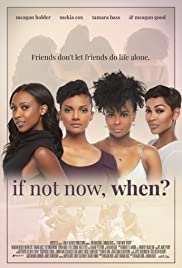
Meagan Good and Tamara Bass co-produced, co-directed, and star in “If Not Now, When?” with a screenplay by Bass. It is the story of four friends who come together as one of them is facing a crisis, and then support each other as each of them faces difficult decisions about life, work, parenting, and romance. Sound soapy? It is, but not because those issues should be dismissed as, in the words of Stephen H. Scheuer’s 1958-1993 guide to movies, “for the ladies.” Plenty of films make clear that those are foundational life questions that everyone struggles with. But the script is the weak point in this film, with exposition-heavy dialogue that too often tells instead of shows.

As we might expect, the strong point of the movie is the performances. Bass and Good understand actors, starting with the casting, and they give them the space to bring more life and emotion to the script than it merits.

In a brief prologue, we see the four friends in high school, working up an elaborate dance routine for a promposal — which is quickly declined. But they’re not bothered. It is clear that they are just as happy going with each other. Tyra (played as a teenager by Li Eubanks), asks them to wait while she goes to the bathroom. It turns out she is in labor. She has not told anyone she is pregnant, not even her friends. They stay with her and promise their support.

Fifteen years later, Tyra (Good) is being discharged from a hospital following an accidental drug overdose. Her friends and her husband, Max (Kyle Schmid) stage an intervention, telling her she needs to go to rehab because she is dependent on opioids. She refuses until she sees her 14-year-old daughter Jillian (Lexi Underwood), who found her unconscious and had to call 911. She reluctantly agrees to go, though at first insists that she does not have a problem.

While she is in rehab, we spend time with the three friends. Suzanne (Mekia Cox) is married to a bitter, unfaithful, alcoholic former football player. She loves another man but won’t leave her husband because she is pregnant, and, more important, because she wants everyone to think her life is perfect. Patrice (Bass), a nurse, is drawn to a doctor at her hospital, but is afraid he will reject her when he learns more about her. Jillian thinks of Patrice as a second mother, and is living with her while Tyra is away.

And Diedre (Meagan Holder), a gifted dancer, is weighing two offers, a dream job choreographing a pop star’s tour and a chance to reconcile with her ex (McKinley Freeman as Jackson), the father of her son. Other than the football player, the men are all gorgeous and pretty much fully devoted to supporting the ladies they adore. With over four different stories and ten characters, including children, there is not enough time to give enough depth to most of them to make us invest in their stories. Much of the film has no score other than some on-the-nose needle drops. Oddly, the lyrics of one say “you are what you choose to be” but another says, “I’ll be different for you, baby.”

Trya’s story gets the most attention, and the most interesting relationship in the film is between Tyra and her counselor at rehab, an exquisite performance by Valarie Pettiford. But the movie really comes to life only when the women are talking to each other, renewing their connections and providing the support that only those ride-or-die friends for decades can give. Good and Bass clearly share that connection, but it is only intermittently that it comes across in the film.

Parents should know that this film includes drug addiction and alcoholism, infidelity, some violence, sexual references and situations, and some strong language.

Family discussion: Why was it so difficult for these women to admit their problems? What made Tyra change her mind about cooperating with treatment?

If you like this, try: “Waiting to Exhale” and “Now and Then”

Related Tags:


Drama movie review Movies -- format Movies -- Reviews Romance
THE MOVIE MOM® is a registered trademark of Nell Minow. Use of the mark without express consent from Nell Minow constitutes trademark infringement and unfair competition in violation of federal and state laws. All material © Nell Minow 1995-2026, all rights reserved, and no use or republication is permitted without explicit permission. This site hosts Nell Minow’s Movie Mom® archive, with material that originally appeared on Yahoo! Movies, Beliefnet, and other sources. Much of her new material can be found at Rogerebert.com, Huffington Post, and WheretoWatch. Her books include The Movie Mom’s Guide to Family Movies and 101 Must-See Movie Moments, and she can be heard each week on radio stations across the country.

Website Designed by Max LaZebnik