The Ringer

The Ringer

Posted on December 20, 2015 at 3:49 pm

B-
Lowest Recommended Age: Middle School
MPAA Rating: Rated PG-13 for crude and sexual humor, language and some drug references.
Profanity: Some crude language
Alcohol/ Drugs: Scenes in bar, character chews a cigar
Violence/ Scariness: Comic peril and violence, serious injury played for humor
Diversity Issues: A theme of the movie
Date Released to Theaters: December 23, 2015
Date Released to DVD: March 23, 2016

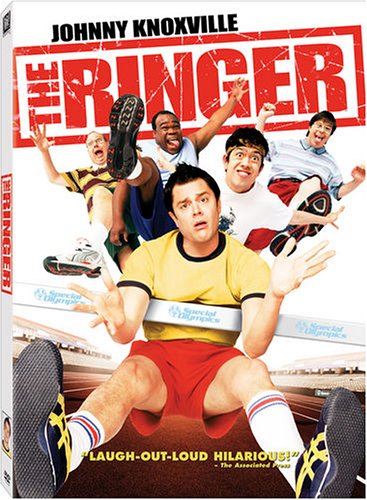
The single most interesting aspect of The Ringer, a movie about a man who pretends to be disabled so that he can compete in the Special Olympics, is that the movie was made in cooperation with and with the endorsement of the Special Olympics organization, and 150 Special Olympics athletes appear in the film.

Unfortunately, the story of how the movie got made is much more interesting than the formulaic story of the movie itself. Steve (Johnny Knoxville), a nice non-disabled guy who needs money to help someone get an operation pretends to be “high-functioning developmentally disabled” to compete in the Special Olympics. He assumes that as a former high school track athlete, he will have no trouble winning, so that his gambler uncle (Brian Cox) can win a huge bet, paying off his own gambling debts and getting the money for an operation. Of course Steve (1) learns that he is the one with the more serious disability, and (2) meets a very pretty volunteer at the Special Olympics (Katherine Heigl as Lynn). You know the rest.

The one thing that is not formula in this movie is its portrayal of the developmentally disabled athletes as loyal, dedicated, smarter than most people think, and very funny. While the non-disabled people in the movie are often clueless, inept, or corrupt, the Special Olympians are on to Steve almost immediately, and they don’t just out-smart him; they out-nice him, too. They become the first real friends he has ever had.

This aspect of the movie provides some fresh and funny moments, but too much of the film is taken up with sub-par “jokes” like Steve’s uncle registering him for the competition under the name of a notorious serial killer and a man having three of his fingers cut off in a lawnmower. The developmentally disabled cast members show considerable charm, especially Edward Barbanell as Steve’s roommate, Billy.   Barbanell contributed the movie’s funniest line and delivers it with exquisite comic timing. But a lackluster script and charm-free performances by Knoxville and Cox don’t do justice to the Special Olympians in the story or in the cast. Furthermore, despite its best intentions, the use of non-disabled actors to play disabled characters in many of the key roles gives the film an air of condescension that is never fully overcome. I’m glad the Special Olympians have been recognized in a mainstream Hollywood movie; I just wish it was the movie they deserved.

Parents should know that the movie has some crude language and crude humor, including getting hit in the crotch. Characters drink (scenes in a bar) and smoke (Steve’s uncle is constantly chewing on a cigar).
Families who see this movie should talk about friends and family members with disabilties and how to prevent prejudice against them.

Families who enjoy this movie will also enjoy an old movie called Miss Tatlock’s Millions, in which a man pretends to be a long-lost heir who is developmentally disabled so that he can get the money. They will also enjoy Stuck on You (some mature material), directed by the Farrelly brothers, who produced this film. They cast disabled performers in all of their movies and the credit sequence in Stuck on You has a lovely speech by one of them about how much the experience meant to him. A scholarly article from Disability Studies Quarterly explores the portrayal of disabled people in the Farrellys’ movies.

Families who see this movie should talk about what Steve learned from his experience and why.

Families who want to learn more about how this movie was made can learn about what it takes to be a Special Olympian.   I recommend this report from the magazine of the Special Olympics organization and this statement from the heads of the organization about what they hoped the film would accomplish:

“Laughing at a person and laughing with a person are very different forms of humor, and it is our belief that this comedy will give audiences the chance to laugh with Special Olympics athletes while appreciating their joy and wisdom. Equally importantly, we believe that the stigmas presented in the early scenes of the movie will be seen as folly by the end of The Ringer. Many of us know all too well how hurtful insensitive words can be. Special Olympics hopes people seeing the movie will be inspired to reach out to people with intellectual disabilities and say, to quote Special Olympics athlete Troy Daniels, ‘Come sit by me’ – a simple gesture that reflects a world of acceptance and mutual respect.”

The Special Olympics, founded by Eunice Shriver, the sister of President John F. Kennedy, now serves more than 1.7 million developmentally disabled athletes in more than 200 programs in more than 150 countries.
Related Tags:


Comedy DVD/Blu-Ray Sports
Star Wars: The Force Awakens

Star Wars: The Force Awakens

Posted on December 16, 2015 at 3:01 am

A-
Lowest Recommended Age: Middle School
MPAA Rating: Rated PG-13 for sci-fi action violence
Profanity: Mild language
Alcohol/ Drugs: Scene in a bar
Violence/ Scariness: Extensive sci-fi action-style violence with guns and explosions and many characters injured and killed, sad death
Diversity Issues: Diverse characters
Date Released to Theaters: December 16, 2015
Date Released to DVD: March 27, 2016
Amazon.com ASIN: B018FK66TU
Copyright Disney 2015

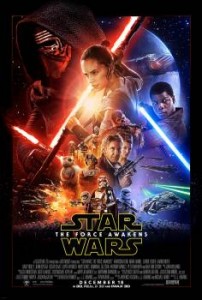
The force is strong in this thrilling new chapter in the story set a long time ago in a galaxy far, far away. Fans will get goosebumps right from the start as the familiar logo and musical theme are followed by a scrolling summary to bring us up to date — without a single mention of a tariff or bureaucratic squabbling. Instead, it has words of near-incantatory power: Luke is missing. Leia is a General. An old ally has provided a clue to Luke’s whereabouts and the best pilot of the rebel forces has been sent to retrieve it.

That pilot is the irresistibly dashing Poe Dameron (Oscar Isaac, who finally seems on the brink of the superstardom he has long deserved). Like Leia in “A New Hope,” he stashes the information in a droid, the adorable B-88, and then he is captured by stormtroopers representing the dark side of the force.  Now called First Order, it is a group that has risen from the ashes of the Empire and threatens to take over again. And we know they’re evil because they mostly have plummy British accents and when they give speeches they dress like they’re appearing in a Leni Riefenstahl recruiting video.

Stormtroopers are indistinguishable in their white armor and helmets, but in the attack on a civilian village one stands out. He seems dazed and disoriented. He shows compassion for a downed member of his battalion.  After returning to the ship, he is ordered to reprogramming to make sure he will never again fail to carry out an order to kill and destroy.  He decides to run away. He does not know how to fly, but there is a prisoner who happens to be the best pilot of the rebel forces, our new friend Poe.  “Why are you helping me?” Poe asks with understandable suspicion.  “Because it’s the right thing to do.” Our Poe is not fooled.  “You need a pilot,” he wisely responds.

Whatever. They both want to get the heck out of there, and that is good enough for the moment. Plus, the defecting stormtrooper speaks with an American accent (even though he is played by British actor John Boyega), so he must be okay.

Meanwhile, a scavenger named Rey (Daisy Ridley, yes she has an English accent but is so obviously honorable and kick-ass great that it just sounds elegant, not evil) encounters B-88. And some old friends from the original trilogy show up for call-outs, tributes, and variations on beloved memories.

Co-writer/director J.J. Abrams has a deep understanding and respect for the original characters and themes going back to the very first episode, now chronologically chapter IV and retitled “A New Hope.” He co-wrote this film with Lawrence Kasdan, the screenwriter of Chapter V: “The Empire Strikes Back,” generally considered the strongest in the series.  They seamlessly bring the story forward with new characters who are vital and engaging. The special effects and mechanics are superbly designed and the action is brilliantly staged.

I wish I could tell you more but I can’t spoil the wonderful surprises, so just let me just say that this is the “Star Wars” you’ve been looking for. Be sure to check out the deleted scenes and other extras on the splendid DVD/Blu-Ray

Parents should know that this movie has extensive sci-fi peril and violence with many characters injured and killed and a very sad death. There are issues of totalitarianism, loss, and betrayal.

Family discussion: Why didn’t Finn have a name? How are Ren and Hux different? Who do you think Rey’s parents are?

If you like this, try: the original “Star Wars” trilogy

Related Tags:


3D Action/Adventure DVD/Blu-Ray Pick of the Week Fantasy Science-Fiction Series/Sequel
The Big Short

The Big Short

Posted on December 10, 2015 at 6:16 pm

A
Lowest Recommended Age: High School
MPAA Rating: Rated R for pervasive language and some sexuality/nudity
Profanity: Constant very strong and crude language
Alcohol/ Drugs: Drinking, smoking
Violence/ Scariness: Fraud, corruption, economic upheavals
Diversity Issues: None
Date Released to Theaters: December 11, 2015
Date Released to DVD: March 15, 2016
Amazon.com ASIN: B0177ZM3LO
Copyright 2015 Plan B Entertainment

Director Adam McKay is so obsessed with the 2008 financial meltdown that he inserted a series of charts and graphs and statistics about it over the closing credits of the silly buddy-cop comedy, The Other Guys. Yes, there was a villain played by Steve Coogan who was up to some financial jiggery pokery, but only the most careful viewers of that film could have deduced that what McKay, best known for raunchy Will Ferrell slob comedies, secretly yearned for, as Michael Caine might say, was to blow the bloody doors off the Wall Street bankers who treated the American economy like a bull treats a china shop.

We’ve had sober documentaries like The Flaw and Oscar-winner Inside Job and the superb drama Margin Call, all outstanding, insightful, and illuminating and essential companion pieces to this movie. But “The Big Short” has several advantages in telling the story. First, by giving us someone to root for, however imperfect the heroes of this story are, it keeps us emotionally connected to the story. Second, because it is in most respects a comedy, McKay has a wider range of tricks on hand to make us understand what happened. This fierce, fiery rant of a film is going to make you understand that the people we entrusted with our economic stability were truly despicable and truly stupid. It is funny and infuriating and then funny again and then, when he tells you that the bad guys went to jail and the big banks were broken up — no, just kidding, they weren’t — it is monumentally infuriating.

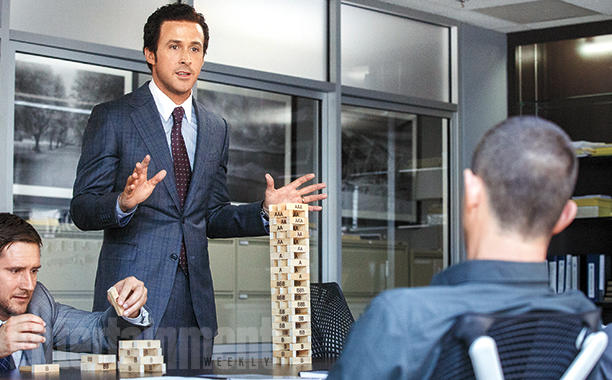
I’ll add a footnote below to give my own very short explanation of what happened.* (And one thing they got wrong.** Pretty much everything else is literally right on the money.) Or, you could listen to Margot Robbie talk you through it, as she sips champagne in a bubble bath. Yes, McKay knows what gets people’s attention and he uses Robbie and other celebrities to come in and explain the parts that the bankers intentionally did their best to obfuscate, using words guaranteed to put everyone to sleep so they could pick our pockets a little while longer. Ryan Gosling also serves as a guide, playing a real-life insider who saw that the mortgage-backed securities were going to tumble down like a Jenga tower.

The real-life acronym used by the bankers during this period was IBGYBG, which stood for “I’ll be gone; you’ll be gone,” meaning that if they could just keep passing the hot potato of economic Armageddon going around the circle a couple more times to collect the fees, they could get out before it all came tumbling down. And many of them did. As Michael Lewis notes in the the book that inspired this film (subtitled The Doomsday Machine), and, if you don’t remember anything else, remember this: the heroes of his book, the small group that bet against the bankers, made fortunes. But so did the people who lost that bet. Everyone on both sides of these deals made a lot of money. Everyone else across the country lost a lot of money, jobs, and homes.

As noted, Lewis’ book and McKay’s movie (the Oscar-winning script is co-written with Charles Randolph of the underrated “Love and Other Drugs”) wisely allow us to enter the story via the scrappy little group of misfit toys who figure out that the game is cooked, that it can’t stay that way, and that there has to be a way to bet against the other side. This grown-up Bad News Bears bunch (two of them barely qualifying as grown-ups) have a couple of things going for them. First, they are skeptics. Actually, they are cynics. They assume everyone is lying to them and just about everyone is cheating them. Michael Burry (Christian Bale), who insists on being called Dr. Michael Burry (he’s a neurologist-turned investment manager) and Mark Baum (Steve Carell) are both men who were already inclined to be skeptics and then faced terrible pain and loss that disabused them of the sense that life was fair. Jamie Shipley (Finn Wittrock) and Charlie Geller (John Magaro), two young partners literally running an investment firm out of a garage, had made almost $30 million finding unseen risks but were so naive about Wall Street that they did not know what the requirements were for being able to trade as an institution and not as an individual. These guys were all outsiders. (All names are fictional except for Burry.)

The second thing they had going for them was that they were not just willing to do their homework; they insisted on it. While the money gusher was going, no one else wanted to check the math (and no one was getting paid to do so). But, in some of the most entertaining moments of this riotously entertaining film, these guys who did not believe what they were told, went to check it out. Burry unpacked the securities to examine each of the hundreds of mortgages they contained to see if they were as secure as promised. They were not. Baum’s colleagues (Rafe Spall and Hamish Linklater) went to Florida to see the homes that were mortgaged. They were abandoned. Baum’s guys spoke to the mortgage brokers who happily explained that they preferred to give mortgages to people who had no possible means of paying them. (Max Greenfield is superbly sleazy in this role.) “They’re not confessing,” one of Baum’s partners says in amazement. “They’re bragging.”

By the time a stripper explains to Baum that she has mortgages on five houses and a condo and has been assured she can refinance when her adjustable rate jumps up, he begins to see the potential in betting that these securities will fall as people like this cannot pay the mortgages. When he goes to a convention of financial types working in this field (Byron Mann is almost deliciously corrupt as the arrogant and ethically vacant Mr. Chau), he knows he is right.

At the same convention, Shipley and Geller are jubilant when they are able to make a big bet against the bankers. And then they get a reality reminder from their their mentor, played by co-producer Brad Pitt. He could not take the corruption of Wall Street any more and left for a life somewhere between disaster prepper and artisanal farmer, wearing a face mask when he goes to town and urging everyone to get colonics. He met the young investor when they were walking their dogs. He reminds Shipley and Geller not to be so happy. When they win big, it will be because the economy is collapsing, causing real, devastating pain.

This is an outstanding film, with sensational performances by a brilliant ensemble cast. It is one of the best of the year and the most important as well.

Parents should know that this film includes constant very strong and crude language, vulgar sexual references, strippers, nudity, and extreme widespread fraud and corruption.

Family discussion: What made just these men able to see what so many other people did not? How did they verify their analysis? Will it happen again?

If you like this, try: the book by Michael Lewis and documentaries about the financial meltdown including “The Flaw” and “Inside Job” as well as feature films “99 Homes” and “Margin Call”

*Here’s what happened, without the jargon or the bubble bath. As you see at the beginning of the movie, Lewis Ranieri, now one of the wealthiest people in the world, came up with the idea of essentially crowd-funding mortgages. He took lots and lots of mortgages, bundled them into bonds, and let big institutional investors, like pension funds, buy them. It was a great investment for them because pension funds need a safe and secure source of income to pay retirees and these were safe and secure — much more than stocks — because people almost never defaulted on their mortgages and because so many mortgages were bundled up together that even if some did default it would have almost no impact. These bundles of mortgages were so popular that the banks ran out of safe and secure mortgages to put into bonds. And so, they started pushing mortgage brokers to issue more mortgages, and that meant giving mortgages to people who would not otherwise have qualified. (Some people will tell you that the government was at fault for pushing home ownership on people who could not afford it. They are wrong. Most of the pressure was coming from people who wanted to buy mortgages, not people who wanted to buy houses.) So, the formerly safe and secure bonds started filling up with less and less safe and secure mortgages. And the people responsible for differentiating the risk of the bonds, including the rating agencies, decided to just keep rating and selling the new, less secure securities as though they were exactly the same as the earlier ones. All of the “formulas” (sometimes called “algorithms” or “models”) used to justify this were bunk. Imagine it this way: there’s a vineyard that makes superior wine that everyone wants to buy and there are strong legal and economic incentives to buy it. But you only have so many grapes, so you start watering it down, still selling it at the same price, and getting the people who rate wine to continue to give it the same rating. Then you run out of water so you start blending it with turpentine, and all of your projections show that it is just as good and will still sell just as well so you price it that way and assume there is no risk.

Here’s the important part: everyone at every part of this conveyer belt of increasingly risky securities all being treated as though they were not risky was being paid based on the number of transactions, not the quality of the transactions, a sort of very big, very expensive game of tag, where there was never any “it” until finally “it” was everyone.

**Actually, because of the immense lobbying power of the bankers (see 13 Bankers: The Wall Street Takeover and the Next Financial Meltdown) the SEC had no authority to regulate these mortgage-backed securities. The agency that should have had jurisdiction was the Commodities Futures Trading Commission. When then-Chairman Brooksley Born suggested that they might look into some kind of oversight, Congress and the then-Treasury Secretary made sure she could not. Also, there are post-employment restrictions that prevent SEC staff from going to work for the people they supervise.
Related Tags:


Based on a book Based on a true story Comedy Drama DVD/Blu-Ray Pick of the Week Satire
Chi-Raq

Chi-Raq

Posted on December 3, 2015 at 3:37 pm

A-
Lowest Recommended Age: Mature High Schooler
MPAA Rating: Rated R for strong sexual content including dialogue, nudity, language, some violence and drug use
Profanity: Very strong and crude language
Alcohol/ Drugs: Drinking, smoking, drugs
Violence/ Scariness: A theme of the film is gang-related violence, guns, shooting, characters injured and killed
Diversity Issues: Race and gender issues are the theme of the movie
Date Released to Theaters: December 4, 2015
Date Released to DVD: January 25, 2016
Amazon.com ASIN: B017W1P79I

“WAKE UP!” Laurence Fishburne pleads at the end of Spike Lee’s incendiary movie, “School Daze,” not just one of Lee’s best films but one of the most important films of the 1980’s. He was not talking to his fellow students. He was not talking to the camera. He was talking to us in the audience. He was telling all of us to rise above fear and petty differences — and fear of petty differences and stop hurting each other.

Copyright Amazon 2015

That message is even more urgent now, and so “Chi-Raq” is an even more powerful call for all of us to wake up, and it is Lee’s best non-documentary film in many years. It is more than a film; it is an anguished wail of grief and fury and the most important film of 2015.

We call the great Illinois city on the shores of Lake Michigan Chicago, but as the opening lines of the movie explain, for the residents of a South Side community with more violent deaths than the US military casualties in Iraq and Afghanistan, it is Chi-Raq. In the film a little girl is killed by a stray bullet in a gang-related shooting. She is collateral damage. The week I saw the film, there was a funeral in the very community where it is set for a nine-year-old boy who was a deliberate murder target as an act of reprisal against his father. Even the ultimate symbol of Chicago gangster violence, Al Capone, never went that far. This is not a documentary and the mode of storytelling here is heightened, but there can be no credible claims that what it portrays is unfair or exaggerated.

They feel completely isolated from any kind of help from the outside. Businesses are afraid to come into their community, so there are not jobs or services. The government does not help. The newspapers do not tell their story. Their news is reported by rappers, and in a sensationally dynamic scene in a club a rapper known as Chi-Raq (a fierce Nick Cannon) tells the truth about what they see all around them.

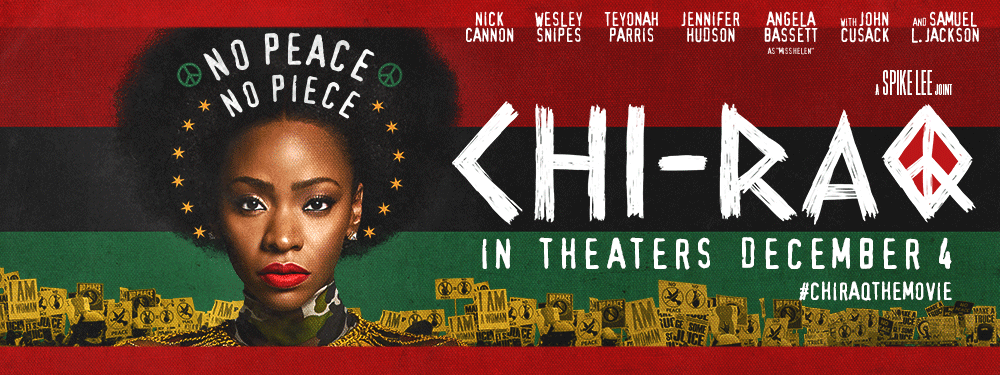
Lee, working with co-screenwriter Kevin Willmott, brilliantly positions this vitally contemporary story as an updated version of a play written in 411 BC, “Lysistrata,” by Aristophanes. Just as the savvy strategist of almost 25 centuries ago plotted with the other women of her community to bring an end to the Peloponnesian War by withholding sexual favors from all of the men, “Chi-Raq’s” Lysistrata (a sizzling performance by “Mad Men’s” Teyonah Parris) sits down with the women from the opposing gang (to continue the classical themes, the gangs are the Trojans and the Spartans) to get them to pledge that there will be no loving until there is no more shooting. The heightened classical overtones include a narrator/chorus who has a Greek-sounding name Dolmedes — inspired by the Blaxploitation hero Dolemite and played by Samuel L. Jackson in a series of natty, brightly colored suits. And then there is the dialog, all in verse, somewhere between rap and iambic pentameter, which actually have a pretty broad overlap.

Lee makes it clear that this is a widespread, even universal problem as women around the world join forces with Lysistrata. And no one escapes responsibility for the carnage, with a searing climax of tragedy and redemption. We see a mother (Jennifer Hudson) scrubbing her little girl’s blood off the street. We see people tweeting the details of a shooting as it happens. Lysistrata is inspired not just by her namesake but by the real-life Nobel Prize winner Leymah Gbowee, who brought the Christian and Moslem women of Liberia together to stop the fighting in their country. Lee is very clear about who is to blame and who is responsible for making it better: all of us.

And when we see mothers holding pictures of their children killed by guns, we are seeing real mothers, holding pictures of their real children. All of the flash, music, sex, and spectacle are balanced with moments of intimacy, connection, and poignancy, and all are anchored in Lee’s passion for his community. That reality makes this a rare movie that can change the conversation.

Parents should know that this film features gang-related and other violence with tragic outcomes including characters injured and killed, explicit sexual references and situations with nudity, smoking, drinking, and drug use.

Family discussion: What is the best way for the community, the government, and business to stop gang-related violence? How can a movie like this make a difference?

If you like this, try: “School Days,” “Do the Right Thing,” and “Pray the Devil Back to Hell” and read “Lysistrata”

Related Tags:


Based on a play Crime Drama DVD/Blu-Ray Pick of the Week Politics
Creed

Creed

Posted on November 24, 2015 at 5:18 pm

B+
Lowest Recommended Age: High School
MPAA Rating: Rated PG-13 for violence, language and some sensuality
Profanity: Some strong language
Alcohol/ Drugs: Social drinking
Violence/ Scariness: Intense sports violence (boxing), illness and disability
Diversity Issues: Diverse characters
Date Released to Theaters: November 25, 2015
Date Released to DVD: March 7, 2016
Amazon.com ASIN: B019EEK7ZA
Copyright Warner Brothers 2015

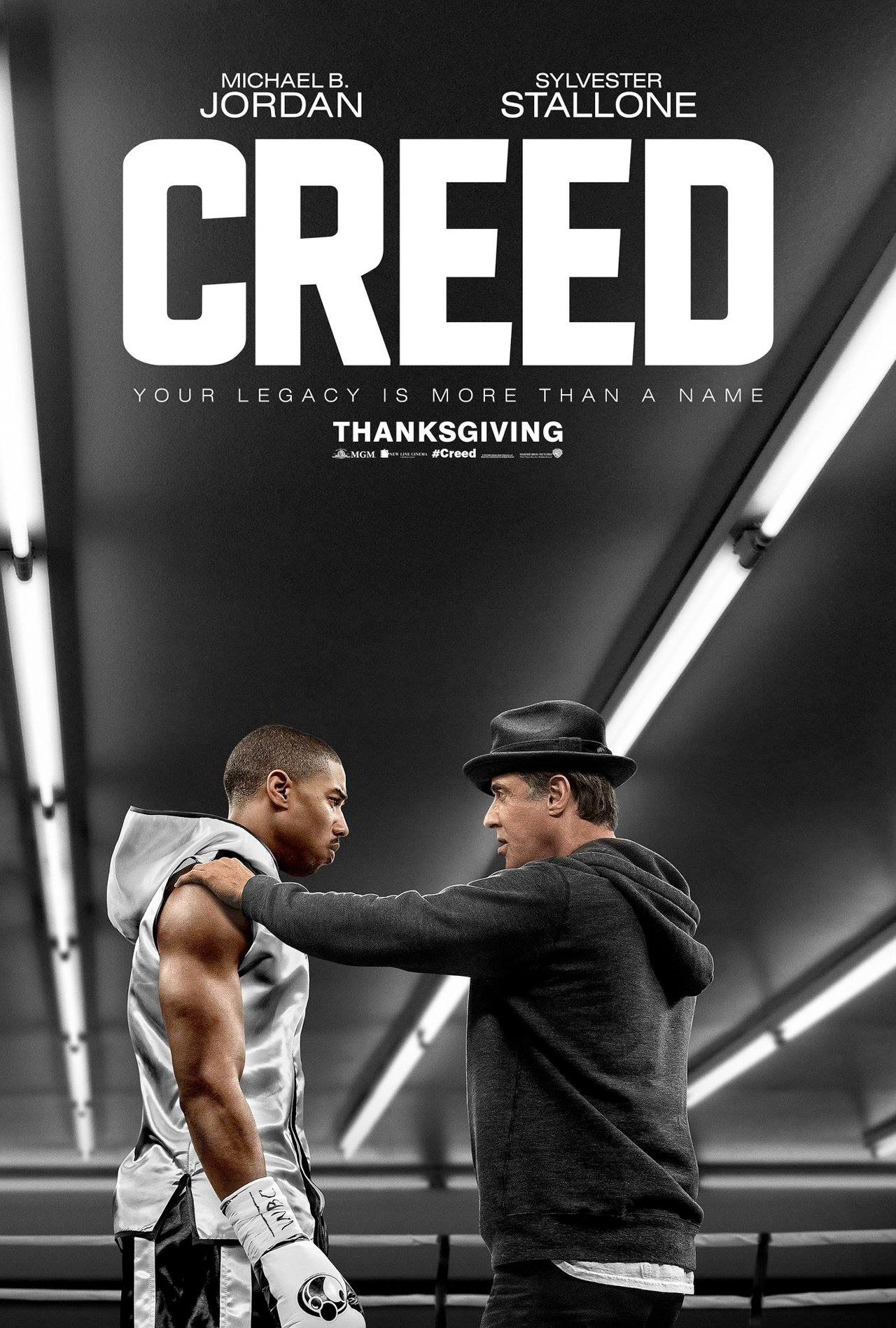
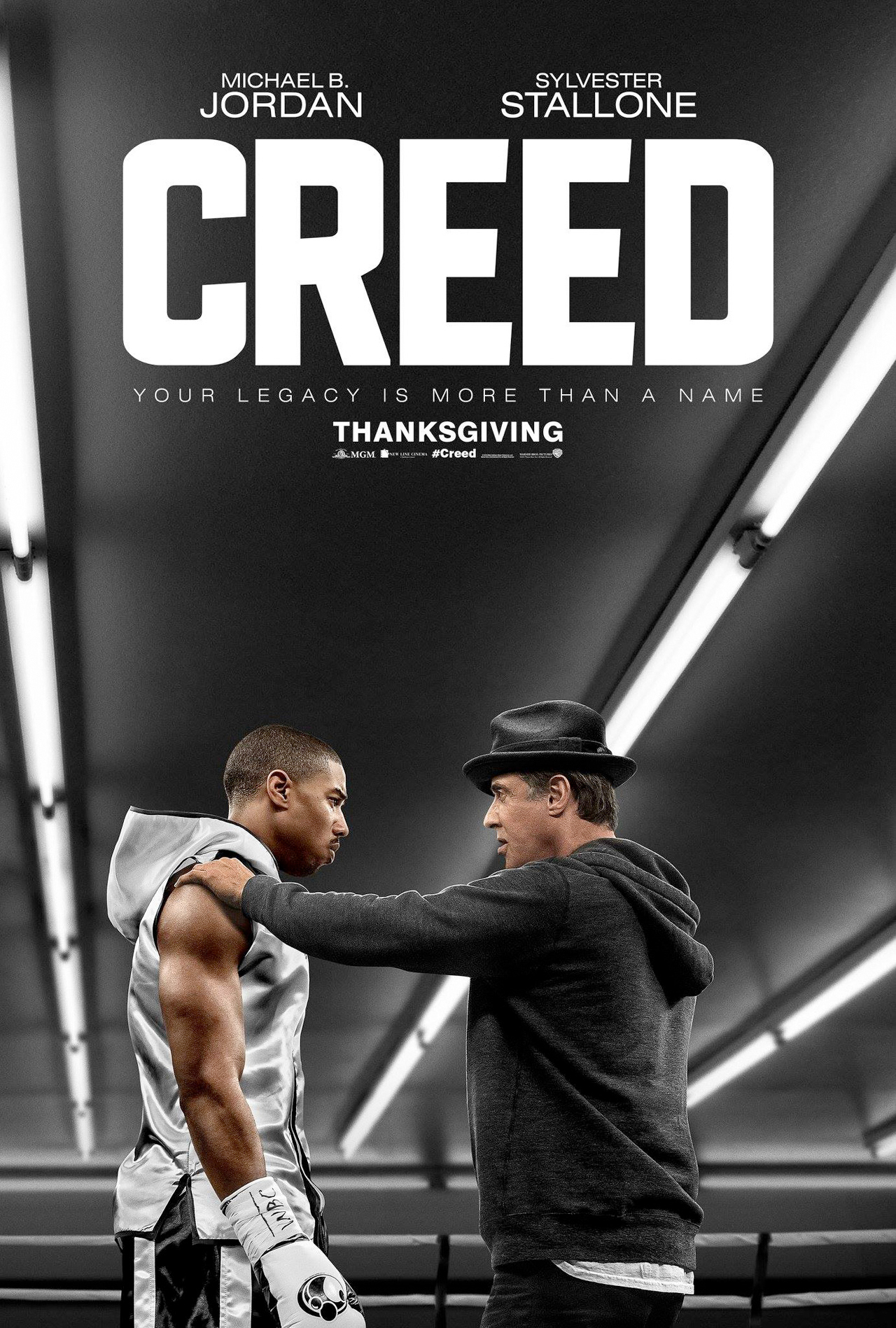
Rocky had to find the eye of the tiger. When we first met him back in 1976, Rocky Balboa (Sylvester Stallone) was an amiable, good-hearted lug who loved his pet turtles, Cuff and Link, and if he ever saw himself getting into the ring with champ Apollo Creed (Carl Weathers), he could only imagine it would be as a sparring partner. His aspiration was not to get his nose broken and go the distance. Over the course of six films, he took on ever-more daunting opponents, so we could always think of him as the underdog. In the first film, he had the advantage of surprise. Creed assumed he could easily defeat the unknown fighter. Rocky did go the distance (and did get his nose broken), and lost in a split decision. In the second film, Creed knew what to expect and his pride was on the line. This time, it was Rocky who got soft after his fame and success. He had to get hungry and learn to be a fighter again. Rocky faced — and defeated — a champion at the top of his game.

Rocky went on to fight ever-more terrifying foes: Clubber Lang (Mr. T) who was not the decent, honorable guy that Creed was, and then the steroid Soviet man-machine Ivan Drago (Dolph Lundgren). In the last two films, Rocky struggled with the killer knock-out punch that we all face — old age. His trainer Mickey and his wife Adrian have died. He still wants to go the distance, but now it does not seem so distant any more.

And now here is another fighter looking for a title shot. We first meet young Adonis Johnson (called Donny) in juvie, where we learn that he just can’t stop fighting. Eye of the tiger is not his problem. It is taming the tiger he has to work on.

Apollo Creed’s widow Mary Anne (dignified but warm-hearted Phylicia Rashad) is willing to give him a home. Donny’s father was Apollo Creed. His mother is dead. Mary Anne has decided to raise him. And she has no intention of letting him become a fighter.

Donny (charismatic Michael B. Jordan) is doing well in his office job, but there is something in him that just needs to punch people. So he leaves Mary Anne working in an office and he seeks out Rocky as a trainer. Rocky does not want to train anyone (see Tommy Morrison in #5). He just wants to miss Adrian in the restaurant he named for her. But this would not be a Rocky movie if Rocky didn’t go back to the gym, and pretty soon that training montage starts up. Gosh darn if it doesn’t still work, especially when that Rocky theme starts filtering through.

Pretty soon there’s a pretty girl, of course, Bianca, played by Tessa Thompson (“Dear White People” and if you haven’t seen it, please do so now). I loved this character for many reasons, primarily because she never took the “oh, don’t fight, you’ll get hurt” role (that is left to Rashad), and because she plays a character who embraces life so fully that she responds to a progressive hearing loss by devoting herself to her passion for creating music while she can. It is genuinely moving to see a disabled character in a film who is not defined by disability. Bianca is a strong, confident, passionate woman and Thompson plays the role beautifully in every sense of the word. Plus, she and Jordan have some sizzling chemistry.

This next chapter (apparently the beginning of a new series) goes the distance. Jordan, thankfully far from the catastrophically awful “Fantastic Four,” is back with writer/director Ryan Coogler. Their last film together, “Fruitvale Station,” was one of the best movies of 2013. As they did in that film, they have created a character who is complex, layered, trying to understand his past and not sure whether he can move on from it. Jordan can hold the screen with as much star power as any young actor in Hollywood today. He and Coogler are true to the Rocky tradition without being trapped by history. Yes, they go back to the steps at the Philadelphia Museum of Art. And yes, you will tear up when they do.

Parents should know that this film includes intense scenes of boxing with graphic injuries, strong language, sexual references and a sexual situation.

Family discussion: Why didn’t Adonis want to use his father’s name? What changed his mind? What would you do if you had Bianca’s health challenges?

If you like this, try: the “Rocky” movies and “Southpaw”

Related Tags:


Drama DVD/Blu-Ray Pick of the Week Series/Sequel Sports
THE MOVIE MOM® is a registered trademark of Nell Minow. Use of the mark without express consent from Nell Minow constitutes trademark infringement and unfair competition in violation of federal and state laws. All material © Nell Minow 1995-2026, all rights reserved, and no use or republication is permitted without explicit permission. This site hosts Nell Minow’s Movie Mom® archive, with material that originally appeared on Yahoo! Movies, Beliefnet, and other sources. Much of her new material can be found at Rogerebert.com, Huffington Post, and WheretoWatch. Her books include The Movie Mom’s Guide to Family Movies and 101 Must-See Movie Moments, and she can be heard each week on radio stations across the country.

Website Designed by Max LaZebnik