What kind of movie do you feel like?

Ask Movie Mom

Find the Perfect Movie

Little Women

Posted on December 24, 2019 at 5:00 pm

A-
Lowest Recommended Age: 4th - 6th Grade
MPAA Rating: Rated PG for thematic elements and brief smoking
Profanity: None
Nudity/ Sex: Kisses
Alcohol/ Drugs: Social drinking, brief smoking
Violence/ Scariness: Very sad death, references to other deaths including death of a baby
Diversity Issues: A theme of the movie
Date Released to Theaters: December 25, 2019
Date Released to DVD: April 6, 2020
Copyright 2019 Sony Pictures

You need to know where I’m coming from on this one. There is no book more central to my life than Louisa May Alcott’s Little Women. My mother, Josephine Baskin Minow, has been Jo since she first read Little Women when she was a child, And now our children call her Marmee. I loved it so much that I read all the other Alcott books on the library shelf (I especially recommend Eight Cousins and An Old Fashioned Girl). Little Women has been central to the lives of young women for more than 150 years, inspired by its heroine, who was inspired by Alcott herself. Jo March is fiercely loyal, impetuous, impatient, and a writer, both eager and reluctant to find her own voice. Authors who name the book as a major influence range from Cynthia Ozick, Simone de Beauvoir, Doris Lessing, Margaret Atwood, Jane Smiley, Anne Tyler, Jhumpa Lahiri, Ursula Le Guin and Nora Ephron to “Twilight”‘s Stephenie Meyer.

Alcott’s semi-autobiographical story of four sisters has been adapted many times, including a Broadway musical, a 48-chapter Japanese anime series, an opera, and films starring Katharine Hepburn, Elizabeth Taylor, and Winona Ryder. The most recent BBC version (of four) was shown in the United States on PBS. One of two major adaptations last year was a modern-day retelling with a quartet of appealing young actresses, adapted with skill and understanding by writer/director Clare Niederpruem.

So, my standards and expectations could not have been higher and it is my very great pleasure to tell you that this new film from writer/director Greta Gerwig exceeded them all. Writer/director Greta Gerwig not only loves and understands the book, she also appreciates that in 2019 we are only beginning to catch up to Alcott’s vision of what is possible for young women and for all of us. Those who do not know Alcott’s work or have only seen the early versions may think that Gerwig has “modernized” the story. But every part of it comes from Alcott (some from other writings) and every part of it is entirely consistent with her fierce, independent, and devoted spirit and rebellious energy. And Saoirse Ronan is the best Jo March yet, her long-limbed coltishness not so much “boyish” as vitally engaged in a world that cannot always keep up with her.

The book was originally written in two parts, but the second volume (called Good Wives) has been a part of what we know as Little Women for more than a century. Gerwig begins the story in the middle of the second book as the now-adult Jo (a teenager in the first volume) meets with a newspaper publisher (a charmingly crusty and wry performance from playwright Tracy Letts, last seen as Henry Ford II in “Ford v. Ferrari”). In case we are not as quick as he is to see through her claim to be bringing stories written by a “friend,” Gerwig lets us see the ink that still stains her fingers. When her story is accepted (with the moralizing parts cut out), she exuberantly races home.

Then, as we will throughout the film, we go back and forth between the two parts of the story, indicated by different color pallattes, the warmer hues for the earlier years, when the girls were all at home and their father (Bob Odenkirk) was a Union volunteer in the Civil War. There were struggles and growing pains, but there was also a sense of purpose and possibility that is not as clear in the cooler-hued older years, when Jo is in New York living in a boarding house, and Amy (Florence Pugh) is touring Europe and studying art. Pugh may be too old for Amy in the early scenes, but she and Gerwig give Amy far more depth than any previous portrayal (perhaps including Alcott’s). Emma Watson is lovely as oldest sister Meg (obligatory complaint about what was left out of this version — the scenes of Meg coming to John’s defense when Aunt March attacks him and the scene of her showing off her “new dress” to him). Gerwig’s script softens the professor’s critique of Jo’s more lurid stories-for-hire and his involvement in getting the book-within-a-book published, but the scene of his telling her that the melodramatic stories she is writing for money are not good is still an important turning point.

Laura Dern plays Marmee, a woman of character, courage, and intention. The private moment she takes in the foyer of the house to make sure she can greet her daughters with good cheer on Christmas morning after caring for the impoverished Hummels is a small master class of acting. When Marmee tells Jo that she still struggles with anger every day, we see where Jo got her inner fire and how inner fire can become the foundation for determination and principle.

And then there is Timothée Chalamet as Laurie, the sensitive boy whose temperament is protected from becoming headstrong and careless by the example of the March family, their attitude toward work and also their attitude toward fun. Like Laurie to Jo, Chalamet is a perfect match for his “Lady Bird” co-star Ronan, and we could happily watch a whole movie of them putting on plays, attending riotous meetings of the Pickwick Society, and skating on the pond.

It is still one of the all-time great coming-of-age stories of a family and an artist finding her voice. By putting making the early year portion of the film flashbacks that comment on, provide context for, and deepen the “present-day” storylines, Gerwig makes us ready for a perfect ending that brings Alcott, her fictional avatar, and the story of all of us who have tried to tell our stories together.

Parents should know that this film includes a sad death and reference to other deaths including the death of a baby, family stress and conflict, and brief smoking and drinking.

Family discussion: Which sister is most like you? Was the publisher right about the ending to the story? Why do so many women, especially writers, say that this story was their most important inspiration?

If you like this, try: the book by Louisa May Alcott and the other movie and miniseries versions of this story
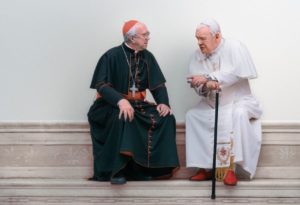
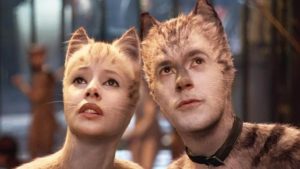
Interview: Anthony McCarten, Screenwriter of The Two Popes

Posted on December 20, 2019 at 7:22 am

My interview with screenwriter Anthony McCarten (“Bohemian Rhapsody,” “The Theory of Everything”) about “The Two Popes” has been published by the Association of Women Film Journalists. An excerpt:

Sometimes history is made by groups of people in labs or courtrooms or legislative bodies or battlefields. Sometimes history is made by two people talking to each other quietly. We hear those stories less often. It may be that what makes those changes possible is keeping them secret. Perhaps that is what makes imagining them so irresistible. That is what screenwriter Anthony McCarten has done in fact-based films like Bohemian Rhapsody, The Darkest Hour, and his latest, The Two Popes.

For the first time in nearly 700 years, a pope (Sir Anthony Hopkins as the more conservative Pope Benedict) resigned instead of serving until death. That made it possible for him to play an unprecedented role in encouraging and supporting the choice of his successor, Pope Francis (Jonathan Pryce as the first pope from the Americas).

Copyright Netflix 2019

In an interview, McCarten talked about what “great directing” by Fernando Meirelles added to the film, and why this is his “most adventurous” film…..Minow: In some of your other films based on real-life characters you had tremendous amounts of information about what went on even in their private moments. You had correspondence and diaries as well as a lot of documentation of their public moments. But here you really had to imagine conversations that no one knows anything about.

McCarten: You’re quite right. This is probably the most adventurous of the films I’ve done. There’s some artistic license but, I hope no less responsible than anything that I’ve done and ultimately, hopefully, no less truthful. These conversations that I imagined are based on deep research. In fact I did so much research that there’s an accompanying nonfiction book that you can buy in all good bookstores which shows how I really went into their pasts and looked at all the circumstances surrounding the resignation of Pope Benedict. It’s essential in all these ventures that you get it right as much as possible and in this particular case it is literally sacred ground. So, it cannot be careless and it cannot be flippant in any way. It has to be embedded in known truths. In fact, even when I create these long dialogues between these two, those dialogues are reflections of their stated positions about the future of this 2000 year old institution.

Cats

Posted on December 19, 2019 at 5:09 pm

C
Lowest Recommended Age: Middle School
MPAA Rating: Rated PG for some rude and suggestive humor
Profanity: Some mild language
Nudity/ Sex: Some crude references
Alcohol/ Drugs: None
Violence/ Scariness: Threats, dusting-style disappearances, portrayal of afterlife/reincarnation
Diversity Issues: None
Date Released to Theaters: December 20, 2019
Date Released to DVD: April 6, 2020
Copyright 2019 Universal

I was not hoping for much from “Cats.” I knew that the record-breaking, popular-for-decades Broadway musical did not have much of a plot, just songs with lyrics from the poetry of T.S. Eliot and music by Andrew Lloyd Webber and spectacular dancing. So that’s all I hoped for — an all-star cast singing and dancing. Some of the singing is fine, and the dancing is great, when you can see it, but the whole thing is so badly misbegotten that it does its best to keep its most entertaining elements out of sight.

I mean that literally. There’s one simple rule, going back to the days of Fred Astaire, for dance in movies: get the camera out of the way and let the audience see the dance as fully as possible. We want to see the shapes the bodies make, we want to feel the way they interact with the rhythm and with each other, and we want to see their feet. There are dance numbers in “Cats” where the camera moves away from the feet or out of beat with the rhythm. Why? They also give “Memory,” one of the most iconic songs of the last 30 years to Jennifer Hudson, one of the greatest singers of the last 30 years and have her put most of her energy into emotion instead of singing.

The movie’s credits highlight ballerina Francesca Hayward in her first film appearance, playing the young ingenue cat, Victoria. She is thrown into the garbage inside a sack at the beginning of the film, and we learn about the world of the cats as it is explained to her. The various felines introduce themselves, including Jennyanydots (Rebel Wilson) the house cat, who teaches mice and even cockroaches to sing and dance, the magician Mr. Mistoffelees (Laurie Davidson), the down-at-the-paws Grizabella (Jennifer Hudson), filled with regret and self-doubt, “the tap-dancing railroad yard cat Skimbleshanks (Steven McRae), and the wicked Macavity (Idris Elba) “the Napoleon of crime.”

Presiding over everyone is the magisterial Old Deuteronomy (Dame Judi Dench), who has the power to select one “jellicle” cat (a term Eliot made up) for a second chance at life. As cats comes forward to introduce themselves, it’s like a feline “Chorus Line,” everyone auditioning for that one big chance.

All of that would be fine if there was some joyful energy behind it, but it is mostly just dreary. Some of the musical numbers, especially McRae’s tap dance, could could have provided that lift if the camera would have stopped long enough to let us see what he was doing. Taylor Swift brings all of her considerable Swiftian panache (though an uncertain hold on an English accent) as Bombalurina, but the movie then sinks back into its trudgey tempo, leaving us to wonder at the furry costumes with ears and tails constantly twitching, so skin-tight it only emphasizes the human and decidedly un-feline forms and movements. It’s a close call what we get more of, silly “cat got your tongue”-style references, the word “jellicle” or Hayward’s lovely face, even in fur and whiskers, which director Tom Hooper keeps cutting back to. Not to sound catty, but it just reminds us how much less enthralled we are than she is.

Here’s a tip. “Cats” is a purely theatrical experience. You want to make a movie about it? Try making it about a theater troop putting it on, and try not have it turn unto “Noises Off.” Even if it did, it would be more entertaining than this version.

Parents should know that this film includes some mild sexual references, nuzzling, some disturbing dusting-style disappearances and death references, and sad songs.

Family discussion: What do you think “jellicle” means? Do you agree with Deuteronomy’s choice? Which was your favorite cat and why?

If you like this, try: “The Fantastcks” and “Nine”

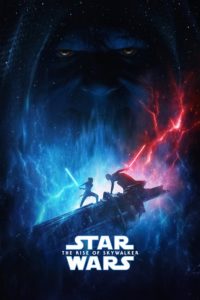
Star Wars: The Rise of Skywalker

Posted on December 18, 2019 at 6:23 am

B +
Lowest Recommended Age: Middle School
MPAA Rating: Rated PG-13 for sci-fi violence and action
Profanity: Mild language
Nudity/ Sex: Kiss
Alcohol/ Drugs: None
Violence/ Scariness: Extended sci-fi/action-style peril and violence, sad death, characters injured and killed, some disturbing images
Diversity Issues: None
Date Released to Theaters: December 19, 2019

Copyright 2019 20th Century Fox
Nine episodes in, not counting the countless auxiliary expansions and storylines, “Star Wars” is still a place I love to go. But nine episodes and more than four decades since the original film, now called “Episode IV: A New Hope,” the franchise faces some daunting challenges, including balancing the weight of precedent with the need for something new and the expectations, and in many cases encyclopedic knowledge of the fans. I liked this last in the original storyline, despite some problematic elements I will do my best not to spoil — and alert to any possible spoilers before I even get close, I promise. Here’s the non-spoiler headline: I predict that this episode will divide the fans into two camps. Those who liked the last two films, “The Last Jedi” and “The Force Awakens” will not like this one as much. Those who were disappointed by those will like this one better.

Now, go see the movie if you do not want to hear more, and come back afterwards to see what else I have to say so you can argue with me.

Once again, the heart of the story is Rey (Daisy Ridley), the former scavenger turned student of the force and Jedi trainee with Luke Skywalker (Mark Hamill), and her friends and colleagues, former Storm Trooper Finn (John Boyega) and hotshot, hothead pilot Poe Dameron (Oscar Isaac). Let’s take a moment to honor their superb performances, which have given so much to the series. In the midst of all of the action and hardware and locations and just-in-time rescues, all three of them have created vital, vibrant characters who give us a reason to care about all of the action. We also get to see the characters from Episode IV, including Carrie Fisher as Princess (now General) Leia, Hamill as Skywalker, Harrison Ford as Han Solo, and Billy Dee Williams as Lando Calrissian, along with droids C-3PO and R2D2 and the Wookiee, Chewbacca. And the conflicted nemesis Kylo Ren (Adam Driver) is back, along with General Hux (Domhnall Gleeson). There’s a brief surprise appearance that had people in the theater cheering, and a return to an iconic location.

So, much is familiar. At the end of “The Last Jedi” the rebel forces were almost entirely wiped out, with no response to their distress signals. And the bad guys who are ruthless fascists, want to take over that galaxy far, far, away. You might think there are only so many times someone can say “If this mission fails, it’s all been for nothing,” but I admit freely, for me, at least a couple more.

Remember how “New Hope” kicked off by sending a secret spy message to Obi-Wan Kenobi? Well, here we are again, with a message from a mole — perhaps we might call him/her a whistleblower — inside the bad guy organization. I do not want to give too much away by saying what they are calling themselves now or who is behind it. I will only say that the message shows they are planning some very bad stuff and the Death Star looks like a slingshot by comparison with what they have now.

So It is time to get Rey back from Luke’s remote island retreat, something between a spa and boot camp. One question is whether Kylo Ren will be on board. He is literally offered “everything” if he will just prove himself by killing Rey, and the glints of red reflecting in his eyes suggest that rage is still his primary motivation. His connection to Rey, including a sort of psychic Skype communication they have with each other across the galaxy, could make him waver. Or, it could make her waver. He offers her the same “everything” he is tempted by.

This is not about the set-up, though; it is about the adventure, and J.J. Abrams takes us from one planet to another, with chases, escapes, explosions, and new characters. I was disappointed that this movie did not pick up on some of the most intriguing elements of “The Last Jedi” and even more disappointed that it countermanded one I considered among the most significant, SPOILER ALERTS tilting some of the series’ most fundamental existential premises away from individual determination toward a less appealing notion of destiny pre-ordained. I did not care for some new Force powers, which also undermine the original trilogy’s premises, or for some of the developments of the last half hour. I did enjoy some new characters, including one from Poe’s past played by Keri Russell and a rebel alliance-friendly group who ride horse-like creatures and even use a bow and arrow, a nice break from all the laser beams and spaceships. There’s a kind of nutty detour to a sort of Ren Faire that was a hoot. One of my favorite characters continues to be the Millennium Falcon (pronounced both FALL-kin and FAAL-kin here!), and I loved every minute it was on screen. I got a kick out of the callbacks, including an “I’ve got a bad feeling about this.”

Abrams was given thousands of threads to tie together, and if what he wove is uneven it is heartfelt and mostly a lot of fun to watch. That is all the force I need.

Parents should know that this film includes extended sci-fi/action peril and violence with some graphic and disturbing images, sad deaths, and characters who are injured and killed.

Family discussion: How did what she learned change Rey’s ideas about herself? Why did Leia pick Poe?

If you like this, try: the other “Star Wars” films and the work of Joseph Campbell, who was one of George Lucas’ inspirations in creation the series

MVP of the Month: Real-Life Heroic Lawyers

Posted on December 16, 2019 at 9:21 am

Copyright Warner Brothers 2019
At awards season, we often get uplifting real-life stories and this year we have three that are about heroic lawyers fighting for justice against almost insurmountable odds. Here they are, with a little background on the real stories.

Mark Ruffalo as Rob Bilott in “Dark Waters

Billot was profiled by the New York Times, which dubbed him DuPont’s Biggest Nightmare. “Rob Bilott was a corporate defense attorney for eight years. Then he took on an environmental suit that would upend his entire career — and expose a brazen, decades-long history of chemical pollution.”

Michael B. Jordan as Bryan Stevenson in “Just Mercy”

Stevenson is a Harvard Law graduate who has spent his career in the town where the man who inspired the most beloved lawyer in movie history, Atticus Finch, practiced law. And like Finch, he defends those who have been unfairly accused and not had adequate access to counsel. He is also the Founder of the stunning Legacy Museum and National Memorial to Peace and Justice, sometimes called the Lynching Museum because of its extraordinary challenge to communities to acknowledge their past.

HBO has a documentary about Stevenson and his Equal Justice Initiative.

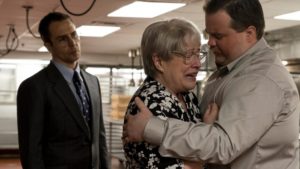
Sam Rockwell as Watson Bryant in “Richard Jewell

Clint Eastwood’s “Richard Jewell” is based on the true story of the man who was initially hailed as a hero for discovering a bomb at a concert celebrating the Olympics in Atlanta, Georgia, and then accused of planting it to make himself famous. Watson Bryant was the lawyer who represented him, proving that the FBI and the local and national media were irresponsible to the point of negligence and abuse.

The movie was inspired by a Vanity Fair article called “American Nightmare” by Marie Brenner. Here is what she said about the lawyer who happened on to Jewell because they had briefly worked together:

The simple fact was that Bryant had no qualifications for the job. He had no legal staff except for his assistant, Nadya Light, no contacts in the press, and no history in Washington. He was the opposite of media-savvy; he rarely read the papers and never watched the nightly news, preferring the Discovery Channel’s shows on dog psychology. Now that Richard Jewell was his client, he had entered a zone of worldwide media hysteria fraught with potential peril. Jewell suspected that his pickup truck had been flown in a C-130 transport plane to the F.B.I. unit at Quantico in Virginia, and Bryant worried that his friend would be arrested any minute. Worse, Bryant knew that he had nothing going for him, no levers anywhere. His only asset was his personality; he had the bravado and profane hyperbole of a southern rich boy, but he was in way over his head.

You can see the real Bryant here: