
New Clips from “Monsters University”
Posted on May 25, 2013 at 2:23 pm
In theaters for the 4th of July!
Posted on May 25, 2013 at 2:23 pm
In theaters for the 4th of July!
Posted on July 6, 2012 at 3:55 pm
“Treasure Planet” and “Home on the Range” are not classics, but they are both beautifully animated and a lot of fun. In honor of their re-release on DVD/Blu-Ray Disney has made available free activity sheets for download.

Posted on March 12, 2012 at 3:48 pm
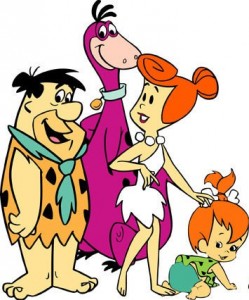 At the SXSW festival, “Family Guy” creator Seth McFarlane told the crowd he is working on a television reboot of “The Flintstones,” a beloved 1960’s cartoon series that led to a couple of not-beloved feature films. McFarlane told the audience that the very first thing he ever drew as a child was a picture of the Flintstones and it feels good to be coming full circle. He promised it would be updated but not as edgy as “The Family Guy.”
There’s really not a lot about that show — other than the references to 1960s America, which really come through in the writing more than the visual — that needs to be changed visually and stylistically. They invented the template that we’re using in animation. We kinda want to keep it, more or less, the same.

Posted on November 23, 2011 at 8:00 am
It was a special treat to speak to Chris Juen of this week’s release, “Arthur Christmas,” because he also worked on one of my favorite animated films of the past few years, Surf’s Up, as well as the delightful Cloudy With a Chance of Meatballs.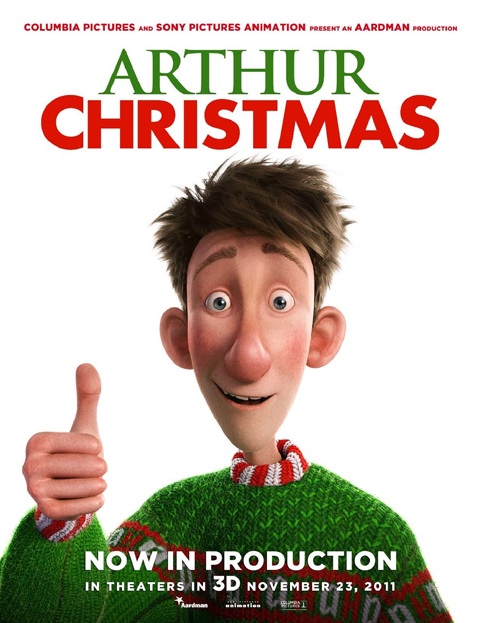
What brought you to this project?
Sony and Ardman had a partnership and I could not pass up a chance to work with Ardman. The story reel was super charming and you could tell right away the story was really solid.
The actors in this film are superb, especially Hugh Laurie as Santa’s super-efficient techno-wizard son, Steve. How did you think about voice casting?
Casting is tricky. So-and-so’s a great actor and then you put him next to a character and it doesn’t quite work. We get a group of people we think will work and test them out against scratch models to get rouch performances to see if we can imagine that voice coming from that character. When we find one we really like, we show them the test. Hugh has such a distinct, great voice and it helps to get actors that Ardman is so beloved.
How did Justin Bieber get involved?
Justin Bieber is a late add, but with his Christmas album the timing was a great boost for the film and a great opportunity to show his video.
What is your role on the film?
I’m the co-producer so I worked for Sony pictures and am kind of the day to day operations guy. I have about 15 years with Sony so I am pretty good at knowing how to build the digital pipeline, how to make a movie inside a computer. We had a crew of about 450 to manage.
What makes Ardman (the people behind “Wallace & Gromit”) different?
They’re not afraid of having flawed characters. They love very humanistic flaws. People aren’t perfect. We were trying to figure out how to get that Ardman quality into a CG film. A lot of time in CG you make a perfect character. A lot of time was spent making our characters imperfect. So one side was offset a little bit or one side bigger than the other. It doesn’t feel like it’s clay, but it feels real. I think they do that not only in design but in character. The characters in this movie are very rich.
I loved Mrs. Santa because she kept surprising you.
I wish she had more screen time! She’s the magic behind the magic.
What was the most difficult technical challenge you had on this film?
I think it was the elves. The director wanted a lot of diversity and a lot of options to make it look large scale, millions of elves. There was a logic to it, with the different kinds of elves, their costumes and assignments. It’s what we call a variation pipeline and it was unbelievable.
You have a real commitment to family movies. Where does that come from?
I was lucky enough to work on “The Polar Express” when I was working in visual effects and it was my first chance to work on a whole story. I just loved that process. It’s a more creative process than just visual effects. And it’s amazing what having your own children will do. I want to make films I can take my daughters to see and be proud and have them get something out of them.
What should parents know about this film?
It’s a family movie about families, about characters people will relate to because they’re in they’re own families. And a reminder not to get too wrapped up –
Literally!
(laughs), that’s right, not get too wrapped up literally or otherwise in the hustle and bustle of the holidays, just do what’s right and spend time with family.

Posted on July 14, 2011 at 3:43 pm
Mark Henn was supervising animator for the iconic title character in Disney’s new animated feature, “Winnie the Pooh” and for Christopher Robin as well. He is a Disney veteran, having served in the same role for Princess Tiana in “The Princess and the Frog,” helping to design the character and oversee her animation throughout the film, and worked on Ariel in “The Little Mermaid,” Jasmine in “Aladdin,” and young Simba in “The Lion King.” He talked to me about the challenge of taking on Winnie the Pooh, a character the audience knows well and feels very attached to but who has been interpreted by many different artists over the years.
I love the traditional look of this film.
One of the great sources of inspiration for me has been the golden age of illustration. Early in my career here at the studio I discovered people like N.C. Wyeth, Rockwell, Maxfield Parrish, E.F. Ward.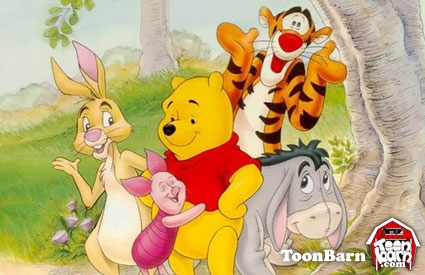
It’s always a little tricky when you’re working with something that’s well-established. And certainly, Disney’s Pooh is — most of us grew up with these characters, the original three featurettes produced at the studio in the 1980’s, “Blustery Day,” “Honey Tree,” and “Tigger Too.” We all knew that some of the very best of the studio had the opportunity to animate it. Now for us it was a great opportunity. You could tell these guys had a lot of fun with the characters. It was light, fun, they had these rich characters and charming stories. We had the same idea now that we had a turn. And it was important to go back to the original material. The directors, Steve and Don , went back to the original stories by A.A. Milne to find elements from previously unused stories to put together our current film. There’s such a charm and sophistication to his story-telling even though it seems very simple. It’s very elegant.
It was a wonderful chance to stand on the shoulders of what has gone before but John Lasseter also encouraged us to make it our own, bring our own sensibilities as artists and animators as well. But for me the biggest compliment is to hear people say, “That’s the Pooh I remember.” Then I feel that I’ve done my job. After all, that’s the Pooh I remember, too!
I was very captivated by the way the characters interacted with the narrator and the actual text.
Again, it goes back to what had been done. We screened the originals several times throughout the production and we all loved that, with the narrator breaking the fourth wall and the characters talking to the narrator. And interacting with the text on the pages — one of my favorites is in “Blustery Day” when the “rain rain rain came down down down” and the lettering gets washed away. We wanted to build on that and we had the chance with the way the story was structured to take advantage of that. For me, in one particular instance, Pooh is dejected and he’s walking out of the woods and the narrator is talking and says he didn’t notice that he walked into the next paragraph. It was just story-boarded that far, with him walking out of the woods. And he says, “What’s a paragraph?” and he finds the yarn that show’s Eeyore’s scarf tail had come unraveled. As I was looking at the sequence in a meeting, thinking about animating the scene and thinking about what would be fun, I said, “How about if he picks up the P for Pooh and says, ‘Is there any honey in this paragraph?'” I liked the idea of his picking up the letter P and looking at it like it might be a box or jar.
It was in everyone’s mind to look at our scenes to see where we could find the entertaining ways to bring these scenes to live within the character and story, which is always the trick.
The backgrounds are beautiful. Were they hand-done?
Yes, but they use a digital paint system. It has the same hand-feel as a brush. It looks like watercolor and the artists still do it by hand but instead of painting on illustration board it’s now done digitally. You hold the stylus in your hand and all the background painters are terrific painters. The head of the background department went to the real 100 acre wood in England on a research trip and did a lot of watercolors on site to capture the feel. They all worked hard to re-create the world that we were so familiar with.
How were you influenced by the original illustrator of the books, E.H. Shepard?
I love his work, I really do. One of the first things we had to do was settle on which Pooh design we wanted to use, proportions and all that. When we looked at the films, we realized that each artist that touched the characters had created a slightly different look. Frank Thomas’ Winnie the Pooh had a slightly different look than Hal Kings, and on down the line. We all kind of agreed that the work that Hal King did on “Honey Tree” was really the definitive model we should use for Pooh. So we had our model sheets built around that, but I took it a step further and went back to Shepard to pull out as many images of his throughout the books and created some inspirational model sheets we had all around and in the office so I could always be reminded of what Shepard had in mind and Pooh-isms and poses.