London Has Fallen

London Has Fallen

Posted on March 3, 2016 at 5:22 pm
Copyright Gramercy 2016

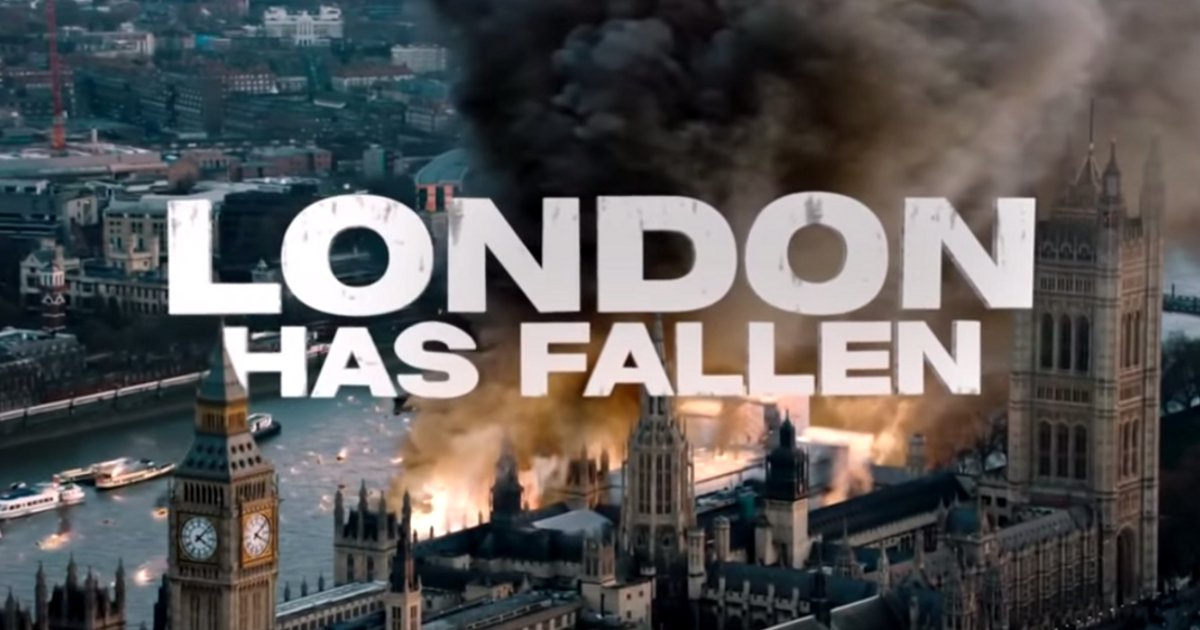
“London Has Fallen” is a love letter from producer-star Gerard Butler to himself and every bit as dumb and dreary as that sounds. This sequel to the more violent of the two attack on the White House movies of 2013 follows an opening scene of a drone attack on a terrorist group, establishing the revenge motive, with a re-introduction to our hero, manly showboat Secret Service hero Mike Banning (Butler), out jogging with (and out-jogging) President Benjamin Asher. “What are you made of?” the President asks with the same air of astonished admiration producer/star Butler clearly expects from the audience. “Bourbon and bad choices,” says Mike, letting us know that he is harder than nails and tougher than hell. All right, then!

Bad news from London. The Prime Minister has died. So that means all the world leaders will attend the funeral, creating a security problem of unprecedented proportions and a heck of a traffic jam, too. Meanwhile, just to amp up the emotion in the laziest possible way, manly Mike and his adoring wife Leah (Radha Mitchell) are expecting a child. Mike stops home to chat with her about paint samples for the new nursery (and whether six security cameras trained on the crib is overdoing it, “and a Kevlar mattress,” ha ha). He also composes a draft letter of resignation but has to leave when the President needs him for the trip to London.

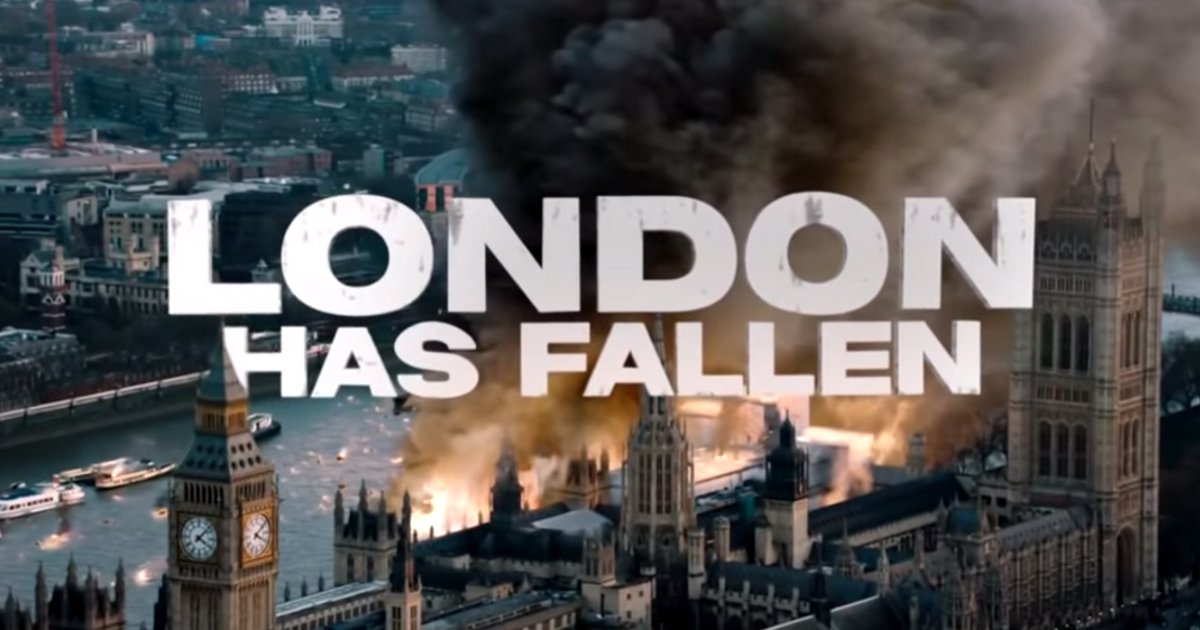
The rest of the movie is just a lot of shooting and explosions as most of the world leaders are wiped out and Mike has to keep the President safe and get him back to Washington. Plus some totally predictable (especially if you saw the last one) scenes of officials back home in the situation room watching intently on screens and saying things like “I think you’d better see this,” and at least one highly predictable death of a major character and at least one “surprise” about a traitor who turns out to be someone previously trusted.

I’d say it was more FPS game than movie, but at least in a game there is some excitement in the challenge of skill and timing. This is just passively watching things and people getting blown up and blown away, with many squishy sounds to remind us that blood is spurting. It is porn-y and fetishistic in the loving depiction of so much carnage, with iconic locations destroyed and many characters killed.

Just as distasteful is the portrayal of producer/star Butler as super-smart, always right, always picking the right target to hit and the right corner to turn, and able to take out dozens of bad guys all by himself, every single time. Excesses of self-regard and self-promotion are dwarfed by a complete failure of self-awareness. Mike blows away yet another swarthy generic bad guy and someone says, “Was that necessary?” “No,” Mike answers casually and moves on to the next one.

Those bad guys are tough. Not only do they blow up the city and murder world leaders, they “are all over social media.” Try burning that down, Mike Banning!

Gerard, was this movie necessary?

No.

Parents should know that this movie has extensive, intense and graphic peril and violence with guns, explosions, terrorism, and many characters injured and killed, disturbing images, world leaders assassinated, massive destruction, and constant strong language.

Family discussion: How do Mike and the President see things differently? If you were running the Secret Service, what would you do to protect the President?

If you like this, try: “Olympus Has Fallen” and “G.I. Joe”
Related Tags:


Action/Adventure Series/Sequel
Whiskey Tango Foxtrot

Whiskey Tango Foxtrot

Posted on March 3, 2016 at 5:20 pm

Copyright 2016 Paramount

When Michiko Kakutani of the New York Times reviewed the book that inspired “Whiskey Tango Foxtrot,” the memoir of journalist Kim Barker about her days covering US military operations in Afghanistan and Pakistan, she wrote:

What’s remarkable about “The Taliban Shuffle” is that its author, Kim Barker — a reporter at ProPublica and the South Asia bureau chief for The Chicago Tribune from 2004 to 2009 — has written an account of her experiences covering Afghanistan and Pakistan that manages to be hilarious and harrowing, witty and illuminating, all at the same time.

It’s not just that Ms. Barker is adept at dramatizing her own adventures as a reporter — though she develops the chops of a veteran foreign correspondent, she depicts herself as a sort of Tina Fey character, who unexpectedly finds herself addicted to the adrenaline rush of war.

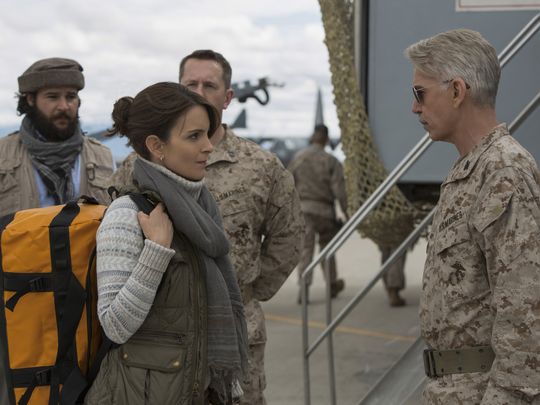
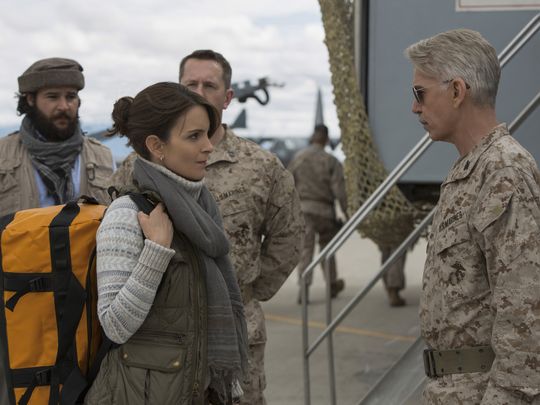
And now that book is a movie, and the role of Ms. Barker is being played by non-other than Tina Fey, who also co-produced. As always, her work is whip-smart and original. This is not Liz Lemon goes to war, it is an impressively sensitive dramatic performance.

But Barker’s story has been movie-ized, giving it the “inspired by” rather than “based on” designation, and removing the “r” from the character’s name to create some space. The real Barker was a print journalist, but making her a television correspondent to make it more cinematic. And the various love interests are fictional. It is disappointing that the movie makes the impetus for the assignment a combination of professional and romantic ennui. Barker was a dedicated journalist looking for a big story.

But much of the essence of it is the real deal, starting with Barker/Baker’s plan to spend three months in Afghanistan that turned into three years, and the ramped-up intensity of spending days embedded with the military, frantically editing the story, and then trying to obliterate memory and consciousness with some hard-core partying, only to start over again. Baker is inexperienced but dedicated and smart. She quickly impresses the cynical General (Billy Bob Thornton) who sees embedded journalists as a bother and a risk. And she quickly bonds with the other woman reporter (Margot Robbie), who shows her the ropes and asks very politely if she can sleep with Baker’s hunky security guy.

Alfred Molina is excellent, as always, as an Afghani official, though we should be past the time when European actors are cast as Middle Eastern characters. And maybe we do not need any more stories of Western characters discovering the mysteries of the other side of the world, with illuminating life lessons from exotic people. We don’t want this to be “Under the Tuscan Sun” but with war instead of sun-ripened Italian tomatoes, and it gets uncomfortably close at times. But the thoughtful script from longtime Fey collaborator Robert Carlock keeps the film from making war be just a growth experience for a reporter looking to shake up her life a bit, and the contrast between what the war does to the people trying to tell the story, knowing that the people back home just change the channel anyway give the story a sobering weight.

Parents should know that this movie has constant very strong, crude, and colorful language, drinking, drugs, smoking, wartime violence with some graphic images, characters injured and killed, sexual references and situations, and nudity.

Family discussion: What was the most important story Kim Baker reported? What did she mean when she said it “started to feel normal?”

If you like this, try: The book that inspired this film, The Taliban Shuffle, and the film “The Year of Living Dangerously”

Related Tags:


Drama Inspired by a true story Journalism War
Gods of Egypt

Gods of Egypt

Posted on February 25, 2016 at 5:36 pm

Copyright Lionsgate 2016

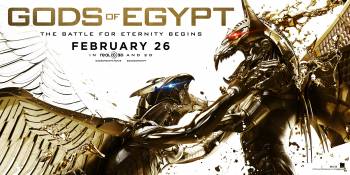
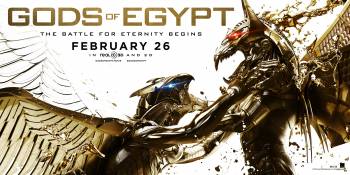
“Gods of Egypt” has more gods than IQ points. There are some grand and striking visuals and some well-staged fight scenes, but there are also effects that look like they were created for a 64-bit computer game and lines of dialogue that make cheesy sword and sandal epics of the Steve Reeves era look like Noel Coward. It may be pretty to look at, but this is a big budget wheel of cheddar.

The producer and director have both apologized, too little and too late, for making a film based on Egyptian mythology without a single Egyptian actor. The gods are played by Australian Geoffrey Rush (Ra, the sun god and father and grandfather to the other gods), Danish Nikolaj Coster-Waldau (Horus, god of air and libertine turned hero), Scotsman Gerard Butler (Set, angry and ambitious god of the desert), American Chadwick Boseman (Thoth, smug god of wisdom), and French Elodie Yung (Hathor, goddess of love). And then there are a few humans, Australian Brenton Thwaites as an Aladdin-style street thief called Bek, and imperious as always British Rufus Sewell as Urshu, Set’s obsequious architect. Given the results, I imagine the Egyptians are relieved not to be a part of it.

The ponderous opening narration informs us that ancient Egypt is the cradle of civilization and so the gods decided to live there among the humans, though they are much taller and have gold for blood. As the story begins, Horus wakes up bleary following an orgy as he is about to take over as king from his wise and progressive father (Australian Bryan Brown). But his uncle Set arrives, kills the king, and plucks out Horus’ super-special eyes. Horus, humiliated and blind, retreats to his temple to sulk and drink. And Set enslaves the entire population to build structures for his glory and decrees that only the rich will obtain eternal life.

Zaya (Australian Courtney Eaton, very appealing) is the servant of Urshu, and the beloved of Bek. With access to Urshu’s architectural drawings, she shows Bek where Horus’ eyes are hidden. She believes that if Horus’ sight was restored, he would be able to defeat Set. Bek gets through an Indiana Jones-style series of traps to retrieve one eye, delivers it to Horus, and persuades him to fight Set and get back his kingdom.

There is visual splendor on a scale Cecil B. DeMille could only dream of, with sumptuous production design by Ian Gracie and costumes by Liz Keogh. But some of the CGI effects are less persuasive than Ray Harryhausen‘s stop-motion miniatures, and a few of them, like Ra’s flames and a sort of sand-based version of Skype, look like they came from a 64-bit video game. The mis-matched sizing of the gods and humans is more silly than impressive. The dialogue is a mish-mash of pretentious claptrap about the Journey and comments like “death is not the end” and “never doubt a man fighting for the one thing as powerful as any god — love.” Occasionally there are painful attempts at humor, as when Bek tells Horus to run from danger: “Mortals do it all the time!” or when Hathor brags that she is “the goddess of too much.” The mythology of ancient Egypt is fascinating and meaningful. This movie is not. It cannot decide whether it wants to be campy or thrilling, but it really does not matter because it fails at both.

Parents should know that this film includes extended sword and sorcery peril and violence with many characters injured and killed, monsters, disturbing images, sexual references and situations, and brief strong language.

Family discussion: Why did Ra treat his sons differently? Why does he say he wants human destiny to be uncertain?

If you like this, try: “Clash of the Titans”

Related Tags:


Based on a book Drama Epic/Historical Fantasy
Eddie the Eagle

Eddie the Eagle

Posted on February 25, 2016 at 5:28 pm

Copyright 2016 20th Century Fox

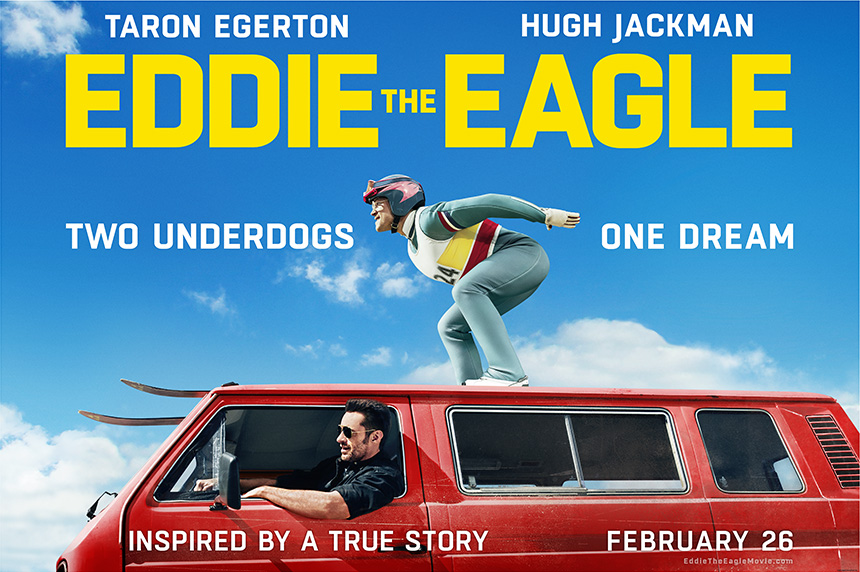
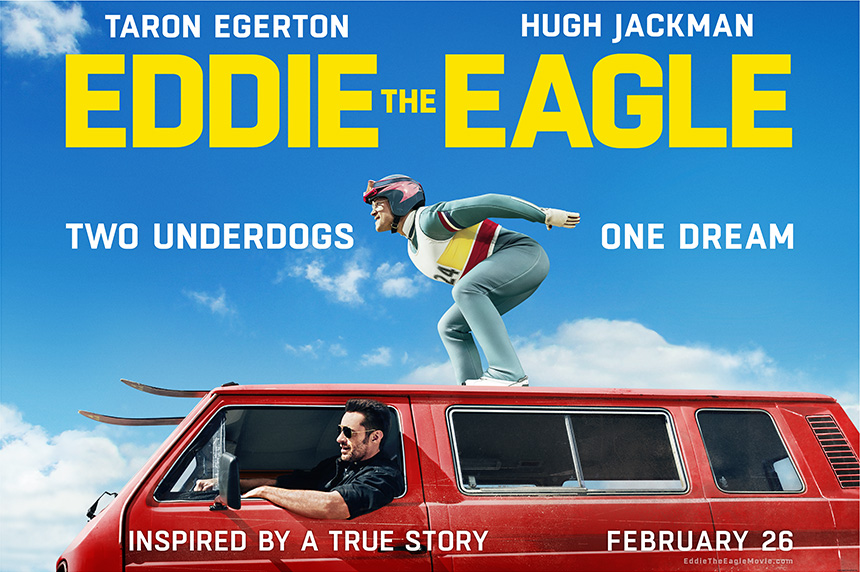
There are heroes who inspire us because they win, showing indomitable determination and courage, like Jesse Owens in Race. And then there are heroes who inspire us when they lose. They also have indomitable determination and courage. They just do not have any talent. But they go farther than anyone thinks they can. Think of “Rudy,” or “Cool Runnings,” or even the original “Rocky” movie. And now add Eddie the Eagle. He was a sickly boy with a dream of competing in the Olympics. When he was bumped from the British ski team, partly for being clumsy and lower class (at least in this film), he switches to ski jumping. There is one advantage: Great Britain does not have a ski jump team and has not competed in the event in 60 years. The rules had not been updated since then, so, unbelievably, anyone who competed successfully (meaning jumped without falling) could qualify. And since no one else was trying, all Eddie had to do was enter one competition and land on his feet.

The bad news was that he had to land on his feet after skiing down a 70 meter slide.

The real Eddie won hearts with his unpretentiousness and enthusiasm, the nickname dubbed in response to his waving his arms in glee and relief after making it down from the jump in one piece. He was refreshing in an era of product-izd athletes groomed from elementary school for endorsement deals and “Up Close and Personal” segments. At the end of the Games, he was the only athlete mentioned in the final speach, singled out for “soaring like an eagle.”

So it is too bad that the movie does something the real Eddie never did — it cheats. It does not trust the real story or the audience. So with the excuse of an “inspired by” credit rather than a “based on” implication of sticking closer to reality, it insists on amping up the ante with schmaltzy/cutesy made-up characters and events. Hugh Jackman brings tons of charm to the fictitious character of an angry, bitter guy who was once on the American ski jump team but got booted for drinking, women, and a bad attitude. Of course he will be inspired by Eddie’s unsullied determination and good attitude. Taron Egerton (“Kingsman: The Secret Service” and the forthcoming “Robin Hood: Origins”) makes Eddie believably awkward, but the character is nearly infantilized, limited to such a narrow range of qualities and emotions. The big showpiece athletic feat is amped up as well, when just the actual fact of climbing up 30 stories and sliding down it on two little sticks should be plenty.

Parents should know that this film includes illness and sport-related peril and injury, some sexual references, brief non-sexual nudity, smoking, alcohol abuse, and some strong language.

Family discussion: What made Eddie’s goals for himself reasonable ones? Why did Bronson decide to help him? How did helping Eddie change the way Bronson thought about himself?

If you like this, try: “Cool Runnings” and “Rudy”

Related Tags:


Biography Inspired by a true story Sports
Risen

Risen

Posted on February 18, 2016 at 5:38 pm

B
Lowest Recommended Age: Middle School
MPAA Rating: Rated PG-13 for Biblical violence including some disturbing images
Profanity: None
Alcohol/ Drugs: Alcohol
Violence/ Scariness: Battle, swords, crucifixion, characters injured and killed, some graphic and disturbing images
Diversity Issues: A theme of the movie
Date Released to Theaters: February 19, 2016
Date Released to DVD: May 23, 2016
Amazon.com ASIN: B01BZ4DOGQ

Copyright 2016 Sony Pictures
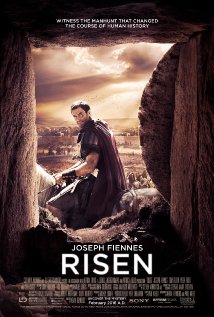
“Risen” is a sober, reverent story of Clavius (Joseph Fiennes), a Roman soldier ordered to witness the crucifixion of Jesus and prevent his body from being stolen. When the rock placed in front of the tomb and sealed by Clavius is moved and the tomb is empty, Pilate (Peter Firth) is worried that the Jesus’ followers will use this disappearance as proof of His divinity, so he sends Clavius to investigate. His journey will take him to Galilee, and what he sees there will transform everything he thinks he knows.

Fiennes brings Clavius to life with a vivid, thoughtful, sensitive performance, showing us the depth of his loyalty and sense of honor. The way he walks, stands, and rides communicates a lifetime of battles fought and won. He is a man confident in his strength and very aware of the brutality on both sides. At first, he is governed by duty, which we see in the opening battle scenes, in his prompt appearance before Pilate following the battle, not even taking time to clean up, in his acquiescence to taking on a new aide (“Harry Potter’s” Tom Felton, excellent as Lucius) who has not come up through the ranks because his father is Pilate’s friend.

We see that he might have made a different decision about how to respond to the Sanhedrin’s concerns about Jesus, but he follows the orders and makes sure that Jesus is dead and that the tomb is sealed. And we see him speak to his own gods placing a tribute on the shrine to ensure that his prayers are heard.

One of the film’s most powerful sections is an almost “Law & Order” scene with Clavius interrogating witnesses to try to figure out what happened to the body in the tomb. Each encounter tells us something different about Clavius and, indirectly, about the impact that Jesus (called Yeshuah) has had on his followers.

The cinematography by Lorenzo Senatore is beautiful, lending dignity to the story, and Cliff Curtis, a superbly talented performer of Maori heritage who is famously able to play a remarkably wide range of ethnicitys makes a warm, appealing Jesus, kind, compassionate, and a little mysterious. But the focus of the story is wisely on the (fictional) Roman, who is the stand-in for the audience as a witness to the resurrection.

Parents should know that this film includes Biblical-era violence including battle scenes, torture, and crucifixions, with characters injured and killed and disturbing and briefly graphic images.

Family discussion: When did Clavius first begin to believe and why?

If you like this, try: “The Robe,” “Spartacus,” and “Ben-Hur”

Related Tags:


Drama Epic/Historical Movies -- format Spiritual films
THE MOVIE MOM® is a registered trademark of Nell Minow. Use of the mark without express consent from Nell Minow constitutes trademark infringement and unfair competition in violation of federal and state laws. All material © Nell Minow 1995-2026, all rights reserved, and no use or republication is permitted without explicit permission. This site hosts Nell Minow’s Movie Mom® archive, with material that originally appeared on Yahoo! Movies, Beliefnet, and other sources. Much of her new material can be found at Rogerebert.com, Huffington Post, and WheretoWatch. Her books include The Movie Mom’s Guide to Family Movies and 101 Must-See Movie Moments, and she can be heard each week on radio stations across the country.

Website Designed by Max LaZebnik