Silence

Silence

Posted on January 5, 2017 at 5:27 pm

Copyright Paramount 2016
Like Joseph Conrad’s Heart of Darkness and Francis Ford Coppola’s Vietnam-era adaptation, Apocalypse Now, Martin Scorsese’s “Silence” is the story of men who take a journey to find a former leader who has disappeared into the untamed natural world.

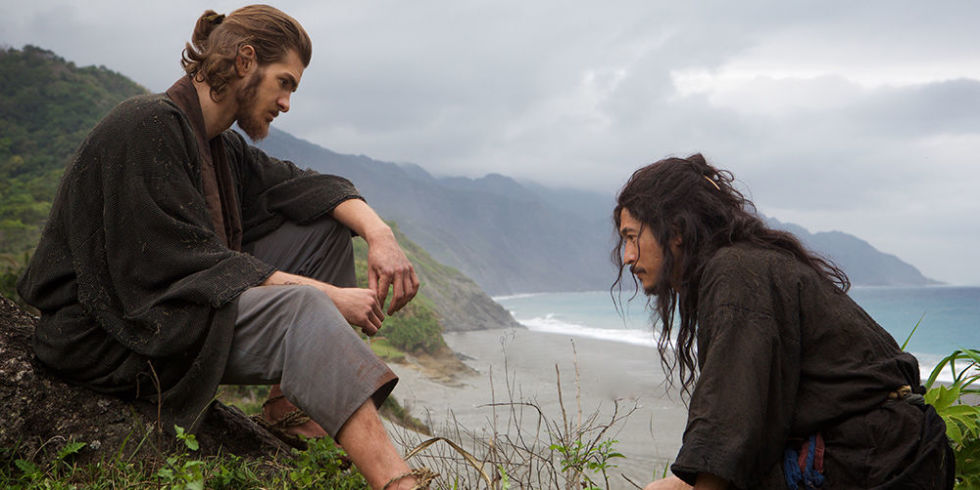
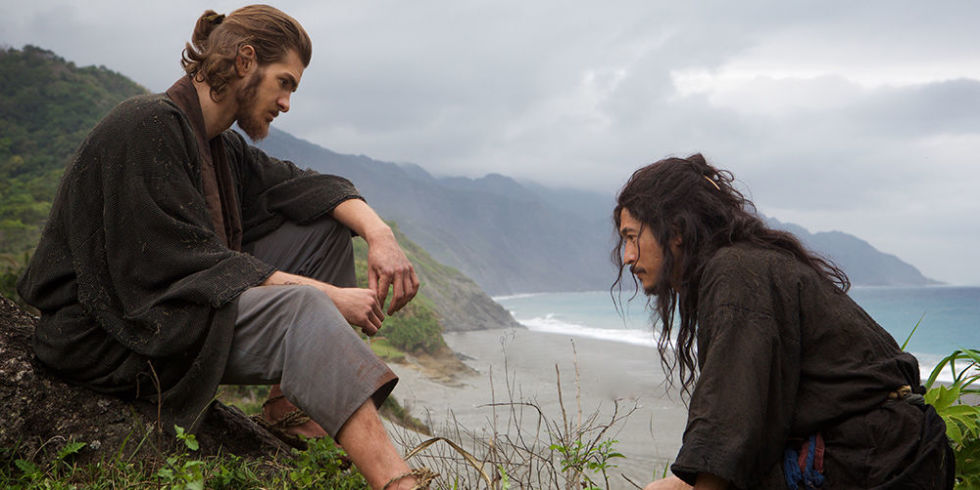
It is the mid-17th century. Two Portuguese priests, Father Rodrigues (Andrew Garfield) and Father Garrpe (Adam Driver) go to Japan in search of their teacher and mentor, Father Ferreira (Liam Neeson). After receiving disturbing reports that he has publicly abandoned his faith, they say, “We have no choice but to save his soul.” They leave with “no luggage except our hearts.”

Ferreira had gone to Japan as a missionary and he and his colleagues had some success in converting Buddhist peasants. But Japan has now outlawed Christianity in any form, and as we see immediately, the officials have decided that the best way to eradicate it is to torture believers, forcing the priests to watch. Early efforts to fight Christianity failed because killing the priests made them martyrs, showing the strength and power of their faith when they refused to renounce it, even under torture. So the officials responsible for eradicating Christianity have had to develop a more subtle approach. Instead of torturing the priests, they torture and murder their followers, telling the priests that all they have to do to stop it is recant. It can be as simple as putting a foot on an icon of Jesus. “It’s a formality,” the Japanese official says in a soothing voice. “You don’t have to believe it.”

The priests have a choice: deny their faith in Jesus and Christianity or allow the suffering and death of innocent people. What should they do? Who has the answer?

For Martin Scorsese, who co-wrote and directed, this movie has been a passion project for three decades, since he read the award-winning novel by Shusaku Endo, inspired by the true stories of 17th century priests in Japan. Scorsese, who once thought of becoming a priest grapples here with the big questions about the letter and the spirit in the context of a time and a faith that traditionally has put a lot of emphasis on the letter as a frame and a discipline for the spirit. It is also a faith tradition that understands suffering as a part of faith practice, whether a way to appreciate the suffering of Jesus or to test one’s faith or to better understand others’ experiences, or to earn the rewards of heaven. The gorgeous visual scope and striking images are as powerful in telling the story of the clash of culture and religion as the narrative.

When it comes to performances, the film is off-balance, probably unintentionally, as the Japanese characters are more complex and completely realized than the one-dimensional priests. Garfield seems at sea as an actor, not just as a character, except in a few scenes where he has a chance to debate the “Inquisitor” (a wry, clever Issey Ogata). This movie about silence is at its best in the verbal jousting on faith, culture, truth, and power.

Translation: Extremely tense scenes of torture and brutality with some very disturbing graphic images, characters injured and killed

Recommendation: Mature teens-Adults

Family discussion: Were you surprised by the final shot? In the debate with the Inquisitor about culture and faith, who was right?

If you like this, try: “Unbroken” and “The Last Temptation of Christ”

Related Tags:


Based on a book Epic/Historical Spiritual films
Hidden Figures

Hidden Figures

Posted on December 23, 2016 at 9:15 am

Copyright 20th Century Fox

The sign on the office door said, “Colored Computers.” That was not a reference to IBM’s Big Blue or to a machine of any kind. In the early days of the space race at NASA, computers were people doing all of the complex, unprecedented math calculations by hand, and the “colored” computers were the African-American women who had more talent, more dedication, more integrity, despite less pay, less credit, and less resources than their colleagues. Twice marginalized, as women and as African-Americans, they were heroically dedicated, capable, and resilient. Their story, unknown until the book by Margot Lee Shetterly, is beautifully told in this heartwarming, inspiring film.

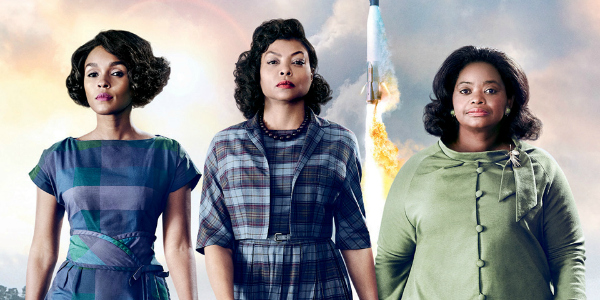
Katherine Johnson (Taraji P. Henson), Dorothy Vaughan (Octavia Spencer), and Mary Jackson (singer Janelle Monáe, “Moonlight”) are stopped by a highway patrolman on their way to their office at NASA. They get out of the car, expecting the worst. In his own way, the white patrolman expects the worst, too. This is Virginia, just a few years after the state shut down the entire school system to avoid complying with the Supreme Court’s decision in Brown v. Board of Education. This is the same era depicted in “Loving,” the true story of the couple who challenged Virginia’s laws prohibiting marriage for people who were not of the same race.

This was also the era of the space race. President John F. Kennedy famously said, “We choose to go to the moon. We choose to go to the moon in this decade and do the other things, not because they are easy, but because they are hard, because that goal will serve to organize and measure the best of our energies and skills, because that challenge is one that we are willing to accept, one we are unwilling to postpone, and one which we intend to win, and the others, too.” But there was another reason to go to the moon. The Soviet Union was ahead of us in space exploration, and beating them had huge symbolic, morale, and political value.

And that meant that something was more important than the deeply institutionalized racism and sexism of the era — ability. These women and their colleagues were simply too good to be overlooked. And to contribute all that they were able, that meant removing some obstacles and indignities. It was not until Johnson’s boss (Kevin Costner) exploded because she was not at her desk when he needed her that he learned she had to go a quarter of a mile to the “colored” bathroom in another building. And it was her vital importance to the project, not any commitment to inclusion or justice, that led him to insist on change. John Glenn (a likable performance by “Everybody Wants Some!!‘s Glen Powell) refused to get on the rocket ship that would make him the first person to orbit the earth until Johnson personally verified the calculations.

Henson, Spencer, and Janelle Monáe are clearly thrilled to have roles of such significance and depth and honor their characters with performances of wit and subtle charm. When Jackson has to go to court for the opportunity to take the evening classes at a segregated local high school that will qualify her for an engineering degree, when Vaughan decides to teach herself computer programming to make sure that the first-ever mainframe being installed at NASA does not make her work obsolete, when Johnson explains that it may be unprecedented to have a woman in the top-level meeting but it is also unprecedented to send a man to the moon, we see the power of their intellect and the steel in their souls. A light-hearted girl’s night shows us the support they gave each other and how much it meant to each of them.

Johnson, Jackson, and Vaughan plotted a course for NASA to put men into space. They also plotted a course for all of us to do things because they are hard, because they are important, because we can do better.

Parents should know that this movie includes extensive portrayal of the racial and gender prejudice of its time, along with smoking and social drinking and some language.

Family discussion: Why did the women in this film continue to be so loyal to a system that constantly disrespected them? Why did Dorothy Vaughan want to learn how to use the IBM machine? What do you think of her reply to Vivian Michael?

If you like this, try: “The Right Stuff” and “The Dish”

Related Tags:


Based on a true story Drama Gender and Diversity Race and Diversity
Fences

Fences

Posted on December 22, 2016 at 5:43 pm

Copyright 2016 Paramount

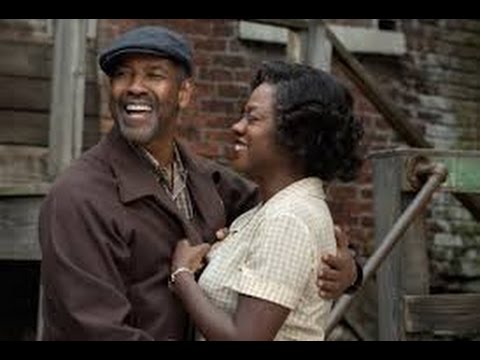
August Wilson’s towering play, the winner of the Tony and Pulitzer prizes, has been magnificently put on screen by director/star Denzel Washington, who won a Tony for the play’s 2012 Broadway revival, and who works with much of that show’s cast in this version.

Wilson’s own screenplay wisely avoids the usual impulse to “open up” a play by adding locations and reducing the dialogue. The best known of Wilson’s ten-play “Pittsburgh cycle,” one for each decade of the 20th century, “Fences” is a story of epic scope and mythic resonance. The gorgeous dialog makes poetry out of the kind of talk we hear around us all day: the jokes, mock insults, and bragging of co-workers and long-time friends, the intimate humor of a longtime couple, anguished confrontation, bitter recollection, back-and-forth that skims the surface while the emotions roil and explode below. To the extent that it preserves the artificiality of a theatrical performance, it emphasizes its ambitious reach. If a play has a character named Gabriel (Mykelti Williamson) who is cognitively impaired following a war injury, who carries a trumpet, and who constantly reminds his brother of a betrayal and survivor guilt, if the tile “Fences” is literal and metaphorical and the character building the fence talks about keeping out the actual angel of death, the audience must recognize these signals of serious, profound, dramatic engagement with eternal themes and be grateful for the chance to be a part of it.

Washington plays Troy, a garbageman who was once a star of a Negro Leagues baseball team but was too old to cross over into the Major Leagues the way Jackie Robinson did. He still keeps a bat and ball in the back yard. He still holds onto the bitterness and dashed dreams of his years as a player. But now, he just wants a promotion to driver, a job only held by white men where he works.

His wife is Rose (Oscar-winner Viola Davis, who also won a Tony for her performance in the revival). We first see Troy bragging to his best friend Bono (Stephen McKinley Henderson) about how he laid down the law when he met Rose, telling her he was not interested in marriage. She laughs indulgently and affectionately, but makes it clear that it was quite the contrary. “I told him if he wasn’t the marrying kind, then move out the way so the marrying kind could find me.”

Troy and Rose have a son in high school, Cory (Jovan Adepo), a talented football player. Rose sees football as a chance for Cory to attend college, and Cory desperately wants to play. But Troy refuses, saying “The white man ain’t gonna let you get nowhere with that football noway.” His mind and spirit have been so constricted by what he has faced that he cannot bring himself to believe that real opportunity exists for Cory. Or perhaps he cannot face the possibility that Cory will do what he could not.

Troy also has an older son, Lyons (Russell Hornsby), with a woman he never married. Lyons, a musician, asks Troy for a loan, mostly as a way to find a way to talk to him, to find a way to see if he means anything to him. Troy tells him he should not need to ask for money, and Lyons responds, “If you wanted to change me, you should’ve been there when I was growing up.”

And Troy worries about his brother Gabriel, who lived with Troy and and Rose in a home they bought with his disability money, but who has moved down the street because he wants more independence. Troy feels guilty for not taking care of him, and for living in a house he would not have been able to afford but for his brother’s disability.

And so, he makes a bad decision that will shatter his family’s foundation. The scene where Davis goes from disbelief to shock to fury will be used for decades in acting class, but she is just as impressive in the movie’s final moments. While Troy occupies much of the screen time and dialogue, it is really Rose who is the heart of the story. Troy can brood, but cannot change. He can hurt, but he cannot heal. He is so damaged that he cannot offer his sons love or respect. But see Rose’s strength. Her resolve is not grounded in compromise or concession. Her soul has expanded to encompass all of life’s contradictions. And it is the great gift of this film that it expands ours, too.

Parents should know that this film includes themes of racism and adultery, some strong language, sexual references, and a sad death.

Family discussion: Do you agree with Rose’s choice? Why didn’t Troy want Cory to play football? What do we learn from Troy’s relationship with Gabriel?

If you like this, try: “A Raisin in the Sun” and “Desire Under the Elms”

Related Tags:


Based on a play Drama Race and Diversity
Passengers

Passengers

Posted on December 21, 2016 at 8:47 pm

Copyright Columbia Pictures 2016

“Passengers” is beautiful to look at, a pretty story about pretty people in a pretty (outer space) setting, but it cannot overcome the ick factor of its premise.

Everyone’s favorite boy we wish lived next door, Chris Pratt, plays a likeable ordinary guy who works with his hands named Jim Preston, one of 5000 passengers and 250 crew in a spaceship on a hundred-year journey to a hospitable colonized planet. Like the spaceship in “Wall-E,” it is set up with every luxury, from sushi restaurant to a genial robot bartender (Michael Sheen). The people on board are in suspended animation for a hundred years, to be awakened four months before arrival, to enjoy the ship’s amenities and prepare for their new home. The ship is gorgeous, though I am not sure how practical it is.

But somehow Jim awakens 90 years early and there is no way to return to his hibernation. He is alone on the spaceship and his plan to emigrate to the new planet is not going to happen. Instead of being a pioneer in a fresh, optimistic new world, he is doomed to spend the rest of his days stranded, sure to die before anyone else on the ship is awake. The ship’s help kiosks briskly inform him that malfunction of the hibernation units is impossible, a reminder of the Titanic’s “unsinkable” hubris. He tries to send a message to the home base on earth, only to learn that it will be more than 30 years before he can get an answer.

So, he basically turns the spaceship into a man cave, living in dirty sweats, growing a beard, drinking, and playing one on no one basketball and one on avatar dance video game. Finally, almost mad with loneliness, he starts looking at the files of the 4999 people still sleeping on the ship, and finds himself captivated with one of them, a journalist from New York with the fantasy name Aurora Lane (Jennifer Lawrence). After many discussions with the robot bartender, he can no longer help himself. He knows it is wrong, but he wakes her up, and he lets her think it was due to the same malfunction that woke him.

Decades ago, movies used to have scenes where the guy grabbed the girl and she beat her fists helplessly against his chest, crying, “I hate you!” until he forced her into a passionate kiss, after which she melted into his arms. These were mostly romantic comedies, but we saw some of this and worse in drama, too. Remember Rhett carrying Scarlett up the stairs in “Gone With the Wind,” and 30 years later, Laura falling for her rapist, Luke, on “General Hospital.” (Also see: Zeus and Europa, the Sabine women, the silent classics “The Sheik” and “Son of the Sheik”) But that just doesn’t work any more.

Aurora is entirely a fantasy figure. Even her nudity is highly sexualized, where his is not. By taking away any shred of agency or consent the script sets up an insurmountable obstacle to any kind of relationship for Jim and Aurora, which it makes the fatal mistake of treating as surmountable. There’s the getting-to-know-you part, and then she she-learns-the-truth part and then the not-talking-to-him part, and then the work-together-or-everyone-dies part, but nothing can really support the idea of the romance it tries to persuade us is happening.

Parents should know that this film includes extended sci-fi action and peril, sad death with characters injured and a sad death, some disturbing images, issues of predatory behavior and consent, brief strong language, alcohol, sexual references and situations, and nudity.

Family discussion: Why did Aurora make that choice at the end of the film? What would you do if you were left alone?

If you like this, try: “Gravity” and “The Martian”

Related Tags:


Romance Science-Fiction
Why Him?

Why Him?

Posted on December 20, 2016 at 10:20 pm

Copyright 20th Century Fox

If you go to see “Why Him?” you will ask yourself, “Why Me?”

Some of the people behind “Meet the Parents” had the idea of basically making the same movie all over again. Of course they made it all over again twice with the sequels, but hey, this time let’s try a twist! How about if the dad is the normal one and it is the prospective son-in-law who is outrageous! And maybe if we have extended scenes of Bryan Cranston and Megan Mullally sitting on toilets, and enjoying it, and the cast getting drenched in moose urine, no one will notice that it is not actually funny. Believe me, I noticed. Over and over and over again.

Cranston plays Ned Fleming, a nice guy who loves his family. We first see him celebrating his birthday with his wife Barb (Mullally), teenage son Scotty (Griffin Gluck), and the employees of his printing business, who are like family, too. Ned’s daughter Stephanie (Zoey Deutch of “Everybody Wants Some!!”) Skypes in from her dorm room at Stanford. Her boyfriend, not realizing anyone can see her, comes into her room and takes his clothes off, thus letting Ned know, in front of all his friends, that she has a boyfriend with whom she has sex. So we’re in that skeezy category of films going back to “Take Her She’s Mine” and “The Impossible Years,” in which daddies are obsessed with their daughters’ sex lives.

It turns out that Stephanie’s beau is a daddy’s nightmare. Not only are they having sex, but Laird (James Franco)’s youth, sexuality, and wealth (he is a tech zillionaire) makes Ned feel emasculated and he hates not being Stephanie’s number one guy anymore. This come just as Ned has not told anyone that his business is doing poorly

The family goes to California to spend Christmas with Stephanie, and everything they learn about Laird just makes Ned feel more anguished. But have no feel — at some point following the moose urine and Japanese toilet jokes, there will be hugs all around.

Franco commits fully to the man-child Laird, and his charm and movie star smile makes up for some of the most appalling elements of the storyline and even gives us a hint of what Stephanie might see in him. Keegan-Michael Key adds some spark as Laird’s concierge/best friend, and there are a couple of clever lines. But disgusting and outrageous does not equal funny, no matter how much moose urine you pour onto it.

Parents should know that this film includes extremely crude and explicit humor including sexual references and situations and bathroom jokes, very strong and crude language, drinking, drugs, comic peril and violence.

Family discussion: How does your family treat the people who date its members? How were Laird and Ned alike?

If you like this, try: “Meet the Parents”

Related Tags:


Comedy
THE MOVIE MOM® is a registered trademark of Nell Minow. Use of the mark without express consent from Nell Minow constitutes trademark infringement and unfair competition in violation of federal and state laws. All material © Nell Minow 1995-2026, all rights reserved, and no use or republication is permitted without explicit permission. This site hosts Nell Minow’s Movie Mom® archive, with material that originally appeared on Yahoo! Movies, Beliefnet, and other sources. Much of her new material can be found at Rogerebert.com, Huffington Post, and WheretoWatch. Her books include The Movie Mom’s Guide to Family Movies and 101 Must-See Movie Moments, and she can be heard each week on radio stations across the country.

Website Designed by Max LaZebnik