A Bigger Splash

Posted on May 12, 2016 at 5:23 pm

B+
Lowest Recommended Age: Adult
MPAA Rating: Rated R for graphic nudity, some strong sexual content, language and brief drug use
Profanity: Very strong and crude language
Alcohol/ Drugs: Drinking, smoking, drugs
Violence/ Scariness: Violence including homicide
Diversity Issues: Background of race and class issues
Date Released to Theaters: May 13, 2016

Where there is Eden, there is usually a serpent. In this case, it is literal and metaphoric, as Paul (Matthias Schoenaerts) and Marianne (Tilda Swinton) are blissfully happy in a lovely home with a pool on an exquisite island near Sicily. Occasionally they are confronted by local wildlife, including a couple of snakes. But mostly they lie naked outdoors, make love in the pool, and go swimming, slathering mud all over each other then sleeping as it dries. Both are recovering, which means both are vulnerable. Marianne is a rock star — in a flashback we see her on stage at an enormous arena with the crowd shrieking her name. She has had an operation on her vocal chords and must not speak at the risk of losing her voice entirely. Paul is a photographer and documentarian who has been to rehab for substance abuse and a suicide attempt. They are gentle and loving with each other.

And then the cell phone rings. It is Harry (Ralph Fiennes), Marianne’s former producer and lover, and he says he is landing on the island in five minutes and needs to be picked up. He arrives with a very young woman named Pen (Dakota Johnson) and it is clear that they are there to break things — to break the silence, to break hearts, to break the fragile peace Marianne and Paul have found when they left home to get away from people like Harry. “We’re hiding out,” Paul tells him. “Not from me!” Harry replies.

Harry is loud, carelessly arrogant, and needy. Some people are obnoxious because they do not know better; Harry knows and relishes it. He is the kind of guy to take up with a girl Pen’s age, but it turns out she is his recently discovered American daughter. Partly because he did not know he was her father until she was grown and partly because he lives in the space between outre and obscene. He literally pees on a grave. “Everyone’s obscene,” he says, “that’s the whole point.” He does not believe in limits, with one possible exception he claims to put on himself. After a lot of hinting from Harry, Marianne invites him and Pen to stay in the house they are renting.

“A Bigger Splash,” takes its title from a David Hockney swimming pool painting, is a remake of the 1969 Alain Delon film “La Piscine” (“Swimming Pool”). The characters experience need, fear, love, loss, and deception. They reflect the power and corruption of celebrity while around them we see glimpses of desperate refugees held in pens. Beautifully composed images show dreamlike settings, but there are intrusions within the pristine purity of the house: the shadow of an airplane about to land, a reptile on the table, some gauche visitors invited by Harry. “You’re not speaking, sweetheart,” he says to Marianne. “So I had to make other plans.” Small details are superbly chosen — a dress awkwardly worn in one scene turns up again later where it is more suitable, Harry’s story about producing a Rolling Stones song (with a fabulous dance), both Harry and Paul placing pills on Marianne’s tongue, a glint of gold and silver on her eyelids. It’s a mood piece, brilliantly performed, resonating like a bell that was rung days before.

Parents should know that this film includes very explicit nudity, sexual references and explicit situations, drinking, smoking, drugs, violence including homicide, and very strong language.

Family discussion: Why did Marianne invite Harry to say with her? Why did Pen lie?

If you like this, try: “Swimming Pool” and “Laurel Canyon”

Related Tags:


Drama Movies -- format Remake
Mothers and Daughters

Mothers and Daughters

Posted on May 5, 2016 at 5:18 pm

B
Lowest Recommended Age: High School
MPAA Rating: Rated PG-13 for brief drug content
Profanity: Some strong language
Alcohol/ Drugs: Drinking, drugs
Violence/ Scariness: Tense family confrontations
Diversity Issues: None
Date Released to Theaters: May 6, 2016
Copyright 2016 Screen Media Films

No one matters more to us than Mom and there is no one we can at the same time want everything and nothing from. We need their unconditional love and approval. We need them to always be glad to see us, always comfort us when we hurt. But we also need to feel that we can do without her, be independent. And then we don’t want to.

Last week’s awful “Mother’s Day” attempted to mine this material. This week, “Mothers and Daughters” does a better job. It still falls into the trap of putting the story in New York City but having all of the characters white and having them keep running into each other and resolving everything too neatly. But it avoids the sit-com vibe and intrusive product placement and has some understated and affecting moments.

In one of the movie’s highlights, Susan Sarandon appears with her real-life daughter, Eva Amurri Martino, who plays Gayle, a woman who is estranged from her family. She insisted on living with her boyfriend, who wants to start a high-end bakery and is sure he will get the loan he needs. But Gayle is getting nervous about the money he is spending and determined not to ask her parents to help them.

Selma Blair plays Rigby, a photographer whose married boyfriend has just — kindly — broken up with her to return to his wife. She is offered her dream job, accompanying a rock star on tour as his official photographer, when she discovers she is pregnant. “How long do I have?” she asks her doctor (“The Blind Side’s” Quinton Aaron). He smiles and tells her it’s a baby, not a terminal disease. She makes an appointment for an abortion, certain that she does not have it in her to care for a child, especially because she feels guilty about not doing more for her own mother, who is in a nursing home.

Sharon Stone is Nina, a fashion mogul whose daughter has dropped out of a prestigious internship and won’t tell her what she is doing instead. Mira Sorvino is Georgina, whose new line of bras is launching, and who has a secret she has not told her very supportive boyfriend. And Courteney Cox is Beth, a wife and mother of a teenage son. Her own mother has just died, leading to the revelation of a family secret that has caused great anger and pain.

There is a quiet sincerity to the film that makes up for some slickness in the screenplay, with its overly convenient twists and rapid progress toward hugs and forgiveness.

Parents should know that this film has mature material including sexual references and discussions of family secrets. There is some alcohol and brief drug use.

Family discussion: Which family had the most difficult problem? Why did Rigby change her mind?

If you like this, try: “The Meddler”

Related Tags:


Drama Family Issues Movies -- format
Captain America: Civil War

Captain America: Civil War

Posted on May 4, 2016 at 8:00 pm

B+
Lowest Recommended Age: Middle School
MPAA Rating: Rated PG-13 for extended sequences of violence, action and mayhem
Profanity: Brief strong language
Alcohol/ Drugs: None
Violence/ Scariness: Extended superhero/action violence with chases, crashes, and explosions, characters injured and killed.
Diversity Issues: Diverse characters
Date Released to Theaters: May 6, 2016
Date Released to DVD: September 13, 2016
Amazon.com ASIN: B01D9EUNB4
Copyright 2016 Marvel

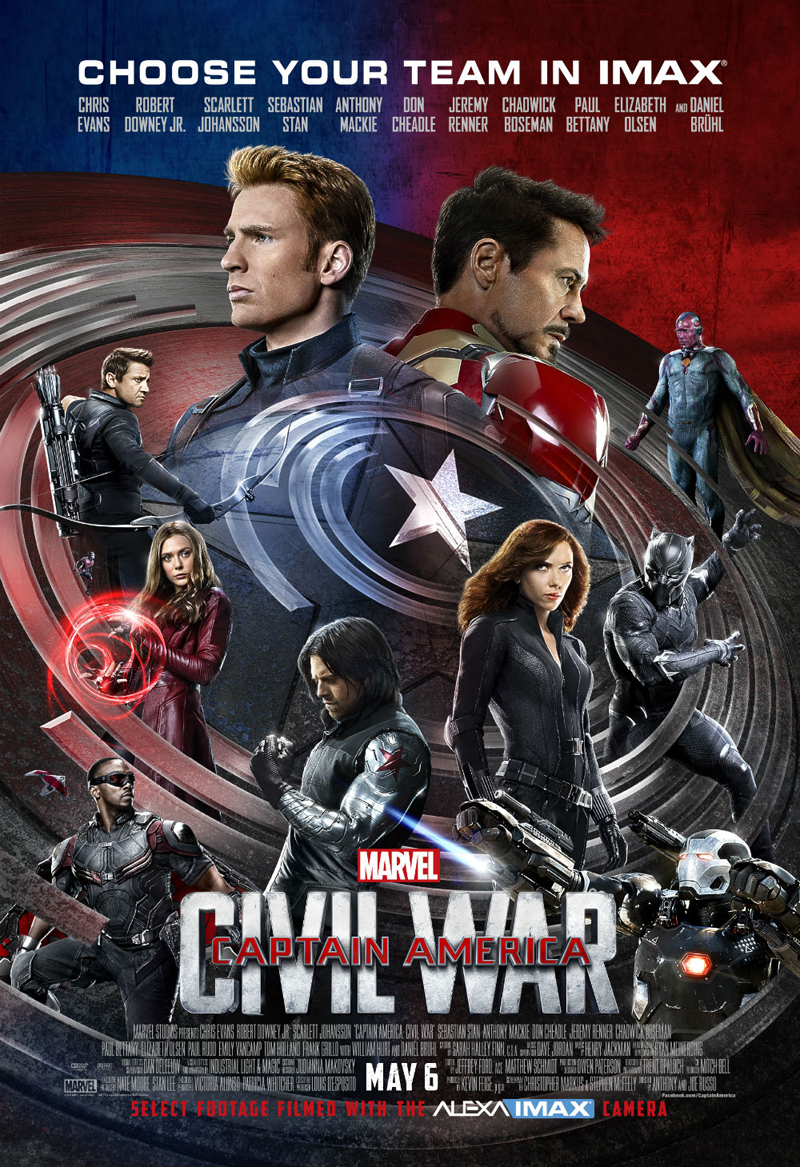
The most important element of any superhero movie is the villain. He (or she) has to pose a credible threat to humanity and challenge particular strengths and vulnerabilities of someone with extraordinary powers. In “Captain America: Winter Soldier” there was a paranoiac Pogo-esque “we have met the enemy and he is us” theme that is expanded in “Civil War.” It goes to the heart of the Avengers themselves as a critical issues divides them so they are fighting each other.

The issue is not one we usually see in superhero movies or indeed action movies in any category: consequences. Part of the fun of action movies is seeing all of the chases, fights, and explosions, without having to worry about the cleanup or what the military euphemistically calls “collateral damage.” But this story has more impact because it acknowledges and engages with the damage that superheroes do while they are preventing worse damage. It falls somewhere between “The Incredibles” and “Eye in the Sky.”

The true meaning of collateral damage is presented early on in “Civil War.” Tony Stark (Robert Downey, Jr.) has just announced that he will fund all of the student research projects at MIT when he is confronted by a mother (a small masterpiece of devastation and fury from the extraordinary Alfre Woodard). Her son was on a humanitarian mission when he was killed in the Sokovia crash of an entire city at the end of Avengers: the Age of Ultron. For her, it doesn’t matter that the entire world was saved in theory by a supervillain who is not around when her son was killed in reality by a man who is. “You think you fight for us,” she says. “You fight for yourself.”

Stark is devastated. “We’re no better than the bad guys.” The man we first saw demonstrating his company’s military weapons as though he was a rock star performing an arena show and who had no problem defending the money he made in munitions finally has to reckon with the truth he barely realized he had been moving closer to. And that is why, after the typical superhero opening action sequence we get a non-typical reaction. With SHIELD collapsed following “Winter Soldier,” the Avengers are operating on their own, without any oversight. A coalition of 117 nations insist that they agree to be subject to a UN commission (the “or what” is not ever spelled out because, what would it be?).

One of the film’s most intriguing developments is that not only do the Avengers line up on opposite sides but they don’t take the positions we might expect. Stark’s post-confrontation grapple with guilt has the most anarchistic of superheroes suddenly looking for the comfort of some rules. And the shock of SHIELD’s corruption has the most Boy Scout-ish of all superheroes, Captain America (Chris Evans) suddenly resistant to putting himself under anyone’s control. Some of the avengers pick a side on principle; some are more instrumental or practical. The Black Widow (Scarlett Johansson), who has her own history of unspeakable crimes, says, “Staying together is more important than how we stay together.”

Directors Anthony and Joe Russo deftly manage an enormous cast of characters. It’s easier to list those who do not appear in this film: Pepper Potts, Thor, Nick Fury, and the Hulk. Pretty much everyone else is here, and superbly added to the mix we have Paul Rudd as Ant-Man, who has some surprises in store, Black Panther (a lithe, powerful, and compelling Chadwick Boseman), avenging the death of his father, and the brand-new Spidey (Tom Holland, with Marisa Tomei as Aunt May). Bucky/Winter Soldier (Sebastian Stan) is here, too, and his storyline nicely mirrors the larger themes. He has been responsible for terrible crimes and abuses and some can never forgive him. But Captain America knows something about military operations. “We try to save as many people as we can,” he says. “Sometimes doesn’t mean everybody.” He knows how a human can become a weapon, and he is determined to get his friend back. Remember, this is not the Justice League. They are Avengers, and another character’s determination to get vengeance provides one of the movie’s most signficiant twists.

I don’t want to give away too much, so I’ll just say the action is everything you’d hope, with superhero-on-superhero collisions beyond the dreams of fanboy heaven. Keep an eye on the motorcycle. And the helicopter. And Ant-Man. And some cool special effects with Stark’s augmented flashback/therapy. And stay through the credits, of course.

Parents should know that this film includes extended sci-fi/comic book action violence with chases, crashes, and explosions, characters injured and killed, and brief strong language.

Family discussion: What are the best arguments for Ironman’s position on the accords? For Cap’s? How is this Spider-Man different from other portrayals of the character?

If you like this, try: “The Avengers” and “Captain America: The Winter Soldier”

Related Tags:


3D Action/Adventure Comic book/Comic Strip/Graphic Novel DVD/Blu-Ray Pick of the Week Scene After the Credits Science-Fiction Series/Sequel Superhero
The Meddler

The Meddler

Posted on May 1, 2016 at 11:42 am

B+
Lowest Recommended Age: Mature High Schooler
MPAA Rating: Rated PG-13 for brief drug content
Profanity: Some strong and crude language
Alcohol/ Drugs: Drinking, marijuana
Violence/ Scariness: Sad offscreen death, minor accident
Diversity Issues: None
Date Released to Theaters: April 29, 2016

Copyright Sony Pictures Classics 2016
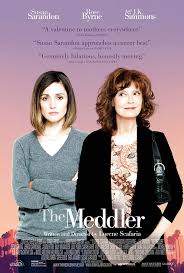
Marnie (Susan Sarandon) is the irresistible force who, just before this movie starts, meets the immovable object: devastating grief in the loss of her husband. She does not have the vocabulary to process this loss. And so she tries to hold onto the person she was before. And she tries to convince everyone around her — and herself — that she’s fine. “The Meddler” begins with a brief monologue about how much she loves living in Los Angeles, where she has moved to be near her only daughter, Lori (Rose Byrne). “It’s like Disneyland!” she says cheerfully.

But she has trouble filling her days and finding a place to use her generous impulses. And so, as the title indicates, she meddles. She calls Lori many times a day, and when Lori does not answer, she comes over — with a bag of bagels. Lori, grieving in her own way for her father and for a breakup with a handsome actor, does not respond, and so Marnie turns her attention to anyone who comes along, from Lori’s friends to the guy at the Apple store genius bar. What she does not feel ready to do yet is to say goodbye to her husband by burying his ashes and putting up a headstone in the family plot back in New Jersey. “It’s been a year,” she tells his brothers. But it has been two. And she is not ready to think about loving someone new, even after she meets a man who is from her home town and seems perfect for her (Michael McKean).

When Lori’s friend Jillian (SNL’s Cecily Strong) mentions that she needs a babysitter, and so Marnie shows up at her house — with bagels. Jillian says that she does not have a mother and she never had the dream wedding she wished for. So Marnie offers to give her a wedding. And when she encourages the Apple genius (Jerrod Carmichael of “The Carmichael Show”) to go back to school, she offers to drive him. She has so much to give, but the loss of her husband has left her with no place to give it and a fear of losing him even more if she changes too much or gets too close to someone else.

Sarandon gives one of her best performances, which means she is truly superb, and Byrne is excellent as well. When Lori’s ex and his new girlfriend find Marnie and Lori having dinner together on Valentine’s Day, there is a beautifully funny and heart-wrenching moment as both mother and daughter try so hard to appear to be doing fine that they do not notice they are undermining each other. In another scene of piercing bittersweetness, a day of emotional upheaval ends in mingled laughter and tears. JK Simmons brings dry wit and humanity to the role of an ex-cop and hen farmer whose quiet understanding gives Marnie her first chance to let go a little, and to acknowledge, after some resistance, that it is something she wants and needs to do, for herself and for Lori.

Writer/director Lorene Scafaria (“Nick and Nora’s Infinite Playlist” and “Seeking a Friend for the End of the World”) has a rare gift for finding the space in between joy and grief, and a rare understanding of the power of small moments to tell a big story. As Marnie watches Lori’s script being filmed, she is moved by the way Lori has used her writing to work through her grief, and as we watch this film, we share that feeling.

Parents should know that this film has some strong language, sexual references, and drug use.

Family discussion: Why does Marnie want to help people she hardly knows? What’s the difference between being supportive and meddling and how does that change in different circumstances?

If you like this, try: “Hello, My Name is Doris” and “Seeking a Friend for the End of the World”

Related Tags:


Comedy Drama Inspired by a true story Movies -- format Romance
Keanu

Keanu

Posted on April 28, 2016 at 5:58 pm

B+
Lowest Recommended Age: Mature High Schooler
MPAA Rating: Rated R for violence, language throughout, drug use and sexuality/nudity
Profanity: Very strong language including n-word
Alcohol/ Drugs: Drinking, drugs, and drug dealing
Violence/ Scariness: Extended action violence, many guns, characters injured and killed
Diversity Issues: A theme of the movie
Date Released to Theaters: April 29, 2016
Date Released to DVD: August 1, 2016
Amazon.com ASIN: B01DYX9Y9M

Copyright 2016 Warner Brothers
I laughed so much and so hard at this movie that by the time it was over I had become of those Key and Peele show parking valets. I just wanted to stand in front of a hotel in my red vest saying over and over, “How about them Keys and Peeles, though! How ABOUT them Keys and Peeles!”

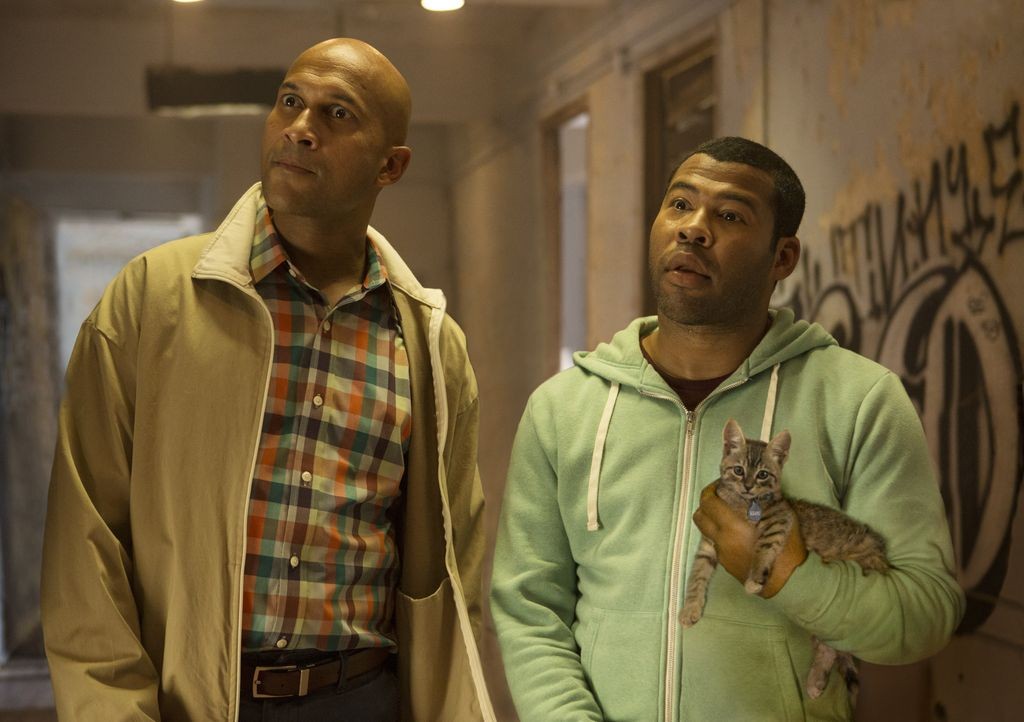
Keegan-Michael Key and Jordan Peele, with a script co-written by Peele and directed by their series director Peter Atencio, have made one of the smartest and funniest comedies of the year, a film that works at every level from slapstick to sophisticated wit to social commentary and slam-bang action, with even a little romance.

Fans of the series will appreciate references like a trip to see a movie starring “Liam Neesons” but even those who have never heard of their Obama anger translator routine or their legendary East-West Bowl player names will immediately understand their characters and their situation.

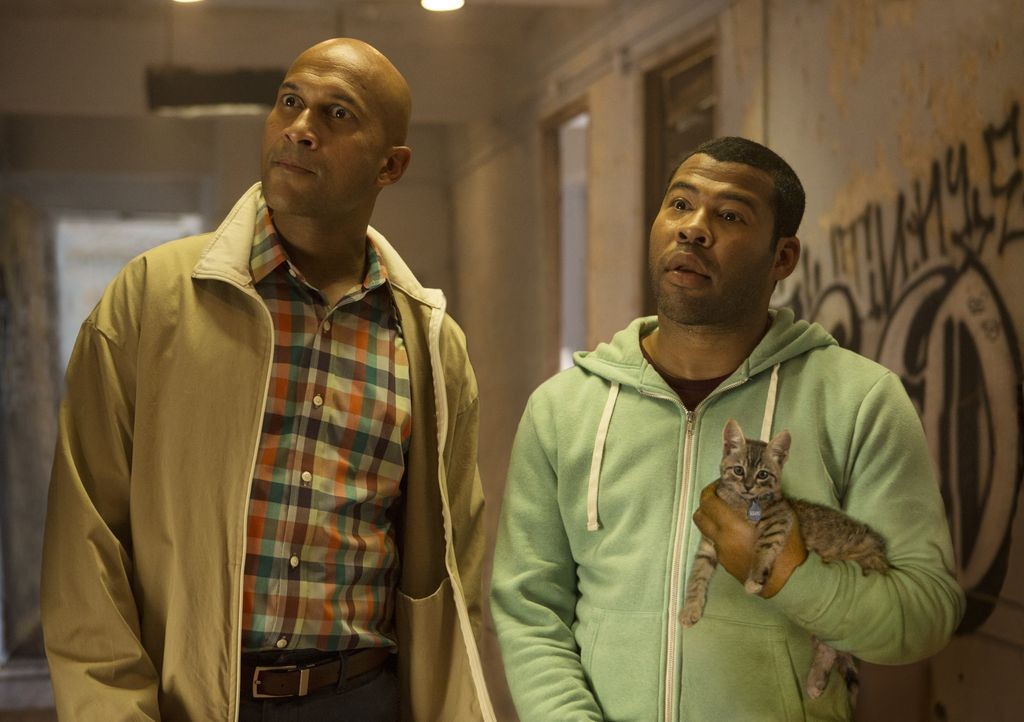
Clarence (Key) is a happily married father who drives a minivan and listens to George Michael. His cousin Rell (Peele) is a pot-smoking slacker who is devastated following a break-up. But when he adopts an abandoned kitten his spirits lift, and he names it Keanu. When Keanu is stolen by the 17th Street Blips, a gang made up of gangsters who could not make it in the Bloods or the Crips, Clarence and Rel decide to rescue him. This leads to a strip club called HPV with a two-for-one lap dance special, run by drug dealer known as Cheddar (Wu-Tang Clan’s Method Man). Clarence and Rell, trying to look tough, introduce themselves as Shark Tank and Tectonic. Clarence wonders how tough someone named Cheddar could be, but Rell points out that “You only name yourself something adorable if you can back it up.” When they explain to Cheddar that they are in the market for a “gangster pet,” Cheddar tells them they can have the kitten he has dubbed New Jack (complete with do-rag and gold chain) if they lead his gang on the delivery of an ultra-potent new drug. A series of encounters, escalating in peril, violence, and hilarity. It would be wrong to spoil more, so I will leave it at this: there is a very funny surprise guest star and Clarence’s professional team-building skills come in handy.

Key and Peele, both biracial, have always found comedy/commentary gold in their ability to reflect on race and culture. By casting themselves as highly and somewhat self-consciously assimilated black men who assume the media-created image of violent black drug dealers, they have added some sharp meta-commentary to a classic set up: fish-out-of-water, normal characters drawn into abnormal circumstances. Rell’s own weed dealer, played by SNL alum Will Forte, is a white man who is also taking on a stereotyped black persona, including cornrows. Clarence, who tries to order a white wine spritzer in the strip club and who tells Rell he sounds like John Ritter, swings into what he thinks is gangster mode when Chedder’s hostile n-word-spouting henchmen approach him. The transformation is wildly funny, both the specificity of it, and the way it fits so seamlessly into our own media-created notion of that archtype and the porous aspects of his new persona as the “real” Clarence keeps peeking out. Clarence and Rell are as innocent and helpless as the adorable kitty in the midst of druglord shoot-outs. Key and Peele are pretty adorable, too, in a gangster pet sort of way.

Parents should know that this film includes extended peril and violence, many guns, characters injured and killed, drugs and drug dealing, sexual references and nudity, strip club, and very strong and crude language including the n-word.

Family discussion: Where did Rel and Clarence get their ideas of how to behave with the Blips? How did Clarence’s team building training come in handy?

If you like this, try: the Key and Peele television series, “Date Night,” and “Analyze This”

Related Tags:


Comedy DVD/Blu-Ray Pick of the Week Race and Diversity
THE MOVIE MOM® is a registered trademark of Nell Minow. Use of the mark without express consent from Nell Minow constitutes trademark infringement and unfair competition in violation of federal and state laws. All material © Nell Minow 1995-2026, all rights reserved, and no use or republication is permitted without explicit permission. This site hosts Nell Minow’s Movie Mom® archive, with material that originally appeared on Yahoo! Movies, Beliefnet, and other sources. Much of her new material can be found at Rogerebert.com, Huffington Post, and WheretoWatch. Her books include The Movie Mom’s Guide to Family Movies and 101 Must-See Movie Moments, and she can be heard each week on radio stations across the country.

Website Designed by Max LaZebnik