Grandma

Grandma

Posted on August 27, 2015 at 5:50 pm

Copyright Sony 2015
Copyright Sony 2015

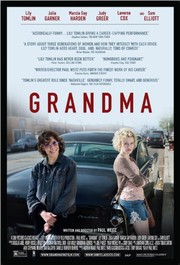
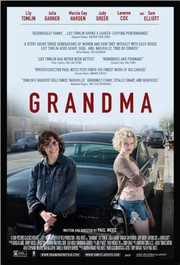
Lily Tomlin is cranky, feisty, tough, and utterly irresistible in this story of a grandmother who has to visit past decisions about her own life in order to help her teenage granddaughter. Tomlin plays the aptly named Elle (French for “she”), a feminist poet. Her work is respected and influential but that has not translated into financial stability. She has recently cut up her credit cards and made a wind chime out of them.

As we first see her, she is dumping her much younger girlfriend, Olivia (Judy Greer). No “it’s not you; it’s me.” No, “I’ll always remember the good times.” No lyrical meditations on love and loss. Not even any arguments or accusations. Just “It’s over. Leave.”

And then Elle’s granddaughter arrives. Her name is Sage (Julia Garner), and she has a head of fuzzy, soft curls that make her look like a dandelion. She is young and vulnerable but determined. She needs help, and it is clear that she would not be there if she had any other option. She is scheduled to have an abortion that afternoon, but she needs $630. And so Grandma and Sage set off in Elle’s clunker of a car, making desperate visits to people who might be able to help them. So we see a series of encounters, sad, angry, poignant, romantic, score-settling, each impeccably performed by an outstanding cast of actors in small scenes with deepening impact. We learn more about Elle’s life, the wrenching loss she is still mourning, the kindness and unkindness she has shown, and the way she has and has not dealt with the consequences. Standouts include Nat Wolff (“Paper Towns”) as the father, Laverne Cox as a sympathetic tattoo artist, Marcia Gay Harden as Elle’s brisk businesswoman daughter, and Sam Elliott as Elle’s ex.

Writer/director Paul Weitz (“About a Boy”) has taken a story that could be a parody of the worst nightmares of Fox News fans and made it into a very human story of love, loss, and overcoming the fear of intimacy. It is about the families we create and the perfect love we must feel for imperfect people.

Parents should know that this film has very strong and crude language, drinking, drugs, teen pregnancy, and extended discussion of abortion.

Family discussion: Why does Elle break up with Olivia? Why don’t Elle and her daughter get along? Why is the film called “Grandma” and not “Elle” or “Elle and Sage?”

If you like this, try: “The Daytrippers”

Related Tags:


Drama Family Issues
We Are Your Friends

We Are Your Friends

Posted on August 27, 2015 at 5:35 pm

Copyright Warner Brothers 2015

Director Max Joseph brings some of the “Catfish” sensibility to “We Are Your Friends,” with an intimate, documentary feel and a storyline about people in their 20’s who have big dreams but not much understanding about how to achieve them or even about the nature of their relationships. Joseph is the quieter co-host of “Catfish,” the MTV series sequel to the film that added its name to the lexicon, meaning an online relationship with someone who is not as described or presented. In “We Are Your Friends” (named for the Justice vs. Simian song) four bros hang out together, trashing each other and everyone else, promoting parties, enjoying easy access to drugs and girls, and reassuring each other that fame and fortune lies ahead. They feel like besties, but it’s just inertia and a shared fear of moving forward. In reality, they are very different.

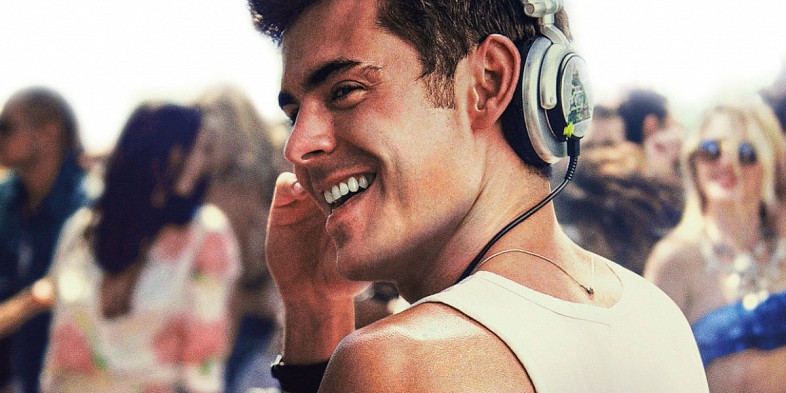
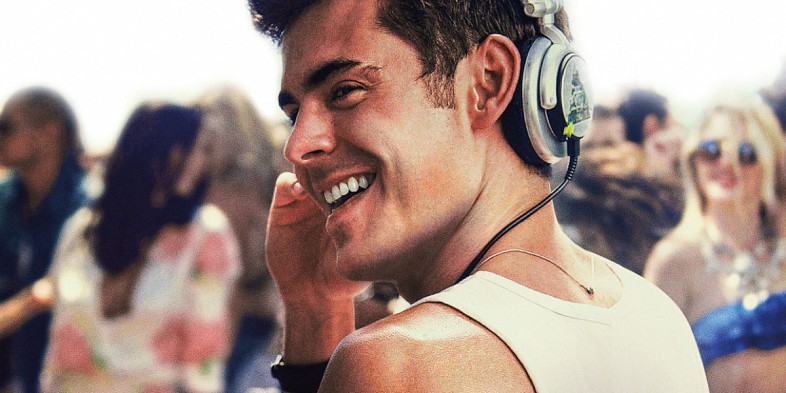
Cole (Zac Efron) is a talented DJ who knows how to combine “the rhythm of a caveman” with a kickin’ bass line to “get the crowd out of their heads and into their bodies.” His pals are hot-tempered Mason (Jonny Weston), low-key drug dealer and aspiring actor Ollie (Shiloh Fernandez) and quiet but thoughtful Squirrel (Alex Shaffer of “Win Win”). They get jobs facilitating real estate deals (calling people in foreclosure) for a wealthy businessman (Jon Bernthal, all rough charm and menace in an excellent performance). And Cole meets James (Wes Bentley with Wolverine-style facial hair), a big shot DJ who has performed all over the world and who has a girlfriend/assistant named Sophie who looks like a Sports Illustrated swimsuit model, because she is played by Emily Ratajkowski, who is one. Ratajkowski was better in “Gone Girl.” Here she does more posing than acting.

There’s nothing wrong with a coming of age story about a young person with a strong creative drive who needs to learn to develop a singular voice, and Efron is, as always, an appealing actor. But too much of it seems borrowed from other films and the situations and settings (San Fernando Valley, aimless young men who party too much and wear their pants too low, the empty and foreclosed houses and predators who flip them) are washed out and played out. The big lesson for Cole is learning to develop a distinctive sound. But the scene where the scales fall from his eyes — or ears — so that he begins incorporating the sounds around him like that wacky carriage ride scene in “The Great Waltz” is just silly. It never persuades us that EDM is anything but derivative, mostly because the movie is, too.

Parents should know that this film has a lot of adult material including very strong language, crude sexual references and situations, nudity, drinking, smoking, extended drug use and drug dealing including marijuana, PCP, ecstasy, and cocaine, a fatal overdose, and a painful scene of foreclosure.

Family discussion: Why did Squirrel say the best part was before the evening began? What did James mean about the meaning of the word “irreparable?”

If you like this, try: “Magic Mike” and “Echo Park”

Related Tags:


Drama Scene After the Credits
Z for Zachariah

Z for Zachariah

Posted on August 27, 2015 at 5:31 pm

B+
Lowest Recommended Age: High School
MPAA Rating: Rated PG-13 for a scene of sexuality, partial nudity, and brief strong language
Profanity: Brief strong language
Alcohol/ Drugs: Alcohol
Violence/ Scariness: Apocalyptic themes, murder
Diversity Issues: Diverse characters (race, gender, faith)
Date Released to Theaters: August 28, 2015
Date Released to DVD: October 19, 2015
Amazon.com ASIN: B014DEGTEO

In 1959, a movie called The World, The Flesh And The Devil imagined a post-apocalyptic world with three surviving humans. In the words of the 1960’s television series, “The Mod Squad,” they could be described as “one black, one white, one blond.” Harry Belafonte, Mel Ferrer, and Inger Stevens played characters who might be the last people on earth but who still carried with them the fears, angers, and prejudices of the civilization now destroyed.

Fifty-five years later, “Z for Zachariah” is another post-apocalyptic story about a black man, a white man, and a beautiful younger woman who may be the only survivors following a catastrophic, toxic event that has poisoned the whole world, except, perhaps, for a tiny, edenic farm that appears to be free from deadly radiation. And once again, human frailty creates conflict at the most fundamental level. The themes of the 1959 film reflected post-WWII concerns like the atomic bomb and racial bigotry.

“Z for Zachariah” is based on the posthumously and pseudonymously published book, though there are significant changes.

Ann (Margo Robbie) lives on her family’s farm. She believes her family will return from their scouting expedition. And she believes that she and her dog and her farm were preserved by God. Periodically, she puts on protective gear to go into the deserted town and scavenge from the shelves of the stores. She grows food on the farm and visits the tiny church her father built to play the organ and worship.

Then John (Chiwetel Ejiofor) arrives. He is also wearing protective gear (it turns out he was one of the engineers who designed it), but foolishly removes it to bathe in a pond that has been contaminated. Ann rescues him and nurses him through radiation poisoning.

They are very different. John is a man of science and rationality. He sees that he can create hydropower through the waterfall, but only if he can use the wood from the walls of the church. Ann believes the church is what has kept her alive; John believes repurposing the planks will enable them to establish a sustainable source of food for…well, with a man and a woman, perhaps there will be more people to feed at some point. In the old world, they would never have met, and if they had, they would have had little to say to one another. But they understanding, respect, and affection are beginning to grow, and the need for connection and comfort is near desperate in both of them. And then Caleb (Chris Pine) — a character not in the book — arrives. He has something John cannot have, a community and cultural connection to Ann. He is young and handsome.

Like director Craig Zobel’s last film, “Compliance,” this is also a tense story of three people in an enclosed, isolated space finding their most profound values tested. Even in the most extreme circumstances imaginable, humans still struggle with morality, trust, honesty, power, forgiveness, and love. It is deceptively understated and quietly compelling.

Parents should know that this film features a disturbing apocalyptic setting, discussion of cataclysmic events, sexual references and situations with partial nudity, brief strong language, homicide.

Family discussion: What do Ann and John have in common? What do Ann and Caleb have in common? What happened when John and Caleb were together? What will happen next?

If you like this, try: “The World, the Flesh, and the Devil” and “On the Beach”

Related Tags:


Based on a book DVD/Blu-Ray Pick of the Week Science-Fiction
Being Evel

Being Evel

Posted on August 27, 2015 at 5:13 pm

Evel Knievel was an international celebrity in the 1960’s-70’s, known for three things: showmanship, stunts that succeeded, and stunts that failed. He was recognized for jumping over 19 cars in his motorcycle, for crash-landing after trying to jump over the fountains of Caesars Palace, and holding the Guinness Book of World Records title for the most broken bones. He was an iconic figure in his white leather jumpsuits trimmed with stars and stripes. Over the 37 years that ABC’s “Wide World of Sports,” seven of the top ten rated episodes, including the most-watched of all time, featured Knievel.

He influenced and inspired a generation of daredevil kids, those who transformed his stunts into a whole new category of amateur and professional competition called extreme sports (“having a high level of inherent danger”). And he inspired a lot of idiotic behavior from people like Johnny Knoxville, who made a career out of doing stupid stuff on television and getting hurt, and who has now made a documentary about the man he says he thought of not as a daredevil but as a superhero. He was a star for what he dared to do but he was a bigger star for staying with it even when he failed. “Fast, faster, and disaster,” says Knoxville, but, as the film makes clear, “He captured my imagination like nobody else.”

Knoxville warns us up front that Knievel was not entirely admirable. And, as a friend comments in the film, his career followed the same arc as his famous “Skycycle” stunt, when he attempted to ride what was essentially a small rocket across a canyon. What went up, came down, eventually, in a spectacular crash.

This portrait, co-produced by George Hamilton, who played Evel in a 1971 film, is frank but sympathetic, with archival footage and interviews with Knievel’s friends, family, and fans.

Robert Craig Knievel was born in Butte, Montana in 1938, where he was raised by his grandparents. He was close to his first cousin, Pat Williams, elected to Congress nine times. In the 1940’s, Butte was a town of coal miners and prostitutes, where disputes were settled by fistfight and no one took a misdemeanor like petty theft personally. When a cop referred to him as “Evil” Knievel, Robert adopted the name, changing the i to an e, to make it “less evil.”

Knievel married a girl from Butte (she admits that he sort of kidnapped her, but she did not seem to mind) and they had three children. He sold insurance for a while, getting mental patients to sign up for policies to set a sales record and then he sold motorcycles. To promote the motorcycles, he started doing stunts. And then he kept doing stunts to promote himself. “How do you convince people to come to a sport they never heard of?” Evel knew how to tell a good story. We see him on talk shows, and later, after the Hamilton film, we see him spouting some of the dialogue written for his character. He didn’t like the film, but he knew a good line when he heard it. “He created the character and then tried to live the part,” says one of his friends.

He was a showman and a salesman. He had sponsors and licensing agreements. The Ideal action figure was one of the most popular toys of the era. He made a fortune and he spent it — planes, boats, jewelry. His enormous safe had a gold-plated motorcycle covered with cash.

This all happened during the 70’s. Knievel’s star-spangled stunts were a welcome distraction from the corruption and disappointment of the Watergate era. But Knievel was less successful at clearing his own distractions. All those injuries meant painkillers. That might have been a factor in his brutal attack on a former colleague, which ended in a guilty plea, a jail sentence, and the cancellation of lucrative endorsements and licensing deals. All those fans meant lots of girls. His wife left him. His health was shot; he had a liver transplant, a hip replacement, a spine fusion. His money was gone. Perhaps most difficult for him, his audience was gone.

Knoxville is an unabashed fan, but he is honest about Knievel’s failings. The movie has some unexpected revelations and telling details, but audiences are unlikely to agree that inspiring a generation of kids to risk their lives in crazy stunts is especially admirable. Knievel’s legacy, for better and worse, is more clearly tied to marketing and celebrity than to courage or integrity. The problem with making a reputation for stunts is that eventually, you crash and burn.

Parents should know that this movie includes a lot of preposterously risky behavior and injuries, references to sex, including sex with groupies and the effects of strong pharmaceuticals, and some strong language.

Family discussion: Who is most like Evel Knievel today? What was his most important influence?

If you like this, try: “Senna” and “Dogtown and Z-Boys”

Related Tags:


Documentary
Gurukulam

Gurukulam

Posted on August 23, 2015 at 12:04 am

B
Lowest Recommended Age: Middle School
MPAA Rating: Not rated
Profanity: None
Alcohol/ Drugs: None
Violence/ Scariness: None
Diversity Issues: Diverse characters
Date Released to Theaters: August 22, 2015

It is hard to think of a form of communication more contrary to the internal stillness and oneness of meditation than a movie. Meditation seeks to remove our minds and spirits from the distractions of the outside world to free us from the non-essential. And movies are noisy, with images that are never still and scenes that stop and then start up again in another place and time, while meditation transcends time and place.

And yet the documentary Gurukulam, directed by Jillian Elizabeth and Neil Dalal is so gentle a window into the world of a traditional Advaita Vedanta ashram in Tamil Nadu, India that it is itself a kind of meditation.

https://vimeo.com/113890428

The film is reminiscent of 2007’s Into Great Silence, where Philip Gröning lived in a monastery for six months in near-complete silence, filming the monks’ daily prayers, cores, and rituals. As in that film, the inherent contradiction of making a film about a secluded community to share their world with outsiders is overcome at least in part by the quiet, unassuming, open=hearted approach of the filmmakers.

And it is, of course, fascinating to get a glimpse of this secluded world. We see members of the community perform various everyday tasks and the movie trusts us enough to expect that we will not find it boring, at least not for long, because the rhythms of the film illuminate the essential oneness — there is no separation between chores and worship. We meet people coming to the ashram and learn a little bit about what brought them at this moment and what they are looking for. And we hear some of Swami Dayananda’s lessons. One of the pleasant surprises of the film is how much laughter there is. There is seriousness of purpose, but the members of this community feel and convey a constant sense of joy that is as important a lesson for us as the commentary on the nature of reality.

Related Tags:


Documentary Movies -- format Spiritual films
THE MOVIE MOM® is a registered trademark of Nell Minow. Use of the mark without express consent from Nell Minow constitutes trademark infringement and unfair competition in violation of federal and state laws. All material © Nell Minow 1995-2026, all rights reserved, and no use or republication is permitted without explicit permission. This site hosts Nell Minow’s Movie Mom® archive, with material that originally appeared on Yahoo! Movies, Beliefnet, and other sources. Much of her new material can be found at Rogerebert.com, Huffington Post, and WheretoWatch. Her books include The Movie Mom’s Guide to Family Movies and 101 Must-See Movie Moments, and she can be heard each week on radio stations across the country.

Website Designed by Max LaZebnik