Everest

Everest

Posted on September 17, 2015 at 5:57 pm

Copyright 2015 Universal

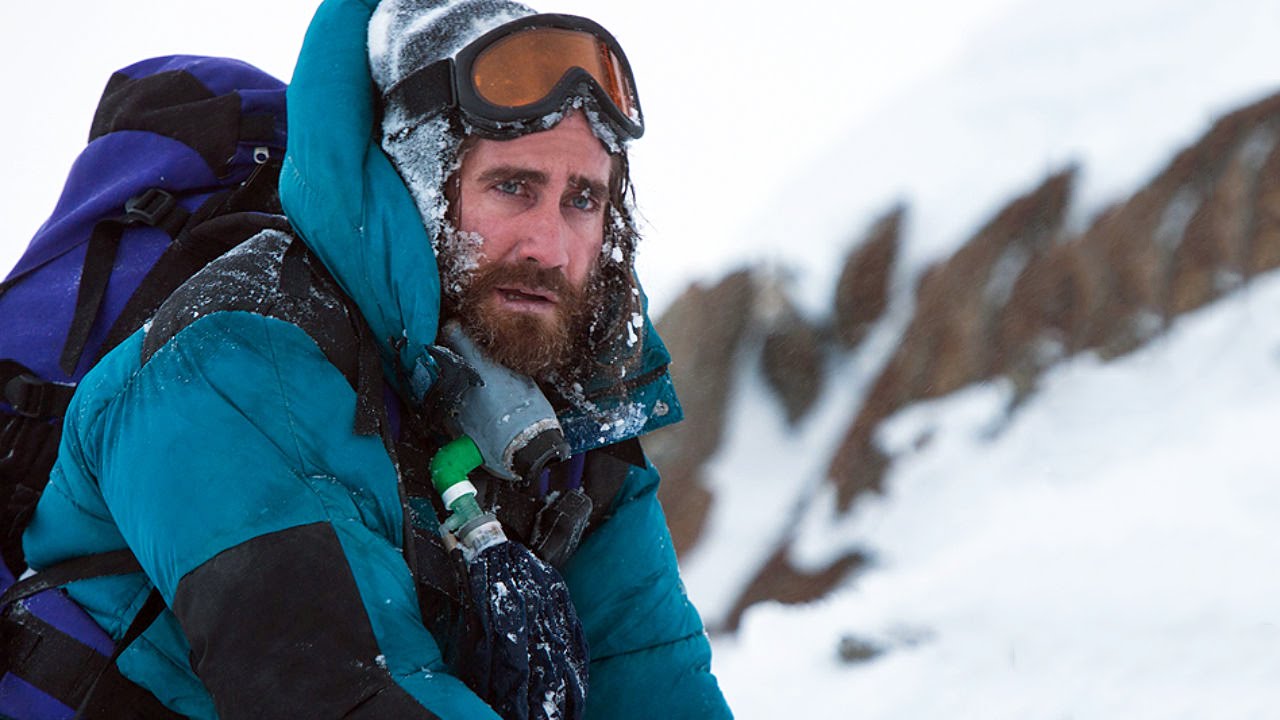
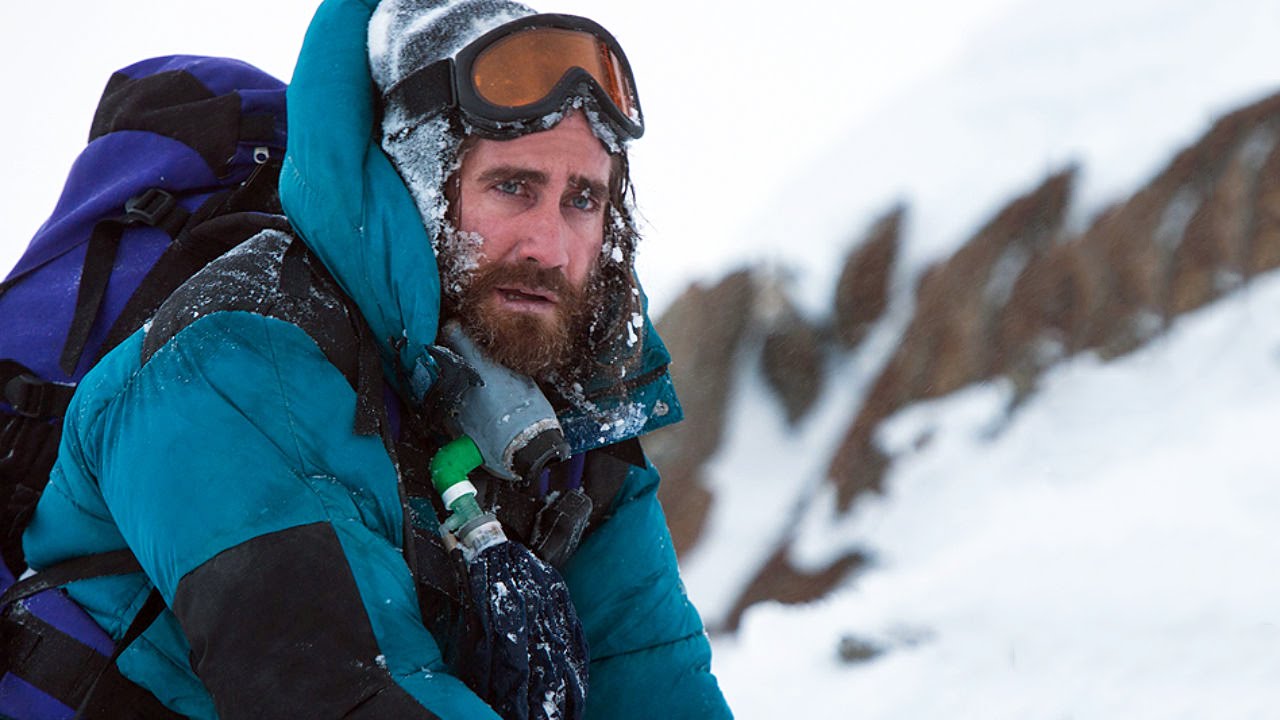
This is why we can’t have nice things. As the brief history at the beginning of “Everest” points out, the first successful group to reach the summit of the world’s tallest mountain was led by Sir Edmund Hillary and Tenzing Norgay in 1953. The mountain was the exclusive province of hardy adventurers. But then four decades later, commercial tour groups began to clog the mountain. This made it possible for people who had no business to be there to arrive with certain expectations that people who were being paid to guide them were under a lot of pressure to deliver on. And the crowding itself made it more difficult to keep everyone safe.

Writer Jon Krakauer went on one of those trips for Outside Magazine in 1996, when a huge storm and some bad decisions resulted in the deaths of twelve climbers. His best-selling book, Into Thin Air: A Personal Account of the Mt. Everest Disaster is the basis for this movie.

The scenery is spectacular, and the 3D IMAX cinematography is literally breathtaking, especially when one climber slips on a precarious ladder across a gorge and we get a vertiginous view straight down. But the people blocking the scenery never come alive to us as characters, partly because most of the time they are wearing near-identical parkas with hoods and speaking through masks or covered with snow, so it is impossible to tell them apart, and partly because so many of them are arrogant idiots. It is difficult to keep the characters straight, much less connect to them, and impossible to feel sympathy for people who make so many bad choices and then go to a place where the altitude, as high as the pressurized cabins of commercial aircraft, literally swells the brain so that thinking is impaired even further.

There are things we do because we dare. And there are things we do because we have big egos and $65,000. Asked repeatedly why they are climbing, no one has a good answer. Some echo Mallory: “Because it’s there!” but the very act of quoting someone else about daring undermines that spirit.

A woman from Japan (Naoko Mori) says that she has already climbed the other six peaks of the world’s seven tallest mountains. A man from Texas (Josh Brolin) wearing a Dole/Kemp t-shirt to make sure we know he’s a proud Republican, says he feels depressed when he’s not on a mountain — and that when his wife (Robin Wright) says she would divorce him if he went on another climb, he went on this one without telling her. A mailman/carpenter (John Hawkes) wants to tell the schoolchildren who helped him raise the money for the trip that ordinary people can do extraordinary things. Everyone else kind of mushes together.

Then there are the two rival tour guides, the only distinctive and relatable characters. Rob (Jason Clarke) is a tender-hearted New Zealander with a pretty pregnant wife (Keira Knightley) waiting back home. Scott (Jake Gyllenhaal) is a seemingly laid-back American who beams beatifically when he says “It’s all good,” but points out that all of his group made it to the top when Rob’s group has not.

The film touches on important issues of hubris and the impact of commercialization turing an area that was for thousands of years reserved for the hardiest of adventurers into a playground for people with too much money and too little judgment, but frustratingly abandons them for an increasingly confusing storyline. We know a lot of things are going wrong, but it is difficult to tell what is happening to which climber and where they are in relation to each other. The anguished faces of the people trying to make contact do not come close in impact to that one moment on the bridge.

Parents should know that this film depicts real-life events of extreme peril with many characters injured and killed, very sad deaths, some disturbing images, and some strong language.

Family discussion: What changes would you recommend to prevent these kinds of fatalities in the future? What would you say to Rob in those final conversations if you were Helen? If you were Jan?

If you like this, try: “Touching the Void,” a gripping documentary about another real-life mountain climbing accident and Jon Krakauer’s book about the events of this film

Related Tags:


3D Action/Adventure Based on a true story Drama IMAX
The Maze Runner: The Scorch Trials

The Maze Runner: The Scorch Trials

Posted on September 17, 2015 at 5:51 pm

Copyright 20th Century Fox 2015

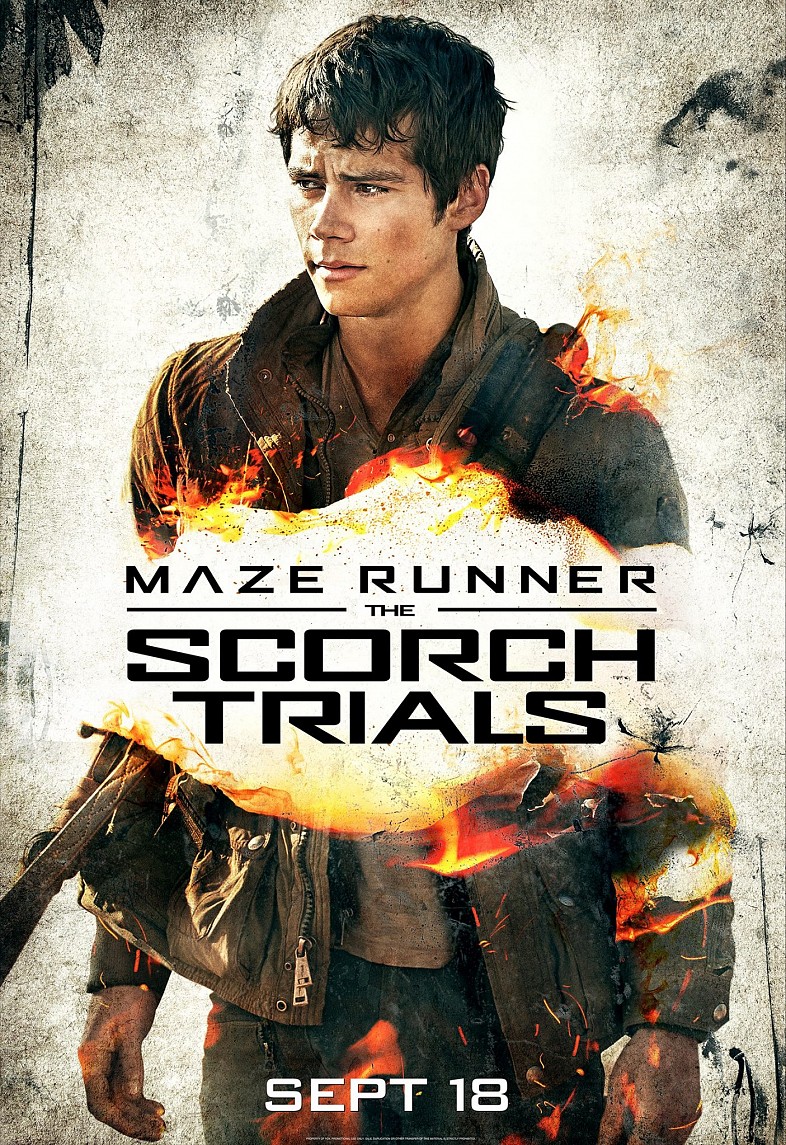
The first Maze Runner movie had an arresting premise and a solid structure, literally and metaphorcally. Thomas (Dylan O’Brien), with his memory wiped, arrived at a mysterious facility called The Glade, populated entirely by teenage boys. It turned out to be an enormous maze that re-arranged itself every night, when horrible monsters called The Grievers came out and one sting from them caused madness.

Thomas figured out how to escape from the maze at the end of the film, but the triumph was tempered by indicators that his worst problems were just beginning and by our knowledge that there were two more books in the series by James Dasher scheduled to be made into movies. “The Scorch Trials” is the second.
This sequel is very much a transitional film, with non-stop action and not much story. It’s as though Dasher decided to throw just about every bad thing possible at Thomas and his small band of escapees from The Glade.

They are greeted warmly by a man whose first indicator of untrustworthiness is that he does not introduce himself. When asked, instead of saying his name, he says, “You can call me Janson” (Aiden Gillen). But the teenagers are so happy to have a shower, food, and real beds that they are not inclined to question the bleak, prison-like structure with high security doors. And Janson’s promise to send them to a place free of the virus and blight that wiped out most life on earth sounds so good that they believe it, especially when they see the other teenagers in the facility cheering each night as another group is selected to leave for the haven he described.

But Thomas is skeptical, and when Aris (Jacob Lofland), a boy who has been at the facility for weeks, takes him on a tour through the air ducts, they discover that instead of being brought to a wonderful new home the teens who have a genetic immunity to “the flare” disease that wiped out most humans are being taken to a medical facility to be drained of their blood for doctors working to find a cure, even at the expense of the kids’ lives. Thomas leads yet another escape, though Janson taunts him that no one can survive the Scorch, the wasteland conditions outside the bunker. Thomas and his friends, including Aris, battle sandstorms and lightning, zombies, and outlaws.

So much happens that it gets repetitive. If a major character appears trapped and you hear a bang, you can bet the bang is a last minute save from behind the bad guy. Some red shirts don’t make it and there are some twists of alliances and betrayals, but eventually it is more video game than story, raising questions that are more “how does this make sense?” than “looking forward to the answers in part three!”

Parents should know that the film has constant very intense peril and extensive violence including zombies, lethal medical procedures, guns, and explosions, suicides, some very disturbing images, many characters injured and killed, a kiss, some strong language, and teen substance abuse.

Family discussion: How is Thomas different from the other characters in the way he evaluates his options? Why did Teresa make her controversial decision?

If you like this, try: the books and the first movie in the series, the “Hunger Games” and “Divergent” movies

Related Tags:


Action/Adventure Based on a book Drama Science-Fiction Series/Sequel Stories about Teens
The Transporter Refueled

The Transporter Refueled

Posted on September 3, 2015 at 5:34 pm

C-
Lowest Recommended Age: High School
MPAA Rating: Rated PG-13 for sequences of violence & action, sexual material, some language, a drug reference & thematic elements
Profanity: Brief mild language (b-word, s-word)
Alcohol/ Drugs: Alcohol
Violence/ Scariness: Extended action-style violence and peril, many characters injured and killed, some disturbing images
Diversity Issues: Diverse characters
Date Released to Theaters: September 4, 2015
Copyright Relativity Europacorp 2015

It must be said. The refueled “Transporter” is very low octane. The original had some of the best chase scenes ever filmed and a star-making performance from Jason Statham. This reboot casts newcomer Ed Skrein who is the lower-priced spread to Statham’s artisanal butter. Skrein has bright blue eyes, cheekbones to die for, cute crooked teeth, and he looks great in a suit, especially when he is taking on a group of thugs all by himself. But neither he nor the storyline are enough to make any of the chases, explosions, or shoot-outs mean enough to hold our attention.

Same character: Frank. Same job: transporting. Same mad skills as a driver and in MMA-style fights. Same commitment to “plausible deniability,” so all clients must play by the rules. No names. No information about what’s in the packages or why they need a ride. No changing the deal after it’s been agreed on.

Frank agrees to transport a woman and two packages. But she changes the deal. She comes out of a bank with two other women, all identically dressed with blond Sia wigs on. Frank refuses to take them until they show him that they have kidnapped his father, played by Ray Stevenson, by far the best thing in the movie, as an unflappably urbane former spy who seems to enjoy everything that happens, from being kidnapped to MacGyver-ing an impromptu spot of bullet removal surgery with sugar and cobwebs. The next day, she’s up and around as though nothing had happened. Don’t try this at home, children. Really.

It would be more fun to watch a highlight reel of chases and stunts from the three previous films than this dull and surprisingly sour film, too lightweight to be referred to as a story and too ugly to be entertaining. A film like this has to have a bad guy who is despicable enough that we want him vanquished but not so nasty that it makes us start thinking too hard about questions like logic and why the police just abandon the chase whenever it is convenient. There are a couple of extra bad guys in this we barely learn enough to make us to pay attention to. If Luc Besson insists on making another one of these, let’s hope it’s “The Transporter’s Father” instead.

Parents should know that this film has constant chases and fight scenes, many characters injured and killed, some disturbing images including graphic wounds, brief strong language, sexual references and situations including prostitution, drinking, and smoking.

Family discussion: Why are Frank’s rules so important? How are Frank and his father different?

If you like this, try: the first “Transporter” movie

Related Tags:


Action/Adventure Movies -- format Series/Sequel
Learning to Drive

Learning to Drive

Posted on September 3, 2015 at 3:25 pm

B+
Lowest Recommended Age: Mature High Schooler
MPAA Rating: Rated R for language and sexual content
Profanity: Very strong and crude language
Alcohol/ Drugs: Alcohol
Violence/ Scariness: Tense emotional confrontations, car accident
Diversity Issues: A theme of the movie
Date Released to Theaters: September 4, 2015
Copyright 2015 Broad Green Pictures

Katha Pollitt’s wry but bordering on scathing essay about taking her first driving lessons in her 50’s, after her partner of seven years left her for another woman has been turned into a softened but still trenchant film. Patricia Clarkson plays Wendy, a less ethnic and more friendly-sounding name than Katha, and perhaps a reference to the “Peter Pan” character who had an adventure and then returned home to grow up.

Wendy is a New York intellectual who writes book reviews and appears on NPR. We first see her devastated and furious because her husband, Ted (Jake Weber), has taken her to dinner so that he can tell her in a public place that he is leaving her for another woman after 21 years of marriage. Their cab driver, a turbaned Sikh named Darwan (Sir Ben Kingsley) pretends not to hear as he takes them home, or rather takes Wendy home. Ted is not going back there anymore. When she realizes that a divorce will mean they have to sell their home, it is as painful for her as the end of the marriage. “It’s like asking me to move out of me.”

Later, Darwan realizes that Wendy has left an envelope in his cab. He returns it to her, and when she sees that he has a second job as a driving instructor, she impulsively hires him to teach her to drive. She has never had to learn; she lives in Manhattan and her husband drives. But their daughter (Grace Gummer) is living on a farm, and if Wendy wants to visit her, she will have to get a driver’s license and a car.

At first, Wendy assumes that Ted will come back. But, as Darwan tells her, she has to learn to be more attentive to what is going on around her. “Teach yourself to see everything.” He also cautions her to be mistrustful of other drivers. She begins to realize that this applies to her life as well as to driving. Meanwhile, Darwan struggles with his nephew, illegally in the US and living with him, and with his sister, back in India, who is trying to arrange a marriage for him. As Wendy’s marriage is dissolving, Darwan is agreeing to marry someone he has never met, Jasleen (Sarita Choudhury).

Beautiful performances by everyone, especially Clarkson and Choudhury, give this story a luminous glow and touches throughout remind us that this is a story told by women. Director Isabel Coixet (do not miss her exquisite “My Life Without Me”) and screenwriter Sarah Kernochan are wise about the connections women make with one another and how they talk about the men in their lives. That applies to Jasleen as well as Wendy. This is more than a story of a woman learning to pay attention and to “taste” a parking space; it is a story of Darwan and Jasleen as well, who have their own challenges of seeing and tasting.

Parents should know that this film includes very strong and crude language, sexual references and explicit conversations, and brief nudity.

Family discussion: What did Wendy learn about “tasting” and paying attention that helped her beyond the driving lessons? Why did she tell her daughter to go back to the farm? What will happen with Darwan and Jasleen?

If you like this, try: “An Unmarried Woman,” “84 Charing Cross Road,” and “Happy-Go-Lucky”

Related Tags:


Based on a true story Comedy Drama Movies -- format Romance
A Walk in the Woods

A Walk in the Woods

Posted on September 1, 2015 at 5:50 pm

B+
Lowest Recommended Age: High School
MPAA Rating: Rated R for language and some sexual references
Profanity: Very strong and crude language
Alcohol/ Drugs: Drinking and discussions of substance abuse
Violence/ Scariness: Some peril
Diversity Issues: None
Date Released to Theaters: September 2, 2015
Date Released to DVD: December 28, 2015
Amazon.com ASIN: B015YYC4C8

Copyright 2015 Route One Films
It isn’t getting to that point where you most often see your friends at funerals. It isn’t feeling stale because instead of promoting a new book, he’s going on some chirpy morning show to promote a reissue of his old ones.

Though both of those things are true. But Bill Bryson (Robert Redford) has a different reason for wanting to try one of the longest hikes in the world, the Appalachian Trail. He quotes the pioneering conservationist John Muir, the man who inspired the National Parks system and urged the preservation of the Grand Canyon. Muir said sometimes you just have to “throw some tea and bread into an old sack and jump over the back fence.” And it is just past Bryson’s own back fence that the AT beckoned.

If mortality was bearing down a bit hard, that just meant more “now or never” urgency. The fact that the lead actors are three decades older than Bryson was when he took the walk that led to his book, A Walk in the Woods: Rediscovering America on the Appalachian Trail, vastly overshadows the clutter from the superficial other issues raised by the script, often half-heartedly. Will Bryson write again? Will he re-adjust to living in the US after years abroad? Will he recover his mojo? Where is he from? Will he make it to the end of the trail alive and without inflicting some serious and possibly lethal damage on his traveling companion?

Bryson is, as the movie begins, back in the US and feeling unmoored. He decides to hike the private, non-profit, volunteer-managed Appalachian Trail, stretching more than 2000 miles from Maine to Georgia. His wife (Emma Thompson, bringing her luminous intelligence to an underwritten wife-y role) insists that he cannot go alone. Everyone he knows turns him down. And then he gets a call from his old high school friend in Des Moines, Katz (Nick Nolte, a marvel of shambling decay with a voice more growl than verbal), volunteering to come along. These guys are not exactly up to jumping over the back fence. But the longest journey begins with a single step, and so off they go.

No big surprises ahead — encounters with quirky people along the way (Kristen Schaal is a stand-out as a loony solo hiker and Mary Steenburgen is a welcome presence as always as the owner of a hotel along the trail), spectacular scenery, some historical and conservationist information, some highs and lows in the terrain, the temperature, and the reconnecting of the old friends. But it is a pleasure to see these two old pros swing for the fences one more time.

Parents should know that this movie has some very strong and vulgar language with very crude sexual references. Characters drink and discuss substance abuse.

Family discussion: How would you describe the friendship between Katz and Bryson? What adventure do you want to take and who would you take with you?

If you like this, try: the book by Bill Bryson and other walking movies like “Wild” and “Tracks” and more great books about treks like A Short Walk in the Hindu Kush

Related Tags:


Animals and Nature Based on a book Based on a true story Comedy Drama DVD/Blu-Ray Pick of the Week
THE MOVIE MOM® is a registered trademark of Nell Minow. Use of the mark without express consent from Nell Minow constitutes trademark infringement and unfair competition in violation of federal and state laws. All material © Nell Minow 1995-2026, all rights reserved, and no use or republication is permitted without explicit permission. This site hosts Nell Minow’s Movie Mom® archive, with material that originally appeared on Yahoo! Movies, Beliefnet, and other sources. Much of her new material can be found at Rogerebert.com, Huffington Post, and WheretoWatch. Her books include The Movie Mom’s Guide to Family Movies and 101 Must-See Movie Moments, and she can be heard each week on radio stations across the country.

Website Designed by Max LaZebnik