Hitman: Agent 47

Hitman: Agent 47

Posted on August 20, 2015 at 5:29 pm

Copyright 20th Century Fox 2015

Maybe someday there will be a good movie based on a videogame. But there’s no evidence of that possibility in the tiresome “Hitman: Agent 47” based on the first-person shooter Hitman Trilogy. The game keeps the player’s interest through challenges involving dexterity and problem-solving.
The movie has striking images and competently staged fight scenes, but a movie needs some reason to care about what is going on, and that never happens. The one interesting twist in the storyline is revealed in the trailer, so if you’ve seen that, you’ll be spending a lot of time looking at your watch. Even by the low standards of the dog days of August, this one is a slog.

“Hitman: Agent 47” is another in a long series of films — and one of two this week — with the same theme. There’s a secret government program to create enhanced humans with better-than-human reflexes, sight, hearing, and survival skills. But other human qualities like emotion, fear, and remorse, have been eliminated. They are called Agents and they have numbered barcodes tattooed into their heads. This is explained by a droning narrator at the beginning, more likely to induce somnolence than dread. So, the program has been shut down, the only person who knows the secret formula has disappeared, and the head of an evil corporation called the Syndicate wants the scientist, he wants the formula, and he wants to create an army of Agents.

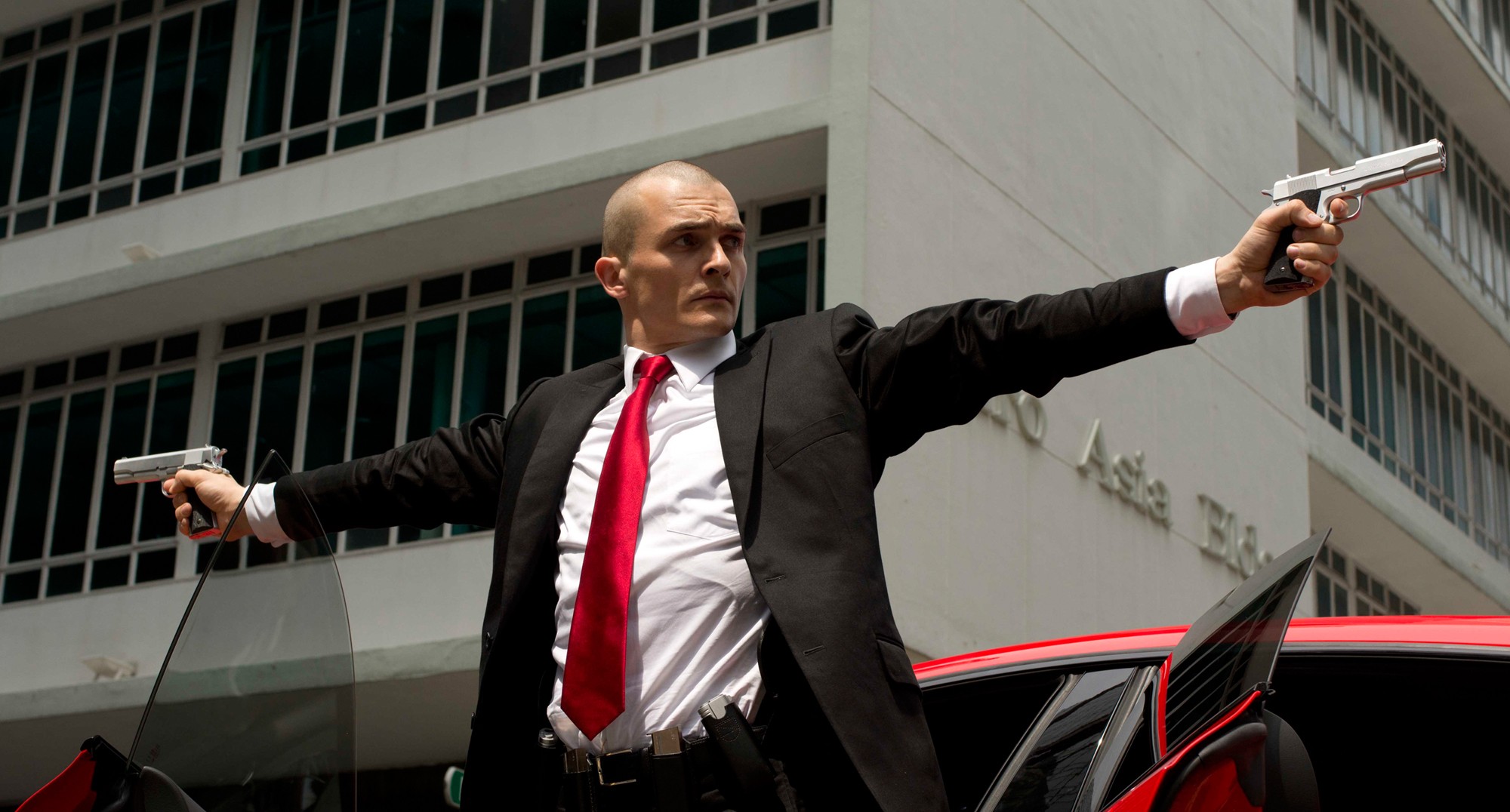
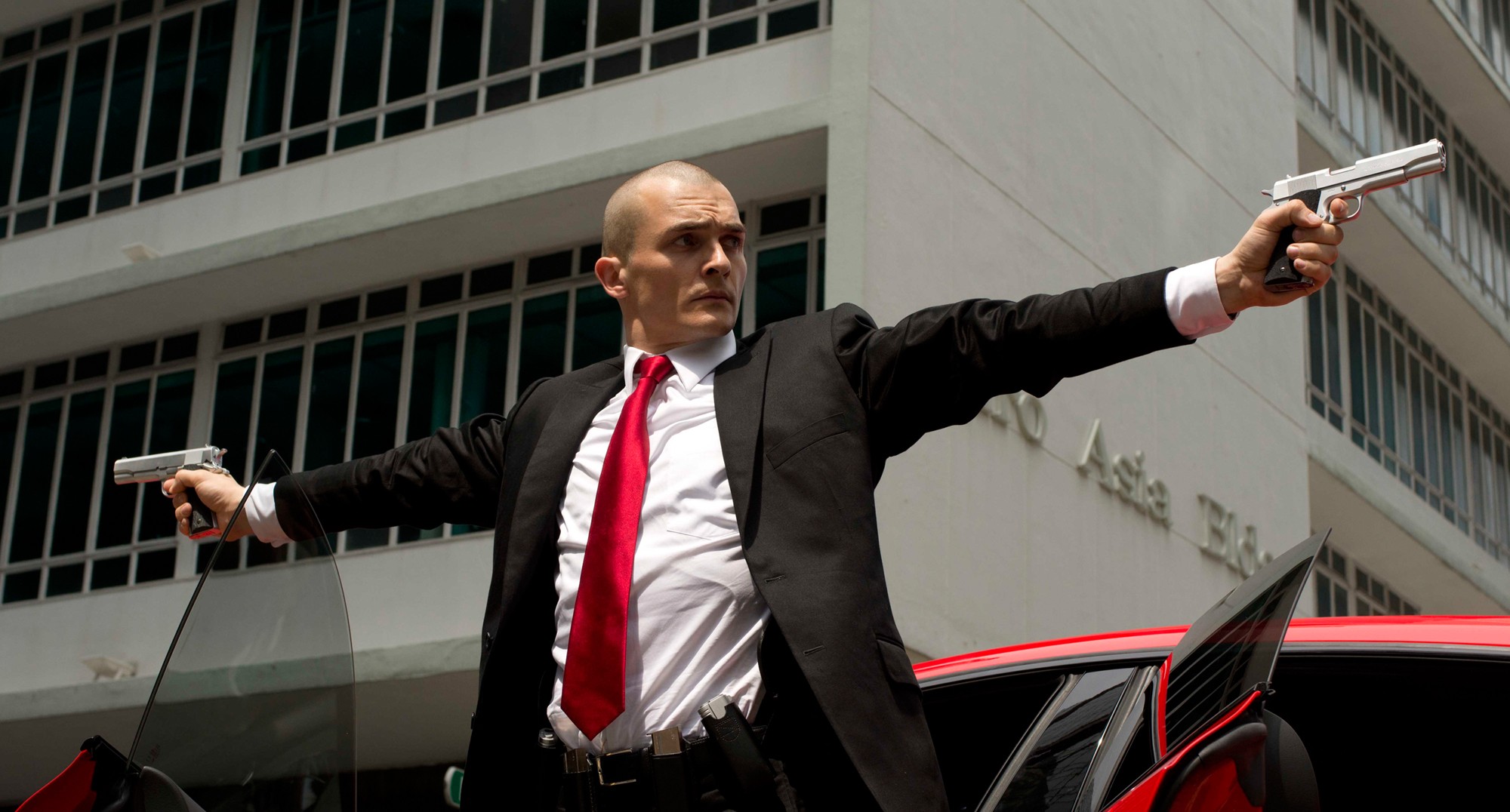
Meanwhile, Katia (Hannah Ware) is trying to find a man, and all she has is an out-of-focus photo. She is not making any progress and then a mysterious man named John Smith (Zachary Quinto) shows up for one of those “follow me if you want to live” moments. He says he will protect her from a man who is trying to kill her and help her solve the mystery. The man he promises to protect her from is Agent 47, played by Rupert Friend, with a shaved bullet head and razor-sharp cheekbones.

After that, it’s just a lot of bang bang in exotic locations and not-surprising surprises about who is what and who fights whom. When you have characters with superpowers, we have to have a thorough understanding of their abilities and vulnerabilities for any dramatic tension about the outcome of a fight. There is literally a shot of a staircase in this film that is more arresting than any of the blood-spurting injuries inflicted along the way. It’s basically a “Terminator” rip-off (as if “Terminator” sequels haven’t already provided us with enough of those) — emotionless killing machine pairs with human and takes on battalions. One of his superpowers apparently includes not mussing his clothes. His red tie stays neatly knotted and his crisp white shirt stays tucked in. He also sleeps sitting up. In the theater, checking my watch, I envied that superpower most of all.

Parents should know that this film includes extensive and very graphic and bloody peril and violence, shootouts, explosions, knives, chases, torture, many characters injured and killed, disturbing images, some strong language, medication, and a sad parental death.

Family discussion: Why does John say his name is Brian? Why doesn’t he get up the first time he is shot? Is it inhuman not to have remorse or sorrow?

If you like this, try: “Hanna,” “The Bourne Legacy,” and “Resident Evil”

Related Tags:


Action/Adventure Based on a video game
Straight Outta Compton

Straight Outta Compton

Posted on August 13, 2015 at 5:38 pm

B+
Lowest Recommended Age: Mature High Schooler
MPAA Rating: Rated R for language throughout, strong sexuality/nudity, violence, and drug use
Profanity: Constant very strong and crude language, racist and homophobic terms
Alcohol/ Drugs: Drinking, drugs, drug dealing
Violence/ Scariness: Violence including guns, fights, riots, sad deaths
Diversity Issues: A theme of the movie
Date Released to Theaters: August 14, 2015
Date Released to DVD: January 18, 2016
Amazon.com ASIN: B013P0X16Q

Copyright 2015 Universal
“What does NWA stand for?” asks Jerry Heller (Paul Giamatti), who is offering to become the manager of a new rap group from the Compton area of Los Angeles. “No Whites Allowed?”

“No,” Eric “Eazy-E” Wright answers: “N**** Wit Attitude.”

NWA liked to think of itself as speaking truth to power, a CNN of oppressed minorities. When the Detroit police force told them that they would be arrested for obscenity and inciting violence if they performed their notorious “F*** the Police” in concert, they performed it. And they were arrested. When they were accused of glamorizing drugs and violence, they said they were journalists, reporting what they saw. They had a lot of attitude, a lot of anger, and a lot of ambition. They were savvy about what we might call branding. When their song “F*** the Police” got them a warning letter from the FBI, Eazy understood that it was the best possible publicity to present them as rebels being attacked by the Man, marketing money could not buy.

Much of the story is familiar from every other musical biopic you’ve ever seen plus every single episode of “VH1: Behind the Music.” 1. Talented young people from a marginalized community are told that their music is neither good nor commercial. “If you find the next Bon Jovi, call me,” says one label executive as he walks out of their performance. 2. And then they find their audience. They become successful beyond their wildest dreams. 3. And then they discover that fame and money present their own challenges, including fights over money and the direction of the business. But this biopic, produced by the original members of NWA is unexpectedly sweet, even tender, presented with affection and perspective. (Perhaps this is the reason the film omits the genre’s most frequent cliche, the scenes of family members complaining that the musical superstars are not spending enough time at home.)

The script is sharp, often funny, and compelling. When a kid on a school bus taunts a thug in a nearby car, the thug boards the bus at gunpoint to tell the kids to treat him with respect — and stay in school. “We just got a motivational speech from an OG ,” says O’Shea Jackson, soon to be Ice Cube.

It has one of the best ensemble casts of the year and all of the performances are superb. But a considerable percentage of the movie’s power comes from its timing. While the events it depicts occurred three decades ago, it could easily be referring to the current headlines about police abuse and the virulent persistence of racism throughout American society. The footage of Rodney King being brutally attacked is chilling because it shows us where NWA’s anger came from and reminds us of how little progress we have made. More chilling than the attitude from NWA is the way that the constant trauma from the community and the society around it have created a particular kind of ambition. This first generation born after the heyday of the Civil Rights movement does not want promises or the traditional idea of progress. They are not about passive resistance and sit-ins. They are not looking for a seat at a segregated lunch counter. They want to tell their stories. And their contempt for the system is so deep that they show no interest in activism or putting their money back into the community.

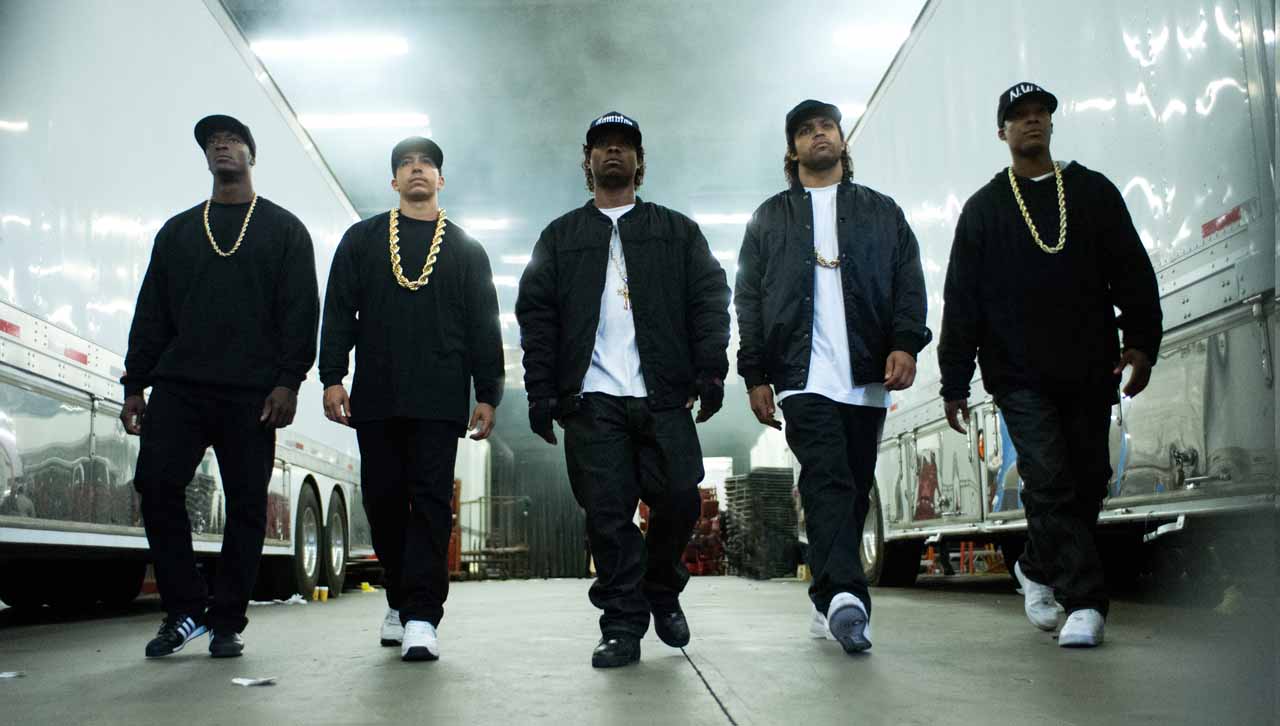
Jason Mitchell gives a star-making performance as Eazy-E, the fearless and canny co-founder of NWA who started Ruthless Records with money he made dealing drugs. O’Shea Jackson, Jr. plays his real-life father, better known as Ice Cube, who created the lyrics for many of the group’s biggest and most influential pieces. And Corey Hawkins is Dr. Dre, master of the turntable. The movie is well over two hours and never seems long, but with that running time there should have been space for more about the creative drive. We see the guys writing in notebooks and there is a funny scene with Eazy as a last-minute substitute Dre has to show how to get on beat for their first recording. But we never get a sense of what it feels like to create these songs or to perform them before thousands of fans or how they felt about the complaints that their lyrics were misogynistic. Later we glimpse Ice Cube working on the screenplay for “Friday,” the first film from this movie’s director, F. Gary Gray. But we do not learn that it would be even more influential in Hollywood than NWA was in music. Instead, we get an admittedly very funny call-out to that film (“Bye, Felicia“). And we get fan service scenes re-creating Eazy’s pool parties and spouse service scenes like Cube meeting Nicole. There are two other members of the group we learn very little about.

There is still room for a more objective NWA story as cultural and political history. At middle age, Dr. Dre, Ice Cube, and Eazy’s widow are not as clear-eyed about their own history as NWA was in calling themselves citizen journalists, matching the harshness and brutality around them with the force of their rap. But this is a compelling story with a message as vitally important now as it was during NWA’s brief recording career, with plenty of attitude and then some.

Parents should know that the film includes very strong and crude language, drug dealing, smoking, drinking, wild parties, nudity, sexual references and situations, sad deaths, peril and violence, and archival footage of police brutality and riots.

Family discussion: Was NWA right to perform their song in Detroit? Do you agree that they are journalists? Should there be limits on song lyrics that are profane or bigoted?

If you like this, try: the documentaries about A Tribe Called Quest and Tupac Shakur and the music of NWA

Related Tags:


Based on a true story Biography DVD/Blu-Ray Pick of the Week Race and Diversity
Molly Moon and the Incredible Book of Hypnotism

Molly Moon and the Incredible Book of Hypnotism

Posted on August 13, 2015 at 3:43 pm

B
Lowest Recommended Age: 4th - 6th Grades
MPAA Rating: Rated PG for thematic elements and brief language
Profanity: Brieg language
Alcohol/ Drugs: None
Violence/ Scariness: Peril, issues of parental death and abandonment, mean adults
Diversity Issues: None
Date Released to Theaters: August 14, 2015

Copyright ARC Entertainment 2015
“Molly Moon and the Incredible Book of Hypnotism” is a cute family fantasy, based on the series of books about a spunky orphan by Georgia Byng. Raffey Cassidy, the enchanting young star who was the highlight of “Tomorrowland,” is perfectly cast as the determined Molly Moon, who learns from an old book how to use hypnotism to get people to do what she wants. Cassidy’s clear blue eyes are so mesmerizing that it is easy to believe they can bewitch anyone.

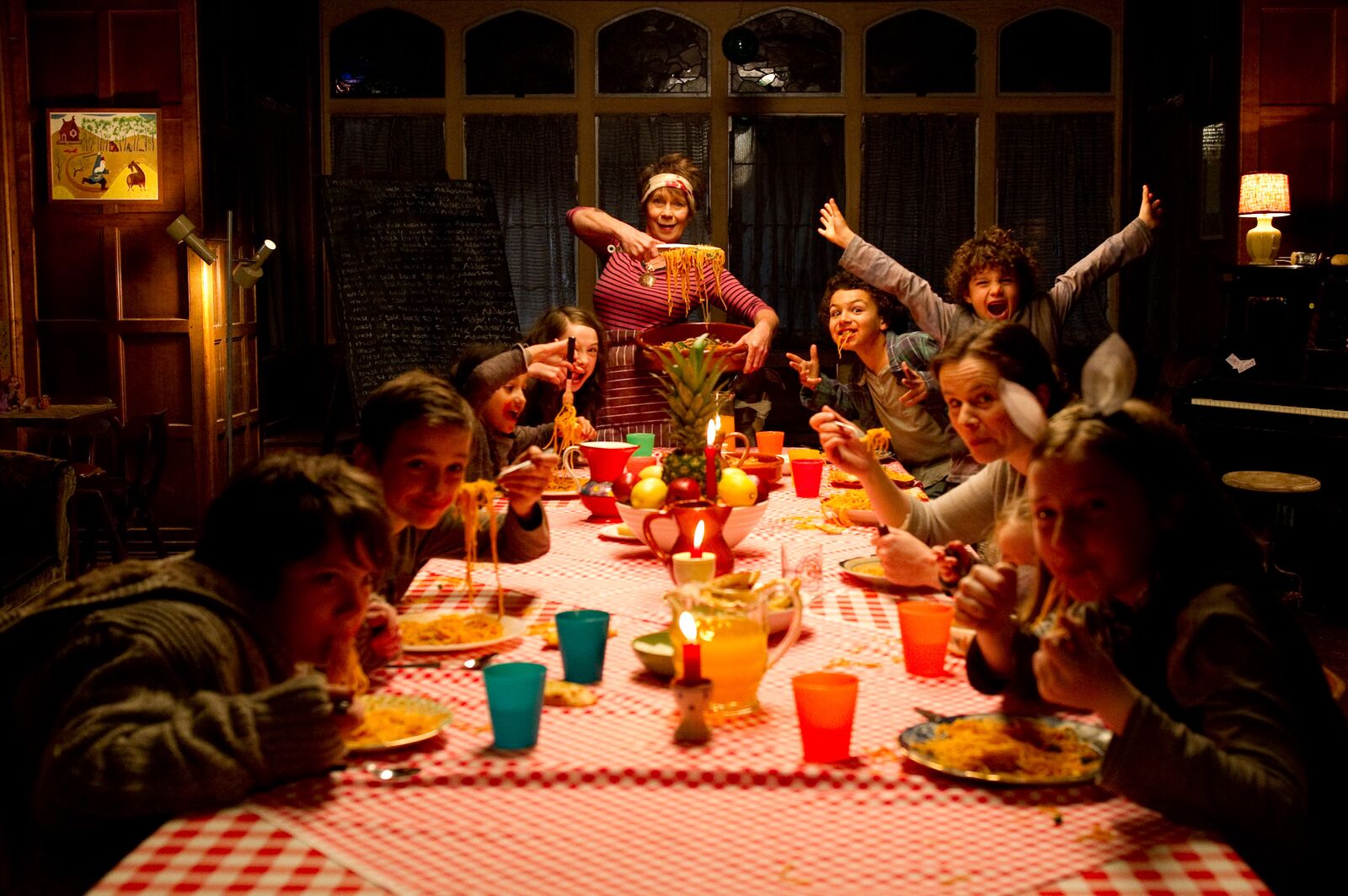
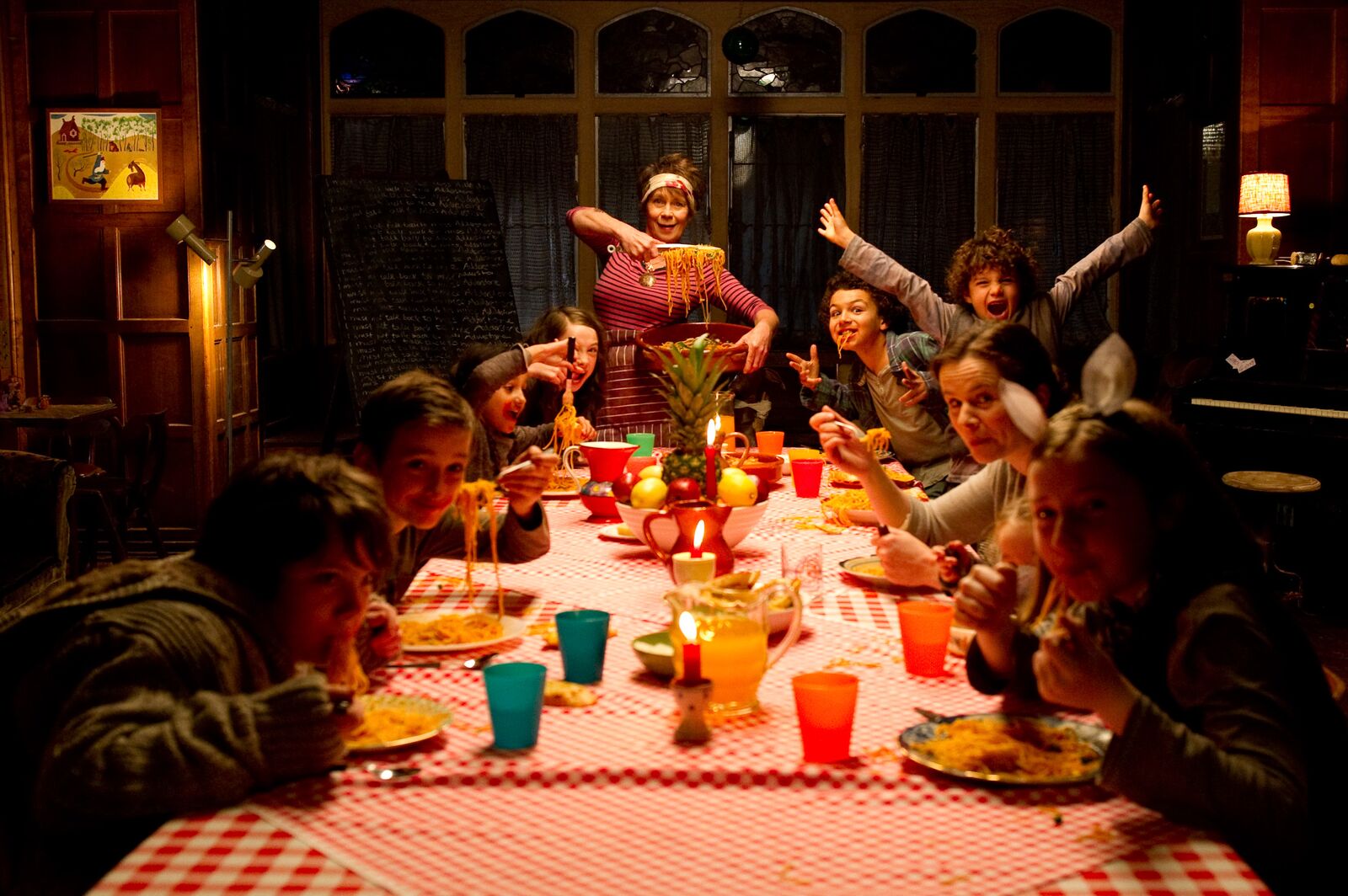
Molly lives in a Little Orphan Annie/Oliver Twist-style terrible orphanage, presided over by mean Mrs. Adderstone (Lesley Manville), with the disgusting food prepared by a cook named Edna (Celia Imrie). In this brutal environment, Molly’s only friend is Rocky (Jadon Carnelly Morris), a gifted singer. Molly promises to be there for his performance but lets him down twice because she is so captivated by an old book about hypnotism she found in the library. She tries out what she learned first on Mrs. Adderstone’s fierce dog Petula, who becomes friendly and devoted. And then she goes to work on Edna, who suddenly starts preparing delicious, wholesome meals for the children. She tries to work out some adoptions that would keep her with Rocky, but, angry and hurt because she broke her promise, he goes off with the wealthy Mr. and Mrs. Alabaster. Molly decides that what she needs is stardom. If she is rich and famous like pop star Davina (Tallulah Evans), she thinks she will be happy. She cannot sing or dance, but she does have the crucial skill — her ability to hypnotize extends not only to a television producer and a talk show host, but by the clever use of magnification, to almost everyone in the audience, not just in the theater where she is performing but those watching on television as well.

Meanwhile, someone else is trying to get the hypnotism book: a crook named Nockman (“Lord of the Rings'” Dominic Monaghan), spurred on by his crime queenpin mother (Joan Collins, as always, at her best playing bad). They want to use hypnotism for a big robbery. And if they can’t get there before a rival gang, maybe they can let them do the robbery and then rob them.

All of the performers, young and grown-up, are clearly enjoying themselves. Cassidy is one of the most appealing young actors in film, Emily Watson is very touching in a brief role as a sympathetic adult supervising the orphans, and Evans is excellent as a pint-sized diva. Director Christopher N. Rowley and director of photography Remi Adefarasin (“Match Point,” “Elizabeth”) keep the tone light and playful, enjoying the heightened fantasy elements of the story. It comes across like a fairy tale, with transformations and enchantments. And it is exceptionally understanding of the story’s villains. In order to hypnotize someone, Molly has to understand something about them. Even pretending to listen to them teaches her something about why acts that are inconsiderate or selfish are often based in hurt and fear. Molly herself is thoughtless and unfair at times. Like Spider-Man she has to learn that with great power comes great responsibility, and like Dorothy, she learns that there’s no place like home.

Parents should know that the film deals with parental loss and abandonment and with adults being cruel to children. They should also know that the film perpetuates inaccurate stereotypes of adoption, including the idea that prospective parents go to orphanages to pick out children as though they are buying groceries. There is some mild peril and brief language and crude humor.

Family discussion: Who would you like to hypnotize? Why didn’t Molly like being a pop star?

If you like this, try: the books by Georgia Byng

Related Tags:


Based on a book Fantasy Movies -- format Stories About Kids VOD and Streaming
Ricki and the Flash

Ricki and the Flash

Posted on August 6, 2015 at 5:48 pm

Copyright 2015 Walden

“Aren’t you allowed to have two dreams?”

The person asking the question is Ricki (as she is now known), played by Meryl Streep. She has just accused her ex-husband, Pete (Kevin Kline), of not supporting her dream of playing rock music. And he has responded, “I thought we were your dream.” Years ago, Ricki was a suburban housewife named Linda, with a husband and three young children. She left them to be a rocker, and now fronts a cover band called Ricki and the Flash, performing at night for a small group of loyal fans at a bar in Tarzana, California. During the day, she is a cashier for a warehouse store. Neither job pays well; she is about to declare bankruptcy.

But first she has to go home. Her daughter Julie (Streep’s real-life daughter Mamie Gummer) is having a breakdown because her husband is in love with someone else. Pete’s wife is away, caring for her ailing father. So Pete calls Ricki and asks her to come home and help him take care of Julie. She arrives, with her guitar and dressed in 70’s rocker drag, at his gracious gated community and enters Pete’s grand and elegant home, where everything seems effortlessly comfortable. And where Ricki, with her stringy braids and kohl-rimmed eyes and tattoo is very out of place.

Screenwriter Diablo Cody (“Juno”) gives Ricki some unexpected characteristics and of course Streep brings her to life. Linda/Ricki loves to perform and loves the look and shock-the-bourgeois attitude of a rock musician, even at her other job. But she is not the stereotype anarchist/liberal. The tattoo on her back is a proudly waving American flag and she calls out “Support the troops!” from the stage. We learn a little bit more about where that comes from in one of the movie’s highlights, when Pete’s second wife, played with depth, heart, and resolve by Broadway star Audra McDonald, returns home and the two women have a conversation about what is best for Julie. It is couched in the kind of “we don’t have to like each other but we need to get along” terms of two very different women who share the experience of having been married to the same man and, in their own ways, mothering his children.

Streep clearly loves being back with her “Sophie’s Choice” co-star, and she and Kline create a palpable sense of history with each other in some touching moments, especially when they join forces to confront Julie’s ex. And it is a joy to see Steep and Gummer together. Their trust and connection is so solid that it gives them both the freedom to make their relationship complicated and painful, wanting so much from one another, and still wanting to give to one another, too.
Rick Springfield (yes, that Rick Springfield) is excellent as lead guitar of The Flash and sometime boyfriend for Ricki.

The film is awkwardly constructed, and the ending, while sweet, is abrupt and unrealistic. It makes sense for the storyline that Ricki is not a great singer or musician, with a dozen cover songs on the soundtrack, director Jonathan Demme’s commitment to using the live performances without any studio sweetening is questionable. But the musical performances are joyous, tender-hearted and true. And it explores essential questions: How do we love the people who cannot love us back the way we want them to? What do you do when your dreams do not fit together? What will you give up for someone you love?

Parents should know that this movie includes tense and unhappy family confrontations, discussion of a suicide attempt, strong language, drinking, marijuana, and sexual references and situations.

Family discussion: Can you have two dreams? How does Pete feel about Ricki? How can you tell? Why does Ricki hurt Greg?

If you like this, try: “The Rocker” and “Juno” and see Streep and Kline together in “Sophie’s Choice”

Related Tags:


Drama Family Issues
The End of the Tour

The End of the Tour

Posted on August 6, 2015 at 5:20 pm

B+
Lowest Recommended Age: Mature High Schooler
MPAA Rating: Rated R for language including some sexual references
Profanity: Very strong and crude language
Alcohol/ Drugs: Drinking and smoking
Violence/ Scariness: Reference to suicide
Diversity Issues: None
Date Released to Theaters: August 7, 2015
Date Released to DVD: November 9, 2015
Amazon.com ASIN: B0153C71X8
Copyright A4 2015
Copyright A4 2015

Form illuminates content in this imperfect but compelling film based on the real-life audiotapes of a four day interview of author David Foster Wallace in the final days of his book tour for Infinite Jest.

The subject of the interview is David Foster Wallace (Jason Segel), whose writing was densely and intricately layered. The journalist doing the interview is David Lipsky (Jesse Eisenberg), also a recently published novelist, though his book attracted no attention.

Lipsky persuades his editor at Rolling Stone that Wallace, whose book is a critical and commercial hit, would be a good subject for the magazine. And Wallace, now in the final days of his book tour, agrees to let Lipsky come along. Their wide-ranging (in geography and subject matter) conversation over four days reflects a constantly shifting set of expectations, assumptions, and goals for a construct so essentially artificial it hardly makes sense to call it a relationship. And yet, Lipsky literally moves into Wallace’s man cave of a home and for that time there is a simulation of some kind of friendship between them, at times even a sense that they could be friends, which they both seem to find unsettling and appealing. Wallace’s writing had a fractured, self-referential quality, filled with asides and meta-commentary. So it makes sense that the film has some of those qualities as well. If there were such a thing as cinematic footnotes, they’d be here. Instead, the context itself provides the footnotes. Wallace, whose great subject was American consumer culture, ends up in Minnesota’s Mall of America, eating in the food court as the indoor roller coaster zooms by.

Janet Malcolm famously described a journalist as “a kind of confidence man, preying on people’s vanity, ignorance, or loneliness, gaining their trust and betraying them without remorse.” We see some evidence of that in “The End of the Tour” but there are several other layers as well. The two men are about the same age, both writers, one lauded as one of the great novelists of his generation, one who released a book that got no attention at all. So Lipsky wants more from Wallace than a story. He is looking for guidance, validation, understanding. He acknowledges that he wants what Wallace has. At the same time he wants to understand why Wallace does not seem to want it. The two men are both relentless, even obsessive, self-observers. As Lipsky is recognizing the gulf between the kind of superficial details that make up a celebrity profile and what it means to actually know someone, he tries to find some kind of foothold. He wants to prove himself to his editor (in real life, the article was never published). And he wants to prove to himself that he is somehow in the same species as Wallace. There is a Mozart/Salieri element here as Lipsky’s greatest talent may be his ability to appreciate Wallace’s genius.

The commitment to verisimilitude is claustrophobic at times because almost all of the dialogue is taken directly from the tapes.  An opening scene where Lipsky first hears of Wallace’s suicide and digs out the tapes adds nothing to the story.  And yet again this is a case of form following content, as the near-obsessive, even fetishishtic, constricted particularity of the conversation is the kind of thing one of Wallace’s characters might do. The most telling moment in the film is when Wallace admits that he does not mind being profiled in Rolling Stone. He just does not want the profile to make it appear that he wants to be profiled in Rolling Stone. That is exactly the kind of fractured, Schroedinger-ian attraction/repulsion Wallace felt to the themes of his work: the gulf between presentation and reality, between observing and being, between attention and distraction. As Lipsky knew, it is a privilege to be a part of that conversation, even as we must be aware that it is the kind of entertainment — even at this ambitious level — Wallace would both want and not want to see.

Parents should know that this film includes very strong and crude language, sexual references, drinking, and smoking.

Family discussion: Why did Wallace agree to the interview? Why did he get angry with Lipsky?

If you like this, try: the books by David Foster Wallace and “My Dinner with Andre” and listen to the excellent interview with David Lipsky on the podcast, “The Moment

Related Tags:


Based on a book Based on a true story Biography DVD/Blu-Ray Pick of the Week
THE MOVIE MOM® is a registered trademark of Nell Minow. Use of the mark without express consent from Nell Minow constitutes trademark infringement and unfair competition in violation of federal and state laws. All material © Nell Minow 1995-2026, all rights reserved, and no use or republication is permitted without explicit permission. This site hosts Nell Minow’s Movie Mom® archive, with material that originally appeared on Yahoo! Movies, Beliefnet, and other sources. Much of her new material can be found at Rogerebert.com, Huffington Post, and WheretoWatch. Her books include The Movie Mom’s Guide to Family Movies and 101 Must-See Movie Moments, and she can be heard each week on radio stations across the country.

Website Designed by Max LaZebnik