Ex Machina

Posted on April 16, 2015 at 5:18 pm

A-
Lowest Recommended Age: Mature High Schooler
MPAA Rating: Rated R for graphic nudity, language, sexual references and some violence
Profanity: Very strong language
Alcohol/ Drugs: Drinking and drug use, intoxication
Violence/ Scariness: Violence and peril, characters injured and killed
Diversity Issues: Diverse characters
Date Released to Theaters: April 17, 2015
Date Released to DVD: July 14, 2015
Amazon.com ASIN: B00XI057M0
Copyright A24 2015
Copyright A24 2015

Movies about artificial intelligence or computers achieving consciousness are, of course, really about what it means to be human.

When software and hardware combine to mimic or exceed human qualities in “Her,” “Chappie,” “2001: A Space Odyssey,” “Terminator,” or the upcoming Avengers sequel, even “Planet of the Apes,” it is a way to think about what it is that defines us. Alan Turing of “The Imitation Game” used our ability as humans to recognize each other as the famous Turing test to determine whether artificial intelligence has been created. The test is passed when a person cannot tell whether the entity on the other side of a conversation is human. If we cannot tell the difference, then we have to rethink our exceptionalist notions of human supremacy.  We accept, sometimes reluctantly, the notion that computers are vastly superior in computation and memory, that they can whomp us in chess or on Jeopardy.  But can a machine achieve what we think of as consciousness?  Or conscience?

Caleb (Domhnall Gleeson) is a computer programmer who gets the equivalent of Charlie Bucket’s golden ticket.  He wins a chance to spend a week at the home of the brilliant founder of his company (think Steve Jobs), a man who at age 13 invented the most powerful search engine and now lives in a home so remote that a helicopter flies over the thickly wooded property for two hours before they reach the residence.  They are in the middle of nowhere.  (The film was made at the stunning Juvet Landscape Hotel in Norway.)

Nathan (Oscar Isaac, all brutish charm, feral, and entitled, with shaved head and beard), welcomes him with a rough candor, explaining that he is hung over, and giving Caleb a keycard, so that he will have access to those parts of the home where he is welcome and be kept out of those where he is not.  It turns out he has been brought there for a purpose.  Nathan has been working on what he describes as the greatest scientific advance of all time.  He is not creating a robot.  He is trying to create life.  He wants Caleb to perform the Turing test on his latest creation, named Ava (Alicia Vikander of “Anna Karenina”).  

But it turns out that it may not be Ava who is being tested.

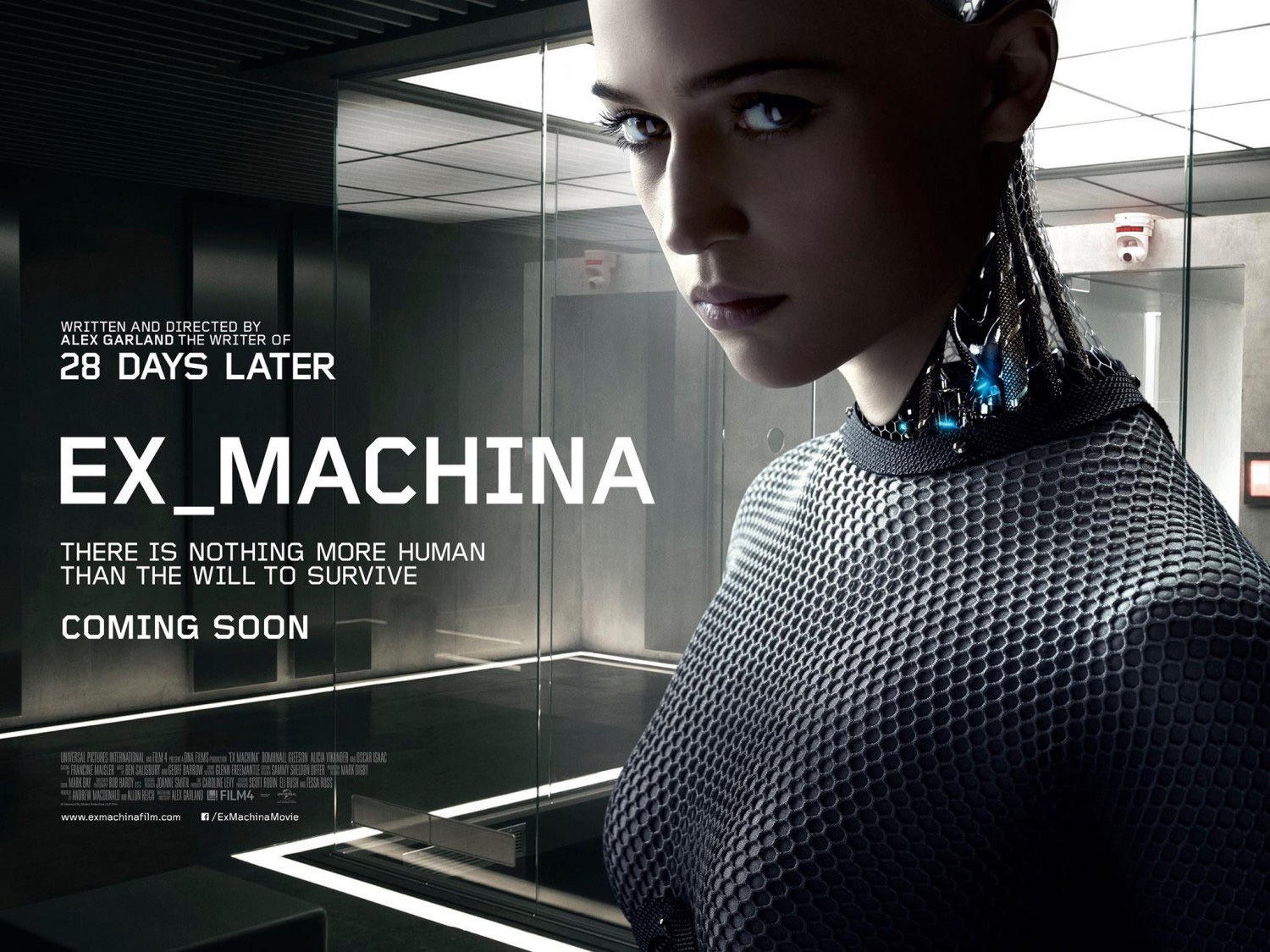
Ava is gorgeously designed.  Nathan admits that he created her to be intensely appealing and she is, both her humanoid face and her transparent neck and midriff that allow us to glimpse her mechanics.  Vikander gives her a tentativeness and innocence, with a sweet seriousness and (at least at first) an endearing wish to please.  She tells Caleb to wait while she gets a surprise and it turns out to be clothes that cover up the machinery so well that it is not just the human part of Caleb that recognizes her as a part of the same species; it is the depths of the lizard brain instinct.  We may have wondered why Nathan’s test was conducted in a glass box that separates Ava and Caleb.  Perhaps it was to prevent him from abandoning the Turing test for a more animalistic evaluation based on smell and touch.

There is that always-compelling hubris/Frankenstein/Jurassic Park/sorcerer’s apprentice element of foolish, narcissistic grandiosity in creating something out of a grant vision without appreciating how dangerous it will be.  Something always goes wrong.  And anyone who does not realize that does not really understand that part of the essence of humanity, for better and worse, is the chasm between our ability to dream and our ability to execute.

First lesson: Isaac Asimov was right.  Second lesson: the qualities of human-hood go beyond syntactical complexity and conversational non-linearity.  To be human means independence of thought and action, and the pesky thing about independence is that it overlaps with rebellion.  We know computers can outsmart us.  Can they out-human us, too?  Is it any wonder that Caleb flays his own arm just to check that what is inside is not made of gears and chips?

Screenwriter Alex Garland (“28 Days Later,” “Sunshine,” “Never Let Me Go”), directing for the first time, has an eye for gorgeous visuals and a superb sense of balancing the future-wow with the ordinary to make his sci-fi-style extrapolations amplify and illuminate who we are.

Parents should know that this film has very strong language, substance abuse, explicit nudity and sexual situations, and violence.

Family discussion: What is Ava’s most human quality?  What is Nathan’s least human quality?

If you like this, try: Read up on the Turing test and watch movies like “A.I.” and “Her”


Related Tags:


Drama DVD/Blu-Ray Pick of the Week Science-Fiction

True Story

Posted on April 16, 2015 at 3:20 pm

Copyright 20th Century Fox 2015

A reporter in disgrace for fabricating details of a story sits across the table from an orange-jumpsuited prisoner, accused of murdering his wife and three children. They have more in common than either of them expected. They are both outcasts. They are both unable or unwilling to explain their actions.

And they both used the name Michael Finkel. The reporter was given that name at birth and it appeared on the byline of his stories in the New York Times Magazine, including the one that cost him his job and his reputation. The man who murdered his family used that name when he fled to Mexico to escape capture. The real Michael Finkel, in seclusion at his home in Montana following his humiliating dismissal, got a phone call when the murderer was arrested, asking him for comment. With nothing else to do, and with the thought that this might be the kind of big story that get him back to a job in journalism, the real Michael Finkel, or as real as sometime just fired for lying can be (Jonah Hill), drove to Oregon to visit the man who was accused of killing his family. His real name, by the way, was Chris Longo (James Franco).

Co-writer/director Rupert Goold has a lot of ideas to explore in this film, and some work much better than others. The focus should be on the parallels between the two men, what links them, the ways they tried to use each other, and the resentments and differences that separate them.  But Goold wastes Felicity Jones (“The Theory of Everything”) as Finkel’s girlfriend, with distracting diversions like an ominous shot of her running (for exercise) through the woods. She does as well as possible with a scene where her character confronts Longo, but it is artificial and stagey.

Franco perfectly captures the superficial charm that occasionally slips to reveal fierce underlying anger and self-justification. Hill is a bit out of his depth, or more likely the Finkel character is underwritten. We should be able to see his anger and self-justification, too. And he is lost in the scene where he is grappling with a moral dilemma or trying to consider the rights of anyone but himself.  He is better at showing us Finkel’s arrogance and his need for approval. When Longo says he took Finkel’s name because he was a fan, Finkel is unabashedly complimented. After his humiliating dismissal, he gravitates toward approval like a moth toward a flame. And we know how that turns out.

The ironic title reminds us that we can never really know the true story; there are always too many conflicting versions, too much that is just unknowable. And yet the difference between Finkel, who violated the most fundamental principles of journalism by combining the details of the Africans he met to tell it as a story about one individual, and the movie of his own story is that fiction is supposed to convey larger truths. It is not at all clear that this one does.

Parents should know that this film concerns the murder of a wife and children. There are some disturbing and grisly images, as well as child slavery and discussion of beatings, deception, some strong language, and drinking.

Family discussion: Why did Jill visit Chris? How did Chris and Mike try to con one another and who was most successful?

If you like this, try: “Capote” and “The Jinx” and Finkel’s book, Murder, Memoir, Mea Culpa

Related Tags:


Based on a book Based on a true story Crime Drama
Paddington

Paddington

Posted on April 15, 2015 at 5:55 pm

B +
Lowest Recommended Age: Kindergarten - 3rd Grade
MPAA Rating: Rated PG for mild action and rude humor
Profanity: Some schoolyard language
Alcohol/ Drugs: Drinking and drunkenness
Violence/ Scariness: Peril and mostly comic violence, offscreen death
Diversity Issues: A metaphoric theme of the movie
Date Released to Theaters: January 16, 2015
Copyright 2014 StudioCanal

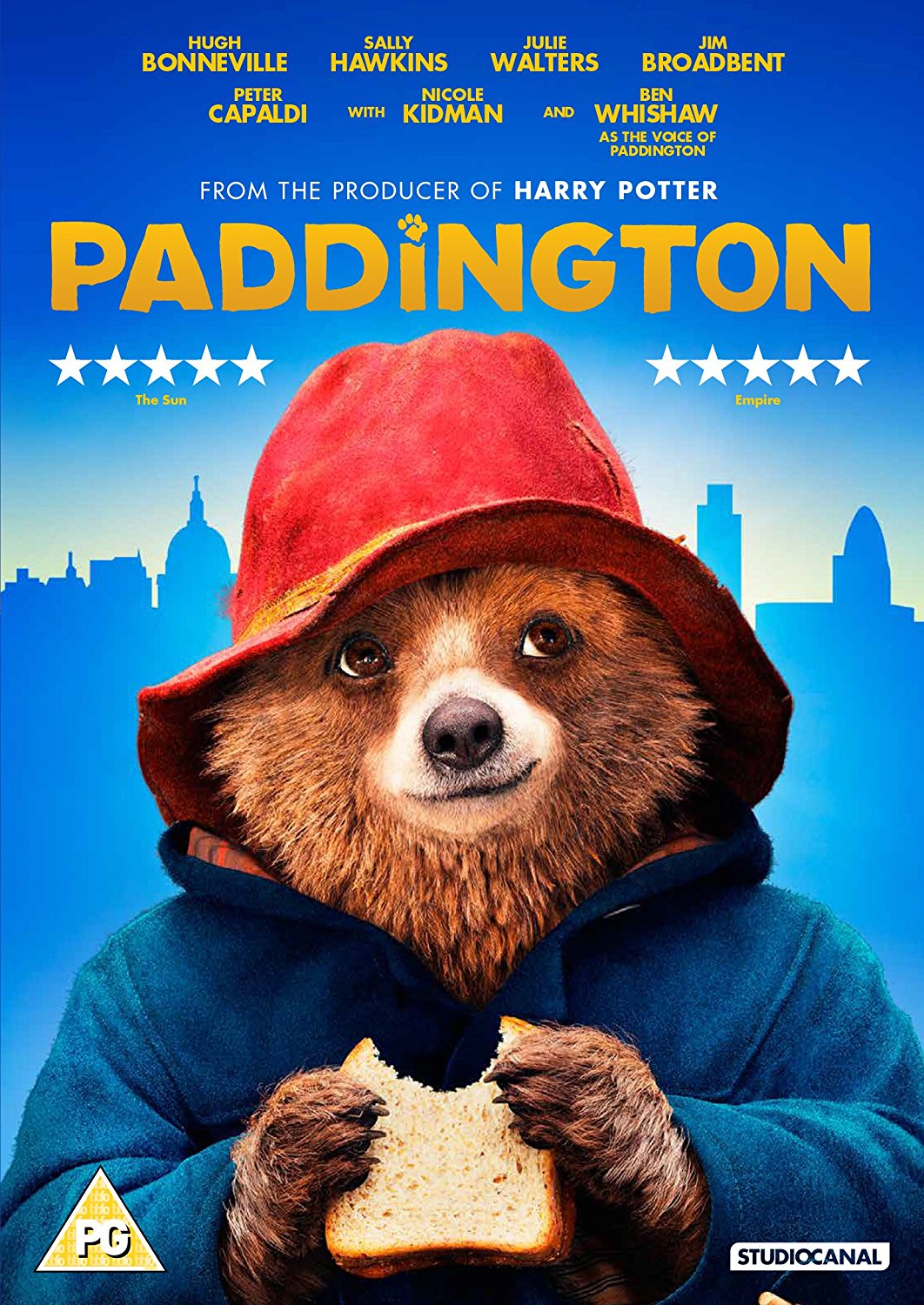
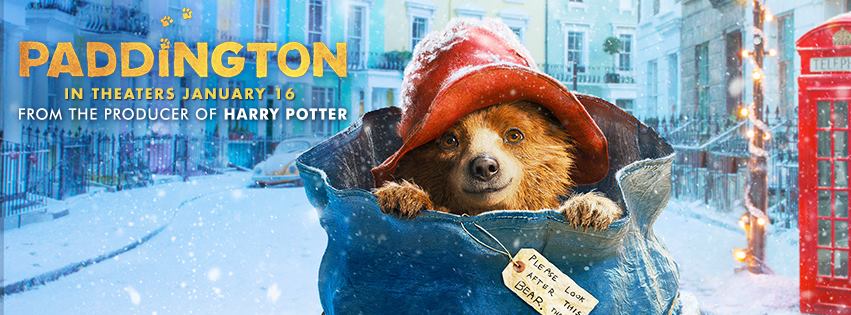
Michael Bond’s gentle, charming stories about the Peruvian bear named for a London train station has been brought to the screen with almost as much gentle charm as the stories, and certainly far more than the slapsticky trailer suggested.

A generation ago, a British explorer named Montgomery Clyde (Tim Downie) was rescued by a rare breed of bears in Peru. He lived with two of them, Pastuzo (Michael Gambon) and Lucy (Imelda Staunton), teaching them some English, including the 107 ways to describe rain that Londoners like to use, and introducing them to the pleasures of orange marmalade. When he said goodbye, he assured them of a warm welcome if they ever came to London bestowed his red hat on Pastuzo.

Pastuzo and Lucy raised their nephew (Ben Wishaw), teaching him all they had learned from Clyde, developing their own artisanal marmalade recipe, and enchanting him with tales about the far-off land called London where their friend would be happy to welcome him. When Pastuzo is killed, Lucy moves to a home for retired bears and the young cub stows away on a freighter bound for London, wearing the red hat and carrying a suitcase filled with jars of marmalade.

At Paddington Station, he meets the Brown family. Risk-averse Mr. Brown (“Downton Abbey’s” Hugh Bonneville) does not want to have anything to do with him, but warm-hearted and spontaneous Mrs. Brown (Sally Hawkins) invites him home, naming him for the train station where they met. The Browns have two children, Judy (Madeleine Harris), a teenage daughter who never takes out her earbuds, and Jonathan (Samuel Joslin), a budding inventor.

As soon as they get home, the extra-prudent Mr. Brown calls his insurance company to extend the protection of his homeowner’s policy, but it is not fast enough. Paddington’s first encounter with a bathroom ends in catastrophe. Mr. Brown is horrified. But Mrs. Brown is sympathetic, and Judy and Jonathan are delighted. A little chaos can be a good thing. And learning to enjoy the differences we encounter in others is a very, very good thing.

As the Browns warm to Paddington, their neighbor, Mr. Curry (“Doctor Who’s” Peter Capaldi) has only one pleasure — having something new to complain about. And there is a more sinister villain as well. A taxidermist at the natural history museum named Millicent (Nicole Kidman, who also co-produced the film) wants Paddington so she can kill him, stuff him, and put him on display. “Is he endangered?” asks one of the museum staff. Millicent narrows her eyes, channeling Cruella De Vil. “He is now.”

The advertising for the film regrettably focuses on the slapstick and gross-out jokes (Paddington thinks Mr. Brown’s toothbrush is for cleaning out his ears). Thankfully, as a whole the film is true to the gentle humor and sweetness of the books. Wishow perfectly captures Paddington’s innocent friendliness and Bonneville and Hawkins are just right as the couple who only need a slight adjustment to reconnect with each other and their children. A brief flashback showing why Mr. Brown became so worried about safety will be appreciated by the children and parents in the audience, and even Millicent’s motives are revealed to be less about evil than about her feelings of hurt and loss. Paddington remains a most welcome visitor, and I hope we see more of him.

Parents should know that this film includes a sad (offscreen) death and some peril, including a taxidermist who wants to kill and stuff Paddington. Characters use some mild language and there is comic mayhem and peril and some bodily function humor. A woman flirts with a man to get him to do what she wants. A man dresses as a woman for disguise and another man finds him attractive. A character gets a security guard drunk so that other characters can break into a building.

Family discussion: Why did Mr. Brown change his views on taking risks when his daughter was born? Why doesn’t Mr. Curry like Paddington? Can you do a “hard stare” and when would you use it?

If you like this, try: the Paddington books and the “Curious George” books and movies — and taste some marmalade!

Related Tags:


Based on a book Comedy DVD/Blu-Ray Pick of the Week Family Issues Fantasy For the Whole Family Talking animals

The Longest Ride

Posted on April 9, 2015 at 5:53 pm

Another spring, another Nicholas Sparks movie.

I don’t mind (much) that they are so rigidly formulaic. Every one of them centers on (1) water, (2) letters, and (3) somebody dying. All genre films follow some sort of formula, and we buy tickets because we want to see what we expect to see.

Copyright 2014 Twentieth Century Fox

I don’t mind (much) the paper-thin characters and corny dialog. I don’t mind the preposterous plot turns. Much. Or the soft-focus romp on the beach and the cinematography that looks like the camera lens was dipped in honey. And okay, yes, I had to pull out my handkerchief.

Here’s what I do mind: the unrelenting generic blandness of “The Longest Ride.” And what I really mind: the unrelenting length of “The Longest Ride,” which makes its title unfortunately apt.

The most interesting part of the film is that four of its stars come from legendary show business families. The movie I’d like to see is them sitting around off camera talking to each other.

Scott Eastwood, the look-alike but even handsomer son of Clint Eastwood, plays Luke, a 21st century cowboy who grew up on a ranch is making a return to a career of competitive bull-riding, following serious injuries a year before. Britt Robertson (who is pretty much the only one in the cast with no famous relatives) is Sophia, the studious art student with a prestigious internship at a New York art gallery starting in two months. They meet sorta cute when her sorority sister drags her away from her books to see the bull-riding and Luke’s hat falls more or less into her lap. Later, when he asks her on a date, she is all but unfamiliar with this quaint custom. What, you mean he wants to pick her up? And have plans? And not just text here “Wanna hang out?” Ladies, he even arrives with flowers, to the collective sighs of the entire sorority house.

But the dream date gets even better after that. Not only is the dinner another wildly romantic gesture (yes, involving a body of water — this is a very wet movie, even by Sparks standards), but Luke actually rescues an old guy from a car wreck just before it explodes in flames, thus completing the trifecta of movie-boyfriend perfection. The ladies in the audience sighed even more happily than the sorority girls. The guy he rescues turns out to be Ira (Alan Alda, son of Broadway legend Robert Alda). And, ding, ding, ding, there are letters! Sophia rescues a basket of old letters from the car just before it blows up, and when Ira starts to recover she begins to read them to him. These are letters he wrote to his beloved late wife, Ruth, even when they were actually together. Sparks really, really, really likes to get letters into the story, even if it does not make much sense. Cue the flashbacks. Sparks loooves parallel love stories.

Ira (now Jack Huston, of the multiply-Oscared Huston family) falls for Viennese immigrant Ruth (Oona Chaplin, who wins the gene pool lottery with both Charlie Chaplin and Eugene O’Neill in her family tree). The conflict they face is that she wants to have a lot of children and he is wounded in WWII risking his life to save another soldier and cannot father children. (Sparks finds a way to let us know that the problem relates to fertility only, not the Jake Barnes/Sun Also Rises problem.)

This section is mildly interesting though too reminiscent of the vastly better portrayal of the life of a marriage in the first ten minutes of “Up.”

Listening to Ira’s letters helps Sophia think about what it takes to make a relationship work, blah blah. Blah.

Oh, it’s okay. It does the job. It doesn’t kill off the wrong person like some Sparks stories or Gothika rule the ending like “Safe Haven.” It is good to see Sparks include characters who are not imaginarily typical middle-class white Christians — there’s even a consultant in Jewish culture listed in the credits. There are no obvious mistakes, but unsurprisingly the portrayal feels no more authentic than the rest of the film.

But as it drags on, it is impossible to overlook the fact that there is more of interest outside the frame than inside. Sophia’s friend Marcia (Melissa Benoist, “Whiplash,” “Danny Collins,” and the soon-to-be Supergirl) would have been much better as the lead than Robertson, whose most frequent response is a cute little laugh, with a couple of slight brow wrinkles thrown in to show concern or confusion. The briefly referenced story of Black Mountain College’s famous experiment in art is much more intriguing than Ruth’s purchases of paintings and the twist at the end, while it will not surprise most people, requires some unjustifiable misdirection.

Sparks has a formula that is safe in its predictability. There’s always a place for movies about pretty people kissing. But it is time for Sparks to try something new, and maybe time for audiences to try something new, too.

Parents should know that this film has some strong language, a WWII battle, bull-riding peril, characters injured, sad deaths, nudity and sexual situations.

Family discussion: Were you surprised at what Ira said to Ruth when she left? Was Luke’s mother right about the reasons he would not quit?

If you like this, try: “Dear John,” “The Notebook,” and “Nights in Rodanthe”

Related Tags:


Based on a book Romance

Furious 7

Posted on April 4, 2015 at 11:21 pm

Copyright Universal 2015

Who would have picked the Fast & Furious series as the one that would defy the odds and just keep getting better? In part that is because the first one was not very good.

And the second wasn’t either. It didn’t even have Vin Diesel. And then there was that crazy detour chronologically and geographically with “Tokyo Drift.”

But somewhere around the fourth or fifth one they made two important decisions. They jettisoned any vestigial commitment to believability in storylines. And they tossed out any thought of complying with the laws of physics. In this seventh and last film, twelve years after the first one, there are so many flying cars amid the chases, explosions, and assault weapons it might as well be titled “Chitty Chitty Bang Bang Bang Bang Bang.”

Okay, the cars don’t actually fly, but they hurtle through the air.

Inspired by a magazine article about street racers, the series has morphed into a sort of “Mission Impossible.” The lovable band of rogues is now on the right side of the law, not because it is the right side, because they would not be rogues anymore, but because of some personal threat or affront, which is what makes them lovable. “I don’t have friends,” says the leader of the pack Dom (Vin Diesel). “I have family.” And those who live their lives a quarter mile at a time, now expanded to include anyone who shares their ineffable coolness and unconditional commitment, qualifies as family.

The talking and the acting and the story aren’t very good, and the comic relief (mostly courtesy of Tyrese Gibson) is weak at best, but that’s not why we’re here, now, is it? It does not have a plot, just a McGuffin of a plot-ish, concerning that most venerable of action-franchise go-tos. The bad guy our heroes took down at the end of #6 turns out to have a brother who is (a) determined to get revenge by killing every one of our group, (b) trained in special ops as a former government assassin with a special affection for explosives, and (c) he is Jason Statham. He even beats up FBI agent Hobbs (Dwayne “The Rock” Johnson), who by now has become a sort of unofficial member of the group and kills another member. “No more funerals,” everyone agrees, except of course for Statham’s character.

Like characters in a fairy tale or a video game they have a series of tasks to accomplish in order to achieve their goal of taking out the bad guy. They have to rescue an extremely hot hacker from a supervillain with infinite access to armored vehicles and assault weapons, including armed drones. They have to retrieve her super-duper thing she invented, which is only on a hard drive in the — of course — super-duper car owned by a prince and stored in the upper stories of a skyscraper. And then they have to get the bad guy, involving a fight that comes down to mano a manly manly mano.

Okay, now that’s out of the way and we can get to the flying cars. This is a movie that has cars parachuting out of a plane. Let’s say that again. Cars parachute out of a plane. A guy gets stuck in a bus teetering over the edge of a cliff and I won’t tell you what happens next except to say it is awesome times two. There are big arms, deep voices, crazy chases, girls in very skimpy clothes, heavy artillery, crazier chases, and did I mention the cars jumping out of the plane? There’s some romance, though the only thing cheesier than the brother of the bad guy coming back for revenge storyline is the amnesia storyline, not forgetting the pregnancy she is too noble to tell him about storyline. But the action scenes are cool and the tribute to the late Paul Walker at the end is genuinely touching. Plus, cars jump out of a plane. Bang bang bang bang.

Parents should know that this film has non-stop, intense action sequences with peril and violence, some strong language, beer drinking, and some skimpy clothes and sexual references.

Family discussion: How do the characters measure loyalty? What do you think about the way they handled the real life tragic death of one of the series’ stars?

If you like this, try: the rest of the series

Related Tags:


Action/Adventure Series/Sequel
THE MOVIE MOM® is a registered trademark of Nell Minow. Use of the mark without express consent from Nell Minow constitutes trademark infringement and unfair competition in violation of federal and state laws. All material © Nell Minow 1995-2026, all rights reserved, and no use or republication is permitted without explicit permission. This site hosts Nell Minow’s Movie Mom® archive, with material that originally appeared on Yahoo! Movies, Beliefnet, and other sources. Much of her new material can be found at Rogerebert.com, Huffington Post, and WheretoWatch. Her books include The Movie Mom’s Guide to Family Movies and 101 Must-See Movie Moments, and she can be heard each week on radio stations across the country.

Website Designed by Max LaZebnik