It’s been called the most frightening film ever made. That’s because there is no razor-toothed monster, giant bug-eyed alien or special effects extravaganza as terrifying as a threat coming from the person you thought you knew and trusted. Were the film’s emotionless pod people supposed to represent Communists or McCarthyite conformists? Either way, they reflect the obsessions of the Cold War. Based on a novella by Jack Finney, “Invasion of the Body Snatchers” has been remade three times (so far), each time resonating with the deepest fears of its era.
Cartoon action-style peril and violence, no one hurt
Date Released to Theaters:
May 20, 2016
Date Released to DVD:
August 15, 2016
Amazon.com ASIN:
B01EK44M64
Copyright Sony Pictures 2016
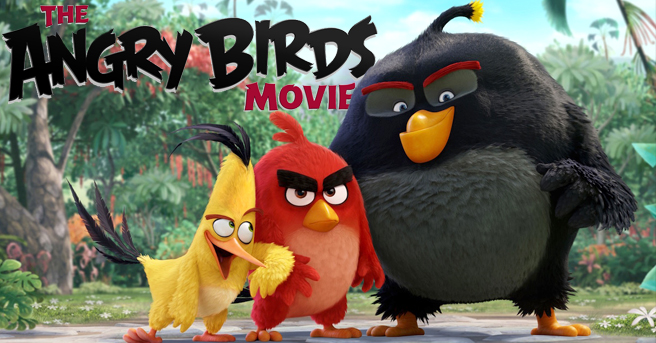
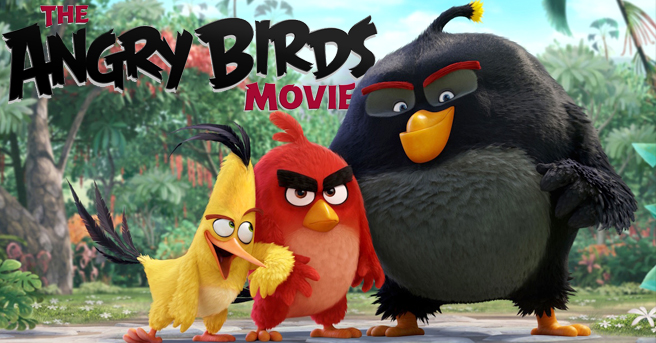
Like the wildly addictive Finnish app/game/toys that inspired it, the Angry Birds movie is colorful, with some silly humor and imaginative settings. And like the many, many attempts to make games into movies that have gone before it, this one has strong visuals, game talent, and yet never quite sustains itself as a story. It’s a rare movie for kids that endorses legitimate anger, but in these touchy times, it is peculiarly xenophobic.
Bird island is something of a flightless bird sanctuary, with no predators and a mostly happy, companionable community. Red (a perfectly cast Jason Sudeikis) is a bright red bird with Eugene Levy eyebrows, a tendency to defensiveness and snark, and a serious anger management problem.
Red is late to a “hatch-day” party he was supposed to work at as an entertainer. He insults the young bird’s parents and is accidentally standing in the wrong place when their new chick hatches, so that the baby imprints on Red instead of his parents. Red has an angry outburst leading to a court appearance presided over by Judge Peckinpah (Keegan-Michael Key), who sentences him to anger management classes conducted by the New Age-y Matilda (Maya Rudolph), where his classmates include the explosive Bomb (Danny McBride) and excitable Chuck (Josh Gad).
A ship arrives at Bird Island, carrying a cheerful pig named Leonard (Bill Hader), who oozes charm and promises friendship and merriment. He even puts on a show, in order to both pad and juice up the storyline.
Red is skeptical, but he is always skeptical. The other birds embrace their new friend, even after Red tells them Leonard has lied about coming alone. He has lied about his purpose, too. The pigs want the eggs. And…now the game part comes in: the birds need to get angry so they can get the eggs back. The whole part about foreigners/those different from us being evil and scary and wanting to eat our progeny, that’s pretty much glossed over as all in good fun, mingled with shout-outs to The Eagles (get it) and Rick Astley (because why not; it’s an easy laugh).
The birds have a possibly mythical leader, Mighty Eagle, the only bird on the island who can fly. Red, Bomb, and Chuck ascend to ME’s aerie and find that he is not as heroic as they hoped. If anyone is going to save the day, it will be the intrepid trio themselves. They have to find a way to get to the pigs’ island and get the eggs back.
It’s all bright and cheerful, but under-plotted and overproduced. Stunt-casting Oscar winner Sean Penn for a few grunts, throwing in pop songs and faux swearing to amuse the parents and bird poop humor to amuse the kids left me feeling a bit angry myself.
Parents should know that this film includes a lot of cartoon-style action and peril, with no serious injuries, some schoolyard language, and some bodily function/gross-out/crotch hit humor.
Family discussion: When is it helpful to be angry? How can you make the best use of anger?
Rated R for violence, sexuality, nudity, language and brief drug use
Profanity:
Very strong, crude, and explicit language
Alcohol/ Drugs:
Drinking, smoking, drugs
Violence/ Scariness:
Extensive graphic violence, guns, explosions, fighting, falls, many characters injured and killed, grisly images
Diversity Issues:
None
Date Released to Theaters:
May 20, 2016
Date Released to DVD:
August 22, 2016
Amazon.com ASIN:
B01F5ZY596
Copyright 2016 Warner BrothersShane Black at his best lives in the sweet spot he pretty much mapped out himself in his 20’s when he wrote the screenplay for “Lethal Weapon.” He figured out that hard-boiled action could be both exciting and funny. His characters have no illusions and few scruples, but in the tradition of loner anti-heroes from westerns to films noir, they have their own set of ethics. They do not like authority and they do not always obey the rules but they will represent the interests of their clients against corruption and bullies.
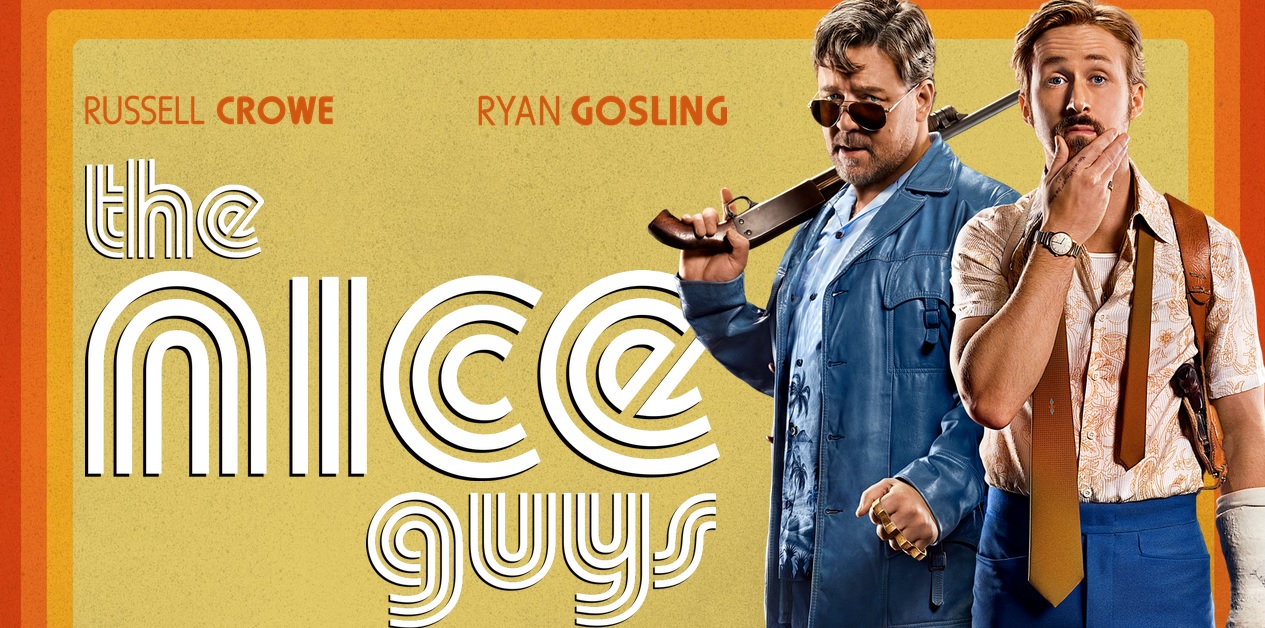
Black’s mismatched and yet perfectly yin-yang characters have included a “too old for this” cop paired with a wild younger one in “Lethal Weapon,” a cop and a thief-turned-accidental-actor in “Kiss Kiss Bang Bang,” and now a small-time private detective and single dad named Holland March (Ryan Gosling) and a muscle-for-hire guy named Jackson Healy (Russell Crowe). Healy, hired by a pretty young woman named Amelia (Margaret Qualley) to dissuade the men who are looking for her, goes to March’s home to punch him in the nose and break his arm. “We’re going to play a game. Shut up unless you’re me.”
March has been hired by a woman who says that her niece, porn star Misty Mountains (Murielle Telio), reported killed in an automobile accident, is still alive. March was looking for Amelia because he thinks she may have information about Misty. Healy is almost clinical in his communication with March. “Give me your left arm,” he says, not unkindly. “When you’re talking to your doctor, tell him you have a spiral fracture.”
But soon Healy himself is visited by some tough guys who rough him up for being in touch with Amelia. They even kill his fish. So he goes back to March to ask him to help find Amelia, and that leads them into a pervasive, murky mess of corruption, betrayal, pornography, a wild party, the Detroit auto industry, and a hit-man named John Boy (a “Waltons” reference, played by Matt Bomer), with many excellent 1970’s songs on the soundtrack.
Black is a master of the deadpan wisecrack that nails the essence of character, setting, and story, and Crowe and Gosling deliver with snap and relish. “There’s whores and stuff here,” says March’s young daughter, played by the marvelously poised Angourie Rice as Holly, the closest thing the story has to a grown-up with a conscience.” March, the sometimes hapless father who loves her dearly, is quick with a paternal correction. “Don’t stay ‘and stuff.'”
The mix of wit, slapstick, and mayhem has some dead-on period detail and some shrewd commentary on contemporary issues. Gosling’s comic timing is pure pleasure, especially in a gem of a scene where he juggles a lit cigarette, a magazine, and a gun, with his pants down. Crowe is fine, too, especially in his interactions with Rice. With any luck, they’ll be back for as many sequels as “Lethal Weapon.”
Parents should know that this film features extensive violence including mayhem, auto accidents, and guns, characters injured and killed, grisly and disturbing images, nudity, very explicit sexual references including pornography, very strong and crude language, smoking, drinking, drugs, and much of this is witnessed by a child.
Family discussion: How would this story be different if it took place today? What was the point of the Nixon story?
If you like this, try: “Kiss Kiss Bang Bang” from the same co-writer/director and “Get Shorty”
We are honored to present an exclusive clip from the new documentary “Almost Holy.”
Gennadiy Mokhnenko calls himself “Pastor Crocodile.” He’s known throughout Ukraine for his years working to rehabilitate drug-addicted kids. But he’s also a vigilante who uses any force necessary to carry out his moral vision. Gennadiy believes he has made Mariupol a better place, but now, the violence in Ukraine threatens everything.
Interview: Henry Jackman, Composer for “Captain America: Civil War”
Posted on May 17, 2016 at 3:37 pm
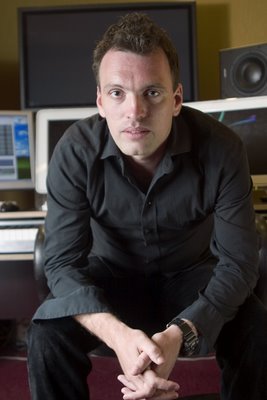
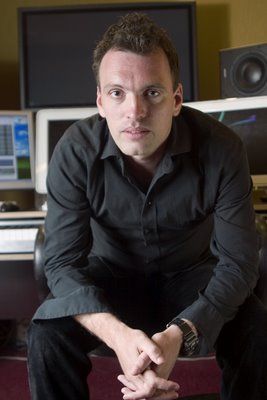
Henry Jackman is one of Hollywood’s most popular composers, writing scores for films of all kinds, from action films to period dramas to family films, including: “Captain Phillips,” “X-Men: First Class,” “Wreck-It Ralph,” “Puss In Boots,” “Kick Ass,” “Turbo,” “This is the End,” “G.I. Joe: Retaliation,” “Abraham Lincoln Vampire Hunter,” “Man On A Ledge,” “Winnie The Pooh,” “Gulliver’s Travels,” and “Monsters vs. Aliens.” I asked the Russo brothers, who worked with him on “Captain America: Winter Soldier” and “Captain America: Civil War,” what they liked about his music, and they said that his background studying literature gives him a unique understanding of the way music shapes narrative. I always enjoy talking to him.
It’s unusual to hear directors praise a composer for understanding narrative.
Copyright Disney 2015
It’s an interesting remark and it’s something I thought about actually. Sometimes you’ll get asked for the secret of trying to make your way into film music. The question might be to do with technology like what the best software or it could be like what composers to study. What musical background should I have? What orchestration should I be aware of? And the funny thing is, it is true especially in 2016 in order to be a successful or at least a diverse composer you really have to have a pretty decent command of the electronics music, electronic symphonic music, the orchestra. I would say you would want to know must composers from Thomas Tallis right through to john Adams and if you really want to be diverse you should want to know a lot about pop music and rock music and electronic and God knows what else. But that is only 50 percent of it.
I think the point the Russos were making is that I’ve only retroactively appreciated one of the secret weapons with my literary criticism classes. I had an extremely disciplined and intellectually demanding tutor at school. Funnily enough it turns out that you can have a selection of people who are all fantastic at writing music, the act of writing interesting or creative music. But the secret to filming is that you are presented with a story and so you have to deconstruct the story and understand the story and figure it all out. There is a surface of the story and then there is subtext of the story and there is the structure of the narrative. How’s it working? Where’s the exposition? Where’s the motivation? Where’s the recapitulation. Where does act two begin? Where does act three begin? What’s the dynamic shape of character arcs. All these things are actually almost literary structural thoughts. It’s the sort of thing you did if you were at college and you were reading “The Crucible” and instead of just enjoying it you are sitting around talking about how you would put it together. If you are reading a novel not for enjoyment but in a literary criticism class it’s like taking apart a Swiss watch so you’re not just looking at the time you actually know how the cogs are put together to produce the time. Sometimes it can be very frustrating to a director to get the score and have to say, “It’s not that I don’t like the music. It’s that it’s not helping or enhancing the story. You’re missing the point of what supposed to be happening at this moment in the movie.”
Obviously music should be as well written as humanly possible but not only should it be well written music it should be music whose purpose fully understands the significance story-wise of what’s happening and act as something to enhance the story. When you do that the whole music experience suddenly goes up a gear. It is totally possible to write outstanding music that doesn’t help the film in the slightest, in fact it can even harm it and still be a fantastic piece of music but it’s not paying any attention because it’s wrapped up in itself instead of understanding the mechanics of the scene or indeed how that scene plays into other scenes and how you can even help the filmmakers enhance parts of the story that might not even be finished on screen and that you can complete with music.
That must be a challenge in a film like this where there are so many different characters, many of them with their own movies and memorable themes. I was thinking it might end up like “Peter and the Wolf.”
One of the quickest way to dissipate and dissolve this movie into an endless and unhelpful fabric of constantly different things would be that approach. But in fact, going back to my literary criticism point, if you really break the movie down even though on the surface we have loads of superheroes so what you don’t want to do every time you see one you get a different theme for each one because that’s not what the story’s about. What the story’s about is that extremely powerful entities who have the capability to cause collateral damage to the scale of thousands of dead people who ought to be answerable some sort of institution and the proposal that was put on the table splits the team right down the middle. It’s “Captain America: Civil War.” So the movie is about the big argument. Funnily enough, it turns out one of the most useful theme in the movie was the Civil War theme which does not pertain to a specific character but is a narrative theme toward which all the characters can gravitate. It wrapped them all up and it helped to bind the movie together rather than do endless disparate themes. That isn’t to say that there isn’t a Captain America theme in there, or a Spider-Man theme, or a Black Panther theme where appropriate but there’s a bigger story going on, the major conflict within the two teams of superheroes. And so you find with music you can help the directors bind things together narratively. It turns out that Civil War theme was actually very useful for that purpose.
It’s great in terms of visual spectacle. I know the fan boys and girls can go crazy about what happens when this character hits that one and the vibranium is hitting, all that kind of stuff. But on a deeper level what the film is about is consequences. Tony Stark he believes it’s not such a bad idea to have some oversight. He’s wracked with guilt and he’s questioning his relationships. It’s a tricky one. You can invent all sorts of amazing technologies but you can’t quite control who’s using them and what sort of damage and how many lives might have been lost as a result of your very clever technology and all the characters they are dealing with consequences. And we ended up having quite an intense philosophical discussion when I was working on the movie with the Russos because one of the reasons the movie is good is a genuine disagreement about that issue; it’s a genuine argument. I know it’s a Captain America film so people might feel inclined to side with him immediately but it’s a decent argument because there aren’t many structures in the world that can cause that much damage that have absolutely no accountability. It’s actually not a bad argument to go, “Well, maybe there should be.” But simultaneously it’s not a bad argument that Cap has, that his moral compass is so sound he will always rely on his version of what is the right thing to do and that some sort of structure even if it’s the UN and even if it contain the opinion of the entire global community is not be as good as his own internal compass because it will get bogged down in agendas and bureaucracy, which is true. Sometimes the UN is great but sometimes the UN takes about five months to decide whether to use the word “genocide” in a document because if they do they’ll actually have to go into a country and do something. So there’s lot of bureaucratic politics about even using a certain words because it means they’ll actually have to do something which could be controversial. But you can also say to Captain America, “You’re saying you are incapable of error and that you’re never going to make a wrong call.” So you don’t want to play all the different character themes. You want to keep the focus on having to cross the line or stay the other side of the line and it had consequences and it had musical consequences in the score which was the prevalence of that Civil War theme. If you take Captain America’s heroic theme for everything you’ll be telling the audience, “You don’t really need to watch the film because Cap’s right from the beginning and this whole augment doesn’t even mean anything.”
There’s a lot of action in the movie, of course. How do you work with the sound guys to decide what’s louder, the sound effects or the score?
By shouting a lot at the dub staging saying the music is not loud enough. No, it starts off as our own civil war and ends up in harmony. I mean fortunately because I had so long to work on it there are a lot of the cues written in demo form and the sound guys already had them so there could already be a strategy. There’s a lot of “Ok, the scene really kicks in here, so maybe we can find holes in places,” and it’s a balance. You get to the dub stage to do the final audio mix and when the sound effect guy been in there all day the music guy is going, “Wait a minute, you got to get some of the music too,” and when the music guys finish their part, it’s their turn to say, “Wait a minute….” And you get there in the end. It reminds me of parliamentary politics. As long as you have a healthy opposition by time they finish arguing it out you’re just about in the right place. If I were in charge of all of the audio for the film I may very well miss some very important sound effects cause I’m too focused on music and it’s the same with the sound effect guys only vice versa. So you sort of put us all in the room and at the end of it you’ll have everyone’s interest defended to the very last.