Mother’s Day

Mother’s Day

Posted on April 28, 2016 at 5:20 pm
Copyright 2016 Open Road Films
I tried, Garry Marshall, I really did, but you finally broke me. I did my best to enjoy Valentine’s Day (I called it a tweet of a movie but gave it a B for being mildly entertaining) and New Year’s Eve (I called it a big budget version of the old television series “The Love Boat” and gave it a C, but managed to find some genuinely touching moments). I was fully expecting to find some light entertainment with a galaxy of big stars showing that they can make lackluster material shine a little bit.

So, if “Mother’s Day,” the third in Marshall’s big star/tiny script mash-ups keyed to a holiday, was no worse than the first two, I was determined to give it the benefit of the doubt. I have a mom; I am a mom, I wrote a book about the best movie mothers, and so I’m the prime audience for a bunch of stories about the tenderest and often the most fraught of relationships, mother and child. If it managed to be inoffensive, I would have recommended it. But with this film, Marshall and his inexperienced co-screenwriters cross the tipping point from merely synthetic to downright vile, with apparently no notion of the difference between humor that points out the virulence of bigotry and “jokes” that treat racism and homophobia like just another cutesy personality quirk.

As with the earlier films, there are a lot of characters presenting variations on the theme. But the characters do not even rise to the level of stereotypes and the storylines couldn’t fill a fortune cookie. There is a chasm-sized disconnect between the film’s assumptions about our belief in any of them and its ability to deliver that level of interest. Not one thing is believable even in heightened, glossed-over movie terms. Everyone lives in gorgeous homes and there are no concerns about money. Intrusive product placement gives the film a sleasy infomercial vibe even as it pretends to make fun of home shopping channels hawking cheesy merchandise. Some odd random shots of individuals who have nothing to do with the story are either friends of the filmmaker or evidence that at one time the movie was even worse and got recut. It’s creepy that it takes place in the very diverse city of Atlanta but everyone is white except for the characters whose primary job is to serve as a racial stereotype. Pretty much everyone in the film is a stereotype, but the white ones are not offensive, just dull. The non-white ones are both.

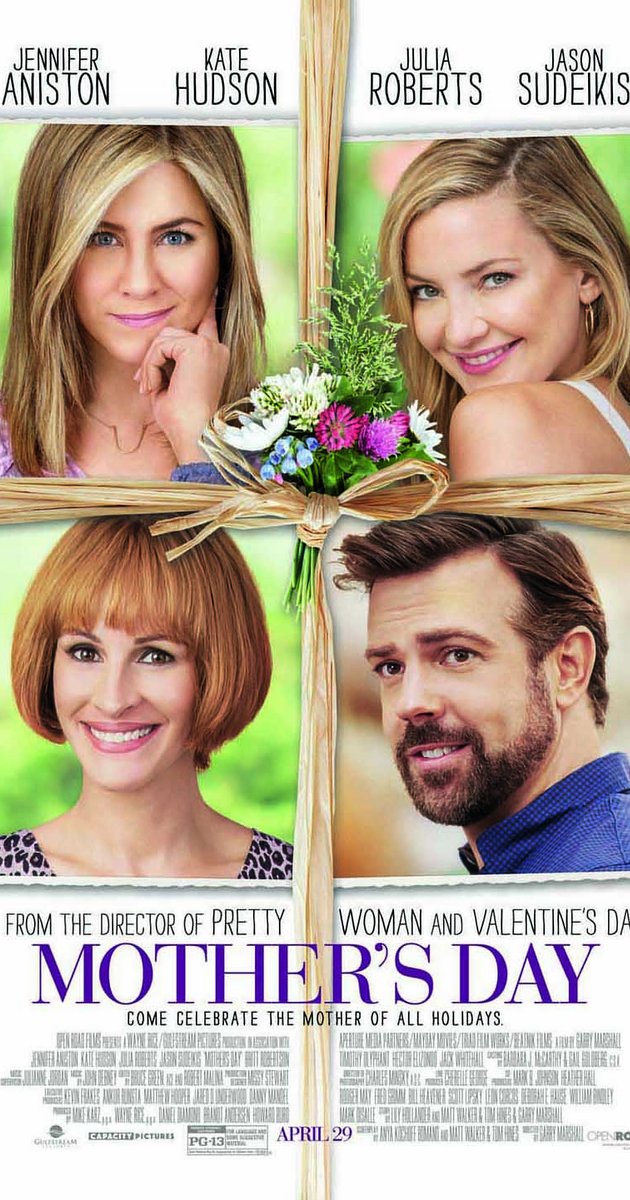
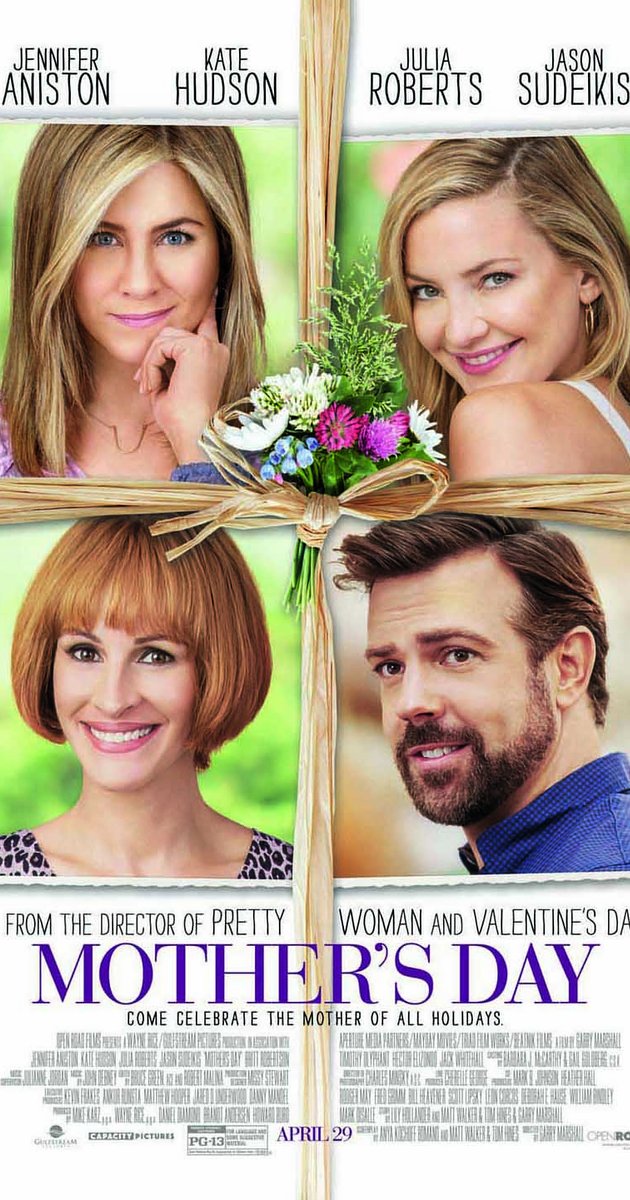
A quick recap of the set-ups — very quick so neither one of us will nod off in stunned boredom. Sandy (Jennifer Aniston) is a single mom with two sons who is upset because her ex (Timothy Olyphant) has married a beautiful young woman. Kristin (Britt Robertson of “Tomorrowland”) loves the father of her baby, an aspiring stand-up comic, but she won’t accept his marriage proposal because she was adopted and thus thinks she does not know who she is. Sisters Jesse (Kate Hudson) and Gabi (Sarah Chalke), who live next door to each other, have not told their bigoted, RV-driving, redneck parents about their spouses — Jesse is married to an Indian-American (Aasif Mandvi) and Gabi is married to a woman (Cameron Esposito). And sad widower Bradley (Jason Sudeikis) has to cope with being a single dad of two daughters. Julia Roberts, in a disastrous orange traffic cone of a hairdo (it’s actually a wig leftover from “Notting Hill”), is also on board as a shopping channel mogul presumably because Garry Marshall gave her her big break in “Pretty Woman” and she will do anything for him.

A series of exposition-heavy introductory scenes (Bradley and his daughters standing at the gravesite: “I can’t believe it’s been a year,” another character explaining, “I have abandonment issues,” Sandy, Jesse, and Gabi helpfully recapping everything that is going on in their lives to each other like the crawl at the bottom of the CNN screen) is followed by a series of micro-complications that fall somewhere between a 6th grade skit and a one-season basic cable sit-com, following by a series of contrived and cloying “resolutions.” The only clunky device left out is words of wisdom from a clown. Oops, no such luck. It’s there. And it’s not over! There are the most lifeless bloopers in the credits in the history of bloopers in the credits.

This is all larded with cornball slapstick wildly outdated “hilarity” that includes a man wearing a woman’s pink silk bathrobe, a man falling off a balcony, a man embarrassed at having to buy tampons for his daughter, a woman with her shirt ripped open holding supposedly professional design presentation model that looks like a third grade diorama, and the same woman getting her arm stuck in a vending machine.

It gets worse. Cops run down a speeding vehicle and make the only non-white character lie down on the ground. It gets resolved when one of the officers recognizes him; the issue of racial profiling is portrayed as a joke. So is a crack about a little person named “Shorty.” The stand-up comic ends up holding his baby and not delivering any jokes during his crucial make-it-or-break-it set, jokes which were not only funny but which might have made it funny and meaningful. Same for this wilted bouquet of a movie. Give Mom breakfast in bed instead.

Parents should know that this film includes discussions of bigotry but also insensitive portrayals of racism and homophobia, brief strong language, sad off-screen death of a parent, family issues about divorce and remarriage, some strong language, and alcohol, including scenes with a baby in a bar.

Family discussion: How did meeting Miranda make Kristen think differently about marriage? What should Jesse have told her parents about her husband?

If you like this, try: “Valentine’s Day” and “New Year’s Eve”
Related Tags:


Comedy Family Issues Series/Sequel
Tale of Tales

Tale of Tales

Posted on April 28, 2016 at 5:15 pm

Copyright 2016 IFC Films
Who ever said that fairy tales were for children?

The visually striking “Tale of Tales” is based on three stories from Giambattista Basile that go back a hundred years before the Brothers Grimm. Basile, whose book was subtitled “entertainment for little ones” was the first person to write down these folk tales, including early versions of Cinderella, Rapunzel, and other classic stories. The three tales here, inspired by Basile’s stories, have fairy tale elements — wishes, magic, monsters, a princess to be won by whoever gives the right answer, a queen who will do anything to have a child. And there are lush, gorgeous, and wildly imaginative images. But these are not for children. These are straight out of the primordial ooze of the collective unconscious. These are not so much stories about enchantment as they are about desire, hubris, terror, all of the the deepest and most untamed emotions. Don’t expect anyone to live happily ever after.

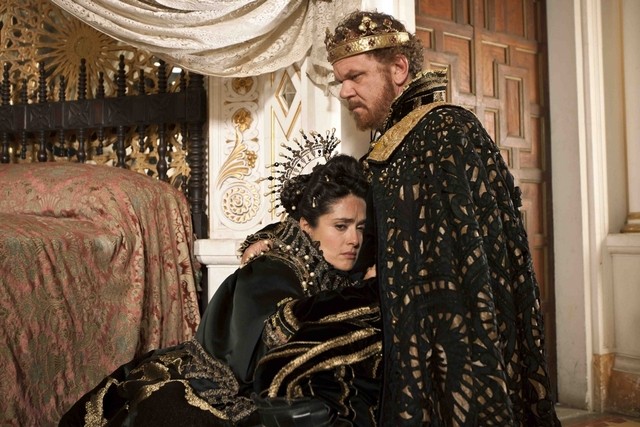
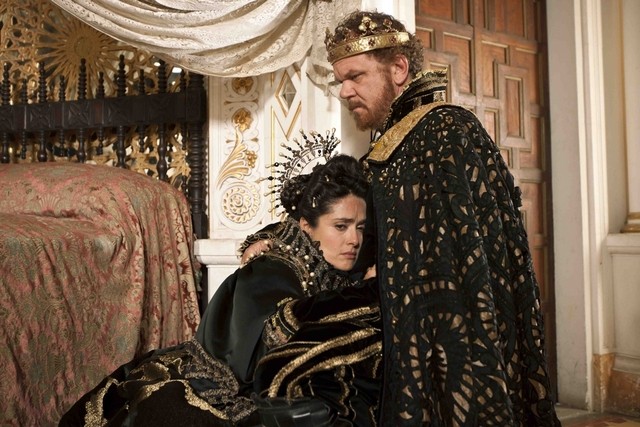
The Queen of Longtrellis (Salma Hayek) is inconsolable. She wants a child. A wizard offers her a solution. If she eats the heart of a sea monster, prepared for her by a virgin, she will become pregnant, but it will be at the cost of a life. She agrees. And her husband, the king (John C. Reilly) is killed capturing the monster. The virgin prepares the heart, and the queen devours it. She and the virgin both become pregnant and deliver identical sons.

The King of Strongcliff (Vincent Cassel) is a libertine. He hears the voice of an old woman singing (Hayley Carmichael) and, believing her to be young and beautiful, tries to get her to agree to sleep with him. She agrees, provided that they keep the lights off. But he peeks and horrified by her appearance, has her thrown out of the window.

And the King of Highhills (Toby Jones) has a beautiful and devoted daughter, Violet (Bebe Cave). She prepares a song to show her love for her father but as she performs, he is distracted by a flea on his hand, which fascinates him so much that he keeps it for a pet, feeding it and fattening it up until it is the size of a pig. When it dies, he has it skinned and offers Violet’s hand in marriage to the first one who can correctly identify the animal it came from. But the one who knows the answer is an ogre.

Each of these stories explores issues of pride, selfishness, and greed. The Queen wants more than a child; she wants all of his love. The old woman wants superficial beauty and the power it can bring and the lecherous king wants sex and a beautiful wife. A woman is consumed — literally — with jealousy. Another king can’t see the love of his daughter because he is preoccupied with his grotesque pet. Director Matteo Garrone, with his first English language film, gives the stories a hallucinatory quality with rapturous images on the brink between dream and nightmare.

Parents should know that this film includes nudity, sexual references and situations, monsters, fairy tale violence and explicit and disturbing images.

Family discussion: How do these fairy tales differ from the ones more familiar to modern audiences? How do each of these stories deal with the theme of pride?

If you like this, try: “The Brothers Grimm” and “Time Bandits”

Related Tags:


Based on a book Fantasy
Elvis & Nixon

Elvis & Nixon

Posted on April 21, 2016 at 5:30 pm

B+
Lowest Recommended Age: High School
MPAA Rating: Rated R for some language
Profanity: Some strong language
Alcohol/ Drugs: Drinking, references to drugs
Violence/ Scariness: None
Diversity Issues: None
Date Released to Theaters: April 23, 2016
Date Released to DVD: July 18, 2016
Amazon.com ASIN: B01EZ6PZSQ

Copyright 2016 Amazon Studios
Today it does not seem at all odd to see Beyoncé hanging out with the Obamas or a reality television star as a popular Presidential candidate. But in the before-social media days of 1970, celebrity culture was not as all-encompassing as it is now. Frank Sinatra memorably supported John F. Kennedy in 1960 and just as memorably was not-so-gently pushed aside when his possible ties to organized crime and general inability to follow orders became a problem. Politicians, even today, want the support of celebrity fans but do not want the controversy that sometimes comes with them. And certainly the very serious-minded Richard Nixon would not want to appear frivolous by hanging out with a singer, even the most famous singer in the world. When told that “the king” wanted to see him, he said, “The king of what?” He was used to visits from actual royalty, and prided himself on learning a few pleasantries in their native language to put them at ease. But what could be the native language of a man from Tupelo, Mississippi who was known as “Elvis the Pelvis” for his sexy, hip-swaying performances, and who sang songs of teddy bears and hound dogs that made girls swoon?

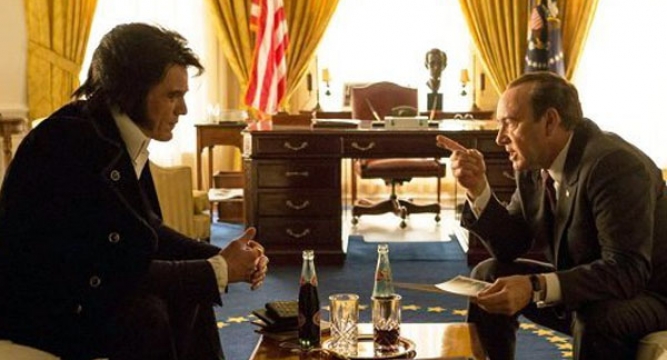
Elvis Presley and Richard M. Nixon did meet in the Oval Office. No one knows exactly what they talked about, but this charming film makes a believable case that they had more in common than we might think. As the President points out (he did insist on being briefed on Presley), they both came from humble beginnings and worked hard to rise to the top of their respective fields. They both feel badly treated by the press. They both find the Woodstock-era flower children and Vietnam war protesters disturbing, even seditious. Both are keenly aware of their level of support and power, which will never be enough. They may not be aware, but we are, that their very success has isolated them in a way that leaves them endearingly unaware of some elements of everyday interaction that the rest of us take for granted. Both have daughters they love very much. And both, constantly surrounded by young men somewhere between acolytes, enablers, managers, and favor-seekers, are, somehow, lonely.

The movie is so delightful that its shrewdness sneaks up on you. There is a very funny line about astronaut Buzz Aldrin that makes an insightful point about celebrity, as does a technique Elvis and his “Memphis Mafia” use repeatedly when they are thwarted, to greater comic effect every time. The parallel scenes as two respective entourages brief Elvis and Nixon about the appropriate protocol for the other is well done and the songs — not by Elvis but of his era — are especially well chosen, particularly when Elvis sings along to “Suzy Q.” Director Liza Johnson makes the most of a witty script (“Princess Bride’s” Carey Elwes was a co-author) and maintains a tone that is slightly heightened but just plausible, given the heightened reality of the two men at its center.

Parents should know that this film includes strong language, guns, and smoking.

Family discussion: What did Elvis Presley and Richard Nixon have in common? How did each rely on the young men around them? Why is there no Elvis music in the film?

If you like this, try: “Frost/Nixon” and “Elvis Presley: Thats the Way It Is”

Related Tags:


DVD/Blu-Ray Pick of the Week Inspired by a true story
Sing Street

Sing Street

Posted on April 21, 2016 at 5:28 pm

A-
Lowest Recommended Age: Middle School
MPAA Rating: Rated PG-13 for thematic elements including strong language and some bullying behavior, a suggestive image, drug material and teen smoking
Profanity: Strong language
Alcohol/ Drugs: A lot of smoking by adults and teens, some drug use
Violence/ Scariness: Bully, some fights, reference to sexual abuse
Diversity Issues: None
Date Released to Theaters: April 22, 2016
Date Released to DVD: July 26, 2016
Amazon.com ASIN: B01E698HZA

When you’re a teenager, suddenly, nothing you thought you knew seems certain anymore. Your parents do not understand you. Your siblings don’t understand you. Your teachers don’t understand you. You don’t understand yourself — everything outside and inside of you seems to be changing all the time.

Copyright 2016 The Weinstein Company

Only one thing understands you: the music. For most of us, that means rock music. Somehow, those songs reach us when nothing else can. Improbably, they understand us, they accept us, and they believe in us and in unlimited possibilities for ourselves and the world we can hardly begin to imagine. That’s why the music of your teen years feels visceral in a way no other music can. No matter how much you love music you discover later in life, it is never a part of you like the music that helps you discover yourself.

“Sing Street” is the rare movie that not only recognizes and portrays this experience; it goes farther than that. It is as close to re-creating the experience as it is possible for a movie to be. Watching this movie is not like remembering what it is like to be 14 and have your soul restored through rock and roll. It is like being there, but having it all work out the way better than you could have wished.

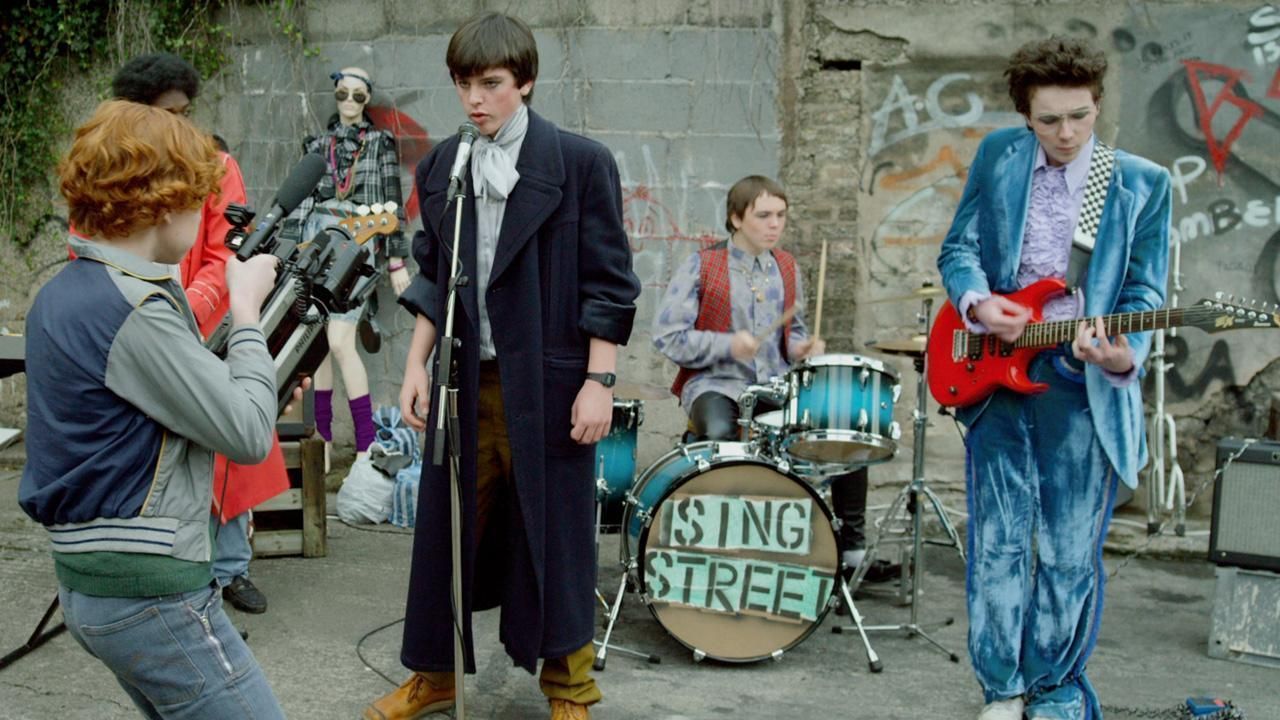
Writer/director/lyricist John Carney, who showed a gift for movies about music and musicians with Once and Begin Again, says that this movie is inspired by his own teen years, but about what he wished had happened instead of what did. Like the main character, Conor (enormously appealing newcomer Ferdia Walsh-Peelo), Carney grew up in 1980’s Ireland, in love with the music of the era, and the soundtrack features a sensational selection from The Cure, Depeche Mode, Duran Duran, A-Ha, Spandau Ballet, and The Jam, and dead-on instant classics from Carney and composer Gary Clark. Carney knows that when your feelings get too big for the song, you have to dance. When they get bigger than that, you have to make a music video. And when you desperately want to reach someone who is irresistible but apparently unobtainable, you just have to start a band.

It’s about more than music; it’s about how to respond to the toughest challenges life throws you, adolescence being just one of them. Music in this film performs the same function that the depiction of emotions did for a younger child in Pixar’s “Inside Out.” As Riley did in that film, Conor comes to understand how sadness and happiness need each other. And, after all, there’s no better place to combine them than a rock song.

As the movie opens, Conor is writing song lyrics based on the bitter fight his parents are having on the other side of the wall. They are having financial problems, which means Conor will have to transfer to a less expensive school. And they have run out of patience with one another and are close to splitting up. His new school is much rougher than his old one, both the teachers and the students. Across the street, though, there is a girl. She’s a year older than he is, which in teenage and gender years means that she is infinitely more sophisticated. Her name is Raphina (Lucy Boynton). When she says she is a model, he impulsively invites her to be in his music video (he has just seen Duran Duran’s seminal music video for “Rio”). When she says she might, he realizes that now he has to start a band.

With guidance from his older brother (a terrific Jack Reynor), who gives him albums to listen to and tells him to seize the moment, Conor puts together a band. The combination of the gritty reality of recession-era Dublin and the purity of the kids’ passion for what they are doing is just the right setting for the kinds of emotion that only rock and roll can express.

Parents should know that this movie includes strong language and a racist term, smoking by adults and teenagers, drug use, some bullies and violence, and some sexual references including sexual abuse.

Family discussion: Why did Conor say he was a futurist? How did he respond to being bullied?

If you like this, try: “Once,” “School of Rock,” “The Commitments,” “Billy Elliot,” “Pirate Radio,” “We are the Best,” and the music of the 80’s

Related Tags:


DVD/Blu-Ray Pick of the Week Musical School Stories about Teens
The Huntsman: Winter’s War

The Huntsman: Winter’s War

Posted on April 21, 2016 at 5:11 pm

Copyright 2016 Universal
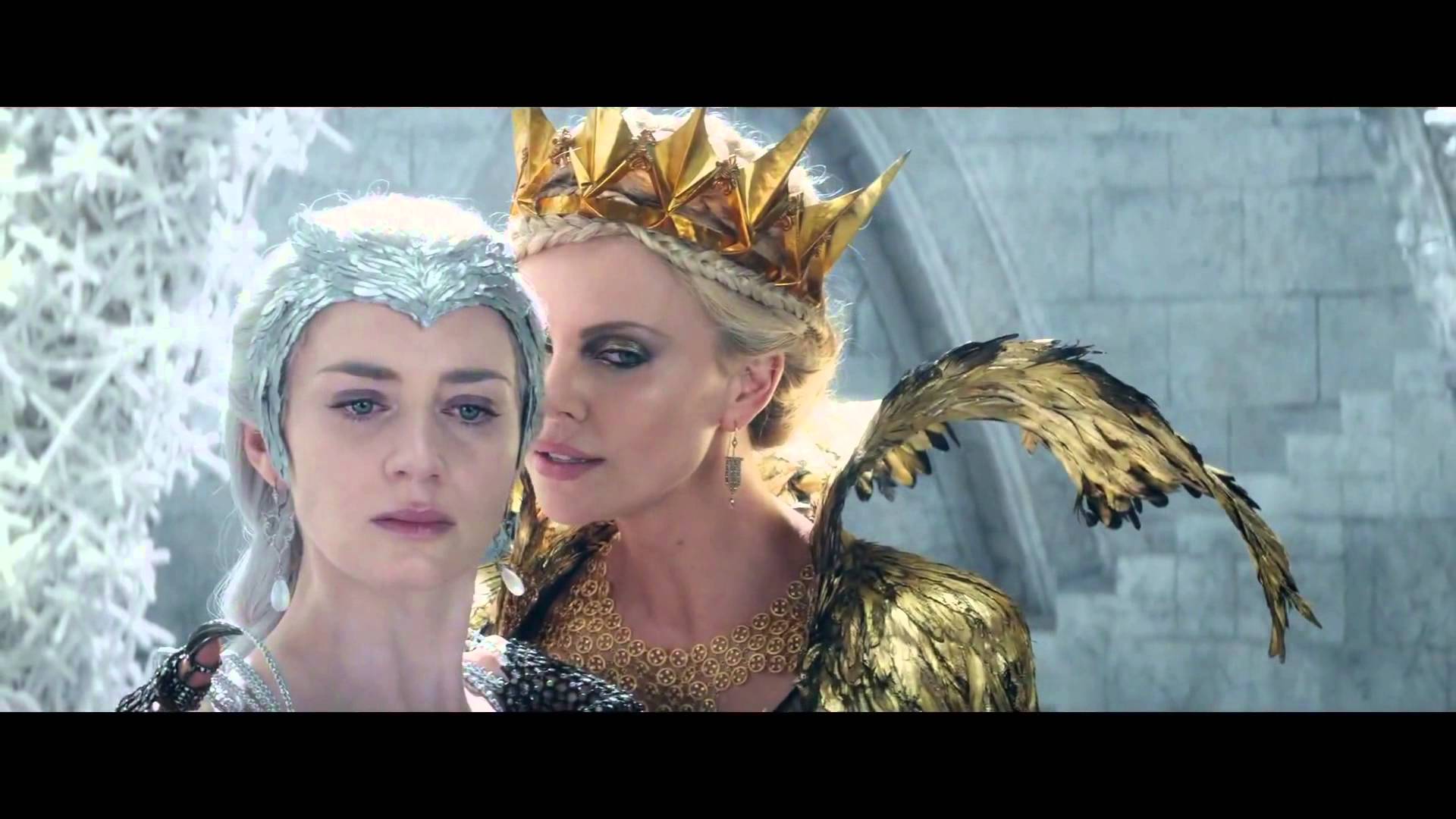
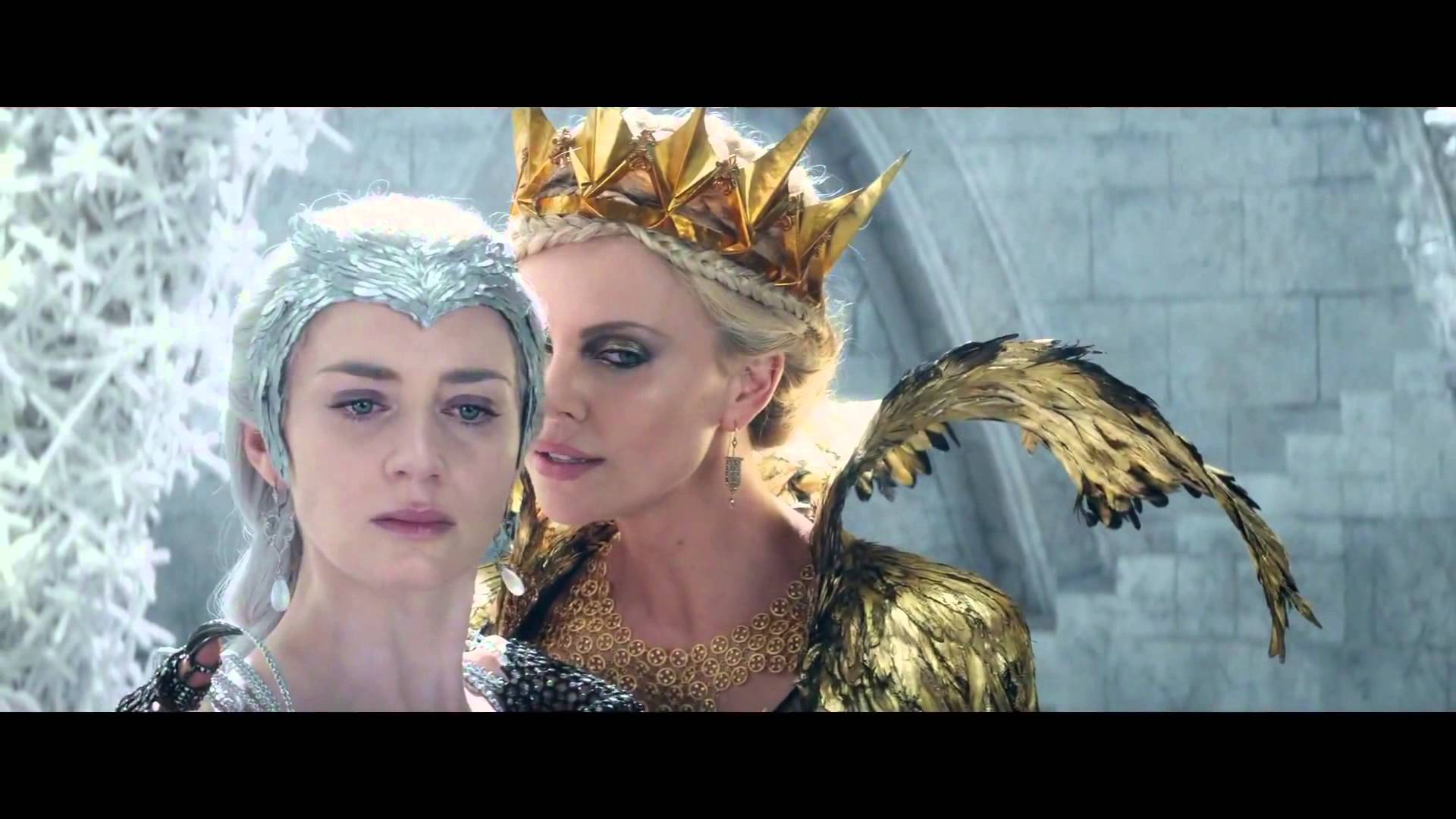
With a storyline as awkward and unfocused as its unwieldy title, “The Huntsman: Winter’s War” is like a mashup of “Frozen,” “Lord of the Rings,” and the Narnia movies, without any of the heart or imagination of any of them.

It’s both a prequel and a sequel to a movie no one was all that eager to see, with only 48 percent positive on Rotten Tomatoes and one of those counted as positive didn’t muster much enthusiasm: “This Snow White may not be the fairest of them all, but sometimes, especially during the heat of summer, fair-to-middling does just fine.” This one is more middling than fair.

In the first film, the evil Ravenna (Charlize Theron) bewitched a king, killed him on their wedding night, and locked his daughter in a tower. Then, when she grew up to be Kristen Stewart and threatened to challenge Ravenna’s status as the fairest of them all, Ravenna ordered the Huntsman with no name to kill Snow White and bring back her heart so Ravenna could eat it and achieve permanent fairness.

In this film, we see Ravenna murder her husband, the king, over a game of chess, and we meet her sister, Freya (Emily Blunt), who is in love and pregnant. Her sister is the one with the magical powers. Freya has none — or so she thinks. But when she is faced with the ultimate loss and betrayal, all of a sudden she discovers her power, or, should I say, she lets it go. Yes, she is the queen of cold and ice. So, she leaves and takes over her own queendom, where her primary occupation is stealing children, telling them that love is illegal, and turning them into fighting machines, with freezing things a close second. Two children grow up to be world-class fighters and to be Chris Hemsworth (this time he gets a name: Eric) and Jessica Chastain as Sara. They break the big rule, and Freya punishes them terribly. Eventually, Eric ends up trying to find the magic mirror, complicated because it was stolen by goblins and because it exerts an evil “Fellowship of the Ring”-style power over anyone who looks into it. He is accompanied by two dwarves, played by Nick Frost and “The Trip’s” Rob Brydon, when, as I pointed out before, little people characters should be played by little people actors. They come across two female dwarves. One is played by Sheridan Smith, who, with Colleen Atwood’s gorgeous costumes, provides the movie’s few bright moments.

The storyline makes even less sense than the first one, with (SPOILER ALERT) repeated reliance on that weakest of plot twists, the character you are supposed to think is dead who turns out to be still alive. Blunt and Theron are game but given little to do but strut and declaim. Chris Hemsworth manages to bring his character to life and there are some striking visuals, but that can’t make up for a dreary mess.

Parents should know that this film features extended fantasy peril and violence, characters injured and killed including an infant, monster, some disturbing images, sexual references and situation, some strong language and crude comments.

Family discussion: What happened when Eric looked in the mirror? Why were so many of the huntsmen loyal to Freya?

If you like this, try: “Stardust” and “Jack the Giant Slayer”

Related Tags:


Action/Adventure Fantasy Romance
THE MOVIE MOM® is a registered trademark of Nell Minow. Use of the mark without express consent from Nell Minow constitutes trademark infringement and unfair competition in violation of federal and state laws. All material © Nell Minow 1995-2026, all rights reserved, and no use or republication is permitted without explicit permission. This site hosts Nell Minow’s Movie Mom® archive, with material that originally appeared on Yahoo! Movies, Beliefnet, and other sources. Much of her new material can be found at Rogerebert.com, Huffington Post, and WheretoWatch. Her books include The Movie Mom’s Guide to Family Movies and 101 Must-See Movie Moments, and she can be heard each week on radio stations across the country.

Website Designed by Max LaZebnik