Rated PG-13 for crude and sexual content, a scene of exaggerated violence, and brief strong language
Profanity:
Brief strong language, crude references
Alcohol/ Drugs:
None
Violence/ Scariness:
Mostly comic peril and violence, characters injured and killed, some disturbing images, assault weapons, knives, explosions, building collapse
Diversity Issues:
None
Date Released to Theaters:
February 12, 2016
Date Released to DVD:
May 23, 2106
Amazon.com ASIN:
B018IDVB6W
Copyright 2016 Paramount
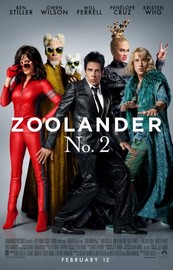
Kind of like fashion itself, we don’t really care whether “Zoolander 2” is any good. We go because it is silly fun.
The original Zoolander, released in 2001 just after the attacks on 9/11, was based on shorts Ben Stiller created for the VH1 fashion awards. It was moderately successful on release but has become a big hit on DVD/Blu-ray and an enduring cultural touchstone. It’s the kind of movie that is best watched at home, with friends who know exactly where the punchlines and star cameos come in, or while sick in bed recovering from the flu when you’re not quite up for binge-watching something that requires more than half your attention.
I suspect the same will happen with this 15-years-later sequel, again directed by Stiller, who stars as the dimwitted supermodel of the title and co-wrote with Justin Theroux, Nicholas Stoller, and John Hamburg. The script relies heavily on the audience’s affection for and knowledge of the first, with more winking references to the original than attempts to be funny about the current state of fashion and the industry.
In the first film, Derek Zoolander plans to build a book-shaped center called The Derek Zoolander Center for Kids Who Can’t Read Good and Who Wanna Learn to Do Other Stuff Good Too. After that film ended, we are told through clips from television news shows (Katie Couric, Jane Pauley, and Jim Lehrer are among the first of an avalanche of what-is he/she-doing-in-this-movie celebrity cameos) that after it was built the building immediately collapsed, killing Zoolander’s wife (Stiller’s real-life spouse, Christine Taylor) and injuring Derek’s rival-turned BFF, Hansel (Owen Wilson).
Partly because he was so distraught, but mostly because he is an idiot, Derek was unable to take care of his son, Derek Jr., and he was taken away by Child Protective Services. Derek announced at a press conference that he was retiring from modeling to become “a hermit crab.” Hansel, his face scarred from his injury, also retreated from the world, to live in the desert (well, Malibu) with an 11-person assortment of consorts he refers to affectionately as his orgy.
But then a nefarious villain is killing pop stars, who die with what appears to be Derek’s famous Blue Steel look on their faces. When Justin Bieber is killed (with time for an Instagram filters joke), Interpol’s fashion division, led by a former swimsuit model (eternal beauty Penelope Cruz) decides that they need Derek’s help to solve the crime.
There’s a lot of fan service here, which can seem stale to those who know the first movie well. But as a lukewarm fan of the earlier film, I found myself being a lukewarm fan of this one, too. The dumb jokes (both those about being dumb and those that actually are dumb) and grotesqueries are no funnier but no less funny. The storyline (Will Derek be reunited with his son? Will Hansel be a father to his various upcoming babies? Will Will Ferrell’s Mugatu destroy whatever it is he is planning to destroy?) is weak, but it is a hoot to see the fashion dream team (even Anna Wintour!) playing themselves with such good humor. In fashion terms, it’s a cheap knock-off, but sometimes that’s all you need.
Parents should know that this film includes very strong content for a PG-13 including very crude sexual references and brief graphic sexual humor, mostly comic violence with characters injured and killed and some disturbing images, and brief strong language.
Family discussion: What are the most important messages we receive from the fashion industry? If they make a “Zoolander 3,” what celebrities would you like to see included?
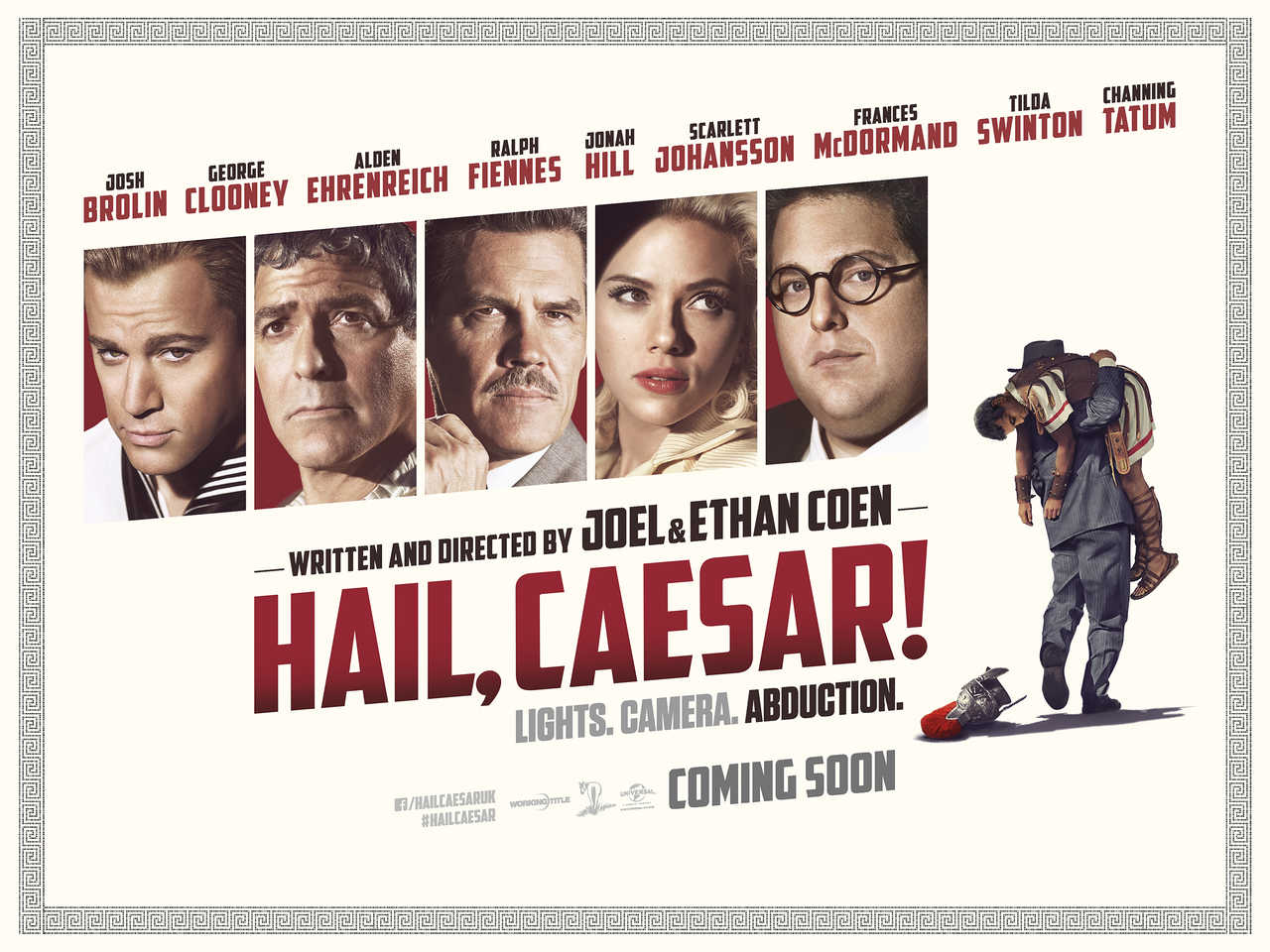
Copyright Mike Zoss Productions 2016 The Coen brothers love old movies, and not just the classics. I remember reading an interview where they discussed their affection for “With Six You Get Eggroll,” which even Doris Day’s most fervent fans do not consider one of her best. With “Hail, Caesar!” they pay loving tribute to the final years of the golden era of the Hollywood studios, in part because it gives them a chance to tell a story about change, and choice, responsibility and irresponsibility, and in part because it gives them a chance to play studio heads themselves, overseeing not just one movie but five. And as Orson Welles said, that’s “the biggest electric train set any boy ever had.”
There really was an Eddie Mannix, the MGM executive who had various titles but who was pretty much a full-time fixer. Whether it was a starlet’s nude photos or a male star’s casting couch encounter with a male director, his job was to keep it out of the courts and especially out of the gossip columns and scandal magazines with names like “Confidential.” This was accomplished with bribes, intimidation, and trading of favors. A reputation would be saved by giving the reporter exclusive access or even a juicy story about a lesser star who could be sacrificed to save the day for someone the studio considered a major asset.
The Eddie Mannix played by Josh Brolin works at a studio called Capitol Pictures, but the issue of capital will arise as well. Eddie is under so much stress he goes to confession every day. He is responsible for keeping the entire studio running smoothly, and that begins before dawn, where he extracts an actress from a compromising situation (paying off the cops), and continues on the studio lot. There he assigns an amiable singing cowboy star named Hobie Doyle (a winning Alden Ehrenreich) to put on a dinner jacket and take over the lead in a high-prestige drawing room drama, even though he’s “a dust guy” and his dialog in previous films was pretty much limited to whistling for his horse, Whitey, and “Hold on, there, partner.” Cleaning him up and putting him in a dinner jacket is not a problem, but the intricate drama he is thrown into requires tricky lines like “Would that t’were so simple,” preceded by a mirthless laugh.
Mannix visits the set of a big-budget musical and sees a water ballet out of Busby Berkeley’s wildest dreams. But the star is pregnant but not married (a career-killer in those days). She’s played by Scarlett Johansson with enough wit and brio to power the massive flume of water that lifts her mermaid character up into the sky.
The biggest studio production is the epic “Hail, Caesar,” about a Roman centurion who becomes a follower of Jesus (oddly similar to the upcoming “Risen”). It stars the studio’s most valuable actor, with the manly name of Baird Whitlock (a wickedly funny George Clooney). Mannix thinks his biggest problem is going to be making sure that the movie does not offend anyone in the audience, and in a hilarious scene, he consults with a focus group of clergy, or tries to. But then a real problem arises. Baird Whitlock is kidnapped and being held for ransom by a group that calls itself “The Future.” They are a group led by the most improbable of 20th century scholars, accurately quoted if not accurately portrayed, and supported by…well, no more spoilers here.
It’s flat-out funny, whether you know the history or not, and I left wishing for a quadruple feature that would include all of the films we see in production (well, maybe not the other “Hail, Caesar”). What keeps it buoyant, even effervescent, is the pure affection for films and filmmaking in every one of what in the pre-digital days we used to call frames. (We see them up close and personal in a hilarious scene with Frances McDormand as an old-school film editor.) The movie touches lightly on issues of story-telling and the inherent chaos and frustration of trying to balance art and commerce, plus the skills and needs of a large group of people. But the love story here is between Mannix, as a stand-in for the writer/directors, and the movies.
Parents should know that this film includes kidnapping, out-of-wedlock pregnancy and paternity issues, some sexual references, drinking and references to alcoholism, and smoking.
Family discussion: Which real-life characters inspired this movie? Should Eddie take the job offer?
If you like this, try: some of the movies that inspired this one like “Million Dollar Mermaid,” “Anchors Aweigh,” “My Pal Trigger,” and “The Robe”
The only panda more “aw-worthy” than Po (Jack Black), is the National Zoo’s Tian Tian rolling in the snow. In this third outing, the roly poly martial arts hero is still kind, humble, brave, and wiser than he knows. And, once again, the film’s gorgeous visuals lend a touch of epic grandeur to the story that provides a nice balance, as the Furious Five do for Po.
Two important characters join the story. The first is a more powerful foe than any we have seen before. His name is Kai and he has the deep growl of J.K. Simmons and the deep animosity of someone who has been waiting centuries in the Spirit Realm for revenge. He has supernatural powers and it is genuinely shocking to see him quickly overcome a character we thought was the most powerful of all dragon warriors. Kai has the ability to steal the “chi” (life force) of his opponents. And he is determined to defeat the Furious Five, their teacher, Shifu (Dustin Hoffman), and Po as well.
The second new character is Li (warmly voiced by Bryan Cranston), Po’s long-lost biological father. Po loves his adoptive father Mr. Ping (James Hong), proprietor of a small noodle restaurant. But he is very different from everyone around him. That is one reason for his compassion and ability to appreciate the difference in others. He longs to learn more about where he comes from.
As Kai comes closer, Li brings Po to the Panda community, where he is delighted to find out how quickly he feels at home. Mr. Ping has come along, and does his best to hide his jealousy, but he is worried about losing Po.
Fathers are the theme of the film, as Po in a sense loses his spiritual fathers Shifu (who tells Po he must now take over as teacher) and Oogway (Randall Duk Kim) and has to figure out what his new relationship with Li will be and how that will affect Mr. Ping. Po also loses the support of some of the characters he has always depended on when their chi is stolen by Kai. At the same time he is gaining new friends and a community he has always somehow missed, he realizes how much of a family his old friends have been for him.
Kai is coming for the pandas, and so Po must train them to protect themselves. The ultimate battle, though, will be left to the dragon warrior, and even though Po is now a teacher, he still has to discover some new techniques to fight a foe who holds the chi of so many valiant warriors. “There is always something more to learn, even for a master.”
Jennifer Yuh, whose last film in this series is the highest-grossing ever by a woman director, returns with co-director Alessandro Carloni, who worked as as artist on both the previous films. Yuh also began as an artist and the visuals are imaginative and gorgeous, inspired by Chinese paintings and landscapes. Po’s early encounters with his new extended family are endearing. While some families, especially adoptive families, may be uncomfortable with Po’s eagerness to rejoin a group he can barely remember, the issues of abandonment and strain between the biological and adoptive fathers are handled with sensitivity.
Like the martial arts masters themselves, the film achieves a seemingly effortless balance, with a light, graceful touch. It that encompasses silly comedy (mostly delightfully so, though making fun of a character with bad teeth is questionable). And it has some sophisticated, self-aware humor (beginning with a joke on the studio logo and continuing with commentary on “the power of a dramatic entrance”), along with warm-hearted lessons learned, and skillfully-orchestrated action.
Parents should know that this film includes action-style violence, some characters (temporarily) transformed and turned into enemy operatives, themes of adoption and identity with jealousy between adoptive and biological parents, and some potty humor.
Family discussion: How does Po feel differently about PIng and Li? Why did Shifu want Po to teach the others? What is the wrong thing for the right reasons?
If you like this, try: the first two “Kung Fu Panda” movies
Interview: Ravi and Geeta Patel on the Adorable Documentary “Meet the Patels”
Posted on August 26, 2015 at 3:29 pm
Copyright 2015 Alchemy
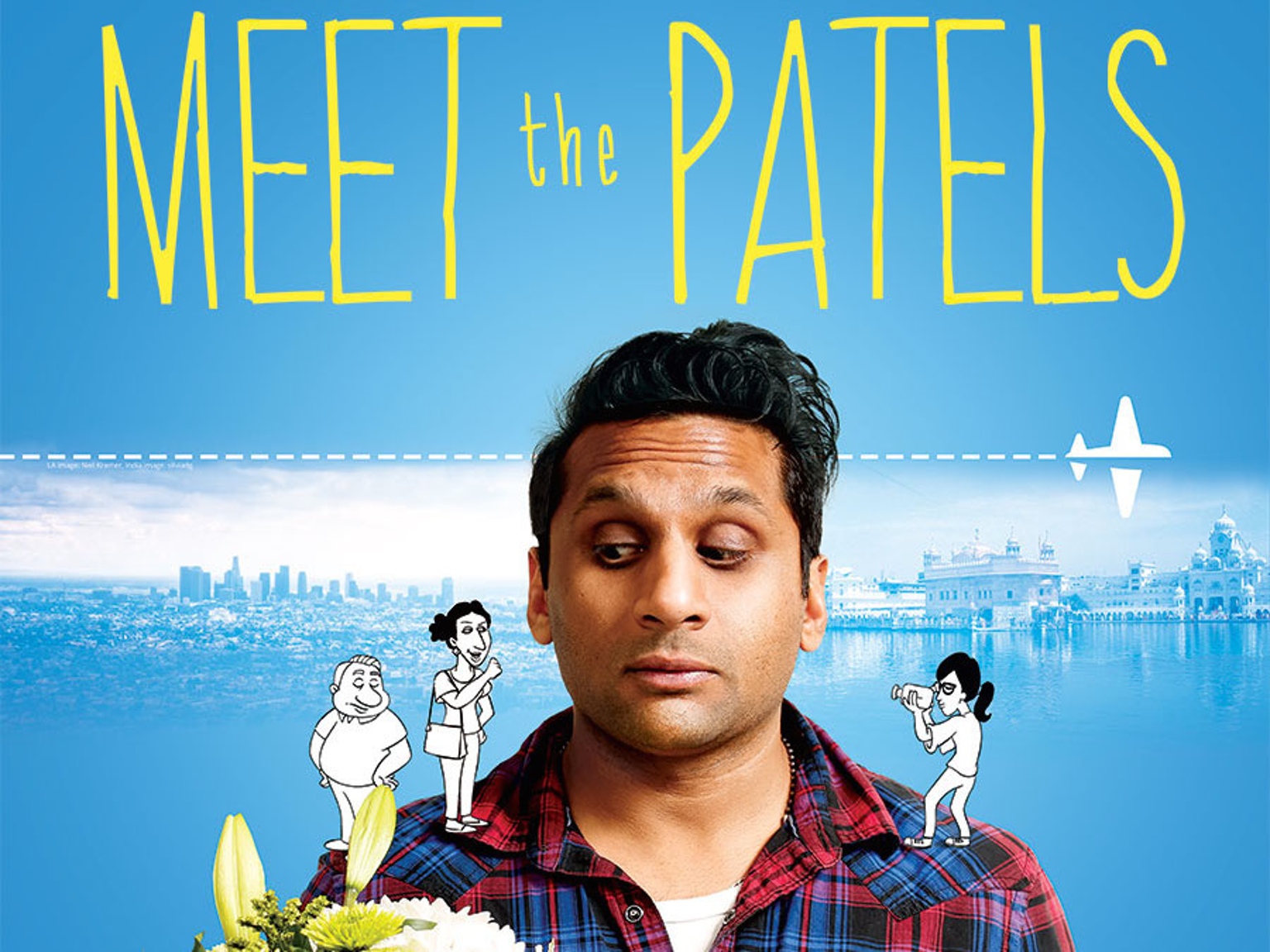
“Meet the Patels” is a warm, funny, and irresistibly captivating romantic comedy documentary about Ravi Patel’s efforts to find love according to the traditions of his family’s culture. His parents, Vasant and Champa Patel, are immigrants from the Gujarati region of India. For centuries, marriages have been if not exactly arranged than lovingly orchestrated by the extended families. This system continues, now with computer assistance but still powered by parents, aunts and uncles, most of them named Patel. Geeta is a documentarian who was trying out a new camera on a family trip to India, just after Ravi, an actor (“Scrubs,” “It’s Always Sunny in Philadelphia”) broke up with his non-Indian girlfriend of two years, in part because he was worried he would not be able to make a life with someone who was not a part of his culture. When he agreed to try out the intricate system of Patel matchmaking, involving speed-dating, a sort of Match.com for Gujaratis, a huge gathering like a combination convention and mixer, Geeta and Ravi decided to keep filming and see what developed. The chance to find out about this extraordinary system is fascinating, but what makes the film so much fun is that anyone with a family can relate to the pressure from parents and the often-daunting search for love. And the adorable Patel parents, whose very happy and devoted marriage was a result of this system, really steal the movie. I really enjoyed talking to Ravi Patel and his sister, Geeta, who co-wrote and directed the film.
Who is meeting the Patels here? Is it you meeting 10 million Patel brides-to-be or is this the rest of the world meeting your family?
Ravi: It’s both. Yes, it’s about this time in my life when I had a non-Indian girlfriend that I didn’t tell my parents about. And I was approaching the age of 30, and my parents are freaking out because I was single and I’m married and there is this thing where I’m supposed to marry a girl also named Patel. Not in an incestuous way, like in a caste and the same culture type of way.
How many people who have seen the film who are not Patels and who are not even Indians have said, “Oh my God, that’s my family?”
Ravi: You would not believe it. It’s been such a pleasant surprise. We sold out every screening we’ve had last year, won a ton of audience awards and probably the audience is represented by 98% non-Indians. I would have never seen or foreseen that response with such a diverse group of people from every walk of life, every ethnicity, every nationality, every culture. It’s been really cool. Because I guess everyone knows what it’s like to look for love and everyone knows what it’s like to have a family.
How did making the film affect your relationship as siblings?
Ravi: I didn’t think this movie was going to take so long. We started this filming about 2008. Geeta has another documentary that she just made for PBS. And I thought we would just make like a cool little Michael Moore or Morgan Spurlock-type thing where I’m a journalist. I didn’t know it was going to be such an incremental thing and I didn’t know what it took to cooperate with someone as a director especially when that person is your roommate, especially when your roommate is your sister.
So it was hard. We both are pretty opinionated. The whole family is very opinionated and it was hard. We fought a lot, we butted our heads creatively. You tend to be a little more real with your siblings. I got really mean, we made each other cry but then somewhere in the process knowing that we couldn’t fire each other because we are related, we had to find a way to get through it. We wanted to make a good movie, we wanted to be siblings. And so I think ultimately we had to learn how to love each other more, how to respect each other more, how to see the world through each other’s lenses. I think the result was a better movie and we are a million times closer as siblings than we could have ever dreamed of. I could say that for actually the entire family and as writers and directors where collaborators. I would have never said a few years ago that after this we would do another one, yet here we are writing and directing and developing other projects as well.
Oh, I love to hear that. Well Geeta, why don’t you give me your side of things?
Geeta: It was one of those things where Ravi drives me crazy, he is impossible. In just the process of like picking the restaurants for dinner I’m about to kill him. And so every day of making this movie was excruciating and I thought, “One more day, one more day, we can get through a year.” And you can imagine the film took 6 1/2 years to make and I think halfway through the film like Ravi said we wanted to kill each other, we realize we don’t want to do this anymore. And dad has always been very influential in our lives. He has always been someone who, as you saw in the film, is incredibly spiritual and he said to us, you guys need to love more. And you think that you have tried, you are throwing your hands up and saying, we have done everything this is just the way it is going to be but he says, “Try again, try harder, there is no limit.” Because I wanted to get along with him, I had for the first time in my life I had to see things through his eyes and see my own flaws. Because of him I feel like I am a better person, I’m a healthier person, I have adjusted so many things about myself and it has made my life a lot richer. And I definitely think that I have changed his life, let’s be honest, I feel like he is so much better because of me. It’s been great.
Your parents are just completely adorable and wonderful. Tell me a little bit about the challenge of presenting them on screen and how they feel about it now.
Geeta: Well first of all they didn’t know they were going to be in the movie. So that was the best part of the whole thing. They were so raw and so open because they had no faith that we were really making a movie. They thought we were doing one of our gazillion projects that never get finished and we were just messing around with the camera. So they were completely kind of oblivious to what it really would turn out to be. Wouldn’t you say Ravi?
Ravi: They are who you saw in the movie. They are cinema gold I think. They’re just charming and totally unaware of the camera and they are just comfortable. So that part of it was in retrospect, I’m shock that it was so easy.
Geeta: And Ravi and I were like, “Okay mom and dad, you’re going to walk on the stage and we’re thinking they’re going to be nervous, they’re going to stumble. Oh my God! They got up on stage as if they are walking to the living room. Like all these people, standing ovation, you know Michael Moore I remember was sitting there waiting for them and they are just talking as if there were hanging out by the pool.”
And are they trying to fix people up that they meet?
Geeta: Yes. And everybody asked them to set them up and it has been really hilarious and really awesome that they actually do. And they follow through.
We have a lot of views in Western culture about what we look for in a romantic partner. Is the traditional Indian way less focused on romance?
Ravi: Yes, for sure I think being raised here as Americans the things we look for are more related to kind of chemistry in love, the spark, personality traits like sense of humor. Whereas my parents come from this model of marriage where love is actually the least important thing because it happens after you find that person. The two things that matter first when you are looking for someone are commitment and the compatibility. And these are the kind of biodata statistics that you see in these Indian biodatas forms in the film.
Geeta: What is interesting is that we see a lot of stories about arranged marriages being kind of strange and alien and weird and even when we were growing up we would tell our friends our parents were arranged and they want us to marry Petals. They look at us like, “Oh my God I’m so sorry.” Like, “Oh, that’s so weird,” but for us we never felt that way because the thing is honestly our model for love, our parents are the happiest couple we’ve ever met. Our cousins who have been married through the matchmaking system, they are really happy. These families are really healthy. And look at this country, it has the highest divorce rate, over 50%.
This idea of marriage is in crisis, so many people are choosing to live alone because they just don’t want to bother with the complications of kids and a relationship is so hard. We seriously have a problem. And yet there are all these kind of — for lack of a better word — what people think are orthodox families from different cultures who were actually doing all right. Even though we may not agree with certain political things about it, I’m sure there’s room for growth and movement. That doesn’t mean we see things as black and white. I think this film is really about the gray area, what is there that we can learn from these communities? I mean, yes we may not agree on everything but we all have the same questions in life, and it’s the greatest enigma, which is what is love? And how do we find it and when we find it how do we keep it?
Tell me about the animation which I thought was very effective in the film. How did you come up with that style and what do you think is the purpose of the animated segments?
Geeta: “When we started making the documentary we didn’t want to film our parents going through hard moments.
Ravi: We would set the camera on their faces in these times and it would make them uncomfortable.
Geeta: We had to think about this, we are like, “Wait a minute, we don’t want to film the turning point,” and we needed to find a way to tell the story of those moments. And we both love radio and we listened to “This American Life” all the time and as Ravi always says, radio is more visual than visual. And so we decided to challenge ourselves with making those animations that were basically the missing moments, bringing them to life through storytelling, and not just storytelling but really good storytelling and really honing each of those sections in the way that “This American Life” does.
And so we met with Ira Glass, we studied radio, all those manifestos. We really kind of made sure and I think we spent about two years just on the animation sections. First we made sure that the audio was solid and we tested like crazy and closed our eyes, and once that was solid we started looking into animation after we tried a million other things. Animation was also the last thing we came upon. We didn’t know how it was going to work but everything kept feeling too contrived, way too polished, and we needed something raw. And when we did the audio storytelling it felt really perfect. We then went to maybe four or five animators and at one point we were doing a test screening and there were storyboards put in. And Ravi was like, “Wait a minute these storyboards are so raw and unfinished and it fit. So we told the animators, “Stop there, we don’t want any more.” They are like, “What, we don’t want people to think that we are bad animators” and we said, “You’re not bad animators, but please stop right here” and that was a hilarious conversation because they were so confused and we were like, “This is it right here!”
So will the next project be about marrying Geeta off?
It’s a Cinderella story times two. Carissa and Michael Alvarado had a romance right out of a fairy tale. And then their creative and professional dreams became reality. One moment they were uploading six-second covers of popular songs to Vine and the next the song they wrote for their wedding was featured in a film (“The Book of Life”) and then they were on tour with Oprah.
If so many wonderful things are going to happen, these are the people you want them to happen to. Carissa and Michael are purely delightful, with enthusiasm and humility, committed to giving their best to each other, their art, and their audience.
Copyright Nell Minow 2014
You wrote the song that’s in the movie for your wedding, right? When you perform it in concert now, does it bring that moment back to you?
Carissa: Totally, we actually go back in our minds to that day when I’m walking down the aisle and he’s crying like a baby and I’m trying not to cry because I don’t want to get my make-up all over my face. People were laughing because here I am in my wedding dress and I have this big old drum that I put around my neck. But it’s nice that every time we perform it we kind of are reminded about that day when we got married. It was the best day of our lives so it’s really nice to get to go back there every time we perform the song.
How long have you been married?
Carissa: About two and a half years now we’ve been married, yes.
Okay, so you performed it at your wedding, you put it up on Youtube and then what happened?
Michael: And then it went viral which was so weird. It had a million views in a week. And we were like, wow! I didn’t know this was that special to everyone. For us it was very special but to the public I didn’t think that they would take to it so well. We honestly just put it up just so we could share it with our friends and our family. So Fox was trying to complete this movie, “The Book of Life.” There was one scene left and it was missing music and they needed this triumphant love song to pull together the whole story. They reached out to our record label Republic and said, “Do you have anything that fits this moment?” And they recommended our song.
They called and said, “I have this opportunity, I don’t know if you’re interested.” We had just signed so everything is very new to us. Six months ago we were just mowing the lawn and playing with our dog and now we are doing this. “Hey, your song is going to be in a feature film and they want to meet with you.” And this is Fox! I mean these are big names. We show up to their studios and we play and they said, “Okay, you guys are great. We want to actually animate our characters to your song.” So not only is the song in the film but the actors are singing our song and they are animating to it, it’s amazing!
So our mind is blown and then Oprah sits down to watch this movie as she hears the song, falls in love with it and then asks us if we can come on tour with her and again, we are just…
Carissa: I am like pinching myself! Is this real? Like every day. It was a dream come true. First of all, to get to meet Oprah, which is pretty awesome! She hugged me and I’m like, “I don’t want to hug anyone else because I don’t want to get rid of this hug.” I’m like, “I want to hold on to you forever.”
Michael: I didn’t get hugs for a week!
Carissa: It’s crazy because the first day we performed on this tour, she actually surprised us and everyone else that was watching and came onstage. We didn’t expect that at all and my jaw about dropped to the floor.
Michael: There is a picture of it; she’s standing in between us and we are hugging her and our faces are like…
Carissa: Like shock face. But she is so sweet, she is a great hugger, she smells good.
So tell me a little bit about the tour. What does that involve?
Carissa: It’s kind of just motivational speaking to everyone and it’s inspiring people to do what they love and live the life that they want to live. That’s perfect for us because that’s kind of our passion as well and what I think is our calling to do; it’s a positive message and shows that you should follow your heart and follow your passions.
You met at a music video?
Michael: Yes, a music video shoot. We were both extras and there she is. I grew up in North Carolina so I never went to LA but I was there visiting and I end up at this music video shoot. It was love at first sight for me and so I flew back to North Carolina and tried to make her fall in love with me for the next six months over social media, which worked! She said, “Sure, I feel the same way about you.” So I packed my bags, moved to LA, I asked her to marry me; all very quick again. And we got married and then we started making music together. But we were both musicians before that happened and nothing ever really happened in our careers. We always wondered, “What is that missing piece?” We felt something was missing. And then when we got together for the first time and started singing and harmonizing, we looked at each other with this stare. I am like, “Oh my gosh, did you hear what I just heard?” Solo we are okay but together something unique happens. We got married and then we started Us the Duo, just a few days after our marriage so it was really surreal and kind of crazy how it all came together.
What’s your best advice for a happy marriage?
Michael: Our advice is more about working together and balancing that with our relationship. I think it’s important to always keep the marriage first and the music will kind of follow and it will trickle-down into whatever we are playing. And we have seen the balance kind of switch and we get panicked like, “Man what are we doing?” So no matter if we are arguing or what’s happening we always work that out before we step on stage or before we go into an interview. Like, “We need 10 minutes just to figure this out and talk through it.” So communication really is the key and always keeping that as our top priority and then work second.
You became a Vine sensation with six-second covers that just showed the bottom of your face. How did that happen?
Carissa: It’s funny because it started out, he came out to me and was like, “Hey, I have an idea.” When he gets an idea, he’s very passionate about it and he asked to do it in the moment. So he found out about Vine, about 10 PM, I am on the couch there with the dog watching TV in my PJs, no makeup on and I’m ready just to hang out. He comes to me and he’s like, “Hey, we’ve got to film a Vine. I know you don’t know what Vine is but we’re going to do it right now.” And am like, “What are you talking about? I look like a wreck right now, my hair is looking crazy.” He says, “Okay, fine, we can film it from your nose down so people don’t know you look tired. And I said, “Okay, fine.” So we do it and then it kind of becomes our brand. And he kept going and am like, “Okay, let’s just keep doing this, is our thing now.” And then Good Morning America invited us out and we did like a reveal of the rest of our faces, a dramatic reveal showing who we are, our identities.
And do you do covers when you perform before audiences?
Michael: Yes, and we end with the theme song from “The Fresh Prince of Bel Air.”
What you want people to know about “The Book of Life?”
Carissa: Oh my gosh everyone can see it, the whole family can go and see it. It’s funny, it’s romantic, it’s adventurous and it’s just a mixture of all genres. It kind of takes you on this journey with them and inspires people. And then you leave wanting to follow your passion, follow your heart.