Ghostbusters

Ghostbusters

Posted on July 14, 2016 at 5:20 pm

B+
Lowest Recommended Age: Middle School
Profanity: Mild language
Alcohol/ Drugs: None
Violence/ Scariness: Extended fantasy/paranormal violence with some disturbing images
Diversity Issues: Diverse characters
Date Released to Theaters: July 15, 2016
Date Released to DVD: October 10, 2016
Amazon.com ASIN: B01I2FFGW6

Copyright Columbia 2016
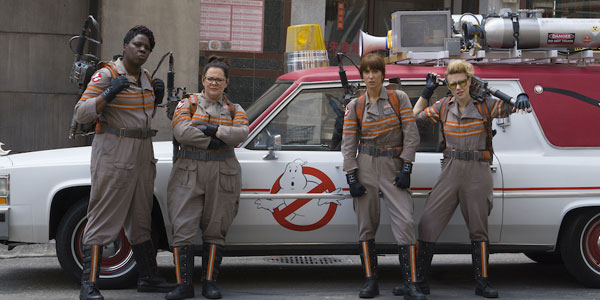
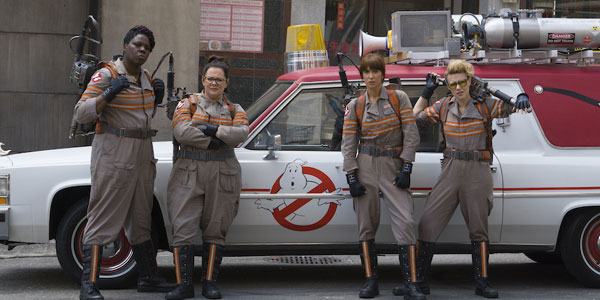
I’m willing to believe them. I mean, sure, the original is a classic, mostly thanks to Bill Murray, Sigourney Weaver, and a new approach to action/paranormal comedy. But the reboot has the Mount Rushmore of movie comedy with SNL writer/cast members Kate McKinnon, Leslie Jones, and Kristen Wiig, plus America’s sweetheart Melissa McCarthy. That’s some serious comedy power there, and some serious dimples, too. It pays tribute to the original, opening with the Ray Parker, Jr. song and featuring cameos from original cast members Murray, Aykroyd, Hudson, Potts, and Weaver, and a couple of the original ghosts, too.

But it is very much its own take on the story, with a fresh script from director Paul Feig and Katie Dippold (“Parks and Recreation,” “The Heat”). There are tweaks on the original’s headquarters and car. And it has updated references — you know that if a New Yorker saw a ghost today, she’d whip out a selfie stick and Instagram it, and they pause for a burn on Reddit haters).

Like the original, it begins with scientists losing their jobs in academia because of their insistence on exploring the paranormal. Wiig plays Erin, a physicist who misses her chance at tenure when it is revealed that she once co-authored a book called Ghosts from Our Past — Both Literally and Figuratively. It was out of print, but the other author, her estranged friend Abby (McCarthy), has made it available on Amazon. Erin visits Abby’s lab and meets Jillian Holtzmann (McKinnon), a mad scientist type who literally plays with fire. When they are all fired, they start a company to investigate the paranormal and are soon joined by Patty (Jones), a subway worker who does not know much about science but has an extensive knowledge of New York city history. And they hire a receptionist named Kevin (“Thor’s” Chris Hemsworth) and get to work trying to capture a ghost so they can prove they are right.

Meanwhile, a nerdy guy is building a machine to unleash and intensify all of the spirits in the city, and so the women go from studying the ghosts to, yes, busting them, with a major confrontation in the midst of a metal concert with a group called “The Slimers” onstage and Ozzy Osbourne watching in the wings. The mayor (Andy Garcia) and his aide (Cecily Strong) thank the team privately but denounce them as frauds publicly to keep the city from panicking.

The final confrontation goes on a bit too long, which is probably why there is an obvious cut of what would have been a dance number (glimpsed in the credits and I hope added in full to the DVD extras). But the action scenes are strong and the comedy is first-rate, at its best achieving a deliriously loopy silliness that is refreshing in an era where gross-out, oh-no-they-didn’t jokes are considered wit.

Each of the four main characters is clearly having a blast showing what she does best, creating distinctive characters with very different styles but always working the chemistry between them with dialog that often feels improvised by actors trying to make each other laugh. It is refreshing to see a movie with four female leads who are professional, super-smart, and totally badass, kicking the butts of all the ghosts and demons and the Bechdel test as well. Their happily ever after is saving Manhattan not getting some guy to put a ring on it.

Newcomer-to the big screen McKinnon tears it up as a Doc Brown type with a wicked smile, a steampunk vibe, and a Faraday cage, swinging into a Glinda the Good Witch song and handing out weapons from a motion-activated proton glove to a Swiss army knife. “She’s doing a marvelous impression of a deflating balloon,” she says as one of her colleagues is being shot through the air. Jones, also in her first feature film lead role, is outstanding as Patty, who knows who she is and what she wants. McCarthy is adorable as always and has a lot of fun with a particular demon. And Hemsworth is flat-out hilarious as the incompetent Kevin. It’s funny, smart, and sweet and in every way as good or better than the original. Fanboys, have at it.

NOTE: Stay through the credits for glimpses of the excised dance scene and some other treats, and following the credits, a brief extra scene with some important information.

Parents should know that this film includes extended fantasy/horror peril and violence. Characters are killed (one off-screen, one suicide by electrocution), and there are some gruesome images and mild crude humor.

Family discussion: What’s your favorite ghost story? Which was the scariest ghost in the movie?

If you like this, try: the original “Ghostbusters,” “Monster House,” and “ParaNorman”
Related Tags:


Action/Adventure Comedy DVD/Blu-Ray Pick of the Week Fantasy Remake Scene After the Credits

Interview: Liana Liberato of “Dear Eleanor”

Posted on July 13, 2016 at 3:18 pm

Liana Liberato (“Trust”) stars in the lovely Dear Eleanor, set in the 1960’s. She plays a girl named Ellie who is caring for her siblings after the death of her mother. She and her best friend take a road trip to try to meet former first lady Eleanor Roosevelt. In an interview, she talked about acting in a story that took place long before she was born and what Mrs. Roosevelt meant to her character.

Why was Eleanor Roosevelt such an inspiration to Ellie and Max?

I know specifically for Ellie, Eleanor Roosevelt was an inspiration because she saw a lot of her own mother in her. She was a incredible humanitarian that believed in positive change. She believed in moving forward and changing the world. I think for Ellie, at that specific time, she needed someone like that to look up to. She needed someone who was going to encourage her to positively change her life and get out of the mental head space she was in when you meet her at the beginning of the movie.

Who inspires people today?

I think there are so many people out there who inspire us. I think the beauty of this era is the ability to reach other people so easily around the world. It doesn’t even have to be some huge celebrity. It could be your next door neighbor that inspires you. The person you sit next to everyday in class. Your barista at a local coffee shop. And I think it is really important to always keep in mind that you, yourself, have the ability to inspire the people around you. So know who you are and what you stand for and spread some good change.

If you could take a road trip anywhere, where would it be?

Well, one of my favorite places in the world is Montreal. So I would absolutely love to take a road trip there – and that is literally across the country so there are so many fun places to stop and explore!

What did you do for fun while you were on location?

We filmed just outside of Boulder, Colorado in Longmont. It was absolutely beautiful. Every morning before work I would go to Great Harvest Bread Company for breakfast and just snack on a huge sample of raisin bread to start the day off right. We would go into town and take yoga classes or just walk along side of the railroad tracks and enjoy the scenery!

What’s the best advice director Kevin Connolly gave you about your character?

Kevin had a lot of insight about Ellie that I loved. One of my favorite things about working with him as a director is that he’s also an actor. He understood my thought process and allowed me to experiment. Regardless of time restraints he was always conscious of us and our time spent with our characters. He is, hands down, one of the best directors I’ve worked with.

What surprised you the most about life in the 1960’s?

Oh gosh, the simplicity! Wouldn’t it be nice nowadays to be able to drop everything and go on a cross country road trip? Or not have to Instagram the whole journey and just enjoy time with your friends? That’s really what I loved about the story. Ellie and Max were just so trusting of those they came in contact with – they were aware of their surroundings and just took in everything they possibly could from the experience.

What was the biggest challenge Ellie and Max faced on the trip?

I think the journey itself is a challenge alone on their friendship. They obviously faced a lot of hardship on this trip. Ellie specially, I think, had to learn how to accept the love of her best friend. I think on that trip she realized she was deserving of a friend like Max.

What was the most important lesson they learned?

I think both of them learned to not give up when things got hard. And just because the circumstances around them can change doesn’t mean their friendship ever should.

Related Tags:


Actors Interview Trailers, Previews, and Clips
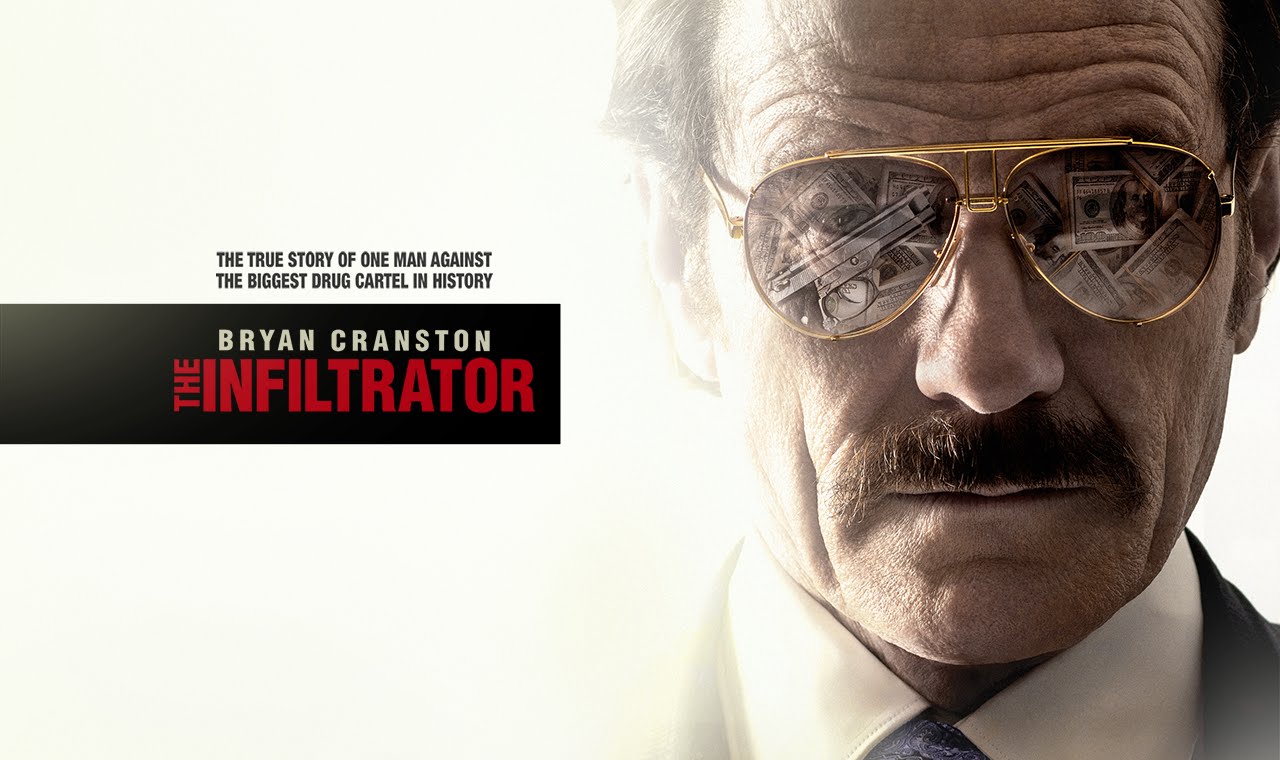
The Infiltrator

The Infiltrator

Posted on July 12, 2016 at 5:25 pm

B
Lowest Recommended Age: Mature High Schooler
MPAA Rating: Rated R for strong violence, language throughout, some sexual content and drug material
Profanity: Very strong language, homophobic slurs
Alcohol/ Drugs: Drugs and drug dealing, alcohol, smoking
Violence/ Scariness: Extensive and graphic violence, guns, car crash, mob executions, disturbing images
Diversity Issues: Diverse characters
Date Released to Theaters: July 12, 2016
Copyright 2016 Broad Green

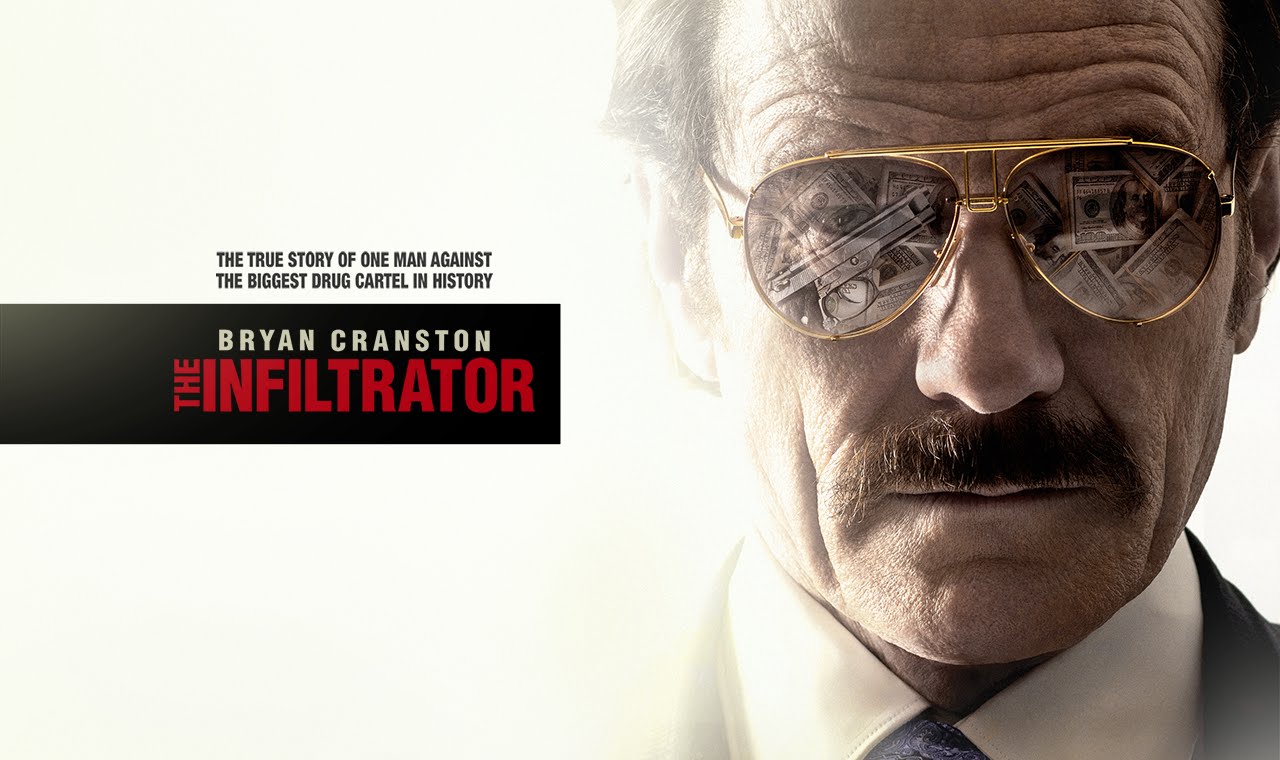
“We’ve been following the drugs to get to the bad guys. What if we follow the money?” That simple suggestion from FBI undercover agent Bob Mazur (Bryan Cranston) led to an unprecedented massive series of arrests that brought down key members of Pablo Escobar’s cocaine operations — and the world’s 11th biggest bank. Based on Bob Mazur’s book, and with Mazur as a producer, it is set in 1980’s Florida, where Excobar was smuggling in literally tons of cocaine. Getting it into the country was easy. Selling it was easy. Paying off, threatening, and torturing anyone who tried to stop them was easy. The biggest challenge they faced was moving the money between countries.

Mazur, trained as an accountant, went undercover and offered money laundering services to Escobar’s lieutenants, funnelling their stacks of cash through “legitimate” companies and criminal-friendly jurisdictions like Panama, then led by Manuel Noriega. He was able to gain the trust of the drug dealers. It was even easier to get the cooperation of bankers, including the prestigious international financial institution BCCI.

This movie, directed by “The Lincoln Lawyer’s” Brad Furman is sincere, diligent, a little corny, and for better and worse exactly what you expect from a fact-based story of an FBI undercover operative. There is the anxious and at times impatient wife. “Promise me this is the last one.” “I’m just wondering where my little Bobby the accountant went?” She has the thankless task of sighing, getting upset when their anniversary celebration is ruined when he has to go into character because they run into one of his criminal buddies, being jealous of his relationship with a beautiful female agent posing as his fiancee (Diane Kruger) and telling him he should have taken the chance for early retirement.

For a tense crime drama, it is surprisingly inert. We learn very little about what is involved in laundering money to prove himself to the bad guys or how the investigation proceeded or what goes into a long-term undercover operation. Mazur shows up in a Rolls Royce and has access to a mansion. Both were confiscated from drug dealers, but we do not learn that from the movie. What we do see is Mazur going home at night to his modest suburban house and his wife and children and jogging through his neighborhood. Presumably Escobar, one of the most ruthless criminals in history, would not turn over hundreds of millions of dollars to someone without making sure he was who he said he was. Mazur comes across as near-saintly, so even Cranston cannot give the character much by way of depth. The conflicts he feels about betraying a man who trusts him are confusing. Even when he is played by the elegant Benjamin Bratt, he is still a barbaric thug. The “Red Wedding”-style climax is synthetic, which, come to think of it, is the problem throughout. This is a movie about a faker that never feels real.

Parents should know that this film has very intense peril and violence, very disturbing and graphic images, guns, car crash, mob executions, characters injured and killed, very strong and crude language throughout with some homophobic slurs, some nudity, sexual references, drinking, smoking, and drugs and drug dealing.

Family discussion: Do you agree with the sentences received by the people who went to jail in this film? What makes someone good at undercover work?

If you like this, try: “Donnie Brasco,” “American Hustle,” and “Kill the Messenger”

Related Tags:


Based on a book Based on a true story Crime Drama Movies -- format
Henryk Hoffmann on Hollywood Legends in Literature

Henryk Hoffmann on Hollywood Legends in Literature

Posted on July 12, 2016 at 3:49 pm

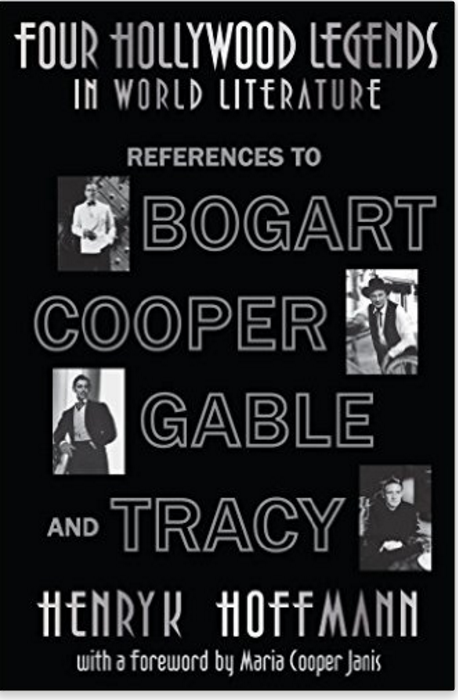
Henryk Hoffmann’s Four Hollywood Legends in World Literature: References to Bogart, Cooper, Gable and Tracy is an extraordinary resource, grounded in massive research and filled with insights about the way four iconic Hollywood figures have inspired and influenced an astonishing range of literary and creative works. In an interview, Hoffmann described the qualities that made Clark Gable, Humphrey Bogart, Gary Cooper, and Spencer Tracy uniquely influential, and the ways that their lives and their work were reflected in books by writers from Larry McMurtry to Elmore Leonard.

Screen Shot 2016-07-07 at 9.21.22 PM
Copyright BearManor Media 2016

What is it about these four men that makes them such timeless and iconic figures?

Each of them possessed a rare kind of charisma, each developed an unusually attractive and appealing persona and each appeared in an impressive number of outstanding, essential (for one reason or another) and unforgettable films. And, of course, we must not forget about the great acting talent with which each of the four men was—in a varying extent—endowed. If you feel that the same can be said about some actors of the younger generations, then I would have to refer to the sociological and cultural criteria that clearly define the times of Bogart, Cooper, Gable and Tracy as something absolutely unique in America and in the world, the times of magic nonexistent ever after.

What would you say are the distinctive qualities that make them so appealing to authors and the characters they create?

It is closely related to the previous question. Most of the authors that have (intentionally, I assume) mentioned one of the four names in their works of fiction are quite aware that a certain legendary or mythological qualities would be automatically entailed, understood or evoked by any reader even remotely familiar with the history of the American cinema. Why? Because the collective or individual image of those four movie stars, either as symbols of the great American hero or as foremost examples of the Golden Era of Hollywood, prevails in the mentality of the devoted moviegoers—certainly those contemporary with the actors, but also those representing younger generations, which is proven by the age of numerous authors quoted in my book.

What are the most frequent uses of references to these stars in literature? As metaphor or as historical/cultural context?

The references discussed in my book play a variety of roles in literature, including those that you mention in your question. It is almost impossible to recount all types, but I tried to categorize/classify them in the Epilogue, where I list thirty-one different uses along with my favorite examples of each. In terms of frequency or any other statistics, it would take a separate time-consuming study to find out which types are most common in literature and which are rather rare or accidental.

How do references to the performances differ from references to the actors themselves?

When an actor’s name is mentioned together with a title of one of his films, the reference usually pertains to a specific scene or the storyline of that movie. A rare (and nice) exception is the reference to Gary Cooper and Mr. Deeds Goes to Town in Elliott Roosevelt’s Murder in the Red Room, where the purpose of the allusion is to emphasize the perfect match between the actor’s persona and the character he portrays. On the other hand, when an actor is mentioned without any movie title, then the purpose of such a reference is usually to capitalize upon his status or prestige as an actor or celebrity.

Do you think that today’s more intrusive, more omnipresent, and less managed presentations of actors’ personal lives in the media will prevent literary use of contemporary stars in the same way these four legends were used?

I would not like to sound prejudiced, but my research points out that references to younger generations of actors (including those with careers longer than Bogart’s or Cooper’s) are by far less numerous, with a pattern showing almost nonexistent interest in the actors of the very young generation, anyone born after 1960. I said “almost,” because I did find some references to Tom Cruise and the like, but they tend to be clearly less complimentary, less positive, sometimes even derogatory. I have my own theory about this phenomenon, but I do not think this is the place to reveal it.

Your work is remarkably comprehensive but there are no databases for these references. What kinds of resources did you use for your research?

Right! There is no database; I have been building it as a pioneer. It started a long time ago when I read books like From Here to Eternity, The Blackboard Jungle, The Catcher in the Rye, They Shoot Horses, Don’t They? and several others, where I noticed the first movie references in fiction and decided to record them for no particular reason. Sometime later I discovered Larry McMurtry with his numerous and rich allusions, but the writer who gave me the idea of turning the data into a book was Elmore Leonard. Since both McMurtry and Leonard, but also some other favorite writers of mine (such as John Updike, Robert B. Parker, Lawrence Sanders, Loren D. Estleman and Tim O’Brien), frequently allude to westerns, my first book on the subject (published by McFarland in 2012) was Western Movie References in American Literature. Upon completion of that book I already had a substantial data base for my next project on references (to the four legends, tentatively), but my subsequent research (based primarily on intuition) expanded it to unexpected proportions. Thus, I had no doubt who it should be focused on. I got in touch with two children of the famous actors and received blessing, guidance and support from Maria Cooper Janis and Stephen Humphrey Bogart.

What movie role is referred to most often in literature?

Copyright Gazeta Wyborcza 1989
Copyright Alehistoria 1989

Two films, Gone with the Wind and Casablanca, have accumulated the biggest number of references (both mentioned in more than 100 works). However, the focus of those allusions is spread over a number of characters, scenes and themes. Consequently, it is Gary Cooper as Marshal Will Kane that gets most attention from writers, and it is the scene of Coop walking tall while looking for help in High Noon (referenced in eighty-one works) that is most frequently mentioned in books. By the way, that particular image was used on the side of the Gary Cooper postal stamp issued in 2009 in the “Legends of Hollywood” series, and, before that, in the Polish post-World War II first free-election poster designed by Tomasz Sarnecki in 1989. The cover of “Gazeta Wyborcza” (Poland’s foremost newspaper) of June 6, 2016, with Sarnecki’s poster announcing an extensive article on the 27th anniversary of the election, can be treated as one more vivid reminder of the incredible impact of one of the Four Hollywood Legends outside the movie world.

Do you have a favorite literary reference to one of these legends or performances?

Here I would like to refer again to my list of 31 items in the Epilogue. All those references are special to me. I have a hard time choosing one, but if I were to pick out three, I would say #13 (Distant Drums referenced in McMurtry’s All My Friends Are Going to Be Strangers—most vivid), #15 (High Noon referenced in Martha Grimes’s The End of the Pier—most personal) and #31 (Guess Who’s Coming to Dinner referenced in Herman Koch’s The Dinner—most complex and informative).

Related Tags:


Understanding Media and Pop Culture
THE MOVIE MOM® is a registered trademark of Nell Minow. Use of the mark without express consent from Nell Minow constitutes trademark infringement and unfair competition in violation of federal and state laws. All material © Nell Minow 1995-2026, all rights reserved, and no use or republication is permitted without explicit permission. This site hosts Nell Minow’s Movie Mom® archive, with material that originally appeared on Yahoo! Movies, Beliefnet, and other sources. Much of her new material can be found at Rogerebert.com, Huffington Post, and WheretoWatch. Her books include The Movie Mom’s Guide to Family Movies and 101 Must-See Movie Moments, and she can be heard each week on radio stations across the country.

Website Designed by Max LaZebnik