Mike Mills is a graphic designer-turned film-maker. His new movie, “Beginners,” is inspired by his own experience. Ewan McGregor plays Oliver, a graphic designer whose father, at age 74, came out and declared that he would spend the rest of his life as an openly gay man. The film goes back and forth in time as the father, played by Christopher Plummer, thoroughly enjoys his new life, even after he becomes ill with cancer. After his death, Oliver begins to explore a relationship with a French actress (Mélanie Laurent of “Inglourious Basterds”), both haunted and inspired by his father’s late-life changes.
I spoke to Mills about grief, dogs, and falling in love without talking.
I loved the authenticity of the portrayal of the designer, very rare in movies. Was that you in the close-up of the hand doing the lettering and drawing? It was clearly someone who was both talented and experienced.
It’s me and Ewan. I taught Ewan to draw a bit. He wanted to learn. He’s really crafty. He builds bikes and motorcycles and cars. He started drawing and he was very quick to figure it out.
And when he did not want to do what the client wanted for the album cover — that was very true not just for artists but for any creative person.
Especially when you are in that grief place, where you don’t really want to compromise. You feel like life is short so you want to go for it the way that seems right to you. You can be unreasonable and uncompromising and not even aware of it. It’s sort of a beautiful thing. It’s a weird gift of grief.
Tell me about your decision to structure it the way you did, impressionistically rather than chronologically.
It started because that was what grief was like for me. You’re walking around in the present, but bits of conversations and memories keep coming back to you. All those emotional exchanges are still so alive, constantly slipping in time. All the assumptions that we assume all day long become impossible to sustain. Incredibly un-complacent and uncomfortable. And as a film-maker, I like movies that do that, like “8 1/2” and “Stardust Memories” or “Annie Hall.” They’re very formally playful. I’m more comfortable if I can work on a story in a more broken-down, multi-viewed way. I’ve got the history monologues, the conversations with the dog. The denser and more multi-platformed it is, the freer I felt.
The dog is wonderful!
Animals are really important to me. I have a boarder collie and it is one of the most important relationships in my whole life. We talk all the time. Obviously, in the movie, it is Oliver projecting what the dog is saying. It’s a way for him to express his feelings. It became a neat, sideways way to get into Oliver’s brain. Dogs are wonderfully mysterious. We don’t know what they are thinking. It’s that otherness that fascinates us. They love us across the species divide and we love them. The same thing with the drawings. It wasn’t me trying to get my drawings into the film. It worked as a way to show Oliver’s emotions. I could go from a memory to cut to a drawing and it made sense emotionally because you’re seeing his reaction, his world.
I’d like to know where the idea came from that when Oliver meets the girl he falls for she can’t talk and can only communicate by notes.
That came from Lou Taylor Pucci, who was in my last film. He plays the magician in the party scene — partly because I got that whole idea from him. He met a girl when he had laryngitis and he couldn’t talk. He met a girl and fell in love in a way that he wouldn’t have if he was talking. He couldn’t be superficial and take the easy route. He got really vulnerable really fast. He told me that story and I asked if I could use it.
In honor of Memorial Day, take a break from picnics and sales and share one of these great films about American soldiers, sailors, and Marines. And be sure to take time thank the military and veterans in your life for all they have done to keep us safe and free.
1. Sergeant York Gary Cooper won an Oscar for his portrayal of WWI hero Alvin York, the pacifist from the hills of Tennessee who carried out one of the most extraordinary missions in military history using lessons from his life on a farm. He captured 132 men by himself, still a record for a single soldier. In addition to the exciting story of his heroism in war, this is also the thoughtful story of his spiritual journey. He is a pacifist, opposed to fighting of any kind. By thinking of what he is doing as saving lives, he is able to find the inspiration and resolve for this historic achievement.
2. Saving Private Ryan Director Steven Spielberg salutes his father and the greatest generation with this story set in the D-Day invasion of Normandy. It frankly portrays the brutality and carnage of war and its wrenching losses, but it also portrays the honor, sacrifice, heroism, and meaning.
3. Mister Roberts There are battles — and heroes — of all kinds. Henry Fonda plays a Naval lieutenant assigned to a cargo ship during WWII who feels very far from the action. He learns that his defense of the crew against a petty and tyrannical captain (James Cagney), on behalf of “all the guys everywhere who sail from Tedium to Apathy…and back again, with an occasional side trip to Monotony,” is an important and meaningful contribution.
4. M*A*S*H Set during the Korean War but released in and very much a commentary on the Vietnam War, this is the story of surgeons stationed at a Mobile Army Surgical Hospital. The emphasis is on war’s essential absurdity — these are doctors whose job is to heal soldiers to they can be sent back into battle — and on the ways that different people respond to those situations, responses that often escalate the absurdity. See also “Captain Newman, M.D.,” with Gregory Peck as a sympathetic Army psychiatrist during WWII as well as the long-running television series this film inspired.
5. Glory The Civil War 54th Massachusetts Volunteer Regiment, one of the first formal units of the U.S. Army to be made up entirely of African American men, inspired his film. Led by abolitionist Robert Shaw (Matthew Broderick), and based on his letters, this is a story of heart-breaking courage, as the men had to battle not only with the Confederacy but with the bigotry of most of the white officers on their own side.
6. The Longest Day An all-star cast shines in this sincere re-telling of the events of the invasion of Normandy D-Day, one of the transformational moments of WWII. Many of the military consultants and advisors who helped with the film’s production were actual participants (from both sides) in the action on D-Day, and are portrayed in the film.
7. Band of Brothers This 10-part miniseries produced by Tom Hanks and Steven Spielberg is based on the best-seller by Stephen Ambrose about the WWII experiences of E Company (“Easy Company”), the members of the 506th Parachute Infantry Regiment, United States Army 101st Airborne Division and one of its officers, Richard Winters (played by Damian Lewis), from basic training through the American airborne landings in Normandy, Operation Market Garden, the Battle of Bastogne and the end of the war.
8. Patton George C. Scott won an Oscar for his portrayal of WWII General George S. Patton. The film also won six additional Oscars, including Best Picture. Its screenplay, co-written by Francis Ford Coppola, frankly portrays Patton’s mistakes and faults as well as his leadership in turning the tide of the war.
9. The Caine Mutiny/A Few Good MenThese two movies, one set in WWII and one contemporary, both center on court martial trials with similar themes — what price do we pay for the luxury of feeling safe?
10. Gardens of Stone This underrated gem from Francis Ford Coppola about the “Old Guard,” the regiment responsible for the funerals at Arlington National Cemetery has beautiful performances from James Caan, James Earl Jones, and D.B. Sweeney and subtly but powerfully explores some of the deepest and most troubling questions about the price we pay — and the price we call on others to pay — for our freedoms.
Studios spend tens of millions of dollars to get the best equipment to photograph and record the most beautiful performers wearing the most gorgeous clothes in the most spectacular settings. And then we go to see them in a movie theater with the wrong lens on the projector, badly focused, and an inadequate bulb.
Do you remember what a movie should look like? Do you notice when one doesn’t look right? Do you feel the vague sense that something is missing? I do. I know in my bones how a movie should look. I have been trained by the best projection in the world, at film festivals and in expert screening rooms. When I see a film that looks wrong, I want to get up and complain to the manager and ask that the projectionist be informed. But these days the projectionist is tending a dozen digital projectors, and I will be told, “That’s how it’s supposed to look. It came that way from the studio.”
He explains that some theaters are showing 2D movies through a 3D lens, which dims the image as much as 50 percent, even up to 85 percent in some cases.
Interview: The Actor Who Plays Jesus in “The Encounter”
Posted on May 27, 2011 at 3:56 pm
Bruce Marchiano spoke to me about playing Jesus in a touching new film called “The Encounter.” A group of stranded travelers come to the “Last Chance Diner” out in the woods. The man behind the counter tells them he is Jesus. It takes some of them longer than others to hear him. He has also played Jesus in “The Visual Bible.”
It’s quite a challenge for an actor, isn’t it?
It is in the sense of the responsibility, but it isn’t in the sense of the simplicity of it. When you’re Jesus, what you do is you just LOVE people! No matter who they are, what their circumstances, their arguments against you, you just pour love into their lives, along with all the truth and the holiness and everything.
That relates to my favorite part of the performance — the way you listened. Not all actors can show that, but for Jesus, I think it is very important.
If anybody listened, it was Jesus. We think of him as talking all the time but there is nothing more fundamental than his ear for people’s hearts. A woman once asked me if I get tired of playing Jesus. No! I’d do it all day long every day.
How did you come to this project?
As a hired actor it all happened very quickly for me. I had played Jesus before. Out of the blue I got an email from the director, who I had never met before, asking me if I’d be interested in playing Jesus in this film. He sent me the script and we met for coffee. I always have to say, “I have a different angle on this thing.” For me, it’s about all the love and heartbreak over people’s pain, that’s the most important thing to get across. David said, “Amen” and the next thing I knew we were working together. So often we get a man who’s detached and a little bit aloof. But as evidenced by the choices He made in his life, there’s nothing aloof about Him.
I laughed when one of the characters said it was like a “Twilight Zone” episode because I was thinking the same thing.
That was David’s concept, to make it almost “Twilight-Zone-ish” — so it worked!
Movies like this are like modern-day parables, a different mechanism for delivering the same message.
You’re exactly right. As Christian movies often go, we’re all working for pennies on the dollar but with a passion for bringing the gospel to people in new and savvy ways. One of the things I appreciated about it was that unusually for Christian movies there was a grittiness and realness to the setting. I don’t like it when they look Hallmark card-ish and not real. And Jesus was a blue collar guy with a scruffy beard.
And Jesus serves in it, too. Does it spill over into your daily life?
I sure hope so! When I did the first one I had remarkable experiences, not weird and supernatural, just understanding His heart in a new and unique way. And the same thing happened with “The Encounter.” At the end of the film when the guy makes the choice to go his own way, I just spontaneously broke down weeping, profusely. It was a little uncomfortable for a lot of the crew! Some of them had a hard time picturing Jesus being affected like that but it helped me to understand the depth of his heart in a fresh and unique way. There were two projects I turned down. Jesus has to be loving people and crying tears over their pain. If people don’t understand that, they’re missing the point. In another one they hired a director who didn’t know the Lord. How can someone direct that story if he doesn’t have access to the spirit of God?
Interview: the Brother and Sister Behind ‘Discover the Gift’
Posted on May 27, 2011 at 8:00 am
“Discover the Gift” is an extraordinary new documentary, book, blog, and CD that reaches from the broadest universal dreams to the most intimate, personal insights, with appearances from powerful lessons from authors, educators, activists, artists, and icons including His Holiness the Dalai Lama, His Holiness Sri Sri Ravi Shankar, Jack Canfield, Janet Attwood, Terry Tillman, David `Avocado` Wolfe, Michael Bernard Beckwith, Mark Victor Hansen, and Niurka and more.
It is the passion project of a brother and sister, filmmaker Demian Lichtenstein and educator Shajen Joy Aziz. Part of the pleasure of speaking to them was the way they brought all they have learned about recognizing and respecting the gifts in others as well as ourselves to the conversation. And it is impossible not to feel privileged by the way they have opened up their own lives as a part of their quest to bring this message to everyone.
This movie is unusual because you shared your personal story to illuminate and demonstrate the broader themes. What made you decide to do that? How did you decide how to balance the two?
Demian Lichtenstein: The entire project began with a question from my sister: “When is the man I know going to match the work he is doing in the world?” So from the beginning there was a personal, family reality to the project. When we began making the movie our thought was to interview and speak with many of the great teachers, luminaries and masters that had influenced our lives on a global and personal level. But as we progressed something became very evident — when Shajen and the editor and I sat down with the rough cut and realized the movie didn’t work. Suddenly you’re like — wow, everything we were working on isn’t working. It was because there was not enough of our true story in it. At that point we realized we needed to open ourselves up to sharing our personal lives on an even deeper level.
Shajen Joy Aziz: We had multiple reasons for choosing to share that much. One was because authenticity is the key to everything. We needed to be authentic and real and share what was really happening in our lives. And we’re a metaphor for everyone’s life. We’ve all been there in some way or another. People could access their own learning by being engaged in someone else’s process. As an educator and a mental health professional, we think a lot about the best way to share what we have to say to everyone.
In the film, you put your findings into eight steps. Did those steps become a part of your film-making as well as in other parts of your lives?
Step #1: Receptivity Step #2: Intention Step #3: Activation Step #4: Infinite Feedback Step #5: Vibration Step #6: Adversity and Transformation Step #7: Creating a Conscious & Compassionate World Step #8: Love
DL: Every day! For me, it’s like, “Oh, no, that’s step 4!” or “I’d better go back to step 1!”
SJA: Yes — it all informed the book, the film-making, and our lives. Demian and I and all our crew sat down to ask ourselves, and we really looked at what really happens to us in our life, what needs to happen, what needs to change. We really hashed it out. What needs to get clear? That’s receptivity! You have to be open before anything else can happen. It came about through the real conversation about what had to happen before we could become the best selves we could become at this point in our lives because we’re always a work in progress.
Why are these concepts so scary for people?
DL: I have an answer and then my sister will probably give you a better one. We become so stuck on a particular paradigm. The fear of the unknown is so much greater than what we’ve got. So we remain so closed off to what’s possible because there’s an identity that’s running the show. That is not our higher self. If you’ve ever been driving home and gotten off the freeway and looked up and found yourself in your garage and can’t remember even getting off the freeway? So who’s driving? There’s an identity that is not that interested in a higher state of consciousness. It likes the status quo and being open to what’s possible is not what it wants.
SJA: Language really creates much of our world. The old paradigm tells us to face our fears. The shift that has worked for us is rather than facing them, we think we should step through them. Instead of “I’m afraid and I’m facing them, good for me, ” you’re still there, facing them. That’s where people get stuck, on taking that step, shifting that gear. What people really lack and need is permission — it seems so silly and simple. The thousands of people people I’ve talked to tell me over and over again that they want to know it’s okay to change, to go deeper.
Where do those messages come from?
SJA: From our parents, society, school, conditioning. We focus so much on what we do wrong, and so we become a fear-based, crisis-driven society.
Did you find that the experts you spoke to used different language to express the same kinds of insights?
DL: They all had different vocabularies based on their background and culture, religion, race, creed. But we found as we literally traveled the world that underneath it all human being share the same underlying principles and desires. We all have unique and individual gifts seeking to express themselves, but it often boils down to a past-based paradigm that does not give permission for someone to discover what it is they have to share with the world. Many cultures demand a certain way of being that does not support who we are at our highest levels.
SJA: Agreed. And for me as an educator and school-based mental health professional, we focus on what’s wrong with our kids, how many answers they got wrong instead of what they got right. We want to show people what is right about them, those pieces that want to emerge. The possibilities seem endless if you focus on what’s right about you.
What led you to present this in such a multi-formated way, with a book, movie, workshops, soundtrack?
SJA: There are so many different learning styles: visual, tactile, auditory, kinesthetic, through emotions, spirituality, nature, Howard Gardner’s multiple intelligence theory. We wanted to make access possible for anyone who wanted it.
DL: A great way to say it, Shajen. Everyone we spoke to had an opinion about where they felt they were best able to learn. On a global level, the motion picture is the greatest collaborative art form on the planet today. Though we are the leaders of a team of unbelieveably passionate and creative people from all over the planet in the support of the creation of a multi-media project. We’re also going to do “Discover the Gifts of Kids” for and about the children of the earth. People learn in a multitude of ways and there are many ways to reach people.
So you are saying that it is incumbent on each of us to be receptive but it is also incumbent on us to respect and try to respond to the way that those around us are most receptive.
DL: Watch the video we did at Agape. In the Agape space there are drummers and dancers and color and light and sound — a shared communal experience connecting people on a spiritual and inspirational level. And then we have the movie and we’re open to the tears and laughter and hugs. And then we have a panel and then the experience of photography and interviews. People had so many ways to experience “Discover the Gift” and our intention is not just to deliver you a book, and a movie, and a web portal, but to engage people in every way possible to help people discover the gifts in themselves. As much as we share of ourselves, the focus is on you.


 Gary Cooper won an Oscar for his portrayal of WWI hero Alvin York, the pacifist from the hills of Tennessee who carried out one of the most extraordinary missions in military history using lessons from his life on a farm. He captured 132 men by himself, still a record for a single soldier. In addition to the exciting story of his heroism in war, this is also the thoughtful story of his spiritual journey. He is a pacifist, opposed to fighting of any kind. By thinking of what he is doing as saving lives, he is able to find the inspiration and resolve for this historic achievement.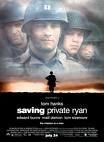
 Director Steven Spielberg salutes his father and the greatest generation with this story set in the D-Day invasion of Normandy. It frankly portrays the brutality and carnage of war and its wrenching losses, but it also portrays the honor, sacrifice, heroism, and meaning.
 There are battles — and heroes — of all kinds. Henry Fonda plays a Naval lieutenant assigned to a cargo ship during WWII who feels very far from the action. He learns that his defense of the crew against a petty and tyrannical captain (James Cagney), on behalf of “all the guys everywhere who sail from Tedium to Apathy…and back again, with an occasional side trip to Monotony,” is an important and meaningful contribution.
 Set during the Korean War but released in and very much a commentary on the Vietnam War, this is the story of surgeons stationed at a Mobile Army Surgical Hospital. The emphasis is on war’s essential absurdity — these are doctors whose job is to heal soldiers to they can be sent back into battle — and on the ways that different people respond to those situations, responses that often escalate the absurdity. See also “Captain Newman, M.D.,” with Gregory Peck as a sympathetic Army psychiatrist during WWII as well as the long-running television series this film inspired.
 The Civil War
  An all-star cast shines in this sincere re-telling of the events of the invasion of Normandy D-Day, one of the transformational moments of WWII. Many of the military consultants and advisors who helped with the film’s production were actual participants (from both sides) in the action on D-Day, and are portrayed in the film.
 This 10-part miniseries produced by Tom Hanks and Steven Spielberg is based on the best-seller by Stephen Ambrose about the WWII experiences of E Company (“Easy Company”), the members of the 506th Parachute Infantry Regiment, United States Army 101st Airborne Division and one of its officers, Richard Winters (played by Damian Lewis), from basic training through the American airborne landings in Normandy, Operation Market Garden, the Battle of Bastogne and the end of the war.
 George C. Scott won an Oscar for his portrayal of WWII General George S. Patton. The film also won six additional Oscars, including Best Picture. Its screenplay, co-written by Francis Ford Coppola, frankly portrays Patton’s mistakes and faults as well as his leadership in turning the tide of the war.
 /
/ This underrated gem from Francis Ford Coppola about the “Old Guard,” the regiment responsible for the funerals at Arlington National Cemetery has beautiful performances from James Caan, James Earl Jones, and D.B. Sweeney and subtly but powerfully explores some of the deepest and most troubling questions about the price we pay — and the price we call on others to pay — for our freedoms.