Ten Questions about Sucker Punch from Brendon Connelly

Posted on April 2, 2011 at 1:13 pm

The always-brilliant Brendon Connelly of Bleeding Cool has ten fascinating and provocative questions for viewers of Sucker Punch. The movie has been widely derided as incoherent eye candy with only 20 percent positive reviews on Rotten Tomatoes. A typical comment was from Tom Meek of the Boston Phoenix: “The director of “300” and “Watchmen” has plenty of visual panache, but when it comes to storytelling, he’s a bombastic hack.”

Some of the questions Brendon asks us to ponder:

When do we first see Sweet Pea talk? And when do we last see her talk?
Whereabouts does the first scene in the movie take place? Whereabouts does the last scene in the movie take place?
Which locations, props and images reoccur, where and why?
Why are the girls dressed the way they are?

I’m going to go with the obvious answer on that last one. But Brendon is exceptionally astute on story-telling via editing and image. He has given us questions that are well worth considering to provide context of a movie that, even for people like me who found it disappointing, is clearly more ambitious than most of the reviews gave it credit for. To hear him debate the film with Kevin McCarthy, Josh Hylton, Travis Hopson and me, check out The Kevin and Josh Movie Show. I’ll update this post with a link when one becomes available.

Related Tags:


Understanding Media and Pop Culture
Interview: Steven Bingen of MGM: America’s Greatest Backlot

Interview: Steven Bingen of MGM: America’s Greatest Backlot

Posted on April 1, 2011 at 7:59 am

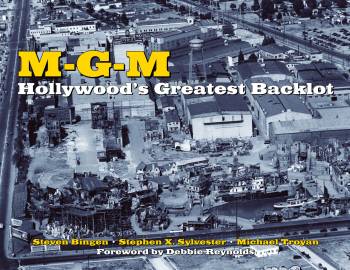
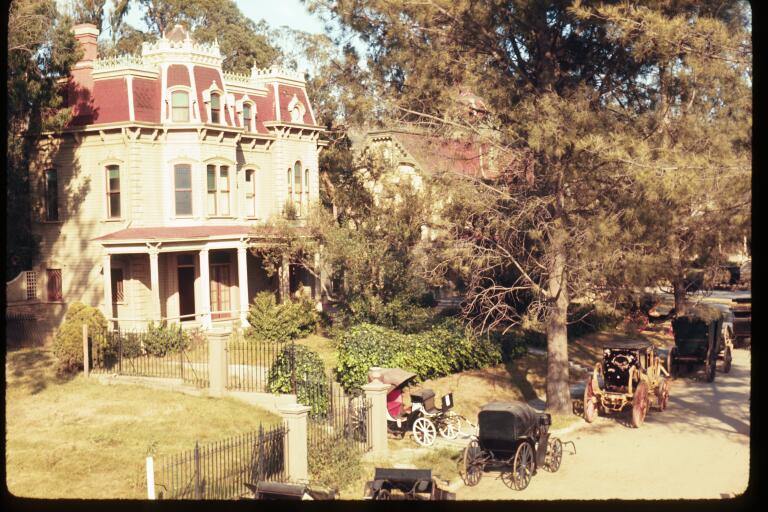
MGM: Hollywood’s Greatest Backlot is like a fabulous fairy tale, except that it really happened. Steven Bingen, Stephen X. Sylvester, and Michael Troyan have written the history of not just a magical place but a magical moment in time, when it seemed that anything — and any place — was possible. MGM had a back lot that was like a full city, with warehouses for wardrobe and props, restaurants, offices, and miles of sets that represented every possible location and era. The book is simply gorgeous, with archival photos showing the sets and stars in action and behind the scenes, and filled with stories and personalities to rival any of the epics produced on the lot. It’s a must for any lover of the classic era of film and I am very grateful to co-author Steven Bingen for taking the time to answer my questions.

Do you remember your first visit to the MGM backlot?

In a way I feel like I’m still there. We all grew up on the MGM backlot in a curious and twisty sort of way. At least 6 generations of people have spent a not inconsiderable amount of their lives watching our dreams played out with those backlots as a setting. Turn on the television and channel surf for a few minutes and the chances are not too bad, even today, that you’ll make a visit to the MGM backlot…

But that probably isn’t a fair answer to your question is it? Truth be told, I was never able to physically visit the place while it was still intact. I’ve walked the real estate many times trying to reconstruct the layout of the sets in my head, but never while those sets were standing. One of my partners, Stephen X. Sylvester, who wrote the book with me along with Michael Troyan, got to visit the backlot (twice!) in the late 1960’s. I’ll never forget what he said. He told me that the next day his parents took him to Disneyland and compared to MGM, he found Disneyland somewhat disappointing! I guess that, in a way, I wrote the book as a way to reconstruct a place I’ve always known I would never be able to physically experience. I tried to build, in print, streets I could never actually walk, and a place I could never actually visit.

Which designers most influenced the sets on the backlot?

An art director named Cedric Gibbons designed most of the sets on the MGM backlot. He was a remarkable and vastly influential man who has never gotten his due for virtual creation of the physical look of the 20th century. People always assume that our movies are influenced by our real lives. But the truth is that very often it’s the other way around. Standards of architecture and design still in effect today were created first in Hollywood, and only later adapted in “actual” construction. Art Deco, for example was seen on-screen before it became the signature “real” design style of the 1930’s. It’s a surprising phenomenon, and one that has seldom been remarked upon. Maybe your question should be “What designers were most influenced by the sets on the backlot?”

Gibbons, by the way, is largely remembered today as the designer of the Academy Award “Oscar” statue. But his legacy is, I think, much farther reaching than that.

How was movie-making influenced by the auto manufacturers and other innovations of the industrial era?

A producer named Thomas Ince was the first filmmaker to base his business model on the factories in Detroit, where an entire car could be finished on a predetermined schedule within the walls of the factory. No one had ever tried that with movies before. And it happened first on the property which would become MGM. Ince would move on, to be followed by Samuel Goldwyn, and later by Thalberg and Mayer. But it all happened, the whole concept of using a backlot as a way to standardize production, on the very site which would become MGM. In a way the whole concept of a Hollywood studio began at the very spot where our story takes place. Today, although few realize it, there is more authentic, yet unheralded movie history to be found in the subdivisions and condominium complexes where MGM once stood than on any tourist-infested block of Hollywood Boulevard.

How did the studio backlot change to reflect changes in technology like color film and improved audio?
With the introduction of color film directors tended to set their cameras farther back. They wanted to take advantage of (or create) dramatic cloudscapes, or cobbled rooftops, or mountain peaks. Black and white, a more intimate and “realistic” medium, didn’t need to concern itself with such details so the sets tended to, if not get bigger, certainly get utilized to a greater degree. Filmmakers eventually started putting their cameras so far away from the action that they sometimes obscured whatever dramatic possibilities the story was supposed to be concerning itself with. The 1935 version of Mutiny on the Bounty, for example, while taking place on an epic scale, focused more on the conflict between the characters then on the jungles of Tahiti. Incidentally, both versions used the studio backlot, although the remake actually did go to the real Tahiti as well – and wasn’t any the better as a movie for it.

Was the studio careful about maintaining its archives? Were there some records you really had to work to find?

For decades the studio was very careful with both its archives and its assets. Everything from full-size fighter planes to bits of twine was carefully inventoried and socked away, awaiting the day when it might be utilized again. But as the system broke down and departments were closed or outsourced the prevailing attitude was to junk everything not in use that day or scheduled to be used the next. Management realized that they themselves could be fired at any time, and so they had no particular interest in making their successor’s jobs any easier by saving anything that could be used by that next regime. So everything from production records to, ultimately, the backlots themselves, were systematically and tragically junked.

I was lucky to have access to materials no one else had ever been able to see through the cooperation of Warner Bros., which had inherited whatever records had survived via the Turner purchase of MGM in the 80’s. But much of this material was already literally just gone with the wind by that time. For example, in our research it took us something like three years just to find a record of the studio’s original purchase of the property that became backlot number 3. This was a 65 acre parcel of real estate where some of the most famous films ever made would ultimately be produced. And there was nothing whatsoever saved by the company anywhere referencing when that property had first been acquired, or for how much! Unthinkable, isn’t it? But true. Desperate, at one point we even ended up spending an entire day inside a badly lit basement near Los Angeles city hall trying to reference tax records to find our answer there. No luck. I finally found the information we needed in the text of a 1970’s memo which actually was about the sale of the property – but which did reference the original purchase date, which was 1937, by the way.

What surprised you as you did your research? What or who was your best resource?

Like I said, Warner Bros. was invaluable, as were other archives and organizations like the Motion Picture Academy, but the people we interviewed, actual studio veterans, were the best. Some of our most interesting stories were from people who worked on the lot for decades. To a man, these employees all told us that they thought that MGM would last as long as the pyramids. It makes me sad that some of these employees, who were all so helpful and giving of their time and memories, didn’t live long enough to see the book published.

Surprisingly, a lot of great material also came from Culver City residents who, in some cases, used to literally climb the fences as children and explore. I must say, that I very much envy those people their experiences.

Do you have a favorite movie or star from the MGM golden era? What artifacts are still around?

The three of us are probably unlike most other film buffs in that we’ve spent the better part of 10 years watching pictures and wishing that those admittedly gorgeous and charismatic actors in the foreground would just get out of the way so that we could get a better look at the remarkable sets they were standing in and blocking our views of.

For us, our favorite films were the ones that found ways to use the backlot in unusual ways. I’ll give you an example. For a 1935 film called I Love My Wife “Spanish Street” was redressed to play Greece. Then they immediately flooded the same street with water so it could play Venice for Anna Karenina. 1935 audiences would have seen both these films, yet never realized they were looking at the same spot – which of course was in neither Spain, nor Greece, nor Italy, but Culver City. You know anyone could go to Europe and take beautiful pictures of these places. But I hope people will finally appreciate the wonder of getting the same effect, with more artistry, on a studio backlot. And the experience of watching these movies is actually enhanced, not detracted from, as people sometimes say, by the knowledge of this. What could be more mysterious and more wonderful than Venice reconstructed in California, and with Greta Garbo thrown in for good measure? This really is the studio’s legacy, and what survives today.

Is there anyone in the industry today who plays a role like the one Irving Thalberg played at MGM?

No. This isn’t a reflection on anyone in modern Hollywood. The business is just so different, and so adverse to risk-taking due to the enormous amounts of money involved. There really isn’t anyone out there with the opportunity to repeatedly throw the dice and come up with a winner like Thalberg so often did. But it’s important to remember that during Thalberg’s reign, even if a single production didn’t measure up, there would always be another one coming off the assembly line in a matter of days. And that second property could conceivably work out better and cover the losses incurred by the first. This process gave a creative producer like Thalberg a chance to experiment and to try out new ideas, which simply isn’t possible today. In modern Hollywood, even at the largest studios, there just are never enough pictures in the pipeline. And no single producer is ever responsible for all of them. Today, any studio picture is liable to cost so much money that a single failure could destroy careers, or even whole studios. It’s a dangerous and risky business model. One which Thalberg and his cohorts would have thought wasteful and absurd, and which they never had to wrestle with.

The MGM backlot was like a city of its own, with a restaurant, a school, water, power, construction – who oversaw operations? Were there any major problems or mistakes?

J.J. Cohn was the Studio Manager, the man in charge of making sure that all the pieces in this vast, crazy, kaleidoscope that was MGM fit together and worked in harmony with each other. He’s another one of those unsung geniuses who made the Studio system operate so well, and for so long. In fact, the MGM backlot at one time was actually referred to on studio maps as “Cohn’s Park” – which should be an apt indication of his overall influence. We were very lucky in our research in that J.J. lived a long time and film historian Rudy Behlmer had the foresight to sit him down for a long oral history in which he discussed his whole career from the pre-merger Goldwyn days right up into the 1960’s and beyond.

And yet in a way which J.J. couldn’t have foreseen, the ultimate fate of the backlots was determined in the accounting ledgers tabulated in his offices. It turned out that for the entire life of the studio, the company had never charged internal productions to utilize their outdoor sets. On the contrary, Cohn had created and maintained these sets for the very purpose of saving production dollars and avoiding expensive and unnecessary location trips. Unfortunately, in the 1970’s when the studio was floundering in red ink and management was trying to save money, the backlots were an easy target because these hundreds of standing sets appeared, from an accounting standpoint, to be generating little or no income. Sadly, after these properties were sold off and bulldozed, the studio realized and regretted what they had done almost immediately.

If there was one now-vanished spot on the backlot you could visit for a day, what would it be and why?

It would be impossible to choose one spot because the charm of the place would have been, for me, the ability to walk from an 18th century French village, into the American West, and then to turn a corner and explore a WWII military base nestled alongside a Jane Austen style estate and garden, which itself would have been adjacent to a dangerous-looking south American jungle! This weird, whimsical, whirlpool of architecture, which F. Scott Fitzgerald called the “torn picture books of childhood,” still strikes me as wonderful and magical and sinister. Just like a fairy tale.

Related Tags:


Books Interview Understanding Media and Pop Culture Writers

Source Code

Posted on March 31, 2011 at 6:08 pm

B+
Lowest Recommended Age: Middle School
MPAA Rating: Rated PG-13 for some violence including disturbing images, and for language
Profanity: Some strong language
Alcohol/ Drugs: None
Violence/ Scariness: Intense peril and violence, bombs, huge explosions, characters injured and killed, brief graphic images of wounded character
Diversity Issues: Brief reference to racial profiling
Date Released to Theaters: April 1, 2011
Date Released to DVD: July 26, 2011
Amazon.com ASIN: B0053F042G

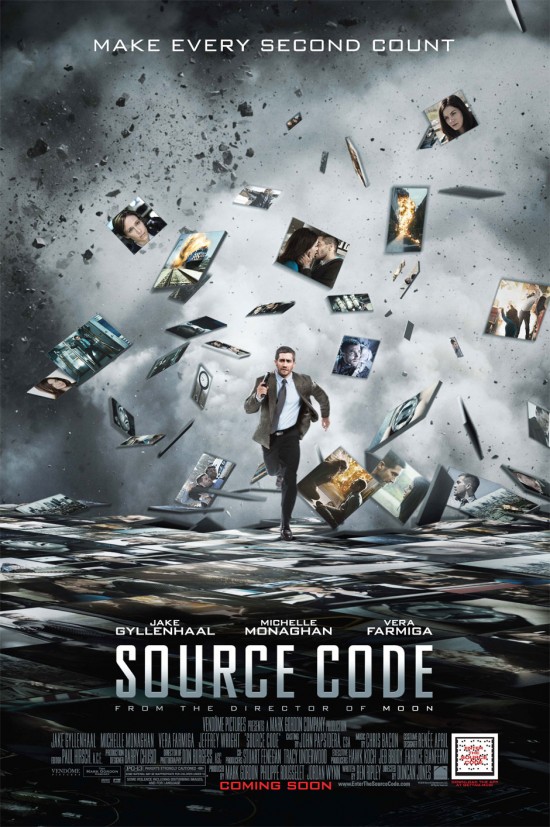
Director Duncan Jones (“Moon”) has produced a first-rate thriller with Jake Gyllenhaal as Captain Colter Stevens, sent back in time and into the body of a man on a commuter train eight minutes before it will explode, to see if he can find the bomber.

At first, we are as confused as Stevens, as he comes to on a Chicago-bound commuter train, apparently mid-conversation with a beautiful woman (Michelle Monaghan), with no idea of who or where he is. He goes into the bathroom and sees someone else’s face in the mirror, as in the old television series “Quantum Leap.” And then everything explodes and he is in some sort of capsule, talking to an officer in some sort of operations center on the other side of a window, (Vera Farmiga as Colleen Goodwin), trying to understand his mission though she answers most of his questions with “not relevant.” Her sense of urgency is clear, though. He must find the bomber on the train before he makes it into downtown Chicago to set off an even deadlier bomb.

Like an action-adventure version of “Groundhog Day,” Stevens is sent back over and over to re-live the same eight minutes to try to notice as much as he can about the people around him. He is in the past, Goodwin tells him. Those events have happened. There is nothing he can do to stop the bomber from killing everyone on the train, including the man whose body he is temporarily occupying. Those people are already dead. His mission is limited to identifying the bomber so that he can prevent the even greater tragedy that is yet to happen. As Stevens goes back and back again over the final eight minutes before the explosion, he is able to learn from his mistakes and start over. But it also means that whatever he has to do must be accomplished in eight minutes. And he re-experiences those minutes over and over again, learning more about what is happening on the train, and in his reports to Goodwin more about what the program he is working for it all about, his ideas about what his mission entails begin to enlarge.

Jones makes each replay different and enthralling as we work with Stevens to find the bomber and then to solve the bigger issues he uncovers as well. It is fast, fun, and exciting and bolstered with a top-notch cast to make some of the wilder elements of the science fiction work (though no one ever really figures out how to manage temporal anomalies). Gyllenhaal is believably dashing, dedicated, and dreamy, and Monaghan is believably someone it would take far less than eight minutes to fall for. Jeffrey Wright clearly relishes his role as the single-minded creator of the system that sends Stevens back in time and Farmiga is ineffably moving as the officer whose conflicts about what she is asking Stevens to do deepen as she keeps hitting the rewind button. Jones shows a sure hand in delivering on the concept and the action but he has already mastered pacing, story-telling, and heart. He makes each of the replays vital and engaging and knows just when to lighten things up. And he even sneaks in an affectionate “Quantum Leap” reference, with Scott Bakula providing the voice of Stevens’ father and even throwing in a signature “Oh boy.” It is the wit and attention to detail (pay close attention to that last shot) that makes this story worth going back to a few extra times.

(more…)

Related Tags:


Action/Adventure DVD/Blu-Ray Pick of the Week Fantasy Romance Science-Fiction Thriller

Hop

Posted on March 31, 2011 at 6:00 pm

“Hop” would more accurately be titled “Stumble,” a disappointing follow-up from the producers of one of last year’s best family films, “Despicable Me.” It is just another story of a hapless live action character who has his life turned upside-down by an animated animal, as in “Alvin and the Chipmunks,” also from director Tim Hill. Character design by New Yorker artist Peter de Sève and some subversively cheeky asides from Russell Brand are not enough to make up for a dull script, pointless celebrity cameos, and an overall nutritional content lower than a stale Peep.

As a little bunny on Easter Island, E.B. looks up to his father, the Easter Bunny (aristocratically voiced by “House’s” Hugh Laurie). He is dazzled by the vast underground factory. Enticingly elaborate assembly lines produce all the candy for the annual Easter basket delivery, with the help of second-in-command a big, fluffy yellow chick named Carlos (voice of Hank Azaria). But when he grows up, E.B. (Brand) no longer wants to take over his father’s egg scepter and delivery duties; as the song goes, he just wants to bang on his drums all day. Just before he is about to go on his first delivery, he runs away to the place where dreams come true: Hollywood.

Fred (James Marsden) is another son whose lack of focus and responsibility is a disappointment to his father (Gary Cole). His frustrated parents throw him out of the house to force him to get a job. Sam, his sympathetic sister (“The Big Bang Theory’s” Kaley Cuoco), gets him a job interview and a place to stay, house-sitting in a mansion to care for her boss’s dogs. He literally runs into E.B., and takes him to the mansion to recover.

E.B. creates chaos and frustration for Fred in various locales including the mansion, the job interview, and a school play. But E.B. also inspires Fred by validating his childhood memory of seeing the Easter Bunny’s egg-shaped flying ship, pulled by a flock of yellow chicks. If E.B. does not want to be the Easter Bunny, Fred resolves that he will do the job. But someone else also has his eye on the post – Carlos.

“Hop” repeatedly gets in its own way by establishing intriguing set-ups without any satisfying resolution. It is pointless to have Fred interviewed by a notoriously outrageous comedian (Chelsea Handler as “Mrs. Beck”) if she is not going to have anything funny to do. All she does is look a little annoyed when he is late and show him around the office. And it is not much better to have the “Pink Berets,” commando bunnies sent to Los Angeles to bring E.B. back, without finding something clever or interesting for them to do. They’re super-effective and powerful until for no special reason they are not. It all feels slack and sloppy, less a story than one under-written set-up after another, cut and pasted together with little sense of moving forward.

It has a poor sense of its audience as well. Kids will not understand or care that E.B.’s first destination is the Playboy Mansion because he is “a sexy bunny” or recognize Hef’s voice on the intercom. Even adults are more likely to find that encounter more skeezy than humorous. David Hasselhoff is a good sport about spoofing himself as the host of a talent show, but how many in the audience will get the KITT joke? When Carlos offers to take over the Easter Bunny duties, the only reason the boss turns him down is a broad and dismissive “a chick can’t be the Easter bunny.” Compared to the generosity and insight shining through the comedy of “Despicable Me,” this seems clumsy and thoughtless – and not much of a message for kids about tolerance.

The Easter Bunny has nothing like the secular appeal or extensive mythology of Santa Claus and this movie does nothing to make us wish he did. Despite some surface appeal, it is as hollow in the center as a chocolate rabbit.

(more…)

Related Tags:


Animation Comedy Fantasy
Interview: Duncan Jones of ‘The Source Code’

Interview: Duncan Jones of ‘The Source Code’

Posted on March 31, 2011 at 8:00 am

Duncan Jones, with only two films, has already established himself as an exceptionally able director. He wrote and directed his first film, “Moon” with Sam Rockwell, and it was remarkably assured, impressively creating a fully-realized future world that was believably normal — and on a tiny budget. His first big-budget film is another sci-fi story, “Source Code” with Jake Gyllenhaal as a man sent back in time by a military operation to relive the same eight minutes over and over until he can locate a bomber. I met with Jones in the wonderful circular Chimney Stack Room at the Georgetown Ritz and we had a great talk about my home town of Chicago, where the movie is set, about the movie’s secret tribute to the 1980’s television show, Quantum Leap, and about how his father, rock idol David Bowie, got him hooked on science fiction.
I’m from Chicago and I loved all the Chicago scenes in the movie!

I’m so glad. You’re the first person I’ve talked to other than the people who worked on it who can say we got it right. It was the first time I’ve ever been in a helicopter and it was stunning to be able to fly through the skyscrapers in Chicago. Incredible, amazing.

I loved seeing The Bean in the movie.

It’s a beautiful park. That whole area is lovely. And a great city.

And you used the Chicago commuter train through much of the movie, with its characteristic double-decker seating.

We took the real train a number of times to get a feel for it and take reference photographs and everything. And then we built our own in Montreal. The funny thing was that the real trains, a lot of the carriages date back to the 50’s and 60’s. They’re beautiful, but they look so period in some ways. We had to update the interior a bit or people would think he was really time-traveling!

I had just finished “Moon” and was doing the press tour for that. In Los Angeles, I had the chance to meet with some of the people I wanted to work with, and one of those was Jake Gyllenhaal, an amazing actor, very handsome, very talented. I was pitching ideas to him, and he said, “I have this script you should really read,” an original spec script by a young guy called Ben Ripley. It was a great read, fast, started off with an incredible ten pages and then keeps up that pace the whole way along.

I made my suggestions – I said, “I think the tone is quite serious. I wonder how you might feel about injecting a little bit of humor into it.” He liked that and we agreed that was what we wanted to do.

For you as a director, it is a real challenge as your main character repeats the same eight minutes over and over again to keep it fresh and interesting and different for the audience.

Yes, one of the most terrifying aspects of this script for a film-maker is how do I keep going back to this same event six or seven times and not bore the audience to tears. I had a graph and I literally worked it out on a visual level how each iteration would be different, whether we used a different angle or went to a different part of the train or move to the upstairs, always keeping variety there. And then narratively, we made sure there was no replication, always something new going on, something learned by Jake, a new relationship, new people. You still have the same eight minute event with continuity but no sense of replication.

We also get a montage taste of other trips back but about six in detail.

Why was the humor important?

I am a big science fiction fan myself. I see it divided up into hard sci-fi and soft sci-fi. Hard sci-fi is where you extrapolate into the future from where we are now and work out incrementally how we get from now to this point in the future. “2001” is a good example of a future you can believe might exist and you can see how we could get there. You understand it could actually happen. Soft sci-fi is a little more fantastical. It can have dragons or magic. And for me, time travel is in a gray area between the two.

I have a hard time believe it is possible but I love it as an idea and I understand the theoretics of it. My approach was, “Let’s use humor to cajole those like me who might not believe that it is possible,” to just say, “Take this leap of faith with me into this world where it is possible, just accept it because the story and the ride is worth it.” Humor does that. It is a very powerful tool in film because if you can get the audience and the protagonist to be laughing about the same thing, to be sharing a joke, in a way, or finding something amusing, the audience bonds with the character automatically.

When I saw the film, I wondered if you had changed the original ending.

We did, but not in the way you’d expect. There was a very sweet, romantic ending that beautifully finished that side of the story, the relationship side. But I am a sci-fi geek and I wanted to deal with this loose thread back at the facility.

It is a challenge to create a character who is interesting enough to play the villain but – without giving too much away here – not so interesting that he throws the movie out of balance, given the direction things end up going in the last third of the film.

I saw this documentary, “The Nuclear Boy Scout,” about this boy in the Midwest, about 15 years ago, trying to qualify for a Boy Scout merit badge in nuclear physics, incredibly smart but no comprehension about right and wrong and built a breeder reactor in his mother’s back yard, just going to antique stores and the library. He was able to create a breeder reactor. The government had to clean it up. Just because you’re smart doesn’t mean you have good judgment; that was where we started. As for casting, if you go with a bigger name, it makes it immediately obvious that if you do that you draw attention to that person. The actor we found, I had seem him at a casting session on video and I said, “There’s something about that performance in particular that captures what I saw in that documentary.”

You pay tribute in the film to some other sci-fi movies.

There were lots of references and parallels, including Quantum Leap, the TV show. My homage to that was the voice of the father: it’s Scott Bakula. He actually says, and we slipped it into the dialogue so it’s very organic, “Oh boy.” So the fans of the show will get that!

Throughout the film there are subtle homages to Hitchcock, here and there. The soundtrack has a Hitchcock vibe to it, and the setting on the train and the clock tower.

Who did the soundtrack?

Paul Hirsch, the amazing editor we had on board – he edited “Empire Strikes Back, “Ferris Bueller’s Day Off,” “Ray” – he’s a legend. He recommended Chris Bacon, this very young composer he had just worked with. We met with him at 11:00 at night, the day his wife had just given birth and he looked like a walking zombie. We hit him with all this information and told him what we wanted, something mischievous and mysterious, and said, “Can you write us something to see if you’re the right guy?” and four days later he came in with the opening theme as is.

It sounds like you worked very fast on this film.

Jake was finishing “Prince of Persia” and was going to disappear to do press for it. So we had about 35 days, about the same as “Moon.” I think that helps give it a sense of urgency; that energy does translate sometimes.

Have you always been a sci-fi fan? Books and movies?

Books first in fact. My dad is an avid reader and ever since I was a kid, I would read an hour a night. He always wanted me to read so if ever I was finding it difficult to get interested in something, he’d pull out Animal Farm or The Day of the Triffids to get me back in. “Blade Runner” is the be-all and end-all for me in science fiction. I strive to make something one day that has the sense of scope. It feels like you could pan the camera away from the actors and you would still be in that world.

My next film is science-fiction, too. My first film, “Moon,” was made for very little money. This is more of a Hollywood film. I’d love to take one of my own projects and make it with a “Source Code” kind of budget.

What do you look for in a project?

Empathy. The idea of identity, who someone is, whether the person they think they are is who everyone sees them as. Mostly that the audience can understand and feel for the main protagonist, that connection between the audience and the person whose story you’re seeing. My next one is science fiction and then I’m going to take a sabbatical and try something different.

Related Tags:


Behind the Scenes Directors Interview
THE MOVIE MOM® is a registered trademark of Nell Minow. Use of the mark without express consent from Nell Minow constitutes trademark infringement and unfair competition in violation of federal and state laws. All material © Nell Minow 1995-2026, all rights reserved, and no use or republication is permitted without explicit permission. This site hosts Nell Minow’s Movie Mom® archive, with material that originally appeared on Yahoo! Movies, Beliefnet, and other sources. Much of her new material can be found at Rogerebert.com, Huffington Post, and WheretoWatch. Her books include The Movie Mom’s Guide to Family Movies and 101 Must-See Movie Moments, and she can be heard each week on radio stations across the country.

Website Designed by Max LaZebnik