
New Narnia Poster: Dawn Treader
Posted on May 17, 2010 at 8:33 pm
Coming this December 10 in 3D: “The Chronicles of Narnia: The Voyage of the Dawn Treader”
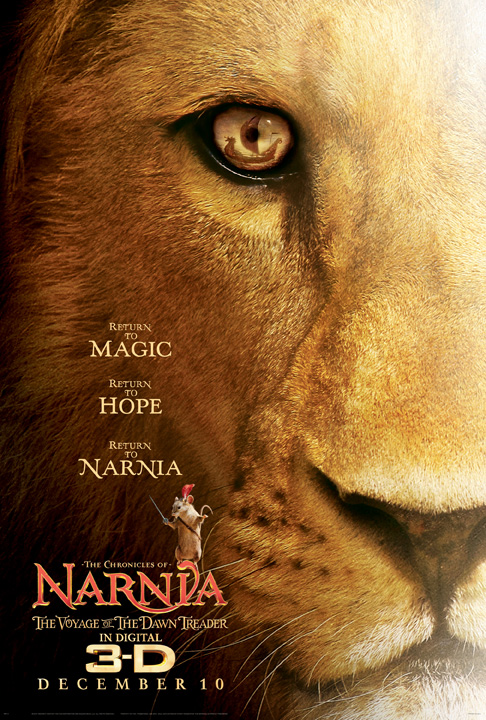
Posted on May 17, 2010 at 8:33 pm
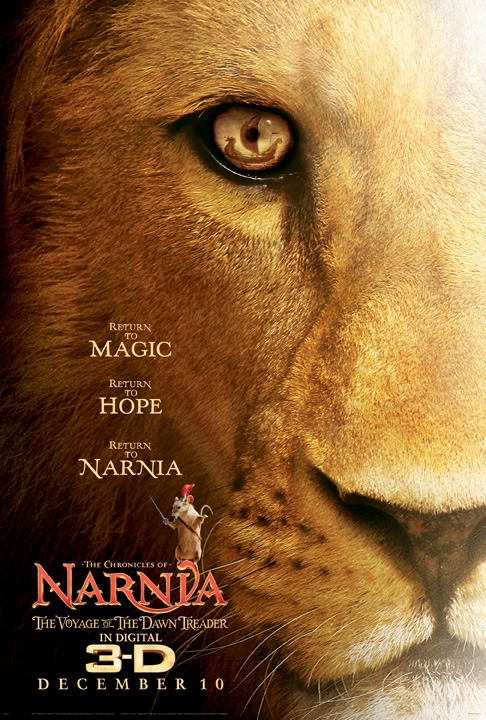
Coming this December 10 in 3D: “The Chronicles of Narnia: The Voyage of the Dawn Treader”

Posted on May 17, 2010 at 8:00 am
B| Lowest Recommended Age: | All Ages |
| MPAA Rating: | Rated PG for some reckless behavior |
| Profanity: | Very mild language |
| Alcohol/ Drugs: | None |
| Violence/ Scariness: | Risk-taking and peril, rattlesnake |
| Diversity Issues: | None |
| Date Released to Theaters: | 2010 |
| Date Released to DVD: | May 4, 2010 |
| Amazon.com ASIN: | B003NTGA90 |
Flicka 2

In this latest version a city girl (Tammin Sursok) who has been living with her mother and grandmother comes to the country to live with a dad she barely knows (Patrick Warburton, Puddy from “Seinfeld”). It is very hard on her as everything feels strange and unwelcoming. And then she meets Flicka, the mustang, and realizes that they are alike, both high-spirited, sensitive, and in need of affection. Country singer Clink Black co-stars and is featured in one of the DVD extras along with more information about mustangs.
Posted on May 15, 2010 at 8:00 am
The New Yorker has a fine article by music critic Alex Ross about soundtrack composer Michael Giacchino, who won an Oscar for his lilting but wistful score for “Up” and who also writes the evocative music for the television series, “Lost.” But even better is the podcast interview with New Yorker Out Loud editor Blake Eskin, because Ross talks about the evolution of movie soundtracks over the decades, from the lush orchestral scores composed by European emigres like Erich Wolfgang Korngold during the 1940’s to the jazz-influenced scores of the 1950’s that first acquainted mainstream audiences with music they were not yet ready to listen to on records or in clubs. And he illustrates his points with great examples that make you want to go back to see the movies all over again — or, I should say, listen to them all over again.
Here is Korngold writing for “The Adventures of Robin Hood.”
And here is Duke Ellington’s score for “Anatomy of a Murder.”
I share Ross’ disappointment with today’s over-reliance on pop songs to carry the emotion of the story but was glad to hear that he thinks that fully-orchestrated scores will make a comeback. As he points out, “Star Wars” would not have had nearly the mythic power without the unforgettable soundtrack from John Williams.