Celebrate Mary Shelley’s Birthday: Watch Frankenstein!
Posted on August 30, 2009 at 12:00 pm
Mary Shelley, daughter of two leading intellectuals and wife of a brilliant poet, was a teenager when she was challenged to write a ghost story and came up with one of the most enduring and often-filmed scary stories of all time, now considered the first true science fiction novel as well. She called it Frankenstein; or, the Modern Prometheus. And, as we all now know, it is the story of a scientist who tries to triumph over death by creating life. On screen, Frankenstein and his creation have co-starred with everyone from Abbott and Costello to Alvin the Chipmunk. The monster has been played by Boris Karloff, Robert DeNiro, Randy Quaid, David Warner, Tom Noonan, Peter Boyle, Michael Sarrazin, Lon Chaney, Jr., David Prowse (the actor who played Darth Vader) and John Cleese and inspired the character of Herman Munster, played by Fred Gwynne.
Frankenstein (1931) The James Whale-directed classic starring Boris Karloff is an unquestioned masterpiece of mood and filled with iconic moments.
The Bride of Frankenstein (1935) Whale and Karloff returned with this sequel, which many consider even scarier. Elsa Lanchester plays both Mary Shelley and the title character. Whale’s skill at making the story not just horror but tragedy makes this a compelling film that transcends genre.
Gods and Monsters (1998) This is not the story of Frankenstein but the story of James Whale (brilliantly played by Ian McKellan), whose depiction of Shelley’s story would be as influential in the 20th century as her book was in the 19th. The re-creations of the scenes from Whale’s films are meticulous and illuminating.
Young Frankenstein (1974) This loving spoof of Shelley and Whales has a hilarious script by Mel Brooks (who directed) and Gene Wilder (who starred as Dr. Fronk-en-STEEN). As influenced by Whales as by Shelley, this wildly funny film used some of Whale’s original sets and props.
Abbott & Costello Meet Frankenstein (1948) Brook and Wilder were not the first to see the comic possibilities in a monster film. Abbott and Costello run into a whole bunch of movie monsters with a lot of silly, Scooby-Doo-style scares.
And be sure to check out the Frankensteinia blog, which is a tribute to all things Frankenstein.
I love this Slate article by Kim Gittleson on the best and worst uses of the classic jazz album, Kind of Blue, by Miles Davis, in film and television. The list includes an action film with real-life jazz-lover Clint Eastwood (“In the Line of Fire”), a romantic comedy with Julia Roberts (“The Runaway Bride”), and an underrated fantasy film (“Pleasantville”), as well as a television series about a serial killer (“Dexter”) and a high-class cop show (“The Wire”).
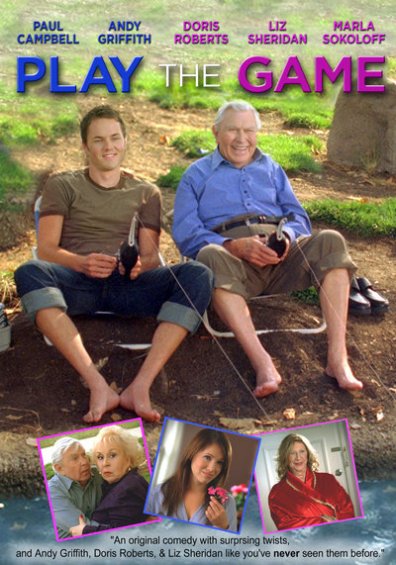
“Play the Game” has many elements that are often found in sexy romantic comedies — a hero who thinks he does not want to fall in love and a heroine who teaches him that he does not know what he wants, a pair of couples whose romantic ups and downs complement and balance each other, and the usual comic mis-fires before the happily-ever-after ending. But it also has some very unusual elements: the sexy humor about the romances of the elderly and the fact that the important relationship in the film is between a devoted grandfather and grandson. Another surprise: the grandfather making the Viagra jokes is played by Andy Griffith.
The movie’s title comes from the games played by the main characters in order to maintain control of their romantic relationships. So I began my interview with writer-director Marc Fienberg by asking him about the worst game he ever played during his dating days.
It was a trick that appears in the movie, “planned spontaneity,” arranging a chance encounter, or what looks like a chance encounter, even though you planned it out meticulously.
I tried to seduce my wife for seven years. Some might call it stalking — any other woman would have called the police. I drove up to Madison after four years and told her I was in town for a consulting gig, even though I was there just to see her. It didn’t work. My friends who helped me develop these tricks of the trade, it worked like a charm for them. I wish I was as suave and debonair as the guy in the movie. So, despite the “planned spontaneity” ploy, it is not autobiographical?
It is not so much autobiographical, as a reflection of my life. In my case, only three years later, I just put it on the line and told the truth. I took my own advice and it actually worked. Lying in general is not good. So I’ve heard! It was nice to see Clint Howard in this film, and of course he has that connection to Andy Griffith going back to his guest appearances with his brother Ron Howard on the old “Andy Griffith Show.”
Clint Howard was the first actor to sign on board. I always wanted him for this part. We had actually gone out to Andy Griffith but he said no at first. We were on a short schedule and he worried that he didn’t have time to learn his lines. And he was concerned about the sex scenes. He is a religious man and he wanted to be consistent with his values. But he said he couldn’t stop thinking about it. The bedroom scene showed older people in a nice, honest, realistic light. And very important — he didn’t die in it. There are not a lot of parts for older characters that don’t have them dying at the end. This movie was all about passion and living life to the fullest and holding out hope that there’s love and companionship at all ages and he liked that. Griffith and many of your other actors have a television background — Liz Sheridan on “Seinfeld,” Doris Roberts on “Everybody Loves Raymond,” Marla Sokoloff (“The Practice”). Was it an adjustment to work on a feature film?
TV and movies are similar enough from an actor’s standpoint. It’s always hard but the actors brought something even I didn’t see. What’s next?
“The Machine,” more of a family comedy about a young goat herder who dreams of doing bigger things with his life. Then the internet comes to town and he is forced to save his village. I’m also working on another romantic comedy and doing commercials now, too. How did your own family influence this story?
My grandfather started dating when he was 89 years old. The more time I spent with him, the more I appreciated different things in life and what was important. When you see these vibrant, passionate lives you more easily focus on what matters in the world.
My father was my first inspiration. He was a closet writer. And I had teachers and read authors who have inspired me to follow my passion. Giving up a safe, secure career, the hardest part was taking that leap to a career that had enjoyment and fulfillment and could make the world a better place. I studied business and started a million dollar e-commerce company that got sold. I wanted to make people laugh, affect people. One of the main things that gave me strength was my kids. It was important to have them see me doing something fulfilling, to set an example for them. We realized that our concern about the financial risk of trying to make a career in movies affected me and my wife much more than the kids.
In the movie, the father is the bad influence and grandfather is the good influence. It was when he started working for his father that he started being less honest. And it is when he starts trying to teach his grandfather not to be honest with women that he learns how important honesty — with himself and others — really is.
Fallen Hollywood luminary, name-dropper, world-class party-goer, best-selling author, and force for justice Dominick Dunne died of cancer yesterday at age 83. He was the brother of screenwriter John Gregory Dunne (the subject of The Year of Magical Thinking by his widow, Joan Didion). He was the father of actor/writer/director Griffin Dunne and Alex Dunne. And he was the father of Dominique Dunne, who played the oldest daughter in Poltergeist. She was murdered in 1982 by an ex-boyfriend whose inadequate sentence caused Dunne to devote the rest of his life to pursuing justice as a writer and activist.
Dunne was the best-selling author of novels based on real-life incidents of society scandal that were often adapted for glossy made-for-television productions like An Inconvenient Woman and The Two Mrs. Grenvilles. And he wrote non-fiction accounts of real-life scandal for Vanity Fair.
I heard him speak once and he was filled with bubbly and sometimes wicked anecdotes about the rich and famous. But he was also an enormously appealing presence, completely sincere in his essential decency. That comes through in a wonderful story he told for The Moth called “My Bunkmate Was In For Murder.” It is the tale of his arrest for possession of marijuana, which, since it was found on him at the airport coming back from another country made it a very serious offence. His rescue by from a most unexpected friend for a most unexpected reason makes it a perfect way to remember him.


 . And, as we all now know, it is the story of a scientist who tries to triumph over death by creating life. On screen, Frankenstein and his creation have co-starred with everyone from Abbott and Costello to Alvin the Chipmunk. The monster has been played by Boris Karloff, Robert DeNiro, Randy Quaid, David Warner, Tom Noonan, Peter Boyle, Michael Sarrazin, Lon Chaney, Jr., David Prowse (the actor who played Darth Vader) and John Cleese and inspired the character of Herman Munster, played by Fred Gwynne.
 is a good resource for the movie versions of Mary Shelley’s story. Some of the best Frankensteins include:
 (1931) The James Whale-directed classic starring Boris Karloff is an unquestioned masterpiece of mood and filled with iconic moments.
  (1935) Whale and Karloff returned with this sequel, which many consider even scarier. Elsa Lanchester plays both Mary Shelley and the title character. Whale’s skill at making the story not just horror but tragedy makes this a compelling film that transcends genre.
 (1998) This is not the story of Frankenstein but the story of James Whale (brilliantly played by Ian McKellan), whose depiction of Shelley’s story would be as influential in the 20th century as her book was in the 19th. The re-creations of the scenes from Whale’s films are meticulous and illuminating.
 (1974) This loving spoof of Shelley and Whales has a hilarious script by Mel Brooks (who directed) and Gene Wilder (who starred as Dr. Fronk-en-STEEN). As influenced by Whales as by Shelley, this wildly funny film used some of Whale’s original sets and props.
 (1948) Brook and Wilder were not the first to see the comic possibilities in a monster film. Abbott and Costello run into a whole bunch of movie monsters with a lot of silly, Scooby-Doo-style scares.
  , by Miles Davis, in film and television. The list includes an action film with real-life jazz-lover Clint Eastwood (“In the Line of Fire”), a romantic comedy with Julia Roberts (“The Runaway Bride”), and an underrated fantasy film (“Pleasantville”), as well as a television series about a serial killer (“Dexter”) and a high-class cop show (“The Wire”).
 by his widow, Joan Didion). He was the father of actor/writer/director Griffin Dunne and Alex Dunne. And he was the father of Dominique Dunne, who played the oldest daughter in
  . She was murdered in 1982 by an ex-boyfriend whose inadequate sentence caused Dunne to devote the rest of his life to pursuing justice as a writer and activist.
  and
and  . And he wrote non-fiction accounts of real-life scandal for Vanity Fair.
 and in a documentary called
  .
.