Where the Wild Things Are

Posted on March 27, 2009 at 10:00 am

Maurice Sendak’s spare, poetic, and deeply wise book has been lovingly unfolded into a movie about the child who lives in all of us, brave and fearful, generous and needy, angry and peaceful, confident and insecure, adventuresome and very glad to come home. The movie may challenge children who are used to bright, shiny colors and having everything explained to them but if they allow it, Max and his story will bloom inside them as it will for anyone open to its profound pleasures.

The book’s opening line is as well-remembered as “Call me Ishmael” or “It was a dark and stormy night.” “The night Max wore his wolf suit and made mischief of one kind and another his mother called him ‘WILD THING.'” Those who wondered what prompted Max’s mischief will accompany him as he experiences the jubilation of creating his own cozy space, a snowball-stocked igloo, and as he joyously takes on his sister’s friends in a snowball fight, only to be inconsolably crushed when they carelessly smash his icy lair and then leave without him.

There has never been a more evocative portrayal on film of the purity, the intensity, the transcendence of childhood emotions. The hallmark of maturity is the way we temper our feelings; it is not a compliment when we call someone “childish” for not being able to do so. Our experiences — and our parents — teach us that life is complex, that sorrow and joy are always mixed, and that we can find the patience to respond to frustration without breaking anything. But one reason that we mis-remember childhood as idyllic is the longing for the ferocity of childhood pleasures. Jonze and his Max (Max Records) bring us straight into the immediacy and open-heartedness of a child’s emotions.

We know we are in a child’s world even before the movie begins, with scrawled-on opening credits and then a breathtaking, child’s eye opening bursting with sensation, all the feelings rushing together. The film brilliantly evokes the feeling of childhood with the same freshness and intimacy director Spike Jonze showed in the influential videos he made when he was barely out of his teens. Max’s mother is beautifully played by Catherine Keener who makes clear to us, if not to Max, her devotion and sensitivity in the midst of concerns about work and a budding romance. His incoherent fury at her being distracted, including a kiss from a date who seems to think he has the right to tell Max how to behave almost hurtles him from the house, into the night, where he runs and runs, and then to a boat, where he sails and sails, until he comes to the land of the Wild Things.

They begin to attack him, but Max tames them with his bravado and imagination and he becomes the king, promising to do away with loneliness and make everyone happy. The book’s brief story blooms here as Max interacts with the Wild Things (voices of James Gandolfini, Lauren Ambrose, Catherine O’Hara, Paul Dano, Forest Whitaker, and Chris Cooper). Each of them represents or reflects Max’s emotions or experiences. They love sleeping in a big pile and are thrilled with Max’s plans for a fort. But Max learns how difficult it is to be responsible for the happiness of others, and before long, like other children in stories who have traveled to lands filled with magic and wonder, he longs for home.

The movie’s look is steeped in the natural world, with forests and beaches, and intricate Waldorf-school-style constructions that evoke a sense of wonder. The screenplay by Dave Eggers and Jonze locates the heart of Sendak’s story. They have not turned it into a movie; they have made their own movie as a tribute to Sendak, to childhood, to parenthood, to the Wild Things we all are at times, and to the home that waits for us when those times are over.
Related Tags:


Trailers, Previews, and Clips

Ellen plays Mother Nature

Posted on March 25, 2009 at 8:00 am

Talk show star and comedian Ellen DeGeneres has signed on to play Mother Nature in an original upcoming comedy produced by Walden Media, to be written by Golden Globe and Emmy Award-winner Jenny Bicks, Creator and Executive Producer of “Men in Trees” and writer and executive producer of “Sex and the City.” DeGeneres said, “I’m so excited to be playing Mother Nature. I’ve always wanted to control the weather. Nothing will stop me from doing this…neither rain, nor snow, nor sleet…I may be thinking of the postal service. But, I’m really excited about the movie.” DeGeneres is a gifted actress and an engaging performer and I am really pleased to see her joining forces with Walden, which has an excellent record of producing quality movies for families.
Walden Media, which has made a specialty of classy adaptations of great books, was recently honored by The Association of American Publishers (AAP) with the 2009 AAP Honors Award. Founded in 1999, Walden Media has brought various children’s titles to the big screen including Hoot, Holes, Because of Winn-Dixie, Bridge to Terabithia, and Charlotte’s Web, and worked with museums, libraries, and teachers creating educational outreach programs for their films. The AAP honors were inaugurated in 1997 to acknowledge the contributions of individuals and organizations outside the book industry who have helped focus public attention on books and the importance on society. Walden, which makes an effort to encourage kids to read the books that inspire their movies, well deserves this recognition.

Related Tags:


Trailers, Previews, and Clips

List: Inspiring Quotes from the Movies

Posted on March 23, 2009 at 8:00 am

Movies have enormous power to inspire us and some of their best lines stay with us long after we leave the theater. Here are some of the lines that always make me try a little harder, risk a little more, and hold on a little longer. And I’d love to hear some of yours.
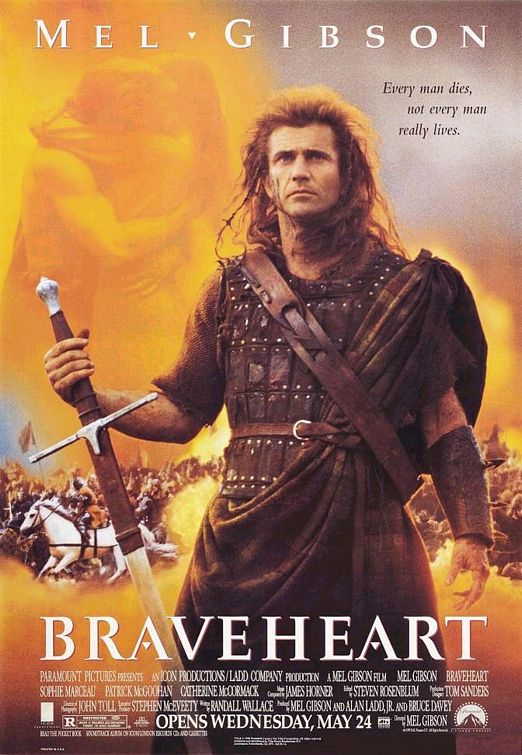
braveheart.jpg“Every man dies, but not every man really lives.” Mel Gibson as William Wallace in Braveheart
“A lot of people enjoy being dead. But they are not dead, really. They’re just backing away from life. Reach out. Take a chance. Get hurt even. But play as well as you can. Go team, go! Give me an L. Give me an I. Give me a V. Give me an E. L-I-V-E. LIVE! Otherwise, you got nothing to talk about in the locker room.” Maude in Harold and Maude
Frodo: I can’t do this, Sam.
Sam: I know. It’s all wrong. By rights we shouldn’t even be here. But we are. It’s like in the great stories, Mr. Frodo. The ones that really mattered. Full of darkness and danger, they were. And sometimes you didn’t want to know the end. Because how could the end be happy? How could the world go back to the way it was when so much bad had happened? But in the end, it’s only a passing thing, this shadow. Even darkness must pass. A new day will come. And when the sun shines it will shine out the clearer. Those were the stories that stayed with you. That meant something, even if you were too small to understand why. But I think, Mr. Frodo, I do understand. I know now. Folk in those stories had lots of chances of turning back, only they didn’t. They kept going. Because they were holding on to something.
Frodo: What are we holding onto, Sam?
Sam: That there’s some good in this world, Mr. Frodo… and it’s worth fighting for.
The Lord of the Rings – The Two Towers
“Get busy livin’, or get busy dyin.” Tim Robbins as Andy Dufresne in The Shawshank Redemption
“Life is not the amount of breaths you take. It’s the moments that take your breath away.” Will Smith in Hitch
“The flower that blooms in adversity is the most rare and beautiful of all.” The Emperor in Mulan
“There is a story in the Talmud about a king who had a son who went astray. The son was told, ‘Return to your father.’ The son replied that he could not. The king then sent a messenger to the son with the message… ‘Come back to me as far as you can, and I will meet you the rest of the way.'” Reuven in The Chosen
“I believe a man is as big as what’ll make him mad.” Reno Smith in Bad Day at Black Rock
“Laughter through tears is my favorite emotion.” Truvy in Steel Magnolias
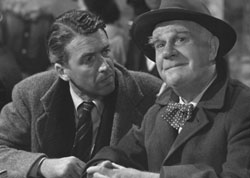
clarence.jpg“Strange, isn’t it? Each man’s life touches so many other lives. When he isn’t around he leaves an awful hole, doesn’t he?” Clarence the angel in It’s a Wonderful Life

Related Tags:


For Your Netflix Queue Lists

When Not to Watch Movies, Part 1

Posted on March 21, 2009 at 10:00 am

I was recently reminded of an incident I wrote about three years ago for the Chicago Tribune and it inspired me to re-post the essay:
My husband, daughter and I had just settled in for lunch at one of our favorite local restaurants when another family was escorted to the next table. The mother helped the little girl, who looked to be about 4 years old, off with her coat and lifted her into the booster seat.
Then, before removing her own coat, the mother placed a personal DVD player on the table in front of her daughter and hit the “play” button. Disney’s “Cinderella” started up, and the little girl began to watch. Without headphones.
Even after we moved to a table on the other side of the restaurant, we could hear the strains of “Bibbidi-Bobbidi-Boo” as we ate our tandoori chicken and talked about how many things were wrong with that picture.
Here’s what we concluded:
First, the little girl’s parents were teaching her to completely disregard the feelings, the rights and the preferences of anyone else.
The DVD made it harder for us to hear one another and the waiter and impossible to enjoy the quiet music that is normally a part of the restaurant’s pleasant atmosphere.
Instead of teaching their daughter good manners and consideration for others, these parents demonstrated through their own thoughtlessness that they did not believe it was necessary to devote time or energy to thinking about how their actions might affect others.
Second, her parents showed the child she had nothing of interest to tell them and they had nothing they felt was worth discussing with her.
Family meals and car rides are the best time to share the stories of our days, to coordinate upcoming plans, to discuss the news in our communities and to make clear our values and priorities. This family communicated to its youngest member that she was neither valued nor a priority.
Third, the parents failed to take advantage of the opportunity to teach their daughter an indispensable life skill — the ability to participate in a thoughtful and courteous conversation. If her parents keep it up, this girl will become a young woman who has nothing to say to anyone and no way to respond to comments and question at school, with friends, on dates, at job interviews.
Children need to learn the structure of a conversation, namely how to listen, when to nod, how to look the person who is speaking in the eye and how to know whether the other person understands and is interested in what you are saying. The art of conversation also involves knowing how to include everyone in the discussion, how to select the appropriate details to evoke a scene or convey an opinion, and how to disagree without being disagreeable.
Like music, these skills come naturally to some people and are harder for others, but everyone can benefit from practice and example.
Fourth, the girl’s parents lost the opportunity to show their daughter how to pay attention to what is going on around her. The more we allow children to numb their brains and cut themselves off from their environment, the less we are able to encourage their powers of observation and inspire their imaginations.
By using “Cinderella” as a distraction instead of a fully engaging experience, the parents turned it into what Fred Allen called television, “chewing gum for the mind.” The children who will grow up to create the next generation’s “Cinderella” are the ones who are looking at the world around them and exercising their imaginations.
Parents should stretch their children’s attention spans, a challenge in this media-saturated world. One way to do that is to set an example by turning off television, iPods, BlackBerrys, cell phones and PDAs when the family is together.
When our children were growing up, we had a “no headphones” rule on car trips. I preferred having my children argue about which radio station to listen to (that disagreeing without being disagreeable skill takes a while to get right) than having each of them off in separate zones of solitude.
Children need to learn to be engaged observers. Parents should both set an example and explicitly teach their families to be junior Sherlock Holmeses, seeing what they can deduce from what they see, and junior Scheherazades, telling stories to develop their senses of narrative, drama and humor. Is that couple at the next table on a first date or do they know each other well? What language are those people speaking? What can you tell about a person’s profession, hobbies, education, political views and favorite sports team? How do you know?
As we looked across the room at this family — the girl watching the movie, the father talking on his cell phone, the mother looking down at her plate — we wished there was a “Bibbidi-Bobbidi-Boo” spell to turn their devices into pumpkins and get them to talk to each other.
NOTE: I got a few emails when this essay first ran asking me if it was possible that the child had some learning issues and was not “neuro-typical.” As someone who worked in a school for disabled children and has disabled family members I am always sensitive to this issue as well. I did observe her in brief conversation with her parents and it seemed clear that this was not the reason for the DVD.

Related Tags:


Commentary Parenting Preschoolers Understanding Media and Pop Culture
THE MOVIE MOM® is a registered trademark of Nell Minow. Use of the mark without express consent from Nell Minow constitutes trademark infringement and unfair competition in violation of federal and state laws. All material © Nell Minow 1995-2026, all rights reserved, and no use or republication is permitted without explicit permission. This site hosts Nell Minow’s Movie Mom® archive, with material that originally appeared on Yahoo! Movies, Beliefnet, and other sources. Much of her new material can be found at Rogerebert.com, Huffington Post, and WheretoWatch. Her books include The Movie Mom’s Guide to Family Movies and 101 Must-See Movie Moments, and she can be heard each week on radio stations across the country.

Website Designed by Max LaZebnik