The magazine published by the American Bar Association has assembled a list of the 25 best movies about the law, with another 25 on the list of runners-up. I am a lawyer from a family of lawyers and we all love movies about the law. Just about every lawyer I know would agree with the ABA’s assessment that “To Kill a Mockingbird” is the all-time best.
I am partial to the movies based on real-life cases like “Philadelphia,” “Amistad,” and “Erin Brocovich.” Another of my favorites, “Inherit the Wind,” includes dialogue lifted straight from the court transcripts. “Anatomy of a Murder has the additional distinction of being based on a book by a judge and having a real-life judge and American hero playing the part of the judge on screen. And it is the only law movie I can think of where one of the highlights is a lawyer finding the right precedent in the law library.
I know it is a popular movie, but I was surprised to find “The Verdict” on the ABA’s list, even with Paul Newman’s Oscar-winning performance. It is wrong on so many points of law that my law professor sister said she could ask her students to find all the errors as an exam for her Civil Procedure class. All of the movies on the full list, including the honorable mentions, are worth watching. There is something inherently gripping about a courtroom drama, as “Law and Order” shows several nights a week.
Interestingly, though, one of the most widely seen and highly regarded of the films takes place entirely outside the courtroom: 12 Angry Men. A friend recently gave me a copy of a a special issue of the Chicago-Kent Law Review dedicated to the 50th anniversary of that classic movie.
In , all but a few moments of the film take place in one room as a dozen men deliberate in a murder case. A teenager has been charged with stabbing his father to death. In the initial vote, all but one (Henry Fonda as Juror #8) vote “guilty.” I go on jury duty myself for the first time after Labor Day and will keep this movie very much in mind as I try to live up to one of society’s most important responsibilities.
Interview: Tannishtha Chatterjee and Sarah Gavron of ‘Brick Lane’
Posted on July 25, 2008 at 10:00 am
Sarah Gavron is the director and Tannishtha Chatterjee is the star of the new British film “Brick Lane,” based on the best-selling novel by Monica Ali. While the book covers three decades in the life of its heroine Nazneen, a Bangladeshi girl who comes to London for an arranged marriage, the movie shows us just one transitional year. I spoke with Gavron and Chatterjee in Washington D.C.
In the US, everyone but the Native Americans is very aware of his connection to the immigrant experience, though that does not necessarily translate into being welcoming of newcomers. How is it different in the UK, which had a very homogeneous and colonialist way of looking at the world for so long?
SG: London is now a fascinating place to live because it has so many cultures, even if you’re a born and bred Londoner, you’re growing up around people who have been displaced, so you get it once removed. Sometimes you have to wait quite a long time to hear English being spoken.
Naznnen is homesick for much of the movie and yet when she has a chance to go back, she does not. Why not?
TC: There is an image she has of Bangladesh, but that Bangladesh is gone, it’s changed. The image they have in their minds is not what it was.
Do women and men find different challenges in navigating a path between assimilation and identity?
TC: In certain ways yes, especially women like Nazneen who are homemakers and don’t have an outlet outside their home or make friends through work or get to know the culture from outside. Creating a home is a bit claustrophobic because they don’t connect to anyone outside. Men in some ways have a connection but in other ways face the harsh reality of the outer world, and feel more like an outsider. Nazneen does not even know their world.
Writer/director Jonathan Levine has been getting great reviews for “The Wackness,” the story of the friendship between a teenage drug dealer (Josh Peck) and his customer/therapist (Ben Kingsley). I spoke to him about what inspires him and about what it feels like to direct an Oscar-winning actor with a “Sir” title.
One thing everyone who sees the movie talks about is the specificity of period detail. It is set in 1994, a time so recent that we don’t really remember how much has changed. It wasn’t that long ago that everyone had to use pagers and pay phones instead of cell phones and Nintendo Game Boys instead of PSP.
It’s a fine line. We didn’t want it to become “I love the 90’s” but to have audiences bring their own nostalgia to it it brings an energy. The nostalgia I put in there interacts with yours — that’s all part of it. As long as you’re aware of it and polling when it gets too much then you’re okay. You can see where it becomes a little too much, and we cut some of it out.
You worked with actors from a wide range of backgrounds and your two leads in particular could not have been more different — one a classically trained Oscar-winner with a very long, distinguished career and one coming from a Nickelodeon sit-com. And then there’s Mary Kate Olson who grew up on television. How do you work with them?
I have to figure out how they like to work. It’s almost akin to throwing a party and you want the right people sitting next to the right people. I have to make sure everyone is as comfortable as possible and working in the mode they like to work in.
With Olivia (Thirlby) and Josh (Peck), they are closer to my age and I can intuit what they’re going to dig. With Sir Ben I had to ask him how he likes to work and he knows. He knows what environment he flourishes in. He said, “You have to tell me when you’ve got it and then we can play around with a few more.” In the movie frequently it’s one of his first two takes and frequently some of the others. He said, “Tell Josh that he’s going to be leading our scenes.” That made everyone comfortable, empowered us in a way, and it mirrors the dynamic the two characters have in the movie. He told Josh that, but then as everyone got more and more comfortable sometimes Sir Ben would take the lead.
Working with smart actors makes everything a lot easier. No matter what your kind of background it works as long as you have a shorthand, and it is much easier to communicate with intelligent people. This group was all very easy communicating, even with Mary Kate.
Take Josh, his show is so broad and big and he’s like this Jackie Gleason character. But he has an acting coach he’s worked with for a while and so he has serious training. I had looked him up on YouTube, too, and saw Mean Creek. He’s not afraid to go where he needs to go. He embraces the entire character, foibles and all. There was nothing that had to be taught or learned. We talked about what of his experiences were relevant. Sometimes I would say, “Bring it back a little bit,” or “Do it again.” All I wanted was the most naturalistic thing possible.
Now I see Drake and Josh all the time, it seems to be on whenever I turn on the television. And he’s into some wacky hijinks! To me the one thing after working with him that may have helped him or informed his work here is that he has an accessibility and vulnerability and ability to empathize, and that is what appealed to me. He is not afraid to be vulnerable, to show all sides of the character good and bad.
I wish I could take credit for his performance, but it’s all him. I can only take credit for casting him.
What were some of the movies or performances that influenced you in thinking about telling this story?
The references I watched during the screenwriting process were looking at May/September buddy movies like Harold and Maude, Rushmore, Wonder Boys, but movies I didn’t watch that were so much a part of who I am and growing up, the ones I tried to capture their spirit, were films by Cameron Crowe and John Hughes. We did watch Almost Famous. I didn’t have to rewatch it because it is so much a part of my memory of growing up. Ferris Bueller’s Day Off is Hughes’ “Citizen Kane.” The real heart of the movie is Cameron; that’s where the movie’s heart is. The scene in the museum is beautifully done. It is all about these characters and the things they’re going through. Even though what you remember is the music and the clothes, those movies influenced me more than I knew.
I’m sure everyone wants to know about Mary Kate Olson!
We offered her the role and it was a small role and she thought she could have fun with it. I was really impressed with how down to earth she was. I’d be looking for her between takes and find her in craft services, eating grilled cheese with the grips. And she’s got this amazing charisma! Considering that she’s had such a crazy strange life, it has to be so hard for her. Walking down the street in Sundance, we had this strange group of people, everyone noticed the other guys but they were tripping over snowbanks trying to get her picture. I was glad to show her in a new light. I like the fact that in independent cinema you can take people who have preconceived notions about them and show everyone something new.
Was there a moment in this film that was your starting point for thinking about the story?
The first scene in the film is the first one I wrote, the one where everything began. I started with it four years ago in film school. As everything else was rewritten and edited, this therapy session with drugs exchanged for therapy was the center, and we built the layers around that.
How did the actors change or enlarge your ideas of the characters?
Working with Josh and Olivia was incredible because they brought such realism and a natural grounded feeling to their scenes, something the actors of the John Hughes movies had, the bravery, the willingness to embrace going to every place that you need to go to show a three-dimensional character. Olivia’s character — I don’t claim to understand women. It was incumbent upon her to fill in the blanks, to make her sympathetic in spite of the fact that what she was doing was not very nice. She gave me a new empathy for all the girls in my life, and I am very grateful for that.
The members of the Alliance of Women Film Journalists speak out on superhero movies. Are they just for boys? MaryAnn Johanson, who’s carved her critic’s niche by taking superhero movies seriously, provides an introduction:
“Comic books and comic book movies ain’t just for boys anymore-if they ever were. The latest slew of superhero flicks, which began to come of age with 2000’s “X-Men,” have gotten increasingly sophisticated and now focus equally on the existential dramas of their heroes and the mythic arcs of their typically tragic stories as they do on slam-bang action…Today we’re seeing fantasy drama with an accent on the drama. Superhero movies are not longer lighthearted comedies dressed up in capes-as in 1978’s “Superman”-or expressions of over-the-top outrageousness-as in Jack Nicholson’s Joker in 1989’s “Batman,” for example. Even “Hancock,” which was marketed as a comedy, turns out to be more intensely dramatic than it is funny. Lexi Feinberg comments, “I’d say they’re mythic. Adam Sandler movies represent the dumbing down of audiences much more than “Spider-Man” or “Batman”.”
The critics overwhelmingly chose “Iron Man” as the best recent superhero movie and hope for better superhero movies featuring women. The survey quotes my comment about Elektra and Catwoman: “they were made by people who don’t understand women, comics or movies.”
Check out my Gallery of 10 of my all-time favorite movie dads.
And check out Idol Chatter’s list of the best TV dads. I love all the fathers on all the list and in the comments, especially Andy Griffith. I also loved Tom Bosley on Happy Days. He always had just the right words of wisdom and support. I loved the late Sydney Pollack as Will’s father on “Will and Grace.” Fred Sanford (Redd Foxx) and Archie Bunker (Carrol O’Connor) had their moments! So did Jerry Stiller as George’s father on “Seinfeld.” And it was a treat to see a glimpse of one of the all-time best TV dads, the late Bill Bixby in “The Courtship of Eddie’s Father” in the new “Incredible Hulk” movie (a nod to Bixby’s role in the Hulk TV show).



 by Monica Ali. While the book covers three decades in the life of its heroine Nazneen, a Bangladeshi girl who comes to London for an arranged marriage, the movie shows us just one transitional year. I spoke with Gavron and Chatterjee in Washington D.C.
  . He’s not afraid to go where he needs to go. He embraces the entire character, foibles and all. There was nothing that had to be taught or learned. We talked about what of his experiences were relevant. Sometimes I would say, “Bring it back a little bit,” or “Do it again.” All I wanted was the most naturalistic thing possible.
 all the time, it seems to be on whenever I turn on the television. And he’s into some wacky hijinks! To me the one thing after working with him that may have helped him or informed his work here is that he has an accessibility and vulnerability and ability to empathize, and that is what appealed to me. He is not afraid to be vulnerable, to show all sides of the character good and bad.
 ,
,  ,
,  , but movies I didn’t watch that were so much a part of who I am and growing up, the ones I tried to capture their spirit, were films by Cameron Crowe and John Hughes. We did watch
  . I didn’t have to rewatch it because it is so much a part of my memory of growing up.
  is Hughes’ “Citizen Kane.” The real heart of the movie is Cameron; that’s where the movie’s heart is. The scene in the museum is beautifully done. It is all about these characters and the things they’re going through. Even though what you remember is the music and the clothes, those movies influenced me more than I knew.
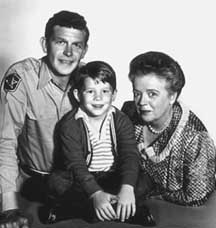
 . I also loved Tom Bosley on
  . He always had just the right words of wisdom and support. I loved the late Sydney Pollack as Will’s father on “Will and Grace.” Fred Sanford (Redd Foxx) and Archie Bunker (Carrol O’Connor) had their moments! So did Jerry Stiller as George’s father on “Seinfeld.” And it was a treat to see a glimpse of one of the all-time best TV dads, the late Bill Bixby in “The Courtship of Eddie’s Father” in the new “Incredible Hulk” movie (a nod to Bixby’s role in the Hulk TV show).