Interview: Writer-Director Anthony Joseph Giunta of “Contest”

Posted on January 21, 2014 at 3:59 pm

I really enjoyed writer-director Anthony Joseph Giunta’s first film, “Contest,” a smart, funny, thoughtful story about high school bullying — and a televised cooking competition.  It was a pleasure to talk to him about making the film.
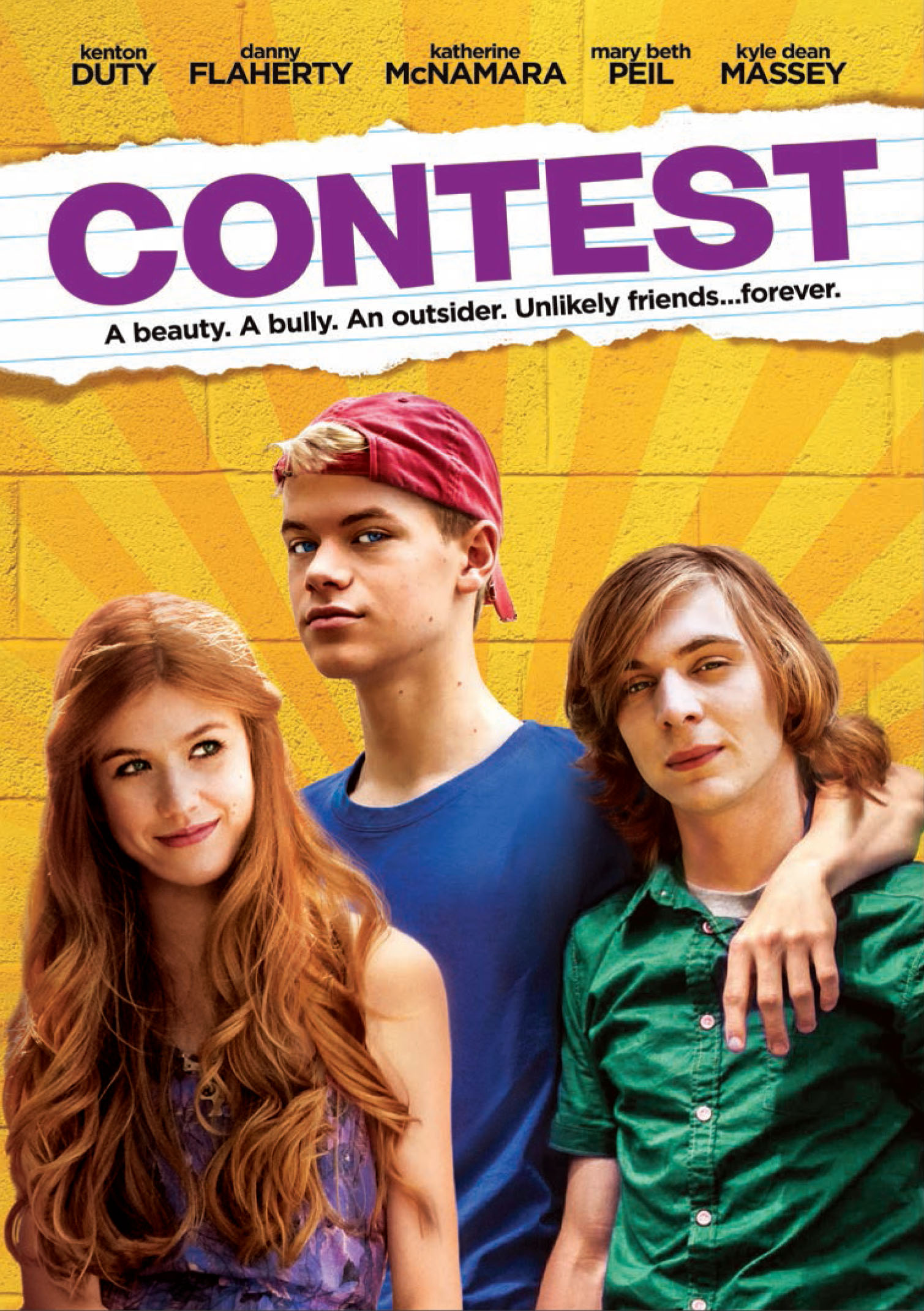
CONTEST_KA_R5.inddHow did this project come about?

Basically it was the end of 2010 and I had read a string of articles during a 1-week period about different kids throughout the country committing suicide as a result of teen bullying.  By the third day when I had read about the third different kid this had happened to it really got to me.  I was a bullied kid back in grade school and high school but that was before the Internet and that was before texting and I had the luxury of being able to come home at the end of the day and close the door and not have to deal with it until I got back to school the next day.  What got me was how pervasive it had grown so there are many kids who just cannot get out from under it.  They have to deal with it 24/7 between social network sites, texting and all of that.  So that is where I felt like I had to do something and that is what I decided to do.  I was in a totally different career.  I was an HR executive with a cultural institution in Manhattan and I basically spent every hour that I was not working for a month doing the first draft of this script and it was like a passion lit a fire in me.  I could not stop and about half way through I just said, “What am I going to do with this? This is not something I just want to sell to a producer or a studio.  This is a movie I want to make,” and I just kept going.  To make a long story short within a couple of months I gave 6 months’ notice to my job as leaving to go make a movie. I didn’t know how yet but I was going to get this movie made.

What would you say is the biggest misunderstanding about bullies?

I think what people don’t get is that a lot of times the kid who is doing the bullying has some kind of pressure on them themselves that also resembles bullying from somewhere whether it is a family member or some authority figure.  There is something going on that is compelling them to target other people. And when they do target the people they are bullying, it is not only about that person. It is to send a message like a social status message to everyone else around like “look I have some power here and if you cross me. see what I’m doing to him, that could be you.”  It is kind of the unspoken thing but it really stems from a place of feeling a lack of control somewhere and you know a lot of times when you look back kids who are the bullies are being bullied somewhere along the line.

As someone who is experienced with HR do you see that this kind of thing plays out in the workplace as well as in schools?

Absolutely.  When I got out of school and went into the working world I thought “okay that part of my life is behind me.”  Not so much.  It definitely plays out into the working world and I actually I touch on it in one scene where the assistant principal is kind of stuck in the middle of a good old boys network between the principal and the head of the swim team and basically all the pressure is shifted to her but there is an already expected outcome.  That was kind of my nod to the way it can continue into the adult working world.

What should parents and school administrators do to help and manage to prevent bullying?  Do you feel the anti-bullying efforts that you are portraying in this school are effective in any way?

There are different schools that have different programs and I think there are probably some that are more effective than others.  I am pleased that one school system is going to use the film in their anti-bullying curriculum starting in the fall of 2014 and we are actually going to be working with them.  It will be used in schools throughout New Jersey and hopefully will continue into schools throughout the whole country.  I’m going to get some of the kids who worked on our film and some of their peers from TV, Broadway, movies etc. to help us out on this initiative and I think when kids see other kids that they hold up as role models it can be very helpful and effective on the kid level but the biggest thing you need to get with any program if you need to get the buy in and participation from not only school administration but from parents too.  It is really totally a collaborative thing.

It is interesting to me that the two main characters in the movie don’t have parents in their lives.  What was your thought about that?

For these particular guys there is that actual physical absence and for audience members who see it there may be qualities that are absent in some of the parent/child relationships that they see in front of them.  That helps me to draw on that without feeling like it is a specific one or two things about this particular parent with this particular child and that is really where that came from.

Why was it important to focus on changes in both the boys?  A lot of bullying material only focuses on the source of the bullying and not the victim.

I was a bullied kid but my journey was pretty much emotionally like what Tommy’s was.  My biggest goal was to live as self-sufficiently as I could without having to bring in other people.  That stuff does not always serve you well and I just thought if the story is going to be or come forth in a way that it really resonates with everyone you are going to have to show the humanity of everybody as opposed to demonizing one side and sanctifying another so it felt like a more natural type of thing.  When people read the script and gravitated towards that and loved that and said, “Oh my God it made it just so accessible and so relatable.” then I knew I had made the right choice.

What are some of the challenges working with the teenagers in the cast?

People said to me “It is going to be so difficult,” “It is going to be so hard,” and I was expecting exactly that and I had exactly the opposite.  It was one of the most wonderful experiences ever.  These are very, very professional kids, many of whom have been working for a very long time since they were little and every day was just more and more joyous.  I think one of the reasons it worked so well is my style is very much that we will talk things through.  We will talk through the motivation, the back story, all of those things and I love when one person’s idea sparks another person’s idea and that is what I got.  These are all really, really smart kids, and we talked about their characters, we talked about where they came from, what motivated them to do certain things etc.   It was just a completely joyous experience.


Related Tags:


Directors Interview Writers

Exclusive Excerpt: The Film Crew of Hollywood by James Udel

Posted on January 21, 2014 at 8:00 am

I am thrilled to be able to share with you exclusive excerpts from one of the best books ever to take you behind the scenes in film production — The Film Crew of Hollywood: Profiles of Grips, Cinematographers, Designers, a Gaffer, a Stuntman and a Makeup Artist by James Udel.  I am deeply grateful to Mr. Udel for speaking with me, for allowing me to publish this excerpt, and most of all for interviewing these unsung heroes of Hollywood.

William Fraker, Cinematographer

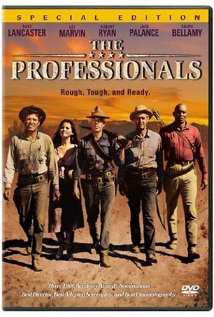
the professionalsThe notion of ‘following one’s instincts’ was first put to the test when Bill Fraker was hired by Hall to operate camera on the 1966 classic adventure western, The Professionals, helmed by a gritty, workhorse of a director, Richard Brooks.  When asked about the picture, Billy smiled broadly while remembering his first (and nearly his last) conversation with the old-school director.  About a week into the shooting schedule, a large complicated scene took place involving an Army train with dozens of troop extras and horsemen positioned around the tracks and platform cars.  While shooting the intricate sequence with its secondary focus of a woman riding on horseback through frame, Fraker became fixated with a lucky accident.  Upon holding a pan shot on actress Claudia Cardinale, (instead of cutting away after a three second beat as Brooks had instructed him to do), he was questioned by the livid Director at scene’s end.  “What the hell did you do that for?”  Brooks roared into Fraker’s serene face.  “Because it was so damn beautiful,” Billy replied candidly.  “It better be,” the Director said, turning and walking away.  Certain that he was going to be fired (and fearing for his situation with Hall), on the following day Fraker was surprised to be invited into the screening room, as Brooks’ habit was to share dailies with as few folks as possible.  In addition to directing, Brooks also wrote brilliant scripts for pictures such as Cat on a Hot Tin Roof, In Cold Blood, Blackboard Jungle, and Elmer Gantry, in 1960 (for which he won an Oscar for best screenplay).  A tough ex-Marine (and no one to fool with by reputation), when the take in question was shown during dailies (with its hold on Cardinale and the horse, neck high flowing through the frame), Brooks had the projectionist in the back of his hotel room stop the machine.  “Fraker,” he began sternly, “you were right to stay on her.  Your shot was better.  Would you like to see dailies with us from now on?”

 Gaylin Schultz, Key Grip

thomas crown mcqueenGaylin’s biggest break in Tinseltown occurred when called by Jack Reddish to take over Key Grip duties on the Thomas Crown Affair, after Morris Rosen (of High Noon and Man with a Golden Arm fame), suffered a fatal heart attack during the first week’s filming.  A case of one man’s misfortune being another’s ‘window of opportunity’ (an often repeated theme of advancement in Filmberg), Schultz was engaged at the suggestion of the movie’s producer, Walter Mirisch; who fondly recalled his heroic action from How To Murder Your Wife a few years earlier.

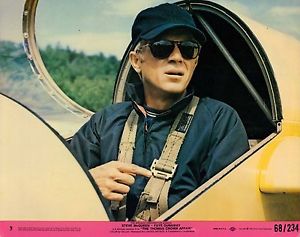
His first day on the film was a challenge that would mirror much of his career success to come.  Tasked with staging a set of moving shots in an open field featuring a Schweizer SGS-1 sailplane for the picture’s opening montage, the images required fly-by coverage of the sleek machine swooping low over the horizon, and then rapidly descending into a graceful landing, with McQueen and Faye Dunaway exiting the craft at scene’s end.  Told to relax by Rosen’s remaining grips, (who resented the outsider taking over), Schultz was informed that the shot was already worked out by their boss.  Patiently, he watched in horror as a Honda motorcycle (carrying an operator sitting backwards with a hand-held Arriflex camera), attempted to get the shot, but failed miserably with a dozen takes of unusable footage.  Rapidly falling behind his shooting schedule with nothing in the can for his morning’s work, Cinematographer Haskell Wexler thought he had the solution when getting producer Norman Jewison to secure a Cadillac convertible for use as a camera-car; crouching in the cavernous back seat, shooting the sailplane handheld.  Again the results were poor as the heavy vehicle fishtailed worse than the Honda at half the speed.  Finally calling lunch without a single printable take, the mood in the chow line was less then festive.  Approaching Jack Reddish and Jewison for permission to work on an idea during lunch, (instead of eating with the still glum grips), Schultz borrowed a heavy-duty 6 by 6 wheeled Military work-truck from transportation (known as Hanks Helper to the electricians), originally used for laying  power cable in rough terrain locations.  Removing the passenger seat first and mounting a camera in its place, Gaylin and the one grip who agreed to help, John Bearsdick, rigged two stout tow-arms from the rear of the trucks vertical A-frame, then attached the glider to them, keeping the support hardware out of the shot.  Allowing for speeds in excess of 40 miles an hour before the towed glider would buck to become airborne, Schultz’s cobbled together process trailer gave them the shot they wanted without the complications of multiple vehicles.  Although ungainly in appearance, Wexler’s initial skepticism was quickly replaced with thanks after seeing the set-up through a lens. “If it hadn’t worked,” Gaylin chuckled, “I think I would have been on the next plane back home.  But as it happened,” he continued, “That one shot kind of made me; for the rest of the movie, I was walking on water, so to speak.

In addition to impressing producers Jewison and Mirisch with his ability to get the job done, Gaylin Schultz also made an impression on Steve McQueen who would ultimately be instrumental in hiring him for some of the most important films in his career. Recalling a moment of bonding between the two men (who both loved the mechanics of machinery and fast automobiles), Schultz said he was installing a camera mount on a Ferrari 275 GTS Spyder that Faye Dunaway drove in the picture (later purchased by McQueen), when the actor walked up and began observing him carefully padding all the straps and hardware which might come into contact with the pricy sport car’s paint job. After watching Gaylin in silence for a few moments McQueen said, “Christ Schultz, you’re an artist!”   Possibly the start of their friendship, he said the talented actor trusted him implicitly from that day forward to do things right.


Related Tags:


Behind the Scenes Books

Steve James Talks About His Roger Ebert Documentary

Posted on January 20, 2014 at 3:58 pm

Rogerebert.com editor Matt Zoller Seitz spoke to Steve James, one of Roger Ebert’s favorite filmmakers, and the man behind the crowd-funded documentary about Ebert, based in part on his autobiography, Life Itself: A Memoir.  Seitz writes

It seems fitting that two decades after Roger helped breathe commercial life into “Hoop Dreams,” James would return the favor by adapting Roger’s memoir “Life Itself,” and that it would premiere at Sundance, a festival that Roger’s attention helped legitimize.

In addition to telling the story of one man’s life and career, “Life Itself” recounts the decay of Roger’s body in the final months of his life, after the cancer he’d battled for years returned with a vengeance; it includes medical scenes of great frankness, filmed with the encouragement of Roger and his wife Chaz, this site’s publisher. The result is a testament to the fragility of flesh and the transformative effect of love. More than anything else, it’s a record of Roger’s generosity, the effects of which are still being felt.

The interview is a treat to read.  My favorite part is when James, one of the people behind the extraordinary “Hoop Dreams,” talks about what he loves about documentaries.

art of the reason that I love doing documentaries is that you start with ideas—and you hope good ideas—about what it’s about and who you’re following and all of that, but if it’s a really great experience it always deviates and deepens as it comes, and is more interesting than anything you could imagine. Because if I could imagine that well, then I should be doing more fiction than docs.

Related Tags:


Critics Documentary
THE MOVIE MOM® is a registered trademark of Nell Minow. Use of the mark without express consent from Nell Minow constitutes trademark infringement and unfair competition in violation of federal and state laws. All material © Nell Minow 1995-2025, all rights reserved, and no use or republication is permitted without explicit permission. This site hosts Nell Minow’s Movie Mom® archive, with material that originally appeared on Yahoo! Movies, Beliefnet, and other sources. Much of her new material can be found at Rogerebert.com, Huffington Post, and WheretoWatch. Her books include The Movie Mom’s Guide to Family Movies and 101 Must-See Movie Moments, and she can be heard each week on radio stations across the country.

Website Designed by Max LaZebnik