
100 Years of Tarzan

Posted on October 28, 2012 at 3:25 pm

The Washington Post has a wonderful tribute to Tarzan in honor of the 100th anniversary of first Tarzan story by Edgar Rice Burroughs, with a fascinating gallery of portrayals of this now-iconic character.  Burroughs had no special calling to be a writer.  According to Neely Tucker’s story in the Post, after a series of unsuccessful jobs,

Burroughs was suddenly in his mid-30s and pawning his wife’s jewelry for cash.

And then — there’s always a “and then” in these kinds of stories — he was reading a pulp magazine, checking to see whether his company’s ads were correctly placed. He thought the magazine’s stories were so lousy that even he could write better.

So he sat down and wrote a science-fiction piece, “Under the Moons of Mars,” and sold it to All-Story. (Today, you know this tale as “John Carter,” the Disney film from earlier this year.)

He sold it for $400, roughly the modern equivalent of $9,300. This got his attention.

“I was not writing because of any urge to write nor for any particular love of writing. I was writing because I had a wife and two babies,” he later told an interviewer. “I loathed poverty and I would have liked to put my hands on the party who said that poverty is an honorable estate.”

The character of Tarzan was an instant sensation, and Burroughs was a good enough businessman that he not only copyrighted his stories, but he trademarked the character.  Copyrights expire, but trademarks do not.  Burroughs wrote two dozen Tarzan books but the character is best known for its many popular movie and television versions, from Elmo Lincoln’s portrayal in the silent era to an animated Disney feature film with music by Phil Collins.

http://www.youtube.com/watch?v=U6BlkuifHi0

My favorite is still the classic with swimming champion Johnny Weissmuller and Maureen O’Sullivan.

Burroughs’ version of Tarzan was highly educated (he had the books left behind by his late parents and was able to speak many languages).  But what makes the character so enduringly appealing over a century is the idea of him as completely isolated from civilization, raised in the jungle, and giving us a chance to consider the deepest questions about what makes us human at the same time as we have the pleasure of imaging ourselves, like Tarzan, Jane, Boy, and Cheetah, swinging through the trees.
 

Related Tags:


For Your Netflix Queue

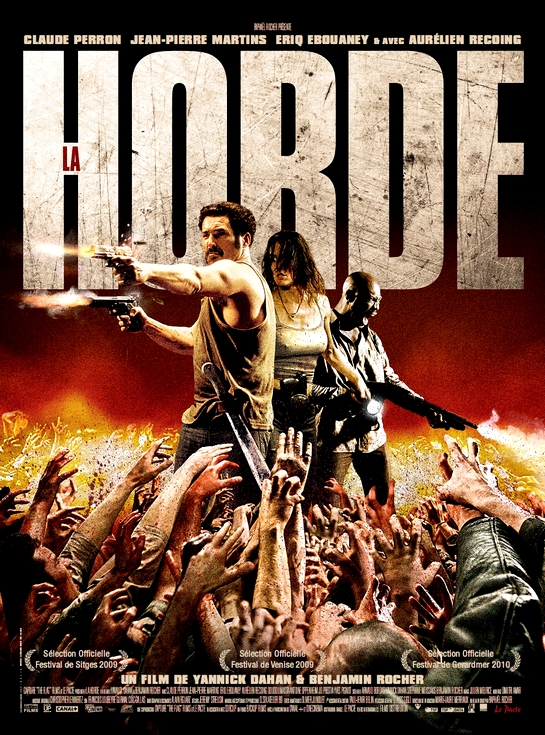
Leslie Combernale’s Top 10 Little-Seen Zombie Movies

Posted on October 25, 2012 at 3:59 pm

I am not a horror fan, but I still like to read about horror films, and I was delighted to see that my friend and fellow critic Leslie Combernale has put together a list of little-seen zombie films she thinks are deserving of a wider audience.  Be sure to take a look at her “School of Rot” list!

Related Tags:


For Your Netflix Queue Holidays Horror Lists Neglected gem

Critics on Their Favorite Time Travel Movies

Posted on September 28, 2012 at 3:50 pm

In honor of today’s release of “Looper,” IndieWire asked a panel of movie critics about their favorite time travel movies.  The answers are a lot to read, with many mentions of blockbusters like “Back to the Future” (and “Back to the Future 2”) but also romances like “Somewhere in Time” and the low-budget indie “Primer.”  And yes, “Bill and Ted’s Excellent Adventure” is on the list.  My favorites: the original “The Time Machine” with Rod Taylor and “Twelve Monkeys”

Related Tags:


Critics For Your Netflix Queue

Is “Vertigo” the Greatest Movie of All Time?

Posted on August 4, 2012 at 3:48 pm

Every ten years, the prestigious film journal Sight & Sound polls critics and film-makers on the greatest films of all time.  Citizen Kane has led the list for decades, but this year it was toppled by Alfred Hitchcock’s Vertigo. While I would vote for “Citizen Kane” if they offered me a ballot, I think it is a good idea to take a fresh look.  The point of polls and lists is to start a discussion, not to end one.  And the changing perceptions of the films on the list say more about our times than they do about the inherent, absolute merits of the film.

“Vertigo” stars James Stewart as a former cop impaired by a paralyzing fear of heights who is unable to save a woman he was hired to protect when she commits suicide by jumping from a bell tower.  When he later meets another woman who strongly resembles the first (both played by Kim Novak), he becomes obsessed with making her over to re-create the woman who died.

http://www.youtube.com/watch?v=D0bV2gh4E7Y

These results were released the same week that Tippi Hedren, who starred in Hitchcock’s “Marnie” and “The Birds,” said that he ruined her career but not her life, with obsessive, creepy, sexual harassment.  A forthcoming HBO film, “The Girl” stars Toby Jones and Sienna Miller as Hitchcock and Hedren.  These claims/revelations about what may have inspired or influenced the themes of obsession and fixation and repression in “Vertigo” and other Hitchcock films recontextualize the films as well.

Roger Ebert has some important insights about the list and the inherent limits of any reductionist attempt at ranking works of art.

What surprised me this year is–how little I was surprised. I believed a generational shift was taking place, and that as the critics I grew up with faded away, young blood would add new names to the list. Kieslowski, perhaps. Herzog. Fassbinder. Scorsese. Lynch. Wong Kar-Wai.

What has happened is the opposite. This year’s 846 voters looked further into the past. The most recent film in the critics’ top ten, as it has been for years, is Kubrick’s “2001: A Space Odyssey” (1968). The two new films are silent: Vertov’s “Man With a Movie Camera” (1929), and Dreyer’s “The Passion of Joan of Arc” (1928). Murnau’s great silent “Sunrise” (1927) is also on the list–three silents out of ten, and no Chaplin, Keaton or Eisenstein.

Why not more recent directors? To make the list, a director is punished if too many of his films are voted for. He needs an “official masterpiece.” With Buster Keaton that film used to be “The General,” but after the restoration of all of his films his votes have become scattered, I suspect, among “Sherlock Jr.,” “Steamboat Bill Jr.” and other treasures.

But his most important point is this: “let’s remember that all movie lists, even this most-respected one, are ultimately meaningless. Their tangible value is to provide movie lovers with viewing ideas.”  So, for your Netflix queue, here are the new Sight & Sound lists:

The Critics’ Top Ten Greatest Films of All Time:

Vertigo (Hitchcock, 1958)
Citizen Kane (Welles, 1941)
Tokyo Story (Ozu, 1953)
La Règle du jeu (Renoir, 1939)
Sunrise: a Song for Two Humans (Murnau, 1927)
2001: A Space Odyssey (Kubrick, 1968)
The Searchers (Ford, 1956)
Man with a Movie Camera (Dziga Vertov, 1929)
The Passion of Joan of Arc (Dreyer, 1927)
10. 8 ½ (Fellini, 1963)

The Directors’ Top Ten Greatest Films of All Time: 

1. Tokyo Story (Ozu, 1953)
2. (tie) 2001: A Space Odyssey (Kubrick, 1968)
2. (tie) Citizen Kane (Welles, 1941)
4. 8 ½ (Fellini, 1963)
5. Taxi Driver (Scorsese, 1976)
6. Apocalypse Now (Coppola, 1979)
7. (tie) The Godfather (Coppola, 1972)
7. (tie) Vertigo (Hitchcock, 1958)
9. Mirror (Tarkovsky, 1974)
10 Bicycle Thieves (De Sica, 1948)


Related Tags:


Classic Critics For Your Netflix Queue Lists
THE MOVIE MOM® is a registered trademark of Nell Minow. Use of the mark without express consent from Nell Minow constitutes trademark infringement and unfair competition in violation of federal and state laws. All material © Nell Minow 1995-2026, all rights reserved, and no use or republication is permitted without explicit permission. This site hosts Nell Minow’s Movie Mom® archive, with material that originally appeared on Yahoo! Movies, Beliefnet, and other sources. Much of her new material can be found at Rogerebert.com, Huffington Post, and WheretoWatch. Her books include The Movie Mom’s Guide to Family Movies and 101 Must-See Movie Moments, and she can be heard each week on radio stations across the country.

Website Designed by Max LaZebnik