A New Alphabet Book for Women’s History Month: Rad American Women A-Z
Posted on March 1, 2015 at 3:37 pm
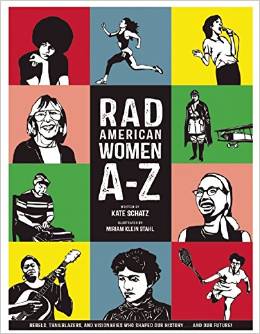
Rad American Women A-Z: Rebels, Trailblazers, and Visionaries who Shaped Our History . . . and Our Future!
Where did the idea for this project come from?
The idea came when my daughter (who’s now 5) was about two. She’s such an amazing kid, and I want her to grow up to be empowered and inspired. I’m very conscious of the images of women and girls in the media, and want her to see a wide range of possibilities for who she can be and what she can do. We have a house full of great books, but I wanted her to have something more to read—something fun and bold but also educational and inspiring, to teach her about history in a way she could appreciate once she was a little older. I couldn’t find the book I wanted, so I decided I’d try to write one myself. After I had my son, I felt even more motivated to create it, because it’s not just young girls that need powerful female role models—it’s boys, too.

Did you have female or feminist role models when you were growing up?
Absolutely. I was lucky enough to be raised by and around very strong, loving women. I’d cite my mother Barbara, and though she may not have identified as a feminist, my Nana as well. As a child I was always drawn to books about spunky, adventurous, bold girls—Harriet the Spy, Nancy Drew, the Anastasia Krupnik books. In middle school I wanted to be a journalist, and I loved (the TV character) Murphy Brown and MTV’s Tabitha Soren. And then I found feminist heroes in music: riot grrl, PJ Harvey, Ani DiFranco, Tori Amos. One thing to note about these figures is that they’re all white—outside of musicians and performers like Janet Jackson, Neneh Cherry, Tracy Chapman, and MC Lyte, I wasn’t exposed to a diverse array of feminist role models until later in high school (when I sought it out on my own) and then in college—that’s one thing I hope to remedy with this book.
Did anything surprise you as you researched the book?
Going into this project I considered myself to be relatively well-versed in women’s history—I quickly realized how much I don’t know, and how many fascinating women I’ve never heard of. It was also incredible to learn more about women I was familiar with. I often knew the basic gist of a person’s life and accomplishments (or thought I knew!) and as I went in-depth with my research I learned so much more. It was a humbling and exciting journey to explore and absorb all of these stories. Only 26 ended up in the book, but I learned about so many more!
What were your best resources for research?
I used a number of great books and websites. A Mighty Girl exposed me to a number of fantastic existing children’s books. I often visited the website for the PBS Makers project, as well as the National Women’s History Project and the National Women’s Hall of Fame. I visited the Oakland Public Library to check out specific biographies on individual women, but also used books like “The Reader’s Companion to U.S. Women’s History” and “What Every American Should Know About Women’s History” as frequent reference points. And of course I used your basic Google search, and actually found great value in the “suggested results” of these searches, which often led me to people I’d never heard of.
Why is it important for both boys and girls to learn about these women?
The term “women’s history” is significant, but also limiting, as it can imply that it’s a history only for or of interest to women—not for everyone. The women we profile are Americans, and their stories are part of American history, to be included in our textbooks and our collective consciousness alongside the many, many male heroes that we learn about. The majority of the women in the book are non-white, and for many reasons their stories have been left out of mainstream and traditional accounts of “important” historical events and individuals. Even when we do teach the history of women and people of color, it tends to rely on the same singular figures over and over. Children—and adults—should know that Amelia Earhart was not the only female aviator. Rosa Parks was not the only black woman in the Civil Rights movement. Susan B. Anthony was not the only one fighting for suffrage. These women were amazing and are absolutely important, but there’s so much more to the (hi)story.
Who were some of the women you most regretted having to leave out and will they be in some future edition?
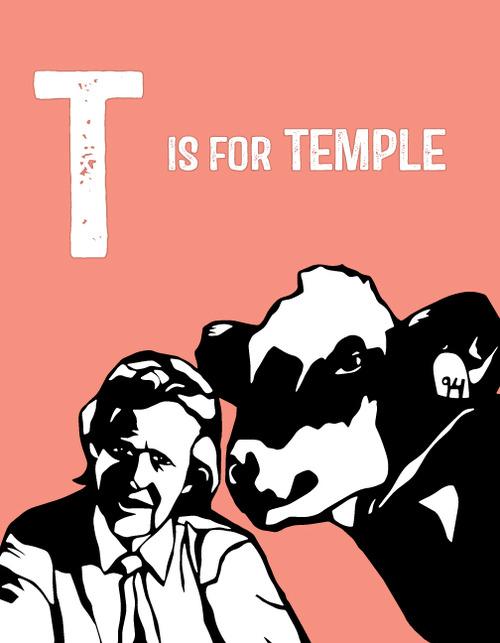
For nearly every woman featured in this book, there are at least 3 others that were almost included. It was very challenging to decide. We do have plans for additional books, and are already planning several. Some letters just have more names to choose from—A, E, F, J, K, M, and S, for example—and some (Q, X, Y, Z) don’t. A was a big challenge, because it’s the first letter and it sets the tone—and because there are so many awesome, amazing As! It could have been Audre Lorde or Adrienne Rich or Abigail Adams or Anne Sullivan. F was almost Fannie Lou Hamer, but E is Ella Baker, and they were working in the same field at the same time, and we wanted as much variety as possible. I definitely want to include Fannie Lou in the next book! J was going to be Jane Addams, but when I learned about the amazing but not very well-known educator and activist Jovita Idar I decided to feature her instead. I love that M is for Maya Lin but I’d like to include astronaut Mae Jamison in a future book. S went through several iterations as well, and was almost Sister Corita Kent, an incredible nun who was a graphic artist, as well as Sylvia Rivera, a transgendered activist and Stonewall vet. Bottom line: there is no end to the incredible stories that deserve to be told.
Why is the X group so significant and what do you hope kids will get from that write-up?
X is significant because it reminds us of how much we don’t know, and how much is yet to come. It’s significant because the illustration and the text challenge how we define and perceive heroism and greatness—many of the images are of people doing “ordinary” things like reading, parenting, and working. You don’t need to be a nationally celebrated figure to be rad, to have an impact on the world. Hopefully readers will think of the many reasons why we don’t necessarily know the names of all the women who have done great, heroic things. Hopefully it will inspire them to consider the past but also look toward the future, and to recognize the radness in themselves and the people around them.