Interview: Mark Goffman of ‘Dumbstruck’

Interview: Mark Goffman of ‘Dumbstruck’

Posted on April 20, 2011 at 8:00 am

I love Mark and Lindsay Goffman’s new documentary, “Dumbstruck,” which follows five ventriloquists over the course of a year between the two annual conventions that give them their one chance to be with others who share their passion.  It is funny, smart, inspiring, and heartwarming, and I had a lot of fun talking to Mark about how it got made and what he learned.

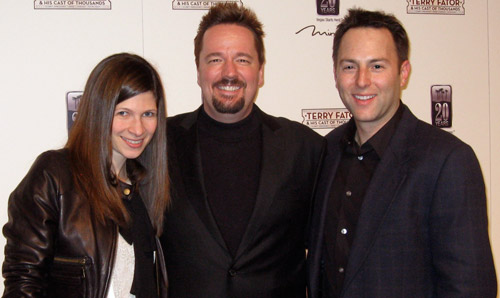
You must have been shocked when one of your subjects became an international superstar in the course of making the film.  Terry Fator won “America’s Got Talent” and now has a hundred million dollar contract with the Mirage in Las Vegas.

We set out to look at working ventriloquists in small-town America.  That’s where we thought we would find ventriloquism.  It harkens back to a simpler time and we liked the smaller venues’ feel.  We knew Terry was phenomenally talented from the moment we saw him.  We expected to see him in his home city of Corsicana and state fairs and things like that and then he got on “America’s Got Talent” and it just exploded from there.

The other ventriloquists are very happy for him but it also makes them dream bigger for themselves.

It gave a lot of people hope.  They’re a really tight-knit community and think of themselves as a family and that was something I really wanted to capture in the film.  There are very few ventriloquists in most towns so they feel a bit isolated.  They feel like they’re on their own and as you can see in the film their families don’t always support this vocation they have chosen so they have this very strong sense of community.  Really, when we stared we thought cruise ships was the pinnacle — that was a great living.  Dan Horn was seen as achieving about as much success as you can get with this art form.  And Terry comes out of nowhere and explodes onto the screen and it was really quite astonishing.

http://www.youtube.com/watch?v=wVtNcrhLClU

How did this project get started?

At our wedding my mother-in-law got up to give a toast.  Her lips didn’t move and she held up her hand with a white glove on it like a sock puppet and words started coming out and her hand started delivering a toast.  It was incredibly endearing and charming and really funny and certainly unexpected to the 150 guests.  It turned out she does ventriloquism primarily in schools — she’s a second grade teacher and she does it in her classroom.  But she has learned that she can express herself very differently and it makes her feel a lot more comfortable in front of a crowd.  She told us about the ventriloquist conference in Kentucky and Lindsay and I knew that this was a community we wanted to see.  We found 500 people with their dummies talking back and forth and really bonding.  We fell in love with these five people that we wanted to follow.

Some of the family members you spoke to were embarrassed or even hostile about their relatives’ interest in ventriloquism.

We wanted to know what their lives were like outside of the convention where they feel welcome and very supported.  And we found that most of the time their families didn’t understand.  We hope that’s something people can relate to, whether it’s any hobby or career path, some people have families that are very supportive and others have to find the courage and determination to pursue their dreams and their loves despite what others around them think.

That’s why they are so happy to be together — they feel understood and accepted.

The people who run the convention say it’s like a family reunion.  They keep that kind of atmosphere and it’s a very welcoming environment.  You see that when Wilma needs help, the people are there for her.

Is it true that you had to remind the sound guys not to mic the puppets?

It was true of the boom mics — when the dummy starts talking, we had to remind them to keep them over the person, not the puppet.

Have you tried ventriloquism?

I have tried it; it’s incredibly hard.  I have enormous respect for anyone who can do it.  It’s an instrument.  You have eyes, ears, mouth, you have to synch with the voice.  That’s one of the reasons we showed Tim Selberg; he is like the Stradavarius of figure-makers; they can cost up to $20,000.  These things are finely-tuned instruments.  Not only do you have to manipulate this and make it behave like a human being but you have to create a character, a persona.  And then, on top of that, you have to come up with a routine that’s essentially a stand-up routine, and that’s a talent in itself.  It’s a combination of a lot of different skills.  It’s very hard.

Yes, one of the most interesting scenes is where one of your ventriloquists gets some advice from a consultant about how to improve her act because you see how much has to go into it.

She was looking for some guidance and the man who came in and helped her is very well known and respected and he advised her to give her puppet a huge makeover.  He was mining the comedy out of who she was and trying to give her puppet a counterpart to play off that.  The successful ones create a character who can say the things they wouldn’t normally say or aren’t comfortable saying.

The puppets are a contrast to the ventriloquists, especially then-12-year-old Dylan, a white boy with an African-American dummy.

Dylan told us there are very few minorities in his school and he’s a showman and he thought he could get a lot of shock value and mileage out of it.  At the same time, he told me on many occasions that Reggie is his best friend and he hopes they are together for the rest of his life.  It’s an amazing attachment that they have.

Related Tags:


Directors Interview
Interview: Candace Cameron Bure of ‘Truth Be Told’

Interview: Candace Cameron Bure of ‘Truth Be Told’

Posted on April 13, 2011 at 8:00 am


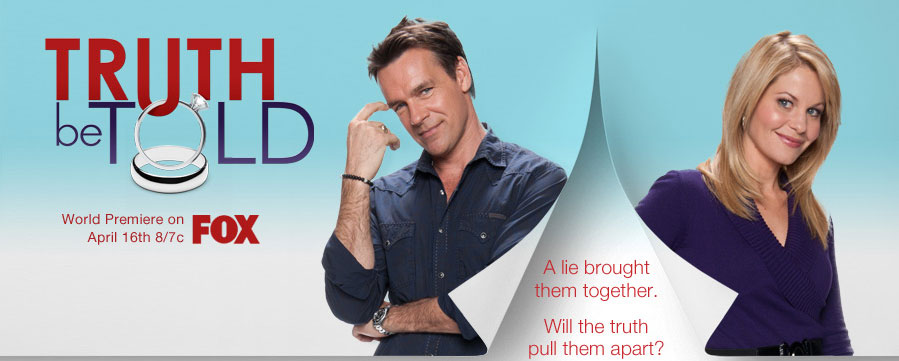
“Family Movie Night,” sponsored by Proctor & Gamble and Walmart, has produced another fine film for all ages.  Candace Cameron Bure (“Full House,” “Make It or Break It”) stars in “Truth Be Told,” the story of a marriage counselor who is not married.  When she has a job opportunity that requires a husband, she tells a lie, and enlists an old friend and his children to pretend to be her family.

I spoke to Candace about the role and about her work and her ministry, speaking about her faith and giving back to the community.

Tell me about “Truth Be Told.”

I couldn’t have been more excited when I was sent this script.  I had seen some of the Family Movie Night shows and said to myself, “I want to do one of those!”  When I read the script, it was absolutely perfect.  I fell in love with Annie Morgan, the character I play.  She’s a family and marriage counselor.  It was something I can totally relate to, and family and marriage are so important to me.  I do a lot of speaking at conferences and churches about family and marriage, so it was a topic I am passionate about.  The premise is that one little lie snowballs into this huge mess and honesty is always the best policy.

That’s what I love about this series.  These are not kids’ films that adults can tolerate or movies directed at adults without offensive content but true family movies with characters and situations that everyone in the family can understand and will want to talk about later.

I appreciate it as a mom.  I have 12, 11, and 9 year-olds. I loved the fact that Proctor & Gamble and Walmart teamed up to give us this time on a Friday night when we can sit down with our families and watch a movie that we don’t have to worry about.  It gives us things to think about and to open up some conversations with the family.  “What happens if you tell a lie?”  Depending on the age of your kids it can be a very simple conversation but you can turn it to a situation you and your family have recently experienced.  I can open the door for something else your child has been struggling with.  You use it as a platform for whatever dialogue needs to be exposed in your family at this time.

What happens in the film?

My character is offered a job at a radio station and because she is a marriage counselor, they assume she is married.  And family is very important to the man who owns the company.  She is probably not going to get the job unless she has a husband.  She runs into an old college friend who is a widower and convinces him and his children to pretend to be her family for the weekend.  The relationship develops — it is definitely a romantic comedy.

What is your experience like as you speak to groups about your faith?

I’ve been speaking and sharing my Christian faith for seven or eight years, and now I am speaking to the bigger groups like Extraordinary Women and Women of Joy.  I actually just got back from a conference with Extraordinary Women.  Sometimes there’s anywhere from 1500-15,000 ladies I will speak to.  It is an amazing opportunity for me to share my faith and what is important to me and ultimately the gospel of Jesus Christ.  I think I am as encouraged or maybe even more to see that God allows me to be used in that sense.  These ladies will tell me they are encouraged by hearing my story and yet I am in awe that I am just a person getting this opportunity so I feel very privileged.  It’s a very different thing from being on television.  Most people would think that you would automatically be comfortable if you’re an actress to go up on stage to speak but it is actually very different.  It’s not the number of people that scares me.  The more there are, the easier it is for me.  But it is a very different thing to open your heart and share your heart and be exposed in that way, not reading a memorized script or acting a different character.  I get much more nervous speaking live at an event.  You throw a camera on me and I am comfortable!

You have written about your faith as a way to manage food issues.

I had an emotional attachment to food.  I ran to food for comfort, to fill a void instead of realizing I had to run to God for those things.  I learned to honor my body by eating healthily and exercising but really by putting my faith into the forefront of my relationship with food by honoring my body as a temple God gave me and learning to run to Him for those needs and not to turn to food for it.  I don’t enjoy getting up at 5 am some mornings but I see it as a necessity to take care of my body.  To eat healthy, that’s all about the choices I make whether in a restaurant or the grocery story.  The food’s not making it for me.  There are so many tools out there to get us on the right track and help us make better choices.  We don’t value those choices as much as we should.  One choice a day, one choice an hour.  If you look at it this way, it’s not so overwhelming.

Do you have a favorite Bible passage?

I don’t like that question because there are so many good ones!  But the one that’s been on my computer desktop recently is Philippians 1, Verse 6.  I just go, “God’s good work is in all of us and He will carry that on.”  I don’t need to worry about it, I don’t need to stress over it.  I know God has a plan set before me and I need to obediently just follow the footsteps that he’s laid out and keep my eyes focused on Him and He will carry out that good work to completion.  And whatever that is, it might not be my own expectation but He knows what that is.

It’s everything.  We read the Bible together and we talk about verses that can help us focus for that day.  If we have a need or a worry for that day we find verses where it talks about it.  We go to church.  My kids are involved in Awana and youth group. My daughter has started leading worship and singing at her chapel.  They go to a Christian school.  So it is in every aspect of our lives but most important, my husband and I try to be that example, to show them that it is not just words but by our own actions and what we do.


Related Tags:


Actors Interview Movie Mom’s Top Picks for Families Television

Interview: David Schwimmer of Trust

Posted on April 10, 2011 at 3:54 pm

David Schwimmer is the director of a new film called “Trust,” the heartbreaking story of a 14-year-old girl who is molested by an internet predator and the devastating effect it has not just on her but on her family.  It is a sensitive, thoughtful, compassionate drama that avoids the overheatedness of television movies.  Schwimmer is best known for appearing as Ross on “Friends,” but his accomplishments also include co-founding the distinguished Lookingglass Theatre and directing “Run Fat Boy, Run.”  I spoke to him about how is work with a program for survivors of sexual abuse inspired this story and working with actors as experienced as Tony-award winner Viola Davis and as inexperienced as newcomer Liana Liberato.

Tell me how this movie came about.

I’ve been a part of this organization, The Rape Foundation, for fourteen years and a member of the board for the last ten. This movie is inspired by the child victims and their families that I met and it was developed in conjunction with the counselors there and one friend who is an agent with the FBI who worked on these cased for many years until he burned out.  The people who work on the “Innocent Images” program have a psych test every six months and the burnout rate is very high.  When he had his own daughter, he had to quit.  These people are real heroes to me.

A few years ago, we had a fund-raising event for The Rape Foundation and for the first time, we invited a father to speak about what he went through when his 14-year-old was brutally raped.  What he described was so devastating to me, so moving, it make me realize that this traumatizes the whole family.  He was a big, lumbering guy, a professional, not at all a public speaker, shaking the whole time in front of this crowd of 1000.  But he articulated so beautifully his combination of grief, and what a lot of these fathers describe as an incapacitating rage, and impotence because they can’t do anything and men want to fix the problem.  He described all these feelings — guilt, shame, responsibility, and it almost destroyed his marriage, his work, his relationship with all of his kids.  And I thought, “That’s a lens I haven’t seen before, the father/daughter relationship.”  So I started the process of developing it and writing it.

The therapist is played by one of the finest actresses in the world, Viola Davis.

I love Viola.  She was my first choice.  She is such a presence in the film and she was only on the set for two days.  Some of her scenes were among the toughest in the movie and they were the first two days of filming.  The person she plays is inspired by Gail Abarbanel, director of The Rape Foundation, so we named the character Gail.  She had that combination of strength and compassion, a grounded presence, never talking down to a kid, incredible generosity of spirit.  This issue was important to her and she wanted to do it.  Everyone came to the table because the story meant a lot to them for personal reasons.  We didn’t want it to be a series of scenes in a therapist’s office.  What she does in four scenes is just remarkable.

The most heartbreaking part of the movie is realizing that what the rapist did to the girl’s body is nothing compared to what he did to her spirit.  It is very painful for her to let go of her insistence that she is special to him.

Her eventual realization that she wasn’t ever loved — that’s the most brutal part.

How did you talk to Liana Liberato about the role?

She is a remarkable, gifted actor for any age, and fearless.  To be able to take direction as well as seamlessly, effortlessly is astonishing.  And when you meet her in person you will be doubly amazed because in person she’s just a kid, so shy and gawky and inexperienced.  She got it, she understood this person from the get-go.  I met her and worked with her a few times and had her read with Clive and Catherine.  They said, “That’s our daughter.”  We were equally jealous of her talent.  I made it clear to her she had to take this on as her own research project.  She immersed herself in the world, met with girls from The Rape Foundation.  We did a lot of table reads and listened to their input and their instincts.  I intentionally put the hotel scene toward the end of the schedule so she would feel as comfortable as possible with me.  It was her choice and instinct not to spend any time with the actor who played the predator.  By the time we did the scene, she was really nervous and anxious about it and that worked for the scene.  I let her know that every step of the way, she was in control.  The lingerie she was wearing was built for her with special lining for modesty.  A wardrobe assistant who befriended her was with her off camera.  The actor who plays the predator was equally uncomfortable — I had to take care of him, too.  I explained every thing he was going to do so every step of the way both of them knew what was happening.  She could lose herself in her imagination and be unsafe in her interior but know that her physical world was safe.  There as a line we had written where she said, “You don’t think I’m fat?”  I know really thin girls say that, but she wanted to say, “You don’t think my body’s weird?”  I wanted her to own this person and that is the line we used.

Tell me about casting and directing the actor who plays the rapist.

The first step was casting someone who is in my research and experience more like the guys that are commonly like this.  They are our neighbors, our teachers, our coaches, our pastors, our doctors.  You can’t see evil coming.  Traditionally the guy is portrayed as a weird creepy guy living with his mom and I wanted to shatter that.  The other thing that was important to me was the ending.  I didn’t want the audience to leave the theater on an exhale.  “Everything’s good, that story’s resolved, where do you want to eat?”  I wanted people to leave more active and engaged.

What have you learned as an actor from the directors you’ve worked with?

I tried to study every director and take the best stuff and remember things I didn’t like, how I was treated, how a set was run.  As an actor, I can sense it if the crew’s not happy, if they’re not supported or if they’re overworked.  If you have a director who is screaming at some prop assistant because they’ve got the wrong prop or everyone is in fear of losing their job or being yelled at — that was something I resolved never to do.  If there is a problem, I never raise my voice on set.  My job is to create the right kind of atmosphere on set to tell the story I am telling.  In “Run, Fat Boy Run,” there was a lot of humor on the set.  On this set, sometime we needed a breather and some levity but for the most part I had to remind the crew that Catherine or whoever is raw right now, preparing for a scene, so if you have to adjust the light, try to do it sensitively.

The father in the film, played by Clive Owen, works in advertising on a campaign that shows teenagers in sexy poses.

He doesn’t understand that he is being complicit.  I wanted it to add to his feeling of culpability.  My hope is that in that scene where he finally imagines his daughter in the campaign at the launch party, it was his unconscious surfacing.  I’m taking an obvious swipe at the sexualization of young people in advertising.  I wish there was more public uproar about it.  It’s the way I was raised, i guess, because my mom is such an activist.

How have people responded to this story?

After we shot the film I adapted it for the stage in Chicago.  What was really interesting is that every night after the play we would have Q&A’s and talk backs and people would stay for an hour and then come back with their daughters. There are very few movies to help families talk about parenting.  I want this to start some important conversations.


Related Tags:


Directors Interview Writers
Interview: John Rhys-Davies of KJB: The Book That Changed the World

Interview: John Rhys-Davies of KJB: The Book That Changed the World

Posted on April 10, 2011 at 8:00 am

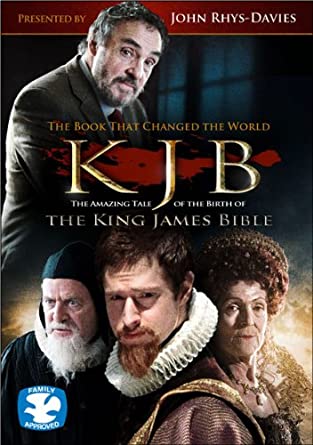
I couldn’t help it.  When I picked up the phone to hear the voice of distinguished actor John Rhys-Davies, I had to enjoy a moment pretending I was talking to Sallah from “Raiders of the Lost Ark” or Gimli from “Lord of the Rings.”  Rhys-Davies and his gorgeous speaking voice have appeared in everything from blockbusters to “Star Trek: Voyager” and “Spongebob Squarepants.”  I very much enjoyed speaking to him about the new DVD release of KJB: The Book That Changed the World, a documentary celebrating the 400th anniversary of the most widely-used and influential English translation of the Christian Bible.

How do you think about faith and science?

I count myself a a rationalist and a skeptic with a very conscious awareness of my indebtedness to Western Christian civilization and I am a fairly passionate defender of it.  My background is as a Welsh Protestant and I find myself championing all sorts of causes when I find them unfairly portrayed.  I am a believer in the evolutionary process and yet I have sympathy for the friends of mine who are creationists.  I don’t find the positions incompatible.  That means I irritate both camps.  How do you expect God to communicate to people — to speak about event horizons and milliseconds?  It is better to say, “In the beginning….”  There is no necessity for them to disagree.  Dare I say it is a failure on the imaginations of both parts.

The issues of faith I keep coming back to.  I am convinced logically that to say there is no God is the act of a fool.  When you get back to fundamental questions — why should anything exist?  A, I’m not sure what the answer is in terms of the science and B, I’m not sure that science can even ask that question.  And it is sophistry to say that it is not a valid question.  In the absence of an answer, reasoned speculation seems to be legitimate.  Given the size of the earth and the number of possible universes that exist — I was told once it was 10 to the 500th power.  The revised figure is 10 to the thousandth to the ten thousandth power, a scale so far beyond our comprehension that to make any assertions about it is simply fatuous.

Don’t you think that is exactly why the Bible presents its lessons in parable and metaphor?  Because so much is beyond our comprehension? 

Copyright Lionsgate 2011


I think that is a very legitimate observation.  Aquinas got it right when he said, “God is that which nothing is greater.”  But the size of that greatness is slowly revealing itself to us.

Were you on location for some of this film?

Only a few occasions like Holyrood Abbey in Edinburgh, where the kings of Scotland were crowned, Westminster Abbey, Magdalen College and the Bodleian Library at Oxford, and the library of the Archbishop of Canterbury. Beautiful places.  And one had the privilege of meeting ultra-smart minds, people who could understand complex matters and give a simple, clear answer.  Not like me!  I can’t give a soundbite for love or money.

What surprised you in learning about the history of this translation?

The human drama.  And the real surprise for me was the enormous sense of emotion that I felt when I actually held it in my hand.  I was moved to tears. It shocked me into realizing how deep the instinct of faith is still in me.  I’m choking up at the recollection of it even now.

You know that argument the traditionalists have with the modernists about the translation: “Then I shall see him face to face but through a glass, darkly,” that wonderful Elizabethan expression.  It always happens to be my favorite because I know exactly what it means.  Imagine murky, dirty, Elizabethan London.  Carts, horses, noise, excrement.  People dumped chamber pots onto the street.  The glass windows were not the clear glass we have now but rather like those sort of obscure, bubble-filled slightly opaque things that let some light in but you could not exactly see through, and that’s the image they found of the way we can look at God.

The scrupulousness of the scholarship, the care, the sense of importance of what they were doing, the need to get it right, and the extraordinary tensions between them.  And as they worked together and refined things, slowly they began to respect each other’s talents and scholarship.  And that strange mutation takes place when you realize that what you’re doing is not just an exercise but a mounting sense of excitement: “What we’re doing is really extraordinarily good.”  I think by the end they knew what they were making was pure gold.


Related Tags:


Actors Interview
Interview: Steven Bingen of MGM: America’s Greatest Backlot

Interview: Steven Bingen of MGM: America’s Greatest Backlot

Posted on April 1, 2011 at 7:59 am

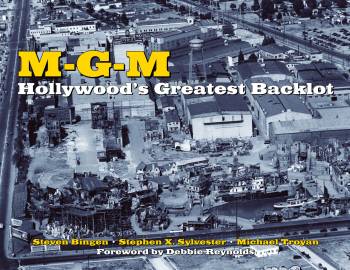
MGM: Hollywood’s Greatest Backlot is like a fabulous fairy tale, except that it really happened. Steven Bingen, Stephen X. Sylvester, and Michael Troyan have written the history of not just a magical place but a magical moment in time, when it seemed that anything — and any place — was possible. MGM had a back lot that was like a full city, with warehouses for wardrobe and props, restaurants, offices, and miles of sets that represented every possible location and era. The book is simply gorgeous, with archival photos showing the sets and stars in action and behind the scenes, and filled with stories and personalities to rival any of the epics produced on the lot. It’s a must for any lover of the classic era of film and I am very grateful to co-author Steven Bingen for taking the time to answer my questions.

Do you remember your first visit to the MGM backlot?

In a way I feel like I’m still there. We all grew up on the MGM backlot in a curious and twisty sort of way. At least 6 generations of people have spent a not inconsiderable amount of their lives watching our dreams played out with those backlots as a setting. Turn on the television and channel surf for a few minutes and the chances are not too bad, even today, that you’ll make a visit to the MGM backlot…

But that probably isn’t a fair answer to your question is it? Truth be told, I was never able to physically visit the place while it was still intact. I’ve walked the real estate many times trying to reconstruct the layout of the sets in my head, but never while those sets were standing. One of my partners, Stephen X. Sylvester, who wrote the book with me along with Michael Troyan, got to visit the backlot (twice!) in the late 1960’s. I’ll never forget what he said. He told me that the next day his parents took him to Disneyland and compared to MGM, he found Disneyland somewhat disappointing! I guess that, in a way, I wrote the book as a way to reconstruct a place I’ve always known I would never be able to physically experience. I tried to build, in print, streets I could never actually walk, and a place I could never actually visit.

Which designers most influenced the sets on the backlot?

An art director named Cedric Gibbons designed most of the sets on the MGM backlot. He was a remarkable and vastly influential man who has never gotten his due for virtual creation of the physical look of the 20th century. People always assume that our movies are influenced by our real lives. But the truth is that very often it’s the other way around. Standards of architecture and design still in effect today were created first in Hollywood, and only later adapted in “actual” construction. Art Deco, for example was seen on-screen before it became the signature “real” design style of the 1930’s. It’s a surprising phenomenon, and one that has seldom been remarked upon. Maybe your question should be “What designers were most influenced by the sets on the backlot?”

Gibbons, by the way, is largely remembered today as the designer of the Academy Award “Oscar” statue. But his legacy is, I think, much farther reaching than that.

How was movie-making influenced by the auto manufacturers and other innovations of the industrial era?

A producer named Thomas Ince was the first filmmaker to base his business model on the factories in Detroit, where an entire car could be finished on a predetermined schedule within the walls of the factory. No one had ever tried that with movies before. And it happened first on the property which would become MGM. Ince would move on, to be followed by Samuel Goldwyn, and later by Thalberg and Mayer. But it all happened, the whole concept of using a backlot as a way to standardize production, on the very site which would become MGM. In a way the whole concept of a Hollywood studio began at the very spot where our story takes place. Today, although few realize it, there is more authentic, yet unheralded movie history to be found in the subdivisions and condominium complexes where MGM once stood than on any tourist-infested block of Hollywood Boulevard.

How did the studio backlot change to reflect changes in technology like color film and improved audio?
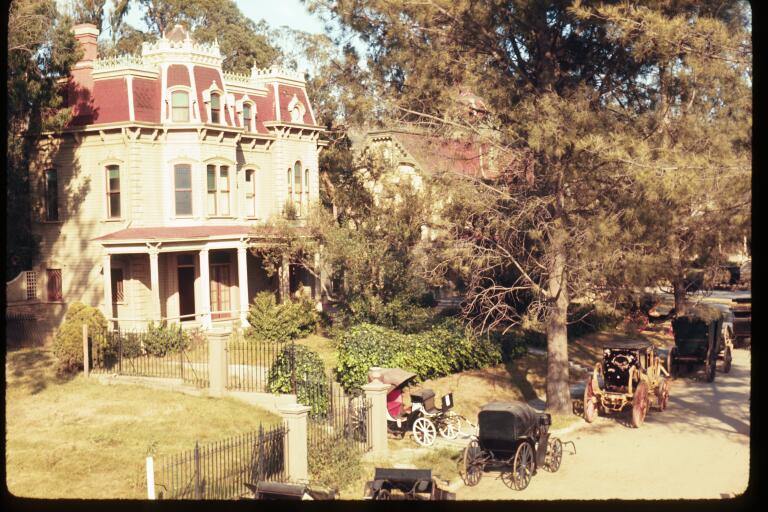
With the introduction of color film directors tended to set their cameras farther back. They wanted to take advantage of (or create) dramatic cloudscapes, or cobbled rooftops, or mountain peaks. Black and white, a more intimate and “realistic” medium, didn’t need to concern itself with such details so the sets tended to, if not get bigger, certainly get utilized to a greater degree. Filmmakers eventually started putting their cameras so far away from the action that they sometimes obscured whatever dramatic possibilities the story was supposed to be concerning itself with. The 1935 version of Mutiny on the Bounty, for example, while taking place on an epic scale, focused more on the conflict between the characters then on the jungles of Tahiti. Incidentally, both versions used the studio backlot, although the remake actually did go to the real Tahiti as well – and wasn’t any the better as a movie for it.

Was the studio careful about maintaining its archives? Were there some records you really had to work to find?

For decades the studio was very careful with both its archives and its assets. Everything from full-size fighter planes to bits of twine was carefully inventoried and socked away, awaiting the day when it might be utilized again. But as the system broke down and departments were closed or outsourced the prevailing attitude was to junk everything not in use that day or scheduled to be used the next. Management realized that they themselves could be fired at any time, and so they had no particular interest in making their successor’s jobs any easier by saving anything that could be used by that next regime. So everything from production records to, ultimately, the backlots themselves, were systematically and tragically junked.

I was lucky to have access to materials no one else had ever been able to see through the cooperation of Warner Bros., which had inherited whatever records had survived via the Turner purchase of MGM in the 80’s. But much of this material was already literally just gone with the wind by that time. For example, in our research it took us something like three years just to find a record of the studio’s original purchase of the property that became backlot number 3. This was a 65 acre parcel of real estate where some of the most famous films ever made would ultimately be produced. And there was nothing whatsoever saved by the company anywhere referencing when that property had first been acquired, or for how much! Unthinkable, isn’t it? But true. Desperate, at one point we even ended up spending an entire day inside a badly lit basement near Los Angeles city hall trying to reference tax records to find our answer there. No luck. I finally found the information we needed in the text of a 1970’s memo which actually was about the sale of the property – but which did reference the original purchase date, which was 1937, by the way.

What surprised you as you did your research? What or who was your best resource?

Like I said, Warner Bros. was invaluable, as were other archives and organizations like the Motion Picture Academy, but the people we interviewed, actual studio veterans, were the best. Some of our most interesting stories were from people who worked on the lot for decades. To a man, these employees all told us that they thought that MGM would last as long as the pyramids. It makes me sad that some of these employees, who were all so helpful and giving of their time and memories, didn’t live long enough to see the book published.

Surprisingly, a lot of great material also came from Culver City residents who, in some cases, used to literally climb the fences as children and explore. I must say, that I very much envy those people their experiences.

Do you have a favorite movie or star from the MGM golden era? What artifacts are still around?

The three of us are probably unlike most other film buffs in that we’ve spent the better part of 10 years watching pictures and wishing that those admittedly gorgeous and charismatic actors in the foreground would just get out of the way so that we could get a better look at the remarkable sets they were standing in and blocking our views of.

For us, our favorite films were the ones that found ways to use the backlot in unusual ways. I’ll give you an example. For a 1935 film called I Love My Wife “Spanish Street” was redressed to play Greece. Then they immediately flooded the same street with water so it could play Venice for Anna Karenina. 1935 audiences would have seen both these films, yet never realized they were looking at the same spot – which of course was in neither Spain, nor Greece, nor Italy, but Culver City. You know anyone could go to Europe and take beautiful pictures of these places. But I hope people will finally appreciate the wonder of getting the same effect, with more artistry, on a studio backlot. And the experience of watching these movies is actually enhanced, not detracted from, as people sometimes say, by the knowledge of this. What could be more mysterious and more wonderful than Venice reconstructed in California, and with Greta Garbo thrown in for good measure? This really is the studio’s legacy, and what survives today.

Is there anyone in the industry today who plays a role like the one Irving Thalberg played at MGM?

No. This isn’t a reflection on anyone in modern Hollywood. The business is just so different, and so adverse to risk-taking due to the enormous amounts of money involved. There really isn’t anyone out there with the opportunity to repeatedly throw the dice and come up with a winner like Thalberg so often did. But it’s important to remember that during Thalberg’s reign, even if a single production didn’t measure up, there would always be another one coming off the assembly line in a matter of days. And that second property could conceivably work out better and cover the losses incurred by the first. This process gave a creative producer like Thalberg a chance to experiment and to try out new ideas, which simply isn’t possible today. In modern Hollywood, even at the largest studios, there just are never enough pictures in the pipeline. And no single producer is ever responsible for all of them. Today, any studio picture is liable to cost so much money that a single failure could destroy careers, or even whole studios. It’s a dangerous and risky business model. One which Thalberg and his cohorts would have thought wasteful and absurd, and which they never had to wrestle with.

The MGM backlot was like a city of its own, with a restaurant, a school, water, power, construction – who oversaw operations? Were there any major problems or mistakes?

J.J. Cohn was the Studio Manager, the man in charge of making sure that all the pieces in this vast, crazy, kaleidoscope that was MGM fit together and worked in harmony with each other. He’s another one of those unsung geniuses who made the Studio system operate so well, and for so long. In fact, the MGM backlot at one time was actually referred to on studio maps as “Cohn’s Park” – which should be an apt indication of his overall influence. We were very lucky in our research in that J.J. lived a long time and film historian Rudy Behlmer had the foresight to sit him down for a long oral history in which he discussed his whole career from the pre-merger Goldwyn days right up into the 1960’s and beyond.

And yet in a way which J.J. couldn’t have foreseen, the ultimate fate of the backlots was determined in the accounting ledgers tabulated in his offices. It turned out that for the entire life of the studio, the company had never charged internal productions to utilize their outdoor sets. On the contrary, Cohn had created and maintained these sets for the very purpose of saving production dollars and avoiding expensive and unnecessary location trips. Unfortunately, in the 1970’s when the studio was floundering in red ink and management was trying to save money, the backlots were an easy target because these hundreds of standing sets appeared, from an accounting standpoint, to be generating little or no income. Sadly, after these properties were sold off and bulldozed, the studio realized and regretted what they had done almost immediately.

If there was one now-vanished spot on the backlot you could visit for a day, what would it be and why?

It would be impossible to choose one spot because the charm of the place would have been, for me, the ability to walk from an 18th century French village, into the American West, and then to turn a corner and explore a WWII military base nestled alongside a Jane Austen style estate and garden, which itself would have been adjacent to a dangerous-looking south American jungle! This weird, whimsical, whirlpool of architecture, which F. Scott Fitzgerald called the “torn picture books of childhood,” still strikes me as wonderful and magical and sinister. Just like a fairy tale.

Related Tags:


Books Interview Understanding Media and Pop Culture Writers
THE MOVIE MOM® is a registered trademark of Nell Minow. Use of the mark without express consent from Nell Minow constitutes trademark infringement and unfair competition in violation of federal and state laws. All material © Nell Minow 1995-2026, all rights reserved, and no use or republication is permitted without explicit permission. This site hosts Nell Minow’s Movie Mom® archive, with material that originally appeared on Yahoo! Movies, Beliefnet, and other sources. Much of her new material can be found at Rogerebert.com, Huffington Post, and WheretoWatch. Her books include The Movie Mom’s Guide to Family Movies and 101 Must-See Movie Moments, and she can be heard each week on radio stations across the country.

Website Designed by Max LaZebnik