Interview: Gary Ross on “Free State of Jones”

Interview: Gary Ross on “Free State of Jones”

Posted on June 27, 2016 at 3:37 pm

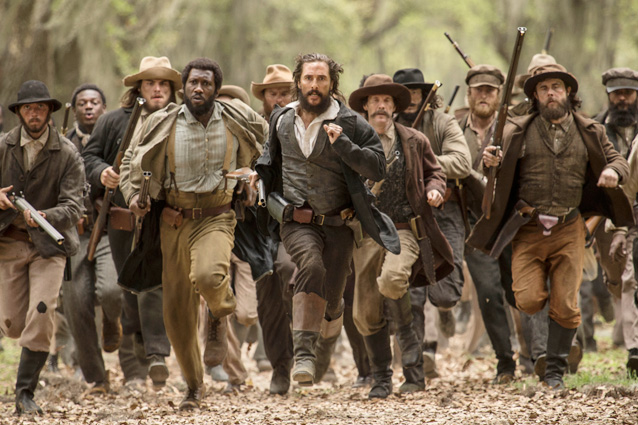
Gary Ross, best known for the first “Hunger Games” movie, spent years researching the real-life story behind his new film, “Free State of Jones,” about a group of deserters from the Confederate Army and runaway slaves who declared their independence from the legal and economic oppression of the Confederacy. You can see more about the story in the “Free State of Jones” website. His commitment to authenticity included filming in the actual locations where the events took place, including the swamp where Newt Knight (played by Matthew McConaughey) and his group hid from the Confederate soldiers. “We were in the swamp for a long time but it was worth it. We were shooting where the true story actually occurred so that was kind of inspiring.” There are several books about the historical events, but Ross reviewed the original documents. “I did a lot of primary source research. When you go to the website you will see that most of the things that we cite are not secondary historians but are primary sources. I studied for about 2 to 3 years before I ever even started writing the script….There’s a tremendous amount of original sources that survived. We use a ton of sources from what was called the OR, the Original Records of the War Between the States which is the most reliable source. And we used a lot of letters to corroborate this evidence from former Confederate soldiers they were writing about the rebellion to one another as it was going on so there’s a tremendous amount of actual primary sources that exists, I mean hundreds and you can see them on the website.” freestateofjones
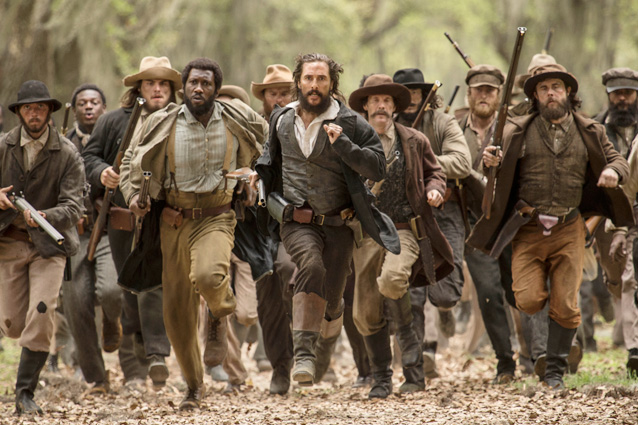
The film is set in the Civil War era, but some scenes show us Knight’s descendent in a 1948 miscegenation trial. Ross said, “I think that we need to see some perspective. It was a way of almost trying Newt in absentia a century later. These issues that were necessarily unresolved. It also let us explore what happens to memory when you lose connection with your past. This is a century later and it is still going on. I think that the fact that there was in fact this real trial which was still bizarre was an important thing to include.”

He talked about seeing the jobs of writer and director separately. “I don’t see directing as an extension of writing. It is to certain degree because you are storytelling but it’s its own thing. But you are never afraid to keep writing when you’re a writer there so I actually have more flexibility on the set, I don’t see the script as such a lock or rigid thing. And directing informs your writing. When you’re directing you think of it the more cinematically, you think, ‘Are they going to be able to actually do it?’ There is less waste in the writing. There is more of a cognizance of the cutting pattern. There is more even awareness the things like sounds design, so yes I definitely think it informs how I write now.”

There are some common themes between this real-life story and the allegory of “Hunger Games.” “Individual and personal liberty is tremendously important to me and I think that this has been somethings that has been expressed through a lot of the work that I’ve done one way or another. Newt used Scripture to justify his actions. It began as an organic rebellion. It was anti-tax rebellion at the outset but it grew into a larger meaning of freedom and it broadened out into a bigger definition of what freedom was. Once he glimpsed what true freedom meant he couldn’t tolerate his wish for personal freedom and then accept unfreedom for other people so I think that Newt expanded and grew and in his worldview and that led him been an advocate for African-Americans in the postwar period.”

Ross wants to make sure that audiences see the oppression that continued after the end of the Civil War. “The war didn’t and in 1865. The conflicts of the war went to 1876. We can see this as a continuum in the fight for freedom. I think that the only movies that existed prior to these were the original “Birth of a Nation” and “Gone With the Wind” so the record needs to be set straight because they are very misleading about the reconstruction era. I hope people who see this can talk about interracial reliance and interracial alliance. I think that’s tremendously important. Newton Knight as an ally of African-Americans in the postwar era is a tremendously important thing to celebrate. Only when we unite in America will we ever make true progress.

Related Tags:


Based on a true story Directors Interview Writers
Interview: Morgan Neville on Yo-Yo Ma and “Music of Strangers”

Interview: Morgan Neville on Yo-Yo Ma and “Music of Strangers”

Posted on June 22, 2016 at 3:55 pm

© 2016 THE MUSIC OF STRANGERS

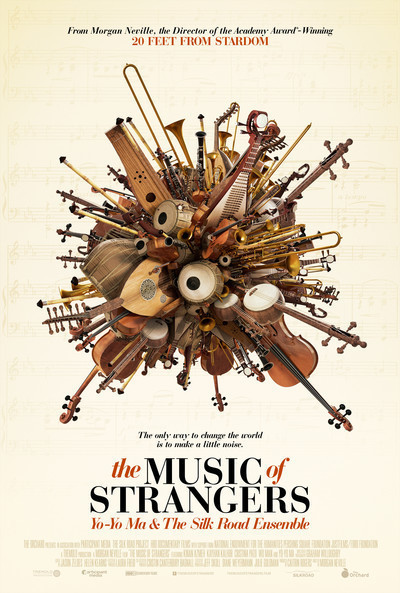
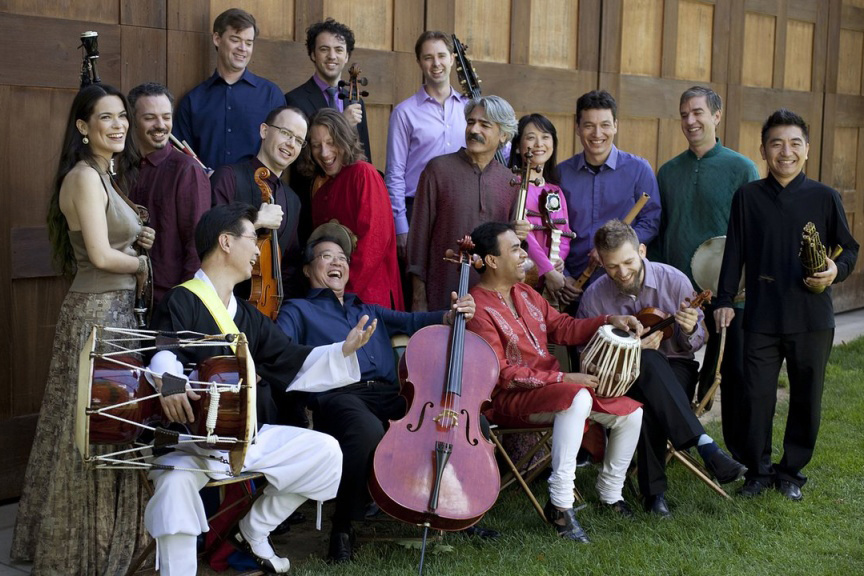
music of strangersMorgan Neville is the man behind some of my favorite documentaries including “20 Feet from Stardom” and “Best of Enemies.” His latest film, “The Music of Strangers: Yo-Yo Ma and the Silk Road Ensemble,” is about cellist Yo-Yo Man bringing together international musicians to share their sounds and traditions in a group called The Silk Road Ensemble. As we learn more about the challenges faced by performers from Spain, Syria, China, and other countries, the music they create together becomes even more moving.

That does not mean it was not a challenge for Neville to work with people from so many different cultures, whose only common language was music. “It was difficult but incredibly rewarding. I mean this was such an ambitious film that I think if I had known how ambitious it was at the beginning I would have been a lot more scared. I think when you make films it’s like being like a mother who’s had a baby. Your body forgets the pain; you have this conscious amnesia where you convince yourself that it won’t be that hard. And this was hard. We shot in seven countries in six languages and so from a production point of view it was hard, but creatively it was fascinating. Trying to take the ideas and the music and the scale of what is happening in the Silk Road Ensemble and trying to put that into a movie was daunting, but it was amazing experience at the same time.”

The film goes back to the first gathering in 2000, and some of the film was archival, coming from a local PBS station. “I didn’t know when I started making the film that any of that stuff existed but we just found little bit and pieces in archives that helped us tell the story and helped shape the story. But I basically filmed everything from 2011 on.” There were so many musicians he had to select a few to focus on. “Not only did I want to represent the diversity of the geography and background and experience but at the same time they had to be on the same type of journey. There were other great musicians and great stories in the ensemble but their stories are less related. I think the thing that united everybody that we focused on was that they all made a decision to leave, to not do the obvious thing or take the road less traveled and to go out into the world and then all returned back to home with some new found perspective on what made their home special or made that tradition special.”

The musicians all cherish their traditions and cultures, but they clearly relish the musical adventure of combining sounds and trying something new. Neville agreed that those two impulses could create some tension. “In all these cultures there are traditionalists, people who basically don’t want things to change, and I get that, but I think what Yo-Yo says in the film is that all traditions are born of real innovation. In a way what they’ve all tried to do with their tradition is the best way of preserving it. They are trying to keep it growing. What you are doing with a bagpipe or a peepa; a Galician gaita or a pipa, it’s taking it and expanding the vocabulary of that language. That’s a way of celebrating its uniqueness and making sure it stays relevant, it doesn’t die out like you see with the Xang Family banned in China . To me they are just tremendous, they are amazing, but there is no future for it. And there is a whole other counter-argument you could make, which is why the metaphor the Silk Road is so appropriate. Things that seem like pure embodiments of specific cultures usually aren’t, whether we are talking about pipas or pasta. I will give you one example, the Persian instrument which is a Kamancheh, a very traditional, personal instrument. It has four strings on it; it used to have two strings on it until they saw violins and said, ‘Well, if they’ve got four strings we should have four strings.’ And now people want to protect it but it already has a vocabulary, it’s already in dialogue with the rest of the world even going back before this tradition. People like Wu Man and Kayhan , even though actually they left their homes, they’ve done more to preserve their tradition than the people that stayed. If you look at how China regards its own traditional music now or how Iran regarded its traditional music after the Gulf War, they not only stopped all Western influence, they stopped all traditional music in the cultural Revolution and that’s part of why Kayhan had to leave, everybody had forgotten how to play the Kamancheh.”

While Neville has made documentaries on other subjects, his favorite topics begin with music. “To me, the best music films are not about music. Music is a way of telling the story. It’s a language but it’s got to say something with that language. I think Yo-Yo is very much about that. I feel like it’s an amazing tool to have as filmmaker and I love investigating those stories. But every music film I’ve done is about something beyond the music. This one is about all these ideas. I mean it’s really about these big questions in its most elemental form, the importance of culture. Does culture matter, how does it define us and connect us in ways we don’t see? How can culture help us humanize the other in a world where we are so caught up in building walls and demonizing the other, how does culture work as antidote to that? I mean all of these kinds of questions I think we’re the ones we were investigating.” He gave as an example one moment in the film he said was one of his favorites: when Yo-Yo Ma is playing a Bach piece and another musician is singing a very traditional Taiwanese song as a mashup between the two seamlessly.” At first, the film had more expert explanations, but “at the end of the day it just felt like we were talking more than showing and that the music expressed so much that we just kept pulling back on it and trying to find the emotional story.”

Related Tags:


Directors Documentary Interview Music

Interview: Aisha Harris on Slate’s Black Film Canon — The 50 Greatest Films Made By Black Directors

Posted on June 7, 2016 at 3:56 pm

Aisha Harris and Dan Kois got ideas from a range of filmmakers, critics, and historians to prepare Slate’s list of the “50 Greatest Films by Black Directors,” a response to the many “canonical” lists that overlook these films. In an interview, she talked about why it was important to research and publish this list, which they called “The Black Film Canon,” and what she learned. I asked why they limited the list to films by black directors. “The idea came from Dan Kois through the idea of #Oscarsowhite controversy and how big a deal that was earlier this year. And part of the running narrative about the reason why that there were hardly any black people nominated this year is because they often don’t get to tell their own stories. They haven’t made it to the point where they can direct a big budget film. And so we wanted to make sure that this was a list that focused specifically on black people being able to tell their own stories and the opportunities that they’ve had to do that. Obviously there are plenty of really great films not on the list that are about black characters; ‘Cabin in the Sky,’ ‘Stormy Weather,’ ‘The Wiz,’ but we were specifically interested in those who were able to get behind the camera and I think there is something really powerful to be said about black people being able to tell their own story. One of the movies is ‘Malcolm X.’ That was originally supposed to be directed by Norman Jewison who obviously directed some great films about race, including ‘In The Heat of the Night’ and ‘A Soldier’s Story,’ but we all know that movie would have been vastly different and maybe not as powerful as Spike Lee’s version of ‘Malcolm X.’ So I think there is something to be said for being able to tell your own story and that’s what we wanted to get across with this list.”

It was great to see titles on the list that some people might consider not serious or prestigious enough for “canon” status, reflecting the same broad range that has what was once dismissed as a genre film, “Vertigo,” on the top of the once-a-decade Sight and Sound ranking. “For us that was another goal. What we wanted with this list was to broaden the scope of what canon means. It doesn’t have to mean high art’ it doesn’t have to mean that every single piece of that film is perfect or that it has a big budget or it is a Hollywood studio film. We wanted to make sure that our list represented films that are culturally significant but maybe aren’t considered ‘great’ by the usual people who make these canons. A lot of people, including me, forget that ‘House Party’ premiered at Sundance in 1990 and that helped redefine what an indie film could look like. It was at the forefront. It was what indie films could look like in the 90s. We also wanted this also to be an accessible list. A lot of these movies are challenging and I am all for challenging films — we should all be challenged by films. But there is room on the list for films that don’t necessarily have to be so heavy. I think we should celebrate the movies that aren’t heavy as well as the ones that are.”

Some of the films reflect the internalized bigotry — and commercial pressures to reinforce stereotypes — of their era. “that is the sort of thing you always have to consider with older movies, especially when you’re talking about black films and black representation on films. I mean ‘The Blood of Jesus,’ the Spencer Williams film, if you are a modern viewer it’s not the easiest film to watch. The acting was theatrical and it has a very old-school mentality about the power of religion and this very antiquated notion of the sinner and redemption. But at the same time you can’t ignore the fact that it’s a very culturally significant film, it’s an historically significant film and it exists. Spencer Williams, if people know him at all, he’s known for being one half of Amos and Andy which obviously has been heavily criticized and does not hold up today by modern standards. So it is important to remember that he was also a filmmaker and a talented one at that at a time when there were barely any black filmmakers. I think is something that is worth looking at and he’s worth being acknowledged as a filmmaker and not just as this character who now is just shorthand for Uncle Tom.”

They also made a point of including black women directors like Kasi Lemmons (“Eve’s Bayou”) and Ava Duvernay (“Middle of Nowhere” and “Selma”). “As polarizing as Spike Lee can be, I think most people acknowledge that he is a force to be reckoned with whether you are talking just about black films or a film in general but when it comes to women it is just a whole different ballgame. A lot of the women on the list have only one or two feature films under their belt and they have been in the game for 20, 30 years. Leslie Harris made ‘Just Another Girl on the IRT,’ and I think that remains to this day her only feature film. And Kasi Lemmons has not made that many movies, Gina Prince-Bythewood did ‘Love and Basketball,’ and then she did ‘Beyond The Lights‘ 14 years later, so they aren’t getting the same opportunities. I mean it’s hard for black males it’s even harder for black women and Ava Duvernay is hopefully turning the tide on that and she’s obviously very vocal and very active about promoting other women and other women of color in filmmaking and I think it’s great that we have someone like her that’s hopefully leading the charge along with the sudden attention to Hollywood being so white and so male.”

Harris was not familiar with all of the films on the list and hopes it will bring them to a wider audience as well. “I just think it gets at the emotional core of slavery and also the politics that happens within slavery that I think a lot of films do not do.
Another movie that I was unfamiliar with was ‘Medicine for Melancholy.’ That’s the 2008 film by Barry Jenkins and it stars Wyatt Cenac and it’s this very beautiful black and white film. I think some people made the comparison to ‘Before Sunrise.’ It takes place in one day. Two people have a one night stand but there is also so much more going on, there are some questions about gentrification and about romance and I was really happy to see that movie and discover it. That’s one of the things I appreciated about the list and I am glad that we did was that we did not just rely on myself and Dan. We didn’t want this to be just a list. We wanted to get as many perspectives as possible and as many informed perspectives as possible and that opened up a whole other realm and I think that made the list all the better to have those suggestions thrown after us.”

Related Tags:


Film History Interview Movie History Race and Diversity
Interview: Princess Cupcake Jones Author Yileya Fields

Interview: Princess Cupcake Jones Author Yileya Fields

Posted on June 6, 2016 at 3:00 pm

Copyright Belle Publishing 2016
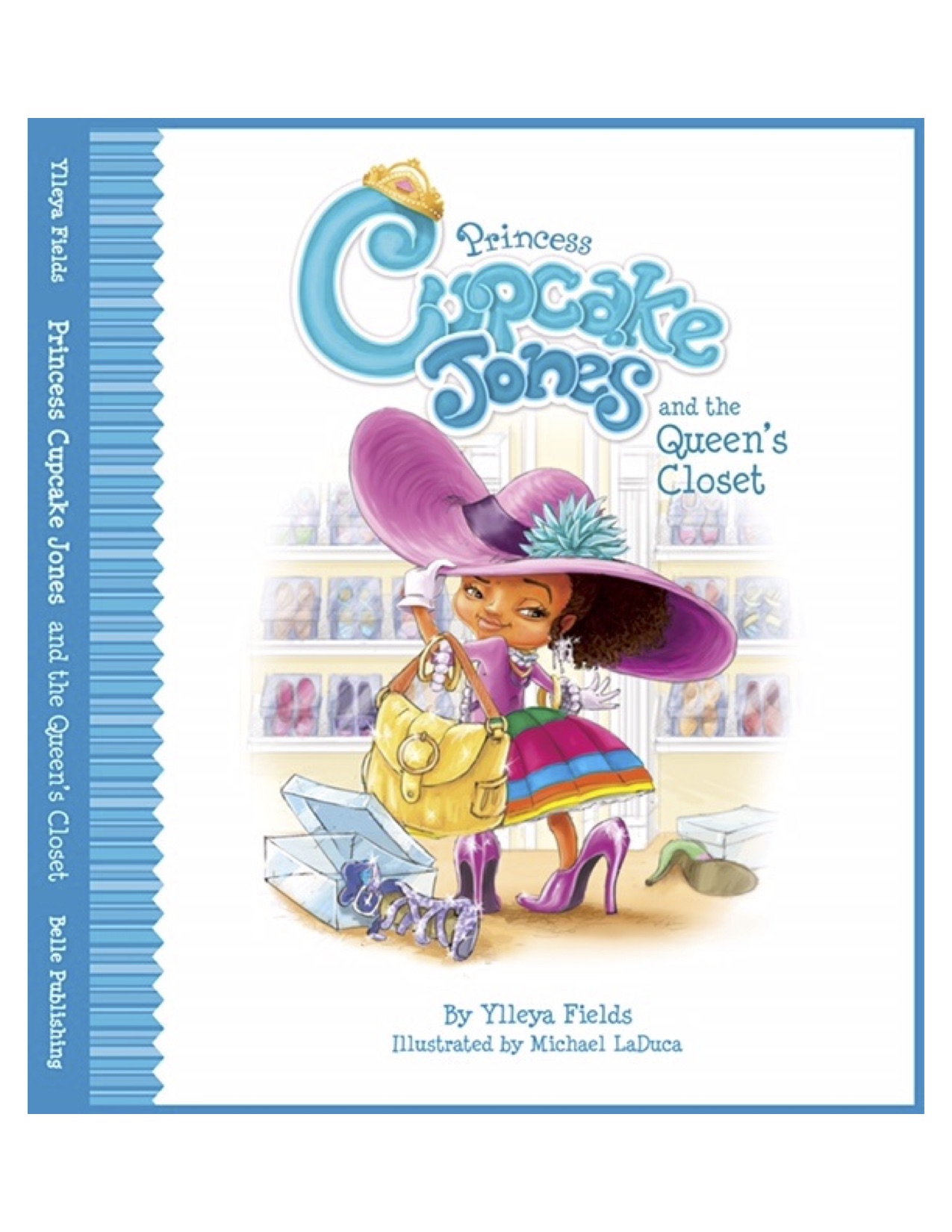
While looking for books to read to her eldest daughter (when she was 2), Ylleya Fields was struck by the limited number of titles featuring African American characters. And so she created one: Princess Cupcake Jones was created, with Princess Cupcake Jones and the Missing Tutu. It won the Mom’s Choice Award, the Gelett Burgess Award, a Family Choice Award and a IndieReader Discovery Award. It was followed by Princess Cupcake Jones Won’t Go to School, and the latest is Princess Cupcake Jones and the Queen’s Closet.

Ms. Fields was kind enough to answer my questions.

What inspired you to create the Princess Cupcake series?

Princess Cupcake Jones was inspired by the lack of diversity I saw while looking for books to read to my children. I decided to take matter into my own hands and blend the appearances and personalities of my two eldest daughters – thus creating Princess Cupcake Jones.

What is Princess Cupcake like? What does she like to do?

Princess Cupcake Jones is a curious, sassy, yet sweet 5 year old. She can be quite mischievous, like most children her age.
She loves playing, dancing, and has quite the imagination.

Who is in her family?

Princess Cupcake Jones, her mother (the Queen) and her father (the King) are the main characters in the story. However, I’m exploring the idea of giving her a sibling in a future book.

Is she based on a real-life character?

She is physically a combination of two of my eldest daughters. I blended both of their appearances and personalities into one beautiful character. Yet my two younger daughters are now providing inspiration for her as well!

Do your children inspire or influence your stories?

Absolutely! The Princess Cupcake Jones series would not have come to life if it weren’t for my children. I felt a responsibility to create this series for them as well as children around the world so they could relate to a character in a book.

Why is it important for children of all races to have books about diverse characters?

Children seeing diverse characters is important because it drives home the fact that while people may look different physically, at the end of the day, our values, dreams, wishes, etc are the same. These characters connect them and help children to relate to each other better.

What books did you enjoy when you were a little girl?

Growing up I was a voracious reader. I loved poetry and still do. Shel Silverstein’s Where the Sidewalk Ends and A Light in the Attic were two of my favorite books!

What do you want children and their families to learn from these books?

With each book having a different life lesson, my goal is to reinforce morals and values that children utilize in everyday life. By reading the books together, families can bond over the fact that Cupcake and her family isn’t that much different than their own!

What adventures will Princess Cupcake have next?

The next book in the series “Princess Cupcake Jones and the Dance Recital” is due out this summer. It’s all about Cupcake’s love for dance and what child can’t relate to that?

Related Tags:


Books Interview Writers

Off Camera: Keegan-Michael Key Interviewed by Sam Jones

Posted on June 4, 2016 at 1:52 pm

One of my favorite performers is interviewed by one of the most thoughtful questioners in the business: “Off Camera’s” Sam Jones talks to “Key and Peele’s” Keegan-Michael Key about excellence, courage, destiny, and why comedy improv has to work backwards, not forwards. I predict that his performance in the upcoming Mike Birbiglia film “Don’t think Twice” will help him be recognized as one of today’s most talented and versatile actors. And once again, Sam Jones shows that he is one of today’s most skillful interviewers, focusing on work, purpose, problem-solving, and option-assessing.

Related Tags:


Actors Interview Shorts VOD and Streaming
THE MOVIE MOM® is a registered trademark of Nell Minow. Use of the mark without express consent from Nell Minow constitutes trademark infringement and unfair competition in violation of federal and state laws. All material © Nell Minow 1995-2026, all rights reserved, and no use or republication is permitted without explicit permission. This site hosts Nell Minow’s Movie Mom® archive, with material that originally appeared on Yahoo! Movies, Beliefnet, and other sources. Much of her new material can be found at Rogerebert.com, Huffington Post, and WheretoWatch. Her books include The Movie Mom’s Guide to Family Movies and 101 Must-See Movie Moments, and she can be heard each week on radio stations across the country.

Website Designed by Max LaZebnik