Interview: Catherine Urbanek of “Courting Des Moines”

Posted on April 5, 2016 at 8:00 am

Catherine Urbanek stars in “Courting Des Moines,” a political romantic comedy with a series of cameos from real-life 2016 Presidential candidates and other real-life figures in Iowa for the caucuses that are the official start to the quadrennial race for the White House. In an interview, she talked about what she learned from playing a campaign manager and about her popular comedy web series about terrible first dates.

What was it like to shoot the film in Iowa as the real political campaigns were going on all around you?

I think what was surprising was how politically engaged Iowans are. It was really refreshing to go to Iowa and to see how politically aware everyone there is. It was just kind of different because in Los Angeles, for example, everyone is very focused on the entertainment world, the entertainment industry. But going to Des Moines, people’s focus was on something completely different — it was on politics. There is an expression that they have in Des Moines: “Everything local is politics and all politics are local.” So everyone is hyper aware of what’s going on in the nation. Kind of like how in LA everyone knows who Chris Hemsworth but in Iowa everyone knows who Bernie Sanders is so it’s really interesting.

In the movie your character runs the campaign for a candidate who is a real long shot but what is happening now seems even harder to believe.

Some of the stuff in the movie honestly felt like it could totally be happening in real life but yes, this election in particular is really kind of a bit like a circus.

Your character meets up with an ex and they are interested in getting back together until they begin to work for rival candidates. In real life you knew your co-star before this film, right?

Yes, Brandon Jones plays Damian. I wrote a short film that Brandon ended up getting cast in. It was a Web video that I wrote called “Too Much Clay Matthews,” about a Packers fan and a Bears fan on a date. Brandon read the script and he really liked it and wanted to do the project so we shot it. And then when we were making “Courting Des Moines,” Brent Roske was looking for Damian and I asked if he thought about Brandon Jones. So I’ve known Brandon before and I had worked with him before and honestly too in terms of preparing for a love interest roles it’s just acting. Brandon is very easy to act like you are attracted to him, it’s very easy to be attracted to Brandon Jones so that was no problem.

You’ve been interested in acting all your life. Tell me a little bit about how it all began and what was your first professional role?

I actually was extremely introverted when I was little. We did a play in kindergarten and when I got to be on stage it was like I was somebody, I was playing something else and it felt incredibly comfortable. And I found that I was more comfortable on stage almost than I was offstage in my real life. Then I become a total goofball and not introverted anymore but I always felt so comfortable on stage. And I also really love to make people laugh, I really enjoy that so I tend to prefer comedy over drama.

Did you see any of the real-life candidates when you were filming?

I didn’t meet any of them while we were shooting but I did go back to Iowa when we did a screening Iowa of the film right on the eve of the Iowa Caucus. And I was with the director for a little while, I kind of hung around with him in Des Moines and we went to the Republican presidential debate and so I was there for that and I remember seeing Rick Santorum and I think we saw John Kasich and Carly Fiorina. It was so interesting because it felt like being at the Oscars in a way. And then at the screening for the film I got to sit with Senator Tom Harkin, who has an appearance in the film sowe had a little scene together.

Tell me about your web series.

It’s actually a dating trilogy that I wrote about the girl that goes on dates where each date starts out really well, they have a common interest but then there is a discrepancy about that common interest and then the date ends horribly. The common thread of the dating trilogy was that the people are equally passionate about things — Elton John, Matt Damon, or football. So when they disagree what starts as something they have in common turns out to drive them apart. One was picked up by Funny or Die, but they cut it so I prefer the version on YouTube. I really kind of want to do one know called something like Too Much Trump about a girl and a guy on a date who are both really passionate about politics where one is for Hillary and other is for Trump and the date ends terribly!
Related Tags:


Actors Interview
Interview: James Younger on the New Series “The Story of God”

Interview: James Younger on the New Series “The Story of God”

Posted on March 29, 2016 at 3:55 pm

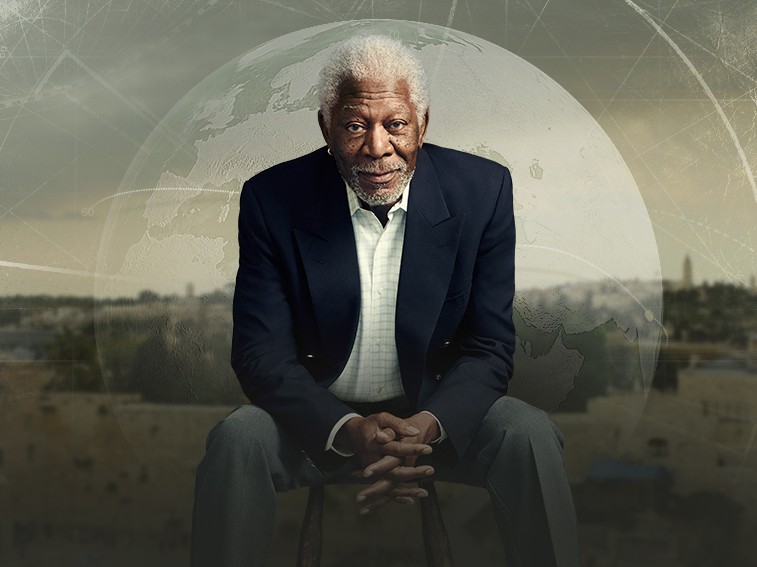
James Younger is executive producer of the new Morgan Freeman series, “The Story of God,” which premieres this Sunday, April 3, 2016. It was a pleasure to speak to him about the challenges of taking on such a complicated and sensitive topic.

You really took on quite an ambitious project!

It was a monumental undertaking to try to cover all the faiths of the world and 10,000 years of history and do it all in the space of just nine months from start to finish was a pretty heavy task but we certainly did a pretty good job. I’m very happy with what we did and clearly we could have done an awful lot more.

Where did the idea begin?

Morgan Freeman and his producing partner Lori McCreary had been working together for many years with their own production company and they were in Istanbul about seven years ago at the Hagia Sophia which is a museum, one of the oldest churches in the world and then it became a mosque. And they were looking up at the decoration of the mosaic on the wall and they were like, “This is a mosque and how can there be all these images of Jesus and the virgin birth and miracles?” And there was a tour guide who told them, “Oh no at this time it was accepted and Jesus was a prophet in Islam. So it’s part of the story.” And their reaction to that was, “Well wow, we think of ourselves as fairly educated and enlightened people and we have an interest in religion and faith and the fact that we don’t know that Jesus is a prophet in Islam is shocking. Just imagine what else we don’t know.” I’d been working with them on this series called Through The Wormhole, which is a kind of a scientific exploration of the big questions of existence: why we’re here, where we came from, what happens when we die. We realized we could make a show in a similar vein: let’s ask big questions but not from the point of view of science but from the point of view of faith and see how different faiths answer those questions.

What did you do to try to reach out to the different faith communities to make sure that you were being sensitive to their concerns?

We involved different faith communities from the beginning. We had ideas historically and anthropologically and culturally on how we would try to divide up this series but we had advisors from all the major faiths with us the whole time in the process. So when we would write a script for treatment or shooting plan we made sure we got feedback and if we made a mistake like, “Oh no this is not really how Islam sees the apocalypse” or “This isn’t how Buddhism understands enlightenment,” we would make sure to correct that. And we involved various faiths along the whole process so that they would see rough cuts and give notes so that’s one aspect.

Then the other aspect is we never tried to pit faith and religion against one another like, “Oh, this is how this faith answers life after death, and this is how this does it, which one is the better answer? Which one is more correct?” We never do that. We are just asking questions and showing people the differences between religious viewpoints but at the same time showing people the similarities between them.

What did you find to be the sort of the universal ideas and what were the ones where there was the most disparity?

Certainly there’s a lot of similarities in this idea of the afterlife. That somehow what happens to us after death is important as it relates to life, people who are living now. I would say you look at the ancient Egyptians, you look Aztecs, they all believed that there’s some power that comes from the dead. And when people die there is something left over, like the idea of the soul or something which is connected to something eternal, divine. That’s kind of a universal aspect. So that was really unifying, the idea that there’s something more to life that’s just physical form of life.

In what way are they the most different? I would say probably the most different is and this is not really different between all religions but between some is that this idea of apocalypse and the end of the world. The idea of the apocalypse, this idea of the Day of Judgment, this thunderbolt, lightning, the destruction of the world is really uniquely Abrahamic. It is from this Jewish, Christian, Islamic and actually originally Zoroastrianism, that’s a very much a belief that came out of the Middle East around 2000 years ago. You don’t find that in Hinduism, you don’t find that in Buddhism you don’t find that in not the Navajo religion, you don’t find this idea of like this one mindset like there’s something wrong with the world there is an injustice that can’t be righted but it will be righted a specific day when God will intervene and save the righteous. That’s probably the biggest separation between faiths.

There is also the question of free will, whether everything is predetermined. That is something that ancient Romans believed, that your faith is entirely in the hands of God and everything could be the result of divine intervention, every coin toss that you make is going to be determined by somebody else. In the Christian faith and Western tradition there is more of a sense of free will, that we have a choice in what we do. You may be judged for what you do, but you do have that choice.

What about the visual depictions of God. Of course some religions don’t have any like of the ones that do, what were some of the most interesting?

Copyright 2016 National Geographic

Well the obvious thing to think about there is that Hinduism, there was a religion where there are as many as 330 million gods. That is so different from Western idea of God, God is this kind of divine almost space less energy. In Islam and Judaism God literally has no form, He is invisible, He has no human form. In Christianity there is a human form to God in the person of Jesus but still there is this idea that God is the sun beams coming down from the sky, right? And in Hinduism you have the all the statues of idols of gods and people worship them and you think it is completely different but when you look into it a bit more it’s not. In a way these statues are proxies for God and different aspects of the divine and even Hindus believe that there is behind the different gods that they pray to a universal divine energy which is called Brahman. And Brahman is a kind of divine eternal energy that spreads into all the gods and it becomes a bit like the Saints of Catholicism, you have a God but then you pray to a Saint for specific intervention and so there is similarity even there.

Tell me a little bit about the logistics. You traveled quite a bit to make this series. What were some of the most difficult locations?

We traveled to seven countries. Many cities we had to fly to by helicopter. We went to the middle of the Guatemalan Rainforest to see the remains of this 2000 year old Mayan city called El Mirador. We went to Israel in the middle of a period of violence, so we couldn’t go to the Arab Quarter, and that was very challenging. We also got kicked out of the Church of Holy Sepulchre when we were filming there, in Jerusalem. We got into a little trouble when we went into an area that we weren’t supposed to. But anyway we worked it out and we got back and we finished up the shoot. And India was just challenging, filming on these narrow lanes of Tirupati by the Ganges, a very sacred ancient city in India. Logistically moving with Morgan and our camera crew down these tiny lanes literally five feet wide with cows and mopeds and dead bodies and scores of people going to past you. It was very challenging to film there.

I was a little surprised but really intrigued and interested in the first chapter that you visited with Martine Rothblatt and Bina Aspen to explore the non-religious idea of eternal life via computer.

This idea of life after death is just one idea where all the advances that are happening in computation and neuroscience really actually can change the landscape there and raise the idea: could it be possible to keep the essence of somebody alive after they die? We choose them because they have Bina48 which is a fantastic robot facsimile of Bina with thoughts, emotions, and memory and they wanted to just talk to them about whether they think that life after death might be possible.

And would you say that this program is for believers, non-believers, or those who are seeking answers?

It’s for everybody. It’s for everybody who wants to know more about other people’s faith traditions, for non-believers to understand people’s faith, to people of faith to understand other faiths, to even understand what non-believers think. It’s for anyone who has a open mind and wants to know more.

The Story of God with Morgan Freeman Season 1 on DVD January 10, 2017 and Season 2 premiers on National Geographic, January 16th.

Related Tags:


Behind the Scenes Interview Television
Interview: Gavin Hood of “Eye in the Sky”

Interview: Gavin Hood of “Eye in the Sky”

Posted on March 18, 2016 at 3:18 pm

Copyright Bleeker Street 2016

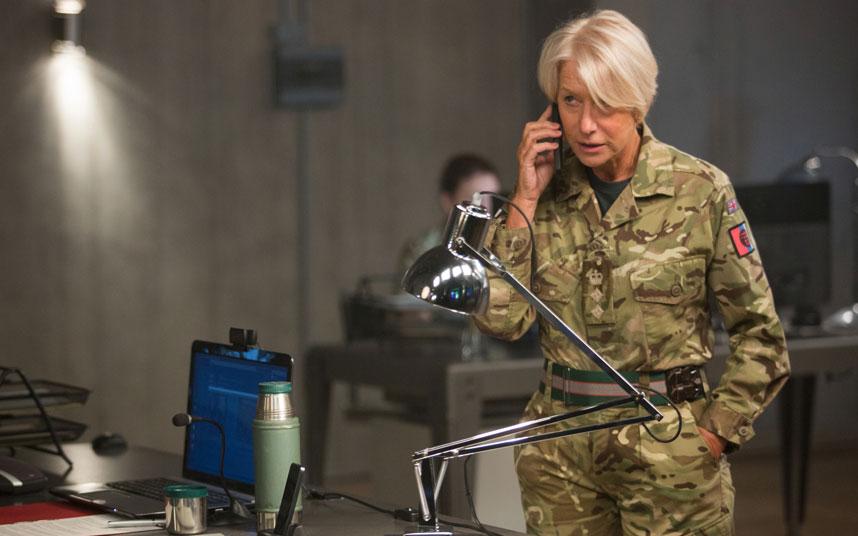
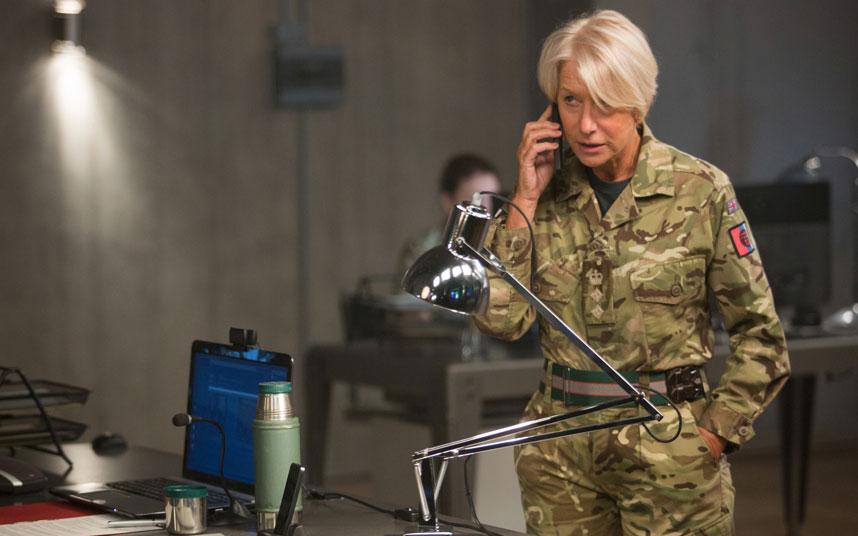
Director Gavin Hood says that his new thriller about drone warfare is “the grown-up version” of his last film, “Ender’s Game.” The Orson Scott Card sci-fi story written in the 1970’s anticipated much of today’s technology, including drone-styled remote machines make it possible for us to get closer to the enemy for obtaining information and keep us farther from the weapons we deploy to defeat them. “This is the real world,” Hood said in an interview, “present time, no sci-fi.” He continued:

We are living in an interesting age where we are more connected than ever before and yet in our connectivity we are also physically disconnected almost more than ever before. So there is something strange about this new world where we can see what’s happening far, far away, we can even control weapons that are far, far away without being in the conflict zones ourselves and therefore we are not physically as a drone pilot, for example, risking our lives. And yet we are engaged in warfare and witnessing close-up, albeit through a lens, close-up, the body counts and the effects of warfare. And so psychologically this is a strange new world for pilots of these drones, a very strange world. As it can be for the military commanders running the operations from places like the joint headquarters. Do you know that all of these places in the film really exist? Everything you see in the film is a real place that really exists, run by real people. The US-based and geospatial unit in Hawaii which we called in the movie Image Analysis Unit with the permission of the Geo space guides because it just what Geo space means and what it basically means image analysis. They analyze imagery from different places in the world, not only face recognition, but that’s a teeny part of it. They analyze for example if they catch a piece of YouTube footage or something from some wanted person who posts it, where exactly it was filmed, where is that object in the background and they have all kind of sophisticated software to try and pinpoint where things are, what things are, they analyzed troop movements from satellite imagery, drone imagery, it’s basically a place to analyze imagery and it happens to be located in an Air Force base Hawaii. I guess if you’re analyzing in darkened places all the time it’s nice to get out into the sunshine.

And then the largest drone piloting base in is Creech Airport base outside of Las Vegas, mostly American pilots, there are those too from other parts of the world that fly out of that base Italians, British, French. And Joint headquarters in London is exactly what its name says but there are many joint headquarters for many operations. So there are military offices and personnel from many different nations working out of that area. The drones which I didn’t actually mention which fire on Somalia are mostly launched from a base in Djibouti where there are subcontractors working for American military, people who have been in the military are now civilians but working for the military.
So it gets really really complicated because the pilots in Creech don’t what they call launch or recover the drones. The drones are launched, made airborne out of Djibouti from ground control crews in Djibouti, they are re-weaponized in Djibouti, they are refueled in Djibouti and then when the plane comes back to land there’s a moment where the ground control people take over from the pilots in Creech and bring the planes in to land and that’s just one base. That’s a sort of East African base in which drones are launched. There are drone bases obviously in Afghanistan, Iraq, all over the world from which drones are launched and recovered but there can be drones from anywhere or pilots from anywhere, and it’s remote.

Copyright Bleeker Street 2016

The movie shows us how different people look at the same set of facts but make different decisions and different assessments based on whether they were looking at military strategy, legal liability, political liability, or bureaucratic liability. When the military officer played by Alan Rickman argues that killing one little girl as collateral damage would be better than allowing the suicide bombers in the building to leave and kill hundreds of people, the politician responds that the key difference would be that it is us killing the little girl but the terrorists killing hundreds of civilians. Hood said that was his favorite moment in the film. “That moment, just when you think, come on people, we know what we’ve got to do here or if you don’t want to do it, and then suddenly comes an argument that spins you off into a totally different but absolutely critical direction. That is said by the Undersecretary of State for Africa named Angela and played by Monica Dolan, I hope playing along into this slight prejudice where you’re going to be ‘Oh, this is a woman, she’s going to be maternal and she’s going to not to want to strike the child,’ and then she comes out with the statement that says she would actually rather sacrifice 80 people at the hands of the terrorists in the local population that to have the local population turn against us because we killed one of their children.Now, you can play with the numbers. It is very important that when people say, ‘what would you do?’ You have to look at the facts. I think the script that I wrote is very humbling. We want to think that there is a policy for every situation and that’s that, but there just isn’t. There are strikes taking place every day in different parts of the world. There are strike taking place in defined conflict zones like Iraq and Afghanistan where we happen to find enemy within the geographic area and then there’s just more complicated questions such as where the enemy has moved into civilian neighborhood in possibly a friendly country whether it be Yemen or North Kenya and strikes are taking place and the question is what is the effect of that strike?

It’s very controversial as to whether the strikes that we made in Pakistan have actually helped us in terms of the overall strategy of winning the population over or whether they turned a lot of the population against us. People ask, ‘Do you think drones are good or bad?’ And that is too limited a question. The real question is: You have a new weapon, and every few years you get a new weapon. There was a time when we fought with spears and swords and then the longbow came along and there is writing from way back when about how the longbows are terrible weapons and horrible weapons and it shouldn’t be used to kill people from a distance. And then we had missiles. So the drone is simply a new weapon. The question is what does this weapon do well? What does it not do well? And when should it be used?

A lot of people say, ‘Well, the drone is so much more accurate.’ Well, first of all it’s not more accurate than a sniper bullet. We see that hellfire; it makes a big mess. So I defy anyone to say that it is somehow the most clean piece of technology that we have. The guillotine is cleaner — chop someone’s hands off, someone’s head off, no elaborate damage. The issue wasn’t what’s the weapon. The question was – Do you have the right person whose head we are chopping off? And what is the effect of chopping this head off and the people watching the beheading? Do they decide that we’re the good guys or not and that also it depends on the particular situation? So I think what Guy’s script does really well is present us with complex ethical, moral, legal, political questions and perhaps remind us not to be so adamant one way or the other about a particular approach. It shows us that we need genuine conversation about this new way of waging war.”

It is both reassuring and chilling that we see the people in the film applying very comprehensive mathematical formulas to weigh the risks and benefits of various strategic options. Hood said,

“You see a very American phenomenon in this formula with five different levels of acceptable ‘collateral damage.’ I don’t mean that in a cynical way. You’ve been doing this for longer than the British. So the British are embroiled in what we might call traditional legal discussion which by the way also applies to America in any war. Even war has laws. Once you’re in war, the rule of war requires that you use only the force that is necessary and proportional and reasonable to neutralize the threat. Even in war when faced with a threat of say three soldiers coming over the hills with rifle we cannot hit them with a nuclear bomb. That would be an excessive use of force and would make you guilty if you gave that order of a war crime.

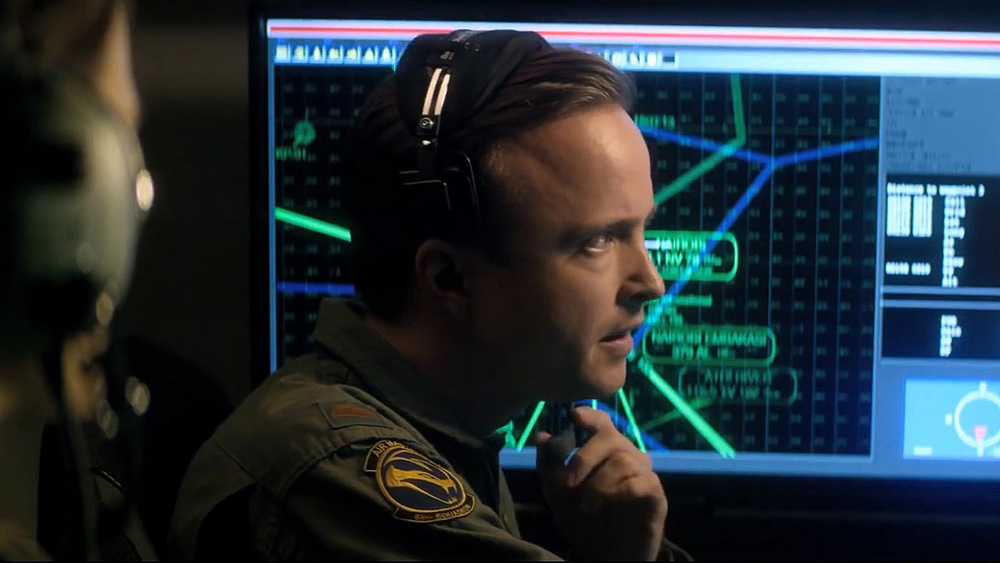
So even though we’ve gone to war, there is a body of international law or the law of war that attempts to control us within reason and then the reason for those laws, despite what Mr. Trump, says is that it matters how we behave in terms of how we can hold others accountable. So if there is no laws of war there would be no Nuremberg trial. If soldiers did not have to make a judgments about whether the order they are being given is legal or not, we cannot hold anyone from Nazi Germany accountable because they were following orders. The character played by Aaron Paul pushes back and asked for an updated collateral damage estimate. And by the way that’s not us making up a piece of dialogue. That’s a direct quote from a drone pilot commander, a colonel, who said ‘I am the pilot in command responsible for releasing this weapon. I have the right to ask that the CDE be run again. I will not release my weapon until that happens.’

If a pilot believes that he’s been issued an illegal order he is allowed to push back. If he defies what turns out to be a legal order, he’ll be court martialed. So these pilots are in a very tricky situation of having to make a judgment. Now does every controversial moment get pushed back such as we have in the movie? No. Because if you’re doing a drone strike in a defined constricted zone like Iraq or Afghanistan there are already rules of engagement. You’re not going all the way up the chain to the British Foreign Secretary.

But if you are doing something such as happened in the film where you’re targeting in a friendly country in a civilian neighborhood, you have big political ramifications. And so I want to say to my audience: this is 100 percent accurate but don’t think that every drone strike involves this kind of legal and moral complexity. Some do, some more, some less and depending on the degree of collateral damage people have to go higher and higher.”

Hood spoke very movingly about his chance to work with the late Alan Rickman.

I don’t know that he knew that he was sick when we were working but he was ill. I think we were very fortunate to get Alan in this film because the role of a general usually is played by somebody in a very simplistic, stereotypical way. What Alan brings to the role is a fully rounded, fascinating, intriguing and charming human being who is highly intelligent, because he was as a person. I wish he was here to talk to you because he spoke so eloquently about this subject. He was so well read and interested and he said he signed on because he loved the story and he literally said, ‘Gavin I just hope I don’t get in the way.’ He brings a comedy in his ability to be both absolutely mostly truthful and also find humor at moments when the audience needs to release tension and I think he’s enriched the film enormously and I miss him, and I wish he could be here to talk to you.

He said the wanted “the audience is in a position of jury, not being preached to but being asked to do think for themselves. So I hope we’ve given them a thriller with multiple points of view in the end let them have a good conversation. We don’t have the answers but I think it’s great for people to think and talk about these questions because it is where we’re going in terms of modern world.”

Related Tags:


Directors Interview

Interview: Cyrus Nowrasteh, Director of “The Young Messiah”

Posted on March 16, 2016 at 3:02 pm

Cyrus Nowrasteh is the director of the new film about the early life of Jesus, The Young Messiah. In an interview, he talked about the challenge of casting a child to play the lead role and creating “the first Jesus moment” in the film.

How did you find a child to play the role of Jesus?

Well, first you call the agents and say, “Send us all the resumes of your seven-year-old actors,” and you don’t hear from anyone. You have to put out a casting call and go searching and use multiple casting directors in different locales which is what we did. I had casting directors in Israel, in Jordan, in Australia, in London, in Rome, in Los Angeles and in New York. Basically these were all people who we were just kind of spreading the word that we were looking for X. We were looking for a seven-year-old to play young Jesus. I get a call one day from a casting director in London. He said, “We just had an extraordinary child come in. He made the hair stand up on the back of our necks.” We looked at the tape, went to the London, put him through a fairly exhaustive audition process for which he was very game and I recognized immediately that he’s a very special child and he has wonderful parents. His name is Adam Greaves-Neil and he got the part.

The camera loves this kid, and that’s a quality you can’t really predict when you see someone in a room, even when you see them on videotape you don’t really know until you start shooting scenes.

My favorite part of the film is His endless curiosity about the world, and, like all parents, the way Mary and Joseph have to try to figure out how to explain things to Him.

It’s a part of the story but it’s also part of the character. I mean I have to believe that young Jesus was a very bright, capable child and very curious and very interested in the world. So in a sense that was sort of a part of why the human side of Jesus was amongst us and dwelt among us because He is here to learn and experience what it is like to be human. And that takes with it a lot of curiosity and intelligence and thought.

Tell me how this project came together. Who began it and how did you get involved?

It started when Anne Rice wrote a rave review of my previous film, “The Stoning of Soraya M.” Through some happy coincidences involving people that we knew, her book got in our hands, I looked at it and fell in love with it. My wife and I adapted it for Chris Columbus’ company 1492 Pictures and we took it to producers that we knew and trusted and then we brought in a financing entity led by Tracy Price and Bill Andrew, Ocean Blue Entertainment and they got it. Everybody just sort of kind of clicked to the idea that this was a really fresh and original take on the Jesus story. Now we knew there were inherent risks attached but we were willing to tackle those.

What did you see as the most significant risks?

That Christians might not like it. That they might think that the fact that we are taking on the unknown years, that we’re telling a story that’s not directly from the Bible, that might be objectionable to them. I felt all along and I said this 1 million times, it’s how you do it and I felt confident that we could do it properly.

It’s inspired by Scripture and rooted in history. The story imagines one year in the boyhood of Jesus. So we’re saying that it is fiction but it’s scripturally inspired, meaning our guidepost for this young boy, for this character of young Jesus, is Jesus as he is revealed in the Bible and how he acts in the Bible. So whenever we wanted some kind of idea of what he would do in the particular situation we looked at the Bible and try to say, “Okay, where is there a similar type situation so that we can interpret how He is going to act?”

I thought it was fascinating and very smart that His first miracle involved a bully because it showed so much about his character right from the beginning, and how he responded when the bully was killed by someone else.

I called that the first Jesus moment in the movie. The bully comes up and shoves Jesus first and makes mockery of him and he calls him a little baby for playing with girls. What does Jesus do? He kind of does a half turn away from him, He turns the other cheek, He’s not going to fight him. Then the kid jumps Him and is beating on Him and He really doesn’t fight back. He just covers up to protect Himself. It is then when the bully turns on the girl who tries to get him off of Jesus by hitting him with a stick when the bully goes after the girl and Jesus gets up and says don’t touch her, stop, don’t touch her. So He’s protecting the girl. This is a whole bundle of what you call revelatory simple Jesus moments even in just that scene but I actually think that’s throughout the movie. People have even pointed out some to us that we weren’t even aware of.

Tell me a little bit about the characters of Mary and Joseph and how you thought about them and the struggles that they were facing.

We have an opportunity in this movie to give the audience a window into the holy family in a fashion that they really never seen it before. I think it’s an amazing opportunity, because they have always been sort of shown to us as these icons and now they have to be real. They have to be a mom and a dad. I love that we were able to do that. I think for example Joseph, who is always just wallpaper in these movies, he actually has some presence, he has strength and he has sensitivity. You could see how he could be a loving father to his child and an example to his child. I think one of the reasons why Joseph gets so lost is because Mary and Jesus are such icons and here we get to see parents working together, supporting one another, loving one another, loving their child, going through all of life’s trials and challenges together. I think it’s a real opportunity in this movie to sort of portray that for parents watching the movie to connect with it. This is not only their child, the child they love and they want to protect but this is also the son of God. So it’s an interesting dilemma.

So why is this important to you personally to tell this story? What is it that you want people to take from it?

First and foremost I want people to have a very satisfying motion picture experience. I want them to go to the movies to be entertained and to be moved. I was approaching it from story level. This is this a story that attracts my interest. When I sit in the movie theater the only reason I’m sitting there is because I want to see what happens next and it is on that level I want it to work the most but of course you can’t get around what is about. This is a movie about faith, about God and about family.

Related Tags:


Directors Interview
Interview: Dayton Duncan on “The National Parks: America’s Best Idea”

Interview: Dayton Duncan on “The National Parks: America’s Best Idea”

Posted on March 11, 2016 at 3:36 pm

In honor of the 100th anniversary of the National Parks Service, PBS and all affiliate stations will rebroadcast The National Parks: America’s Best Idea April 25-30. 2016. The six-episode series was produced by Ken Burns and Dayton Duncan and written by Dayton Duncan. It was filmed over the course of more than six years at some of nature’s most spectacular places, from Acadia to Yosemite, Yellowstone to the Grand Canyon, the Everglades of Florida to the Gates of the Arctic in Alaska. Mr. Duncan is the author of twelve books, including Out West: A Journey Through Lewis & Clark’s America and Grass Roots: One Year in the Life of the New Hampshire Presidential Primary. SSeed of the Future: Yosemite and the Evolution of the National Park Idea is being released with the Yosemite Conservancy to commemorate the 150th anniversary of the park’s initial creation as a federal grant to the state of California. Mr. Duncan generously took time for an interview.

He told me about his unforgettable first trip to a national park.

I was not quite nine and it was the only real vacation my family ever took, back in the late 50s. I grew up in a little town in Iowa. Both of my parents worked so we didn’t really take vacations except that one summer. So it’s such a vivid memory. I can almost give you a day by day rundown of the places we went but they included the Badlands in South Dakota, Devils Tower, which is a national monument in Wyoming, the Little Bighorn Battlefield which is a national historic site in Montana and then we went to Yellowstone to the Grand Teton National Park, both of them in Wyoming, to Dinosaur National Monument. It was a great experience. My mom sort of lead me to believe that I was going to be instrumental in the planning of the trip and had me get out maps and write away write to different states for brochures and stuff and help to map out where we were going to go.

Basically we borrowed my grandmother’s car and some camping equipment from some family friends. We stayed in national parks because they were beautiful, because my mom thought they were important and also because they were affordable. I didn’t come back from that trip saying, “My life has been changed forever,” but as I look back on my life now as someone who has spent much of his adult life traveling the United States in pursuit of getting to know more about it, and someone who has written a lot about the history of United States but particularly the western part of United States, I can say it has. You know I can look back and think that that actually did change my life because at the time I didn’t say, I will end up being a writer, a filmmaker and one of those things that I’m fascinated in now is the land that we call the United States and our history and its interplay with that land. So I can’t help but think that that probably had something to do with it.

My mom wanted to broaden my sisters and my horizons and there is no question that I saw places that I hadn’t conceived of. It was 1959 and our car had broken down in the Black Hills, South Dakota which delayed us for two days otherwise we would have been in Yellowstone in the disastrous earthquake of 1959. In fact we would have been in the campsite outside of the park with the big flood when the dam broke. But while we were in Yellowstone there were still a number of aftershocks and not only did I see these geysers going off but felt the earthquake aftershocks two or three times. I saw my first moose, my first buffalo, all those kind of things. And 40 years later as a parent I took my children to those places and got to watch them see their first bison, their first moose.

The idea of national parks is original to the United States. Duncan says that the tension between those who want to preserve the parks and those who want to sell them over to private interests is not a new one.

The subtitle of our film says it is the best idea we ever had. We are quouting Wallace Stegner, the great writer and historian. At the core of that are two things that come from us as a people as a democracy. We are the first nation to have set aside the most extraordinary magnificent, some would say sacred parts of our landscape not for the exclusive use of kings and royalty or the rich and the well-connected but for everyone and forever.

The Declaration of Independence created our country as a nation. The creation of the national parks which no nation prior to us had ever done is in my belief a direct extension of the Declaration of Independence to the land, that is to say those things, every person is equal, that is what national parks does, too. That we all are owners and have equal access to these extraordinary places for our pursuit of happiness, however you want to define what pursuit of happiness might be. So that’s the thing that should be saved for everyone in the second part is in for all time. And in doing that that obviously like the idea of liberty itself, it’s always being contested, it’s always evolving and so far in our history has broadened. The Declaration of Independence said that all men are created equal, but if you ask the people who wrote that in 1776 they would’ve said, “Well, we mean all white men who owned property and had no debts are created equal.” Fortunately they didn’t write it in this way and our nation’s journey has been to redefine and broaden what that meant so that not just on men white men with property and no debts but then all white men were created equal, then we included African-American men and we included women and we still on that journey of expanding that and bringing true meaning to those inspiring words.

And in the national parks at first we were setting aside these sorts of logical oddities, the tallest waterfalls in North America the biggest trees on earth and the greatest collection of geysers on earth, those sort of things and we continue to broaden that to include important places in our history, both those places that we traced because they speak to the best of us and places now in our history that reminds us of mistakes that we have made. We’ve expanded the state parks not just for the scenery but that there to preserve nature itself. When Yellowstone was created in the 1872 as the world’s first national park, they had no concern about buffalo at the time, well as it turned out it became a refuge for the bison when they were nearly exterminated in our continent, the most magnificent animal that we have ever had I believe was down to about 24 in the national park and even there it took legislation and action by people to fully protect them and it saved them from going to extinction and now there are 7 million bison in the United States.

Slowly we came understand that these places served lots of different roles. The first director of the National Park Service 100 years ago. Stephen Mandel, called them “vast schoolrooms of Americanism,” by which he meant that when people go there they become prouder of their country and therefore better citizens. But what we have also learned in the last hundred years is they are best schoolrooms, period. They are great teaching places. They teach us about nature, they teach us about our interaction as human beings with nature, they teach us about our history and remind us of things that we need to be reminded of at different times. Alexis de Tocqueville said that Americans prefer the useful to the beautiful and we will always demand that the beautiful be made useful. And as John Muir said, “Nothing dollarable is safe.”

Americans are commercial and believe in individualism and all those things to sometimes an excessive degree. But at the same time what the parks remind us is that we are capable of something else, that we were capable in the 19th century which when as a nation we were in a mad dash across the continent trying to privatize everything that we could. In 1864, in the midst of the Civil War, Congress’s main duty for 100 years had been to give away or sell away the public domain but in Yosemite in 1864 they said, “No, we’re not going to do that here,” and they entrusted it to the state of California to protect it forever. And then in 1872 when the reports came about Yellowstone they said we’re going to do the same thing that we did in the Yosemite but wait a minute there is no state to give it to as Wyoming was still territory, so they created the world’s first national park and then discovered that that was a better model than the state and then eventually Yosemite became a national park like Yellowstone.

So the Grand Canyon was first proposed as a national park in 1880-something. Had Congress agreed to the proposal it would have been the world’s second national Park. But local interests in Arizona territory didn’t want it to be. They wanted it for commercial use, so they fought and stopped it and so it was proposed again and again turned down again and again. Theodore Roosevelt visited there as a president 1903 and on his very first visit there he said, “My advice of the people of Arizona is leave it as it is. The ages had been at work on it and man can only mar it.” They paid no attention to him.

Then with the tools of the thing called the Antiquities Act in 1908 he was able to set it aside as a national monument against the howls of protest of commercial and private, political interest in Arizona. It wasn’t until 1919 that the Grand Canyon was finally after very long and political fight was finally made into a national park. It’s about the most self-evident place that should be preserved as a national park as you could ever imagine but it took 30 plus years to make it so. So that’s part of the tension that is within us and within society. It has always been that way and it sometimes rises to a higher pitch and sometimes recedes a little bit. Right now we are in one of those higher moments when there seem to be a greater interest and political push to privatize what’s left of the public domain versus both protecting places like parks but also protecting places that might become national parks in the future. That’s just the political situation that we find ourselves in. Luckily and what I feel very profoundly is that that kind of impulse will kind of always be with us. There is always going to be somebody who is going to look down at Grand Canyon and see a river down there and say, “Boy, what a great place for a dam.” There’s going to always be somebody who is going to be looking at a beautiful valley like Yosemite and say, “Boy, what a great place for trophy homes,” and there’s always going to be somebody who will look at the mountainside and wonder if there are minerals inside of there, and see a grove of trees and try to figure out how many board feet of lumber could be gotten out there. That will always be with us.

The challenge for us as Americans is to recognize that we have to inspire each generation to be responsible for taking care of this legacy. Once it’s been ruined, it’s been ruined. So just because you created a national park doesn’t mean that you don’t have to always be vigilant and always be trying to bring forth the next generation who understand that and will treasure it and will have the political will to fight those other impulses that are part of the American character that might just spoil it. The imperative is to reach both young people and diverse populations and say,”This place belongs to you too. You are an equal co-owner of the most jaw-dropping Canyon on earth, you are a co-owner of these ancient and magnificent trees, you are co-owners of these geysers and custodians of these bison. Nothing converts you more to being a park advocate than actually visiting one.

Related Tags:


Animals and Nature Documentary Interview Television Writers
THE MOVIE MOM® is a registered trademark of Nell Minow. Use of the mark without express consent from Nell Minow constitutes trademark infringement and unfair competition in violation of federal and state laws. All material © Nell Minow 1995-2026, all rights reserved, and no use or republication is permitted without explicit permission. This site hosts Nell Minow’s Movie Mom® archive, with material that originally appeared on Yahoo! Movies, Beliefnet, and other sources. Much of her new material can be found at Rogerebert.com, Huffington Post, and WheretoWatch. Her books include The Movie Mom’s Guide to Family Movies and 101 Must-See Movie Moments, and she can be heard each week on radio stations across the country.

Website Designed by Max LaZebnik