Interview: Michael Showalter of “Hello, My Name is Doris”

Interview: Michael Showalter of “Hello, My Name is Doris”

Posted on March 10, 2016 at 3:12 pm

sally-field-doris
Copyright Roadside 2016

Writer/director/actor Michael Showalter has a great eye for talent. The original “Wet Hot American Summer” was a career starting point for Bradley Cooper (who missed his Juilliard graduation to be on the set), David Hyde Pierce, Paul Rudd, Elizabeth Banks, Amy Poehler, and many more performers who went on to starring roles. “The Baxter,” with Showalter as a man destined to have his bride run out on him at the wedding, starred Peter Dinklage, Justin Theroux, Michelle Williams, and Peter Dinklage. In “Hello, My Name is Doris,” his star is not a new talent, but he gave two-time Oscar winner Sally Field a role that gives her a chance to show us that at age 69 she can still astonish and surprise us. She plays the title character, who has spent her life taking care of her mother. As the film opens, at her mother’s funeral, Doris has to begin to figure out what her life will be.

Your casting choices are always impeccable, even in the smallest roles. How you approach casting, or do you just to know everybody?

I weirdly know a lot of people even though I’m not like a social person really at all. But I do know a lot of people or I know people who know people. Sally Field was a total shot in the dark. I certainly don’t know her other than I’m a huge fan of hers and have been for a really long time. I felt that she would be amazing in this part and offered her the role not thinking that she would want to do it but she did want to do it and of course once she is cast the rest is pretty easy. Once you are able to tell other actors that Sally Field is playing the lead role it’s pretty easy to cast the movie after that because all the other actors want to work with her.

when I’m casting usually I do have a couple people in my mind. I watch a lot of movie and I see a lot of TV shows so I kind of know who is out there and I go, “Gosh, if we could get that person it would be amazing. Wendi McLendon-Covey for example who plays the sister-in-law, I always knew she would be so good in this part. I think she’s so funny and interesting and I just always envisioned her and Natasha Lyonne and just people that I know or whose work I like and then you just go and you make them an offer and a lot of times you’d be surprised that people are interested. People want to work.

Doris has an exceptionally eclectic wardrobe in this and it is fun to see how people react to it. How did you create her look?

I live in LA now but have lived in New York for many many many years.  Doris is a New York kind of person that you encounter.  You see people like Doris who are kind of eccentric.  Their clothes are very wild and specific and collected and interesting but they don’t necessarily talk that much, you just see them on the subway or on the bus or walking on the street. I just wanted, I like the idea of a character who have this sort of fashionista quality but it was kind of all cobbled together.  She’s probably been collecting clothes and buying clothes and buying jewelry for years and that’s this character’s armor in a way. She’s lived in a little bit of a fantasy. That’s kind of how she get through her days, by putting on these clothes and becoming different characters the way that you can use clothing to do.

I like clothes a lot. I myself don’t wear interesting clothes but I appreciate clothes, I like costumes and I like fashion and kind of pay attention to it. And so we always knew that her costume and her wardrobe would be a really, really important part of the character. And her hair piece and the cat eyeglasses and wearing two pairs of glasses at once. A lot of that stuff was Sally Field. She really dove into creating the character and the way she looked and the specificity of it and that piece was entirely Sally’s creation. She had a name for it, Beverly, they called the hair piece Beverly. So when we would be shooting she would say someone, “I need you to come get Beverly for me.”

What did she want to know before she agreed to the role?

She read the script first and then took the meeting with me so it was more about me answering some of her questions. She knew I wanted her to do the movie it was about her wanting to know how are you going to balance the comedy and the drama? Wanting to just meet me and see what kind of person I was, did we click? I think wanting to know how we’re going to make this movie on such a low budget. She has never done a movie with such a low budget.
Sally has done huge giant Hollywood movies and has done that for a long time so how are you going to make a movie for no money? How are we going to shoot this movie in such a short amount of time? Like do you know what you’re doing was essentially what you wanted to know and I just tried to be as honest with her as I could and just to say I have faith in myself, I have faith in the other people that are working on the movie and we want to create an environment that is conducive to you doing the work, the best work you can do. Sally Field has three sons. One is a very successful writer, her two older sons are both filmmakers and the youngest son is in film school. And they all to varying degrees were familiar with me and some of the other things I’ve done and I think they kind of recommended me to her and said, “You should do it, he is legit.” And so she agreed to do it. She took a huge risk on me and on the project and she’s just been fantastic obviously in the movie and I love working with her.

And this began as a short film, right?

Yes, the short film was called “Doris, the Intern” and it’s nine minutes long or something like that and is really just a very silly, sweet comedy about an older office worker named Doris who is a little bit like this Doris but not nearly as fleshed out, more just kind of a cookie lady working who becomes romantically infatuated with a much younger intern. I think in the short film he was 19 years old. And nothing happens with them at all. There is no relationship; they don’t really even know each other.

It’s much more kind of from afar and basically the way that movie ends is that she sees that he has a girlfriend and she kind of does something kind of rebellious to make herself feel better about it. It’s a really sweet little movie and I really like the main character and felt that she was really charming and comedic and different and kind of adventurous in a way that was really surprising. And then I kind of envisioned the whole role around that character. And Laura Terruso and I spent a couple of years fleshing it out and created the story adding in all of the elements of the hoarding and the mother and the brother-in-law, the whole hipster culture and the whole idea of the way she dressed being so extreme, really just invented the whole story around her that we could use. But we did keep the spine of the love story that it all kind of hinges on that she had this crush on the younger coworker.

It is a lot of fun to see Doris meet young hipsters who see her very differently from her friends, family, and co-workers.

I think she finds a community of people who believe in personal expression and who are also searching for an identity that fits them. That is so much of what being in your 20’s is about. It’s such a quest for identity and to kind of really define who you are and what kind of person you want to be and you are questioning a lot of those things. And Doris is too. She has been in a world where she has known no acceptance and then she finds all this acceptance in this most unlikely of places. You think she’s going to go to that concert and she’s going to look totally different and everybody’s going to laugh at her and it’s going to be a big disaster and it’s totally the opposite. She fits right in with them and she is immediately accepted and nobody questions her. It just seemed like a kind of a wonderful idea.

I also really loved the Tyne Daly best friend character, so fierce.

These characters are roughly the same age as my parents. Over the course of my life I’ve known a lot of women just like Roz that were friends of my parents, super lefty intellectuals of a sort, very high idealistic who were young people in the late 50s and early 60s who just have a certain kind of way about them. They grew up together on Staten Island all their lives and they have a million stories together.

The movie is an unusual mixture of comedy and drama with some very serious moments.

I just sort of go a little bit by intuition. I like it that it has both. I’m not interested as a director in just doing a comedy are just in a drama. I think life is like that, I think life is both, life is funny and serious at the same times at least that is how I try to approach it and so in terms of a strategy it’s more just kind of that I think the lens I see the world through is the comedy the humor and the sadness live hand-in-hand so I just tried to portray that the best I can.

Related Tags:


Directors Interview Writers
Interview: The Producers of “Knight of Cups”

Interview: The Producers of “Knight of Cups”

Posted on March 7, 2016 at 3:17 pm

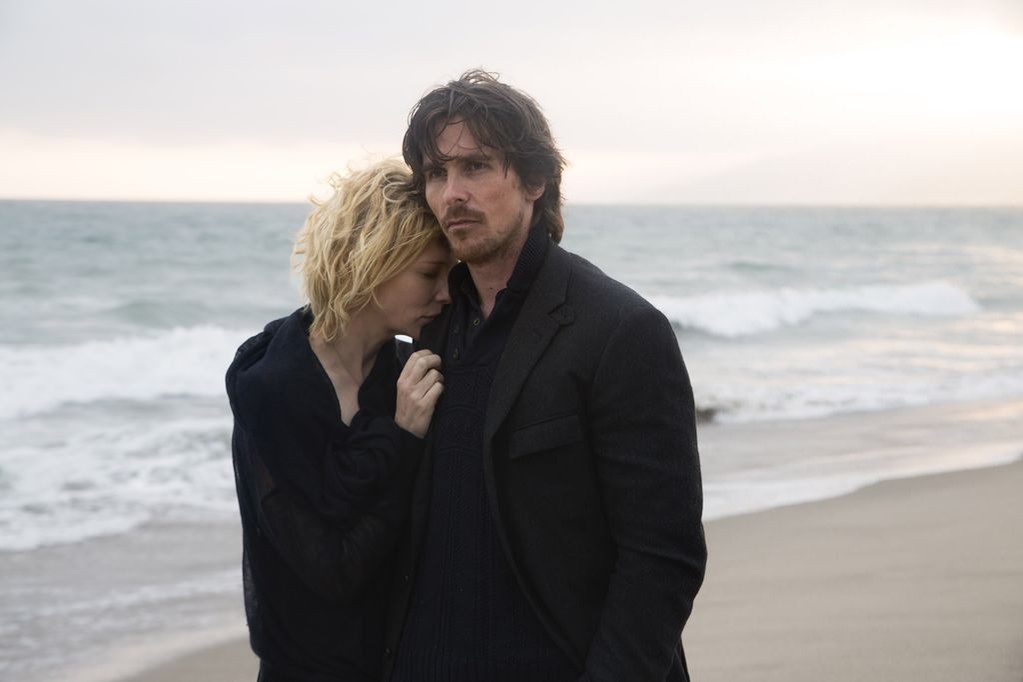
Director Terrence Malick makes films that are visually stunning and — depending on who you ask — either narratively challenging or frustratingly obscure. It was a pleasure to speak to three producers of his latest film, “Knight of Cups,” starring Christian Bale as Rick, a Hollywood screenwriter, and inspired in part by John Bunyan’s Pilgrim’s Progress. Nicolas Gonda, Sarah Green, and Ken Kao described how they work with Malick. Gonda began, “We are a group that really works from soup to nuts, so from the earlier stages of being able to collaborate with Terry to understand the nuances of the story, to be able to put that into a production plan, obviously working to reassemble a lot of the recurring crewmembers and build out that crew as well as the cast obviously throughout production and postproduction and then through now at distribution strategy and marketing, we’re front and center as producers throughout that entire course.” Green added that they all work on everything together rather than compartmentalizing. “We actually overlap pretty consistently because we all have a practice side, we all have the business side and we all have a very strong creative side so it actually works really well because we kind of tag team. We’re all there in the important moments when things ought to be moving quickly like in production and then we just stay in constant touch with each other and we sort of trade-off whatever needs doing or managing in the moment. Some people really split it up in a much more distinct way but I don’t think that’s how any of us have worked together. We really kind of meshed. I think what makes it work is that we’re always in close touch and we always keep each other informed with whatever we might know that the other one doesn’t, it really helps. There’s a lot of texts and emails.” “We all have a real sympatico,” Kao said, “and at the same time we also have our own language with Terry and we have our own ways of contributing to the project. So I think it’s a good plan, we work well together.

Copyright Broad Green Pictures 2016

Malick’s films always have a loving portrayal of the natural world, and while that is the case in this one it also has more of an urban setting and more densely populated moments than we have seen from him before. There is a Hollywood party scene with some real celebrities like Antonio Banderas, Nick Kroll, and Fabio playing versions of themselves. I asked about the challenges of creating this complex section of the film. Gonda said, “We were able to secure a phenomenal location as you could see in the film and then we were there for several days and had a plan where you can see a menagerie of phenomenal actors from different backgrounds. It was able to essentially act as this fish pool where inside this contained setting we were able to have all of these different types of experiences so Christian and the other actors were able to react to some things that they didn’t even know were coming up. And so we had everything from the more familiar faces to different types of dogs and all different types of experiences that created this chemical reaction. So it was definitely some of the most fun that we all had throughout the production.”

Green said, “I wouldn’t say that anyone was playing themselves; they were definitely there because of what they brought to the table but Terry would talk to each of them and tell them what their character is and how he wanted them to interact with the Christian character, Rick. So each of them had a part to play and they had fun with it. We never know exactly what Terry told Christian but he was surprised a few times.”

All three producers spoke of the way Malick trusts the audience and encourages each viewer to explore the interpretation or interpretations that resonate with his or her individual perceptions and experience. Gonda said, “Part of the beauty of Terry’s films is that there is really room for the audience to apply their own thoughts and experiences. So really the construct is there and these relationships are there but like ‘Tree of Life’ and several of his other films a lot of people were able to project their own experiences and their own relationships on that. I think that’s really what we’re hoping people would do. Here we were fortunate to work with such tremendous actors so Brian Dennehy and Wes Bentley brought so much of these performances and they are very important to Rick’s journey and obviously a big part of why he went on the journey that he did is to re-discover these relationships and assign greater meanings. But in terms of getting into the granularities of that meaning I think that is what we really hope audiences will join us in doing. Terry has an enormous amount of trust in the audience and I think that that is something that audiences really appreciate. We’ve been so delighted by the response that we always get to Terry’s films where audiences appreciate being involved in a way where the film is almost interactive. A lot of people compared Terry’s films to almost like a VR experience because you are immersed in this atmosphere much more so than other films. So I think trust in the audience and really acknowledging the audience as as much of a character is very much is something that really distinguishes him.”

I asked about the women in Rick’s life, who each represent a different outlook and kind of relationship. Green put it this way: “Terry doesn’t tell us how to interpret the film any more than he tells anyone else so and for me those women are very much guides. They all have something very specific to show him or teach him, whether it’s by example or what they say. I look at my life and sometimes it is hard for me to recognize what I might be learning from someone but after-the-fact I can kind of get that and I think when I look at this film I see these people as teachers.”

Kao summed up their view. “In an age where so many of the films have become so spoon-fed Terry really allows for each filmgoer to have their own experience. I don’t know if I’m reaching really when I say it can be a meditative experience. Just as people learn how to meditate through instruction, we all have our own unique experiences on our own after that. And I think that’s really the beauty of what Terry’s filmmaking provides for you.”

Related Tags:


Behind the Scenes Interview
Interview: Joseph Fiennes of “Risen”

Interview: Joseph Fiennes of “Risen”

Posted on February 19, 2016 at 3:17 pm

Copyright 2016 Sony Pictures

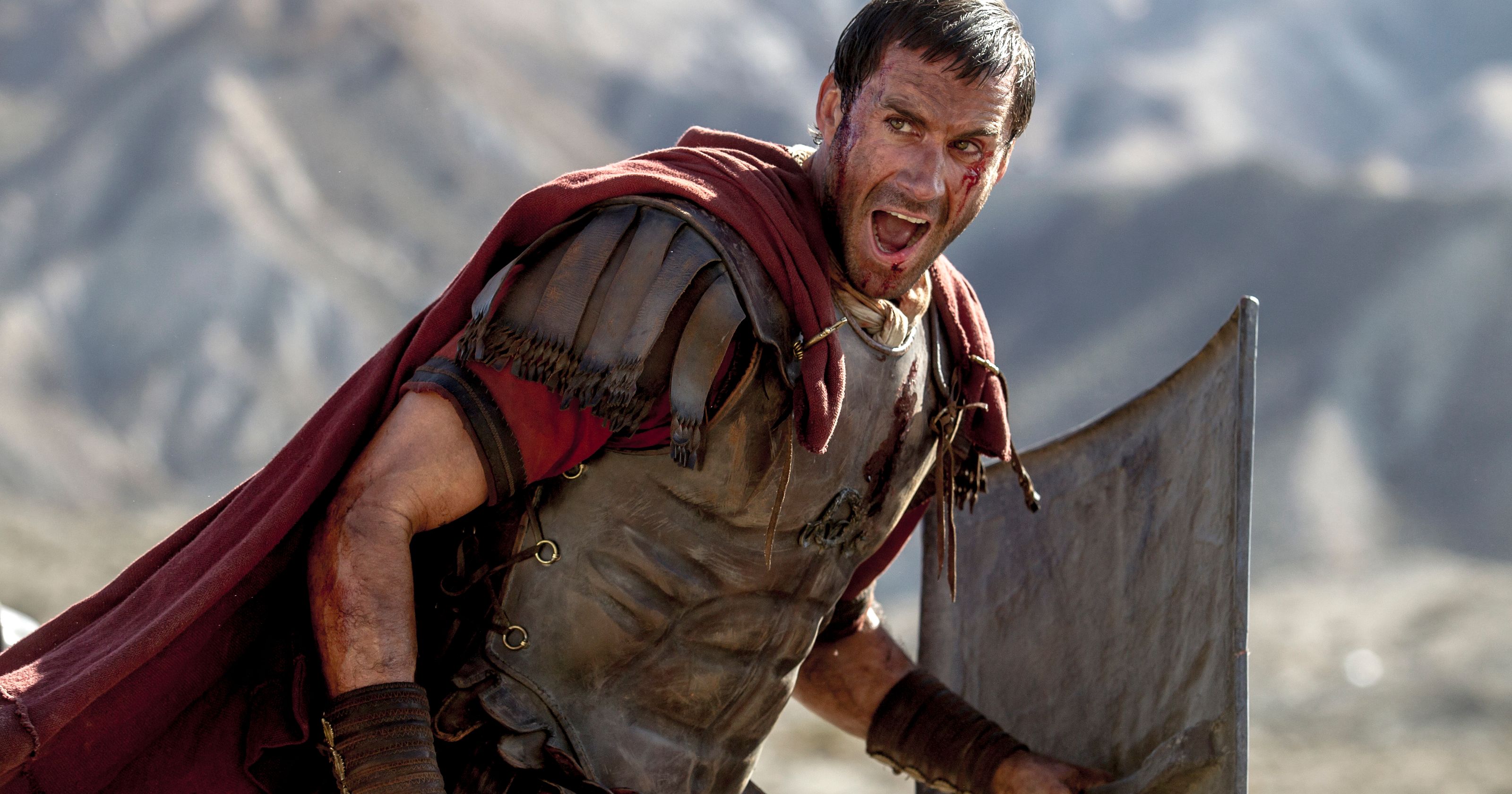
Joseph Fiennes plays Clavius in “Risen,” the new Biblical epic about a Roman solider who witnesses Jesus’ crucifixion and resurrection and becomes a believer. It was a great honor and pleasure to talk with him about what drew him to the role, how he made a character from ancient times seem vital and real to a modern audience, and the surprising research he did for the part.

I think I’m always looking for authenticity and modernity because that’s where the audience is at. A lot of times I look at certain period movies but I like to sniff out their relevance and modality if you like. And it seems to me if you are dealing with human conditions it doesn’t matter if it is set in Judaea, in this time, or on a spaceship; human condition remain the same and it is something that we all relate to and in that sense it’s always going to be about being able to look at our nature and ourselves through film.

I think in many ways Clavius is in many respects, like every man. He’s got horrible bosses and he is dealing with that and with work colleagues. He is a man at the end of his career, he’s possibly suffering from post-traumatic stress syndrome, he’s been in the industry of death for the best part of his life and I think he is ready to get out and retire possibly get to the Senate, that would be the next for someone of his standing – he’s a Tribune so I think that will be the natural direction for him to gravitate towards.  In many ways he is in every man that despite the fact that he is charged by Pontius Pilate to oversee the death of Christ via crucifixion which is a pretty appalling thing to be a part of, which also was the first question for me when I read the script: how can I get an audience to come along with me when they witness this ghastly event?

I felt that I had to reach for a thread that they could connect to, which might be an integrity. So he is a man who is dutiful, and as much as he is charged with these things by his boss that he might not want to do because he is so exhausted, if he has an honesty about him, if he is dutiful, I thought at least that is something an audience could get with. And as he goes on that journey hopefully especially as we get into the middle part of the film the audience might be able to understand two things; one is a power of redemption and also the sense of second chances that he is forgiven and also that he carries doubt which is a huge part of human condition, and that we all suffer from doubt. So I was looking for things that are sort of human in that way.

Fiennes worked with specialists to learn about the training and experiences Clavius would have had.

Though he is a fictionalized historical character, I wanted nevertheless to reach to an area of authenticity which also led me to around a week before shooting to work with these wonderful guys who call themselves physical archaeologists. They are gladiators, and they teach gladiator school but they also collect depictions of Roman military warfare that they reenact them and bring them back to life and they were very instructive to me in terms of how the minds of the military of that time worked and thought.  I found out that the way they fought in terms of in battle was surgical and brutal and economical, and that told me a great deal about the way they thought. And so I really got to a place where I had to condition myself to a point where I could then take Clavius on a journey where he was challenged and thereby de-conditioned and then essentially to where at first he feels he in is in charge of these interrogations, while what he may not know is that he is slowly being unraveled. And then his world is completely turned upside down when he walks into a room to arrest people and there is a person in that room that shouldn’t be there.

Putting on the uniform of  a Roman soldier helped him to understand the character, too.

I might come more from the method of outside in, which is being affected by the components around you rather than necessarily beginning with the psychological and interior perspective and so costume was a big deal. We have an amazing Italian designer and the costumes were made in Rome. It’s something dear to them and they knew exactly what they were doing and it shows. There is an authenticity there and it does give this sort of sense of power, especially when you are depicting a military Tribune. It goes with the look and it helps you a lot, capes and a sort of sixpack leather, and I think most importantly to the costume is actually the armoury. It was a revolution in the Roman army which was the gladius which was which was more like a sort of surgical stabbing device than the slashing sword; so all of those components together then you throw a horse on into that equation and you really feel like you’ve been picked up and dropped off in Judea circa that time.

Clavius was a man of standing by virtue of his birth and his accomplishments, focused on advancement but, as we hear him say in the film, he has dreams of a more peaceful, quiet life.

I think the word ambition came to mind. It wasn’t embarrassing; it wasn’t something to be shy of. To be ambitious was something to be celebrated and I think he has worked his up through the ranks. But I think the industry of death has got the better of him and he runs out, he is at the end of his career. His next stop would be the Senate but in order to get there he has got to please his boss because his boss will give a good word to Emperor. So he is duty-bound.

It is also all he knows, it’s his only family. And that’s another thing; I love the sense of him having to divorce himself from the family. He ends up having to leave his family and leave his sort of father figure if you like, Pontius Pilate and he has to entertain a new theological Father in terms of a greater understanding. But certainly he is duty-bound and it’s just part of his DNA and his upbringing. I’ve always had the feeling that Clavius was not handed the job on plate as some tribunes were.

In some of the film’s most powerful scenes, Clavius interrogates witnesses to try to find out what happened to the body in the tomb.

I thought: “How am I going to do this? Please help me.” So when I was in Malta I had the bright idea of finding a detective who worked on murder investigations. And I found this wonderful gentleman in Malta who brought me in with his superiors and we had long conversations. From that I got a way to color each investigation or psychological way how I would suss my suspect and how I would use psychology to extract information in different ways, threatening them with brutality or becoming their best friend or whatever so it was interesting to hear those techniques. But most importantly what actually came out of that for me was if you think of detectives that we see depicted in television and film or in literature, a lot of them smoke. And what I found out from our detective was that once you smell death constantly you cannot shake the smell from your nostrils so the only way to get rid of it is the smoke cigars or cigarettes to eliminate the smell. I thought that was really interesting. So I bought a little bit of that in in terms of asking if we could have a plant on his desk so there’s always that sense of his trying to extinguish the stench of death but that also came out of there. It just was a tiny bit of nuance but it came out of that talk with the detective.

And he had a challenge in bringing reality to the scene of discovering Jesus in Galilee after he saw him die.

That is my pivotal moment in the journey of Clavius and in the movie. We had already shot the scene of the crucifixion before, going in chronological order is not always the case in movies, but this time we had so in my mind I already put to death this zealot whose followers had claimed him to be the Messiah. Crucifixion was sort of a daily occurrence in Judea at that time; it was just another day in the office but I had saved that in my memory. I psych myself up into a place of absolute aggression like I was just about to go into the frontline and arrest a series of men and I didn’t know what to find in that room, whether I would have to go to war with the gladius, whether I would be attacked. So it was a moment of absolutely psyching myself up into the aggression ready to come into this room charged with a different kind of energy to be confronted and then judy react rather than act.

Related Tags:


Actors Interview
Interview: “Race” Director Stephen Hopkins on Jesse Owens

Interview: “Race” Director Stephen Hopkins on Jesse Owens

Posted on February 17, 2016 at 3:50 pm

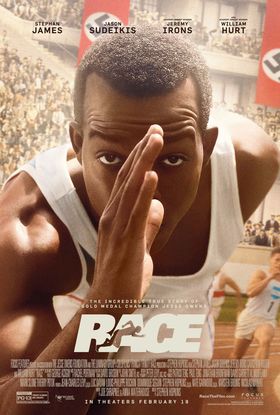
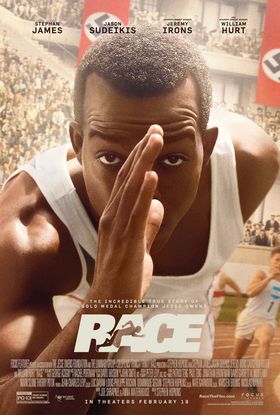
Race” is the story of Jesse Owens, one of the greatest athletes of all time, and an African-American whose four gold medals in the 1936 Berlin Olympics showed the world that Hitler’s propaganda — and America’s Jim Crow laws — could not deny the reality of Owens’ ability, honor, and dignity. In an interview, director Stephen Hopkins talked about why making the film was so important to him and what he wanted audiences to understand about the events that occurred nearly 80 years ago.

One of the reasons I wanted to make the film is there are so few reluctant heroes nowadays. I think most people who are at the forefront of the media tend to be there not for the admirable act. When I was growing up there were great heroes like Mohammed Ali or Nelson Mandela or there were mavericks in the world of rock stars and actors and filmmakers that artist and I don’t know who my kids and my grandkids are going to look up to in the same sort of way. I was originally offered to make a story about his whole life which I don’t think you can ever do in a film really so I kind of honed down to these three years. I’d love to have done more about his childhood and his background which I think has a lot to do with why he was so full of steel and grit like he was. And obviously he had an anger inside of him as a young African-American man in America in those days where racism was a part of the institutional legality.

Copyright 2016 Focus Features

So he is a conundrum because he really ran for himself and his family more than for his country. I think running for America was tough in those days because you would be a patriot but you were treated so poorly in your own country and he sort of followed his own compass really and did what he thought was right. And his wife Ruth was very important to him. And I kind of wanted to introduce maybe a younger generation to a hero from what seems to be a simpler time but obviously was a crazy political arena. One of my first questions to myself as I went through his story was how it was possible for a young African-American man to walk into such a hostile gladiatorial arena like the Olympics stadium in Berlin and function and hold himself together and held his head up high and explode for the necessary critical 10 seconds just at the right time and start winning these medals in front of Hitler and this hostile crowd.

He came from an incredibly tough background. His grandfather was a slave, his father was a share cropper which was basically a slave in those days and he grew up in a very, very tough environment with a great family. And often they would eat meat once a month if they were lucky. They grew up in the Great Depression, so whether you were African-American or not, you were suffering and that gave him so much. He almost died himself as a kid; he lost a couple of siblings through malnutrition and illness. And all this he used to forge someone who has so much dignity and so much steel that it just makes me think what the great hero he was.

At the same time, we don’t want him to be a saint. I hate it when you have a hero who doesn’t have flaws because there is nothing to overcome. The story in the background of what he had to go through to win makes the Berlin part of the film work. It would not be the same if you didn’t know what he went through and how high the stakes were before he got there and how clever the Nazis were in collaboration with Avery Brundage to hide what they were doing and to use this giant propaganda machine to put their pretend political party on the map. Because really they were just gangsters and thugs and they were trying to make out as if they were a real movement and a real political party and they were branding a corporate sporting event for the first time. In a sense they created the modern social media idea with live worldwide radio and filming everything and shipping the film quickly around the world, inventing closed-circuit TV and inventing all the technology to support their event they accidentally made the Olympics into the Jesse Owens Olympics and they accidentally made him the world first ever athlete superstar.

Hopkins provides fascinating behind-the-scenes drama as filmmaker/propagandist Leni Riefenstahl insists on telling the truth about Owens’ astonishing performance, though Joseph Goebbels wants her to suppress it.

I wanted to see it through her eyes because she was an artist born in Nazi Germany, or in pre-Nazi Germany, and became prominent during the Nazi reign and she was a woman which at the time was very much a second-class citizen. In the Nazi idea, they were supposed to stay home and cook and take care of the children. She was dazzled by Hitler and she was Hitler’s favorite but when she made this film she stuck to her ideals and she made Jesse the hero in the center of the movie. She actually had to leave the country soon after making the film because the Nazis were horrified about what she did. They actually made her cut all of Jesse Owens out of the film and then they looked at it and they realized how foolish they looked and they had to grudgingly put it all back in.

It’s all very well for all of us to look back and go “Oh I wouldn’t have gone along with that,” but I think the Nazis were very clever at covering up and their reign of terror was so complete. She should have known better, she should have been a better person and not helped to glamorize them but she was seeing Nazi Germany through an artist’s eyes, I think. And she openly admits that she was a Nazi at the time and then she lost faith in them and had to leave the country because she became so unpopular after making Olympia.

And he puts Jesse Owens’s story in the context of the negotiations that led to America’s participation in the Olympics, over the objections of those who did not want to appear to endorse Hitler.

Avery Brundage is more of a villain than Leni Riefenstahl. He knew what was going on and he helped the Nazis, then covered it up to serve himself. He was actually much more a villain than I think I was able to portray but it is hard to prove all of it. He was a really bad guy.

And there are unexpected good guys as well. Owens’ first-ever stay in unsegregated housing was in Berlin, which was a revelation for him. And he was befriended by one of the German athletes.

I wanted to see these events from as many different angles as I could. Jesse’s best friend became Carl ‘Luz’ Long, the German long jumper. They were very, very close. We have all the letters. They wrote to each other all the time and saw each other. Actually the last letter that Carl Long wrote to Jesse was from Sicily where the Americans were about to invade where he was fighting. His last letter says, “I think the Americans are coming, I’m probably not going to survive, would you go to Germany and find my son and tell him I was never a Nazi.” And then he did get killed and Jesse went searching for his son for years after the war and found him and gave him the letters. So the stories are are so rich and complicated. That’s a whole movie by itself I think, that one.

The movie also shows how competitive running has changed since the 1930’s.

It’s interesting, a lot of the Olympic coaches worked with us on this film and they said if Jesse had the nutrition, the shoes, the running tracks they have nowadays and the techniques they have he would be possibly beating Usain Bolt. He was such a freak of athletic nature. Because in those days they had to run with leather shoes on with no socks and the shoes would cling to their feet but basically with nails in the bottom.

No socks because socks would make them slip and they wanted the leather to sort of cling to their feet, but they were very painful to wear. And the track was made out of ashes and grit so if it was wet you would be running in mud basically. And nowadays the tracks are all so sprung and made of a type of material that these tiny spikes cling onto. And if they are wet it doesn’t affect them.

While he re-created some of the locations digitally, Hopkins was able to film parts of the movie in the imposing arena built by the Nazis for the Olympics.

All of the other arenas obviously don’t exist anymore so we re-created them exactly from the plans and stuff digitally. But we shot in the real Olympic arena. We shot half in Berlin, half in Montréal. So we shot in the real stadium and it visually affected the scenes because it’s an edifice that’s built to intimidate. You are meant to feel small and scared. We are very lucky to have been able to shoot in there and all around. We shot the scene where Jesse goes to meet Hitler and he refuses to meet him, we shot in the real place where it actually happened. In the room behind Hitler’s box which is still in the stadium, and we shot under his box we shot all over the stadium, underneath it, in the rooms, all around it. Every so often that they have referendum in Berlin whether to pull it down or not but it is an important piece of history I think and for better or worse it’s an edifice to something there.

The movie also shows the importance of Owens’ relationship to Larry Snyder (played by Jason Sudeikis), his Ohio State coach.

I think what they learned from each other was interesting. I think Jesse learned the psychology of winning and the psychology of not listening to other people and listening to his one heart and obviously to cut himself off from how the crowd was feeling about him, to really concentrate and focus, because he just loved to run. That’s what he did. It just made him feel free of all the burdens of what it would be like to have been a poor African-American in the Great Depression in American in 1933, which must have been hell on earth. And Larry learned that you can’t treat athletes like they are robots. They became such good friends over their whole lives. Larry was a very private person. He was very edgy and funny and charming. It’s very difficult to find out much about him. I loved having Jason in that role because he’s just got an edge to him, and his comedy has an edge. His comedy has a little darkness to it. And he’s a sports freak man, he just loves sports. So does Stephan so the two of them bonded on that and you could tell.

Related Tags:


Based on a true story Directors Interview Race and Diversity

Interview: Composer David Benjamin Steinberg of “Mapplethorpe: Look at the Pictures”

Posted on February 16, 2016 at 2:32 pm

David Benjamin Steinberg is a composer who recently created the score for a documentary about photographer Robert Mapplethorpe called “Mapplethorpe: Look At The Pictures.” In an interview, he talked about finding sounds that would complement the striking images in the film.

The directors, Randy Barbato and Fenton Bailey had been working on it and doing interviews for almost two years when I saw the first rough cut, which was in the spring of last year and the cut was long, it was like three hours when I saw it and eventually the film would be half as long as that. So I came on two years into their work and then started talking to the directors about what the score approach might be conceptually. We started sending each other ideas back and forth on MP3s and stuff like that. It sort of evolved as the edits got closer.

There were a few storylines that they wanted me to emphasize. There is a motif that goes through the film that sort of always reconnects to this sort of bittersweet piano and that cue accompanies sections where they have to deal with Robert’s relationship with his family, with his father. And then there was also a motif that the directors wanted to convey which was this idea that Robert, who would die very young at 42, that he was in a race against time to do as much work as he could before he died and a race against time to become famous. He was really ambitious, really really ambitious and liked making a lot of money and liked being famous and worked hard to be famous. So there is also this idea of this clock ticking motif — not literally but there is this undercurrent of a race against time. So that was one of the motifs and then another motif sort of evolves which ended up actually being Mozart’s Requiem which connected Robert’s upbringing in the Catholic church and how that played into his work and influenced his work. Ultimately that was a motif that was Mozart’s last symphony and ended up being sort of representing in the film when Robert dies and that is also a recurring theme that is woven through the score.

Patti Smith, who was Robert’s girlfriend in the late 60’s and 70’s, wrote a really great book called the Just Kids. I love her writing and that was really the first research that I did. They actually talked about the music that they used to sit around listening to in their loft in the Village and that started me thinking about what the tone might be even before the directors were giving me more specific ideas about what they thought the score should be.

Most of Robert’s adult life he was in New York City during the 70s and 80s and they wanted to convey the idea that New York was this percolating hotbed of creativity, almost as if there were vibes coming in from all over the place and that New York was really the center, the hub of creativity in that era. There was actually conversation about the idea that the score might sound as if in places when we’re changing the dial on the on a radio station and sort of sequencing the textures were coming in that felt like they were staticky influences. So a lot of the score is textural and ambience, and then as we fine-tuned it, it became wanting to drive the film a little bit more and we ended up focusing on some cues that help to create momentum and keep the film energetic and moving forward.

Steinberg also wrote scores for a documentary about Britney Spears and Carrie Fisher’s one-woman show.

I think I’ve done 20 documentaries and I don’t know that there is a typical sort of scenario. With the Carrie Fisher documentary, my job was to score what was happening in her autobiographical one-woman play, so that was dictated by the material. In the Britney Spears documentary there were like a dozen of her tracks in there, which was kind of nice because I like the balance in that film of score to her tracks. A lot of it was kind of chill pop music, a lot of it was kind of percussive and driving but there was a fair share of ambience stuff in that film as well. Her personality obviously comes through in those pop tunes that we’re familiar with so my job was to just be the fabric that sort of gets things going in between the pop songs.

And he has written music for television series, including the opening jingles. We shared reminiscences of some of our favorite classic television jingles from the days when the jingle was a full-length song.

I love “The Munsters” and “The Adams family.” And “Bonanza.” And I love the “Twilight Zone” theme and the score in the series which I came to find out as an adult was scored by Bernard Herrmann who is one of my heroes. Actually Bernard Herrmann even did some work on “Lost In Space.” I heard some of those scores when I was in New York at the Museum of Radio and Television and it’s kind of amazing to hear his score over the pretty cheesy “Lost In Space” but he was a working guy and I think in the 60s he was picking those kinds of gigs and was doing great work. I have done themes for 30 TV series and when I started doing them I don’t remember, some of them were like close to a minute long and then they got shorter and shorter and now it’s not uncommon for me to do a theme that’s just 7 to 10 seconds. What’s definitely nice about themes is that typically there is no narration.

Steinberg’s first instrument was drums. He played in bands and was a session musician before turning to composing.

I played through my teens and 20s in bands playing drums and then I was making my living really as a session drummer in a way and at the time when there were like these amazing drummers in LA in the session and I started to wonder how I was going to compete with guys like that that were just so unbelievable and that’s when I started thinking about shifting my focus to more writing. One of the big influences on me was Stewart Copeland, the drummer from The Police, who scored “Rumble Fish,” and that score just really knocked me out. That film was a big influence on me with the way that he used he used loops and how he really came up with his own vocabulary, lots of drums but really interesting textures. I still love that score.

Coming up, Steinberg has a new season of “Million Dollar Listing” and a documentary set in Iraq. “That was interesting because I got to use a palette I don’t typically do, with a lot of heavy stringed instruments and I had to really stock up on my sample library.”

Related Tags:


Composers Interview Television
THE MOVIE MOM® is a registered trademark of Nell Minow. Use of the mark without express consent from Nell Minow constitutes trademark infringement and unfair competition in violation of federal and state laws. All material © Nell Minow 1995-2026, all rights reserved, and no use or republication is permitted without explicit permission. This site hosts Nell Minow’s Movie Mom® archive, with material that originally appeared on Yahoo! Movies, Beliefnet, and other sources. Much of her new material can be found at Rogerebert.com, Huffington Post, and WheretoWatch. Her books include The Movie Mom’s Guide to Family Movies and 101 Must-See Movie Moments, and she can be heard each week on radio stations across the country.

Website Designed by Max LaZebnik