Interview: The Blonde at the Film

Interview: The Blonde at the Film

Posted on December 8, 2015 at 3:50 pm

Cameron is The Blonde at the Film, and her blog on vintage movie classics is one of my favorites. I especially love the History Through Hollywood series where she traces technology and culture as portrayed over the years in films. Ever wondered about how everyone in old movies drinks cocktails? Or why old-time phone numbers began with words instead of numbers? Her explanations are lively and informative.
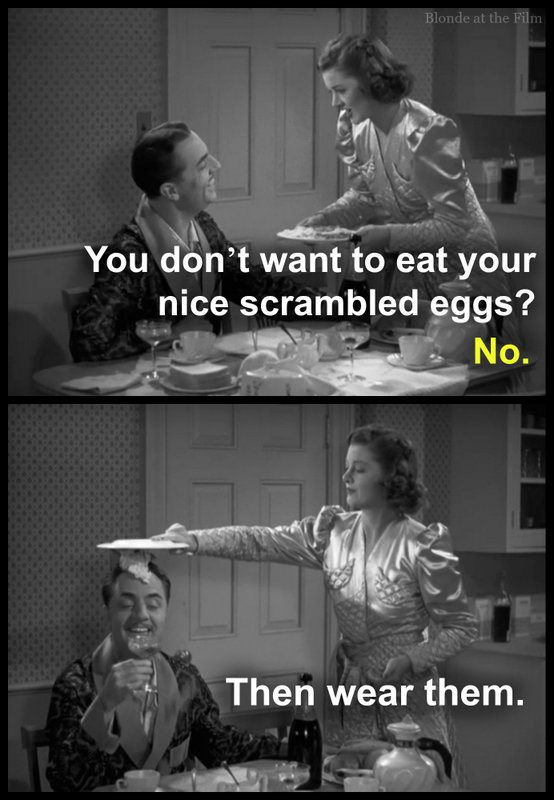
Copyright MGM 1940
Copyright MGM 1940
She also has great write-ups on some of my favorite films like The Major and the Minor, with Ray Milland and Ginger Rogers, directed by Billy Wilder, and I Love You Again, with William Powell and Myrna Loy. Her write-ups are detailed, thoughtful, and illuminating.

I am very grateful to Cameron for taking time to answer my questions and I look forward to keeping up with her blog.

Has the availability of old films via Netflix, TCM, and other outlets widened the audience for vintage movies?

I definitely think so! Old films are more available now than ever, which is wonderful. TCM has been especially instrumental in reviving interest in old movies, and I use a great site called ClassicFlix.com that stocks just about anything you might want to rent. Although Netflix doesn’t have a huge selection, their streaming service has helped introduce people to classic movies. For example, a lot of my readers first find my site because they search for some variation of “classic movies to stream on Netflix” and land on my “Netflix Instant: Five Classic Films” posts.

Blogs and social media outlets like tumblr and pinterest have also helped spike interest in these classic films and stars. There is a thriving community of classic movie fans online, and it’s great that people are interested and that these films are so accessible today.

Do you have an example of a movie that was popular when it came out but has not stood the test of time? What about one that was neglected on its release but now is appreciated by audiences?

I immediately think of Esther Williams, a national champion swimmer who was discovered by MGM when she was performing in the Aquacade, a live water extravaganza. She became a huge star, and her films were incredibly popular for over a decade, but today she’s not nearly as well known as some of her contemporaries. Her movies are big Technicolor musicals with lavishly produced “water ballets,” and although I still find them delightful, audience tastes have changed quite a bit from Williams’ heyday. Films like Neptune’s Daughter (1949) or Easy to Love (1953) made MGM a healthy profit, but they aren’t as timeless as other classics.

A famous flop-turned-classic is Bringing Up Baby (1938), which is one of my favorites. It stars legends Katharine Hepburn and Cary Grant, and was directed by Howard Hawks, but when it was released, audiences weren’t nearly as enamored with it as people are today. For one thing, Hepburn had recently been named “box office poison,” and she wasn’t bringing in the crowds at that point in her career. But its lackluster performance was also due to its over-the-top wackiness. Its one of the most “screwball” of all the screwball comedies, so if you expect the characters to make rational sense, you’ll be disappointed. But if you embrace the crazy, you’ll probably have a great time. Fortunately, it’s now adored as the screwball masterpiece it is.

How did you begin to get interested in old movies and which were the ones you first loved?

We didn’t watch much TV when I was little, but my parents would take me to the public library and let me check out VHS tapes of old movies. I don’t know why, but I was hooked immediately. I first fell for 1950s musicals like Singin’ in the Rain (1952) and Seven Brides for Seven Brothers (1954), but I watched anything I could find. And at the time, there wasn’t much! I exhausted the library’s collection and my local video store’s “Classic” section, and became a Turner Classic Movies addict. I also read everything I could find about classic Hollywood, and the more I learned and watched, the more fascinated I became.

I find that it is immediately obvious when you are watching a film whether it was made in the 1930’s or 40’s or 50’s or made later and depicts an earlier era. Do you agree? What are the giveaways?

I absolutely agree. I think that no matter how hard we try, the current age sneaks in. You can see that happening in the classic era, too—for example, in The Harvey Girls (1946), which is set in the 1880s, Judy Garland and the other actresses sport 1940s hairstyles and makeup. Today we prize historical accuracy far more than they did in the studio era, but it’s still impossible to be perfect. If a filmmaker went for complete accuracy, the movie might become cartoonish or odd just because styles, fashion, architecture, language, etc., have changed so much. Also, the technology is so different; sound, color design, special effects, and other elements make movies look and sound differently depending on when they were made. In the 1940s, for instance, Technicolor films often featured a bright, saturated, bold palette with plenty of hot pinks, cyan, and chartreuse, but you don’t see that look today, even in films set in the 1940s. Part of this disjuncture is because movies don’t present “reality”—and especially not in the studio era! But that’s one reason I love old movies so much. When you watch one, especially a musical, you’re watching a dream world, not real life. But you can learn a lot about how people lived and what they enjoyed watching from the vision that movies presented. But don’t always trust their version of historical events!

How did you get interested in tracing technology and culture by watching old movies?

I can remember being confused by a lot of what I saw in old movies when I first started watching them as a kid. The clothes, homes, telephones, cars, and even the language seemed incredibly foreign. I didn’t understand why women were traveling to Reno to get divorced, or why American characters spoke in British accents, for example. But those disconnects fascinated me. After all, these are the films my grandparents went to see in theaters! I’m not that far removed from that era, but the world onscreen looks so different! As I continued watching I realized I was accidentally picking up a lot of information about things like fashion, courtship, travel, and even doughnuts.

Old movies are a great way to learn about the past, and I love writing about that in my “History Through Hollywood” series. I think of classic movies as inadvertent time capsules, packed with little details that find their way into films just because they were a normal part of life. It’s really interesting to me to learn why characters drink champagne out of shallow-bowled coupes instead of flutes, for instance, or why telephone numbers included words until the 1960s.

And sometimes what is left out of movies can tell you a lot, too. Our rating system only dates from 1968, and before that, the Production Code Administration, which was Hollywood’s self-censorship body, governed what could and could not be onscreen from 1934 until the 1960s. The Code was designed to keep anything “objectionable” out of the movies, and covered broad topics like violence and sex, but also stretched to tiny details such as how many seconds a kiss could last or the use of specific words. (The Code helped make classic movies a great option for kids today.) It’s important to remember that sometimes old movies do not necessarily reflect the reality of the time, but instead show the power of the Code and an era’s social mores and values.

I also try to make old films more accessible and watchable, so I like to provide context and explain why these movies seem “tame” or different from today’s films. I think that if a viewer comes to them cold, he or she can get confused, bored, or just find the movies silly because the world onscreen can seem really foreign. I hope that by tracing cultural and technological change, and trying to explain why an old movie looks and sounds the way it does, viewers who are new to classic films might enjoy them even more.

If you could keep one aspect of early telephone technology, what would it be?

There isn’t anything quite as glamorous as a gorgeous, sculpted white handset in the perfectly manicured hand of a legendary star! And although I love the convenience of my smartphone, it might be fun to rely on an operator once in a while!
Related Tags:


Critics Film History Interview Understanding Media and Pop Culture
Interview: Teyonah Parris and Spike Lee on “Chi-Raq”

Interview: Teyonah Parris and Spike Lee on “Chi-Raq”

Posted on December 3, 2015 at 1:01 pm

Copyright Amazon 2015

“Chi-Raq” is one of the best films of the year and one of the most important films of many years. It is a searing wail of love, grief, and fury inspired by “Lysistrata,” a play written in 411 BC. A small group of reporters spoke to star Teyonah Parris and co-writer/director Spike Lee.

Parris told us that she actually performed in the original Lysistrata when she attended Juilliard. “I did not get to play Lysistrata but I have always studied Shakespeare and Greek plays and Chekhov and I love working on that sort of text. There is so much to mine from it. And so when I got this script for ‘Chi-Raq’ and I realized this was a modern retelling of that story I was all in. And then to hear Spike talk about what he was doing with the movie — the first thing he said is, ‘I’m trying to save lives. We have to save lives,’ and I was all in, there was no question about it. Spike certainly has an out of the box approach to his work but I think that’s why people gravitate towards him. He gives us another way to look at things. It is a bit more unconventional but I certainly think that it will resonate with our current generation because it’s Spike. It’s hard to put your finger on what it is he does that makes it hit right here but I think that people will watch this movie and certainly understand what we’re seeing and what the message is.” She acknowledged that the film is bound to be controversial. “The title has gotten a lot of flak but the no one has actually seen it and heard the message and seen what we’re trying to say but I know that Spike’s intentions and mine and everyone that is a part of this film, our intentions are pure and were trying to make a difference and get this conversation started so that people can actively make some changes. The issue that we’re dealing with in the film with our young brothers killing each other — to talk about that I don’t think eliminates the conversation which has been on everyone’s minds and hearts with the police brutality against particularly young black men and women. I think that those conversations can be had simultaneously. There is a lot more at play and we talk about it in the movie, the fact that there are no jobs in these places. People are trying to feed their families who are given no other way out.”

The character she plays in the film is confident, forthright, and very capable of weaponizing her sexuality. She is a long way from the more realistic characters she played in “Mad Men” and “Dear White People,” and the distinction is clear in her physicality as well as her dialog and responses to other characters. She spoke about the costume designer and movement coach who helped her create the character. “I call the costume designer Master Ruth Carter. I remember being in those fittings saying ‘Ruth, don’t you want to add a little bit more fabric, a little more here and there?” but I loved it. I thought it certainly was a physical representation of who this woman was and the confidence that she has and how she moves about the world and finding her physicality. It felt very theatrical which is no surprise because it’s from a play. So finding who this woman was and how she walks into a room or walks down the street, I certainly had lots of assistance from a wonderful woman name Maija Garcia who was our movement director, and we worked on just finding her strength and, how does she stand and how does she command a room simply by being there without walking around or whatever. It took some work. I didn’t just show up to set; I had to explore it before getting there and I definitely had the assistance of Maija Garcia. We just did little exercises, exploring what does it feel like to walk in 6 inch heels and how that changes you.”

Parris was excited to work with Lee and to play the central role. “She’s the hero. She comes in and she sees the issue. There has to be a strength and a determination not only for her to carry on her mission but for me also the actress to figure out what she’s trying to do and how she has to do it and in such a very short time. We shot this in five weeks, the entire thing. And I had to use every bit of my artistic being in this film from the dancing to just finding my center and my strength and how do I affect people and how to effectively lead people. Yes, I think those are some of the things that made it a challenge for me but they are a welcome challenge.”

Lee emphasized that this movie is not for any particular demographic. “The film talks strongly about guns and that affects everybody, all Americans.” But it was not easy for him to get it into production, in part because it is so unusual to have an entire screenplay in verse. “I’ve never done this before so it was a challenge to get this made. I think that one of the reasons why everybody said no in the process is because of the verse, because it’s hard to read, and that’s why before Amazon said yes we had two readings. They wanted to hear it, they want their ears to hear it, and I don’t blame them because even when I write my own scripts reading it and hearing the actors say the lines is two different universes. And that doesn’t even happen till you hear bits and parts during casting. I do a lot of rewriting during that period because I hear it for the first time.”

The training Parris got at Juilliard helped prepare her for speaking in verse as though it was natural conversation. “Essentially the idea is that the structure is different but your intentions are still the same. You are trying to affect something. You are trying to get something out of someone. So what are you doing? And you have to continuously remember and remind yourself that you don’t get lost in the sing-song or the verse of it. Nick Cannon] and I frequently had conversations about that, just reminding ourselves and each other what is the scene about, like what are we trying to do so that we don’t get lost in the sound of it, so to speak.”

Like Lee’s earlier film, “School Daze,” this film ends with someone calling on us in the audience to “wake up.” Lee said, “We’ve been using those two words, that’s the last two words of ‘School Daze:’ wake up, from Laurence Fishburne. ‘Do The Right Thing’ begins with Samuel Jackson saying ‘wake up’ and closes with him saying ‘wake up’ as Mister Senor Love Daddy because consciousness is not something that is at use all the time.”

Parris added, “I agree with what Spike said. I think our role as artists is to show, to be a reflection of our community and the world in a way that even though it may not be comfortable to watch or to receive its truthful and makes you think about the state of our community.”

Related Tags:


Actors Directors Interview Race and Diversity Writers
Interview: Erin Bernhardt of “Imba Means Sing”

Interview: Erin Bernhardt of “Imba Means Sing”

Posted on November 29, 2015 at 6:35 am

The African Children’s Choir is more than a performing group. It is a chance. Children from the direst poverty who tour with the group get to see the world. They go to school. And when they grow up, their education is paid for through college. A touching and inspiring new documentary about the group is called “Imba Means Sing,” available December 4, 2015 on VOD. In an interview producer Erin Bernhardt explained how she became involved with the group and what the children taught her.

Copyright 2015 Imba Film

How did you meet the choir?

I met the African Children’s Choir the summer after I graduated from the University of Virginia. I had already committed to the Peace Corps but I wasn’t going to move to Madagascar until September. So I had that summer off and number one selling indie rock band of all time, Dispatch brought me on to be their outreach coordinator for a big benefit concert they had, a three night event at Madison Square Garden for Africa. And that’s how I met the choir. We had the kids come perform with the guys at the Garden and meeting those kids just totally changed my life. The children were from Uganda, Rwanda and Kenya and they were all orphans and they had nothing back home. They had no running water, no electricity, no parents, no toys, no education and thanks to being in the African Children’s Choir their education was now going to be funded through college. So they would be able to go on to achieve their dreams. They were the happiest, most joyful kids that I had ever met in my entire life, actually the most joyful people I had ever met, and it really changed my perspective on what mattered in life.

So for eight and a half years I’ve been wanting to tell their story and it’s really exciting that it’s finally happening. After the concert, I left them, moved to Madagascar, lost touch with them. I came home and worked at CNN for three years as a writer and producer mostly covering politics and then four and a half years ago I went with one of my best friends to Uganda to do a story for CNN about her social enterprise, the Akola Project. I ran into the choir my first day in Uganda, the same kids. I had gotten Croc, the plastic shoe company, to donate shoes for the kids in New York in 2007 and then in 2010 I saw those kids wearing those shoes and they were just doing really, really well. So I made a documentary about them for CNN and then I left to make this feature film because I wanted to reach younger audiences and be able to get the film in schools, and have it really make a difference.

The children in the film really are always joyful. And yet they have so little and as they travel through the United States they can see how much others have that they do not. What keeps them so cheerful?

When you ask them why they’re so happy, they say God. So if you talk to them about why you’re so happy, why are you so well behaved, why do you always have a good attitude, why are you so thoughtful? Their answer to all of those question is God.
For the kids in Uganda and a lot of developing countries spirituality is a lot more alive. It’s not just like an intellectual thing in their head and it’s not just something that is in your heart that you talk about. These kids come from communities where anything good that happens they think it’s happening because of God. That’s just how their life is in their villages and even in their slums. They just have so much faith. They talk about it and they live it and they wear it on their sleeves. So that’s really how they live. They realize how lucky they are that they have this opportunity and they totally give that credit to God for picking them and letting them have this opportunity to change their life and their families’ lives.

The film has a very intimate feel. And the performances are filmed very dynamically. What kind of crew did you have? And how big?

To me it was big, it was bigger than the crews that we use on CNN. I had a director of photography who was always using one or two cameras and a director who was doing the second or third camera and then we always had a field audio mixer because the audio was really, really important for the film because it was about music so we always had that. And then we had a production assistant who would be helping with writing and making sure everyone in the other rooms nearby were quiet and all that stuff and then me, the producer. For performances, we had two or three cameras at the time and always an audio person and sometimes you have to bring in extra audio people or extra photographers.”

The choir performed in a wide variety of venues. What were the ones that they enjoyed the most?

They loved singing at the Atlanta Braves baseball games. I think that was really fun for them to have such a huge audience. At that point they had been at only one baseball game before and that was a minor-league with a really small stadium and a really small crowd. So I think that this was beyond their wildest expectations and they loved that. They really liked performing at the Grand Canyon because it was just really fun. They weren’t as into the vast landscape of the Grand Canyon as they were into the snow there. They stayed and made snowmen and had snowball fights and then they sang. So they definitely loved it.

How did you make the children comfortable with you so that they were so unselfconscious in the film?

What makes me be able to tell really intimate character-driven stories is that I’m just really honest with all of the people I work with and it allows me to tell stories about people that I really love. And so they can tell that I genuinely love them and care about them and the kids, you know kids can see through anything so the kids really knew that I had their best interest in mind and the second they were selected for the choir I was there. So they didn’t know life in the choir without me around and without all the cameras around. So really their new life as members of the choir started with us there, too. So I think it would have been harder if they had been on tour for a while and then we came into the picture but it was really natural.

At first we were using a big camera and I had a different crew and that didn’t work so I ended up hiring a crew that worked better with the kids. They used smaller cameras. The kids never paid attention to us when we were rolling but when we weren’t rolling they would play with us, and they hung out with us and we would all be really mindful of spending time with the other 17 kids who weren’t the main characters of the film, too. We ate tons of meals with them and had tons of fun with them and everything off-camera. And they are singing professionally to make money and they are the news a lot so they know what’s going on; they are very smart and very wise.

What did they find most memorable in the US?

They volunteered at a few homeless shelters and Boys and Girls Clubs and I think they really liked that. They like seeing what Americans do for the less fortunate because in Uganda it’s mostly Westerners helping the less fortunate but in America they saw black Americans helping black Americans and I think that they definitely took that with them. But Anthony , who hadn’t been to America since he was eight, when he started touring, he as an adult was really bothered by the fact that we have homeless people in America. He was like “I don’t understand how that’s possible. Everything that you guys have, like we stay on tour in these mansions with pools and slides and families where each kid has their own bathroom and bedroom.” So he is was like, “I just don’t understand how you have homeless people, it just doesn’t make any sense.” So it’s interesting what the perspective of an eight-year-old is versus a 28-year-old. Of course, they are both right. For my grandmother’s birthday my cousin and I made a donation to the Survivor Initiative, which helps Holocaust survivors who are living in poverty.

To see the film, check here or host one yourself at a theater, place of worship, or school.

Related Tags:


Documentary Interview Music VOD and Streaming
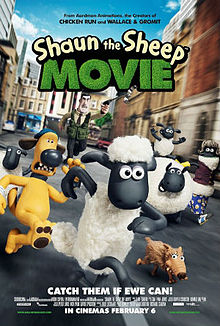
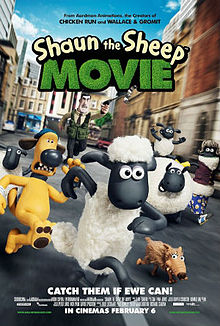
Interview: “Shaun the Sheep” Co-Writer/Director Richard Starzak

Interview: “Shaun the Sheep” Co-Writer/Director Richard Starzak

Posted on November 23, 2015 at 3:51 pm

Copyright 2015 Lionsgate

Richard Starzak and Mark Burton wrote and directed the adorable “Shaun the Sheep,” and it was a lot of fun to talk to him about making a stop-motion animation movie with no words. The DVD/Blu-Ray, which will be available November 24, 2015, has a behind-the-scenes featurette showing Starzak and Burton acting out some of the movements for the animators “to get the timing right for comedy” and working with actor Justin Fletcher on recording some of the non-verbal sounds. The idea of having the mouths of the sheep go off to the side of their snouts came from one of the storyboard artists “just to indicate that the character was smiling and we thought it was funny so we kept it there. Some people think it looks very strange and some people kind of don’t worry about it.”

The vehicles in the film are as individual as the human and animal characters. “We tried to give everything a bit of personality.”

It is a painstaking, very slow process to move each of the characters very slightly, take a picture, and then move it again. “We aim for about two seconds per animator a day so in a week we’re expected to do about ten seconds on average. That’s times sixteen animators so it would be two or three minutes of animation during the week…We use mainly the live action video to time how long we need for any particular shot. It’s a bit of jigsaw puzzle. You have to fit the film into a certain amount of time but it’s kind of trial and error. We shoot and then we might adjust them after we have shot them, we might take the odd frame out here and there, we’ll double up the odd frame so it is constantly being reassessed. I suppose the film ended up a few minutes longer than we intended but that’s fine; the timing was worthwhile so we were happy with that.”

Working without dialogue was liberating. “Strangely, yes, it makes life in some ways more difficult but also really focuses you on the story. We kind of have a lot of evidence particularly when children watch the film, they really concentrate on the film as they do on the television episodes because it requires all the attention but they get more immersed in it as a result. So I found it very liberating because it’s a very pure way of making a film. It’s very cinematic. I can’t wait to make another one really, I love the idea of not using dialogue.”

One of the challenges is directing the voice talent on recording the various sounds that the characters make. “They are noises but they are still very crucial to get the right tone so it’s a question of the voice talent that we use actually understanding and getting the tone right so they can watch and understand how to enhance and how to make any shot or movement more understandable. It’s a lot of trial and error. And it’s very strange standing there saying, ‘Can you put a little more despair into that squeak?’ or ‘Can you make that squeak slightly lighter?'” It’s a process but we get there in the end. We put up the storyboards against a temporary track of grunts and squeaks and then we invite the voice artist to lay down some sounds for us and after the process is finished we refine them and we get them in again to see if they can improve on what we’ve already got.”

Starzak was influenced by silent film masters like Buster Keaton and Jacques Tati. “When I first started the series I always had Buster Keaton in mind because there is not a lot that you can do with Shaun’s face. He has just got eyes and occasionally a mouth but there’s not a lot to express with so I’ve got a picture of Buster Keaton on the door on the way into the studio to remind people what we’re trying to do. We watched a lot of funny comedies. Jacques Tati films are very clever in including a lot of ideas in the same shot and playing out the shots obviously with sounds but no dialogue which is kind of what we were aiming for.”

The most complicated scene in the film takes place in a restaurant, where the sheep are disguised as humans. “It’s almost a comedy of manners. We had to stage four characters sitting around the table then there was another table with two characters plus there was the waitress and the maître d’ and everything was quite complicated. The most fun thing to do was the hospital scene.”

Related Tags:


Animation Behind the Scenes Directors Interview Writers
Interview: Jay Roach, Director of “Trumbo”

Interview: Jay Roach, Director of “Trumbo”

Posted on November 20, 2015 at 3:46 pm

Copyright 2015 Bleeker Street
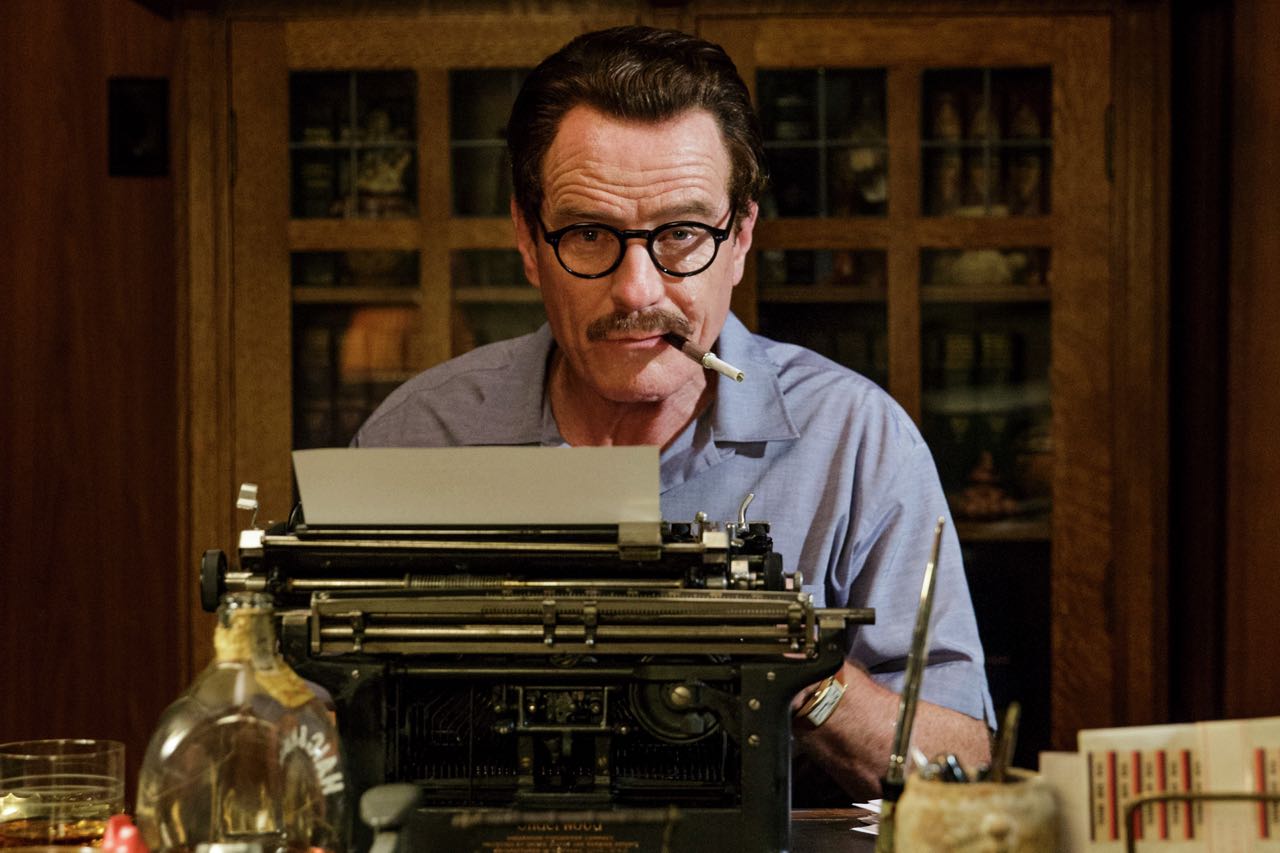
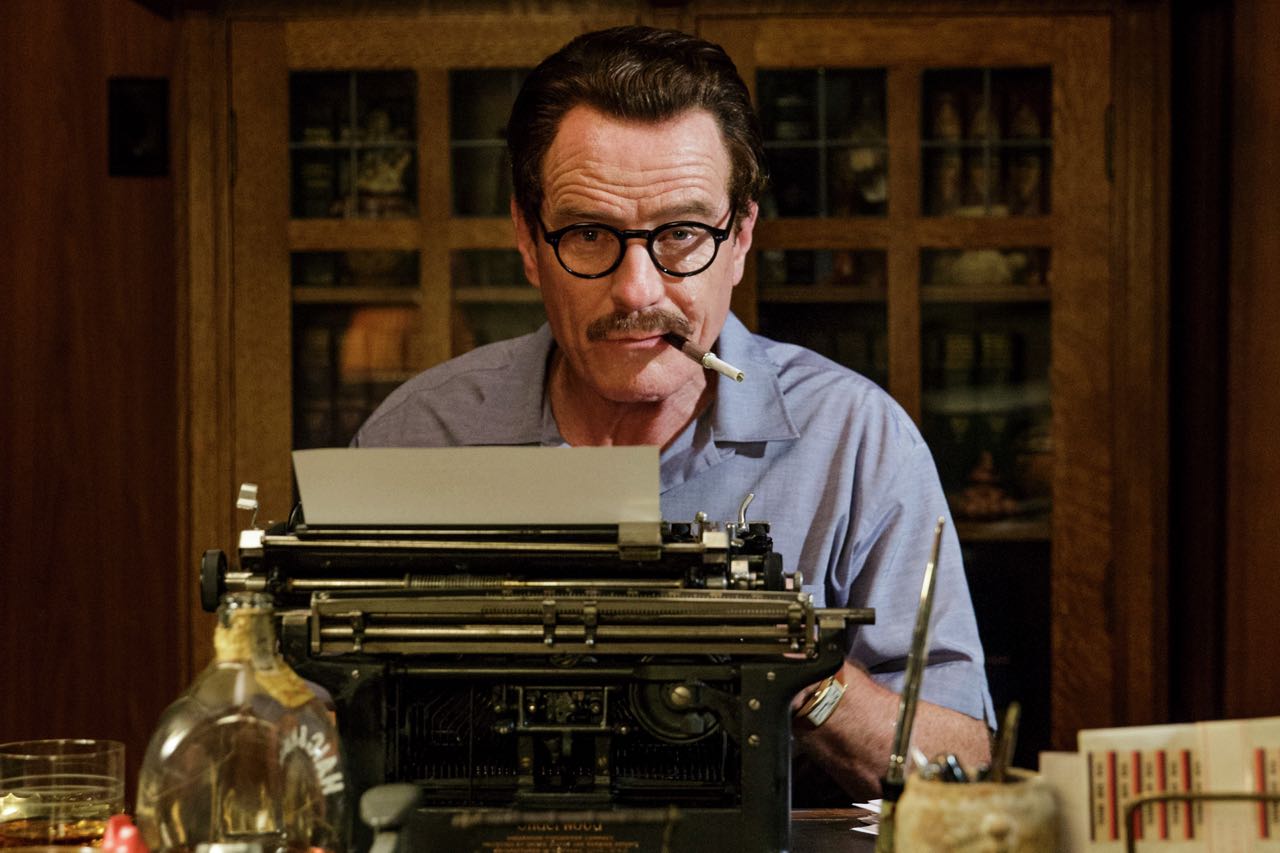
Jay Roach is best known for wild comedies like the Austin Powers and “Meet the Parents” films, but he also directed the sharp, fact-based political films “Recount” (about the Bush-Gore election) and “Game Change” (about Sarah Palin) for HBO. He turned to serious drama in “Trumbo,” the story of a blacklisted screenwriter who won two Oscars under other names when he was prohibited from working in Hollywood during the McCarthy era. Bryan Cranston plays Dalton Trumbo and Helen Mirren plays gossip columnist Hedda Hopper in the film. In an interview, Roach talked about what makes a great screenplay and the challenges of casting actors to play iconic real-life characters like Kirk Douglas and Edward G. Robinson. “I always look for a main character whose soul is at stake, a character whose mind and psychological and spiritual situation and intellectual situation is someone I want to track. Particularly though their conscience, that’s what I mean by their soul at stake. What type of moral choices do they make? And I think a really good screenplay takes the character through the triumphs and the valley of the shadow of death where you should feel like you’ve been through everything through the course of the story. In drama and even in comedy too I always try to have the main characters go through pure hell. There’s also an anxiety dream element. I also like it when a story works on multiple levels, not just a personal level. If there is a civilization at stake which has gone a certain way in all the dramas I have been working on then that’s very interesting too, if the soul of the country is to some extent at stake, that really improves the sense of suspense and puts more forces into play.”

Trumbo is under intense pressure through the film. He has to continue to support his family even though he has been blocked from writing films for the Hollywood studios and even went to prison for nearly a year for refusing to testify before the House Un-American Activities Committee. There are several scenes of him writing in the bathtub, smoking, taking pills, and frantically trying to churn out scripts. “In this case Dalton Trumbo has overextended himself as a writer during this period. Not only was he writing black-market screenplays to survive during the blacklist era for 13 years, but he had also gone to the King Brothers and other producers in our story and said, ‘Look, help all of us get work. He had other friends who he was just trying to help too and bring them in, so he told the shlock independent producers, ‘These are some of the better writers in the business. You can get them at a ridiculously discounted price right now. They will be writing under assumed names and if you don’t like their work I’ll make them go back and rewrite it and if you don’t like it even still I’ll rewrite it myself.’ So he put himself in this kind of hell of perpetual deadlines by having to write way too fast just to be able to make a living because his pay was so low. His back went out, he was smoking too much, taking so many uppers and downers to wake up and then go back to sleep, drinking too much and I wanted to try to capture a little bit of that hellishness. It is kind of an odd place to write in the bathtub but he had to be there to deal with the pain of his screwed up back. He couldn’t sit there just soaking so of course he would sit down and write. And I also like that there is a very constructive aspect to that kind of writing because he is cutting and pasting and stapling and ripping the pages apart and he is muttering the lines of the characters out loud which are funny and some of which are heartbreaking and that kind of mania, that kind of manic-depressive aspect that every writer is familiar with, I thought could add some cinematic drama to the situation and I think Bryan embraced that and went for it.”

Cranston worked hard to get the physicality of the character, very different from what we’ve seen him do in “Breaking Bad” or his other roles. “That was partly to distinguish this character from his other roles but the most important reason he went that way was that was how the guy was and he wanted to get the authentic guy. The Trumbo daughters were around and when the saw him transform into that character both of them said, ‘Oh my God that’s our father.’ They had a lot of thoughts about details, that’s a thing that they had agreed on and agreed with this us on that Bryan captured the essence of this guy. He was theatrical and larger-than-life, a very brilliant writer too, and was just a very deep, deep thinker who would spend hours and hours alone. But when he got up to talk and he spoke a lot at public, he was old school, oratorical. He wasn’t just saying things; he was performing the ideas, and Bryan really went for that too. So as I said the daughters described it as a surreal experience seeing Bryan channel their father.”

Copyright 2015 Bleeker Street

Elle Fanning plays a character based on both of the Trumbo daughters. “I just knew she would capture the essence of the cost to the family, the price on the family’s happiness that Trumbo was forced to be pay and so and I think she was in some way robbed of a normal childhood. They both described it that way but in another way they were bonded by being ostracized and locked into this sort of secrecy together and collaborating in this conspiracy to sell Trumbo’s black-market scripts. By the way they never called him anything other than Trumbo, his kids called him Trumbo, his wife called him Trumbo. Nobody called him ‘dad’ or ‘honey’ or whatever, just Trumbo. They describe their lives as being like living on island, like the Swiss family Robinson, like being castaways. It was very painful sometimes because their lives were so turned upside down and Trumbo became somewhat dysfunctional under all the stress but it was also very loving and family driven in an unusual way that they became so close.”

Copyright 2015 Bleeker Street
Mirren plays a character known for the iconic hats and glamorous gowns. “Daniel Orlandi is the costume designer I work with all the time. He just has a fantastic eye for authenticity but also for which of the realistic costumes are going to be the most spectacular especially with a character like Hedda Hopper. Her hats alone were part of her persona, part of her iconography and you throw in those beautiful gowns. She used glamour and fashion to disguise this killer instinct that she had in politics. I just thought we had to give her lot of layers. She’s not at all a cartoon villain; she is a very interesting pop culture, gossip, columnist kind of person but she also had this whole other sort of dimension which was pure politics and her form of patriotism. And you mix all of that together and it just visually became really a interesting complex character.”

As he did with “Recount” and “Game Change,” he had to find actors who could play people whose faces are already indelible in the minds of the audience. “Well, you first have to just tamp down your terror that you are going to get it wrong because you know what it’s like when you see a favorite icon miscast or underserved. I think that the fear of failure helped me because I just kept looking and kept looking kept looking until in each case I found the person that that I absolutely was convinced could pull it off. And Kirk Douglas was possibly the most terrifying one for me because he was such a hero in the story along with Otto Preminger who I also had to make sure I got right although he is nowadays a little less iconic. And David Rubin, my incredible casting director, kept sending me people and everyone sort of got part way there. Some people did more of an impression, and that was not right. And then we came across this guy named Dean O’Gorman in New Zealand and I had to rely on Skype calls and video rehearsal and workshopping the character until he and I were both confident because he couldn’t come out until quite close to shooting. So that was risky. It took some faith and I’m really happy with what he did. Kirk Douglas saw him. He joked that he wished that we had cast him but if he couldn’t do it he was really happy with that guy and that meant all the world to us because we recognize that Kirk Douglas took such a risk to put Trumbo’s name on ‘Spartacus,’ so what a great part of the story that would be if we get that character right.”

He’s changed his mind recently on which is his favorite of Trumbo’s films. “Up until I started making this film, ‘Spartacus’ was it because I remember distinctly seeing it when I was at a drive-in with my whole family when I was a little kid, four of us as kids and my parents in 1967 when it was reissued. As a 10-year-old kid I was just like ‘I am Spartacus!’ I’m sure we shouted it around the house and every one of us got in trouble for months and months. But then I re-watched ‘Roman Holiday,’ with that sublime performance and characterization of Audrey Hepburn’s character in her first film and Gregory Peck. It’s not typically my kind of film. I don’t love somewhat straight up romantic comedies but there’s something so beautiful and fairytale about this princess who is not allowed to be a human being in the position she’s kind of thrust into, born into and so she goes out and hangs out with this sort of slightly working-class journalist out in Rome. It’s just a fascinating, I think it might be my favorite.”

Roach says the story has special meaning in today’s political climate, but some themes are eternal. “It’s just the power of storytelling. I think that’s the reason he’s such a hero to so many writers is that he turned storytelling and writing to a super power and he used it to take on one of the most oppressive political witch hunts in the history of our country and he in a way emerged certainly scathed but he reclaimed his name, he helped other writers reclaim their names, he wrote great material and it ultimately exposed in a way the lunacy of the system by doing so. He started out in his life working in a bakery and for many years of hard working he became the highest paid writer in town and then got completely shut down enough to have to go back to square one and write his way out of not only literal jail but movie jail. This is just one of those stories of hope people point to. And then the other thing is just how so easy it is to exploit fear to get people to conform to a particular political ideology. Fear is a powerful political weapon and that applies the 2015 as much as it did in 1947.”

Related Tags:


Directors Interview
THE MOVIE MOM® is a registered trademark of Nell Minow. Use of the mark without express consent from Nell Minow constitutes trademark infringement and unfair competition in violation of federal and state laws. All material © Nell Minow 1995-2026, all rights reserved, and no use or republication is permitted without explicit permission. This site hosts Nell Minow’s Movie Mom® archive, with material that originally appeared on Yahoo! Movies, Beliefnet, and other sources. Much of her new material can be found at Rogerebert.com, Huffington Post, and WheretoWatch. Her books include The Movie Mom’s Guide to Family Movies and 101 Must-See Movie Moments, and she can be heard each week on radio stations across the country.

Website Designed by Max LaZebnik