Interview: Wayne Blair of “The Sapphires”

Posted on March 26, 2013 at 8:00 am

Wayne Blair is an actor who starred in the live theatrical version of “The Sapphires,” the true story of three sisters and a cousin who became a successful girl group in 1960’s Australia.  He directed the feature film based on the play, which opens this week.  He spoke to me about bringing what he knows as an actor to directing a film and loving American country and western when he was growing up.  His next project, as writer, director, and actor, is an Australian miniseries called “Redfern Now,” the first series written, directed and produced by Indigenous Australians.

How were you selected to direct this film?

It was a stage show, a musical, a sold-out theater show in Australia, and I was an actor in that show, and friends with the writer.  He asked me if I wanted to direct the film.  I’d done a lot of short films. But this is my first feature film.

How does being an actor help you as a director?

Your communication skills are much better.  You can cut to the chase.  You can see when an actor’s frustrated, when he’s firing on all cylinders.  You know what they need to hear and how they need to hear it.

You’re too young to have grown up with the music of the 60’s.  Were you familiar with these songs? 

I grew up with it in my family and sort of stayed with me.  I grew up more with more country and western, Merle Haggard and George Strait.   “All my exes live in Texas……” Like that!  When we finally got into soul we exaggerated it a little bit.

What was it like to have the people who really lived the story looking over your shoulder?

They were involved but they gave a lot of trust over to us.  The co-writer is their son, and they were involved in the stage show.  They knew we weren’t going to tamper with it much.

How did you do the casting?

We were looking for four girls that were newcomers, some new talent.  We went looking all over Australia for girls who were not only great singers but great actors, and who could work with the family on the set.  These four girls were the best. I don’t say this lightly.  I was very fortunate, blessed in that sense.  Chris O’Dowd was the last added and we really lucked out.  I went to LA.  “Bridesmaids” had just opened and they said, “You should go see this new guy coming out of Ireland.” It was a no-brainer.

What were you looking for on the costumes for the girls?

We just wanted something authentic.  We were looking at two different times, 1958 and 1968.  We were looking at four different women, making them look real but making them look great.  So it was a bit of a challenge.  But  Tess Schofield just did amazing things with the budget we had, just keeping it very, very real, in a certain moment and time.  We had our budget limitations and that was a great thing because you just make better choices.

Was the battle scene in Viet Nam the biggest challenge?

We shot this film in six weeks.  Every day was a challenge.  Shooting five people every day with two cameras — it takes it out of you.  Shooting a lot of cast every day, and key cast — everyone had their line in almost every scene.  But the battle, yes, that was a big challenge.

What’s the best advice you got about directing?

Just take it beat by beat, moment by moment, scene by scene, day by day.  Make sure you get one scene, don’t think of the next.  Make sure you get every moment that you’re after.
 

Related Tags:


Directors Interview

Interview: Ben Mankiewicz

Posted on March 1, 2013 at 2:38 pm

“I have only one thing in common with Martin Scorsese,” I confided to Ben Mankiewicz.  “We both pretty much keep Turner Classic Movies on all day.” Mankiewicz, who introduces many of the films on TCM, was in town for a special showing of the restored version of the classic silent film “Metropolis,” with a live musical accompaniment, and I was thrilled to get a chance to talk to him about my favorite station.  He told me he is looking forward to hosting his father, Frank Mankiewicz, for a special Father’s Day presentation of “The Last Hurrah.”  Frank’s father and uncle, Herman and Joseph Mankiewicz, were key figures in the golden age of the Hollywood studio.  Herman Mankiewicz co-wrote the film that is consistently at the top of the greatest American film lists, “Citizen Kane.”  And Joseph Mankiewicz was an Oscar-winning writer and director of films like “All About Eve.”

Mankiewicz talked to me about the discovery of 25 extra minutes from “Metropolis” to complete director “Fritz Lang’s original vision.  A tremendous amount of the film was missing.  Being able to get that — and they found it rather randomly — is exciting.  There’s a phrase that gets used a lot — ‘It really still holds up.’  I was just in Dallas for a screening of ‘Rio Grande’ with Angie Dickenson and that definitely holds up.  It’s unfair to expect that from every movie.  You don’t make a movie in 1946 so that people can enjoy it in 2013.  There are things I watched and liked at the time and they made money and it’s fine that we look at them now and they don’t seem to work as well.  But ‘Metropolis’ holds up in a very significant way.”  He mentioned the Billy Wilder film “Ace in the Hole” (Kirk Douglas as an unscrupulous journalist exploiting a tragic mine accident) and “A Face in the Crowd” (with Andy Griffith as a beloved media personality with an easygoing, country persona whose audience does not realize he is a megalomaniac) as examples of films that can seem even more relevant today.  “You see those movies and ask yourself, ‘How did those guys know?’  I think there’s some of that with ‘Metropolis.’  The themes certainly apply today.  The idea of a few powerful corporatists running the world — it certainly resonates.  And the lore from the missing scenes, that helps, too.”

He was especially happy to be able to show the film in AFI’s grand Silver Spring Maryland theater with live musical accompaniment, telling me that even people who do not think of themselves as silent film fans find the experience of seeing them an extraordinarily powerful experience.

We talked about how today’s audiences, used to unlimited special effects and quick cuts, still respond to the older movies shown on TCM.  “In Dallas for the ‘Rio Grande’ screening, everyone who worked for the theater was in their 20’s and they were dedicated enthusiasts, fans of everything, silent, foreign, David Lynch.  So that’s encouraging.  Only the cliché is discouraging.  At all three of our festivals we get film students, kids with their parents because the kids wanted them to go.  We commissioned an extensive and vast study of our audience and 67 percent of our audience is between 18 and 40.  So our audience isn’t going away.  Even those in their 40’s didn’t see these movies when they came out.  Not even close.”

Today’s audiences have the greatest opportunity to see older films in history.  Two generations ago, when a movie left theaters, no one ever expected it would be shown again.  One generation ago, some older movies were available on a limited schedule on television.  Now, with cable and DVD/Blu-Ray, almost anyone can see almost any film.  If you see one movie you like starring Loretta Young or Gregory Peck or directed by Stanley Donen or Alfred Hitchcock, you can easily find all of their other films and watch them, too.  And that is why people love TCM.

“Summer Under the Stars” and “30 Days of Oscar” are the most popular months on TCM. “I’m like everybody else.  I intro them and then I go home and set the TIVO like everyone else.”  He very much enjoys interacting with the fans at TCM’s annual festival and cruise.  Most often, they want to know why their favorite films are not on — or not on more frequently.  “The licensing stuff is both fascinating and mind-numbingly complicated,” he told me.  “Every movie we can get ahold of, we’ll take.”  Sometimes fans complain that the movies do not have the extended final credits today’s audiences are used to.  But the problem is that during the studio era, most often there were very few screen credits.  That’s why TCM has its own very extensive data base with information about the movies it shows.

I especially enjoyed talking to him about the tributes TCM airs, with contemporary stars talking about the stars of the classic era, like Burt Reynolds talking about Spencer Tracy.  “Some of those stars are bigger today than they were when these movies came out,” he said, like Barbara Stanwyck.   That’s one thing Mankiewicz loves about sharing these films with today’s audiences, the way they still connect so viscerally fully to viewers.  “These movies just make them feel good.  It was not a better time in America.  We’ve made a tremendous amount of progress.  But, to remember either seeing it with your parents or your parents saw it and introduced it to you or now, for people in their 20’s, watching with their grandparents, or just discovering these films for the first time, that gets me.  We’re never going to push these movies out.  We show movies from the classic era and that’s not going to change.  I’d be proud to put ‘Argo’ on TCM but in 20 years it will still be too expensive.  But we have great films to share and new generations to share them with.”


Related Tags:


Interview Television

Interview: John Ottman, Editor/Composer of “Jack the Giant Slayer”

Posted on February 27, 2013 at 8:00 am

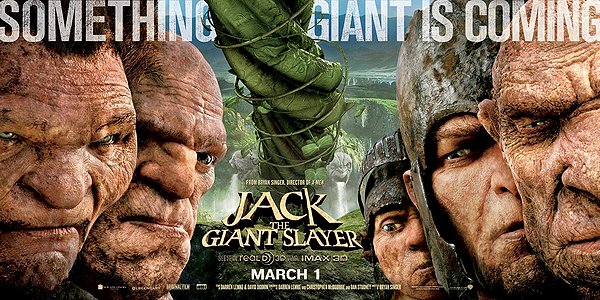
John Ottman is not just editor of this week’s exciting fantasy, “Jack the Giant Slayer” — he also composed the score.  I had a lot of fun talking to this polymath about his work on the film.

When you think about doing a movie set in another period and especially a fantasy movie what kind of signals can you send with the soundtrack?

Well I think the obvious thing is to be intentionally medieval or have music in line with the time or period but I didn’t do that. I just wanted to try to make the score timeless in terms of just good old fashioned movie adventures as opposed to something that is categorized into a certain time or period, doing stuff that was too fairy tale-like or obvious. I try to do that with the music as much as I could. It’s sort of a fine line between pushing the popcorn buttons but trying to keep the bar a little higher as much as possible without sacrificing popcorn fun.

Like any good popcorn movie you have romance and adventure.  How do you begin to put that together in the soundtrack?

I just looked at my deadline and I panicked and something comes out of my head. But just frankly this was all about story and these are timeless themes in this movie. You have the princess that doesn’t want to be a princess. But she gets saved by a pauper and they fall in love. I mean it’s not something we haven’t seen before so the challenge was how to keep it fresh and basically take a time old story and make it interesting for people.

Well it is a time old story but as you said these are themes that are perennially appealing. What is it about the story that makes these themes so enduringly popular?

People still fall in love. So I guess a love story is something everyone can still relate to.  And I guess there’s also the fantasy on the boy’s part of being a hero. And so I think those things will be true forever.

And at what point do you start working on the music?  Had you seen any of the visuals and special effects?  Did you have a sense of what the world was going to look like?

I’m the editor so I know everything. By the time I started writing the score I had probably seen the film hundreds of times. I was the one storyboarding the sequences and these motion capture shots and nurturing every visual effect for a year and a half. So by the time I go to write the score I am well aware of what the visuals are and it’s difficult because I have very little time to actually write and give time to my other responsibilities on the film, managing the movie.

Wow. You really surprised me. I though the music would come before the editing.

If I weren’t the editor I would have been on a maybe like a month before the editor’s cut was put together to watch the film and write the score. You have to tailor the music exactly to the images on the screen.  They have to be in sync with what’s going on. You really can’t write anything ahead of time.

As you’re editing are you thinking about the music, the rhythms?

As I’m editing I’m just thinking, “I have to write all this music. I’m don’t know when I’m going to have the time.” From day one I’m tormented by the fact that I somehow have to write this score but I don’t know when I am actually going to have the time to do it. That’s what I’m thinking about. As I’m making the movie of course I’m thinking about the types of music that it’ll need but I don’t specifically write anything while I am cutting because it’s such a life encompassing job just to cut a movie together. I wish I could. I would have less to do later.

I’ll intentionally create like a pregnant area in the movie so I’ll know that’s it’s going to be a big score moment for the drama. What the score is going to be I have no idea. I know generally the kind of music it is going to be.

Tell me a little bit about some of the challenges of editing such a special effects intensive movie.

I don’t recommend it to anybody. Special effects are one thing. Motion capture is a whole ‘nother world. Because basically you are taking raw data that is not even on film or videotaped.  It is just basically computer data based upon the movements of the actors and you can make anything of it you want. So I would take that data and lens the shot which is what creating the shots.  It’s very complicated because from that point on I would create a shot and storyboard how the real people are going to be integrated within that shot. So then I would take the shot to set and then based upon the storyboard would dictate how much of a set they would have to build and then becomes the battle between the production designer and the visual effects team. Who’s going to help? How much stuff are they going to build? How much is going to be CGI? So it’s enough to make your head explode on a daily basis because it’s just a lot of creating something from nothing. So each one of those shots, I don’t know how many there are, over 1000, is its own separate project that you have to basically baby until it’s finished. All the way from the original lensing to creating the textures of the skin to the lighting and integrating it with the real actors.

So all the giants were motion capture?

Yes.

Wow.

Those are real people walking around in motion capture outfits. But again it’s just the general movements of the faces that are caught and the general movements of the bodies. We embellish if we have to. But the animators do it and they create all the skin textures, and the outfits, and the background and the whole bit. It’s just a massive project. Process I should say.

Disney set a very high bar for beanstalks with “Mickey and the Beanstalk” but I thought you really did an amazing job.

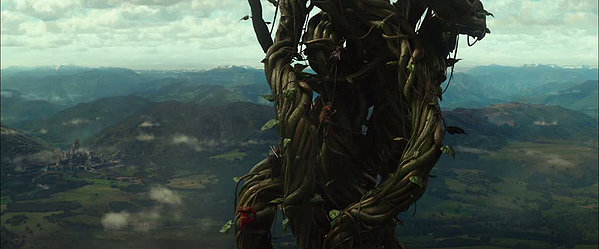
That’s a relief to hear because I was the number one cynic of the bean stalk.  I was the non-believer because I thought it looked like a chunk of plastic all the time. I was aghast. I never thought anybody would ever buy it and it seems that in the end it worked through creative lighting and so forth on the set and then the CGI people spent a lot of time on the animation and the coloring to try as best as possible to try to make it look real.

I understand that you started making movies when you were very young.  What were the movies that inspired you to want to make movies?

Well actually they weren’t movies; they were the original “Star Trek” series. It actually pretty much trained my brain how to score movies because they has to reuse a lot of their existing music.  It taught me how they would reuse thematic ideas and so forth. And they scored those episodes in a very classic way. That was a huge influence on me, that series and then when “Star Trek: The Motion Picture” came out, the movie version. And of course “Star Wars.” That was the catalyst that woke all of us up inside, especially the resurrection of the classic film score.


Related Tags:


Interview

Interview: Eleanor Tomlinson, the Princess in “Jack the Giant Slayer”

Posted on February 26, 2013 at 8:00 am

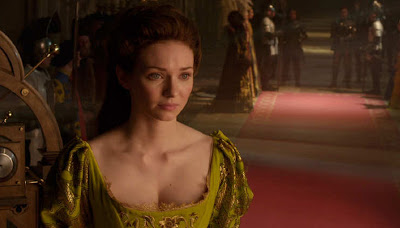
Eleanor Tomlinson plays Princess Isabelle in “Jack the Giant Slayer.”  But she is not your grandfather’s fairy tale princess.  This one goes undercover to explore the world of her subjects, rebels against her father’s plans to marry her off to the odious Roderick (Stanley Tucci), and suits up in armor to fight the giants.  I spoke to her about doing her own stunts, acting in a lycra suit studded with ping pong-like balls for the CGI, and keeping the enduring appeal of fairy tales while making them new again.

Tell me about the costumes — they are gorgeous and must have been a lot of fun to wear.

I absolutely loved the costumes.  They were all amazing.  The costume designer, Joanna Johnston (“Lincoln,” “Love Actually”) was fantastic at creating that fairy tale aspect.  She and Bryan , worked very hard and the minute I put on the armor or the dress I felt like a princess.  It was fantastic.

Your character is not a typical fairy tale princess.

That’s what drew me to her in the first place.  She’s not a damsel in distress, waiting in the tower; she’s very independent and feisty.  She was born into the royal family.  She didn’t choose the life and all that comes with it.  So it was interesting creating that character and I worked very hard with Bryan because I didn’t want her to come across as spoiled.  She still has to be lovable and Jack has to fall in love with her.  Bryan was brilliant.  He was so helpful.  This is my first lead role in a big movie, my big break and he really took the time, working with me before we started filming to talk about exactly where we wanted the character to go.  So, for example, I looked to Sigourney Weaver for inspiration because she’s a very strong, powerful woman.  We decided to go down that route as opposed to making her the princess that everyone has seen before.  So that was cool.

What was it like to work knowing the computer images would be filled in later?

That was a huge challenge.  Bryan talked to the actors and showed us what he had lined up, how the scenes were going to play and how the giants were going to interact with us.  It was fantastic!  He’s a really lovely man.  We shot all of the motion capture stuff right at the beginning with Bill Nighy so that his performance was captured and put onto the giant.  We would all be dressed in these strange lycra suits with balls on them and then our physical performance would be transferred onto a computer screen so you could see how your character would respond.  Every movement was transferred so you were controlling this little figure.  And Nicholas and I were mainly looking at tennis balls on very large poles to show us where the CGI would be added later.  Bryan was very helpful in showing us what the giants would look like and where they were going.  What they did with the giants was incredible!  Nick and I both said it was beyond our imagination.  They are really amazing.

Were you climbing on something real for the beanstalk?

Yes, they built an enormous beanstalk!  We used some of it to train before shooting so we were in tip top physical condition so we could tackle any stunts our characters would face.  Both Nick and I were really passionate about doing our own stunts and we felt that was crucial for our characters.  We were on the beanstalk and they would turn on wind machines and rain machines and it was all very scary!  But the most amazing fun.  Being thrown around by the giant when he gets hold of me — that was quite painful, and that was the day my mum came to the set.  She was all, “What are you doing to my daughter!”  

You come from a family of actors.  What’s the best advice you got about acting?

“Keep your feet on the ground.”

That’s hard to do in a movie where you climb a five-mile beanstalk!

Exactly!  My family are very down to earth people.  Keeping your friends close and doing your best.  Having the confidence to speak up and be brave about getting your ideas out there.  Sometimes it’s nerve-wracking in a movie this big to say, “I kind of saw Isabelle as doing this” or “I saw so-and-so doing that.”  But it’s important that you do your job and are not shy about doing it.  It was fantastic working with people like Bill and Stanley and Ewan .  They were so helpful.  They were really lovely to me and took me under their wings.

Isabelle has to stand up to her father but she does it in a loving and respectful way.  Did you bring anything to that from your own experience?

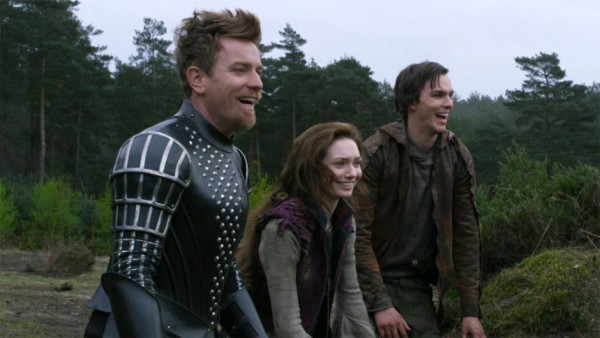
Well, I’m not a princess in real life but I am pretty feisty!  There are definitely elements of my personality in Isabelle and it was fun merging the two together.  I think she feels very trapped by the lifestyle that she was born into.  Working with Ian McShane was fantastic.  He was very helpful.  It’s not every day that you go to work with Ian McShane playing your dad and Ewan McGregor playing your guardian!  It was pretty special.  And Stanley Tucci is so funny and so amazing to watch.  Everything he does with his character is just amazing.  He really pushes the limits and he is hilarious.  I absolutely love his performance.

What is it that makes fairy tales so enduringly meaningful over hundreds of years?

It’s a form of escapism.  Everybody loves to go back to the stories that were a huge part of their childhood.  But also it’s lovely to see a movie that the whole family can enjoy.  There’s something in “Jack the Giant Slayer” for everyone, romance for the teenagers, the giants for scaring.  It’s nice to have a family movie.  And with CGI they can tell the story in a way no one could before.  It’s fascinating to see what they do.  They make make it again in 20 years and it will be totally different!

What lesson do you want people to take from the movie?

The movie’s about achieving your dreams and not being afraid to stand up to people to are telling you what to do.  It’s about deciding who you are, doing the things you want to achieve, even if it is climbing a five mile high beanpole for an adventure.  Why not?

Related Tags:


Actors Interview

Interview: The Trouble With Flirting Author Claire LaZebnik

Posted on February 26, 2013 at 8:00 am

Claire LaZebnik’s latest YA novel, The Trouble with Flirting, published today, is the witty and insightful story of Franny Price, a talented teenager who gets a summer job working with her aunt, the costumer for a high school drama program putting on plays by Shakespeare.  I loved it!  LaZebnik was nice enough to answer my questions.

Jane Austen’s Mansfield Park inspired some elements of your story, including the name of the main character.  Your Franny Price is much more confident and outspoken than Austen’s Fanny Price.  What are their most important similarities and differences?

They’re both thoughtful, decent, intelligent young women who occasionally get overlooked because they’re not flashy or gorgeous—they’re the type that grows on you, rather than the type that hits you over the head from the beginning. So that’s how they’re similar.

But, like all of us, they’re products of the age they live in, which ultimately makes them more different than similar. Fanny lives in an era when a woman with no independent means either has to marry well or face a lifetime of poverty: she has no way to pull herself up except through marriage. Alone, she’s impoverished; married, she’s dependent on her husband’s goodwill. Franny, on the other hand, is a modern young woman, who’s dependent on no one but herself for her future success. She may have to work when others get to play, but that’s a cash issue, not a class issue and really just proves how self-sufficient she is. When she falls in love, it’s for fun, not to ensure her future.

One of the most important elements of Austen’s Mansfield Park is a theatrical production that ends very poorly.  What do you as an author think that giving the characters a theatrical setting allows you to explore?

Actually, I think the whole idea of any summer program–not just an acting one–is that you get to escape whoever you are at home and play at being whatever you want to be and of course acting does exactly the same thing. And the contrast between getting up on stage and acting–which is fun and glamorous–and sitting backstage sewing costumes–which is the opposite–really added to Franny’s outsider status. But she’s not self-pitying or angry and I think that reflects well on her character, especially since she proves she’s as good an actor as any of them when she’s given the chance.

Your characters are very witty and it was a nice change to read a book about teenagers where the main characters were not too shy or insecure to speak up.  What can readers learn from characters who have that kind of confidence and humor?

I think it’s incredibly important for boys and girls (and men and women) to feel comfortable talking to each other. Nothing makes me sadder than hearing people ask for advice on “how to talk to the opposite sex.” Really? Because in my experience, you open up your mouth and the words come out. The strongest relationships I know are the ones based on friendship, and friendship grows when you talk easily, openly, and with a shared sense of humor.

In addition to Mansfield Park, another classic literary work that inspires this book is Twelfth Night, the Shakespeare play that the characters perform.  Why did you choose that play and how does it relate to the themes of the book?  Is the duality and mirroring of Twelfth Night relevant to your story?

So I’m embarrassed to admit that I chose Twelfth Night largely because I knew the play pretty well and could write about it  easily, although you can definitely find a lot of parallels between it and the novel (for one thing, characters have a tendency to fall in love with the wrong people in both). But it’s actually Measure for Measure that I chose more deliberately for them to discuss because there’s so much in that play about how you shouldn’t trust someone just because he appears on the outside to be good. All of that really does tie into The Trouble with Flirting, since Franny makes the mistake of judging people on how they appear and not on what they actually do.

Why is it important that Franny comes from a family with much less money than the kids in the theater program have?  How does her unexpected opportunity to appear on stage affect the way the others see her?

In Austen’s Mansfield Park, Fanny can’t shake her outsider status no matter how long she lives with the Bertrams, because she’s dependent on their generosity and her father isn’t a gentleman. I decided that putting Franny to work during the summer when every other high schooler is just having fun would capture that “poor cousin on the outside looking in” feeling.

When she gets to join a cast, she can prove that she’s just as talented as everyone else, that she could have gotten into the program if she’d been able to afford it, and I think that’s important to her self-esteem. She stops being so much of an outsider at that point–but other obstacles crop up for her.

What is the hardest part of writing a book like this?  What is the most fun?

Hardest part is this: promoting the book. I’m a homebody. I like to sit in my house and write–it’s trying to get people to hear about my books that I find challenging.

The most fun is that moment before you start writing, when you’re thinking about the story and phrases start popping into your head and you see everything so clearly and it feels like it’s going to all come together perfectly–like you could just sit down and the book would flow from your fingertips in a few short hours. Of course, when you sit down to actually put it on paper, everything gets obscured and confusing again. But that moment is lovely.

What were some of the books you enjoyed most when you were Franny’s age?  What do your kids like to read?

YA books basically didn’t exist when I was a kid. There were children’s books and there were books for adults, and pretty early on I took a lot of pride in reading adult books. I wanted to read everything I’d ever heard of, so I read D.H.Lawrence in middle school and Virginia Woolf when I was fourteen. I absolutely loved Colette’s Claudine books, which no one reads anymore, and I reread Austen’s novels every chance I got. I really read anything I could get my hands on. (I wasn’t a very social kid, as you can tell–I was always reading.)

My 15-year-old daughter has no interest in reading adult books; she likes YA books, but nothing too heavy or too supernatural. She likes her novels light and romantic, which might explain why I write that kind of book. Anyway, it’s interesting to me that the “invention” of this whole YA genre may have made teenagers less interested in reading adult books. Which isn’t necessarily a bad thing: a lot of my favorite novels from the last decade have technically been YA novels–I think some of the best writing of our times is being done in that genre.

Related Tags:


Books Interview Teenagers Tweens Writers
THE MOVIE MOM® is a registered trademark of Nell Minow. Use of the mark without express consent from Nell Minow constitutes trademark infringement and unfair competition in violation of federal and state laws. All material © Nell Minow 1995-2026, all rights reserved, and no use or republication is permitted without explicit permission. This site hosts Nell Minow’s Movie Mom® archive, with material that originally appeared on Yahoo! Movies, Beliefnet, and other sources. Much of her new material can be found at Rogerebert.com, Huffington Post, and WheretoWatch. Her books include The Movie Mom’s Guide to Family Movies and 101 Must-See Movie Moments, and she can be heard each week on radio stations across the country.

Website Designed by Max LaZebnik