Interview: Lavinia Currier of ‘Oka!’

Interview: Lavinia Currier of ‘Oka!’

Posted on October 28, 2011 at 3:59 pm

“Oka!” is a simply wonderful movie based on the real-life story of music scholar Louis Sarno, who left New Jersey to study the music of Central Africa.  I spoke to director Lavinia Currier about casting the film and what the natives thought of it when it was done.

I would never of thought of British actor Kris Marshall (“Traffic Light” and the guy who meets all the supermodels in Milwaukee in “Love, Actually”) for the part of a guy from New Jersey, but he is just perfect in the role.

He is wonderful at physical comedy.  He knows how to work his body, as you can see in “Love, Actually,” and “Death at a Funeral” and also the Noel Coward movie, “Easy Virtue.”  Especially for a British actor, I liked that he could do body comedy.  And British actors really hold up well in adverse conditions!  The only thing to do on days off was play in the river so he and all the crew would be jumping in the river all the time and he got some hideous parasite.  So for a big percentage of the shoot he was quite ill but he never missed a day of work.  And being British he liked to be text-based and we had no text, essentially, so he learned Oka and was very proud of his Oka.  I was so glad to have him because he was wonderfully inventive but also a trouper.  He is an urban person, but so is Louis Sarno.  He is not particularly sporty or outdoorsy.  He does not spend his summers camping.  It was his intellectual interest that took him to Africa.  People said, “He’s a character actor, not a leading man.”  But that was perfect because he is playing a character with some courage but not a hero.

I was also stunned by the cinematography, which is just gorgeous and more high-end than you normally see in small-budget films.

I met Conrad Hall through my producer who has a strong connection with his sister and had met his dad years ago.  What I liked about him is that he insisted on a kind of classical approach to the film.  I might have wanted to be more quick and dirty, more hand-held, smaller equipment.  We wanted to shoot in 35 because we wanted to do justice to the landscape but we also needed a camera that could handle the humidity.  Conrad insisted on quite cumbersome equipment but it served us well because it allowed us to maintain the feeling of a feature film and not a documentary.  We had very primitive and limited ability to light but he did a great job.

Tell me about filming in the wilds of Africa.

People said, “Aren’t you scared of bugs or snakes?”  But I wasn’t.  The fear I had was the pygmies would be willing to take the job and then as soon as they had more money than they’d ever seen, which they would after two weeks of filming, they would say, “We have enough money now; we’re going hunting.”  We did a long period of preparation and exercises and determined who had concentration and was right for the part but we kept three people for every part.  About three weeks into our ten-week shoot some of them took leadership and were really into it.  It suddenly clicked in and still I’m not sure why but when the others were clowning around they would make them stop.  After the film was finished we took it back there to show them and asked them how they felt about it and why they decided to do it.  Some said it was great to be respected and had employment.  But they didn’t relate to it the way I might do, to say, “This is my story and I want to share it with the world.”  It was more that they embraced what we were doing and went with it, and you could really feel it palpably when it happened.  Something about being with the Bayaka, you feel more optimistic about human nature.  They are really fun, nice, resourceful and playful people.  They don’t have an easy life.  But they’re just cheerful.

Is that because of their music?  Or is the music a reflection of their spirit?

I talked to Louis Sarno about the music a lot.  I don’t pretend to understand it because it is actually very complex.  They use 28 phrases and Western music is like 4.  But Louis says that their music is played the way nature plays music, they wait for a niche to jump into.  Sometimes they sound like birds — they are incredible mimics.  They could mimic us speaking English even if they didn’t know what the words meant.  I had a Chinese bicycle and finally it fell apart and so I was walking and I heard a sound behind me and there were two children behind me imitating my bicycle!  Often at the end of the day we would see them sitting in a circle recapping the day, laughing and imitating what happened during the day.  Louis said, “Each one of you has a nickname and you’ll never know what it is.”

How did you come to this story?

I went to Central Africa 12 years ago to cast a film about a famous story about a pygmy named Otabenga who was brought to the World’s Fair in 1905.  It was a tragic story.  he actually was exhibited in the Bronx zoo and then was taken to Virginia by African-Americans who tried to convert him to Christianity and he committed suicide.  We had this screenplay I loved that I wrote with a partner and everyone who read it cried.  I met Louis as a translator.  I began to have my doubts.  I felt like I would be doing to the pygmy actor what the Americans did to Otabenga.  The Bayakans said, “That’s a terrible story!  Why do you want to remember that?”  I went back to Louis and said, “Let’s do something contemporary, and talk about some of what you’ve faced and what the Bayakans have in their daily life.”  He had written a memoir but it was in storage with his mother so it took a while to fish it out.  I read it and I laughed.  He was so self-effacing and so not the white hero saving the natives but someone who finally found his home.


Related Tags:


Directors Interview
Interview: Andy Borowitz of The 50 Funniest American Writers*

Interview: Andy Borowitz of The 50 Funniest American Writers*

Posted on October 25, 2011 at 3:59 pm

Andy Borowitz really understands what it means to be funny.  He is the first recipient of the National Press Club’s humor award and his @BorowitzReport Twitter feed is constantly circulated with LOLs.  His new book is The 50 Funniest American Writers*: An Anthology of Humor from Mark Twain to The Onion, an instant best-seller and sure to be a popular gift for the holidays.  It is filled with favorites, surprises, and surprises from favorites, like a gem of a short story by the late John Hughes that has not been in print for decades and was the beginning of his “Vacation” series of films.  This book provides guaranteed happy laughter for anyone who reads it.

Who was the first author you read who made you laugh?

Woody Allen.  It was the early 1970’s, when his first prose collections, Getting Even and Without Feathers, came out.  I couldn’t believe someone could be that funny.  I still can’t.

What made Twain’s approach to humor so different from earlier writers?

I sometimes think Twain is like America’s Shakespeare because he writes about human beings in a universal way that transcends time and geography.  You read humorists who came before Twain – and after, for that matter – and they seem very bound to their time and place.  We recognize ourselves in Twain’s characters.  And even his political humor, which one would expect to seem dated, isn’t.  Example: “Suppose you were an idiot.  And suppose you were a member of Congress.  But I repeat myself.”

Is there an American style of humor?

I’ll defer to Mark Twain on that one.  He wrote in his essay “How to Tell a Story” that American humor was essentially deadpan – the storyteller is funny because he appears to be serious.  That’s true of Twain, and also true of The Onion – so maybe he has a point there.

Do funnier politicians win more elections?

Almost always the opposite is true.  Case in point: Bob Dole.  He was elected to the Senate many times, but whenever he ran for national office, his taste for a mean or cutting remark seemed to undermine him.  You always got the feeling that Dole would sacrifice a million votes if it meant getting a really good one-liner off.  I think if I were a politician I would be just like him.  I would lose big-time.

Why are writers like George Ade and S.J. Perelman so often overlooked?

In general, humor is an evanescent thing.  When I was reading material for the book, I came across many humorists who were huge in their day and are practically forgotten today.  It was one of the joys of this assignment to be able to resurrect some of them.  George Ade’s most popular series of humor pieces were called “Fables in Slang,” and it’s not hard to see why humor pieces written in turn-of-the-century American slang are a little hard to get now.  As for S.J. Perelman, he specialized in literary parody, and some of the things he was parodying aren’t so well known today.  In general, I think humor falls out of fashion more quickly than other genres.  Some of the funny writing that’s beloved today may be incomprehensible to readers fifty years from now.


How did you find that early piece by John Hughes?

I met John Hughes in Hollywood in the early 1980’s, right before his first film, Sixteen Candles, came out.  (We were going to work on a movie together but like many things in Hollywood, it never happened.)  He told me about his days as an advertising copywriter – a job he hated – and how he submitted pieces to National Lampoon to get his start in comedy.  So when I started working on the anthology, I went back through the National Lampoon archives looking for Hughes pieces.  The one I chose, Vacation ’57, is one of the funniest short stories ever written, in my opinion.  (It also was the basis of the successful Vacation films starring Chevy Chase.)  It hasn’t appeared in print since the 1970’s, when it appeared in the Lampoon.  Some readers have said that The 50 Funniest American Writers is worth buying for this piece alone.  I heartily agree.

Molly Ivins wrote very topical and often very local pieces.  What makes her work so funny for people who have no connection to the politicians she wrote about?

She has a real kinship with Mark Twain, I think, in that she finds the universal in the specific scoundrels she’s writing about.  A few years before she died, I did a show with her in Austin and every joke out of her mouth slayed the audience.  I love this one: “Next time I tell you someone from Texas should not be President of the United States, please pay attention.”  Eerily timely today.

You made the unusual choice to include stand-up comedy.  Do you think that reads as well as it comes across when it is delivered live?

Well, I didn’t exactly do that.  I didn’t write down transcripts of stand-up routines, because that would be totally lame.  It’s obviously much better to enjoy stand-up comedy in performance, and thanks to DVDs and YouTube, that’s very easy to do now.    I only considered published writing by stand-ups.  (An arbitrary distinction, I know, but everything about this anthology is arbitrary.)  I read books written by comedians – George Carlin, Wanda Sykes, Bernie Mac, Larry Wilmore and Lenny Bruce are included – and only used selections that were funny on the page.  In the case of Bruce and Wilmore, the writing I chose was never a part of their stand-up acts – it was written to be read, not performed.  As for George Carlin, he was a bestselling author many times over because his writing is laugh-out-loud funny.

Where should we look for today’s best humorous writing?

I love The Onion, although I usually avoid reading it because I don’t want any of my fake news at The Borowitz Report to overlap with theirs (sometimes we do come up with similar ideas, which is inevitable).  Young writers like Sloane Crosley keep churning out funny books (Sloane also writes a funny blog for The New York Times).  The New Yorker, which has published everyone from James Thurber and Dorothy Parker to Woody Allen and David Sedaris, is always finding new comic voices, like Yoni Brenner and Amy Ozols, who I think are hilarious.  And there are always funny new writers turning up on Twitter and elsewhere online.  The nice thing about the Internet is that the magic of crowdsourcing acts as kind of a curator: if someone is writing something funny somewhere, it’s only a matter of time before people find it and share it with others.
Was it as much fun to curate this book as it seems?

I’m glad that the fun of the project comes through.  I had a blast.  The Library of America is the best publisher I’ve ever worked with.  It’s a nonprofit, too, so none of us were in this to make money – we just put all our hearts into it and tried to put together something we’d love and be proud of.  What’s surprised me is that at the end of the day, the book turned out to be a bestseller.  On its very first day of publication, the book was #8 on Amazon and the #1 humor book in America.  That totally took me by surprise.  I guess the lesson for me in all of this is that if I want a bestseller I should get Mark Twain and The Onion to write it for me.

Will you do a sequel?

It’s possible.  I write in the introduction that this book is by no means definitive; it’s just a playlist of fifty pieces of writing that make me laugh.  Do I have enough favorites for The 50 Other Funniest American Writers?  Absolutely.

Related Tags:


Interview Movie Mom’s Top Picks for Families Writers
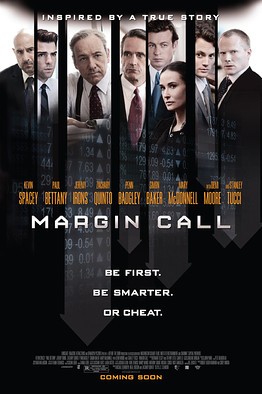
Interview: J.C. Chandor of ‘Margin Call’

Interview: J.C. Chandor of ‘Margin Call’

Posted on October 21, 2011 at 8:00 am

J.C. Chandor wrote and directed “Margin Call,” a sharply-scripted thriller about one night at a never-named Wall Street firm.  The top executives discover that they are at risk of catastrophic failure and have to decide before the markets open in the morning whether they or their clients will take the losses.  The movie stars Jeremy Irons, Keven Spacey, co-producer Zachary Quinto, Stanley Tucci, and Demi Moore.  It is specific enough to make some very pointed commentary on the financial meltdown but universal enough that its themes of betrayal and externalized costs could be set in any industry or indeed in any organization.

How did you come to write about the financial meltdown?

I had written several different things in several different capacities but had never done anything even sort of remotely topical let alone completely topical.  This was being written for myself to direct so it was from a very personal place, not a Hollywood script to go out and sell.  A lot of what has become the strength of the project and drew people to it came from an odd place, from production restraints I placed on myself to keep the budget realistic.

I’m a total real estate junkie and took time off to set up a partnership to renovate an old building and it happened to be on the other side of the real estate bubble.  The godfather of one of my  partners was a very prominent investment banker, a ground-breaker, an intellectual, invented the concept of a real estate hedge fund, a whole new model.  He intervened in his godson’s life and about halfway through our project came to him and said, “Those offers you’ve been getting to buy the project half-completed — take them.  I’ve been leaving millions of dollars in deposits on the table because it is time to get out.”  We took his advice, mostly because we were having trouble with one of the other partners but also because we had the feeling things were not going well in the markets.  We just broke even and felt like a defeat at the time but a year and a half later I felt I had a new lease on life.

As things really started bubbling to the surface I thought back to that man and what it was like to be walking around — you never know for sure, but he felt pretty strongly things were bad enough that he had to take a financial hit to avoid a worse one and warn us.  I thought it was an interesting issue to look at it from the inside, and do a small character-driven story about investment bankers as they see what they thought their lives were about changing in a deep way and what their responsibility was, all those things that were a little bit unsaid in the film but that the actors and I knew were all there.  I have only so much time, so much energy, this skill set, and this is what I’ve used it for.

It has the setting of a drama but it feels like a thriller.

To be there on that day was an interesting limited view into a wide problem.  It’s a ticking time bomb structure, which is a thriller by its very nature.  The one total deviation is that 45 minutes into the movie you know the bomb can’t be defused.  The drama is who will they hand the bomb to?

Do you see them as villains?

What most people would choose to do in this scenario is what these characters do — to look out for themselves.  To look at it in the macro viewpoint, they made the decision when they walked into the door coming out of Harvard or wherever they were to use their time and skills and very intense intelligence and education and have the big majority of those people get siphoned off into this world.   People who have already made that choice when they walk in the door it is unrealistic to expect them five, ten, fifteen years later to make a different choice about who to take care of.

Your father worked on Wall Street, at Merrill Lynch.  Did he guide you at all on the script?

For superstitious reasons I didn’t show the script to anyone in my family.  I’ve had a lot of false starts if you know what I mean!  I didn’t really tell my family I was doing this until we were really at the point of no return.  But what I learned from my father and from friends over the years is the toll that it takes on the people who stay behind and keep their jobs when others are let go.  It’s one of the only businesses that even in their best years still culls 5-10 percent of the workforce every year purely for motivation.  The people who last are the ones who play the game correctly.  For certain characters like Spacey’s it’s not about greed; it’s about survival.  For others like Simon Baker’s and Demi Moore’s it is about ego and the way you define yourself.

I originally wrote the scene when it wasn’t the big dramatic day, yet.  It was supposed to be more run of the mill, but as things developed in real life by the time we shot it, it became too subtle.

The way it was revised though, gets Stanley Tucci’s character out of the building, and that is important for the plot.

The fun thing about Stanley’s character, Eric Dale, is that I have a hard time naming characters and I usually use names from people in my life.  Eric Dale just worked and it is amusing for him because every character says the name through the film as he becomes the symbol of the paranoia that the information will get out.

I won’t give it away, but I wanted to tell you how much I liked your ending — you took something of a risk and it paid off.

The ending and the music are the things most people feel comfortable having an opinion about.  For me, the movie started with the ending and then you figure out how you get there.  Kevin Spacey would say something different but for me the most important thing is what’s behind him, the house.  It became very important to understand that in his mind, he did need the money.  No matter what you make, the way people rationalize their connection with money is almost identical.  As Paul Bettany says in the film, “You learn to spend what’s in your pocket.”


Related Tags:


Directors Interview Writers
Interview: Elizabeth Olson of ‘Martha Marcy May Marlene’

Interview: Elizabeth Olson of ‘Martha Marcy May Marlene’

Posted on October 19, 2011 at 3:59 pm

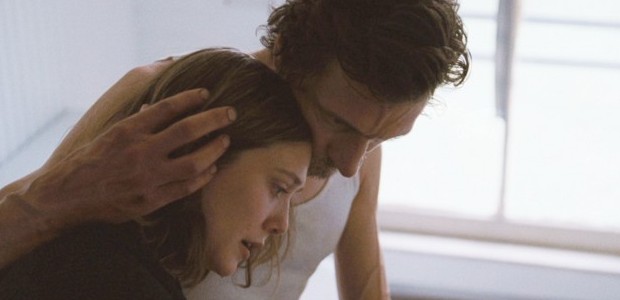
Martha Marcy May Marlene” is the story of a young woman who returns after living off the grid in a remote group home with a predatory, cult-like leader.  She moves in with her newlywed sister (Sarah Paulson) after years of no contact.  We never get the details of the source of their estrangement or why the young woman who at various times goes by all of the names in the title wanted to give herself to an abusive man.  But we do see that the experience has left her almost feral, without the most basic ability to recognize social norms.

Copyright 2012 This is That

The young woman who plays Martha Marcy May Marlene is an extraordinary young actress named Elizabeth Olson, who has two more movies coming out and is still completing her studies at NYU.  She is the younger sister of Mary Kate and Ashley Olson, the actresses/producers/moguls, who named one of their fashion lines after her.  She and I sat down for a quiet chat that covered everything from how she came up with the way her character in the film eats, to why she’s not a method actor, and putting on a family-friendly version of “A Chorus Line” at summer camp.

Tell me about looking at the script for the first time.

You don’t get to read many good scripts and this instantly stood out.  It’s a part that gets to navigate so many different experiences and emotions it seemed like something I would have to wait to do, to do the bad stuff before I would get a chance to get to the good stuff.   But they wanted an unknown actress so it was like being in the right place at the right time.  I read twice, first the diner scene and a lighter scene with the sister.

What was the best part of making the film?

Sean Durkin and I work really well together, really honest and direct but he is very gentle so it isn’t off-putting. I said, “I trust you.  Save time and don’t beat around the bush.  If I am not getting it, just tell me.  Tell me if I’m not giving you what you need or if I’m having an off-time.”  I wish I could say that I trusted everyone that much.

You worked with one of my favorite actresses, Sarah Paulson, who plays your sister.  The movie does not tell us very much about their family history.  Did the two of you work something out to fill in those blanks?

We worked six to eight weeks and filmed all the farmhouse stuff first.  She came in and she and Hugh Dancy (who plays her husband) went over things together about their relationship and then she and I sat down and tried to make a timeline that was as specific as possible and understand when was the time that she left and at what point was my character fully abandoned.  In order to figure out all the tensions in the script we had to be so clear with what happened in the past.   Families sometimes do not talk about the things in the past that affect them today.  My family is very good at communicating.  But some never learn how to do that.  This is one of those examples.  We do mention in the film the mother passing away and living with the aunt, so there are those hints.

This character is a challenge because she is so internal.  How do you convey all of her fragility and fear without being able to talk about it?

I kept thinking of the risks that she was willing to take and showing too much fear or vulnerability was a risk for her.  So in every scene, even if she was by herself there had to be something she was reacting against or towards.  There was always something she was in relation to, a sound on the roof, a car outside.  How much she was willing to give that away was the meter I was playing with.  And she has so much energy.  There is an absurd humor in a way at times and projecting anger onto people.  What are the instigators for when that happens?  I am really an analytical person so to try to figure out at what point she was comfortable and when was the peak of her fear was really fun to navigate.  You have do do work.  We all gotta do work on things.

You have classical training as an actress.  How did that affect the way you approached this role?

I studied at the Atlantic Theater Conservatory, founded by William H. Macy and David Mamet.  It’s based off a writer’s view of approaching the script.  Everything the actor does is to serve the script and the story.  Every action you have is to tell the story.  It has nothing to do with your own experience.  It has to do with the function of what you are trying to accomplish.  Another thing that is fundamental is that you are not your character.  They don’t believe in method or emoting.  For something like this, that couldn’t be more helpful!  I had to have an outside perspective and make concrete things happen that I had control over and trust that the story-telling of the script and editing is going to tell the other part.  I don’t have to do the whole thing.

One very telling detail in the movie is your character’s style of eating.  Was that in the script or was it something you developed?

Those things are really fun to play.  She has not eaten in the presence of a man for all the time she has been away.  So at the lake house , for the first time she is eating with a man at the table.  So I played with the fact that I am watching him eat and trying to figure out what our relationship is. And she is used to not being allowed to eat until late in the afternoon, so that seemed odd to her.  Those things that are out of the norm added to what seemed slightly off.  Because she had something happen to her that the audience is trying to figure out as the story goes on, it was fun to try to figure out how much of the backstory I understood, to unravel it myself.

What draws someone to a cult?

For this character I think it was a feeling of purpose and being part of something larger than yourself, that you actually have a home somewhere.  And she felt she had unconditional love.

What movies made you want to act?

When I was young, “Singin’ in the Rain,” “Guys and Dolls,” “Gypsy,” “Pal Joey.” That is what spurred my interest and I went to musical theater camp.  They wouldn’t pay for the rights so we did our own versions.  We did “A Kid’s Chorus Line,” so with different lyrics, and “A Comedy Tonight,” which was our version of “A Funny Thing Happened on the Way to the Forum.”  My favorite was playing Ado Annie in “Oklahoma.”  I was in 5th grade and my sisters were in 8th grade and brought their guy friends and I was so embarrassed that they were there.  My dream role was Adelaide in “Guys and Dolls.”  My brother influenced me and he has darker taste, like “Return to Oz” and then I started to love Woody Allen and Wes Anderson and as I got older P.T. Anderson and of course “Star Wars” and “Lord of the Rings” and “Gone with the Wind.”  I don’t just want to do indie films; I’d like to try it all!

Related Tags:


Actors Breakthrough Perfomers Interview
Interview: Mark Henn of ‘The Lion King’

Interview: Mark Henn of ‘The Lion King’

Posted on October 17, 2011 at 3:59 pm

I had a lot of fun talking to animator Mark Henn about “Winnie the Pooh” last summer so it was a pleasure to get to talk to him again, this time about The Lion King, which has had surprise box office success as a 3D theatrical re-release and in its first Blu-Ray edition.

Were you surprised by the support for the theatrical re-release of a 1994 movie?

Yes — seventeen years gone by and this little film that we had no idea how well it would do back then is surprising us again even today.  Still the king of the beasts, I guess, and a nice shot in the arm for hand-drawn animation, which is still viable.

I think it is less due to the 3D than because people want to go to the theater to see a movie the whole family can enjoy.

I don’t disagree.  The 3D is a hook but it is still a great movie.  I haven’t seen it in a long time and even I went, “Wow, this is a really good movie!”  And the 3D on top of it gave it a fresh twist but it’s really a great movie and there’s a whole new generation to see it, too.

You start by going there.  I was not a part of the original research trip but the directors, head of story, head of layout and head of background go on these trips.  I did one for “Mulan.”  They went to Africa and I had the opportunity several years after the film came out to go to Africa to do a promotional trip and when I showed up there, I said, “Oh, my gosh, there’s Pride Rock!  There’s where the wildebeests were!”

It all goes back to Walt Disney.  He believed everything had to be based in reality and fact and then you go from there.  We went to zoos and studied real lions.  Even though there are some liberties with color and things like that, that’s what you can do with this medium, adjust the colors and moods but it is all based in fact and reality.

What was your role on the movie? 

We’re the actors.  In a live action movie we can offer it to Tom Hanks or Brad Pitt but for animation we are usually cast on a specific character.  I was responsible for young Simba, the beginning of the movie through “Hakuna Matata,” those scenes of him growing up.  Animators, like actors, have a variety of strengths, some are better with villains or comedy but I’ve tended to do more lead characters, especially the girls.  The directors, when the sequence is ready to go into production they can sit down with us and communicate what Simba is doing and part of my job is not just the design of the character, what he looks like, but how he acts and moves.  So I act like quality control between the director and the other animators working on Simba, and make sure that what they do is what the directors want and consistent in the way he looks and acts throughout the the film.

One of the highlights of the film for me is when young Simba sings “I Just Can’t Wait to be King.”  How do you make a lion dance?

You have to know how a lion walks and moves first, and how they’re put together.  And then you can break the rules and have some fun with it.   You push it until it looks broken and then you back it up.  It wouldn’t be appropriate for him to get up on two legs — you had the rhythm and choreography but it had to be on all fours.

We have the voice and the music, particularly with songs, but the rest of the score comes in later.  We get the very specific musical beats and highlights and accents they need to hit and the lyrics — you have that to move the character to.

What does the 3D add to it?

It completes it, in a way.  The film was already very vast and epic in the way it was laid out.  We did what we could with the tools that were available in 1994 to make it that way.  If we had this technology then we would have used it.  So the technology has caught up with us to provide the final piece of the puzzle.  It is really something to see Zazu walking the lion cubs out into the middle of the Savannah.  You can feel him floating in the air with the cubs below him and it is really neat, an extra little tool that enhances the movie-going experience.


Related Tags:


Animation Behind the Scenes Interview
THE MOVIE MOM® is a registered trademark of Nell Minow. Use of the mark without express consent from Nell Minow constitutes trademark infringement and unfair competition in violation of federal and state laws. All material © Nell Minow 1995-2026, all rights reserved, and no use or republication is permitted without explicit permission. This site hosts Nell Minow’s Movie Mom® archive, with material that originally appeared on Yahoo! Movies, Beliefnet, and other sources. Much of her new material can be found at Rogerebert.com, Huffington Post, and WheretoWatch. Her books include The Movie Mom’s Guide to Family Movies and 101 Must-See Movie Moments, and she can be heard each week on radio stations across the country.

Website Designed by Max LaZebnik