
Beliefnet Spiritual Film Awards: We Want Your Vote
Posted on February 8, 2009 at 8:00 pm
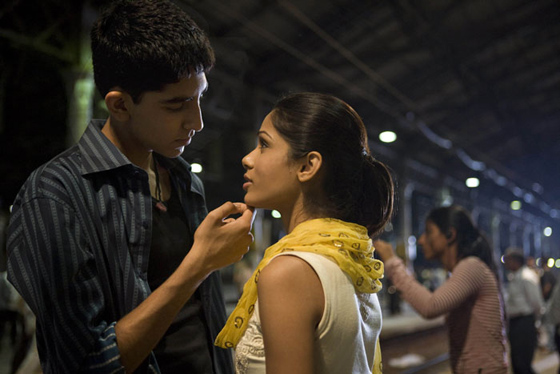
Be sure to check out the nominees for Beliefnet’s Spiritual Film Awards and vote for your favorites.
Posted on February 8, 2009 at 8:00 pm
Be sure to check out the nominees for Beliefnet’s Spiritual Film Awards and vote for your favorites.
Posted on February 8, 2009 at 10:00 am
On Idol Chatter, Kris Rasmussen has come up with a two-part list of haunting moments in movies that is well worth exploring and every one of the films and those added by the commenters is a worthy addition to your Netflix queue.
I like her definition of “haunting” — “cinematic points in time that bring revelation to our souls in some big or small way.”
The moments that haunt me tend to involve extraordinary kindness or devotion. Some that I would add:
1. The last moment in Charlie Chaplin’s City Lights
2. “Miss Jean Louise, stand up. Your father’s passin.'” In To Kill a Mockingbird
3. Helen Keller learns about language in The Miracle Worker
4. A family farewell in A Man for All Seasons
5. Erin Brockovich
Posted on February 7, 2009 at 4:16 pm
It is always a challenge to guide parents about how scary a movie is, but it is especially difficult with this week’s release of “Coraline,” the 3D stop-motion animated film based on a popular book for children by Neil Gaiman. By coincidence, Gaiman was just awarded this year’s top prize for children’s literature, the Newberry award, for The Graveyard Book
SPOILER ALERT: There are ghosts in “Coraline,” too, plus a very scary insect-like predator who likes to replace children’s eyes with sewn-on black buttons and many other macabre and grotesque images. But is that scarier than “A Series of Unfortunate Events” or “The Wizard of Oz” or the Narnia movies? Is it scarier than Disney movies like “Bambi” or “The Lion King” (both feature the death of a parent) or fairy tales like “Hansel and Gretel” or “Snow White?”
Some of the commenters on this blog think so, and have noted sharply that they think this movie is too scary for younger children. The Motion Picture Association’s ratings board gave it a PG. I originally recommended it for 4th grade and up but on reflection have changed it to middle school and up, though when I saw the film again last night there were younger children in the audience who seemed to be doing fine with it.
There are many kinds of scary material and every kid reacts differently to every one of them. Some are disturbed by tension and peril but don’t mind battle scenes. Some get very upset when an animal is injured but don’t blink an eye when a human character is killed. Some kids react because they are sensitive about events going on in their own lives, loss of a grandparent or a pet, a move, or divorce.
In “Coraline,” some kids may be rattled by the images in this film like the skeletal designs of one (good) character’s helmet and gloves or the increasingly spidery appearance of the villain. Some may be upset by the themes of the film that includes the ghosts of three eyeless and devoured children. Some will be very reassured by the brave and resilient heroine, finding it exciting but not disturbing.
The New York Times’ A. O. Scott led off his review of “Coraline” with some thoughts on its capacity to scare its young audience:
There are many scenes and images in “Coraline” that are likely to scare children. This is not a warning but rather a recommendation, since the cultivation of fright can be one of the great pleasures of youthful moviegoing. As long as it doesn’t go too far toward violence or mortal dread, a film that elicits a tingle of unease or a tremor of spookiness can be a tonic to sensibilities dulled by wholesome, anodyne, school-approved entertainments.
This brings us back to the enduring appeal of scary stories. Children have read millions of scary books from R.L. Stine and Lemony Snicket and teenagers have bought millions of tickets to the “Halloween,” “Friday the 13th,” “Nightmare on Elm Street,” and “Saw” series. The top box office films of all time include scary stories like “Jaws,” “Pirates of the Caribbean,” and “Silence of the Lambs.” Even family-friendly G-rated films like “Finding Nemo,” “Babe,” and “The Sound of Music” have scary parts. That is because one of the reasons we tell and read and watch stories is because they give us a way to understand and conquer our fears. It will always be difficult for parents to determine what will be too scary for their children. I will do my best to describe what I see and provide some guidance but ultimately the decision can only be made by the ones who know the child best. And ultimately, parents must realize that sometimes a part of seeing a movie is being unsettled and learning to resolve those feelings.
P.S. “Coraline” also has a burlesque performance with two fat, elderly ladies in tiny little costumes that turn out to zip off, revealing younger, lither performers inside. How should a parent evaluate that on a scale of nudity or sexual material? Because it was comic and because it turned out not to be “real,” but a humorous fat suit, I described it as “brief comic nudity (skimpy costume).” I welcome other suggestions and reactions.
Posted on February 7, 2009 at 4:00 pm
 I love Beliefnet’s gallery of Memorable Movie Nuns from Paul Asay. He includes some of my favorites like Lilies of the Field


 I would add to his list Come to the Stable


Posted on February 6, 2009 at 8:00 am
I love Walden Media‘s commitment to quality entertainment for families. Their films include Bridge to Terabithia

And I am also a very big fan of libraries. I am always inspired by the dedication and generosity of the people who work there. My sister is a librarian and she once took me to the annual American Library Association. I was dazzled by the programs and displays.
So I was thrilled to hear that Walden Media is sponsoring a sweepstakes through March 31 to attend this year’s ALA conference in Chicago this July. And it was a very great pleasure to speak to two of the people involved, Chip Flaherty from Walden Media and Sarah Debrasky, the president of the ALA’s Young Adult Library Services Association.
Chip Flaherty spoke to me about Walden’s interest in the books that inspire their films.
This is yet another initiative that goes back to how Walden came about. We looked at the state of media years ago and really thought that educators – moms and dads or teachers and librarians, were an under-served audience. We thought it would be great to give them a tool to help get kids excited about reading.
The name Walden was inspired by Thoreau, who learned about the world around him in an unconventional way. We make faithful adaptations of quality books and put them on the screen. We hear a lot of great ideas from teachers and librarians. And we began to understand the challenges they face. Working with them is a natural progression of what we tried to do on the film side, to serve that under-served audience. They have the most important job in American, shaping the trajectory of children’s lives.
We thought by offering this sweepstakes it would give a librarian something they would not otherwise get to do, a chance to talk to colleagues to exchange ideas and make new contacts. And it frees up those budget resources to buy books and do other things.
It is so important. Teachers and librarians are always performing in front of 30 kids, trying to connect, always needing to engage. But it can be a lonely profession in terms of collegiality. It is important to attend the ALA meeting for collegial reflection, a chance to sit down and share experiences and get support.
We are very diligent about reminding kids that our films are based on great books. If kids connect to the story, it’s not a zero sum game. I would argue that it’s more immersive to have all of these formats. Any publishing house will tell you the best promotion for a book is a movie. We do what we can to support teachers and librarians on our website with lesson plans for our films. It’s almost a cyber-faculty lounge. If kids are engaged in the story they want to consume it in all formats.
Sarah Debrasky also emphasized the importance of the ALA conference.
The conference is a huge event; it really is the place to go if you’re a librarian. The best thing about it is you will come away excited about your profession, full of new ideas. Not everything gets put into a big program, some idea shares are less formal. There is something for everyone, programs, events, all very exciting. They get around 20,000 people.
As the incoming President, I am very excited about engaging the Young Adult Library Services Association community with more give and take back and forth, getting more members involved who can’t come to the conferences. We’ll also continue with our awards and booklists to help every young adult find just the right book.
In times of tight budgets one of the first things that gets cut is travel. It is wonderful that Walden is making it possible for a librarian to be there who might not otherwise get to come.