Javier Bardem: Another Worst Movie of All Time Review

Posted on September 17, 2017 at 9:57 pm

I did not like Darren Aronofsky’s “mother!” one bit and called it pretentious and self-indulgent. I’m in the minority among critics, most of whom admired it, though many said they found it confusing. Rex Reed, however, hated it even more than I did, calling it possibly the worst movie of the century.

An exercise in torture and hysteria so over the top that I didn’t know whether to scream or laugh out loud…with the subtlety of a chainsaw…two hours of pretentious twaddle that tackles religion, paranoia, lust, rebellion, and a thirst for blood in a circus of grotesque debauchery.

That reminded me of another review of a film also starring Javier Bardem, “The Counselor,” dubbed by Salon’s Andrew O’Hehir not just “the worst movie ever made” but “a self-referential commentary on its own terribleness.”

Mr. Bardem, yes, you got an Oscar for the ultra-violent “No Country for Old Men,” but perhaps it’s time to try something different.

Related Tags:


Critics

Center for the Study of Women in Television and Film Report 2017

Posted on September 12, 2017 at 9:34 pm

This year’s Center for the Study of Women and Television in Film Report has a pointed title: Boxed In 2016-17: Women On Screen and Behind the Scenes in Television. Top findings:

•Overall, 68% of the programs considered featured casts with more male than female characters. 11% had ensembles with equal numbers of female and male characters. 21% of the programs featured casts with more female than male characters.

•Across platforms, females comprised 42% of all speaking characters. This
represents an increase of 3 percentage points from 2015-16 when females accounted for 39% of all speaking characters, and an increase of 2 percentage points from 40% in 2014-15.

•Females accounted for 42% of major characters on broadcast network, cable
and streaming programs. This represents an increase of 4 percentage points from 38% in 2015-16, and an increase of 2 percentage points from 40% in 2014-15.

•The percentage of female characters featured on broadcast network programs was the same in 2016-17 as it was nearly a decade earlier in 2007-08. Last year, women comprised 43% of all speaking characters on broadcast network programs. While this figure represents an increase of 2 percentage points from 41% in 2015-16, it is the same percentage achieved in 2007-08.

•Across platforms, programs are becoming more racially and ethnically
diverse. Black characters in speaking roles comprised 19% of all females in 2016-17, up from 16% in 2015-16. Asian characters accounted for 6% of all
females in 2016-17, up from 4% in 2015-16. The percentage of Latinas increased from 4% in 2015-16 to 5% in 2016-17.

•Broadcast network programs became more racially and ethnically diverse in 2016-17, with Black and Asian female characters achieving recent historical highs. The percentage of Black females increased from 17% in 2015-16 to 21% in 2016-17. The percentage of Asian females increased from 5% in 2015-16 to 7% in 2016-17.

•Latinas continue to be dramatically underrepresented on broadcast network programs. Latinas accounted for only 5% of all female characters with speaking roles in 2016-17. This figure is even with the number achieved in 2015-16 and 2010-11.

•Regardless of platform, gender stereotypes on television programs abound. Female characters were younger than their male counterparts, more likely than men to be identified by their marital status, and less likely than men to be seen at work and actually working.

•Across platforms, female characters were more likely than males to play personal life-oriented roles, such as wife and mother. In contrast, male characters were more likely than females to play work-oriented roles, such as business executive.

•In 2016-17, women comprised 28% of all creators, directors, writers, producers, executive producers, editors, and directors of photography working on broadcast network, cable, and streaming programs. This represents an increase of 2 percentage points from 26% in 2015-16.

•The employment of women working in key behind-the-scenes positions on
broadcast network programs has stalled, with no meaningful progress over the last decade. Women comprised 27% of all creators, directors, writers, producers, executive producers, editors, and directors of photography working on broadcast network programs. This represents no change from 2015-16, and an increase of only 1 percentage point since 2006-07.

•Overall, programs employed behind-the-scenes women in relatively small numbers. 50% of programs employed 4 or fewer women in the behind-the-scenes roles considered. In contrast, only 6% of programs employed 4 or fewer men. 3% of programs employed 14 or more women in the behind-the-scenes roles considered. In contrast, 47% of programs employed 14 or more
men.

•Across platforms, women fared best as producers (39%), followed by writers (33%), executive producers (28%), creators (23%), editors (22%), directors (17%), and directors of photography (3%).

•Across platforms, startlingly high percentages of programs employed no women in the behind-the-scenes roles considered. 97% of the programs
considered had no women directors of photography, 85% had no women directors, 75% had no women editors, 74% had no women creators, 67% had no women writers, 23% had no women producers, and 20% had no women
executive producers.

•On programs with at least 1 woman creator, females accounted for 51% of major characters, achieving parity with the percentage of girls and women in the U.S. population. On programs with exclusively male creators, females accounted for 38% of major characters.

•Regardless of platform, programs with at least 1 woman creator featured
substantially higher percentages women in other key behind-the-scenes roles. For example, on programs with at least 1 woman creator, women comprised 57% of writers. On programs with exclusively male creators, women accounted for 21% of writers.

•Across platforms, programs with at least 1 woman executive producer featured more female characters and had higher percentages of women directors and writers than programs with exclusively male executive producers. For example, on programs with at least 1 woman executive producer, women accounted for 18% of directors. On programs with exclusively male executive producers, women comprised 8% of directors.

Related Tags:


Gender and Diversity
Dolores Huerta and Peter Bratt on the New Documentary “Dolores”

Dolores Huerta and Peter Bratt on the New Documentary “Dolores”

Posted on September 12, 2017 at 8:00 am

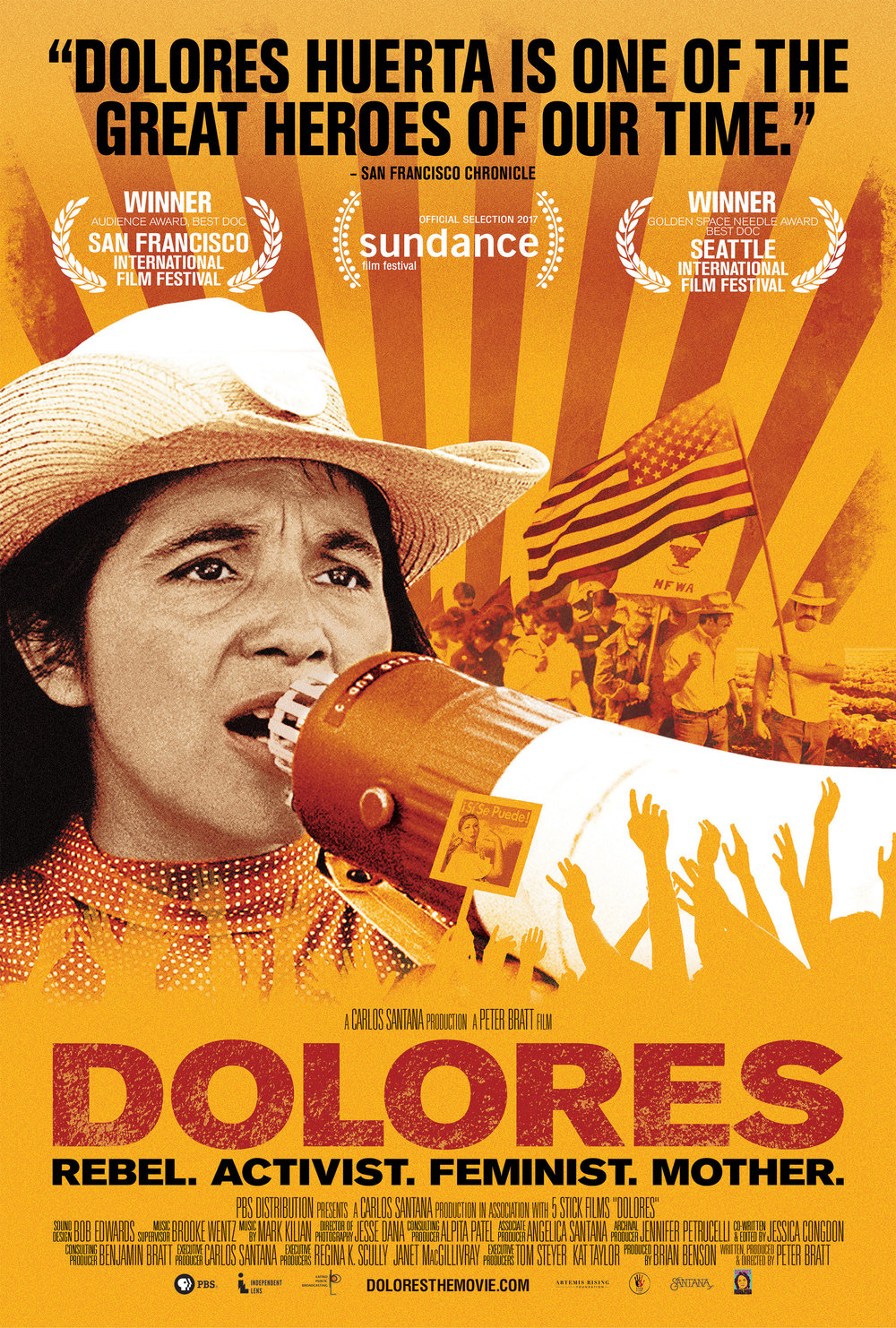
Dolores” is a new documentary that tells the story of activist icon Dolores C. Huerta, president and founder of the Dolores Huerta Foundation, co-founder of the United Farm Workers of America. If Ginger Rogers is known for matching Fred Astaire’s steps backwards and in high heels, Huerta was as responsible as the better-recognized Cesar Chavez for bringing the attention of the world to the rights of immigrants, women, and farm workers while raising eleven children as a single mother and constantly being marginalized and underrated because of her race and gender. I spoke to Huerta, who was awarded the nation’s highest civilian honor by President Barack Obama, along with the director of the documentary, Peter Bratt.

In the film, we see you begin by sitting down in living rooms or talking to farm workers in the fields to encourage them to insist on fair treatment. What did you say to them?

Dolores Huerta: When you are organizing a group of people, the first thing that we do is we talk about the history of what other people have been able to accomplish; people that look like them, workers like them, ordinary people, working people, and we give them the list. These are people like yourself, this is what they were able to do in their community. And then we talked about the issues that they’re facing in their own community and then we would say to them, “Well, just like these other people did, they were able to accomplish all these great things. You can do the same thing. But the thing is that you got to do it because if you don’t nobody else is going to do it for you; nobody else is going to come into your community and solve your problems. So you have to take on the issues yourself. You’re the ones who have to volunteer to make the work happen.”

So we do a whole series of these little house meetings and you probably get a hundred and fifty people together and out of that group then you have a cadre of them that will come up and they’ll volunteer to do the work that needs to be done and that’s how the leaders are developed. When you go into a community you’ll never know ahead of time who the leaders are going to be. The leaders come up from the volunteers that do the work and it’s amazing because then they do these incredible things in their community that they never thought they had the power to make that happen. Basically, the message is: you have power, the power is in your person and you can make this happen but you can’t do it alone; you’ve got to work with other people to make it happen, you have to make a plan and you have to volunteer. And it works; it’s like magic.

You go out there and you find those people that have this burning passion that they want to change things and you basically are just giving them the tools. This is the way that you do it: you come together with a group of people, you pass petitions, you go to the city council, you go to the board of supervisors and you can make it happen.

Peter Bratt: She actually was telling me a story that she hopped on a Greyhound to northern central California, throughout the bus ride was expecting sixty to seventy people at a house meeting which had only one person, and she said she gave it her all because one person can be the most incredible leader that can change thousands of lives. That was a great lesson.

Why was it important to you to tell this story?

Peter Bratt: Dolores in my view challenges the three pillars of society. She’s challenging patriarchy and yes, that’s part of gender discrimination but it’s also racial. She’s also a Chicana; she’s a woman of color. The third one is as a labor activist she’s challenging the institution of capitalism, and I think those are the three great threats and that made her dangerous. I think those complexities combined to keep her in the margins.

The people who appear in the film are very candid and sometimes very emotional. How do you as a filmmaker develop a sense of trust so that they will share those memories and feelings?

Peter Bratt: I have some history with Dolores. I’ve known her for a little while and I think there was initially a great amount of trust between her and myself and Carlos Santana whose idea this was, and I also knew a few of her daughters from years back. So I think initially there was trust but you still have to prove yourself and earn even more trust. The most important thing as a director is you have to create a safe environment where you make the person feel safe enough to open their heart and reveal the soul; that’s ultimately where you’re trying to get. We interviewed probably about fifty people and the ones that we selected for the film were the ones who we felt truly opened their hearts and spoke their truth.

What has surprised you in terms of how far we’ve come and what has been the most persistently frustrating?

Dolores Huerta: Women are now 50 percent of the law schools and medical schools, so we can look at all the progress that we’ve made, but we can see all the progress that we still need to make and now with the voter suppression going on and with the racism rearing its ugly head we know that we’ve got to really step up our game on the progressive side and get people to vote because a lot of people aren’t voting. They’ve taken civics out of our high schools. People were asleep but I think they’re waking up now. Trump has given everybody a good kick and people are waking up and realizing they’ve got to get involved. That’s the message that we want to send with the film; for people to get involved at the local level, at the community level, at the state level and international level because we can’t afford to let the right wing take over our country. My son Emilio is running for Congress to continue the fight for social justice.

Peter Bratt: Sometimes I just want to put the covers over my head and stay in bed and I feel like no matter what I do it’s ineffectual and I get depressed. So for me having spent these last few years with Dolores, to see her not just doing the work but impassioned about doing the work and getting out there at the grassroots level and she still goes out into the fields in 100 degrees to organize this farm operation, she’s still doing it in the school boards, on water boards, she’s been getting people involved and to see her so engaged and relentless. The fortitude is awe inspiring and yet there is this joy and this passion while continuing to do the work, It encourages me to like quit feeling sorry for myself and get back out there. To me as a filmmaker that’s the biggest reward, to see people lift themselves up and recommit themselves.

A briefer version of this interview originally appeared on the Huffington Post.

Related Tags:


Biography Directors Directors Documentary Gender and Diversity Race and Diversity
Interview: Ron Hall of “Same Kind of Different As Me”

Interview: Ron Hall of “Same Kind of Different As Me”

Posted on September 12, 2017 at 1:01 am

Copyright 2012 Ron Hall

On the Huffington Post, I interviewed Ron Hall, whose wife inspired him to befriend a homeless man named Denver Moore. Their book, Same Kind of Different as Me: A Modern-Day Slave, an International Art Dealer, and the Unlikely Woman Who Bound Them Together inspired a film starring Greg Kinnear, Djimon Hounsou, and Renee Zellweger. It will be in theaters this fall.

He wasn’t really looking for any friends. He considered himself like the lion in the jungle. He had this very angry persona that was his protection and his self-preservation. I wasn’t looking for any friends like him either, truthfully, I was only doing this to repay Debbie for the forgiveness that she had shown me after my infidelity. At her insistence I pursued him for about five months until I finally got him in my car. I took him to breakfast and he thought I was in the CIA. He said, “Why would some rich white man be trying to follow me around?” We ordered breakfast and I found out a lot more about him. He came from a plantation and he had never been to school in his life. He said “Well, so what is it you all want from me?” I said, “Well, I just want to be your friend. Straight up, that’s all I’m looking for.” That in a way was kind of a lie. I was wanting to be more friendly, I wasn’t really wanting to be his friend in the real sense.

That’s how arrogant I was. I didn’t think he had anything to offer me in a friendship. In my mind if he cleaned himself up a little bit, behaved himself I would let him hang out with me for lunch and things like that, and take him around and show him a few nice things and try to make him feel bad about making all the bad decisions in his life that keep him from being like me. I didn’t have any respect for homeless people at the time because I felt most of them laid their own bed and they will have to lay in it.

Anyway after a couple of weeks I saw him taking trash out of the dumpster so I stopped by and I said, “Hey, you want to go get some coffee?” So we were sitting there at Starbucks and I’m trying to explain to him what an art dealer does and he was totally uninterested in that so after a few minutes of me talking he said, “Are you through talking? Tell you the truth there’s something I heard about white folks that really bothers me and it has to do with fishing.” He said, “I heard when white folks go fishing they do this thing they call catch and release.” I said, “Yeah, Denver, they sure do because it’s a sport, don’t you get it?” He said “No, no man I don’t get that at all. Back on the plantation where I grew up we’d go out in the morning, we’d get the cane poles, dig us a can full of worms, we’d go sit on the riverbank all day long and when we got something on the line we were really proud of what we caught and we’ll share it with our folk. It occurred to me that if you are a white man that’s fishing for a friend to catch and release, I ain’t got no desire to be your friend.” My mind flashed back to Debbie’s dream of a poor man who was wise. If I ever heard from God in my life it was at that moment and I knew that I had to accept that friendship and I had to catch and not release. I said, “Okay Denver, if you will be my friend I will not catch and release,” and he said to me “You have a friend for life;” and I said, “Okay, you do too.” The fear I had of him or becoming his friend evaporated.

Related Tags:


Books Interview Writers

HIstoric Black Films Available on Netflix

Posted on September 3, 2017 at 10:00 am

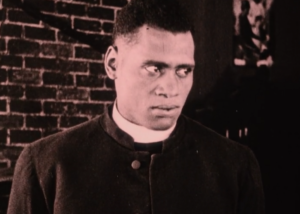
Twenty of the films in the Kino Lorber Pioneers of African-American Cinema collection are now available on Netflix. They include Paul Robeson’s debut in “Body and Soul,” a black and white silent film where he plays the dual roles of a preacher and his evil brother and “The Bronze Buckaroo,” with Herb Jeffries as a singing cowboy, as well as “Hot Biskits” (a man cheats at golf using magnets), “Birthright” (a Harvard-educated man goes home to start a school), and “Verdict not Guilty” (“Truth” serves as judge over a woman’s life).

Related Tags:


Film History Movie History Race and Diversity
THE MOVIE MOM® is a registered trademark of Nell Minow. Use of the mark without express consent from Nell Minow constitutes trademark infringement and unfair competition in violation of federal and state laws. All material © Nell Minow 1995-2026, all rights reserved, and no use or republication is permitted without explicit permission. This site hosts Nell Minow’s Movie Mom® archive, with material that originally appeared on Yahoo! Movies, Beliefnet, and other sources. Much of her new material can be found at Rogerebert.com, Huffington Post, and WheretoWatch. Her books include The Movie Mom’s Guide to Family Movies and 101 Must-See Movie Moments, and she can be heard each week on radio stations across the country.

Website Designed by Max LaZebnik