Interview: Writer/Director James Gray of “The Lost City of Z”

Interview: Writer/Director James Gray of “The Lost City of Z”

Posted on April 12, 2017 at 3:55 pm

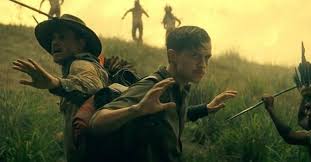
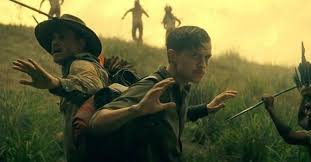
James Gray wrote and directed the adventure movie “The Lost City of Z,” based on Percy Fawcett, the real-life explorer who inspired fictional characters from Indiana Jones to the swashbuckling heroes of books by Arthur Conan Doyle and H. Rider Haggard. The movie stars Charlie Hunnam, Robert Pattinson, and Sienna Miller. Gray and his crew had to re-create the arduous journey through the South American rainforest; while they had better technology than Fawcett’s group, they also had to bring along all of the equipment to make the film.

In an interview, Gray talked about the directors who inspired him — and why he had to make some different choices than the ones in their classic films.

It’s 100 years after the events in the film. Tell me how you approach dealing with issues of gender and race that acknowledges the realities of its era without distracting us unnecessarily?

Wow, that’s a heavy one. How did I deal with it, well, with great difficulty and with kid gloves. It’s one of the advantages we have and it’s not about judging the characters, that’s not really what I’m saying but a more global view, a more…how do I say this? A more progressive view, a more open view hopefully of the ideas of gender, class and ethnicity that has to be part of the film. And I felt that if I could make a movie in the style of let’s say David Lean, who I revere, but bring, dare I say this, a more advanced or different approach to the politics of it — for example,”Lawrence of Arabia he has Alec Guinness playing an Arab which is absurd today.

So, I felt that that was the way that I could do something different from what Mr. Lean did. And in the case of something like an “Apocalypse Now,” as great as I think it is, and I think it is the greatest, there certainly aren’t any women in it of any importance. A Playboy playmate is pretty much the only woman in the whole movie. So, I felt that it was important that I give everybody a sort of fair shake at the narrative and that everybody’s existence would be entirely independent. So, Sienna Miller’s character has her own hopes and dreams and that the film acknowledges those desires. And the indigenous people of South America would be independent and not demand a white male European view of the world to exist. People talk about what they call the Magical Negro in movies where this African-American character has all these magical qualities throughout which is in its own way deeply racist. My ambition was to do something the opposite of that, which was that the indigenous people of Amazonia would function in a way that was entirely free from any need for the white man. lost city of z
And really the approach was to try and bring a certain dignity and humanity to every single person in the movie. And so, I’ve tried to think of it in those terms.

For me one of the most intriguing characters in the film was Murray, the veteran of the Shackleton expedition to the Antarctic but a terrible problem for Fawcett.

In the book he goes on I think it’s eight trips, so I had to condense that to three. When I approached it I thought, “Okay if it’s three trips, each trip has to have a different meaning.” The first trip is about the exposure to his obsession and how the obsession settles in and what it becomes and what it starts to mean for him. The second trip with Mr. Murray would have to be about how he saw the trip in the beginning as cementing his position not only in society but in history and really it was an act of ego to bring Mr. Murray along. He was going for glory and he thought Murray would bring an incredible luster. Murray’s ethical bankruptcy is in a way Fawcett’s fault because he chose Murray to go with him. That was the price he paid for wanting that because Murray is the lie of one class’s superiority over the other. Murray is the person who’s “Oh look how much wealth I have.” He’s a man of means and prestige and yet he’s a fraud.

So, Murray was a lesson for Fawcett really that the measure of a man has nothing to do with class or rank. That was what I thought the whole trip meant. He had to learn that and the third trip was his atonement for his neglect. It became a much more spiritual experience for him because he was able to enjoy it with his son. On the third trip he could achieve a measure of transcendence because he had already been through the second trip with this person who showed him that the search for glory and class validation was a bankrupt position.

Were you able to read some of Percy’s own journals?

I sure did. In addition to the Grann book I read Exploration Fawcett which is a compilation of his journal entries along with some editorializing by his son Brian that was put out many years later. I’m sure there is some embellishment from Brian, who was anxious to validate his father’s journeys but I’m sure it still had a bunch of Percy’s actual words still in them. I tried to adhere to Fawcett’s own words in as many places as possible. That Royal Geographical Society speech that he gives, which is about a seven and a half-minute long scene in the center of the movie is almost entirely his actual words. I read his letters too, back and forth to his wife and Charlie Hunnam and Sienna Miller did too. That was actually the best window into who those people are that we could have found. And I think it was necessary work.

Did you feel in a way as you were filming in South America that you were re-experiencing some of what he experienced? Did you learn what he went through just from being there?

Probably not because I’m nothing like Fawcett. I’m a wimp and I was only there for four months and he was in it for years. He didn’t have GPS and he didn’t have a bed at night to sleep in. I had clothes with special coating so I didn’t get bitten by anything. It must’ve been unbelievably difficult and I can’t understand how he did it. I mean we were there only four months and one crew member got malaria and two people got dengue. Somehow he marched to the jungle multiple times in the eight trips he went on that’s really about 20 years’ worth of living.

What would have happened if he found the City of Z?

Perhaps if he had found it, it would have been kind of anticlimactic for him. We have a real-life example of this in Hiram Bingham, who discovered Machu Picchu but his life had to have another act. He became a Senator. And I feel like if Fawcett had found some city in the jungle he would’ve looked at it for about twenty minutes and thought, “This is totally amazing. What the hell do I do now?” So much of what it was about for him was about the need to escape.

What is it that you think drives people to become explorers, to go past what is on a map?

There are noble qualities to exploration, there really are. There is an unending curiosity, there’s a remarkable drive, there is a stunning courage but there are also darker, less noble, aspects to it. One is the need to escape confronting what it means to be a person living in this world. I think that Fawcett’s whole need for exploration was in part a need to get out, a need to get away from what was very obviously a situation that was punishing to him. The father was a terrible alcoholic and was a gambler. He destroyed not one but two family fortunes. It shamed the family. So Fawcett was trying to escape from Victorian England and the cruelty of that world that seemed so punishing. And I think part the need for exploration is just to get out.


Related Tags:


Based on a true story Directors Interview
Interview: Mckenna Grace of “Gifted”

Interview: Mckenna Grace of “Gifted”

Posted on April 12, 2017 at 10:49 am

Mckenna Grace as “Mary Adler” and Chris Evans as “Frank Adler” in the film GIFTED. Photo by Wilson Webb. © 2016 Twentieth Century Fox Film Corporation All Rights Reserved.

Mckenna Grace is the star of “Gifted,” playing Mary, a first grader with extraordinary mathematics ability, living with her Uncle Frank, played by Chris Evans. In an interview, she talked about what she and Evans did off camera, crying on cue, and what might be difficult for someone who is gifted.

What did you and Chris Evans do to get to be comfortable with each other?

We had an immediate connection. It was very special when I first met him. We were there ahead of time for two weeks to kind of get to know each other better and then we were there for two months so some of the scenes were really just better with our connection because we had been knowing each other for longer.

What kinds of things did you do when you were not filming?

We sang, we sang. “Peaches” by Presidents of the United States of America and then we also sang “Old Man on the Back Porch” by Presidents of the United States of America.

Would you like to be as smart as Mary?

I think it would be cool but from watching “Gifted” I learned that some people don’t always feel accepted or they feel different or alone when they are gifted or they just feel they have an irregular life. So, I think that being gifted would be cool but sometimes people can make fun of you and I think that that’s wrong.

Are you good at math?

I do six grade math even though I’m in fifth grade so I think I’m okay.

Did you have fun with Octavia Spencer, the way your character does with her character?

Yes, we still talk a lot. And she would always invite me to her hotel, we have parties and we talk and sing and eat. We hung out a lot and we still talk a lot.

What was your audition like for this role?

I was auditioning and connected to this for over 8 months. I did the Blacklist live reading so if they made a movie I thought I would get to play Mary but nope, I had to do a whole auditioning process to get it right.

What are some of the tricks that you use to be able to cry and to be angry in a scene?

I just think about sad things and I really put myself in Mary’s shoes, Mary’s position.

So, what was she feeling when it seemed like she was going to be living with Frank anymore?

She was feeling very upset and she felt very worked up and sad and she felt very abandoned. We did tons of takes, tons.

Do you like to read? Are there any books that you especially like?

Yes, I love reading. I’m on my tenth novel this month. I love the Miss Peregrine’s Home for Peculiar Children series. I also really love Stephen King’s, The Girl Who Loved Tom Gordon, that one was amazing!

Was there a movie or television show that you saw where you said, “That’s what I really want to do. I really want to act?”

Yes, The Pee-wee Herman Show and Shirley Temple movies. I really love “Little Miss Broadway.”

And what is the best advice that you ever got about acting?

That you can do anything you put your mind to and do your best and if you do your best then you know you have done all that you could do.

What makes you laugh?

Oh goodness, lots of things made me laugh. My papa because sometimes he is very overdramatic on purpose to get laughs out of me. He makes me giggle a lot.

Related Tags:


Actors Interview

The Writer of “Groundhog Day” is Living It Over Again — As a Musical

Posted on April 11, 2017 at 3:16 pm

New York Magazine has a fascinating article about Danny Rubin, screenwriter of comedy classic “Groundhog Day,” who is now adapting the story into a Broadway musical.

This is the story of how Danny Rubin wrote Groundhog Day not once but twice — maybe more times than that, but who’s counting. It’s unusual for any artist to live so long under the shadow of a single work, let alone a story that is itself intimately concerned with limits and repetition. It’s more unusual still for an artist to return to that story in another medium for an encore nearly three decades later. Yet here Rubin is, in a Broadway theater, listening to his words echo, again and again and again, into the dark.

Related Tags:


Writers
White Actors in Asian Roles — Not Just Ghost in the Shell

White Actors in Asian Roles — Not Just Ghost in the Shell

Posted on April 9, 2017 at 12:39 pm

Copyright DreamWorks 2017

The casting of Scarlett Johansson in “Ghost in the Shell” is just the most recent “whitewashing” that has created controversy and played at least a contributing factor to the poor results at the box office. Audiences have understandably objected to having white actors play Asian characters. It might be different if it ever worked the other way, if actors of color were cast in roles written for white actors. But with so few explicitly Asian characters in movies and so few Asian actors being cast in lead roles, it is especially troubling. To make matters much worse (SPOILER ALERT) the cybernetic characters played by Johansson and white actor Michael Carmen Pitt are both supposed to be Japanese humans who now have white-featured robot “shells” or bodies.

This is just one of many examples in current and past productions. Asian characters have been played by white actors for decades, including Katharine Hepburn, John Wayne, Marlon Brando, Alec Guinness, Peter Sellers, Warner Oland, Peter Lorre, and Mickey Rooney. More recently, Cameron Crowe was sharply criticized for casting Emma Stone in “Aloha” as a woman with some native Hawaiian heritage.

In the LA Times, Jen Yamato and Justin Chang wrote about this issue:

Chang: We seem to have fallen into a dispiritingly familiar pattern where Hollywood-goes-East blockbusters are concerned, and it usually starts with the announcement of some fresh casting outrage: Tilda Swinton enlisting as a Celtic version of a Tibetan mystic in Marvel’s “Doctor Strange,” or Matt Damon being called in for white-hero duty on “The Great Wall” (a China-U.S. co-production, incidentally).

From there, the woker-than-thou factions of the press and public react with unsurprising anger. The marketing campaign becomes a passive-aggressive exercise in damage control. The movie is released, and the casting is duly dubbed either the worst thing ever or a complete non-issue. And neither reaction, I think, really gets at the more complicated truth of the matter….I liked Johansson in “Ghost in the Shell,” just as I liked Swinton in “Doctor Strange.” And I was perfectly fine with Damon in “The Great Wall,” in which he’s not really a white savior at all, and is in fact amusingly upstaged by director Zhang Yimou’s make-China-great-again production design.

As she demonstrated in “Lucy” and the masterful “Under the Skin,” Johansson can be a mesmerizing screen presence, with the kind of otherworldly aura that naturally lends itself to science fiction. All of which is to say: It’s possible to admire a performance while still acknowledging the ways in which it’s — to use a word I loathe, but sometimes there’s no alternative — problematic.

Yamato: It’s one thing for a film or television show (see Marvel’s “Iron Fist” and Netflix’s upcoming Americanized “Death Note”) to be problematic. It’s more insulting for filmmakers — and the stars whose white faces are plastered on posters and billboards in front of exotic Asian scenery — to ignore the damage their failures have wrought. That is both irresponsible and cowardly….But whether you call it yellowface, white saviorhood, race-bending, erasure — it’s all whitewashing if a story rooted in Asian origins or an Asian setting defaults to a white normative reality. The filmmakers behind these properties, nearly all white men, are forcing white preference and white privilege into the spotlight and blaming it on a system that necessitates bankable white stars. The more these movies bomb while others like “Get Out” flourish, the more these excuses get exponentially more tedious.

And in the Hollywood Reporter, four Japanese actresses gave their thoughts. They spoke about some cultural dissonance or outright mistakes they think would have been handled correctly if the filmmakers were Japanese. Some of their comments:

Keiko Agena: It was harder to watch than I thought it was gonna be. To get emotionally invested, you have to really care that she needs to find out who she is. But when she finally meets her mom, my gut felt so weird in that moment.

Atsuko Okatsuka: ScarJo was probably lost. “OK, hold on. So I’m a Japanese woman. I used to be? Wait, I am. I talk to my boss in English even though he speaks to me in Japanese?”…It’s not even about seeing me on the screen as a performer. It’s a bigger concern. It’s 2017 and I don’t know why these representation issues are still happening. It’s overwhelming. This means so much to our community but is so on the side, still, for a lot of people.

Even if Hollywood does better on this (and on casting trans and disabled actors in roles reflecting their experience and understanding), we still have the problem of the past. An Asian friend recently wrote to a movie theater about their showing of the beloved Audrey Hepburn classic, “Breakfast at Tiffany’s.” Hepburn’s impeccable elegance cannot make up for the outrageously offensive portrayal of her Japanese neighbor, played by Mickey Rooney.

The theater manager’s thoughtful response:

I can say that this is a constant issue of programming a repertory theater. Showing anything from classic Hollywood is generally at the very least problematic, and in many cases, such as “Breakfast at Tiffany’s,” an example of a horrible history of filmmaking. While this is not a plea to justify our decision to book this film, I hope you can understand that we do not condone every element of all of the films that we show and when booking classic film this issue is unavoidable. This film is playing as a part of a ‘music in film’ series; they will be performing a song from this film later in the month. I do hope the rest of our programming, specifically the new indie and modern repertory titles, reflect our commitment to diversity, progressivism, and positive depictions.

After a further exchange, the manager said they would provide some context.

On the evening of the screening, I will be present to introduce the film and to discuss Rooney’s performance in “Breakfast at Tiffany’s” in order to shed light on these issues in classic Hollywood cinema and to let the audience know that both institutions are opposed to such portrayals. We will also be distributing a handout that discusses Rooney’s character and the history of racial stereotypes in Hollywood films.

That is the best we can do for movies of the past — to raise the issue and insist that it be addressed. We can do a lot better with movies of the future, to make sure that the history of racial stereotypes in Hollywood films is coming to an end.

Related Tags:


Race and Diversity Understanding Media and Pop Culture

Interview: John O’Hurley of “Swing Away”

Posted on April 9, 2017 at 8:00 am

John O’Hurley may be best known for playing a fictionalized version of the founder of the J. Peterman catalogue on “Seinfeld.” In his new film “Swing Away,” he also plays something of a fictionalized version of a real-life character. In an interview, he told me that when they were filming in 2014, he had no idea that the real estate mogul he based his brash, bombastic golf resort developer character on would be elected President before the film was released. We also talked about the fun of filming in Greece and why golf reveals character.

The film is about a Greek-American professional golfer (Shannen Elizabeth) who flees to her grandparents in Rhodes after a televised meltdown in an important golf tournament. It is a sweet, funny, story with a little romance and some spectacular scenery. One of the highlights is a golf match in Rhodes with an obnoxious American developer, played by O’Hurley.

The audience at the screening we attended was almost entirely Greek-American and they were thrilled to see the beautiful location footage.

It does speak to something that I found out about this film. The Greek people are the proudest people I have ever met and they support Greek culture in any way that they possibly can. They are proud to be Greek when they get up at six in the morning and they are proud to be Greek when they go to bed at 4 am.

It is clear you are real-life golfer.

Yes, I am a golfer. I have been a golfer my whole life. It’s always been the game that I played and I played it competitively in high school and then acting was my love so it has always been kind of an avocation for me.

They say that golf is more revealing of a person’s integrity and character than any other game. Do you think that is right?

Absolutely. You spend four hours with somebody on a golf course and you will learn pretty much everything you need to know about them. It’s a game with personal responsibility. The ball isn’t moving when you go to hit it, so therefore everything you do from the first tee shot to the ball is all up to you. It’s all within your wheelhouse; you can’t blame anyone or anything else for it.

Is it true that, at least a year before he declared his candidacy for the Presidency, you based your performance on Donald Trump?

That’s exactly what I was going for. It really had to be that kind of overwhelmly myopic American businessman capitalist coming in to take over what his vision of the development would be, culture be damned. We’ve seen examples of that all over the world and Donald certainly has made several forays overseas in the British Isles and met with quite a bit if resistance over there, so he has been through it, absolutely.

Is it fun to play a guy who is really over-the-top?

Oh, absolutely and I had a chance really to sculpt his character from the ground up. I make no apologies for the jackass that he is. And I think he has to be unredeemable in order to make this film work; I don’t think he can be somebody who is redemptive. The rest of the film is redemptive but he has to be irretrievable.

Very little of my character was scripted. A lot of it was just improvisational because I understand the mentality of this character very well. So in many cases I had the borderlines of what we wanted to say, and they let me flower things up. Most of what you see on screen is just me rambling.

It is so beautiful there. Did you get to enjoy yourself in Greece? Try any special Greek delicacies?

As it turned out I only had about two weeks free from other commitments that I could spend there so they basically had to stack all of my scenes including the big golf match kind of back to back to back. So I didn’t really have a day off, I kind of just continually shot. But in the evenings we went out to eat and I enjoyed them all and I think I had them all. I think I gained 15 pounds and I look at the film and I also thought it was kind of appropriate that the character looked a little self-indulgent. So, I definitely put on pounds while I was there. Because we were shooting so much outdoors we were limited by the last light and from there we would go right to dinner and we would eat and dance every night. They celebrate outdoors and eat outdoors and dance outdoors and it was fabulous every night.

What do you think people should talk about after they see the movie? What is the lesson of the movie?

I think it’s a movie about redemption, that all things are remediable. I like the idea her going back to her homeland to rediscover the whole passion of why she became involved with golf. It was a sense of rebirth for her and seeing through the eyes of this little 10-year-old girl and mentoring her and just gave her that sense of renewal that she needed to go back and take the game at a different level.

And what’s the best advice you ever got about acting?

Acting is reacting. Before I go on stage and before I do a film I always say, a prayer: “God, let me be surprised.” And that’s all it is so that way I’m calm and I’m out there looking for the next moment to happen. I know what I’m going to say but I shouldn’t know how I’m going to say it yet. I’m just waiting and ready for the moment to inspire me.

Related Tags:


Actors Interview
THE MOVIE MOM® is a registered trademark of Nell Minow. Use of the mark without express consent from Nell Minow constitutes trademark infringement and unfair competition in violation of federal and state laws. All material © Nell Minow 1995-2026, all rights reserved, and no use or republication is permitted without explicit permission. This site hosts Nell Minow’s Movie Mom® archive, with material that originally appeared on Yahoo! Movies, Beliefnet, and other sources. Much of her new material can be found at Rogerebert.com, Huffington Post, and WheretoWatch. Her books include The Movie Mom’s Guide to Family Movies and 101 Must-See Movie Moments, and she can be heard each week on radio stations across the country.

Website Designed by Max LaZebnik