Mashable has a great list of recommended vloggers with a wide range of disabilities who are using the democratized world of social media to tell stories we never get to see from mainstream media. It is a privilege to get a chance to share the culture, perspective, and experiences of these remarkably honest and perceptive people.
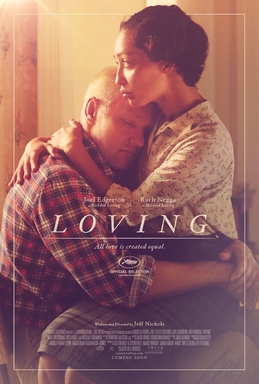
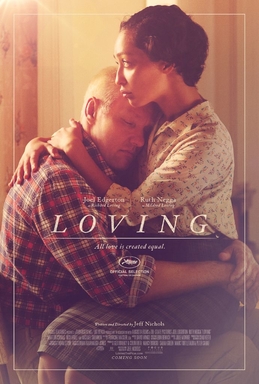
Joel Edgerton stars in “Loving,” the true story of the couple whose 1967 Supreme Court case successfully challenged laws prohibiting marriage between people of different races. In an interview, the Australian actor spoke about playing the quiet man from a small town in Virginia who just wanted the Court to know, “I love my wife.”Copyright 2016 Focus
He said, “I kept seeing the words Loving v. Virginia. I saw those words together and I thought it was a very powerful obviously, the couple felt so fated to be because of their name but it felt like humanity versus the system which is really what the movie is about. I just kept thinking about a human quality, a human desire that we all share versus the system that’s all about everything else.”
The movie’s script, by director Jeff Nichols, includes some of the moments in the powerful documentary, “The Loving Story.” Edgerton said one of his favorite lines was when Ruth Negga as Mildred Loving said, “We might lose the small battles but win the big war.” And a woman who saw an early screening told him that her favorite line was when Richard Loving asked his wife, “What can I do?” “She said every man needs to know that.” Edgerson said, “That says a lot about the relationship, the support, of not presuming to create somebody’s happiness but to see what you can do to contribute to somebody’s happiness by listening to what their needs rather than to presume what their needs are.”
I asked whether it was especially difficult to play a character who does not speak very much. He answered, “I actually thought that it might be the opposite and not because I thought I could be lazy or no homework or anything but I know all too well that film is a visual medium and the camera often gets very close. The camera doesn’t lie and therefore it’s important that we as actors don’t lie and if we are doing it we hide it very well. And so I thought this might be somewhat not easy but a simpler task than I realized it was. And I realized that it taught me a lot. When you have large speeches you kind of choose the surface layer or the subtext and do a dive into that and it kind of gives the audience a guide to what you’re supposed to be thinking as a character. When the audience doesn’t have that guide, that verbal guide then it’s up to you to be very specific about the silence, the reasons for it. That became the real task and I don’t think I’ve ever had to think so specifically about silence. The pause is as much line of dialogue is a line of dialogue is. So Jeff and I would have conversations about the frustrations or the awkwardness or the shyness or looking for an aspect of Richard in those silences and try to be as specific as possible so that they became words we just couldn’t hear or screams that we were unable to express. Just because you’re not speaking doesn’t mean you’re not communicating.”
NR (some sexuality, drug use, brief violence, and language throughout)
Profanity:
Very strong language
Alcohol/ Drugs:
Drugs and drug dealing, alcohol, smoking
Violence/ Scariness:
Bullies, beating, disturbing images, sad offscreen death
Diversity Issues:
A theme of the movie, homophobia
Date Released to Theaters:
October 28, 2016
Date Released to DVD:
February 27, 2017
Amazon.com ASIN:
B01LTHZVM4
Copyright 2016 Plan B Entertainment
In the 2017 Oscar winner for Best Picture, a man tells a young boy a story, and, as with many stories adults tell children, especially in movies, it is a story with a purpose. Juan (Mahershala Ali) tells the boy derisively known as “Little” (Alex Hibbert) that when he was young, a woman saw him at night and told him that the silvery moonlight made his dark skin looked blue. She said he should be called Blue from then on. But, he tells Little, he wasn’t. “At some point you gotta decide for yourself who you gonna be. Can’t let nobody make that decision for you.”
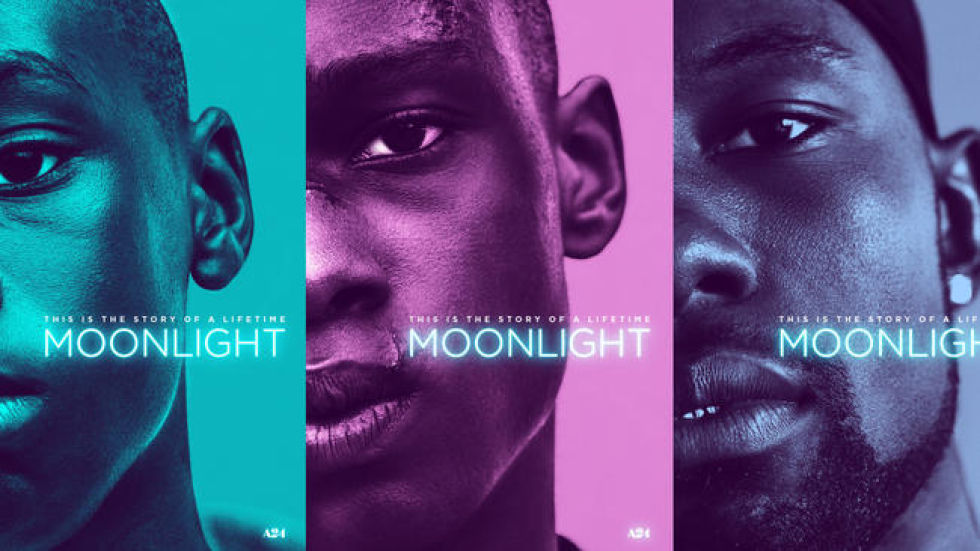
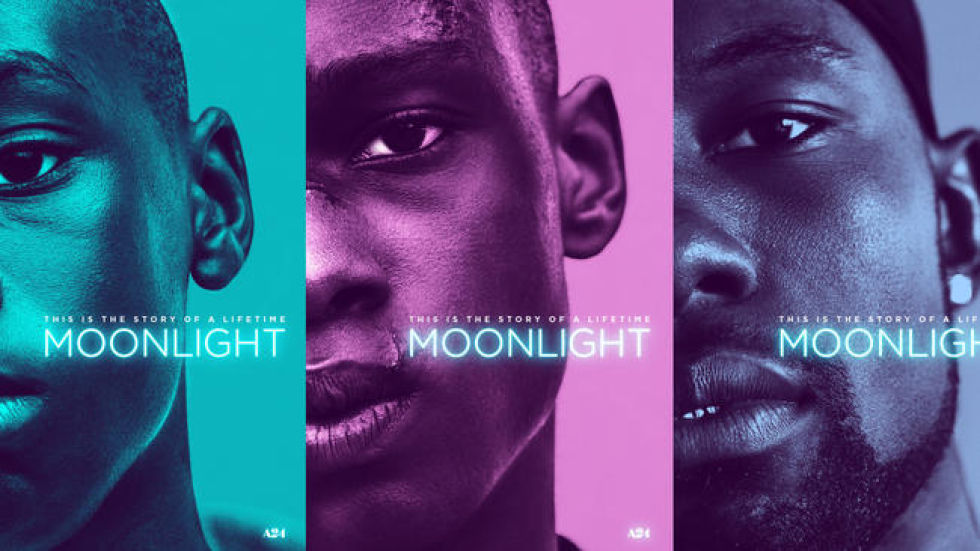
In “Moonlight,” a film of a delicate, shimmering beauty that measures up to the title, the boy will struggle to make that decision for himself. Three chapters, as a child, a teenager and a young man, played by three different actors, are labeled with three different names that he is called: the taunting nickname Little, his birth certificate name Chiron (played by Ashton Sanders), and the nickname given to him by someone who had a profound impact on him, Black (played by Trevante Rhodes). Who will he decide to be?
The story begins in the Liberty City neighborhood of Miami. Little runs from bullies and hides out in a crack house, where he is discovered by Juan, a kind-hearted drug dealer. Little won’t talk, so Juan takes him home, where his warmhearted significant other, Teresa (singer Janelle Monae) gives little some food and lets him stay the night. The next day, Juan brings Little back to his mother, Paula (Naomie Harris), a nurse who loves Little but leaves him alone much of the time. “He can take care of hisself. He good like that.”
In the second section, he is a skinny teenager all but abandoned by his mother, who has become addicted to drugs, and bullied at school. He still does not talk much, but he has one friend, Kevin (Jharrel Jerome), who calls him Black. Chiron cannot even acknowledge to himself that he wants more from Kevin, but one night on the beach, they share a piercingly sweet moment of tenderness that will indirectly lead to an act of violence.
When we see him again, he is a man, with an armor of muscle and gold teeth grillz, still almost silent, still almost isolated. But a call from Kevin inspires a journey.
The film is based on a play called “In Moonlight Black Boys Look Blue” by McArthur awardee Tarell Alvin McCraney, who worked with director Barry Jenkins (the lovely romance “Medicine for Melancholy”) on adapting it for the screen. Both McCraney and Jenkins, like Little, had mothers who struggled with addiction, and Jenkins grew up on the Liberty City setting of the film.
The small miracle of the movie is the way it subverts the expectations the audience has based on news reports and many, many other movies. Every character is authentically complex. The graceful, poetic score by composer Nicholas Britell gives the story epic scope and heartbreaking intimacy.
We see Juan’s kindness and wisdom as he holds Little gently in the ocean, teaching him to swim and, more important, giving him an idea of what a man can be. We hear his thoughtful answer when Little asks him what “faggot” means. And yet, when Paula wants drugs, Juan supplies them, even knowing what it will do to Little. The confident, capable Kevin casually mentions time in prison as though it was an inevitable rite of passage. Little/Chiron/Black is physically transformed from chapter to chapter. We are continually challenged and confounded, yet held close to the heart of the story by its romantic lyricism and, most of all, the spacious humanity of its love for its characters.
Parents should know that this film includes very mature material: bullying, brutality, drug dealing and drug abuse, very strong language including homophobic slurs, sexual references and explicit sexual situations.
Family discussion: Why does the main character have a different name in each chapter? What do you think happened to Juan?