Copyright TriStar 1993Get ready for the Super Bowl with some of my favorite football movies:
Burt Reynolds, who played college football, stars in The Longest Yard as former pro player who puts together a team in prison. (Ignore the Adam Sandler remake, please.)
North Dallas Forty is a darkly comic look at the game with Nick Nolte as an aging player who clashes with the coach.
Remember the Titans is inspired by the true story of the first integrated team at a Virginia high school, with Denzel Washington as Coach Boone. You will cry, I promise.
(Did you catch Ryan Gosling and Hayden Panitierre?). Here Washington and the real Coach Boone talk about the role.
There’s more Ryan Gosling in this little-seen football movie gem, The Slaughter Rule:
Chicago is my home town, so I have a soft spot for Brian’s Song, one of the cryingist movies of all time, the true story of Gale Sayers and Brian Piccolo, with Billy Dee Williams and James Caan.
Or you could try The Game Plan, featuring real-life former college football player Dwayne (The Rock) Johnson in a more family-friendly story about a selfish quarterback who discovers he has a ballet-loving daughter:
I’m a big fan of the silly but fun Keanu Reeves movie, The Replacements, with Gene Hackman as the coach, a kind of Dirty Dozen of football. Catch “Iron Man” director Jon Favreau on the team.
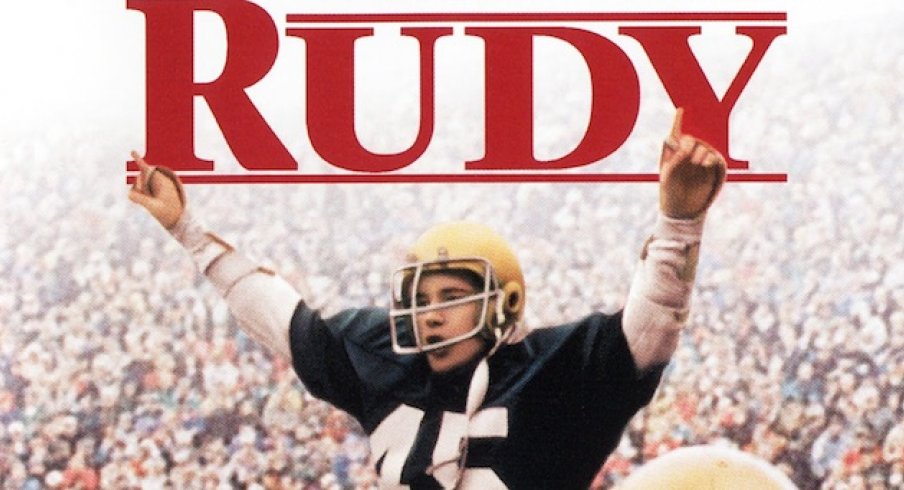
You can see Favreau in another crying football movie based on a true story, Rudy.
The Express is the true story of the first Black winner of the Heisman trophy, Ernie Davis.
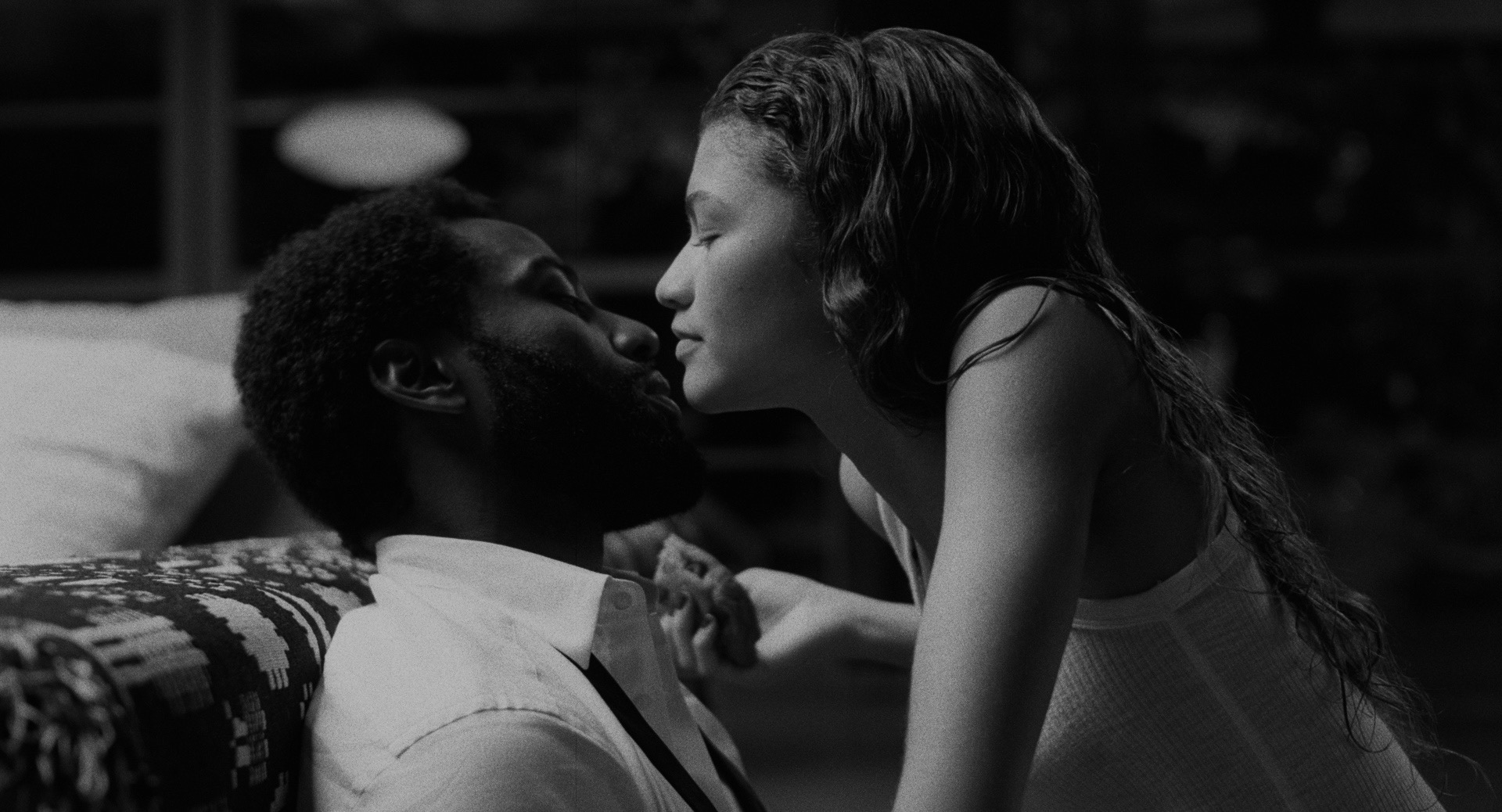
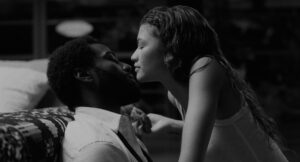
Copyright Netflix 2021When I interviewed John David Washington about “BlackKklansman,” he told me his dream was a film of “The Taming of the Shrew.” His new film, “Malcolm and Marie” could be an audition for that project and based on the results, someone should cast him and his co-star Zendaya right this minute and start filming it tomorrow.
There’s a lot wrong or maybe it is more accurate to say missing in “Malcolm and Marie,” but given the way it was made, it is remarkable how much is right and it is never less than watchable thanks to the palpable magnetism and chemistry of its two stars, who make up the entire cast. This was a pandemic project, made by writer/director Sam Levinson, as he and Zendaya were on hiatus from their “Euphoria” series due to COVID-19 restrictions. So, this film preserves the classical unities of time and space and action, not as a tribute to Aristotle’s Poetics but as a way to keep everyone safe. The cast and crew quarantined together and the entire film takes place in real time during one late evening in one beautiful beach house. It is filmed in gorgeous black and white by Marcell Rév. And it has a script that could have used a couple more drafts.
Malcolm (Washington) and Marie (Zendaya) come home from a big, glittery event in very different moods, so different that they do not at first notice what is happening with each other. Malcolm is proud, happy, relieved, and excited. He pours himself a drink, cranks up the music, starts to dance, and asks Marie to make some mac and cheese.
Marie boils the water and cuts the butter, but she is quiet, reflective, possibly seething underneath.
Malcolm is an up-and-coming film director and they have just come from the premiere of his latest, the story of a young woman struggling with drug addiction. The premiere was a triumph, the kind that may have moved him from up-and-coming to arrived. Following the screening, he was complimented by everyone, even “the white lady critic from the LA Times.” He is delighted with the reaction, but it stings that her compliment compared him to directors like Spike Lee and Barry Jenkins, all Black filmmakers, and not to, say, William Wyler, a white director from the 1940s and 50s. Marie is feeling left out, partly for reasons we will discover, but initially because in his speech at the reception, he thanked a lot of people, including the star of the film, but did not thank her. He apologized in the car on the way home, but it still bothers her.
The rest of the film is up and down and back and forth as they argue, make up, argue, make up, argue, and possibly make up again. There are elements of “Who’s Afraid of Virginia Woolf” as their arguments strip away the boundaries enduring couples are careful to protect, but in this case there is no bewildered, meek, and tipsy other couple to perform for; there is just us. Washington and Zendaya are never less than utterly present, utterly vulnerable, and utterly in control of the constantly shifting moods, challenging and matching each other in every beat as characters and as performers. It is a wonder to watch.
And it is impossible not to be sympathetic to the movie’s failures because they are the faults of daring too much, when too many movies fail for the opposite reason. “Malcolm and Marie” tries to bring a lot into the world of these two people in two hours, with issues of race and culture and the relationship of the critic to the artist and who gets credit for what and when and probably also what art is for in the first place. A lot a lot a lot, all from two people talking. It is unlikely that it would have been made this way without the restrictions of a pandemic, including the claustrophobia of the entire crew quarantining together. What other conditions could create this work? How else could we explore these issues in this way? Think of other movies about two people talking. “My Dinner with Andre” was constructed, with everyone going home after a day of shooting, and “Before Sunrise” and “Columbus” had whole cities to explore.
“Malcolm and Marie” may end up as a footnote in what are sure to be long and rich careers for the filmmakers. But it is well worth seeing as an example of what can be done when it seems like nothing is possible, indeed what can be inspired by a moment that seems stuck. I came away hoping the characters go on together and looking forward to whatever Washington and Zendaya do next.
Parents should know that this movie includes very strong language, explicit sexual references and situations, tense confrontations, and discussions of drug addiction.
Family questions: Do your sympathies shift back and forth over the course of the movie? When? Why?
If you like this, try: “Who’s Afraid of Virginia Woolf” and “My Dinner with Andre” as well as other films from Washington and Zendaya and the works of William Wyler
Golden Globe Nominations 2021: Netflix, AppleTV+, Amazon and some Old Hollywood, Too
Posted on February 4, 2021 at 8:40 am
The Golden GLobes get a lot of attention because they have a big, glittery award show, but their nominations are not always consistent with the choices of critics and industry groups. They are decided by a small group of international journalists living in Los Angeles. This year’s nominees reflect our pandemic viewing, with streaming services getting the majority of nods, Netflix with 22 and Amazon with 7. They have been criticized already for overlooking outstanding Black performers and for some quirky choices like “Music,” and Jared Leto in “The Little Things.” The best news about the Golden Globes is that the show will be hosted by Tina Fey and Amy Poehler. It won’t be the same without the chance to see the biggest stars of Hollywood and television getting tipsy during the broadcast, but it will still be a lot of fun.
MOTION PICTURES
BEST MOTION PICTURE – DRAMA
THE FATHER (Trademark Films; Sony Pictures Classics)
PROMISING YOUNG WOMAN (LuckyChap Entertainment / FilmNation Entertainment; Focus Features)
THE TRIAL OF THE CHICAGO 7 (Marc Platt Productions / Dreamworks Pictures; Netflix)
BEST PERFORMANCE BY AN ACTRESS IN A MOTION PICTURE – DRAMA
VIOLA DAVIS
MA RAINEY’S BLACK BOTTOM
ANDRA DAY
THE UNITED STATES VS. BILLIE HOLIDAY
VANESSA KIRBY
PIECES OF A WOMAN
FRANCES MCDORMAND
NOMADLAND
CAREY MULLIGAN
PROMISING YOUNG WOMAN
BEST PERFORMANCE BY AN ACTOR IN A MOTION PICTURE – DRAMA
RIZ AHMED
SOUND OF METAL
CHADWICK BOSEMAN
MA RAINEY’S BLACK BOTTOM
ANTHONY HOPKINS
THE FATHER
GARY OLDMAN
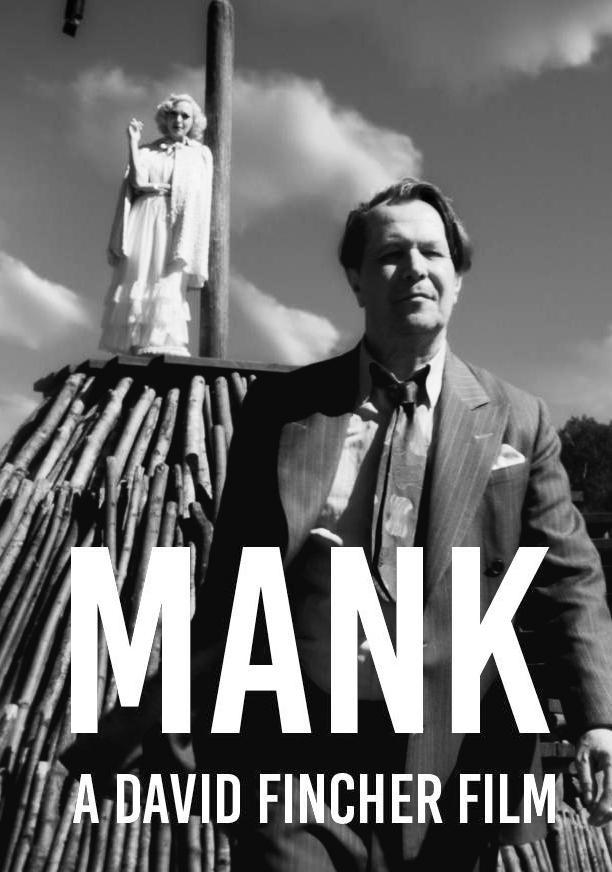
MANK
TAHAR RAHIM
THE MAURITANIAN
BEST MOTION PICTURE – MUSICAL OR COMEDY
BORAT SUBSEQUENT MOVIEFILM
(Four By Two Films; Amazon Studios)
HAMILTON
(Walt Disney Pictures / RadicalMedia / 5000 Broadway Productions / NEVIS Productions / Old 320 Sycamore Pictures; Walt Disney Studios Motion Pictures)
MUSIC
(Pineapple Lasagne Productions / Landay Entertainment; Vertical Entertainment / IMAX)
PALM SPRINGS
(Party Over Here / Limelight Productions; NEON / Hulu)
THE PROM
(Netflix / Dramatic Forces / Storykey Entertainment; Netflix)
BEST PERFORMANCE BY AN ACTRESS IN A MOTION PICTURE – MUSICAL OR COMEDY
MARIA BAKALOVA
BORAT SUBSEQUENT MOVIEFILM
KATE HUDSON
MUSIC
MICHELLE PFEIFFER
FRENCH EXIT
ROSAMUND PIKE
I CARE A LOT
ANYA TAYLOR-JOY
EMMA
BEST PERFORMANCE BY AN ACTOR IN A MOTION PICTURE – MUSICAL OR COMEDY
SACHA BARON COHEN
BORAT SUBSEQUENT MOVIEFILM
JAMES CORDEN
THE PROM
LIN-MANUEL MIRANDA
HAMILTON
DEV PATEL
THE PERSONAL HISTORY OF DAVID COPPERFIELD
I can’t say for sure but to the best of my recollection in the history of the Academy Awards, only one presenter had the presence of mind to bring — a letter opener. That was Cloris Leachman, the year after she won her Oscar for Best Supporting Actress. While she is usually remembered today for her comedic roles, her Oscar was for a heartbreaking dramatic portrayal of vulnerability in “The Last Picture Show.”
Few people recognized her from her brief role as a cheerful prostitute in “Butch Cassidy and the Sundance Kid.” Or as “Lassie’s Mom” in one season of the television series about the boy and his collie or a reliable guest star on 1950s and 60s television series, including “Lancer,” the one featured in “Once Upon a Time in Hollywood.”
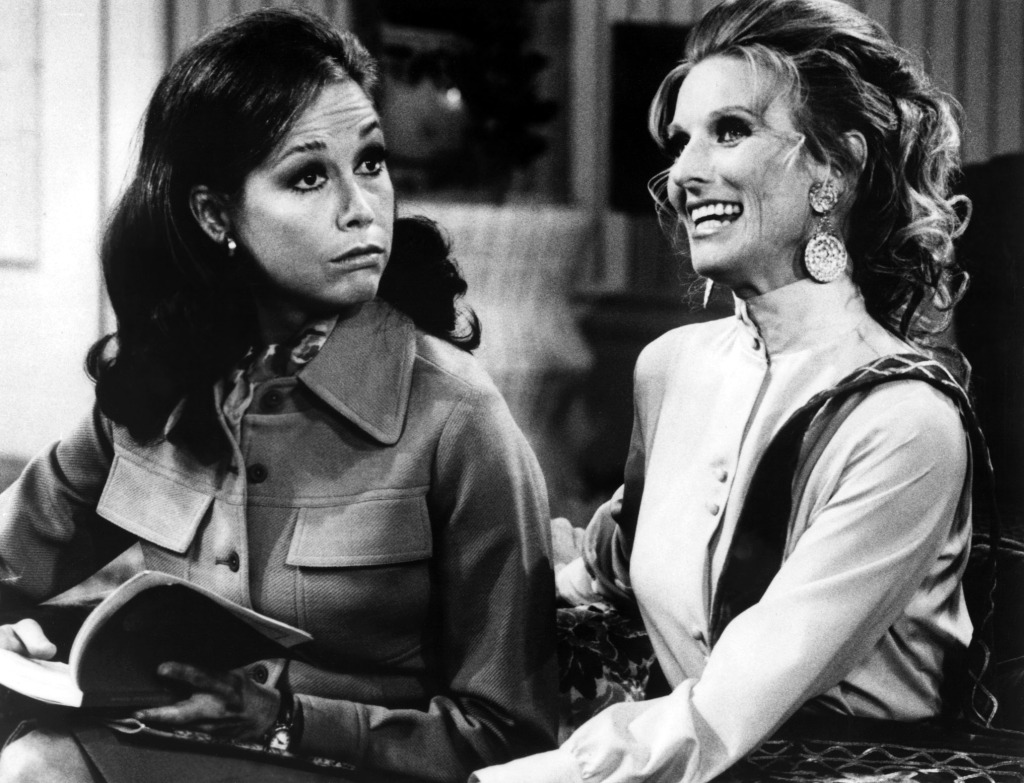
But when she appeared as Phyllis Lindstrom, the very proper neighbor/landlady on “The Mary Tyler Moore” show, she became an instant household name, ultimately getting her own spin-off series.
The opening credits spoofed “The Mary Tyler Moore Show” and any theme song that extolled the irresistibility of its star.
Leachman appeared in just about every form of entertainment, most recently providing the voice of the grandmother in “The Croods” and last year’s sequel. She was also known for being quirky, outspoken, and something of a hippie back in the day.
Cloris Leachman and my mother were in the same dorm at Northwestern University freshman year, until Cloris dropped out, and they stayed friends. My mother loved to tell us how Cloris got out of an exam by tearfully telling the professor about her boyfriend who had just been killed in WWII. (He wasn’t killed, in fact he didn’t exist.) Mom says she was a very believable actress even then.
In the 1970s, when my father was asked to give the graduation speech at Northwestern, he told the students that his roommate at the school was the journalist Sandor Vanocur and my mother’s was Cloris Leachman. “If only we were students now,” he said with mock regret. “I could have had Cloris Leachman as my roommate and my wife could have roomed with Sandy Vanocur.” This was considered rather racy and daring back in those days when many schools still had parietal rules limiting visitors of the opposite sex, and the idea of mixed-gender dorms was just beginning to be considered.
Cloris Leachman heard about the speech and wrote to my father. “I am deeply insulted!” she wrote. “How dare you suggest that I would have roomed with you at Northwestern! I would have roomed with Sandy Vanocur!”