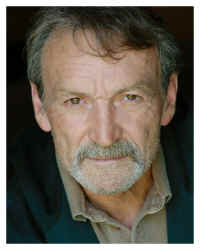
 Actor Muse Watson is a familiar face. He has been a regular on “NCIS” and “Prison Break” and has appeared in movies that range from “Austin Powers II” to “I Know What You Did Last Summer.” I’m a fan of his film A Christmas Snow
 , so I was very happy to get a chance to talk to him about his appearance in a live musical version of the story in Branson and about his work on behalf of children and families dealing with autism.
This is the second year you’ve done the show, right?
Yes, the show in Branson is called “A Christmas Snow Live” and it’s based on a movie that we shot, A Christmas Snow. We actually turned the movie into a musical and we’re lucky enough that the leads in the movie have musical theater training, and so we were able to bring everybody from the movie. The first year we brought everybody from the movie straight to Branson to do the show and I’m going back for the second year. We’ll have a new cast in some of the other roles, but I’m going back for the second year, this year. I love Branson and love the positiveness of that community. You couldn’t go into many small communities where the attitude is, “Nothing good ever happens around here,” and see things built like are built in Branson. There were some people there with some real vision and some real positive attitudes. So, I love going to Branson and of course, we’re at the Starlight theater there, and the greatest thing about this show is that every afternoon and every night after the show, we come out of the dressing rooms, go out front and meet the people who are at the show, and to hear the stories of inspiration and how the story grabbed them and to have them say things to you like, “When I get home, I’m going to call my dad.” It’s stories like that that really make you know that doing the show is the right thing, you know?
Have you done much singing before?
Yes, I have. Most people don’t watch me do the kinds of roles that they’ve seen me do on television and think of me as a singer, but when I first got started in this business years ago musical theater was one of my fortes. I did three different productions as Quixote in “Man of LaMancha,” singing numbers like ‘The Impossible Dream.’ And I’ve done “Guys and Dolls” and all kinds of musical stuff. It’s something that I hadn’t done for years but I was tickled to death to be able to go back and do another musical. In fact, my daughter is at the Chime School in Los Angeles, part of the Chime Institute, and a bunch of us do a fundraiser every year. This year my friend Amy Brenneman, you know, from “Judging Amy,” her daughter and my daughter are like best friends, so Amy and I are good friends and Amy led the fundraiser this year. I’ve been doing it now for three, four years I guess, and over the years we involve people who have children at Chime and we’re talking about people like Benjamin Bratt, Collin Farrell, Steven Stills did a couple of numbers last year…and so this year, I was trying to figure out something that I could do for the fundraiser and this year, as it happens, I got to thinking, you know, people back East know me for musicals and stuff like that, but people on the West coast, they know me sometimes for how well I kill people and stuff like that, so…
You have played a lot of bad guys!
Well, ‘”misunderstood,” I like to say. But you know, I decided, this is a free gig and I’m not getting paid for this gig and it’d be a good opportunity for me to show Hollywood how I can stretch a little bit, and so what I did was I did a cover of Coldplay’s “Fix You.” Now Amy decided, she told me that she thought it was a little against our town spirit to sing a song called ‘Fix You,’ and so I got to thinking about what she was saying and so I just changed the words of the song to “Help You,” but that came off, I think, fairly well. I asked some of the Chime people to join me for the last chorus on stage and so they came out of the wings and stuff, and Andrew Keresztes, who is a dear friend of mine, he invited the software called ‘LA Scoring Strings’ which is the way most independent films put orchestral backgrounds to their films, and he did an orchestra backed-up and then he played guitar. I’m an actor who sings, not a singer who acts, so generally speaking, I’m selling a song, probably, more than I got chops, but it works.
You were in another movie I love, Songcatcher .
Well then you’ve seen me play the fiddle! When they talked to me about doing the movie they wanted me to play the banjo, and then a couple of weeks later they called me and they said, “Oh, you’re not going to play, we’ve arranged for Taj Mahal to be part of the show, and since Taj Mahal’s going to be part of the show, we need you to switch and play the fiddle,” and I very seriously said to them, “Well, if he’s a professional musician, he ought to be the one changing instruments, not me!” And of course, the studio producer thought I was being serious, you know! I hired a guy from the Warner Brothers symphony to come over to my house and I video-taped his left hand and then I video-taped his right-hand. The problem with portraying someone playing the fiddle is that people who play the fiddle don’t play a song twice the same way, you know? In the bow strokes they’ll be going up two notes and down one, and then the next time they play the song they’ll be going up one note and down two, and so the bow strokes are a lot different. Finally I just said, “You know, I’m a musician, I went through college on the music side for clarinet and sax, so I know what it takes to make music. I’m just going to feel this thing,” and I did it, and when we got to Sundance Film Festival, where we won a Grand Jury award for ensemble acting, there was a lady that came walking out at one of the screenings and she said, “I’m a violinist and I have never been fooled in a movie. You played a fiddle.” And I said, ‘Gosh, that’s one of the greatest compliments I’ve ever gotten, but I’m sorry, I don’t.”
Tell me a little bit about your work with families dealing with autism.
Well, my wife and I, of course, knew nothing, absolutely nothing, and at about 16 months my daughter started losing words that she had already learned, and we noticed things like we went to the circus and we’d be sitting there and as soon as the circus parade opened the big gates at the end of it, at the hall and started in, she just about went into a coma, she just passed out. We just left, you know? It was just overstimulation. And so we got involved with Chime, with their infant-toddler program, and at about 18 months we started with them, and the more we studied and everything the more we saw that there was definitely going on, perception and whatnot, and of course at that time (I think it’s different today) but at that time you couldn’t get a real diagnosis until 3 years old. So then when 3 years old came along we had been going to therapy for a year and a half or so and of course, they gave us our diagnoses then of “moderately severe autism.” And my wife and I have made it our lives’ work.
Once you’ve met one autistic child you’ve met one autistic child, because there are no similarities. We find ourselves just continually trying to be open. You know, one of the things we definitely wanted to stay away from was the chemicals. We didn’t want to give her any medication and there’ve been several times in the process where we’ve gone to conferences, whether it be where Temple Grandin was or her mother or the Autism Society of America, and we would go to the conferences and we would just say to ourselves, “Okay, we’re going to be open-minded about this. If we need to think about a medicine of some sort of if they’ve come out with a medicine, then we’re not going to be idiots about it,” you know? So far, we’ve not gone that route, and this last conference that we went to in San Diego, we were open once again to it, went to a couple of sessions and I guess we decided that there are still some natural homeopathic things that we can try before we try the medicine. There may be 15 medicines out there and each one may work with a person, but none of them have been proven to work with a lot of people, so everything you do is a real trial and error.
What kind of things are you doing to reach out to other families?
Well, the Chime institute in itself is a place where children of all diagnoses and normal children all get together and they all have the same opportunities as what the school would like to do. It’s total inclusion, and so because of that, we find ourselves involved with parents of all kinds of children, but naturally of course, you gravitate towards some of the people who have, not necessarily similar diagnoses, but at least, diagnoses. And you find yourself being friends with those folks and comparing notes with those folks, but particularly on how it is best to relate in a school situation. So one of my jobs, I feel like, is to explain to folks, “You’ve got to go get a special-needs trust, and you’ve got to get this done, because if you don’t get this done, if you and your husband died, then nobody’s there to take care of the child,” you know? And so, it’s little information like that, that I learned about this process, and I try to share that with other parents. We’ve devoted our lives to the OTs, to the different perception doctors and speech teachers and to giving her the best shot that we can get her. But it’s sad, at the same time, to think that there are so many people out there that have maybe their husband or maybe their wife, either one, that goes into denial about a diagnoses and then when the child gets 10 or 11 years old and the behavior gets to be to the point where you can’t deny anything, you’ve missed all those wonderful years that we had with Sophie of early intervention.
What is it that you wish that parents of neuro-typical kids would understand about autism?
I’m going to confess something to you. After becoming a father of a young lady with autism, I look at the entire world differently. I would hope that I could do something for folks that understand what I’ve come to realize…and that’s that, as I watch YouTube and I watch the videos on YouTube, it’s a crazy, stupid, look-how-weird, how freaky, any of those words—generally speaking, when you get to the video, it’s someone of special needs. And rather than just autism, I wish folks would stop for a minute and instead of taking comfort in their own existence and saying, “look, I ain’t that weird,” I wish they would just take a moment when they see someone and instead of criticizing or throwing them out of their lives or somehow putting any kind of label on them, they would give them just a moment to see what’s good about that person, and what they do right, because there are those things there. I’ll tell you, I think about the kids in school when I was in school, and that kids that were bullied, the kids that were made fun of—I look at them so differently now, because I look at them as being special needs, and it’s…I’m admitting it, I’m a part of that, I understand it; I understand it. I’m just saying, I’m in a better place, now, and I would hope to be able to say something that would allow these people to be in a better place and to look at people a little differently.

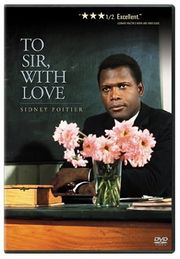 American Graduate Day is a national broadcast and outreach event on Saturday, September 22 from 1-8 pm, dedicated to engaging our country around the dropout crisis. Broadcast nationally from the Tisch WNET Studios at Lincoln Center, the seven-hour special highlights Community Partners, educators and youth to help keep at-risk students in school. Hosts will include PBS NewsHour’s Ray Suarez, ABC News correspondent Juju Chang, and Need to Know anchor Maria Hinojosa, among others. The event will feature Sidney Poitier’s film, “To Sir With Love,” the story of an engineer who takes a temporary job as a teacher and inspires — and is inspired by — his students.
 director
 , with Robert Redford as the leader of a ragtag group of quirky geniuses, written and directed by Phil Alden Robinson, who wrote “Field of Dreams.” This has some of the same off-beat idealism and some endearing performances by Dan Aykroyd, Mary McDonnell, Sidney Poitier, David Strathairn, and the late River Phoenix. Reading
 , the new DVD set, is coming out next week.