The Black Reel Awards Nominates “Registry of Honor” Historic Films
Posted on May 12, 2012 at 8:00 am
The Black Reel Awards pay tribute each year to the greatest achievements in film featuring African-American actors, directors, and screenwriters. Now they have looked back in history to nominate candidates for a “registry of honor” to bring attention to the most significant achievements of African-American filmmakers from the silent era to the present. The list of nominees includes established classics and some neglected gems. Take a look — I’d be glad to hear your favorites, especially anything they’ve overlooked. Only five will be selected each year, but I am confident that most, if not all of these will make it to the roster eventually.
A Natural Born Gambler (1916)
A lovable scoundrel is busted for gambling and thrown into jail, where he dreams of playing poker – but even in his dreams, he loses.
Within Our Gates (1920)
Abandoned by her fiancé, an educated Negro woman with a shocking past dedicates herself to helping a near bankrupt school for impoverished negro youths. Produced, written and directed by novelist Oscar Micheaux, it is the oldest known surviving feature film made by an African-American director.
Body and Soul (1925)
An escaped prisoner poses as a minister to steal from the community. Paul Robeson, in his film debut, plays the prisoner and his twin brother.
Hallelujah! (1929)
In a juke joint, sharecropper Zeke falls for a beautiful dancer, Chick, but she’s only setting him up for a rigged craps game. Hallelujah! was King Vidor’s first sound film, and combined sound recorded on location and sound recorded post-production in Hollywood. King Vidor was nominated for a Best Director Oscar for the film.
Hearts in Dixie (1929)
The story unfolds as a series of sketches of life among American blacks. It featured characters with dignity, who took action on their own, and who were not slaves. The film was one of the first all-talkie, big-studio productions to boast a predominantly African-American cast.
The Emperor Jones (1933)
Unscrupulously ambitious Brutus Jones escapes from jail after killing a guard and through bluff and bravado finds himself the emperor of a Caribbean island.
Murder in Harlem (1935)
A black night watchman at a chemical factory finds the body of a murdered white woman. After he reports it, he finds himself accused of the murder.
The Green Pastures (1936)
God, heaven, and several Old Testament stories, including the Creation and Noah’s Ark, are described supposedly using the perspective of rural, black Americans.
Swing! (1938)
Ted Gregory is trying to be the first black producer to mount a show on Broadway, but he has trouble with his star singer.
The Bronze Buckaroo (1939)
Bob Blake and his boys arrive at Joe Jackson’s ranch to find him missing. Slim cheats Dusty out of his money using ventriloquism and marked cards. Black cowboy star Herb Jeffries plays the lead.
Broken Strings (1940)
After noted violinist Arthur Williams suffers a hand injury which ends his playing career, his hopes are transferred to his son, who prefers swing music to classical.
Son of Ingagi (1940)
A newlywed couple is visited by a strange old woman who harbors a secret about the young girl’s father.
The Blood of Jesus (1941)
An atheist accidentally shoots his Baptist wife. She dies and goes to a crossroads, where the devil tries to lead her astray.
Cabin in the Sky (1943)
A compulsive gambler dies during a shooting, but he’ll receive a second chance to reform himself and to make up with his worried wife.
Stormy Weather (1943)
The relationship between an aspiring dancer and a popular songstress provides a retrospective of the great African American entertainers of the early 1900s.
Go Down, Death! (1944)
The owner of a juke joint arranges to frame an innocent preacher with a scandalous photograph, but his scheme backfires when his own adoptive mother interferes.
Dirty Gertie From Harlem, U.S.A. (1946)
A sexy, enticing dancer from Harlem makes things happen in a sleepy Caribbean island resort.
Intruder in the Dust (1949)
In 1940s Mississippi two teenage boys and an elderly woman combine forces to prevent a miscarriage of justice and clear a black man of a murder charge.
Pinky (1949)
Pinky, a light skinned black woman, returns to her grandmother’s house in the South after graduating from a Northern nursing school and passes as white.
No Way Out (1950)
A black doctor is assigned to treat two racist white robbery suspects who are brothers, and when one dies, it causes tension that could start a race riot.
Carmen Jones (1954)
Dorothy Dandridge stars in a ontemporary version of the Bizet opera, with new lyrics and an African-American cast.
Blackboard Jungle (1955)
A new English teacher at a violent, unruly inner-city school is determined to do his job, despite resistance from both students and faculty.
Anna Lucasta (1958)
In 1959, United Artists produced a film version of Anna Lucasta starring Eartha Kitt as Anna Lucasta. Sammy Davis, Jr. co-stars.
The Defiant Ones (1958)
Two escaped convicts chained together, white and black, must learn to get along in order to elude capture.
Black Orpheus (1959)
A retelling of the Orpheus and Eurydice myth, set during the time of the Carnival in Rio de Janeiro.
Odds Against Tomorrow (1959)
Dave Burke is looking to hire two men to assist him in a bank raid: Earl Slater, a white ex-convict…
Porgy and Bess (1959) In this legendary Gershwin opera set among the black residents of a fishing village in 1912 South Carolina, a crippled man falls for a beautiful woman.
A Raisin in the Sun (1961) A substantial insurance payment could mean either financial salvation or personal ruin for a poor black family.
Lillies of the Field (1963) An unemployed construction worker (Sidney Poitier) heading out west stops at a remote farm in the desert to get water when his car overheats and ends up building a school for a group of German refugee nuns. Poitier became the first black man to win a Best Actor Oscar for his performance.
Nothing But a Man (1964) A proud black man and his school-teacher wife face discriminatory challenges in 1960s America.
Guess Who’s Coming to Dinner (1967) Matt and Christina Drayton are a couple whose attitudes are challenged when their daughter brings home a fiancé who is black.
In the Heat of the Night (1967) An African American detective is asked to investigate a murder in a racist southern town.
The Learning Tree (1969) The story, set in Kansas during the 1920’s, was inspired by the real-life experiences of director Gordon Parks.
Shaft (1971) Cool black private eye John Shaft is hired by a crime lord to find and retrieve his kidnapped daughter.
Sweet Sweetback’s Baadassssss Song! (1971)
After saving a Black Panther from some racist cops, a black male prostitute goes on the run from “the man” with the help of the ghetto community and some disillusioned Hells Angels.
Buck and the Preacher (1972)
A wagon master and a con-man preacher help freed slaves dogged by cheap-labor agents out West.
Lady Sings the Blues (1972) The story of the troubled life and career of the legendary Jazz singer, Billie Holiday.
Sounder (1972) The son of a family of black sharecroppers comes of age in the Depression-era South after his father is imprisoned for stealing food.
Coffy (1973) Coffy, an African American nurse, takes vigilante justice against inner city drug dealers after her sister becomes their latest victim.
The Spook Who Sat By the Door (1973) A black man plays Uncle Tom in order to gain access to CIA training, then uses that knowledge to plot a new American Revolution.
Uptown Saturday Night (1974) Steve Jackson and Wardell Franklin sneak out of their houses to visit Madame Zenobia’s: a high-class but illegal nightclub, and have some wild adventures.
Cooley High (1975) In the mid-1960’s, a group of high school friends who live on the Near North Side of Chicago have various adventures, comic, scary, and serious, as they learn some lessons about responsibility and growing up.
Killer of Sheep (1979) Stan works in drudgery at a slaughterhouse. His personal life is drab and he feels suffocated. Dissatisfaction and ennui keep him unresponsive to the needs of his devoted wife.
48 Hrs. (1982) A hard-nosed cop reluctantly teams up with a wise-cracking criminal temporarily paroled to him, in order to track down a killer.
Sugar Cane Alley (1983) In Martinique, in the early 1930s, young José and his grandmother live in a small village where nearly everyone works cutting cane.
A Soldier’s Story (1984) An African American officer investigates a murder in a racially charged situation in World War II.
Beverly Hills Cop (1984) A freewheeling Detroit cop pursuing a murder investigation finds himself dealing with the very different culture of Beverly Hills.
The Color Purple (1985) The life and trials of a young African American woman.
She’s Gotta Have It (1986) A strong, independent woman has three lovers in this ground-breaking film from Spike Lee.
Hollywood Shuffle (1987) An actor limited to stereotypical roles because of his ethnicity dreams of making it big as a highly respected performer. As he makes his rounds, the film takes a satiric look at African American actors in Hollywood.
Pixar usually hits the G-rating sweet spot but for this year’s highly anticipated “Brave,” the first Pixar film to feature a female lead, they have received a PG rating from the MPAA, for “some scary action and rude humor.” The “rude humor” is evident in a cute fake ad being used to promote the movie.
But for a better idea about the “scary action” you’d need to take a look at the Japan-only movie trailer.
It may be that Pixar heightened the action to make sure that boys would not be turned off by a girl-led story.
Interview: Simon Wincer of the Horse Racing Film “The Cup”
Posted on May 11, 2012 at 8:00 am
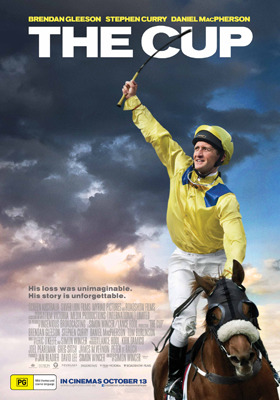
Australian director Simon Wincer specializes in movies featuring big animals. His most successful film is “Free Willy,” but his most frequent stars are horses, in films like “The Young Black Stallion,” “The Man from Snowy River,” and the fact-based “Phar Lap.” His newest film, “The Cup,” is based on the real-life story of the 2002 Melbourne Cup, when jockey Damien Oliver, devastated by the loss of his brother, best friend, and fellow jockey Jason Oliver in a tragic racing accident, rode the Irish horse Media Puzzle, to a triumphant win. I spoke to Wincer about working with the great Irish actor Brendan Gleeson, who plays the Irish trainer, about the real-life mother of the Olivers who supported her sons even though their father died in a racing accident, and what he wants families to learn from the film.
What were some of the challenges you faced in making this film?
Raising money to make it was one. It took a while but they were changing the track where we were shooting the film. I wanted to capture it as it was before it changed, so we had to shoot some of it in advance. Then eventually when we did start production, it didn’t take all that long, although because of Brendan Gleeson’s availability—he was just available for a very short window—we ended up having to shoot the film in winter. and of course, it was Melbourne’s wettest winter I think in almost forever. So the racing sequence had to be abandoned and shot in the spring when the tracks had dried out. It was an adventure, but it was fun. The weather is always a challenge. I’ve been to places in the world, as for example, in Turkey where it has never ever snowed on the Mediterranean, and of course we were shooting there and bang! Snow. I’ve seen it in the desert where it hasn’t rained in five years and guess what happened when we arrived to make a film? We got ten inches of rain, so that tends to happen to film crews, but that’s the whole fun of it.
It was a very big important story in the news when it happened, but what made you think it would be a great movie?
It was such an extraordinary story, the fact that the mother had been through it twice really interested me, how a woman can be so strong and put under such extraordinary stress in life. I suppose I’ve always wanted to do a film set around Australia’s biggest annual event, which is the Melbourne Cup. In Australia it’s called “the race that stops the nation” because literally everyone in the country stops—this is the Melbourne Cup and every office has a suite, everyone has a bet on. It’s a tradition and it’s part of our culture. This year it’ll be the 152nd Melbourne Cup, so it’s a very old tradition. It’s a public holiday and all that sort of stuff, so it’s just part of that culture, you know? And that fascinated me to build the story around that; you need a good story to do it and I felt that was the story.
Tell me more about Mrs. Oliver. She lost her husband and her son and still wanted her other son to keep racing.
She’s a very strong lady. She was very much part of a racing family and it was just their lives, despite the fact that it’s touted as the world’s most dangerous job. It’s highly dangerous, but it’s just in their blood. She’d seen these two little boys wanting to be like their dad and grandfather. I think she just wanted Damien to make up his own mind whether he decided to ride or not. She’s quite an extraordinary woman. She’s quiet, but she’s very strong and very, very brilliant to go through that emotionally, which I tried to capture when she walks into the hospital to see her son, flashing back to the memory of her husband, which was exactly what she had been through pretty much. It was extraordinary. I suppose it comes from a slightly different era when values are different and she’s just one of those stoic women, just extraordinary.
I want to ask you the same question I asked the director of “Secretariat,” which is how do you make a race exciting when everyone knows the outcome?
People have said to me in Australia, “God, you know, I was on the edge of my seat, thinking that he wasn’t going to win the race, even knowing that he won the race.” I wanted, first of all, to make it real. I didn’t want it be hokey. Quite often in these horse-racing movies you see the hero horse gallop past and if you look closely, the horses are being gently held by the jockey so the hero’s horse can run past them. I decided not to do that. Because I’m also a horse person and I’ve been riding and around horses all my life, I can certainly detect something like that, so I just wanted to keep it real. And I wanted to capture the sound. It’s incredibly dynamic when those horses go fast; I can remember every take, the crew— many of them hadn’t been to the races in their lives—just the excitement to see these things come passed us at extraordinary racing speed and so close together. Everybody just goes, “wow.” So, I wanted to capture that on the screen. I couldn’t change the result because there it was in history, but I just thought if we could make the staging and the filming of the race dynamic enough, people would get wrapped up in it because they’ve shared in this transformational journey before the race happens, and then they can share it and triumph when he eventually does win. The race which we restaged is almost identical to the actual race, and I was a slave to that and wanted to do it exactly the same. It’s been viewed by so many people, I didn’t want it to get it wrong, you know?
You had quite a casting challenge, not just to cast actors to play real-life people who were well-known, but also to cast the horses. How did you cast the horses?
We looked at about 800 horses, I think, before we eventually settled. We bought 60 and leased another 40, and again, I wanted them all to match the originals. In real life Media Puzzle wasn’t an easy horse, it was a difficult horse. Somehow of course, Damien has this incredible relationship with it, so you need to find something a bit special that’s got a bit of attitude and all that sort of stuff. You have to have several because one could get injured, and you can only do a couple of takes a day when you’re doing the racing scenes. Then you have to change the whole field. So we had more than one Media Puzzle. The main one who did the close-ups with the actors was a horse called Spike. He’s now in another show I did, playing a tribute to a famous horse called Phar Lap, which is another movie I made a long time ago. He’s just a wonderful horse because he just has this sort of attitude and you know, he’s a bit of a handful, but that’s what you want because they easily make wonderful trained horses. He does the most extraordinary act in this new show and it’s quite moving because he’s just so graceful when you see him galloping into the arena in the spotlight, all on his own, no bridle and stuff like that, it’s fantastic—and that’s what you look for, you just look for something just a little bit special with the right look in the eye and that sort of stuff.
Brendan Gleeson is wonderful in the film.
Brendan is another joy, yes, he is one of the world’s greatest actors, I don’t think anybody would dispute that when you look at the body of his work which is extraordinary. When I first talked with Brendan, I was introduced to him by telephone, and I was in Australia and he was in Ireland. He told me, “I’d just like to clear one thing up, I think that the Irish dialogue needs a little work,” and I said to Brendan, “That’s just what a Texan and an Australian think of as Irish dialogue.” That sealed the deal, because he was concerned that he didn’t want to change a word without our go-ahead, of course, but his input was fantastic. So, I happened to have to go to Dublin, and Brendan and I were able to spend a couple of days together going through the screenplay and all these scenes and then we were able to introduce him to the real Dermot and then he was able to go down and spend some time with Dermot, just outside Dublin and really get to know a bit about a trainer’s life and boy, he’s just wonderful—I guess when you work with a great actor, it raises everybody’s game, and it might be playing tennis with someone better than yourself and you rise to the occasion. I can’t speak highly enough about what a nice man he is and what a pleasure to work with and what he brings to the set, not only the energy and good vibes but just great ideas.
What lesson would you like families to take away from this film?
The theme is how we choose how we to want to live. Damien chose to do it by riding in this race. I suppose it is the drive and the human spirit. He was so down and everyone thought he shouldn’t be doing it and he had this terrible losing streak but persistence wins through in the end. It’s about dealing with adversity in a positive way. I think if people are lifted up at the end, then I’ll be very satisfied because while it’s extremely sad, it’s incredibly uplifting at the end when he rides — and that magic moment when you touch the heavens, it’s been forever etched in Sydney Australian sporting folk lore.