I really enjoyed this Entertainment Weekly list of the best songs performed by musical groups on television and in films. Of course it includes the legendary Robin Sparkles “Let’s Go to the Mall” from “How I Met Your Mother” and he title song from “That Thing You Do” — though every song in that film should be included, especially “Mr. Downtown.” I was glad to see “Inside Llewyn Davis” included, “Sing Street’s””Drive it Like You Stole it”and two songs from the under-appreciated “Music and Lyrics” and thrilled to see “A Goofy Movie” on the list as well. And of course I have my own favorites that do not appear on the list. Where is Spinal Tap? “Waiting for Guffman?” “A Mighty Wind?” The also-underrated “Bandslam” has a great fictional group with a wonderful name: I Can’t Go On I’ll Go On and great songs, like “Someone to Fall Back On.” And the new “Documentary Now!” episode inspired by the D.A. Pennebaker film about the recording of Stephen Sondheim’s “Company” cast album, “Co-Op,” has brilliant fake Sondheim songs like “I Gotta Go,” sung by Paula Pell, inspired by “Ladies Who Lunch,” and “Holiday Party,” echoing “Getting Married Today.” I’d buy that cast album.
I know it is unforgivably esoteric, but just once when I was a kid I saw a television show starring Ricky Nelson as a musician and there was a song in it I always remembered. Decades later, after the internet turned out to have the answer to almost everything, I was able to track it down and it turned out it was written by none other than Burt Bacharach and Hal David. Here’s the soundtrack.
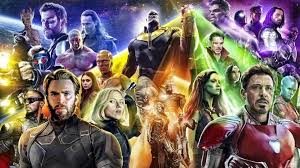
Feige, 45, and Marvel Studios have taught a moviegoing audience who may have never even thought about picking up and flipping through a comic book before, how to absorb a narrative over the course of differentiating stories, characters, and uniquely made worlds. With movies plotted until 2022, the studio shows no sign of slowing down, despite their reported break over the next year following “Spider-Man: Far From Home.” It is the most widely regarded and well-known story of the 21st century, to the point that a movie like “Avengers: Endgame” has a more than fair chance at breaking the opening weekend box office record that the “Avengers” film before it set almost a year prior — — which was $257.6 million mind you.
How Two 1994 Movies Transformed Screen Portrayals of Female Sexuality
Posted on March 11, 2019 at 3:58 pm
Copyright MGM 1994
For rogerebert.com’s Women Writer’s Week, I wrote an essay about how two films, both made 25 years ago, transformed the way female sexuality is portrayed on screen. Before these films, female characters either seemed unaware of sex or determined not to have sex until marriage. If they did, the consequences were usually terrible — an unwanted pregnancy, a nervous breakdown, loss of reputation, even death. There were sex comedies based on successful Broadway farces like “Sunday in New York,” “The Moon is Blue,” and the weirdest of all, written by Arthur Marx (son of Groucho), “The Impossible Years.”
David Niven (one of the failed seducers from “The Moon is Blue”) plays a psychology professor obsessed with his daughter’s virginity—in a sex comedy kind of way but still pretty creepy. Spoiler alert: She is safely married by the time she has sex (with her father’s young professional colleague/rival, hmmm, wonder what a psychology professor would make of that). And somehow the act of having sex instantly transforms her into a mature, thoughtful, responsible person as well, just in time for her dad to start worrying about her younger sister.
Other movies feature the tragic consequences of pre-marital sex. In “Where the Boys Are” Yvette Mimieux is not only raped but also hit by a car as the consequence for her decision to have sex on spring vacation in Fort Lauderdale. Worst of all, “they’re not even Yalies.” Meanwhile, Dolores Hart, who intellectually is in favor of sexual autonomy and freedom from shame for young women, maintains her purity and thus achieves the ultimate—an invitation to the spring dance from handsome Ivy Leaguer George Hamilton.
Copyright Miramax 1994But the micro-budget “Clerks” and the glossy romantic comedy “Four Weddings and a Funeral” both did something remarkable and revolutionary — they gave us female characters who were comfortable with sexual desire and expression, unapologetic because they saw no reason to be. And the men they confided in were not disgusted, disappointed, or contemptuous. They were impressed and intimidated. Compare this to Audrey Hepburn’s similar — except entirely fictitious — recitation of imaginary lovers to Gary Cooper in “Love in the Afternoon,” just one example of this era’s pretend to have your cake but don’t eat anything attitude during this era.
This idea that sexual experience was evidence of a healthy, confident ownership of sexual expression was an enormous shift, the foundation for later films like the raunchy but sweet-natured sex comedy “American Pie” (1999), also revolutionary in the female characters’ ownership of their sexuality, compared to “Porky’s” (1981) or “Revenge of the Nerds” and “Sixteen Candles” (both 1984), where the perspective is all about male sexual gratification including voyeurism, sexual assault, and a boy selling a look at a teenage girl’s underwear.
2018’s “Blockers,” like “The Impossible Years,” also featured parents who were way too invested in whether their daughters were going to have sex. But this time, the point of view of the movie was very much on the side of the girls and their ability to make their own choices. Series like “Big Mouth,” “PEN15,” and “Broad City,” have characters who may make some bad decisions and suffer the consequences, but they do not pretend that sexual desire is wrong or bad. They follow in the steps of “Clerks” and “Four Weddings and a Funeral,” as those two films provided a turning point for healthier depictions of women and our right to our feelings and our choices.
Where once slasher films almost made killing teens who had sex a given, after “Clerks” and “Four Weddings and a Funeral” came “Scream,” with a heroine who only after having sex achieved the wisdom and power to defeat the killer(s).
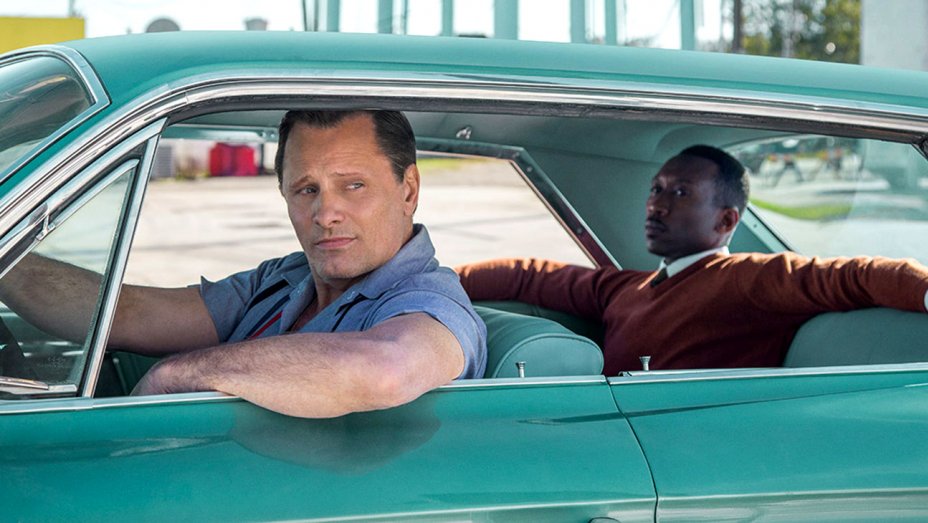
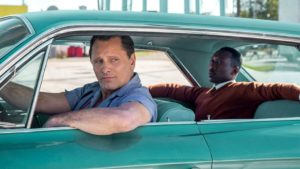
Contest: Win the Soundtrack of the Oscar-Winning Green Book
Posted on March 8, 2019 at 8:51 am
Copyright 2018 UniversalSend me an email at moviemom@moviemom.com with Green Book in the subject line and tell me your favorite place to stay when you travel. Don’t forget your address! (US addresses only) I’ll pick a winner at random on March 16, 2019.
I love the annual Women Writers Week on rogerebert.com and this year’s is especially dear to my heart because it is my first as an assistant editor. From my welcome/introduction:
We do not pretend that women have more empathy or indeed that it is possible to make any generalization about gender with one exception: every one of us has walked through the world as a woman and that is an experience only we can understand and reflect in our take on the films we write about. It may be less important in what we bring than our own particular points of view based on our individual experiences—whether we are old or young, hetero-normative or LGBQTIA, partnered or single, mothers or childless, baby boomers, Gen-Xers, or millennials, from the city or the country, from the US or international, white or a woman of color, whatever our level of education or amount of money, whether we are fans of Korean horror movies or anime or multiplex fodder or quirky indies, all of those elements are reflected in our writing, as they are for the male critics. But all of us understand what it is to live in a culture that has always been dominated by another gender, and review films that come out of a system that has been even more so.
This week, with every word on the site written by women, our readers of any gender will see the fabulous range of talent, insight, and perspectives of our female contributors. If you look closely, you may see something else—a consistent perception by writers who are at least in part outsiders to the stories overwhelmingly told by men. Sharing their perspectives creates an empathy machine of our own.
Some of my favorite past work is featured on the site, including my essay about Nora Ephron.
And there is some superb new content, including a “Captain Marvel” video interview, Carrie Rickey connecting golden age of Hollywood directors George Cukor and Mitchell Leisen to “Black Panther’s” Ryan Coogler for their sympathetic and nuanced portrayals of female characters, and a piece on “Killing Eve” by Kristy Puchko.